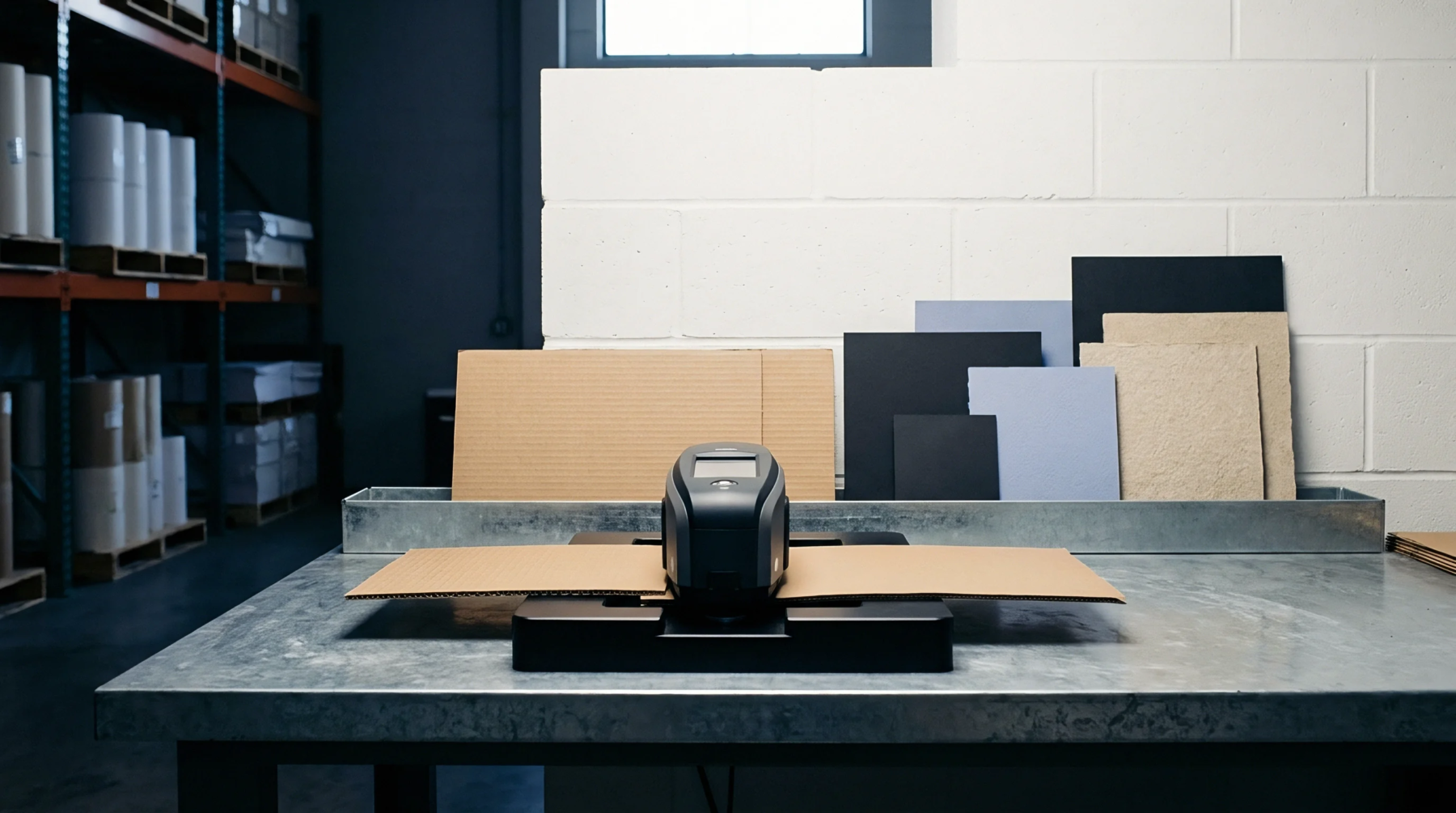
Detection System
Non-contact acoustic inspection methods use sound waves transmitted through gas rather than a liquid or solid couplant to evaluate material integrity. In the paper industry, air coupled ultrasonics allow for the continuous monitoring of moving webs without risking surface damage or moisture contamination. This technique relies on transducers that emit high frequency vibrations through the air gap to detect internal defects and mechanical properties.
Measurement Precision
Specialized transducers operate at frequencies suited for the low impedance of air to ensure energy reaches the substrate. Because air coupled ultrasonics bypass the need for water or gel, the system identifies delamination or stiffness variations in finished paper grades during high speed production. Signal processing compensates for the attenuation caused by the air interface.
Production Integration
Equipment placement occurs at the dry end of the machine where the web has reached its final thickness and density. While air coupled ultrasonics provide real time data on elastic constants, the sensitivity decreases as basis weights fall below very thin tissue thresholds. Modern scanners track cross direction profiles to maintain uniform quality across the entire reel width.
Effective calibration accounts for ambient temperature and humidity shifts that might otherwise skew the velocity readings in the air gap. Regular maintenance of the sensor head prevents dust accumulation from interfering with the acoustic signal.