Coupled Hygro-Mechanical Finite Element Formulations for Multi-Wall Packaging Collapse under Rapid Condensation Cycling
Coupled hygro-mechanical finite element modeling prevents chilled transit collapse by predicting rapid condensation softening and interface delamination.

Dew
Refrigerated freight moving across dock doors encounters sudden thermal shifts that condense moisture directly onto outer linerboards. When warm, humid ambient air hits cartons leaving a cold storage facility at 4 degrees Celsius, liquid water accumulates on cold paper surfaces within seconds. Surface moisture spikes from an equilibrium state of 7 percent to local saturation exceeding 24 percent within minutes, swelling the fibers and degrading the compressive resistance of the cellulose matrix before water can diffuse into the inner fluting plies.
Standard static safety factors fail to account for these transient hygro-mechanical gradients, leading to stack collapses during warehouse transfers.
Moisture absorption through the sheet thickness follows transient diffusion kinetics governed by a concentration-dependent tensor. The moisture flux across paperboard boundaries satisfies the conservation equation:
div(D(c) grad(c)) = dc/dt
where c denotes localized moisture concentration in grams per cubic centimeter and D(c) represents the orthotropic moisture diffusion tensor. In multi-wall corrugated board, diffusion along the thickness direction (ZD) runs roughly an order of magnitude slower than in-plane transport along the machine direction (MD) and cross direction (CD). Surface condensation creates a steep moisture gradient across the outer liner while the inner medium remains dry.
This localized saturation drops the local elastic modulus by up to 75 percent, driving out-of-plane deformation across the sheet.
Under ISO 535 Cobb60 water absorption testing, unsized virgin kraftliner absorbs 28 grams of water per square meter, reducing Z-directional tensile strength by 62 percent within two minutes.
Alternating thermal chambers reproduce this degradation in condensation cycling tests. Packaging moves repeatedly between 4 degrees Celsius at 85 percent relative humidity and 25 degrees Celsius at 90 percent relative humidity, with dwell times of 30 minutes. Cyclic condensation accelerates strain accumulation through mechano-sorptive creep, where transient moisture flux magnifies mechanical deformation far beyond the combined sum of static sorption strain and pure mechanical creep.
Under these conditions, the board collapses at static top-loads below 30 percent of its dry box compression test rating ~ failures that stem from the deficiency of static sizing agents against rapid boundary phase changes rather than rough pallet handling.
Shell
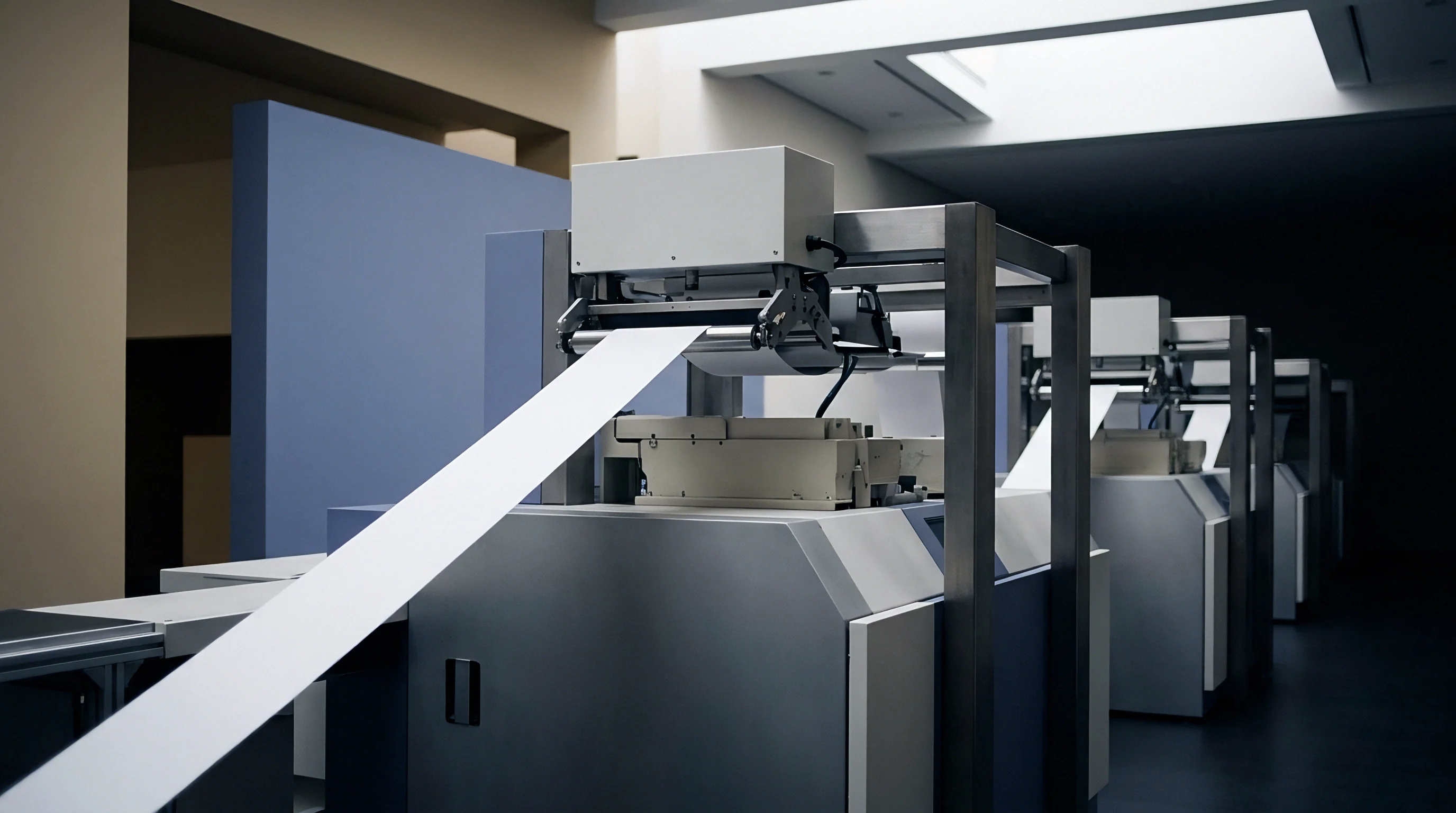
Structural modeling of multi-wall corrugated packaging requires continuum shell formulations that capture through-thickness hygro-mechanical coupling. Conventional finite element models treat linerboards and fluting as single integration-point homogenised surfaces, missing the transient through-thickness moisture profiles that trigger premature local buckling. Layered continuum shell elements or solid-shell elements with multiple through-thickness integration points supply the mathematical resolution needed to evaluate local stiffness degradation as moisture penetrates from the exterior boundary.
When Do Transient Gradients Trigger Bifurcation?
The total strain increment tensor in each layer decomposes additively into elastic, plastic, hygro-expansion, and mechano-sorptive components:
d(epsilon) = d(epsilon_elastic) + d(epsilon_plastic) + d(epsilon_hygro) + d(epsilon_mechano_sorptive)
The hygro-expansion strain rate scales with moisture concentration through directional coefficients, with beta_MD ranging between 0.01 and 0.03, beta_CD between 0.05 and 0.12, and beta_ZD reaching up to 0.30 per unit change in moisture content. The mechano-sorptive strain rate couples the stress state to the absolute value of moisture flux, driving accelerated creep during both wetting and drying phases:
d(epsilon_mechano_sorptive) = mu S |dc/dt|
where mu is the mechano-sorptive material parameter matrix and S is the deviatoric stress tensor.
| Material Component | Grammage (g/m²) | MD Modulus (MPa) | CD Modulus (MPa) | ZD Modulus (MPa) | Mechano-Sorptive Coefficient (m³/kg) |
|---|---|---|---|---|---|
| Virgin Kraftliner | 175 | 7400 | 3100 | 35 | 0.00018 |
| Recycled Testliner 2 | 170 | 5200 | 2100 | 22 | 0.00034 |
| Semi-Chemical Fluting | 140 | 6100 | 2600 | 28 | 0.00021 |
| Recycled Fluting (Wellenstoff) | 135 | 3900 | 1500 | 18 | 0.00048 |
Finite element discretizations incorporating geometric nonlinearity through updated Lagrangian schemes capture the out-of-plane displacement fields of fluting peaks under compressive box stacking loads. As the outer liner takes on condensate, its bending stiffness drops sharply, shifting the compressive neutral axis inward toward the drier inner liners. This asymmetry creates an eccentric compressive loading field across the composite panel, triggering localized skin wrinkling along the fluting tips well below the classic Euler buckling threshold.
The numerical stability of the coupled system depends on the time integration algorithm. Staggered loose-coupling schemes compute the diffusion field and transfer nodal moisture contents to the mechanical solver at discrete intervals, but they often diverge during rapid condensation cycles due to steep concentration gradients. Fully coupled monolithic formulations solve displacement and moisture degrees of freedom simultaneously at every element integration point, maintaining quadratic convergence during material softening.
Packaging mechanics literature has not yet resolved whether micro-scale fiber reorientation under cyclic moisture sorption can be fully captured by macroscopic phenomenological models without tracking fiber-fiber bond failure explicitly.

Bond
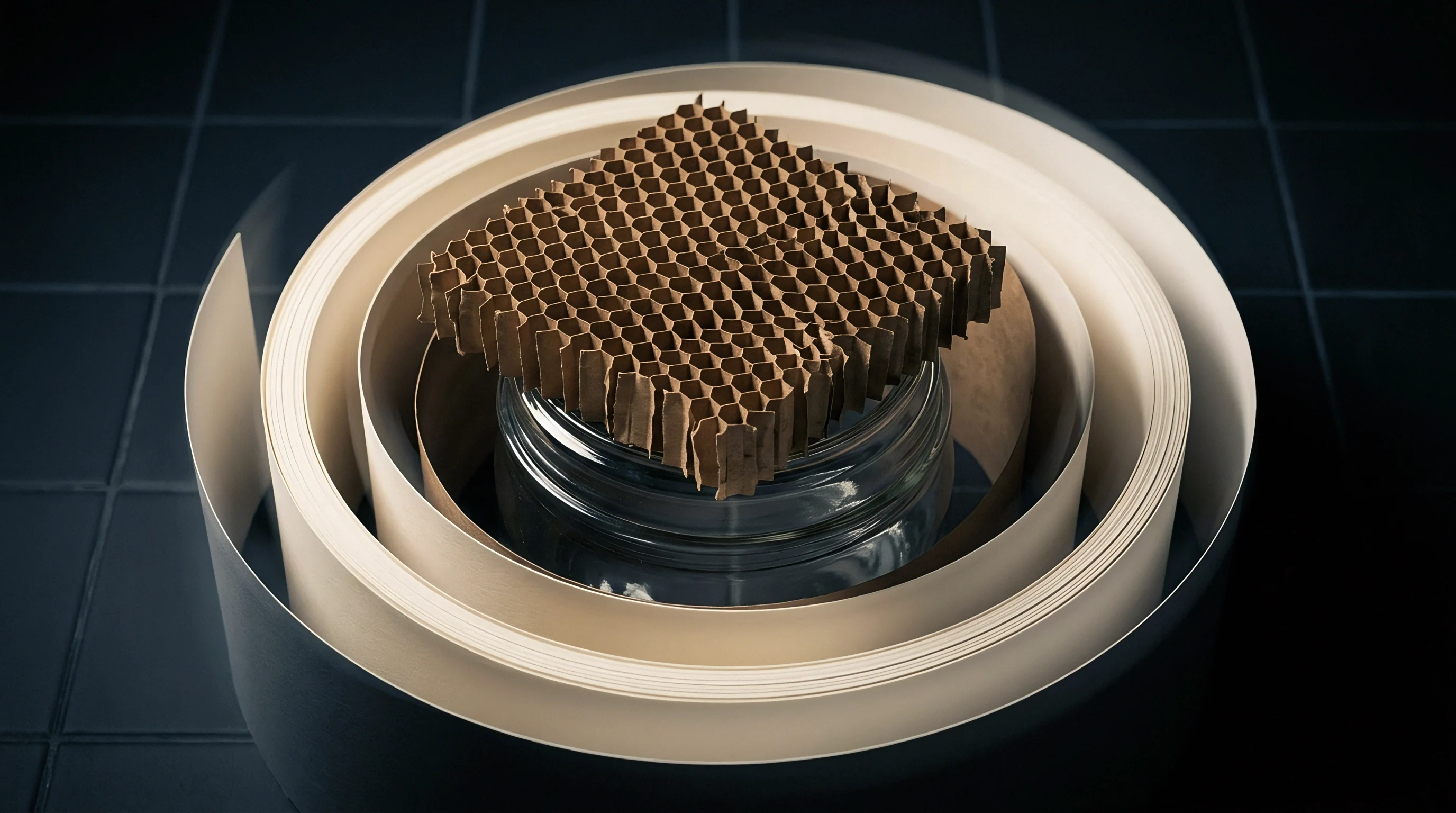
Adhesive interfaces between corrugating fluting tips and linerboards form the weakest structural link in humid transit. Starch-based adhesives undergo severe hydrolytic plasticization when exposed to moisture concentrations above 18 percent. Under rapid condensation, liquid water forms directly on the outer liner and wicks through the porous fiber network to the adhesive meniscus.
Cohesive zone modeling (CZM) implemented along the flute-liner interface provides the numerical framework to predict progressive delamination under combined compression and shear loads.

Which Boundary Conditions Govern Chilled Transit?
The interface constitutive behavior incorporates a bilinear traction-separation law with moisture-dependent fracture energy. Normal and shear tractions transfer linearly across the glue line until reaching interfacial initiation strength, after which traction softens until complete separation occurs at critical energy release rates G_c. Both interfacial shear strength and fracture toughness degrade exponentially with local moisture concentration:
G_c(c) = G_c0 exp(-gamma c)
where G_c0 represents the dry fracture energy and gamma is an empirical degradation factor ranging from 8.5 to 14.2 for unmodified native cornstarch adhesives. Modified starch formulations containing crosslinking resins such as ketone-formaldehyde or polyamidoamine-epichlorohydrin preserve greater fracture energy under high relative humidity, restricting damage progression across the interface.
A glue line with insufficient crosslinking resin loses over eighty percent of its shear fracture toughness when interface moisture content exceeds twenty percent by mass.
Losing adhesive shear transfer triggers a total loss of composite action between the linerboard and the corrugating medium. Once the outer liner separates from the flute tips, its effective buckling length increases from the single-flute pitch distance of 4.5 millimeters (for standard C-flute) to the unconstrained global panel width, reducing panel compressive strength by more than 60 percent.
- Native Cornstarch Formulation displays rapid shear softening at moisture contents above 16 percent, leading to unzipping along the flute lines during the first condensation cycle.
- Crosslinked Ketone Resin Starch retains structural cohesion up to 22 percent moisture content, preventing interface separation during short-duration dew point transitions.
- Synthetic Water-Resistant Emulsion Adhesive maintains fracture toughness across repeated thermal cycles, shifting the failure plane entirely into the Z-direction of the paperboard core.
When the outer interface unzips, loads transfer instantly to the inner fluting structure and interior linerboard, exceeding their elastic limits and causing sudden outward panel blowouts. Rigid adhesive formulations that lack moisture compliance accelerate failure by concentrating stress at the dry-wet boundary. A carton wall that maintains bond integrity under cyclic condensation carries its load until the fibers themselves crush.
Yield
Compressive collapse of multi-wall corrugated boxes under cyclic condensation represents an interactive post-buckling plasticity failure. Standard box compression formulations such as McKee’s equation assume uniform, static material properties across the perimeter, overpredicting container carrying capacity under non-uniform moisture fields. A valid predictive calculation combines edge crush test (ECT) values modified by transient moisture functions with finite-element-derived panel buckling factors.
Consider a heavy-duty double-wall container (BC-flute construction) subjected to a constant static top load of 4.5 kilonewtons in a multi-tier pallet stack. The box dimensions are 600 millimeters in length, 400 millimeters in width, and 400 millimeters in height. The dry board exhibits an initial ECT value of 11.8 kilonewtons per meter under ISO 3037 test conditions at 23 degrees Celsius and 50 percent relative humidity.
- Initial Static Capacity Calculation evaluates baseline performance using the classical structural relation P_box = 5.87 ECT sqrt(h t), where h represents panel thickness and t represents box perimeter. The dry box compression strength calculates to 14.2 kilonewtons, yielding an apparent static safety factor of 3.15.
- First Condensation Cycle Shift introduces a rapid 30-minute exposure to dew-point conditions during refrigerated truck loading. Surface moisture in the outer liner rises to 22 percent, reducing its cross-directional compression resistance by 55 percent, which depresses composite panel ECT to 6.8 kilonewtons per meter.
- Transient Stress Redistribution causes the outer liner to yield plastically under eccentric loading, shifting compressive stresses to the inner B-flute and C-flute components. Mechano-sorptive creep strains increase local vertical deflection by 2.4 millimeters within two hours.
- Secondary Dew Shock occurs upon arrival at an unconditioned transfer cross-dock. Inner liners absorb penetrating moisture, dropping overall board ECT to 4.1 kilonewtons per meter. The effective load-bearing capacity falls to 4.2 kilonewtons, dropping below the sustained top load of 4.5 kilonewtons.
Progressive creep buckling accelerates into structural collapse within twelve minutes of the secondary condensation exposure.
| Cycle Number | Mean Outer Liner Moisture (%) | Effective Wall ECT (kN/m) | Peak Creep Strain Rate (1/s) | Predicted Time to Collapse (Hours) |
|---|---|---|---|---|
| Cycle 1 (Dock Loading) | 21.8 | 6.8 | 3.2 × 10⁻⁶ | 18.4 |
| Cycle 2 (Intermodal Transit) | 17.4 | 7.9 | 1.1 × 10⁻⁶ | 14.1 |
| Cycle 3 (Cross-Dock Transfer) | 24.2 | 4.1 | 8.7 × 10⁻⁵ | 0.2 |
| Cycle 4 (Final Storage) | 25.6 | 3.2 | 2.4 × 10⁻³ | 0.0 (Immediate Failure) |
Failure to integrate transient hygro-mechanical formulations into box specification calculations results in widespread structural failure throughout chilled supply chains, forcing expensive repackaging operations, cargo damage claims, and total write-downs of crushed food products.

Liability
Specification files for chilled and high-humidity transit packaging require complete documentary qualification to survive customs scrutiny and border inspections. A declaration of compliance asserting water resistance or wet strength means nothing without attached test reports detailing the conditioning parameters and chemical treatments applied to the board. When cargo collapses in international transit, customs authorities, cargo insurers, and import consignees trace the failure through the chain of custody to establish whether the packaging satisfied regulatory and contractual performance baselines.
European packaging regulations, including the Packaging and Packaging Waste Regulation (PPWR), impose strict recyclability and chemical substance limits that directly restrict the use of heavy wax coatings and non-repulpable wet-strength resins. Converters cannot simply apply paraffin wax barriers to solve condensation vulnerability without forfeiting the EN 13430 material recyclability qualification. The technical dossier must prove that moisture-barrier treatments maintain recyclability thresholds while providing the declared wet compression performance.
A certificate of analysis lacking the exact conditioning protocol specified in EN ISO 2233 leaves the importer of record fully exposed to carrier damage subrogation.
Chain-of-custody verification under FSC-STD-40-004 or PEFC ST 2002 represents the baseline entry gate for fiber sourcing compliance. The certificate code must appear on commercial invoices with the explicit claim category corresponding to the actual board grade delivered. If a supplier bills corrugated packaging under an FSC Mix Credit claim but the mill manufacturing the linerboard operates under a suspended or expired certificate, the entire shipment becomes non-compliant at the customs border.
The importer of record carries the legal and financial exposure for invalid claims.
Food contact compliance under European Regulation 1935/2004 adds another qualification layer for packaging containing moisture-resistant chemical sizing agents, alkyl ketene dimers (AKD), or alkenyl succinic anhydride (ASA). Migration testing conducted according to EN 1186 and aqueous extraction testing under EN 645 must prove that wet-strength polymers and biocide additives do not migrate into chilled food contents during condensation events. Batches produced with unauthorized wet-end chemicals face border detention and immediate destruction orders.
Commercial purchase contracts must incorporate specific clauses establishing liability for transit collapse under predictable condensation cycling. Standard force majeure clauses covering atmospheric moisture fail to protect buyers when predictable supply-chain temperature variations trigger packaging failure. Incorporating explicit technical thresholds based on cyclic hygro-mechanical testing into the procurement specification shifts the financial risk of board structural collapse directly back onto the packaging converter.