Non Intentionally Added Substance Screening in Radiation Cured Overprint Formulations
Untargeted mass spectrometry screening isolates photoinitiator degradation products and unreacted acrylates in food packaging overprint coatings at 10 ppb.


Lamp
Free-radical polymerisation in radiation-cured overprint formulations relies on rapid photolytic initiation to turn liquid acrylic monomers and oligomers into a dry, crosslinked network. Medium-pressure mercury arc lamps and ultraviolet light-emitting diodes operating at 365, 385, and 395 nanometres supply the spectral irradiance required to cleave photoinitiator molecules. At press speeds between 150 and 400 metres per minute, complete conversion of carbon-carbon double bonds is virtually unachievable.
Atmospheric oxygen competes for surface radicals, forming a thin zone of inhibited polymerisation. This boundary layer retains unreacted acrylic monomers, short-chain oligomers, photoinitiator fragments, and mobile secondary reaction byproducts.
Early conversion kinetics depend heavily on how closely the emission spectrum matches the photoinitiator absorption profile. Iron-doped and gallium-doped mercury lamps yield broad emission spectra that penetrate deep into thick coatings, whereas UV-LED systems deliver monochromatic output concentrated within narrow spectral bands. Irradiating an overprint formulation containing alpha-hydroxyketones or acylphosphine oxides excites photoinitiators to a triplet state, splitting them into primary free radicals that drive chain polymerization across acrylate functional groups.
When the energy dose falls short, unreacted monomers such as tripropylene glycol diacrylate, trimethylolpropane triacrylate, and hexanediol diacrylate remain trapped inside the polymer network.
Ultimately, the extent of chemical conversion governs chemical purity.
Cure efficiency is evaluated by measuring double-bond conversion with attenuated total reflectance Fourier-transform infrared spectroscopy. Residual monomer concentration directly reflects the integrated UV dose delivered to the sheet surface. Above 250 metres per minute, peak irradiance frequently drops below the threshold required to overpower oxygen inhibition.
Oxygen combines with propagating acrylic radicals to form unreactive peroxyl radicals, halting chain growth at the coating-air interface and leaving a concentrated layer of low molecular weight acrylic species prone to direct contact or set-off migration during storage.
| Curing System Type | Peak Irradiance (W/cm²) | UV Dose (mJ/cm²) | Double Bond Conversion (%) | Residual Monomer Extract (mg/m²) |
|---|---|---|---|---|
| Medium-Pressure Mercury Arc (Standard) | 1.8 | 45 | 84.2 | 12.4 |
| Medium-Pressure Mercury Arc (High Output) | 3.2 | 85 | 93.1 | 2.1 |
| UV-LED 395 nm (Single Array) | 4.5 | 60 | 88.5 | 5.8 |
| UV-LED 395 nm + 365 nm (Dual Array) | 8.0 | 110 | 96.4 | 0.4 |
To mitigate oxygen inhibition, formulators often add amine synergists, secondary photoinitiators, or high-functionality acrylate monomers. Each addition, however, introduces potential non-intentionally added substances. Tertiary amine co-initiators react with peroxyl radicals to regenerate active alkyl radicals, but their oxidation pathways yield volatile amine fragments, aldehydes, and alkylamines.
Multi-functional acrylates increase crosslink density, yet incomplete conversion of multi-arm monomers leaves pendant acrylate groups that degrade under thermal or photo-oxidative stress over shelf life.
When peak irradiance falls below 1.2 W/cm² under medium-pressure mercury emission, acrylate double-bond conversion drops below 82 percent, leaving residual tripropylene glycol diacrylate above 450 mg/kg in the cured film matrix.
Electron beam curing bypasses photoinitiators altogether, relying on high-energy electrons to cleave carbon-carbon double bonds directly. Accelerating voltages between 80 and 110 kilovolts propel electrons into the coating film under a nitrogen blanket that maintains oxygen levels below 50 parts per million. While electron beam systems avoid photoinitiator breakdown products, electron bombardment causes random polymer backbone scission.
These reactions generate low molecular weight fragments ~ including acrylic acid monomers, short-chain aliphatic aldehydes, and alkyl esters ~ that form an alternative class of non-intentionally added substances requiring analytical tracking.
Post-cure dark polymerisation is often cited as eliminating residual monomers within forty-eight hours of radiation exposure.
Cleavage
Photolytic breakdown converts photoinitiators into structural fragments that differ significantly from the parent compounds. Type I photoinitiators undergo unimolecular alpha-cleavage upon photon absorption, generating two free radicals with high reactivity toward carbon-carbon double bonds. For example, 2-Hydroxy-2-methylpropiophenone breaks down into a benzoyl radical and a 2-hydroxy-2-propyl radical.
The benzoyl radical initiates acrylate polymerization, while the 2-hydroxy-2-propyl radical disproportionates or abstracts hydrogen to yield acetone, benzaldehyde, and benzoic acid. These photolytic cleavage products have low molecular weights, high vapor pressures, and high migration potential across paperboard substrates.
The crosslinking of acrylate networks generates a variety of reactive side products.
Type II photoinitiator systems rely on bimolecular hydrogen abstraction from a tertiary amine co-initiator. Benzophenone, isopropylthioxanthone, and 4-phenylbenzophenone abstract hydrogen atoms from co-initiators such as ethyl 4-dimethylaminobenzoate. This pathway inevitably leaves residual unreacted photoinitiator, substituted benzophenones, and aminobenzoate fragments within the cured network.
Photochemical side reactions between transient radical intermediates yield pinacols, substituted biphenyls, and alkylamine condensation products that do not show up on raw material safety data sheets.
Oligomer synthesis residues form another secondary stream of non-intentionally added substances. Epoxy acrylates, polyester acrylates, and polyurethane acrylates contain unreacted bisphenol A diglycidyl ether derivatives, residual organotin catalysts like dibutyltin dilaurate, solvent traces, and chlorinated synthesis intermediates. During UV exposure, residual photo-sensitizers trigger oxidative degradation of ether linkages in polyurethane acrylate structures, generating low molecular weight polyethylene glycol diacrylates and cyclic ether compounds.
- Benzoyl formate esters fragment under irradiation into methyl benzoate, benzoic acid, and volatile phenylglyoxylate intermediates that migrate into dry food matrices.
- Phosphine oxide derivatives including diphenyl(2,4,6-trimethylbenzoyl)phosphine oxide cleave into trimethylbenzaldehyde and phosphinic acid derivatives that form persistent extractable residues.
- Polymeric photoinitiators limit migration of parent molecules, but photolytic scission of active pendant groups yields low molecular weight aromatic fragments that retain migration mobility.
- Secondary thermal stabilizers such as organophosphites and hindered phenols undergo photo-oxidation, producing quinone methides, dialkyl phosphonates, and substituted phenols.
Raw material purity specifications set by chemical suppliers frequently permit up to two percent of uncharacterized synthesis impurities in commercial acrylate resins. Monomer synthesis byproducts include acrylic acid dimers, dimerized solvent residues, and chlorinated aliphatic esters resulting from epichlorohydrin precursor processing. When these impurities pass through the curing station, high-intensity radiation alters their chemical structures via radical addition or hydrogen abstraction, creating modified chemical species that resist standard targeted mass spectrometry quantification.
Whether the photo-oxidation of secondary amine co-initiators generates persistent nitrosamine precursors inside sealed corrugated cases remains an open question in packaging science.

Stack
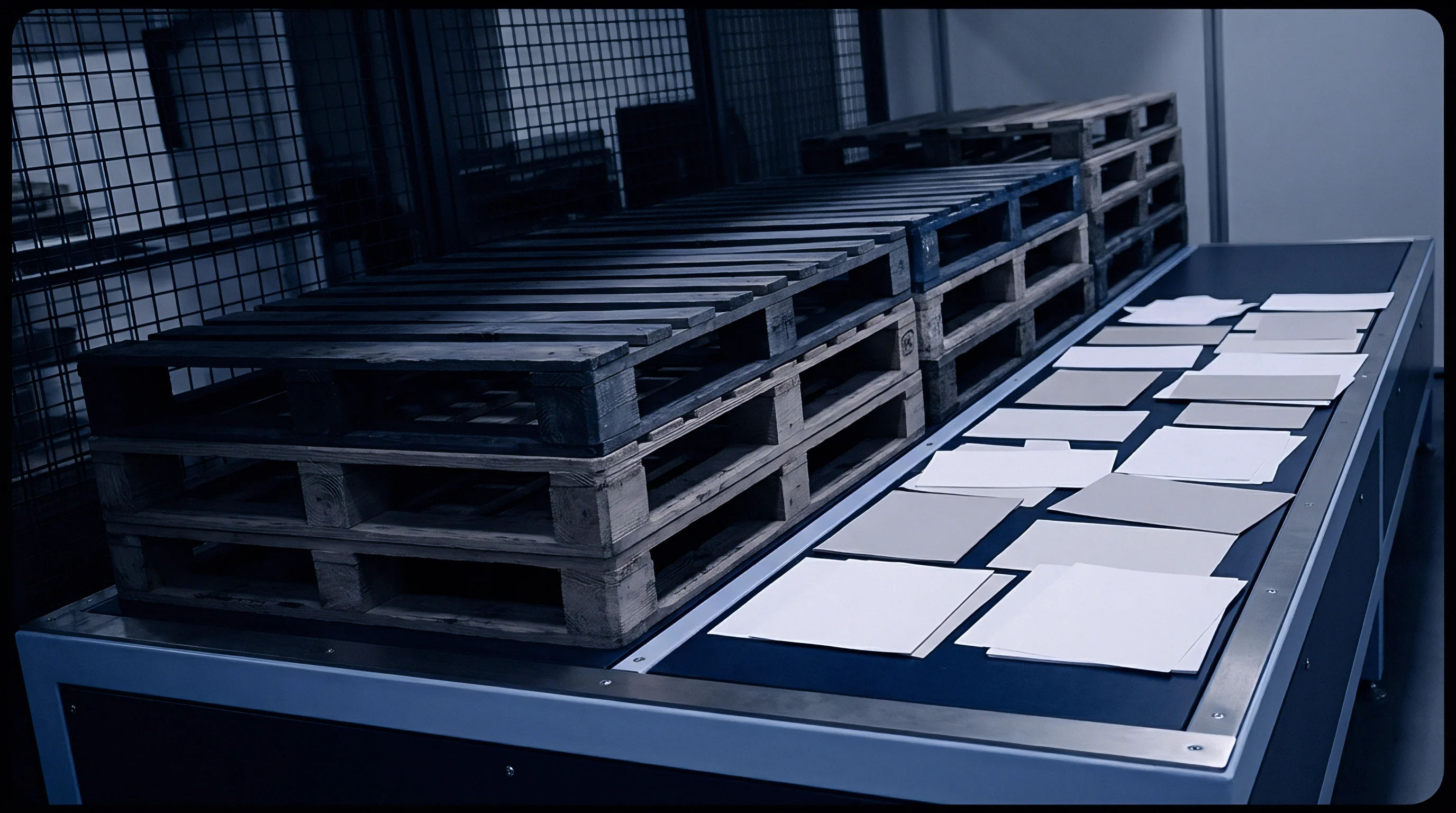
Extractable compounds move from the cured coating to the food-contact surface primarily through set-off during reel rewind or sheet stacking. When freshly printed paperboard sheets drop onto a pallet at press speeds of three hundred metres per minute, heat from the curing lamps stays trapped inside the pile. Stack pressure at the bottom of a two-tonne pallet forces the cured varnish into tight contact with the unprinted reverse side of the adjacent board, transferring volatile breakdown products, residual acrylates, and photoinitiator fragments into the porous fibrous matrix.
Under heavy pressure, physical surface contact transforms into active mass transport.
The central core of a pallet stack regularly retains thermal energy for hours.
Mass transfer kinetics inside a stacked pallet depend on temperature, stack pressure, substrate porosity, and compound vapor pressure. Internal stack temperatures frequently reach 45 degrees Celsius, accelerating the diffusion of compounds with molecular weights below 500 Daltons. Unprinted paperboard reverse sides made from mechanically pulped fibers readily absorb lipophilic migrants like isopropylthioxanthone, 2-ethylhexyl acrylate, and 4-methylbenzophenone.
Once transferred to the unprinted reverse side, these substances diffuse through the paperboard board thickness during warehouse storage, reaching the internal package cavity before filling operations begin.
- Pull three sequential sheets from the middle of the pallet twenty minutes after stack completion.
- Place the unprinted face of sheet two against a glass plate cleaned with analytical-grade n-hexane.
- Apply a uniform mechanical load of fifty kilopascals across the sample area for twenty-four hours at 40 degrees Celsius.
- Separate the sheet and extract the contact surface using ninety-five percent ethanol for four hours at ambient temperature.
- Analyze the ethanol extract using gas chromatography coupled to mass spectrometry to quantify set-off migration levels.
Direct diffusion through the substrate matrix occurs alongside set-off migration. Virgin fiber solid bleached sulfate board presents a porous cellulosic network with minimal intrinsic barrier performance against volatile compounds. Recycled paperboard grades contain residual mineral oil hydrocarbons, fatty acids, and phthalates that interact with migrating coating chemicals, creating complex chemical mixtures at the food-contact interface.
Functional barriers applied to the reverse side, such as ethylene vinyl alcohol copolymers or polyolefin dispersion coatings, restrict direct diffusion but remain vulnerable to surface set-off during high-speed coiling.
A dense pallet stack holding residual thermal energy from curing acts as an extraction oven, driving volatile photolytic breakdown fragments into the unprinted reverse side of adjacent carton blanks.
Gas-phase migration dominates the movement of volatile photoinitiator breakdown products inside closed transport packaging. Compounds such as acetone, cyclohexanone, benzaldehyde, and 2-hydroxy-2-methylpropiophenone evaporate from the cured coating into the headspace of corrugated shipping cases. The vapor equilibrium creates a concentration gradient that drives adsorption onto dry food matrices like flour, cereals, and powdered milk.
Barrier inner bags made of low-density polyethylene allow rapid gas-phase transit of these volatile organic species, requiring high-barrier aluminum foil or metalized polyester laminates to prevent food contamination.
Miscalculating winding tension on thin paperboard rolls forces volatile photoinitiator fragments into the food-contact face, triggering full batch rejections at the filling plant and unrecoverable converter liability for clean-down downtime.


Spectrometry
Identifying non-intentionally added substances in radiation-cured coatings requires high-resolution accurate mass spectrometry combined with complementary chromatographic separation techniques. Gas Chromatography coupled to High-Resolution Time-of-Flight Mass Spectrometry handles volatile and semi-volatile species under 500 Daltons. Liquid Chromatography coupled to Quadrupole Time-of-Flight Mass Spectrometry using electrospray ionization targets polar, non-volatile monomers, oligomeric degradation products, and photoinitiator adducts up to 1500 Daltons.
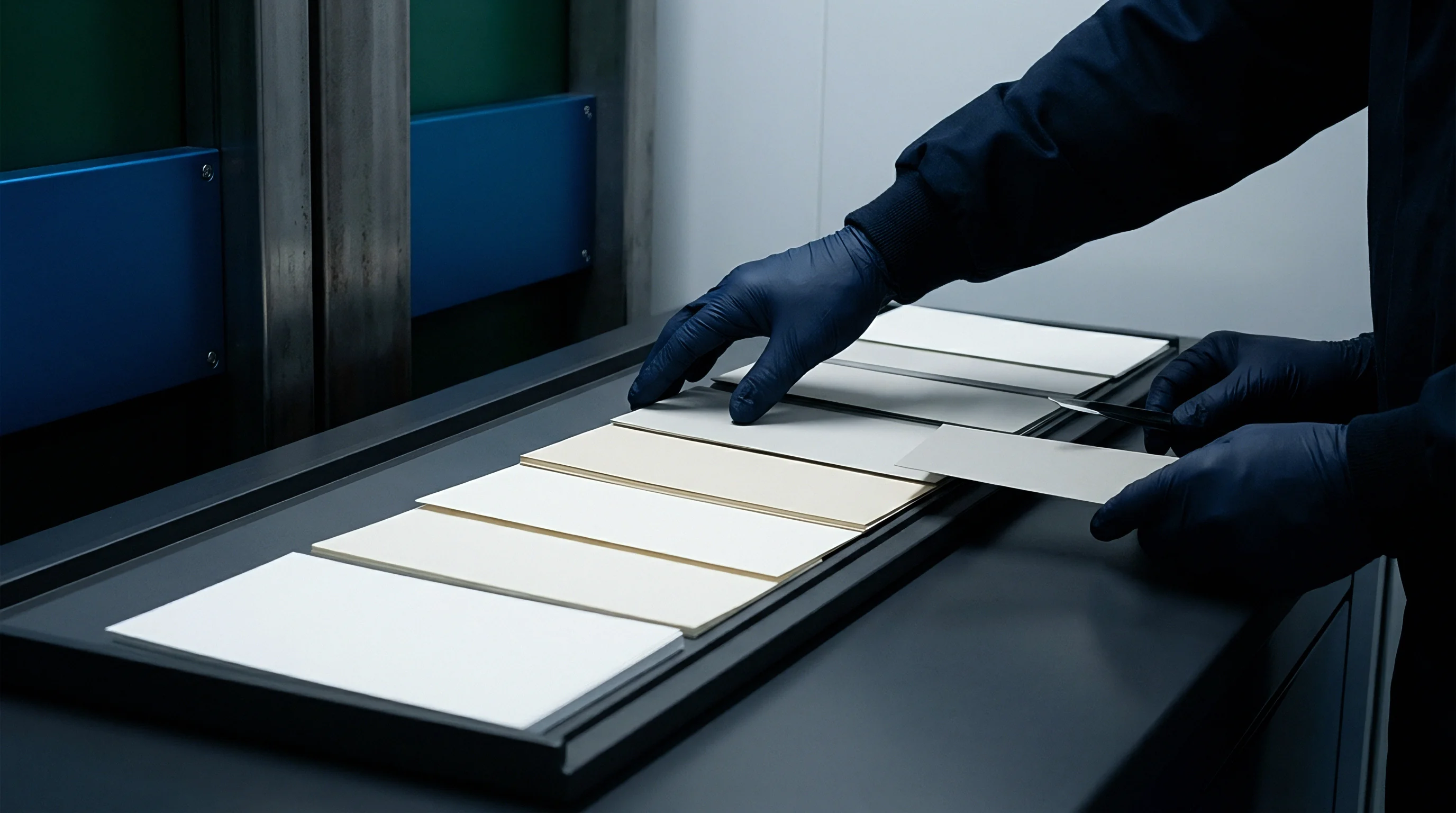
Broad-scope screening demands sample preparation protocols that extract migrateable species without dissolving the polymer coating matrix or wood fiber substrate.
Obtaining clean chromatograms relies entirely on rigorous extraction protocols.
Inadequate mass accuracy frequently results in false structural assignments.
Elevated background noise easily masks trace contaminants.
Screening thresholds are established at ten parts per billion across high-resolution mass spectrometry profiles to align with European safety guidelines. Migration testing into food simulants provides the regulatory framework for quantitative screening. Modified polyphenylene oxide, commercialized as Tenax, serves as the solid food simulant for dry food contact at 40 degrees Celsius for ten days.
Liquid simulants include 95 percent ethanol for fatty foods and 20 percent ethanol for aqueous foods. Solvents extracted from simulant exposures undergo total ion chromatogram acquisition in both positive and negative ionization modes.
Which Extraction Solvents Isolate Low Molecular Weight Acrylates without Dissolving Paperboard Polymers?
Iso-octane and 95 percent ethanol isolate lipophilic photoinitiator breakdown products and acrylic oligomers effectively, but prolonged contact with ethanol swells crosslinked acrylic networks, causing artificial leaching of bound oligomers. N-hexane extracts unreacted monomers and low-polarity cleavage products selectively without swelling high-molecular-weight acrylic polymer chains. For paperboard substrates, migration testing into Tenax at 60 degrees Celsius for ten days avoids solvent-induced matrix destruction while simulating long-term ambient storage conditions.
Quantitative analysis requires internal standard spiking using deuterated analogues such as d10-benzophenone and d6-bisphenol A to compensate for ionization suppression and matrix effects during liquid chromatography separation.
| Technique | Target Chemical Class | Ionization Mode | Mass Accuracy (ppm) | Limit of Detection (µg/dm²) |
|---|---|---|---|---|
| GC-HR-TOF-MS | Volatile photolytic fragments, aldehydes, light acrylates | Electron Ionization / CI | < 1.5 | 0.05 |
| HS-GC-MS | Ultra-volatile residual solvents, cleavage gases | Electron Ionization | Nominal | 0.20 |
| LC-QTOF-MS | Polar monomers, amine synergists, photoinitiator adducts | ESI Positive / Negative | < 2.0 | 0.01 |
| LC-MS/MS (Targeted) | Specific listed photoinitiators, primary aromatic amines | Electrospray (MRM) | Nominal | 0.002 |
Determining the structure of unknown chromatographic peaks follows a systematic mass spectrometry workflow. Accurate mass determination establishes the empirical molecular formula within a 2 part-per-million mass error tolerance. Isotopic pattern distribution confirms the presence of chlorine, sulfur, or nitrogen atoms within the molecular formula.
Tandem mass spectrometry (MS/MS) fragmentation patterns obtained at collision energies between 10 and 40 electronvolts reveal structural subunits, including benzoyl rings, acrylate ester groups, and aliphatic amine chains. Spectral library matching against commercial and custom packaging contaminant databases provides candidate structures that require validation against authentic reference standards.
Compliance certificates framed around static migration tests into 10 percent ethanol fail to detect lipophilic photoinitiator breakdown fragments that migrate readily into high-fat dry food simulants like modified polyphenylene oxide.
Deconvolution algorithms separate co-eluting chromatographic peaks in complex packaging extracts. Uncharacterized peaks with signal-to-noise ratios greater than three undergo structural assignment. When an unknown peak matches no existing spectral database, mass spectral fragmentation pathways are modeled using density functional theory or automated fragmentation tools.
Compounds containing unsaturated carbonyl moieties, such as residual mono-acrylates or quinone methides, display characteristic fragment ions at mass-to-charge ratios of 55 and 71, signaling potential genotoxic structural alerts that demand strict toxicological threshold evaluation.
Standard purchasing contract clause 14.3 mandates non-targeted GC-QTOF screening down to 10 parts per billion for all direct and indirect food-contact overprint varnishes, shifting full analytical verification costs to the ink compounder upon any detected peak exceeding five nanograms per square decimetre.

Toxicity
Toxicological evaluation of unidentified non-intentionally added substances relies on the Threshold of Toxicological Concern framework established by international safety authorities. When high-resolution mass spectrometry detects an extractable compound whose precise chemical structure cannot be unequivocally confirmed by reference standards, exposure limits are calculated based on structural alerts and Cramer chemical classifications. Cramer Class I covers simple chemical structures with efficient metabolic pathways indicating low oral toxicity, establishing an intake threshold of 1800 micrograms per person per day.
Cramer Class III encompasses complex structures, aromatic rings, and functional groups suggesting high toxicity, reducing the acceptable intake threshold to 90 micrograms per person per day.
Toxicological evaluation ultimately sets the baseline for commercial allowance.
Unidentified peaks represent the primary source of regulatory risk.
Chemical structures possessing genotoxic potential require the application of the Threshold of Toxicological Concern genotoxicity limit. Alkylating agents, primary aromatic amines, N-nitroso compounds, and alpha-beta unsaturated carbonyls represent genotoxic structural alerts. For any substance displaying these alerts, the toxicological threshold drops to 0.15 micrograms per person per day.
Assuming standard packaging consumption models of one kilogram of food packaged in six square decimetres of packaging per day, this intake limit translates to a maximum migration concentration of 0.01 milligrams per kilogram of food, equivalent to 10 parts per billion or 1.5 micrograms per square decimetre of packaging surface area.
| TTC Category / Cramer Class | Structural Characteristics | Human Exposure Limit (µg/person/day) | Migration Concentration Limit (mg/kg food) | Analytical Action Threshold (ppb) |
|---|---|---|---|---|
| Genotoxic Alert Threshold | Unsaturated carbonyls, aromatic amines, epoxides | 0.15 | 0.010 | 10 |
| Cramer Class III (High Risk) | Heterocyclic aromatics, complex nitrogenous bases | 90.00 | 0.150 | 150 |
| Cramer Class II (Moderate) | Substituted benzene derivatives, acyclic ketones | 540.00 | 0.900 | 900 |
| Cramer Class I (Low Risk) | Aliphatic hydrocarbons, simple esters, alcohols | 1800.00 | 3.000 | 3000 |
Migration rates double for roughly every ten-degree rise in pallet stack temperature during post-print storage. Safety margins calculated under standard room temperature conditions underestimate consumer exposure when converting facilities store finished rolls in unconditioned warehouses prior to slitting. In silico quantitative structure-activity relationship (QSAR) models, including Derek Nexus and VEGA, assess mutagenicity, carcinogenicity, and reproductive toxicity directly from predicted molecular structures.
When QSAR models yield positive structural alerts for mutagens, the compound cannot be cleared under Cramer Class III thresholds and mandates full bacterial reverse mutation testing under OECD Guideline 471.
- In silico mutagenicity screen evaluates predicted mass fragments against Ames test databases to rule out DNA-reactive structural motifs.
- Cramer classification assignment categorizes non-genotoxic structures into toxicological risk tiers governing acceptable migration limits.
- Exposure profile calculation models daily consumer intake based on pack surface-to-volume ratios and food consumption factors.
- Margin of exposure determination compares benchmark dose response levels from animal bioassays against estimated human dietary exposure.
European Regulation 10/2011 and the Swiss Ordinance on Materials and Articles in Contact with Food (SR 817.023.21) govern compliance frameworks for packaging inks and overprint coatings. Annex 10 of the Swiss Ordinance lists evaluated substances with specific migration limits alongside non-evaluated substances subject to the default 0.01 milligram per kilogram limit. Non-intentionally added substances that migrate below 0.01 milligrams per kilogram require toxicological risk assessment demonstrating the absence of genotoxicity, mutagenicity, and endocrine disruption potential to satisfy Article 3 of Framework Regulation 1935/2004.
Any unidentified chromatographic peak exhibiting an unsaturated carbonyl mass fragmentation pattern must be assumed genotoxic until secondary structural confirmation proves otherwise.

Clause
Legal compliance for radiation-cured overprint coatings requires complete documentation linking raw material purity, press curing parameters, and verified migration analytical data. Statements of Composition provided by ink formulators must declare all intentionally added substances, listed specific migration limits, and known non-intentionally added substances surfaced during internal quality audits. Converters cannot rely solely on raw material declarations; analytical screening of the final cured coating film on the specific production substrate establishes the legal baseline for compliance verification.
Verifying chemical safety relies on traceable, audit-ready documentation.
Valid compliance certificates depend on precisely defined testing parameters.
Procurement agreements are structured to require chemical characterisation of all extractable fractions prior to line qualification. Procurement contracts specify liability allocation when non-intentionally added substances exceed toxicological thresholds at the filling plant. Standard indemnity clauses transfer financial responsibility for quarantined packaging inventory, filling line downtime, and analytical re-testing to the coating supplier if uncharacterized photoinitiator degradation products trigger regulatory non-compliance.
Quality assurance protocols mandate non-targeted mass spectrometry screening on every raw material resin batch variation exceeding five percent by weight.
- Declaration of Compliance signed by authorized regulatory directors attesting to compliance with Regulation 1935/2004 and GMP Regulation 2023/2006.
- Analytical Screening Dossier containing full GC-QTOF and LC-QTOF chromatograms with peak identification tables down to 10 parts per billion.
- Cure Verification Log recording peak irradiance, line speed, surface double-bond conversion, and ambient oxygen concentration during press runs.
- Substrate Suitability Certificate specifying acceptable board grades, basis weights, and functional barrier specifications validated under migration testing.
Commercial packaging procurement balances analytical screening expenses against operational risk exposure. High-resolution non-targeted mass spectrometry screening costs between 1,500 and 3,500 Euros per coating sample, whereas targeted LC-MS/MS quantification of specific listed photoinitiators costs approximately 400 Euros per run. For high-volume food packaging applications running millions of carton units annually, upfront non-targeted screening represents less than 0.1 percent of total converter contract value while protecting against catastrophic product recalls and legal enforcement under national food safety statutes.
A supplier declaration that relies entirely on structural compliance of raw ingredients without chemical screening of the cured film leaves the converter fully exposed to regulatory enforcement.
Audit procedures at converting facilities mandate retaining physical retains of cured overprint sheets from every production lot alongside press log parameters for five years. When compliance disputes emerge from downstream filling plants, retrieving lot retains enables immediate chemical extraction to isolate whether non-intentionally added substance accumulation originated during printing, reel storage, transit, or food contact filling operations.