Recycled Boxboard Fiber Classification and Mechanical Refining Dynamics
Fractionating recycled furnish prior to low-consistency refining preserves boxboard caliper while meeting internal bond targets at reduced energy consumption.

Furnish
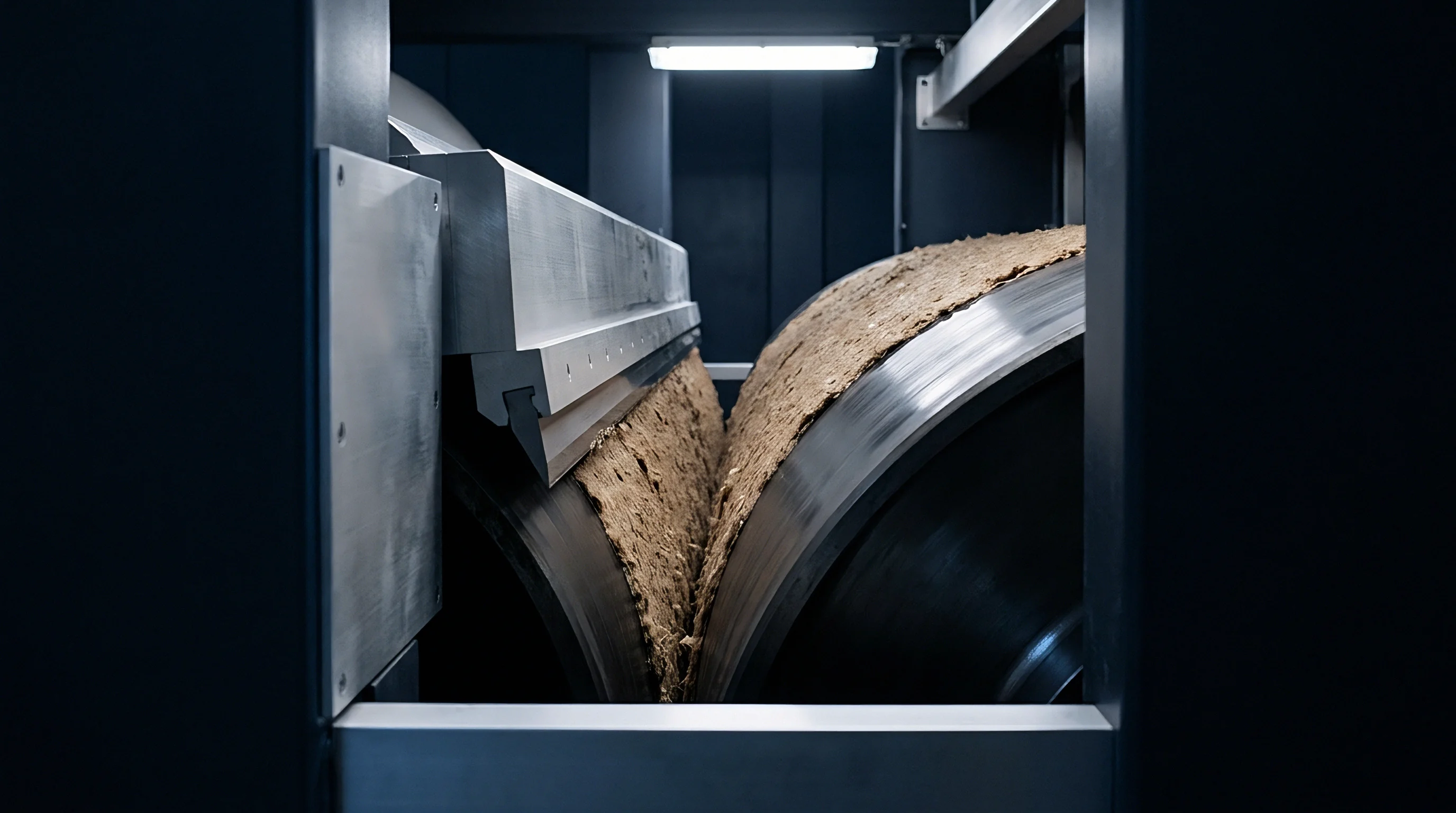
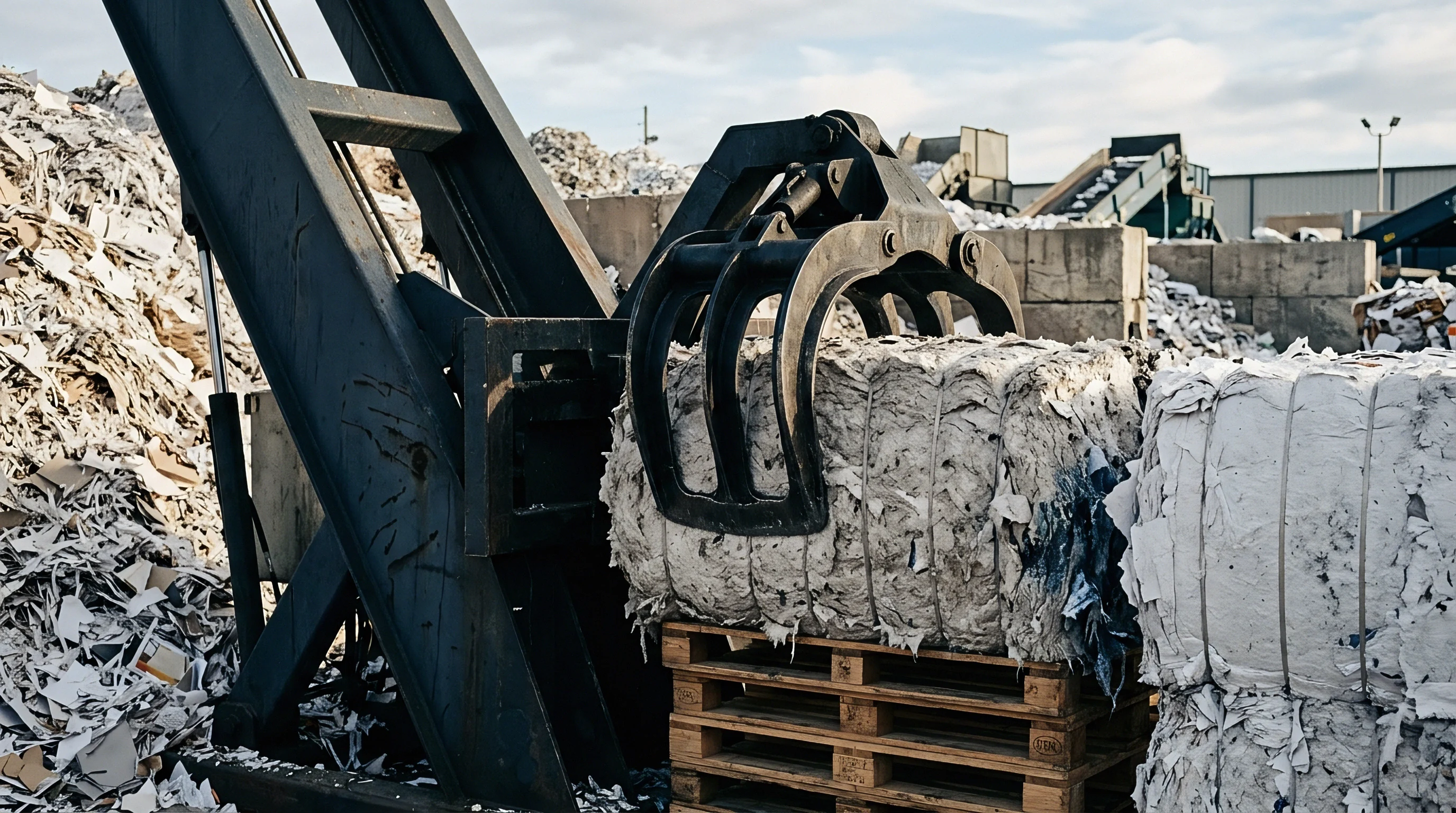
Optical fiber analysis following ISO 16065-1 protocols establishes baseline fiber morphology for recycled boxboard before mechanical processing starts. Raw stock arriving at the pulper is a mix gathered from recovered corrugated containers, double-lined kraft cuttings, folding carton scrap, and mixed waste papers. How this furnish responds to mechanical refining depends directly on its structural composition.
Unbleached softwood kraft fibers from virgin linerboard plies show arithmetic mean lengths between 2.10 millimeters and 2.45 millimeters. Hardwood kraft fractions, coming mostly from corrugating medium and bleached folding cartons, average between 0.85 millimeters and 1.15 millimeters. Mixed waste streams bring in non-woody debris, mechanical pulps, and heavily degraded fibers that have gone through up to seven recovery cycles.
The length distribution across the incoming stock governs wet-web consolidation, sheet bulk, and strength development under shear stress.
Repeated drying and rewetting cycles physically alter the fiber wall structure. During initial papermaking and converting, hydrogen bonding draws microfibrils in the S2 cell wall layer into tight alignment. Once the board is repulped in water, these internal pores cannot return to their original swollen state.
This collapse of the pore network ~ hornification ~ lowers both equilibrium moisture sorption and swelling potential. Stiffened cell walls change the fiber’s viscoelastic behavior, causing it to resist conformability during sheet formation.
| Furnish Component Source | ISO 16065-1 Length mm | Weight-Weighted Length mm | ISO 23714 WRV g/g | Initial TAPPI T 227 CSF mL |
|---|---|---|---|---|
| Double-Lined Kraft Cuttings DLK | 2.15 | 2.62 | 1.42 | 620 |
| Old Corrugated Containers OCC Top Ply | 1.85 | 2.25 | 1.25 | 540 |
| Old Corrugated Containers OCC Fluting Ply | 1.10 | 1.45 | 1.08 | 410 |
| Sorted Mixed Waste Paper MW | 0.92 | 1.20 | 0.95 | 330 |
| Deinked Pulp DIP High Grade | 1.40 | 1.75 | 1.18 | 480 |
Cell wall swelling capacity is measured using the Water Retention Value test under ISO 23714. Virgin unbleached softwood kraft routinely holds between 1.65 grams and 1.85 grams of water per gram of dry pulp, whereas recycled corrugated container stock drops to 1.05 grams to 1.25 grams per gram. That lower Water Retention Value tracks directly with lost fiber-to-fiber bonding.
Because unswollen fibers offer less accessible surface area for hydrogen bonds, the resulting sheet loses internal cohesion, burst resistance, and tensile energy absorption. Pulper hydration alone cannot reopen hornified microfibril networks. Refining must apply enough shear force to delaminate the cell wall without snapping the weakened fibers.
Unrefined OCC fractionated stock conditioned under ISO 187 at 23 C and 50 percent relative humidity yields a Water Retention Value of 1.15 grams of water per gram of dry fiber.
Fiber degrades through distinct structural stages over multiple recycling loops. Initial pulping breaks open the primary fiber wall to expose the outer secondary layer. Later refining and thermal drying force microfibrils into dense aggregates, sealing the internal lumen shut.
When total fines passing a 200-mesh screen under TAPPI T 233 testing rise past 18 percent by mass, wet-web drainage slows down rapidly. Evaluating incoming old corrugated container stock shows how raw material variability alters stock preparation energy profiles. High fines concentrations blind the wire mesh during forming, creating density gradients that destabilize Z-direction strength in multi-ply board.
Chemical testing of recycled furnish shows high levels of residual additives that interfere with refining physics. Polymeric wet-strength resins, rosin size residues, starch coatings, and synthetic latexes coat the exterior fiber surfaces. These contaminants lower the specific surface energy of the cell wall, forming hydrophobic barriers that prevent hydration during low-consistency beating.
Raw furnish heavy in post-consumer mixed waste displays wide shifts in chemical demand and electrical conductivity, which alters the double-layer electrostatic forces keeping fibers dispersed. Mechanical refining with unremoved hydrophobic contaminants leads to sticky agglomeration, where synthetic polymers build up on disc refiner bar edges, altering plate clearance and distorting effective energy delivery.
Knowing the morphology of the incoming raw furnish lets operators tailor refining energy to what the stock can handle. Softwood fibers need mechanical action aimed at internal delamination, while short hardwoods and recycled fines need gentle treatment so they don’t break. Refining whole, unseparated recycled streams indiscriminately destroys sheet bulk and generates micro-fines that harm machine runnability.
Heavy fines loading slows drainage on the fourdrinier wire, forcing operators to drop machine speed or draw higher vacuum, which compacts the sheet and burns off caliper. Proper stream classification builds the physical baseline needed to run downstream mechanical refining efficiently.
What structural limit prevents hornified recycled softwood fibers from recovering their original virgin swelling performance regardless of mechanical energy input?
Fractionation
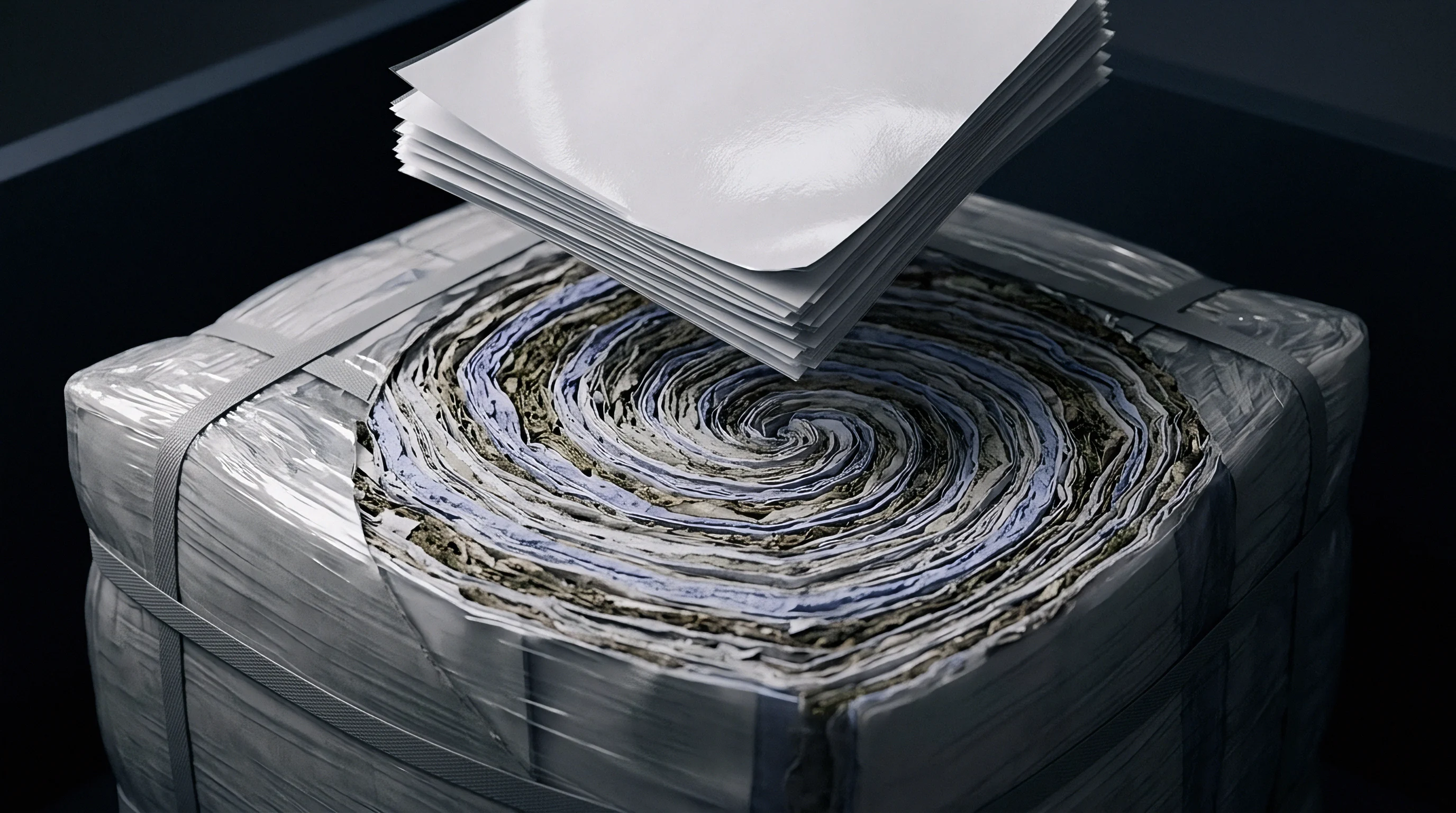
Fractionation splits heterogeneous recycled fiber slurries into distinct morphological fractions by length, flexibility, and particle size. Modern pressure screens use velocity gradients and centrifugal shear near slotted or perforated plates to separate stock into long-fiber and short-fiber streams. Slurry enters the screen at consistencies between 1.2 percent and 1.8 percent.
A high-speed foil rotor turns next to the screen basket, generating alternating positive and negative pressure pulses that keep the fiber mat from blinding the basket openings. Long, flexible softwood kraft fibers align with streamlines parallel to the plate surface and resist entering narrow slots, while short hardwood fibers, parenchyma cells, and inorganic fillers pass through into the accept stream.
Screen basket selection sets the operational efficiency of the fractionation system. Profiled plates with slot widths of 0.10 millimeters to 0.15 millimeters yield sharp length separation at surface velocities of 14 to 18 meters per second. Smooth plates produce less turbulence, letting flexible fibers pass through more easily and narrowing the morphological gap between reject and accept streams.
The volumetric rejection ratio ~ the fraction of total feed volume leaving the reject port ~ controls long-fiber concentration in the reject line. Operating at a 35 percent to 45 percent volumetric rejection ratio concentrates unbleached softwood kraft into a stream with weight-weighted mean fiber lengths over 2.20 millimeters.
Hydrodynamics inside the screen set up distinct stress patterns on individual fibers. Higher rotor speeds increase hydraulic shear, breaking up flocs so single fibers present cleanly to the slots. Going past target rotor speeds creates localized shear high enough to fragment fragile, degraded recycled fibers, artificially swelling the fines count in the short-fiber accept stream.
Effective fractionation gathers high-yield long fibers into a stream that justifies high refining energy, while isolating short, brittle fibers that need no mechanical action. Skipping unnecessary refining on short fibers preserves bulk and avoids generating drainage-slowing fines.
- Basket Slot Blinding reduces volumetric throughput across the screen plate when stickies accumulate on profile contours.
- Fines Accumulation shifts the drainage curve of the short-fiber stream, dropping couch roll vacuum by 12 kilopascals.
- Shive Carryover occurs when feed consistency exceeds 3.5 percent, forcing bundled fibers through slot openings.
- Fiber Fraction Overlap degrades the long-fiber stream when rotor speed drops below 14 meters per second.
Screen separation sharpness is measured with a Bauer-McNett fiber classifier following TAPPI T 233 standards. Raw furnish splits across a cascade of 14 mesh, 28 mesh, 48 mesh, and 100 mesh screens. The fraction retained on the 14-mesh screen holds long softwood kraft fibers with strong tensile potential, while everything passing the 100-mesh screen consists of primary and secondary fines, ash, and micro-debris.
Fractionation efficiency tracks the recovery ratio of 14-mesh fibers in the reject line compared to the feed. High-efficiency systems recover over 75 percent of 14-mesh fibers, yielding a reject stream with strength potential close to semi-virgin kraft.
Thick screen baskets with outward-inclined slot profiles reduce stickie shear fragmentation without sacrificing long-fiber recovery.
The short-fiber accept stream leaving the screens carries a high proportion of hardwood fibers, short softwood fragments, and mineral fillers like calcium carbonate and clay. It yields high initial smoothness and opacity but poor Z-direction bond strength. Because short fibers have already gone through significant mechanical action in prior use cycles, sending the accept stream through refiner discs cuts length further without adding real strength.
This stream either bypasses the refiner room entirely or gets ultra-low intensity treatment, saving power and protecting sheet bulk. Meanwhile, the long-fiber reject stream, rich in long softwood elements, heads straight to dedicated low-consistency disc refiners set up for intensive wall delamination.
Keeping a multi-stage fractionation plant balanced requires continuous monitoring of consistency, mass flow, and length distribution. Shifts in feed consistency alter hydraulic flow through the screen slots, distorting separation metrics. Raising feed consistency from 1.4 percent to 2.2 percent increases fiber entanglement, generating large flocs that drag short fibers into the long-fiber reject line.
Automated optical fiber analyzers on the feed, accept, and reject lines feed real-time data to rotor drives and reject control valves. Maintaining stable operating parameters ensures a steady stock supply to the refiner room, keeping paper machine operation and final board strength consistent.
Fractionation efficiency improves when screen slot geometry matches the average fiber wall thickness of incoming softwood stocks.

Beating
Low-consistency mechanical refining applies physical stress to recycled slurries running at mass consistencies between 3.5 percent and 4.5 percent. Stock is pumped under pressure between rotating and stationary disc plates cut with patterns of raised bars and grooves. Rotating at 900 to 1400 revolutions per minute, the plates force fibers through narrow gap clearances where they experience shear, compressive impacts, and hydrodynamic friction.
The goal is to open up the hornified cell wall, induce internal micro-compressions, peel off non-bonding outer wall layers, and expose surface area for hydrogen bonding when the sheet consolidates.
Refining intensity is defined mathematically by Specific Edge Load theory, which measures net mechanical energy applied per meter of bar edge crossing line. Specific Edge Load (SEL), in Joules per meter (J/m), splits total power into net refining work and no-load hydraulic losses. Net power equals gross motor power minus the no-load power consumed spinning the disc in water without pulp.
Cutting Edge Length (CEL), in kilometers per second (km/s), totals the length of bar crossings per unit time. Dividing net motor power by Cutting Edge Length gives the Specific Edge Load. Low SEL values between 0.4 J/m and 0.8 J/m offer a gentle, brushing action that favors internal fibrillation over fiber cutting.
Values over 1.5 J/m concentrate energy on fewer contact points, shortening the fibers significantly.
| Refining Condition | Specific Edge Load J/m | Net SEC kWh/t | Weighted Length mm | TAPPI T 227 CSF mL | ISO 1924 Tensile Index Nm/g |
|---|---|---|---|---|---|
| Unrefined Control | 0.00 | 0 | 2.15 | 580 | 32.5 |
| Low Intensity Gentle | 0.50 | 45 | 2.08 | 510 | 44.2 |
| Low Intensity Extended | 0.50 | 85 | 1.98 | 420 | 52.8 |
| Medium Intensity Standard | 1.20 | 65 | 1.78 | 410 | 48.1 |
| High Intensity Aggressive | 2.00 | 65 | 1.42 | 330 | 41.5 |
Net Specific Energy Consumption (SEC), measured in kilowatt-hours per metric ton (kWh/t), tracks total net energy delivered to the dry pulp mass. Net Specific Energy Consumption sets the cumulative structural change, while Specific Edge Load determines how that change occurs. Applying 80 kWh/t at a gentle 0.6 J/m delaminates cell walls, boosts internal swelling, and preserves length.
Delivering that same 80 kWh/t at a harsh 1.8 J/m cuts fibers into short fragments, generates micro-fines, and impairs drainage without improving tensile strength. A rapid loss of bending stiffness occurs on multi-ply board lines when refiner plate wear shifts operational Specific Edge Load values above 1.6 J/m.
Which Disc Pattern Prevents Fiber Shortening?
Refiner plate geometry governs fluid flow, hydraulic dwell time, and stress distribution in the gap. Fine bar patterns ~ with bar widths of 1.2 millimeters to 1.8 millimeters and groove widths of 1.5 millimeters to 2.5 millimeters ~ maximize Cutting Edge Length, transferring energy efficiently at low Specific Edge Load levels. Wide bar patterns concentrate force over broader areas, increasing local impacts and cutting recycled fibers faster.
Bar angles relative to disc radii range from 8 degrees to 25 degrees. High bar angles create pumping action that speeds pulp through the disc gap, shortening residence time and preventing over-refining. Fine-bar patterns with steep bar angles supply the gentle, distributed shear required to rehydrate hornified fibers.
A non-conforming mill certificate omitting the Specific Edge Load reporting protocol invalidates supplier guarantees on ply bond performance under standard converting stress.
Subsurface mechanical changes occur as fibers move through plate gaps between 50 micrometers and 150 micrometers. Compressive forces buckle rigid crystalline cellulose microfibrils in the S2 layer, creating micro-fractures perpendicular to the fiber axis. These micro-compressions increase longitudinal flexibility without breaking the outer wall envelope.
Flexible fibers flatten readily as the web consolidates on the wire, widening contact areas where fibers cross. Better conformability lets van der Waals forces and hydrogen bonds bridge voids, raising dry sheet density, burst strength, ring crush, and Z-direction tensile capacity.
Running low-consistency refiners takes strict control of throughput and inlet pressure to prevent plate clashes. Clashes happen when fluid clearance drops to zero, putting opposing metal disc surfaces in direct contact. That contact instantly destroys plate bar profiles and grinds fibers into useless flour.
Automatic refiner controls monitor motor load currents, stock inlet pressures, and gap sensors to keep Net Specific Energy Consumption stable through flow changes. If inlet consistency drops below 3.0 percent, the hydraulic film thins, raising clash risks. Control software pulls back disc positioning motors automatically when consistency drops, protecting fiber structure and extending plate life.
Uncalibrated zero-point sensors during a mill qualification run caused an unrecorded plate contact event that contaminated forty tons of linerboard stock with metal micro-shards, resulting in an eighteen thousand euro loss.

Shear
Mechanical shear in the refiner gap drives two structural responses: internal fibrillation and external fibrillation. Internal fibrillation breaks down internal hydrogen bonds linking microfibril aggregates in the secondary cell wall. Hydrodynamic shear stresses the S2 layer, separating microfibrils and allowing water into sub-microscopic wall pores.
This internal swelling thickens the wall while reducing stiffness. Swollen fibers yield higher Water Retention Values under ISO 23714 standards, flexing readily under vacuum pressure during wet pressing. Internal fibrillation expands inter-fiber contact without creating free debris.
External fibrillation partially peels the primary wall and S1 secondary wall away from the fiber body. High shear pulls surface microfibrils loose, leaving fine hair-like fibrils attached to the exterior. These microfibrils dramatically increase specific surface area, tripling to quintupling accessible hydroxyl groups.
As the wet web dries, attached microfibrils interlock physically and form dense hydrogen-bonded networks across contact points. Excessive shear, however, tears microfibrils completely free, converting attached fibrils into unattached secondary fines that clog drainage.
- Freeness Target Verification establishes the baseline Canadian Standard Freeness prior to disc gap adjustments.
- Water Retention Testing measures cell wall swelling recovery following mechanical shearing at 4.0 percent consistency.
- Optical Fiber Profiling quantifies fiber cutting rates before fines content exceeds 18 percent by weight.
- Scott Bond Evaluation confirms internal Z-direction strength gains meet the 160 Joules per square meter threshold.
Drainage resistance rises steadily with refining degree, tracked through Canadian Standard Freeness tests per ISO 5267-1 or TAPPI T 227. Freeness measures the drainage rate of a 0.3 percent consistency pulp suspension through a perforated plate, expressed in milliliters. Unrefined recycled softwood starts between 550 mL and 620 mL CSF.
Refining drops freeness as internal swelling, external fibrillation, and fines restrict flow through the forming web. Refining recycled stock below 350 mL CSF creates steep drainage resistance on the paper machine, forcing lower line speeds to prevent web breaks at the couch roll.
Excessive mechanical shear generates secondary fines that blind formers long before tensile strength targets are achieved.
Building internal Z-direction bond strength, measured by Scott Internal Bond testing under TAPPI T 569 or ISO 16260, depends on balancing internal delamination with external microfibril creation. Scott Bond measures the energy needed to delaminate paperboard along its Z-axis using a pendulum hammer, expressed in Joules per square meter (J/m2). Unrefined recycled boxboard stock exhibits low Scott Bond values between 60 J/m2 and 90 J/m2, leading to ply separation during converting.
Gentle, low-intensity refining raises Scott Bond values to targets of 160 J/m2 to 220 J/m2 by expanding bonding surface area per unit sheet volume. Scott Bond development gains 45 Joules per square meter when refining energy reaches 60 kilowatt-hours per ton under gentle edge loading.
Tensile energy absorption (TEA), measured under ISO 1924-2, totals the work a paperboard strip absorbs before breaking, expressed in Joules per square meter. It depends on both ultimate tensile strength and stretch capability. Internal fibrillation improves fiber stretch by freeing micro-compressions along the fiber length, allowing the dry sheet to take converting impacts without cracking.
Cutting fibers during refining lowers individual fiber tensile strength, which drops sheet TEA even if inter-fiber bonding improves. Balancing shear stress keeps TEA high while minimizing freeness loss.
Rapid freeness drops occur when unexpected incoming pulp pH swings modify fiber wall charge states, causing plate bar edge cutting rather than normal shear surface delamination.

Caliper
Mechanical refining alters the basic relationship between grammage, caliper, and bulk density in multi-ply recycled board. Grammage, under ISO 536, measures mass per unit area in grams per square meter (g/m2). Caliper, under ISO 534, measures sheet thickness in micrometers (μ m) under a static load of 100 kilopascals.
Sheet bulk, in cubic centimeters per gram (cm3/g), is the inverse of apparent density. As refining energy rises, fiber swelling and higher conformability pack the structure tighter during pressing and drying, lowering bulk. Caliper retention dictates stiffness.
Bending resistance follows beam mechanics, calculated as the product of elastic modulus (E) and sheet moment of inertia (I). For a uniform cross-section, moment of inertia scales with the cube of sheet caliper (t3). Bending stiffness (S), measured under ISO 2493-1 using a Taber-type tester in milliNewton-meters (mNm), follows the relation:
S = (E t^3) / 12
Refining raises the elastic modulus (E) by forming more inter-fiber hydrogen bonds, making the sheet denser. At the same time, it reduces caliper (t) through compaction. Because stiffness depends on the third power of thickness but only linearly on elastic modulus, small caliper losses trigger sharp drops in Taber stiffness.
Refining whole recycled furnish to high density increases tensile strength but ruins bending stiffness, producing thin, floppy board that fails on folding carton converting lines.
| Total Refining Net SEC kWh/t | Sheet Caliper ISO 534 um | Sheet Bulk cm3/g | ISO 1924 Tensile Index Nm/g | TAPPI T 569 Scott Bond J/m2 | ISO 2493 Bending Stiffness mNm |
|---|---|---|---|---|---|
| 10 Base Level | 485 | 1.38 | 34.1 | 85 | 24.5 |
| 35 Light Refining | 460 | 1.31 | 42.5 | 130 | 23.8 |
| 60 Moderate Refining | 435 | 1.24 | 51.2 | 175 | 21.2 |
| 85 Heavy Refining | 410 | 1.17 | 58.0 | 210 | 18.1 |
| 110 Extreme Refining | 385 | 1.10 | 62.4 | 235 | 14.9 |
Multi-ply board designs manage caliper loss by placing refined and unrefined stocks strategically across individual plies. Coated Recycled Board (CRB) and White Lined Chipboard (WLC) typically use three to five plies. Top plies need high refining energy to produce smooth surfaces for coating and high Z-direction strength to resist tacky printing inks.
Middle filler plies, making up to 60 percent of total sheet mass, use unrefined or lightly refined recycled stock with coarse fibers and bulk-building mechanical pulps. Leaving middle plies unrefined maintains thick inner layers, keeping the outer stiff plies far apart and maximizing bending stiffness per unit grammage.
- Bending Stiffness Specifications document longitudinal and transverse Taber values under ISO 2493 test conditions.
- Z-Direction Ply Bond Limits specify minimum interlayer strength to prevent delamination during high-speed scoring.
- Surface Roughness Thresholds record Bendtsen values across top plies to verify coating holdout capacity.
- Basis Weight Tolerances define acceptable mass drift across the paper machine wire width.
Creasing and scoring turn flat boxboard into foldable packaging blanks, putting the refined fiber network to the test. During scoring, a steel rule presses board into a female matrix channel, causing controlled delamination along ply boundaries. Proper scores need enough internal bond strength to avoid tearing, combined with enough flexibility to fold cleanly without face-ply cracking.
Score cracking on 350 gram per square meter boxboard traces to excessive refining of the middle ply stock, which elevates middle-layer density and prevents internal micro-delamination along the score axis. Tailoring refining across individual plies leaves internal delamination zones intact for clean score folding.
Standard purchase contract clause 14.2 specifies that delivered board caliper must remain within plus or minus 4.0 percent of target nominal thickness across the entire reel width, shifting financial liability for press feed failures caused by caliper-driven bending stiffness losses directly back to the producing mill.
Tonnage
Evaluating mechanical refining commercially means balancing net energy costs against substrate yield, machine runnability, and converting performance. Disc refiners consume substantial power in recycled board mills. Running a double-disc refiner at 1.2 megawatts net power with electricity at 0.12 Euros per kilowatt-hour adds noticeable operational cost per ton.
Refining whole, unseparated recycled streams at high Net Specific Energy Consumption raises power expenses without bringing a proportional bump in product value.
Yield losses in refining occur when fibers get cut into micro-fines that fail to consolidate in the wet web. Particles smaller than 75 micrometers pass through fourdrinier wires, heading with press white water to savealls or primary treatment. Highly refined stock drives up white water solids, forcing higher retention aid dosage to keep single-pass retention above 70 percent.
Fines lost to wastewater represent raw material paid for at pulp rates. Generating excess fines raises sludge disposal fees while cutting total fiber yield by 1.5 percent to 3.0 percent per ton of board.
Consider a commercial comparison evaluating two refining strategies for an annual order of 10,000 metric tons of 350 gram per square meter multi-ply Coated Recycled Board. Strategy A processes un-fractionated container stock through a central refiner at a Net Specific Energy Consumption of 75 kWh/t. Strategy B installs a mechanical fractionation screen, routing 40 percent long-fiber reject pulp through gentle refining at 90 kWh/t, while bypassing the 60 percent short-fiber accept fraction entirely.
Strategy A consumes 750,000 kilowatt-hours of net refining power across the 10,000-ton run. At 0.12 Euros per kilowatt-hour, direct energy costs total 90,000 Euros, or 9.00 Euros per metric ton. Refining the whole furnish generates heavy fines, reducing sheet bulk to 1.22 cm3/g and yielding a caliper of 427 micrometers.
To hit the customer’s Taber bending stiffness requirement of 19.0 mNm, the mill must keep the full 350 g/m2 target grammage.
Strategy B applies 90 kWh/t only to the 4,000 tons of long-fiber pulp, consuming 360,000 kilowatt-hours. The fractionation screen adds 40,000 kilowatt-hours of auxiliary load, bringing total process energy to 400,000 kilowatt-hours. Direct electrical costs come to 48,000 Euros, or 4.80 Euros per metric ton ~ saving 42,000 Euros in power.
By leaving the short-fiber fraction unrefined, Strategy B holds sheet bulk at 1.30 cm3/g. That extra bulk achieves the target 427 micrometer caliper at a lower grammage of 328 g/m2 while maintaining required Taber stiffness.
Calculating the net cost difference between whole-furnish refining and fractionated refining for a folding carton program confirms substantial yield advantages. Basis weight downgauging from 350 g/m2 to 328 g/m2 represents a 6.29 percent reduction in raw material fiber consumption per unit sheet area. Across 10,000 tons of baseline supply, raw fiber savings equal 629 metric tons.
At a recycled furnish cost of 180 Euros per ton landed at the pulper, raw material financial savings total 113,220 Euros per year. Combining electrical energy savings of 42,000 Euros with raw fiber savings of 113,220 Euros yields total operational savings of 155,220 Euros annually. Net landed cost per thousand square meters of converted boxboard drops from 63.00 Euros under Strategy A to 54.12 Euros under Strategy B, establishing the financial justification for targeted mechanical refining dynamics.