Surface Energy Dynamics and Collector Interactions in Flotation Deinking Systems
Collector chemistry modulates ink surface energy to balance contact angles between forty and eighty degrees for selective bubble attachment and froth discharge.

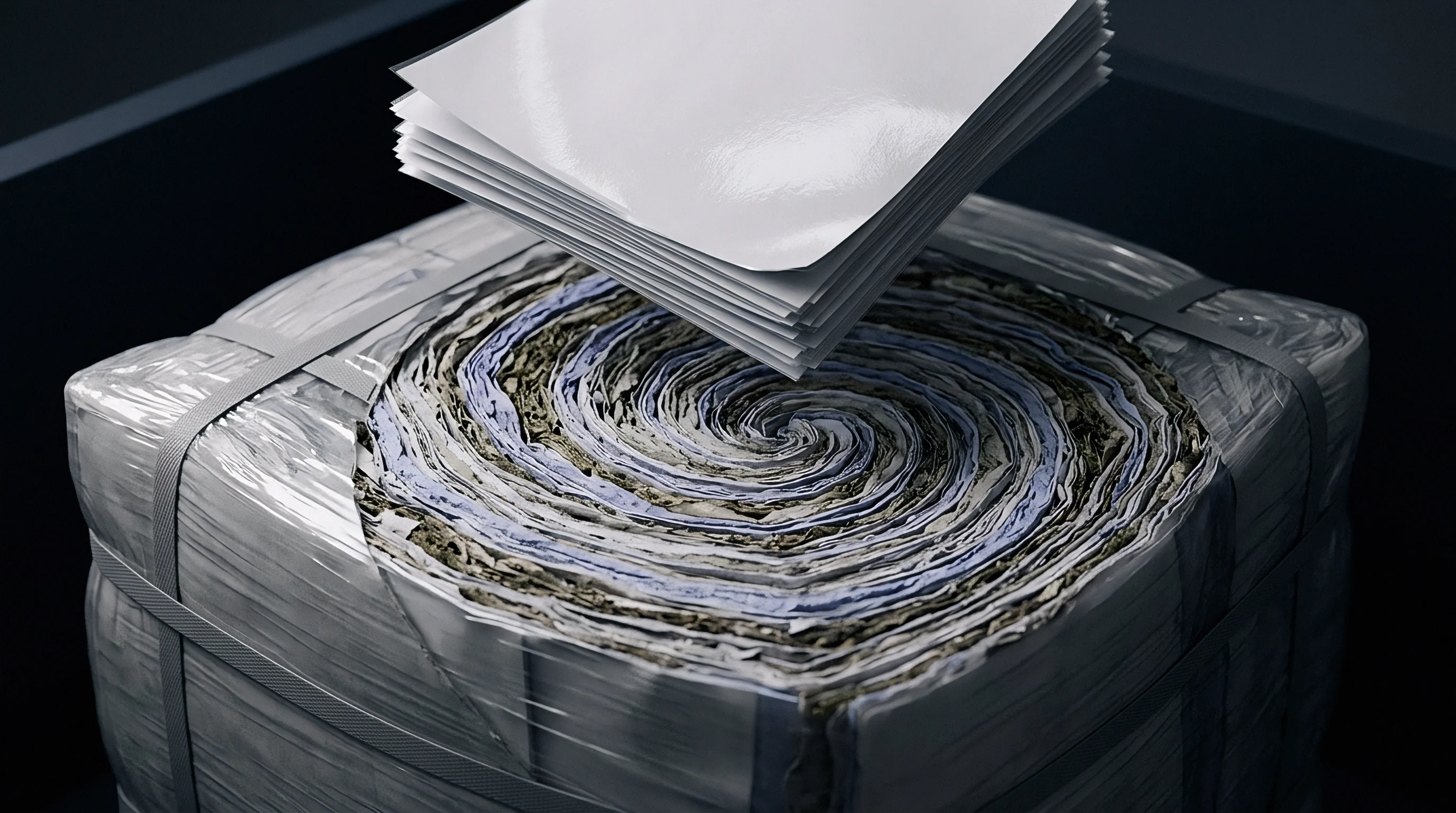
Interface
Deinking flotation operates on differences in interfacial free energy between dispersed ink particles, mineral fillers, process water, and cellulosic pulp fibers. Cellulosic fibers exhibit strong polar surface characteristics, maintaining native water contact angles below fifteen degrees in aqueous suspension. Hydrophilic fibers remain wetted in the pulp slurry, avoiding adhesion to passing air bubbles.
Offset, flexographic, and toner ink formulations possess mixed polymeric and carbonaceous surfaces with higher natural hydrophobicity. Their contact angles range from forty to ninety degrees depending on resin cross-linking, vegetable oil drying vehicle content, and mechanical fragmentation during repulping.
The work of adhesion between an air bubble and a suspended solid particle in an aqueous medium governs flotation selectivity. This thermodynamic relationship derives from the Young-Dupré balance across solid-liquid, solid-gas, and liquid-gas boundaries:
WA = γLV (1 – cos θ)
Here WA represents the thermodynamic work of bubble attachment per unit contact area, γLV denotes the liquid-gas surface tension of the clarified process water, and θ is the equilibrium three-phase contact angle measured through the aqueous phase. Stable attachment demands a positive thermodynamic driving force. Higher liquid-gas surface tension increases the energy release upon film rupture.
Excessive surfactant dosage depresses γLV below forty-five millinewtons per meter, destabilizing bubble-particle aggregates inside turbulent flotation zones.
Water contact angles below forty degrees prevent particle attachment to rising air bubbles during cell aeration.
Mechanical shear inside flotation injectors generates fine air dispersion while creating turbulent hydrodynamic fields. Particle diameters dictate collision efficiency. Offset ink agglomerates measuring between twenty and one hundred micrometers exhibit high collision and collection rates.
Flexographic water-based inks fragment into colloidal domains under five micrometers during alkaline pulping, escaping hydrodynamic interception. Toner particles from digital electrophotographic presses produce flat, plate-like geometries between forty and two hundred micrometers, yielding high inertial collision rates alongside fragile three-phase contact lines.
Mineral fillers present distinct wetting behaviors. Calcite filler from coated broke carries an isoelectric point near pH 8.5. Clay platelets expose hydrophilic basal planes alongside weakly hydrophobic edges.
Uncoated ground calcium carbonate consumes fatty acid collectors through premature surface precipitation. Slurry consistency sets cell capacity. Process water conductivity above two thousand microsiemens per centimeter compresses the electrical double layer of both ink and bubbles, lowering the electrostatic barrier to attachment.
The operational window for selective ink recovery requires strict control over slurry surface chemistry:
- Equilibrium Contact Angle ranges between forty-five and seventy-five degrees to ensure spontaneous film rupture without causing pulp fiber entrapment.
- Liquid Surface Tension holds between forty-eight and fifty-six millinewtons per meter to support bubble breakup while preventing froth collapse.
- Zeta Potential Magnitude remains below fifteen millivolts negative on ink surfaces to minimize electrostatic repulsion against negatively charged air bubbles.
- Carrier Bubble Diameter measures between 0.8 and 1.5 millimeters to maximize interfacial surface area while maintaining buoyant rise velocity.
Surface contamination on recovered fibers degrades paper strength properties in downstream papermaking operations. Residual collector soaps redeposit onto fine fiber fractions, reducing inter-fiber hydrogen bonding potential. Burst and tensile indices drop by fifteen to twenty-five percent when unfloated collector carryover exceeds 0.3 percent of dry furnish mass.

Soap
Fatty acid collectors function as the primary chemical bridge converting hydrophilic ink fragments into buoyant, floatable hydrophobic aggregates. Commercial formulations blend technical-grade oleic, linoleic, and stearic acids with carbon chain lengths from C16 to C18. Pulper dosing introduces these carboxylic acids at rates between five and twelve kilograms per air-dry metric ton of recovered paper furnish.
Pulper chemistry requires alkaline conditions, running between pH 9.2 and 10.5 through additions of sodium hydroxide and sodium silicate. Alkaline pulping saponifies the fatty acid into soluble carboxylate anions.
Calcium bridging transforms dissolved carboxylates into surface-active collector aggregates. Soluble calcium ions, introduced via calcium chloride supplementation or dissolved calcium carbonate coatings, bind with carboxylate groups:
2 RCOO– + Ca2+ → Ca(RCOO)2
Neutral mills face this hurdle. Calcium stearate and calcium oleate precipitate as colloidal soap flocs when divalent calcium ion concentrations exceed two hundred parts per million, equivalent to roughly twelve German hardness degrees. These calcium soaps exhibit dual affinity.
The non-polar hydrocarbon tails adsorb onto ink resins through hydrophobic association, while the precipitated calcium carboxylate cluster imparts localized hydrophobicity. Stearic salts precipitate as flakes. Contact angles increase from thirty degrees to seventy degrees on treated offset ink surfaces.
| Ink Formulation | Dispersed Particle Size (μm) | Native Contact Angle (deg) | Treated Contact Angle (deg) | Flotation Ink Removal (%) |
|---|---|---|---|---|
| Coldset Newsprint Offset | 15 to 45 | 38 to 44 | 68 to 74 | 84 to 91 |
| Heatset Magazine Offset | 20 to 65 | 46 to 52 | 72 to 80 | 88 to 94 |
| Water-based Flexographic | 0.5 to 4.5 | 12 to 22 | 28 to 36 | 18 to 32 |
| Liquid Electroink Toner | 5 to 25 | 55 to 62 | 65 to 70 | 62 to 74 |
| Dry Electrostatic Toner | 40 to 180 | 68 to 85 | 78 to 92 | 76 to 86 |
Chemical addition protocols follow a disciplined sequence across the deinking plant:
- Mechanical pulping breaks recovered bales into dispersed fibers at twelve to fifteen percent consistency while sodium silicate buffers the liquor.
- Alkaline saponification dissolves fatty acid blends into soluble carboxylate salts over a fifteen-minute retention period.
- Process water dilution reduces furnish consistency to one percent solids while introducing dissolved calcium chloride salts.
- High-intensity aeration induces calcium carboxylate precipitation directly onto newly liberated ink surfaces within the primary flotation feed line.
Soap precipitation demands a dissolved calcium ion threshold of at least one hundred eighty milligrams per liter.
Nonionic collectors offer an alternative pathway for mills running neutral or low-calcium circuits. Ethoxylated fatty alcohols and alkoxylated polyethers adsorb directly onto carbon black and binder matrices through dispersive interactions. These nonionic surfactants eliminate the need for hard water precipitation.
Collector molecule orientation dictates effectiveness. The hydrophobic alkyl chain attaches to the ink, extending ethoxy groups toward the aqueous phase. Low ethoxylation degrees, between three and five ethylene oxide units per molecule, produce hydrophobic coatings.
Higher ethoxylation degrees invert the mechanism, causing sterically stabilized steric dispersion and catastrophic flotation failure.
Chemical distributors frequently claim their proprietary ethoxylate blends bypass water hardness requirements without increasing chemical carryover to the forming wire, yet washer drainage rates tell a different story.
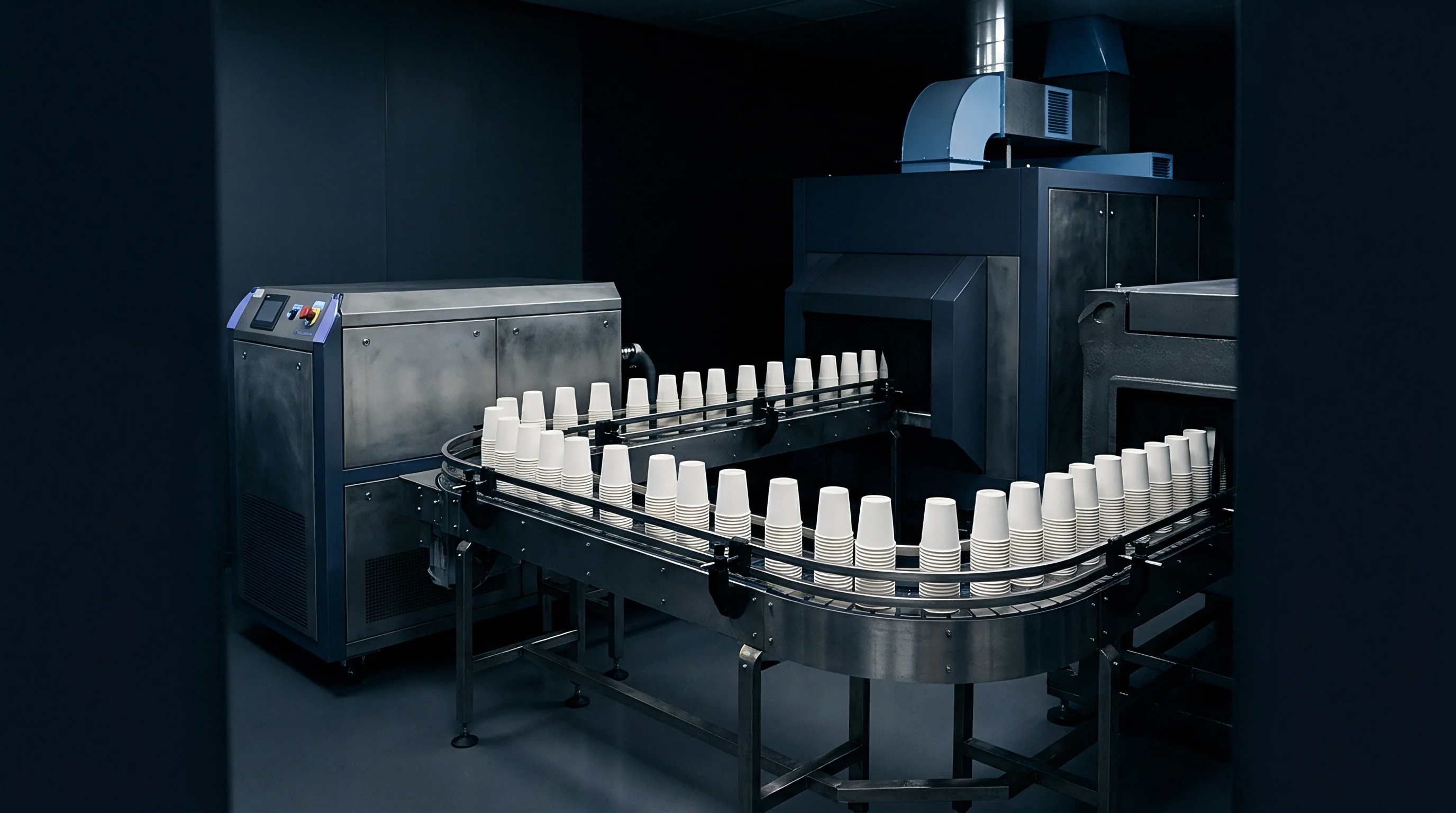
Froth
Flotation deinking cells rely on two distinct structural regimes: the dynamic collection zone within the slurry and the static froth bed resting on the suspension surface. Injector nozzles accelerate the pulp slurry to velocities exceeding ten meters per second, sucking in atmospheric or compressed air. The resulting hydrodynamic shear creates fine gas dispersions with bubble surface area fluxes ranging from fifty to one hundred square meters per square meter of cell area per minute.
Rising bubbles sweep through the collection zone, intercepting hydrophobic ink particles through film thinning, rupture, and meniscus formation.
Pulp stock passes through multi-stage flotation banks configured in series. Primary stages focus on dirt and ink removal efficiency, operating at forward reject rates of eight to fifteen percent volumetric flow. Secondary stages treat primary froth to recover entrapped cellulosic fibers, returning concentrated ink rejects to sludge dewatering systems.
High shear strips the collector. Fiber loss mounts quickly.
| Process Variable | Primary Flotation Cell | Secondary Scavenger Cell | Test Method Standard |
|---|---|---|---|
| Feed Consistency (% Solids) | 0.9 to 1.3 | 0.6 to 0.9 | ISO 4119 Gravimetric |
| Air-to-Stock Ratio (vol/vol) | 1.2 to 1.8 | 1.5 to 2.2 | Magnetic Flow Balance |
| Froth Residence Time (s) | 45 to 90 | 90 to 150 | Acoustic Bed Sensor |
| Calcium Hardness (as CaCO3 mg/L) | 180 to 280 | 180 to 280 | ISO 6059 Titration |
| Operating Temperature (°C) | 42 to 48 | 40 to 46 | Pt100 In-line RTD |
| pH Range | 8.2 to 9.5 | 8.0 to 9.0 | Glass Electrode Sensor |
Bubble coalescence within the upper pulp layer creates the froth phase. Froth lamellae stabilize through the packing of calcium soap precipitates, colloidal fatty acid particles, and detached fine mineral fillers. A stable froth carries rejected ink flakes over skimming weirs without premature collapse.
Unstable froths burst prematurely, returning separated ink particles back into the accepted pulp stream. Excessive froth stability presents an opposite failure mode: thickened, viscous foam mats entrain valuable long fibers, inflating overall fiber shrinkage across the deinking plant.
Froth wash systems spray conditioned process water directly onto the foam layer. Hydraulic impingement washes out mechanically trapped cellulosic fibers while preserving hydrophobic ink adhesion. Air flow controls reject mass.
Washing nozzles operating at pressures between 0.5 and 1.5 bar improve optical brightness by 1.5 to 2.5 ISO units while reducing fiber yield losses by three metric tons per operating day on a five-hundred-ton line.
Froth stability mirrors calcium soap concentration up to the critical precipitation point.
Lamellar drainage rates dictate separation efficiency. Gravity forces trapped process water downward through liquid foam channels, carrying along hydrophilic fines and parenchymal fiber fragments. Ink flakes remain pinned to the air-water interface by capillary forces.
Higher temperatures accelerate saponification kinetics. Operating temperatures between forty and fifty degrees Celsius maintain optimal soap solubility and viscosity. Slurries exceeding fifty-five degrees Celsius experience calcium soap redissolution, collapsing the froth and transferring hydrophobic contaminants downstream.
Dry foam skims clean while wet foam drags fiber across the weir.
Reject
Deinking reject streams concentrate heavy inks, stickies, wax fragments, coated paper flakes, and mineral ash into an unrecoverable waste slurry. Primary and secondary flotation cells generate reject suspensions at dry solids contents between 1.5 and 3.5 percent. This reject stream carries up to sixty percent inorganic pigment fillers by mass, dominated by calcium carbonate, kaolin clay, and titanium dioxide.
Sludge volumes scale with ash.
Dewatereability challenges arise from residual collector chemistries. Free fatty acid soaps and unprecipitated surfactants act as wetting agents, reducing the filtration drainage velocity on belt filter presses and screw presses. Cationic flocculants, typically high molecular weight polyacrylamides, condition the reject stream before mechanical squeezing.
These polymers neutralize anionic charges on dispersed collectors and ink residues, forming robust macro-flocs. Coagulant overdosing inverts particle charges, blinding drainage filter fabrics and increasing cake moisture contents.
Contaminant classification identifies specific operational problems across the reject circuit:
- Micro-Stickies Carryover occurs when pressure-sensitive adhesives bind with fatty acid collectors, evading mechanical screens and precipitating on press felts.
- Ash Concentration Elevation results from excessive collector affinity toward fine ground calcium carbonate, driving inorganic material into the froth while depleting chemical reserves intended for ink.
- Secondary Ink Redeposition happens when high mechanical turbulence tears ink particles from air bubbles, dispersing finely ground hydrophobic flecks onto bleached kraft fibers.
- Filtrate Loop Foaming manifests when unreacted surfactants return via press water into paper machine whitewater loops, causing micro-bubble entrainment and web breaks.
Belt press cakes typically exit dewatering at thirty-five to forty-eight percent dry solids. The cake enters thermal incineration or land application depending on regional packaging waste directives and ash composition. Landfill tipping fees penalize high-moisture cakes.
Every additional percentage point of water retained in deinking sludge adds twelve to eighteen euros per metric ton in haulage and disposal costs. Mills tracking waste economics penalize furnish brokers when incoming recovered paper bales contain elevated coated brochure fractions that consume excessive collector soap without yielding fiber.
EN 643 European Standard for Recovered Paper defines strict thresholds for non-paper components and moisture content in purchased bales. Commercial supply contracts stipulate automatic price deductions of 1.5 percent per gross bale weight for every single percent of prohibitive contaminants exceeding agreed tolerances, shifting the financial burden of unusable mineral reject back to the merchant.

Yield
The economic balance of a deinking operation hinges on reconciling optical gain against total fiber loss. Virgin softwood and hardwood pulps enter the market at pricing premiums of three hundred to five hundred euros per dry ton over sorted office waste or mixed news and pam furnish. Flotation deinking bridges this raw material cost gap.
Sourcing bleached chemical pulp alternatives through recycled fiber processing requires tight supervision of tonnage yield across the flotation hall.
Consider an operational model for a primary flotation bank processing five hundred air-dry metric tons of sorted graphic paper per day. Incoming furnish carries an ash content of sixteen percent and an unprinted sheet brightness of 58.0 ISO units according to ISO 2470-1 testing standards. Total pulper yield stands at ninety-two percent following gross reject removal at drum pulpers and high-density centrifugal cleaners.
Flotation feed rate settles at 460 metric tons of dry solids daily.
| Fatty Acid Collector Dose (kg/t) | Final Ash Content (%) | Final Deinked Brightness (ISO) | Flotation Stage Fiber Yield (%) | Net Furnish Cost per Delivered Ton (€) |
|---|---|---|---|---|
| 4.0 | 12.8 | 62.4 | 95.2 | 284.50 |
| 6.5 | 10.5 | 66.8 | 92.1 | 292.10 |
| 9.0 | 8.2 | 70.2 | 88.6 | 304.80 |
| 12.0 | 6.4 | 72.5 | 84.1 | 322.40 |
| 15.0 | 5.8 | 73.1 | 79.5 | 344.60 |
Increasing collector dosage yields diminishing optical returns while accelerating fiber shrinkage. Pushing fatty acid addition from nine to fifteen kilograms per ton gains only 2.9 ISO brightness units. That same adjustment increases flotation shrinkage from 11.4 percent to 20.5 percent of feed solids.
At typical recovered paper costs of one hundred sixty euros per delivered ton, this additional fiber loss inflates net pulp production expenses by thirty-nine euros and eighty cents per finished dry ton. Over an annual run of one hundred sixty thousand finished tons, this yield penalty represents an unrecoverable margin erosion exceeding six million euros.
Ink redeposition ruins optical gain. Mill water hardness varies daily. Papermakers balancing furnish formulations evaluate recycled deinked pulp against unprinted woodfree broke based on net landed sheet cost.
When high collector dosing strips ash and fines indiscriminately, machine-direction tensile strength drops by eight to twelve percent according to ISO 1924-2 testing protocols. Printers converting the resulting containerboard or graphical paper grades experience dusting, web breaks, and impaired ink holdout on offset press lines.
The physical limit of mechanical deinking systems remains bound to particle mechanics and surface thermodynamics. How chemical suppliers will formulate collectors capable of selectively hydrophobizing sub-micron flexographic pigments without precipitating onto valuable bleached hardwood fines in calcium-free neutral loops remains an unanswered industrial problem.