Sheetfed Lithographic Register Drift Dynamics under UV Thermal Radiation Exposure
UV lamp radiation drives moisture loss and thermal expansion in sheetfed litho, causing tail fan-out and downstream die-cutting registration failures.
Heat
A four-color process target on sheet twelve thousand measures 0.32 millimeters out of true at the trailing edge, while the gripper margin holds zero point zero two millimeters. Press operators watch the cyan separation crawl away from the yellow baseline across an eight-hour commercial carton run, fighting the shift with cylinder cocking and dampening increments. The root cause sits above the transfer cylinders, where ultraviolet lamp housings beam continuous energy onto paperboard travelling at three meters per second.
Medium-pressure mercury arc lamps emit energy across a broad continuum, generating substantial non-actinic output. The sheet surface absorbs this spectrum instantly. The paper web undergoes immediate thermal excitation.
Ultraviolet curing chemistry relies on photon absorption by photoinitiators between 200 and 420 nanometers to trigger free-radical or cationic polymerization of acrylate oligomers. Mercury vapor lamps convert roughly twenty percent of electrical input power into usable ultraviolet output. The remaining eighty percent dissipates as thermal infrared energy and convective heat transfer from the quartz envelope.
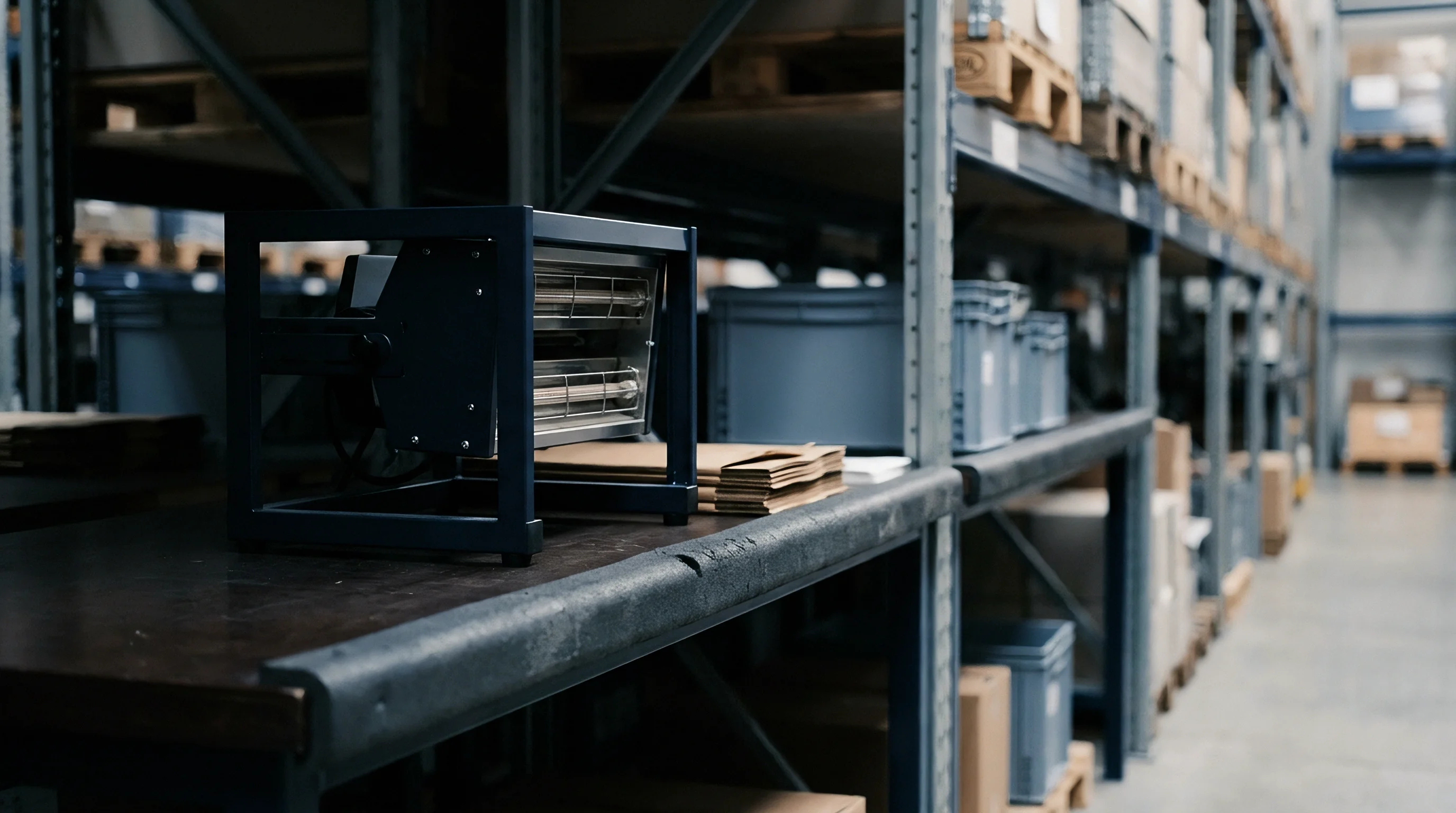
Operating temperatures of lamp cassettes reach nine hundred degrees Celsius, projecting direct radiant flux onto the moving board. Peak surface temperatures on 350-gram folding boxboard spike from twenty-two degrees Celsius at the feeder to seventy-five degrees Celsius beneath a single interdeck lamp assembly. This thermal shock destabilizes the cellulose fiber lattice before subsequent ink films split onto the coating.
Peak board surface temperatures exceed seventy degrees Celsius under conventional medium-pressure mercury arc lamps operating at one hundred sixty watts per centimeter electrical input.
Peak sheet temperature depends on the spectral distribution of the emitter, press velocity, and the dwelling duration beneath the cassette aperture. Light-emitting diode systems concentrate radiative energy within narrow bands at 385, 395, or 405 nanometers, eliminating the direct infrared emission characteristic of mercury vapor envelopes. Conductive and convective transfer remains substantial even within diode arrays due to high electrical current running through compact semiconductor substrates.
Solid-state diode assemblies radiate heat downward when air cooling or chilled liquid loops operate with degraded heat-exchanger capacity. The ink film absorbs radiant flux, transmitting thermal energy through the mineral coating into the raw cellulose base within milliseconds.
| Emitter Architecture | Peak Electrical Power (W/cm) | Infrared Output Bandwidth (nm) | Sheet Surface Peak Temperature (°C) | Single-Pass Moisture Loss (%) |
|---|---|---|---|---|
| Conventional Iron-Doped Mercury Arc | 200 | 750 to 4500 | 78.4 | 0.42 |
| Standard Medium-Pressure Mercury | 160 | 750 to 3500 | 69.1 | 0.35 |
| Doped Gallium Mercury Arc | 160 | 780 to 3200 | 64.8 | 0.31 |
| Water-Cooled UV LED (395 nm) | 16 (W/cm²) | None (Trace Conductive) | 38.2 | 0.08 |
| Air-Cooled UV LED (385 nm) | 12 (W/cm²) | None (Convective Drift) | 44.6 | 0.12 |
Thermal absorption profiles differ between unprinted board, heavy process black solids, and transparent gloss coatings. Carbon black pigments exhibit broad-band infrared absorption, accelerating local temperature rise by up to fourteen degrees Celsius compared to unprinted margins on the same sheet. This differential thermal gradient generates localized expansion pockets across the sheet width.
Coated surfaces trap heat while bare backings dissipate energy into the impression cylinders. The sheet leaves the lamp zone with severe internal thermal stress.
Press manufacturers routinely state that modern air-cooled shutter systems and dichroic cold mirrors isolate ninety percent of thermal radiation from the delivery pile, leaving substrate stability entirely in the hands of the board converter.
Deformation
Cellulose fibers absorb and release atmospheric water along their amorphous boundary walls in constant equilibrium with surrounding ambient air. The dry fiber matrix expands when water molecules penetrate hydrogen bonding sites between microfibrils. Fiber diameter swells up to twenty-five percent in cross-direction while fiber length increases by less than two percent in machine direction.
Paperboard production aligns fibers predominantly in the grain direction parallel to the paper machine wire. This structural orientation forces sheets to exhibit directional hygrothermal movement, with cross-grain expansion exceeding machine-direction expansion by factors between four and six.
Thermal radiation from curing lamps triggers rapid moisture flash within the first four microns of the clay-coated surface and the porous fibrous base. Desorption occurs over milliseconds. When moisture leaves the board, cross-directional shrinkage begins immediately.
The moisture loss rate averages 0.35 percent per print pass under conventional 160 W/cm medium-pressure mercury arc lamps, measured under standard conditions of twenty-three degrees Celsius and fifty percent relative humidity. This figure rests on continuous sheet velocity at twelve thousand impressions per hour; slower press run rates double radiant residence time and push moisture desorption past zero point eight percent. At the same time, pure thermal expansion acts in opposition to moisture contraction.
Heating the cellulose lattice increases molecular vibrations, expanding the material according to its thermal expansion coefficient. Solid bleached sulfate board displays a cross-direction thermal expansion coefficient of 0.0045 percent per Kelvin.
Where Does Circumferential Expansion Outrun Lateral Distortion?
Printing units pull the substrate around impression cylinders under high blanket nip pressures, imposing severe mechanical constraint along the print circumference. Lateral dimensions across the cylinder width encounter no mechanical restraint beyond friction against blanket surfaces. The sheet exhibits lateral contraction as moisture flashes off under interdeck lamps, while cylinder geometry and paper caliper compression force circumferential elongation.
Register marks wander inward along the lateral axis while extending outward toward the trailing tail edge.
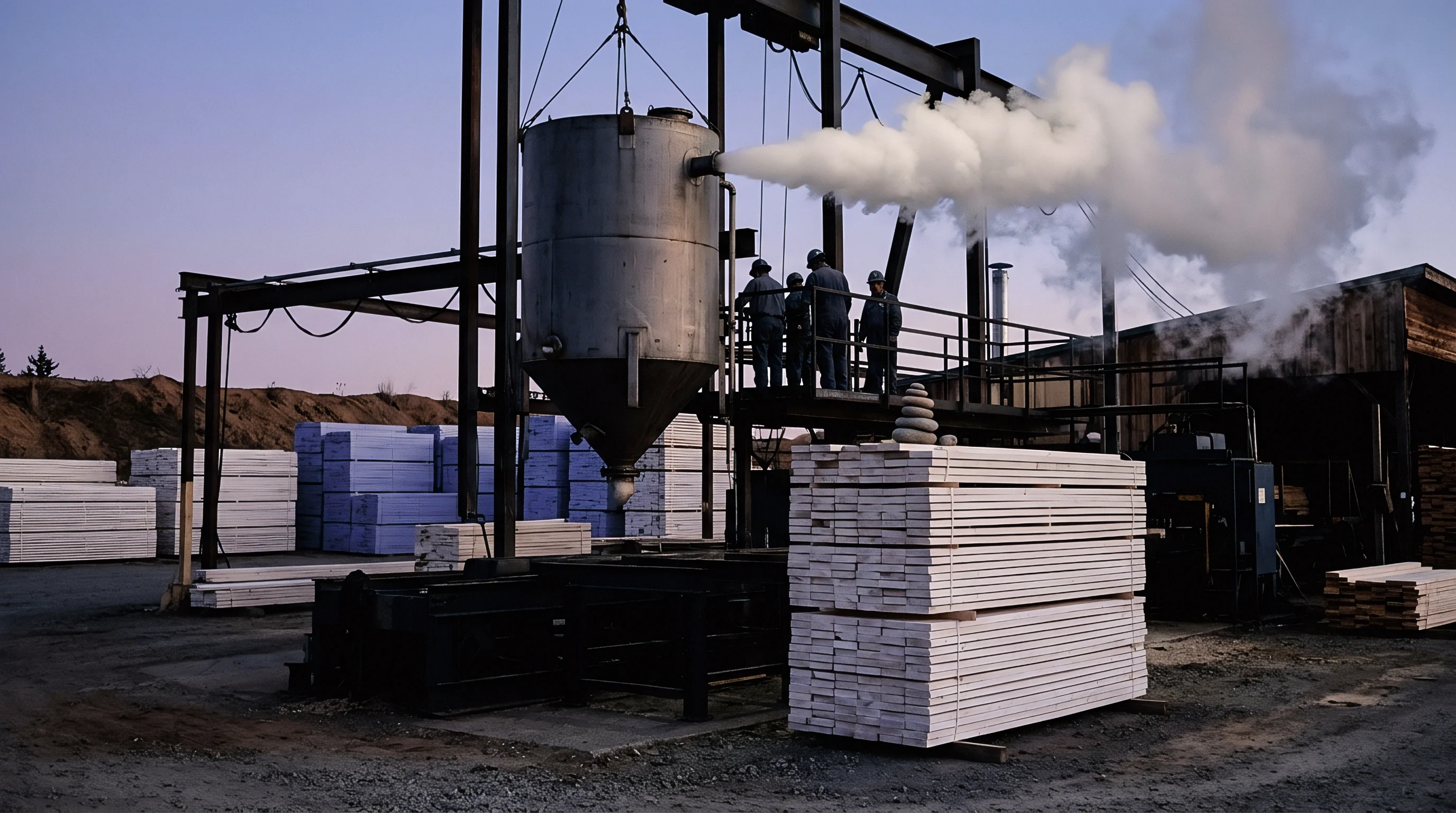
Industrial timber drying exhibits identical hygrothermal relaxation behavior when kiln heat evaporates capillary moisture from raw lumber cells, inducing transverse shrinkage while longitudinal cellular walls hold fixed dimensions. In sheetfed lithography, this directional shrinkage occurs within fractions of a second between successive blanket impressions. Unit one lays down black ink onto cold, humid board.
The sheet passes under an interdeck mercury cassette, shedding moisture and heating up. By the time the gripper bars present the sheet to unit two for cyan laydown, the physical dimensions of the tail have contracted laterally by 0.18 millimeters while elongating circumferentially by 0.08 millimeters. Trapping tolerances disappear.
White halos split process rosettes.
Under ISO 12647-2, register deviation across four process colors on coated commercial paperboard cannot exceed seventy micrometers across ninety-five percent of the production lot.
Multiple dynamic forces compound across multi-unit printing configurations, generating progressive registration drift that ruins fine packaging designs:
- Hygrothermal cross-grain shrinkage pulls the trailing outer corners inward toward the center line of the impression cylinder after moisture desorption.
- Circumferential fan-out deformation pushes the rear sheet margin outward into an arc shape because blanket squeeze flattens the damp board core.
- Bimetallic thermal curl bends the sheet toward the heated printed side as surface fibers desorb moisture faster than the unprinted reverse side.
- Viscoelastic creep accumulation locks permanent mechanical elongation into the paperboard structure under continuous pull from multi-unit gripper mechanisms.
Plate exposure software incorporates linear expansion factors, but lithographic thermal deformation operates in distinctly nonlinear modes. Board entering unit four holds less moisture, carries higher surface temperature, and exhibits higher tensile stiffness than virgin stock entering the infeed. Tail fluttering increases as stiffness shifts unevenly.
The trailing edge whips beneath interdeck lamps, increasing radiant dwell time unpredictably across consecutive sheets.
The exact threshold where lateral contraction overtakes circumferential blanket stretch on heavy recycled boxboards remains an open dispute among press room technicians, depending on variable furnish ratios and unknown starch additive volumes.
Tolerances
Optical alignment systems inside press feeder units measure sheet arrival with micrometer-level precision, but mechanical alignment at the front lay cannot prevent mid-press dimensional shifts. Modern sheetfed presses utilize electronic cylinder cocking, automated lateral draw adjustments, and tail-end spreading mechanisms to counteract sheet fan-out. These electromechanical compensations operate on fixed linear assumptions.
When high-power curing lamps induce localized thermal gradients, the sheet deforms into an hour-glass or barrel shape. Linear cylinder adjustments fail to correct complex double-curved geometric surfaces.
Could Chilled Cylinders Eliminate Moisture Desorption?
Internal water circuits cool the steel jackets of impression cylinders to maintain surface temperatures between seventeen and twenty-one degrees Celsius. Chilled cylinders pull conductive heat out of the unprinted sheet backing during the physical impression stroke. The sheet spends less than thirty milliseconds in direct contact with the cylinder surface during each ink transfer.
This contact window proves insufficient to counteract the intense radiant flux delivered by an overhead mercury lamp bank spanning forty centimeters of open sheet travel. Condensation risks arise if cylinder cooling loops run below the ambient press room dew point, depositing liquid water onto clean board backings and causing catastrophic localized swelling.
Calibrating lamp positions and cylinder packings requires systematic adjustments across a production bring-up:
- Mount aluminum printing plates with precise zero-gauge pin registration across all units.
- Engage chill-roll water circuits forty minutes before make-ready to reach thermal equilibrium across all press side frames.
- Measure baseline moisture content of incoming paperboard skids using a calibrated sword hygrometer inserted into the pallet core.
- Run five hundred make-ready sheets at target production velocity with curing cassettes set at thirty percent power.
- Measure trailing-edge registration targets under an illuminated forty-power pocket microscope to record baseline mechanical fan-out.
- Ramp curing lamps to full commercial curing wattage and run an additional five hundred sheets without changing cylinder settings.
- Calculate dimensional delta across outer register marks and dial negative lateral expansion offsets into the prepress raster image processor.
Cylinder packing changes offer mechanical micro-adjustment of image length. Adding zero point zero five millimeters of calibrated polyester packing beneath a blanket cylinder increases its effective circumferential radius, compressing image length on paper. Stripping packing from the blanket and shifting thickness beneath the plate cylinder extends printed image length on the moving substrate.
This mechanical adjustment operates strictly in the circumferential dimension. Lateral drift remains completely unaffected by blanket packing thickness.
Chilled cylinder jackets running two degrees below press room dew point generate moisture condensation that destroys sheet stability.
The industry uses automated fan-out software that cocks plate cylinders dynamically between 120 and 150 microns to compensate for sheet distortion. The exact dividing line between correctable linear distortion and uncorrectable thermal warp within this band rests on unverified press operator intuition. When register drift crosses beyond physical packing and cocking capabilities, ink dots fail to trap cleanly, resulting in muddy shadow tones, visible color fringing around corporate brand logos, and complete rejection of the printed carton lot by quality control inspectors.
Finishing
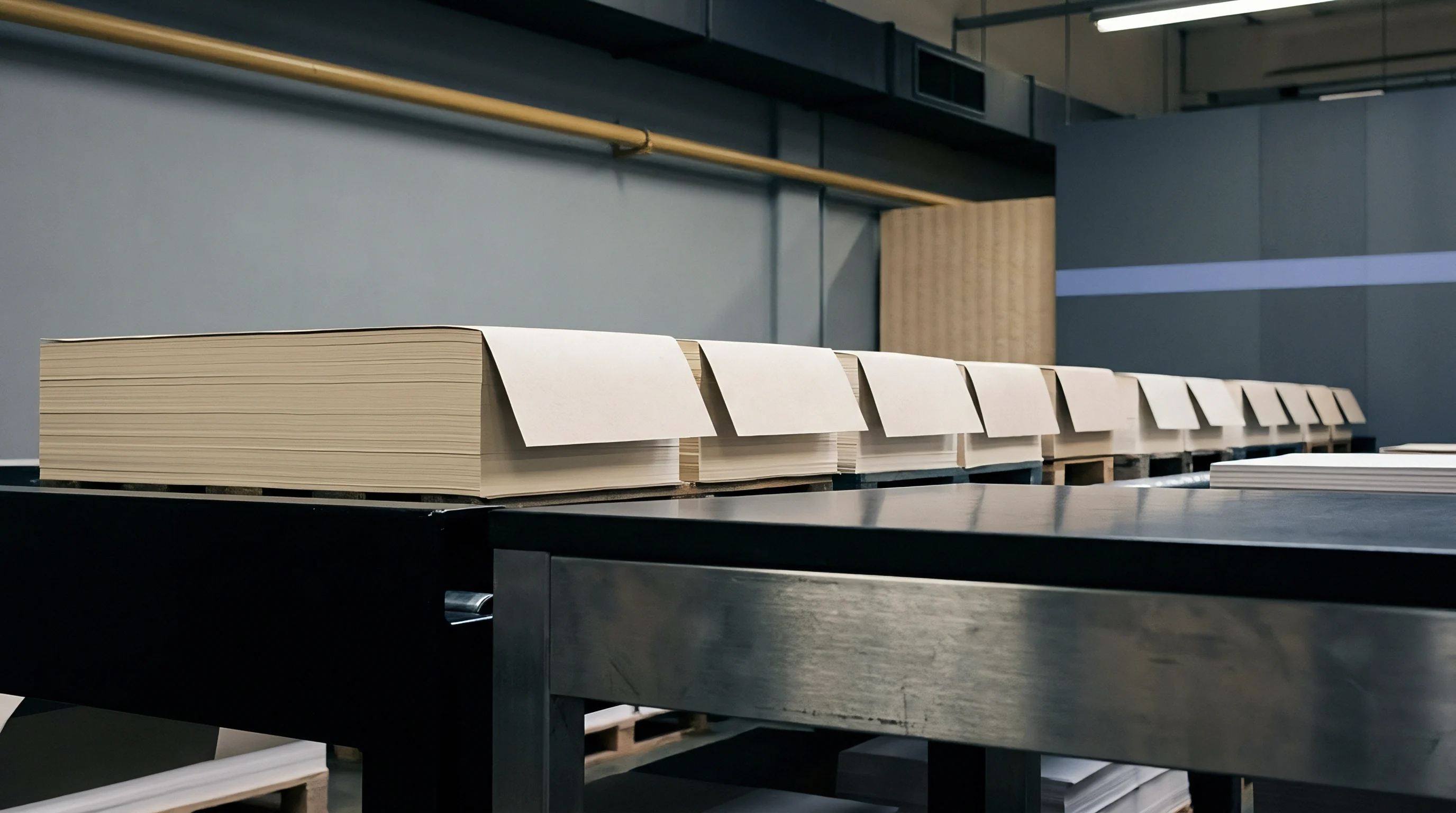
Printed sheets leaving the press delivery pile stack tightly in pallets of eight thousand units, retaining accumulated process heat for days. Internal pile temperatures often exceed fifty degrees Celsius forty-eight hours after delivery. Moisture evaporates from pile perimeters into press room ambient air while center regions remain sealed, creating severe wavy edges and structural distortion across the lot.
Secondary converting operations suffer immediate disruption when distorted sheets enter high-speed die-cutting, embossing, and foil-stamping machinery.
Flatbed die-cutters use rigid steel cutting and creasing rules mounted inside high-density birch plywood dies. The rule layout matches CAD drawings locked to nominal product dimensions. When sheets experience hygrothermal shrinkage during lithographic UV curing, printed graphics shrink relative to the fixed steel knives.
A die-cut carton blank requires crease alignment within zero point three millimeters of ink transitions to prevent raw white board showing at folded carton corners. Sheets shrunken by zero point five millimeters across a 1060-millimeter format force creases directly into copy areas, destroying carton folding integrity.
| Substrate Classification | Caliper (µm) | Print Curing Intensity | Observed Lateral Shrinkage (mm/m) | Tooling CAD Scaling Correction (%) |
|---|---|---|---|---|
| Virgin Solid Bleached Sulfate (SBS) | 350 | Two Interdeck Arc Lamps (160 W/cm) | -0.45 | -0.045 |
| Folding Boxboard (FBB – Mechanical Core) | 400 | Two Interdeck Arc Lamps (160 W/cm) | -0.58 | -0.058 |
| Coated Recycled Board (CRB / WLC) | 450 | Full End-of-Press Arc Array | -0.72 | -0.072 |
| Solid Bleached Sulfate (SBS) | 350 | Interdeck UV LED (395 nm, 16 W/cm²) | -0.12 | -0.012 |
| Metalized Polyethylene Terephthalate Board | 380 | Interdeck Arc + Final UV Delivery | -0.18 | -0.018 |
| Measurements taken after 48-hour pallet resting period in controlled converting environment at 23°C and 50% relative humidity. | ||||
Downstream hot foil stamping introduces an additional high-temperature thermal cycle that compounds lithographic distortion. Brass and steel stamping dies run at operating temperatures between one hundred ten and one hundred forty degrees Celsius under platen pressures exceeding two hundred tonnes. Placing heated brass dies against pre-shrunken paperboard causes secondary moisture loss and sudden localized thermal expansion of the tooling metal.
Heated brass expands by 0.019 millimeters per meter per Kelvin. Toolmakers scale foil stamping dies down during CNC engraving to compensate for metal expansion, but this scaling assumes the incoming printed sheet matches original CAD geometry.
Critical post-press mechanical failures trace back to register drift created under ultraviolet lamp housings:
- Embossing die splitting ruptures clay coatings when male counter dies strike misaligned paperboard fibers outside the printed embossed frame.
- Window patch misplacement exposes raw structural carton edges because cutouts drift away from transparent film patch adhesive margins.
- Glue flap skewing chokes high-speed folder-gluers as misaligned score rules produce uneven fold resistances across carton panels.
- Foil stamping flaking occurs when thermal drift shifts stamping dies over uncured wet-trapped offset inks rather than dry varnish coatings.
Toolmakers accommodate predictable material behavior, but uncoordinated press room heat inputs destroy converting tolerances across the run.
Tooling offsets hold true only when moisture content remains uniform from the first sheet off the feeder to the final pallet in the warehouse.
Settlement
Commercial packaging contracts allocate liability for dimensional defects based on strict verification procedures documented before job sign-off. When die-cut cartons jam automated cartoning lines at a food or pharmaceutical packaging plant, blame moves rapidly upstream between the board mill, the trade printer, and the converting finisher. The trade printer claims the virgin paperboard lot contained excessive latent moisture or deficient internal sizing.
The mill points to ambient relative humidity logs and press room thermal loading. The finisher demands compensation for damaged cutting plates and lost machine hours.
Establishing clear technical dossiers protects buyers against unearned spoilage charges and defective deliveries. Technical specifications should state permissible dimensional drift limits alongside curing parameters. Standard contracts routinely exclude registration disputes if incoming stock sits unpacked inside press rooms for fewer than forty-eight hours prior to processing.
Incoming skids equilibrate slowly. A tightly wrapped pallet of coated cartonboard takes up to five days to bridge a ten-degree temperature differential between winter transport trucks and heated production floors without sweating.
A typical commercial run demonstrates the ledger stakes. Take a run of one hundred thousand pharmaceutical folding cartons printed on 350-gram solid bleached sulfate across two hundred fifty press sheets per thousand cartons. The job requires forty thousand parent sheets format 720 by 1020 millimeters, running across an eight-color lithographic press with three interdeck mercury lamps and an end-of-press ultraviolet coater.
Assume board stock costs one thousand two hundred dollars per tonne, representing sixteen thousand eight hundred dollars in raw substrate value. The customer specification demands hot foil stamping, blind embossing, and high-speed auto-bottom gluing.
Thermal radiation from the three interdeck lamps induces a 0.42-millimeter cross-direction shrinkage across the outer carton positions on each sheet. The printer attempts to salvage the run by running the job through the die-cutter, splitting the misregistration evenly between left and right layout lanes. On the automated cartoning line at the customer filling facility, thirty percent of carton blanks jam the feeding magazines because score line positions wander outside the plus-or-minus zero point two five millimeter robotic gripper allowance.
The rejection is total. The customer returns thirty thousand finished cartons, triggering a credit claim for thirty-two thousand dollars covering scrap value, replacement board, rush machine time, and automated line downtime penalties.
Under standard packaging terms governed by DIN 19306-4 and ISO 12647-2, the delivery conforms to commercial standard if register marks align within agreed tolerance bands at press release, meaning buyers who omit post-press dimensional drift clauses absorb the full financial loss of downstream cartoning line failures.