Physical Coefficient
Thermodynamic material properties govern the fractional change in packaging substrate dimensions per degree of temperature variation. Foil-laminated cartons exhibit internal strain when the thermal expansion coefficient of the aluminum layer diverges sharply from the underlying cellulosic fiber base. Pressroom temperature fluctuations cause register shift and web distortion when differential expansion rates misalign laminate layers.
Substrate Distortion
Cellulose fibers have a low expansion rate in the longitudinal fiber direction but expand significantly when heated in moist environments. Metallic foils, synthetic films, and plastic barrier plies expand at predictable rates dictated by their molecular density and chemical composition. When heated during hot-foil stamping, heat-seal packaging, or ultraviolet curing processes, the laminated plies expand at unequal speeds.
This physical mismatch induces shear stresses at the adhesive interface, causing delamination, surface puckering, and sheet curling. Converting engineers balance material thermal coefficients to prevent structural deformation across varied operating temperature ranges.
Register Control
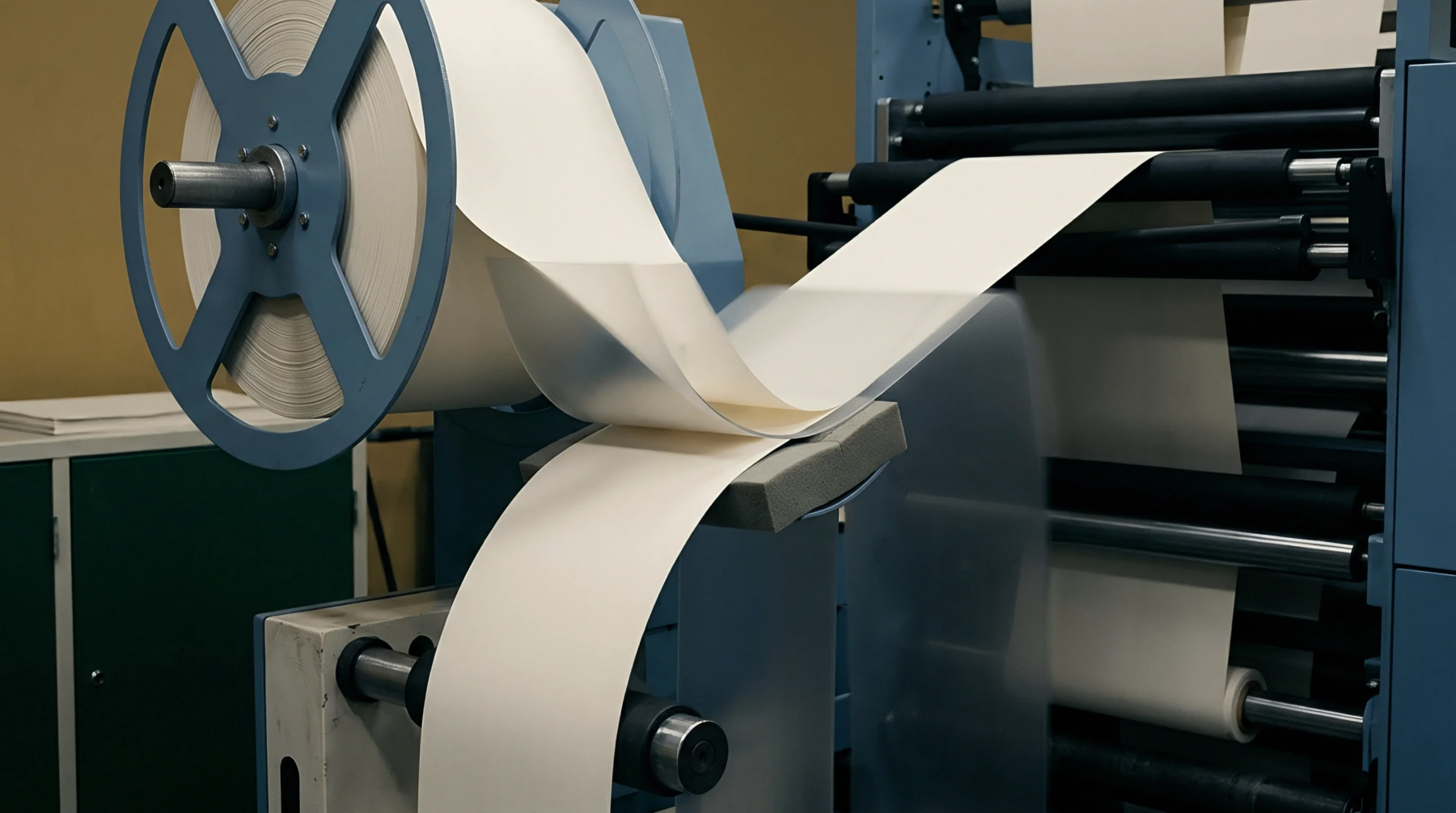
Printing multi-color packaging requires tight spatial alignment across successive print units and curing stations. Inter-deck infrared or ultraviolet lamps warm the moving web, causing localized expansion that alters the physical distance between printed registration marks. Substrates with high dimensional sensitivity to heat require active chill-roll cooling to stabilize web dimensions before entering subsequent printing or die-cutting stations.