Emboss Die Money Committed before the Caliper Is Proven
Committing embossing die funds before verifying batch-specific board caliper causes die clearance errors, crushed paperboard profiles, and ruined tooling.
Tooling
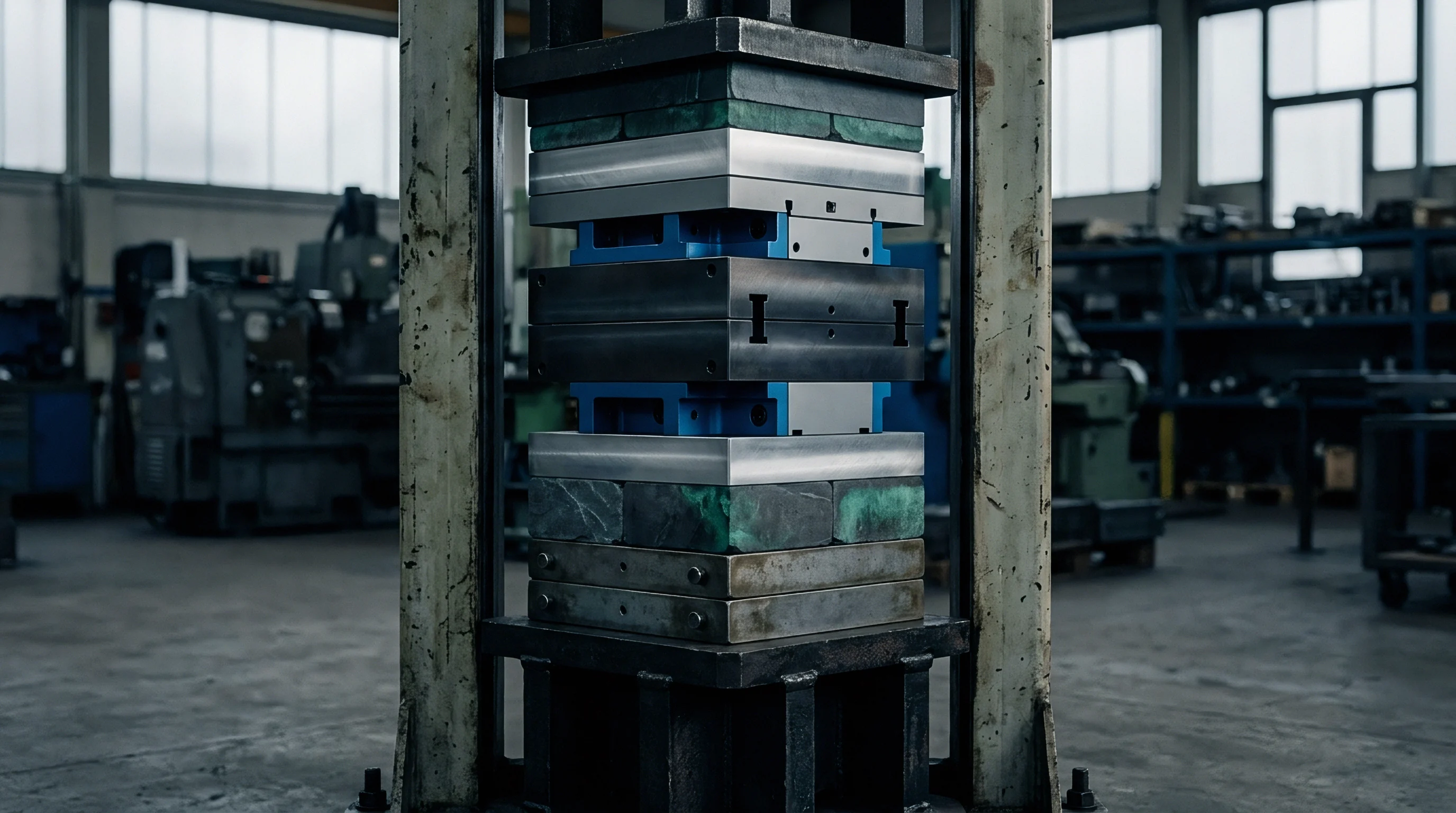
CNC engraving cuts solid brass alloy slabs into multi-level dies long before paperboard reaches the press floor. Brand managers sign off on digital renderings, purchasing cuts six-figure tooling dockets, and die makers mill female cavities to clearance tolerances down to five micrometers. Ordering metal before measuring delivered paperboard routinely drains converting budgets.
A mill specification listing a nominal weight of three hundred and fifty grams per square meter and a nominal caliper of four hundred micrometers always carries mill variance. Standard paper contracts allow caliper fluctuations of plus or minus seven percent across a single roll and up to plus or minus ten percent between production batches. Ordering matching female and male die pairs against theoretical board thickness leaves the press room to bridge that gap during make-ready.
When an unverified substrate arrives thin at three hundred and sixty-eight micrometers, the milled clearance between the male counter die and female brass cavity remains locked at four hundred micrometers. Press operators try to compensate with tissue shims or paper packing beneath the plate cylinder. That extra packing raises impression force exponentially without restoring the sharp definition of micro-embossed bevels.
The sheet lacks the fiber volume required to fill the tool’s deepest channels. Rounded highlights appear where crisp multi-tiered edges belong, leaving expensive multi-level engraving looking like a flat single-level blind stamp.
Over-caliper stock creates worse mechanical problems. Board arriving at four hundred and thirty-two micrometers gets crushed inside a cavity cut for four hundred micrometers. Solid bleached sulfate subjected to that level of localized Z-direction shear stress exceeds its internal fiber bond strength, splitting the top coating along structural bevels.
Chalky white fractures open across dark printed solids. On heavy plastic film laminations, the stretching film snaps over tight die radii, triggering micro-flaking and edge delamination around the embossed perimeter. Operators are left to choose between running with cracked fibers across the job or backing off impression pressure and leaving half the sheet flat.
Modifying finished brass dies costs critical turnaround weeks. Removing metal from hardened brass requires manual re-engraving under optical microscopes or a full secondary CNC remill. Epoxy resin or fiberglass-reinforced vulcanized counter dies must be scrapped and re-cast whenever relief dimensions change.
Meanwhile, costs mount from idle time on high-speed flatbed platens, wasted make-ready sheets, rush courier fees, and missed retail dates. That exposure compounds on combination foil-stamping and embossing dies, where thermal expansion mismatches magnify every spatial error.
ISO 187 atmospheric conditioning at twenty-three degrees Celsius and fifty percent relative humidity dictates the exact fiber volume before die clearance calculations are finalized.
Ordering tooling without testing physical sheets assumes paperboard behaves like an incompressible solid. In practice, board is an anisotropic, viscoelastic matrix of hydrogen-bonded cellulose fibers, mineral fillers, surface sizing, and polymer coatings. It compresses, yields, stretches, and rebounds depending on moisture content, ambient humidity, grain orientation, and press speed.
A die cut for dense recycled chipboard will tear straight through bulky, low-density folding boxboard of the identical caliper. Press shims cannot correct a fundamental conflict between metal tooling geometry and fiber mechanics.
Committing tooling funds before validating physical batches repeatedly leads to severe failures on the press floor:
- Coating fracture along detail bevels occurs when high-bulk board compresses beyond its elastic shear limit inside tight die impression clearance.
- Pin-hole registration ghosting develops when excessive nip pressure distorts sheet dimensions mid-impression, pushing secondary foil passes off target.
- Counter die crushing happens when over-thickness board destroys delicate fiberglass-reinforced epoxy counters during the first fifty make-ready impressions.
- Embossing halo distortion forms along flat highlights when pressmen over-shim plate cylinders to force under-caliper stock into deep die recesses.
The die maker faults the paper mill for shipping stock outside tight target windows, while the mill points to trade handbooks that permit broad manufacturing bands. In the end, the converter absorbs the loss because no one audited the actual stock before signing off on the tooling release.
Depth
Cellulose structures deform under load through elastic deformation, plastic flow, and internal fiber sliding. Measuring static caliper with a standard dead-weight micrometer under ISO 534 provides only a rough baseline. That micrometer applies fifty kilopascals of uniform pressure across a flat two-hundred-square-millimeter foot, whereas high-speed embossing platens drive dynamic localized pressures of fifteen to forty megapascals onto narrow die ridges under fifty micrometers wide.
Static numbers reveal little about how a fiber matrix yields under intense, localized impact.
The governing variable in sculptured tooling design is the dynamic compression modulus of the specific board lot. Solid bleached sulfate, folding boxboard, coated unbleached kraft, and coated recycled board behave differently under load. Folding boxboard has a middle layer of mechanical pulp that yields readily, offering high bulk at lower weight.
Solid bleached sulfate uses chemical pulp throughout, resisting Z-direction compression and requiring far more energy to shape. Moving a sculptured die cut for solid bleached sulfate onto folding boxboard collapses the mechanical pulp core early. The detail sinks into the sheet, losing relief height as the internal matrix breaks down within the carton wall.
| Substrate Grade Class | Nominal Caliper (μm) | Measured Lot Range (μm) | Dynamic Compressibility (%) | Maximum Die Relief Depth (μm) | Fiber Shear Failure Point (MPa) |
|---|---|---|---|---|---|
| Solid Bleached Sulfate (SBS) | 400 | 382 ~ 418 | 14.5 | 220 | 34.2 |
| Folding Boxboard (FBB) | 400 | 368 ~ 424 | 26.8 | 280 | 21.8 |
| Coated Unbleached Kraft (CUK) | 400 | 376 ~ 412 | 11.2 | 190 | 38.5 |
| Coated Recycled Board (CRB) | 400 | 360 ~ 430 | 18.0 | 160 | 18.4 |
Fiber orientation directly governs deep die design. Paperboard carries a distinct grain direction from the machine wire, aligning fibers with web travel. Tensile stiffness in the machine direction runs roughly two to three times higher than across the web.
When female die cavities have long, straight bevels parallel to the machine direction, fibers stretch across the gap with little resistance. Running that same bevel perpendicular to the grain forces stiff machine-direction fibers to bridge the cavity like beams, resisting die bottoming and producing uneven relief depth across symmetrical patterns.
Moisture content governs fiber flexibility and internal hydrogen bonding. Standard conditioning under ISO 187 calls for twenty-three degrees Celsius and fifty percent relative humidity, bringing paperboard to six to eight percent equilibrium moisture. If stock sits on pallets in an unconditioned warehouse through dry winter months, moisture can drop below four percent.
Dry fibers lose ductility, causing the brittle matrix to snap under the male counter nip and flake the coating. Stock above nine percent moisture becomes highly ductile but loses structural stiffness, allowing embossed details to relax toward flat within forty-eight hours of leaving the press.
Fiber elasticity dictates maximum relief height long before metal tooling boundaries are reached.
Multi-layer film laminations further complicate deformation dynamics. Board laminated with twelve-micrometer oriented polypropylene or polyethylene terephthalate film presents a non-compressible tension barrier on the surface. That film bridges narrow female channels, demanding higher male counters to force material into the recess.
The resulting pressure shears the adhesive layer along bevel edges. Polyurethane or ethylene-vinyl acetate adhesives often delaminate under this stress, forming white air channels along embossed outlines. Caliper figures for laminated stock must account for the distinct compressibility of the film, adhesive, coating, and base fiber layers.
Die relief depth requires systematic evaluation before sending CAD files to the CNC engraving center:
- Cross-section thickness verification measures total sheet caliper across ten randomized press sheets using micro-caliper gauges across five key zones.
- Bulk density calculation divides grammage by caliper to determine the structural void ratio of the internal fiber matrix.
- Z-direction tensile testing under ISO 1924 confirms internal bond strength to prevent mid-sheet layer splitting during die withdrawal.
- Surface smoothness rating measured via Parker Print-Surf under ISO 8791 identifies micro-roughness that demands deep counter impression force.
Female die depth should never exceed sixty percent of total uncompressed board caliper for single-pass blind embossing on coated boxboard. Exceeding that limit forces the male die to pinch stock against the floor of the female cavity, turning a stretching operation into a crushing step. Crushed board permanently loses bending stiffness, causing carton panels to bow inward on automated filling lines.
Precision converting works within the physical limits of the fiber rather than forcing paperboard past its ultimate tensile strength.
Tooling engineers evaluate board compressibility using the compression ratio ~ the initial board thickness divided by final compressed thickness under peak platen force. If that ratio tops one point five on dense SBS board, edge splitting is inevitable. Setting clearance geometry requires adding eighty percent of measured board thickness to female cavity width and subtracting twenty percent for male counter relief clearance.
Skipping these calculations against physical stock dockets leaves converters with expensive scrap metal.
Proof
Off-line hand-pulled proofs give a false sense of security in high-end packaging. A die maker pulls a sample proof on a manual press using a single sheet supplied during project scoping. That hand press runs cold, with dwell times lasting several seconds and unmeasured pressure applied through a manual lever.
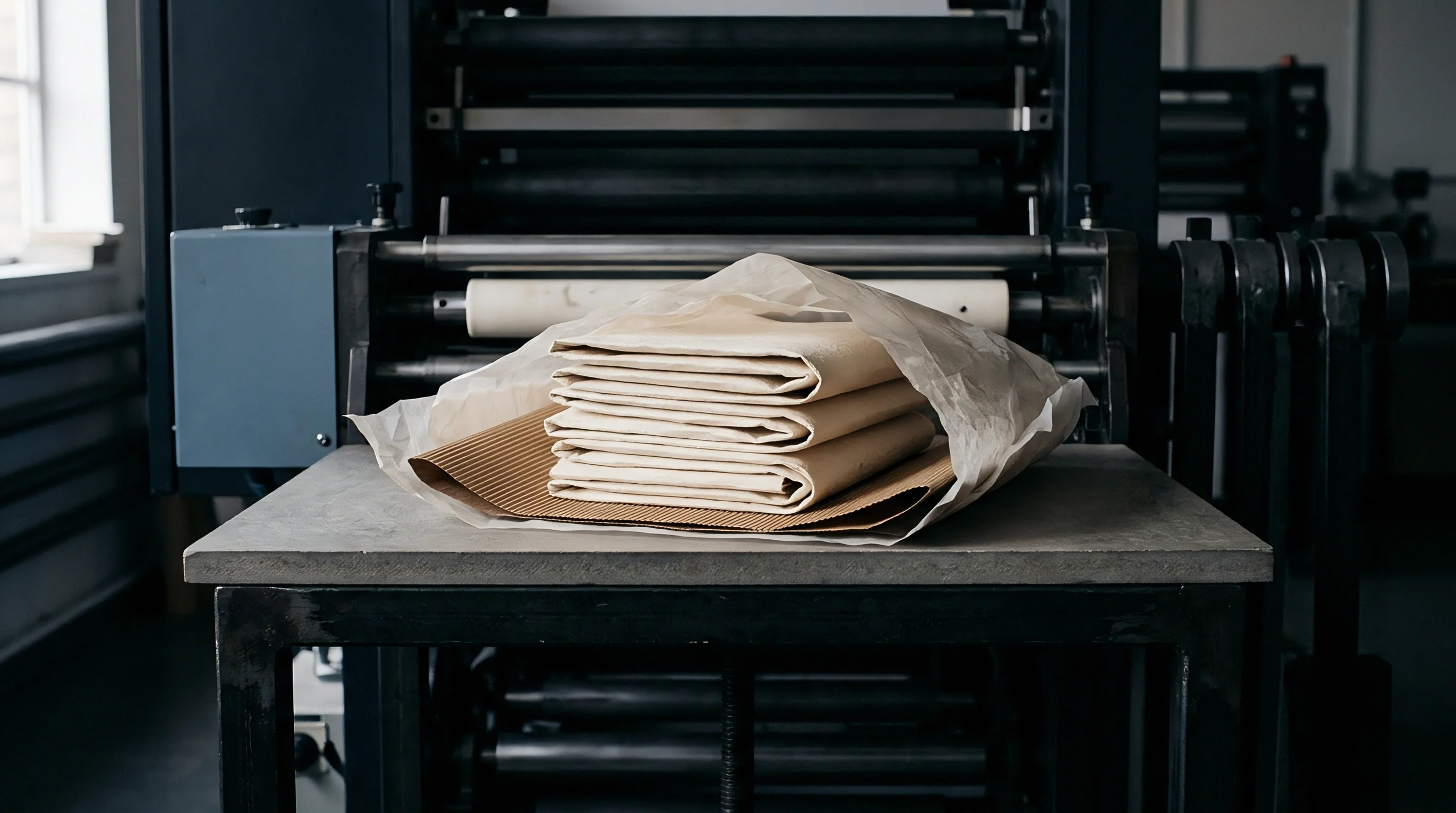
The operator hand-cuts paper counters from soft blotter board, building up pressure behind individual design details with razor blades and tissue tape. The proof looks clean ~ crisp highlights, deep relief, sharp bevels, and tight registration ~ prompting brand managers to sign off on production dockets immediately.
That hand-pulled baseline fails as soon as the brass bolts onto an automatic high-speed flatbed platen press. At seven thousand sheets per hour, dwell time drops to a fraction of a millisecond. Soft paper counter dies degrade within five hundred sheets under continuous cycling.
Production runs require hard, resin-cast poured epoxy counters or precision CNC-milled glass-epoxy composite plates. But rigid synthetic counters do not yield to caliper variations across a paperboard web. If the production lot runs zero point zero two millimeters thicker than the proofing sheet, the counter crushes the board surface on impact.
Which Caliper Anomalies Destruct Production Counter Dies?
Continuous production generates heat that alters mechanical clearances inside the press bed. As high-speed platens cycle, friction and heated foil plates drive die temperatures to between one hundred and one hundred and forty degrees Celsius. Brass has a thermal expansion coefficient of roughly nineteen times ten to the minus sixth power per degree Celsius.
A four-hundred-millimeter wide solid brass plate expands nearly one millimeter along its horizontal axis as it reaches operating temperature. If counter dies remain pinned to a cold lower bed while the top plate expands, male and female elements lose alignment. The hard male ridges shear against expanding brass walls, chewing up resin edges and scattering plastic dust across wet ink units.
On a luxury spirits run using an unverified seven-hundred-micrometer recycled chipboard lot with a four-tier sculptured brass plate, unverified mill certificates caused an immediate failure. Within three thousand impressions on a high-speed platen, the rigid epoxy counter shattered completely. Extra board bulk generated three hundred kilonewtons of uncalculated lateral force against the counter bevels, shearing epoxy straight off its steel baseplate.
Machine downtime, tool remilling, and lost press time cost eighteen thousand dollars on that single shift.
Drawdowns and physical press-side qualifications bridge the gap between hand-pulled samples and full production runs. High-volume tooling should not be released without running a verification sequence on actual production stock:
- Sample ten sheets from three distinct rolls or pallets representing the beginning, middle, and end of the delivered substrate batch.
- Measure caliper across sixteen distinct grid coordinates per sheet using an calibrated digital micrometer precise to one micrometer under standard atmospheric conditioning.
- Mount a standardized step-wedge test die containing varied relief depths ranging from fifty micrometers to three hundred micrometers onto the production press plate.
- Run test sheets at full production press speeds under incremented tonnage settings to plot the precise point where surface fiber tearing begins.
- Inspect tested sheets under twenty-times optical magnification to check for micro-fractures in the clay coating layer along cross-grain bevels.
- Select the maximum safe relief depth based on actual fiber tearing points rather than theoretical CAD software calculations.
Press-side qualification takes time and machine capacity, but skipping it guarantees larger losses downstream. Once a high-speed press starts cycling, a two-micrometer drift in paperboard caliper across a single pallet forces press operators into constant shimming. The operator spends the shift chasing registration and adjusting platen tonnage while generating hundreds of spoiled sheets per hour.
Proofing must reproduce every production variable ~ heat, speed, counter hardness, and actual board thickness variation ~ to serve as a reliable control.
Comparing hand proofs to production conditions explains why unverified tooling fails on the converting floor. Dwell time on a hand press runs between fifteen hundred and three thousand milliseconds, giving cellulose fibers time to slip, stretch, and seat into deep cavities without tearing. Production platens limit dwell time to ten to thirty milliseconds.
Under rapid kinetic load, board behaves with greater stiffness and brittleness. Because cellulose is strain-rate sensitive, stock that yields smoothly under slow hand pressure can snap cleanly under high-speed platen impact unless bevel angles are relaxed during die design.
A six-thousand-dollar credit note issued when a cosmetic buyer rejected forty thousand folding cartons for flat, incomplete embossing highlights shows the hazard. The hand-pulled proof had looked crisp because a technician spent two hours hand-building counter pressure behind a low-bulk sample sheet. When production stock arrived five percent thinner, the high-speed platen could not bridge the gap without crushing non-embossed areas.
Production sign-off procedures must account for that gap.

Foil
Combining hot foil stamping with sculptured three-dimensional embossing in a single pass demands tight control over thermal energy and physical displacement. Combination tooling uses heated brass plates with sharp relief surrounded by precise hot-stamping counter-lines. The metallic foil ~ a polyester carrier film, release wax, lacquer layer, vacuum-deposited aluminum, and heat-activated adhesive ~ must release cleanly from the PET carrier and bond to the paperboard at the exact millisecond of peak compression.
When paperboard caliper shifts off target, the balance of heat and pressure in combination stamping breaks down. If stock arrives thin, nip pressure falls below the threshold needed to activate the thermal adhesive and shear foil cleanly along die edges. Foil fails to transfer into deep recesses, leaving ragged, un-foiled patches known as flaking or drop-out.
Operators often try to fix drop-out by raising plate heat by ten to twenty degrees Celsius. But excess heat degrades the polyester carrier, distorting the film and leaving dull, cloudy spots across bright metallic finishes.
| Layer & Substrate Assembly | Surface Roughness PPS (μm) | Optimal Foil Release Temp (°C) | Required Nip Pressure (MPa) | Foil Shear Cleanliness Score (1 ~ 10) | Caliper Variance Tolerance Window |
|---|---|---|---|---|---|
| Gloss Coated SBS + 12μm PET Film | 0.85 | 105 ~ 115 | 18.5 | 9.4 | ± 3% |
| Matt Coated SBS + Soft-Touch Varnish | 2.10 | 120 ~ 130 | 24.0 | 7.2 | ± 2% |
| Uncoated Kraft + Dispersion Primer | 4.80 | 135 ~ 145 | 32.0 | 5.8 | ± 1.5% |
| Cast Coated Board + UV High-Gloss | 0.45 | 95 ~ 105 | 15.0 | 9.8 | ± 4% |
Thick stock in combination stamping brings the hot brass plate into contact with heat-sensitive foil before the press reaches bottom dead center. The adhesive melts early outside the target image area. Excess foil bonds to flat margins, creating heavy metallic flash and plugging fine lines.
Sharp micro-embossed typography fills with foil residue, turning intricate crests and logos into blurred metallic deposits. Cleaning filled dies requires stopping the press, scrubbing hot brass with wire brushes and solvents, and resetting impression pressure, driving up waste sheets.
Surface roughness measured via Parker Print-Surf under ISO 8791-4 determines the pressure required to push foil adhesive into full contact with the board. Uncoated or rough matt stock needs high impression force to flatten surface peaks and valleys. If tooling is designed around smooth gloss SBS samples and then switched to rougher matt board for the main run, the die cannot stamp clean edges.
Surface peaks prevent the hot brass face from applying uniform pressure across the graphic, leaving micro-gaps in the foil.
Polymer laminations introduce difficult chemical and mechanical variables to combination passes. Soft-touch films ~ elastomeric polyurethane over polypropylene ~ act like shock absorbers under impact. When the die strikes a soft-touch sheet, the polyurethane compresses elastically, dampening the impact of the brass bevels.
Relief depth must be cut deeper to compensate for that energy absorption, while brass temperature must be held within a tight two-degree window. Excess heat melts the soft-touch coating, causing the plastic film to adhere to hot brass and peel off the sheet entirely.
Multi-pass registration drift compounds errors when combination stamping follows offset or flexo printing. Paperboard changes dimensionally during printing as wet inks, dampening water, and UV curing lamps alter sheet moisture and thermal stress. A six-color sheet can expand by up to zero point five millimeters across a thousand-millimeter press width.
If combination dies are cut to early digital artwork rather than printed sheets pulled straight off the press delivery pile, the multi-level emboss will fall out of register with printed graphics.
A single combination brass die cannot reliably hold three-dimensional registration across a ten-thousand-sheet run when board moisture fluctuates by three percent between morning and evening shifts.

Rebate
Commercial protection against caliper variance and wasted tooling costs depends on contract terms. Standard purchase orders specifying only paperboard grammage leave converters exposed to bulk swings. Mill sales terms protect paper manufacturers by referencing trade standards that allow wide tolerances for caliper, stiffness, and density.
When a batch of four-hundred-micrometer board arrives at three hundred and sixty-five micrometers, the mill meets its legal obligation, leaving the converter with paperboard that ruins pre-cut embossing dies.
Mitigating that risk requires writing explicit mechanical parameters into raw material contracts before releasing tooling dockets. Supply agreements must replace basic grammage specs with strict caliper tolerance bands, Z-direction compression limits, and surface roughness thresholds. If a mill delivers stock outside those physical parameters, the contract should assign financial responsibility for wasted make-ready sheets, press downtime, and die remilling costs to the supplier.
Financial models show how unverified paperboard caliper drives up converting costs across a typical fifty-thousand-carton run:
| Caliper Variance Percentage from Spec | Make-Ready Waste (Sheets) | Press Downtime (Hours) | Die Rework / Re-cutting Fee | Total Financial Loss ($) | Unit Cost Impact per 1,000 Packs ($) |
|---|---|---|---|---|---|
| 0.0% to ± 2.5% (In Spec) | 350 | 0.5 | $0 | $280 | $5.60 |
| ± 2.6% to ± 5.0% (Minor Variance) | 1,200 | 2.5 | $450 | $1,850 | $37.00 |
| ± 5.1% to ± 7.5% (Moderate Variance) | 3,500 | 6.0 | $1,800 | $5,400 | $108.00 |
| ± 7.6% to ± 10.0%+ (Severe Failure) | 8,500 | 14.0 | $4,200 | $11,900 | $238.00 |
The arithmetic is unforgiving. A seven-and-a-half percent caliper deviation adds over one hundred dollars per thousand cartons in hidden scrap and rework charges, eliminating the margin on a luxury packaging run. Unplanned downtime on a modern six-axis high-speed platen press costs two hundred and fifty to four hundred dollars per hour in machine overhead alone, quickly eclipsing the cost of the brass embossing plate.
Every packaging RFQ should mandate a technical verification dossier before approving die manufacture. The procurement framework must establish clear protocols:
- Physical lot sampling certificates establishing real-time micrometer readings across five physical sheet positions per pallet before die release.
- Benchmarked compression profile charts verifying that the Z-direction yield matches the counter die relief clearance calculations.
- Contractual die modification clauses assigning full financial liability to the substrate vendor when board caliper drifts beyond five percent of approved target dockets.
- Press-side drawdown approval dockets requiring sign-offs on production-speed sample sheets before launching full volume converting passes.
Recyclability scoring under European packaging standards like EN 13430 penalizes packages that rely on plastic laminations to cover up weak paperboard performance. Using thick polypropylene films to stop fiber cracking over tight bevels drops a package recyclability grade from Class A to Class C, triggering higher extended producer responsibility fees in EU markets. Designing correct die clearances matched to un-laminated, high-strength fiber matrices reduces environmental taxes while eliminating wasted tooling spend.
The standard procurement specification sheet must carry a binding physical clause: Substrate deliveries exhibiting a caliper deviation exceeding plus or minus three percent from the agreed physical drawdown benchmark automatically invalidate supplier non-liability clauses, rendering the mill financially liable for all associated tooling modifications, make-ready scrap, and line downtime costs.