Paperboard Grammage and Caliper Fundamentals for Sourcing Specialists
Paperboard grammage and caliper dictate sheet yield, bending stiffness, and converting performance, making exact testing under ISO standards essential for sourcing.

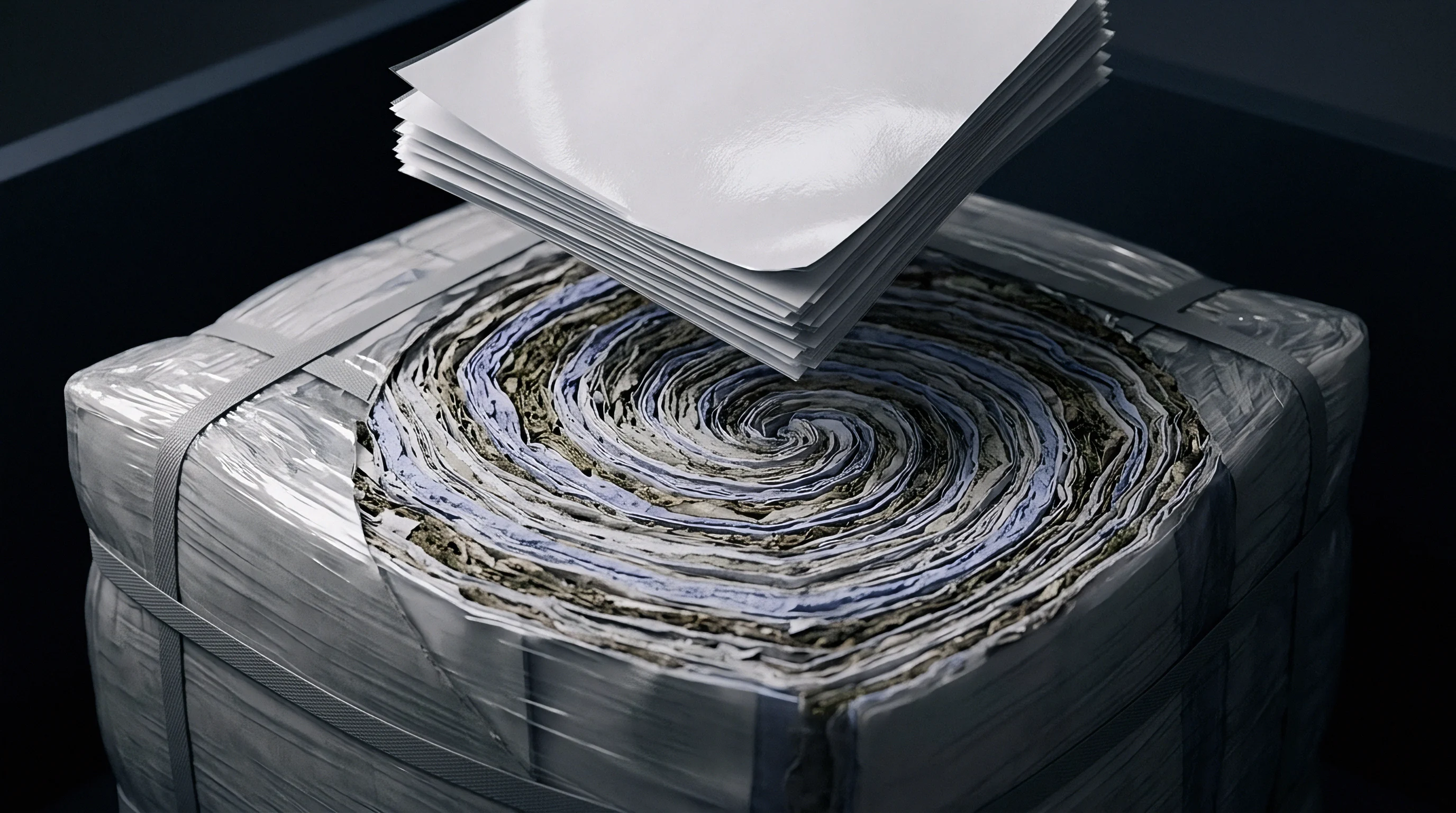
Mass
An electronic balance calibrated to 0.001 grams weighs a test specimen cut to exactly 100 square centimetres with a pneumatic punch. This direct measurement underpins trade specifications across the international pulp and paper sector. Standard atmospheric conditioning requires paperboard samples to sit for twenty-four hours at 23 degrees Celsius and 50 percent relative humidity before weighing.
Ambient moisture fluctuations quickly alter sample weight through hygroscopic adsorption; a sheet weighed in an unconditioned warehouse yields inflated figures that distort technical audits and yield calculations.

Standard Conditioning Protocols for Laboratory Mass Measurement
Testing to ISO 536 requires strict control over the environment as set out in ISO 187. A standard specimen set consists of twenty individual sheets cut across the full machine width. Moisture equilibrium is reached when consecutive weighings two hours apart differ by less than 0.2 percent in mass.
Skipping full pre-conditioning to speed up lab testing produces erratic results, especially with heavily clay-coated multi-ply board.
| Standard Designation | Sample Size Specimen | Conditioning Atmosphere | Tolerance Band | Equilibrium Requirement |
|---|---|---|---|---|
| ISO 536 | 100 cm² or 500 cm² | 23°C / 50% RH | ± 0.5% scale precision | 2 hours < 0.2% delta |
| TAPPI T 410 | 100 in² or 500 cm² | 23°C / 50% RH | ± 0.25% scale precision | 24 hours static rest |
| SCAN-P 6 | 20 sheets at 100 cm² | 23°C / 50% RH | ± 0.5% scale precision | 4 hours active circulation |
| Test conditions specified per standard methods; atmospheric deviations invalidate comparative MTR figures. | ||||
North American markets report basis weight in pounds per ream of 3,000 square feet, while international trade uses metric grammage in grams per square metre. Converting pounds per 3,000 square feet to metric grammage takes a multiplication factor of 1.6275. Fluctuations in grammage directly affect press feeder suction.
Mass Variations across Virgin and Recycled Furnishes
Virgin bleached hardwood and softwood chemical pulps form uniform sheets with consistent density profiles. Recycled furnishes made from post-consumer board bring shorter fibers, variable ash content, and residual sticky contaminants. Adding inorganic mineral fillers improves opacity and raises sheet density, but it reduces structural tensile strength.
When evaluating a 300 gram per square metre sheet, sourcing specialists need to look closely at the furnish makeup ~ a heavy filler load improves surface smoothness at the expense of internal bonding strength.
Standard mill supply agreements establish a hard grammage rejection limit at five percent beyond nominal target weight, measured across twenty consecutive reams.
Coating weight adds to total sheet mass without improving structural strength. A double-coated folding boxboard with 25 grams per square metre of mineral pigment per side contains less functional fiber than an uncoated kraft linerboard of the exact same grammage. Sourcing managers specify functional fiber requirements directly when contracting for load-bearing packaging.
Supply contracts stipulate that declared basis weight applies strictly at certified standard moisture conditions of 50 percent relative humidity, meaning delivery notes carry no weight if physical sampling takes place outside ISO 187 parameters.
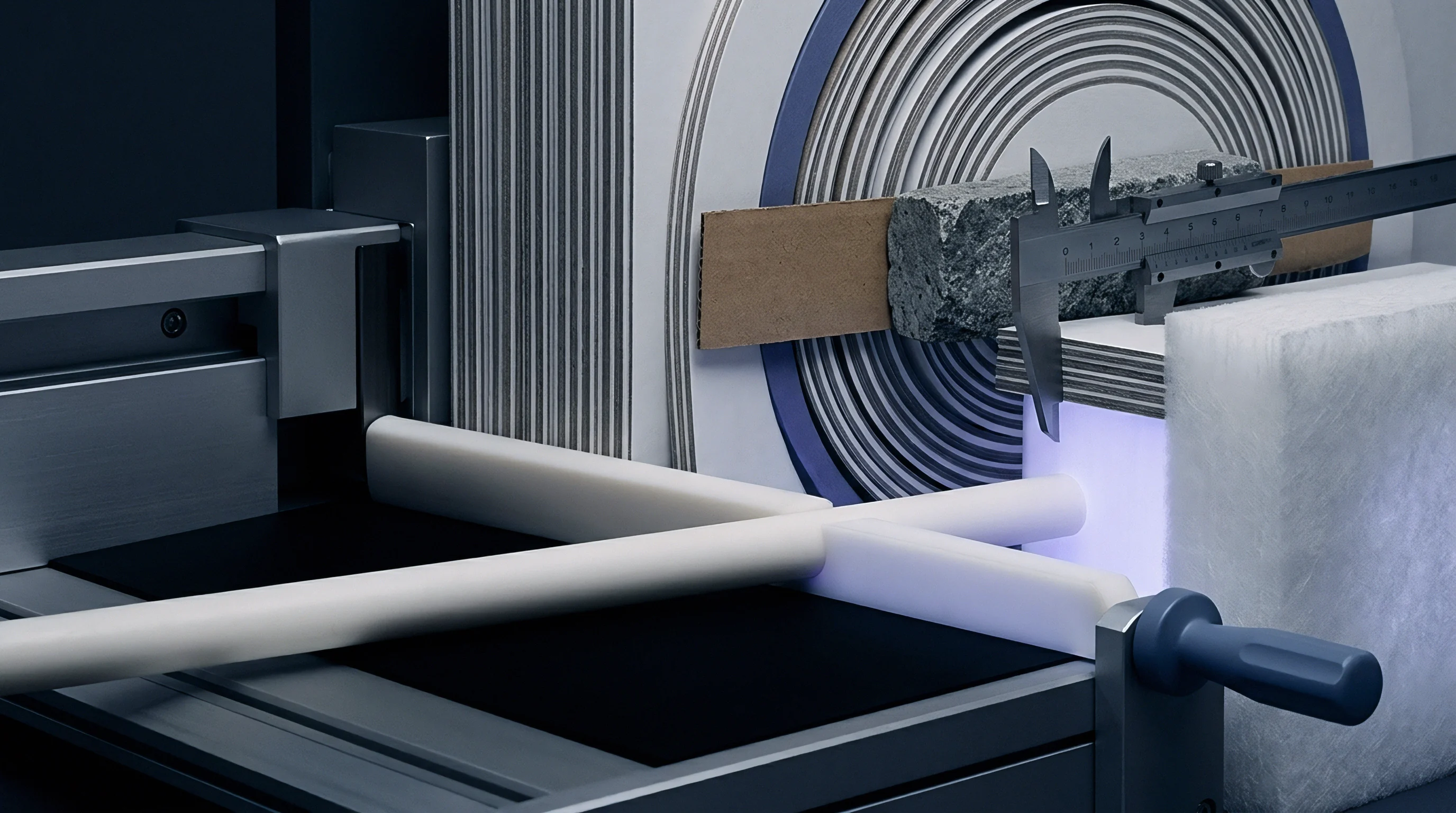

Thickness
Single-sheet micrometer readings show the physical gap a substrate fills inside converting equipment. Caliper is reported internationally in micrometres or in thousandths of an inch, known as points. Precision digital micrometers lower a static pressure foot onto the sheet at a controlled descent rate to avoid impact deformation.
Standard ISO 534 testing applies 100 kilopascals of static foot pressure across a contact area of 200 square millimetres.
Static Pressure Discrepancies in Micrometer Testing
North American TAPPI T 411 testing applies a static pressure of 50 kilopascals over an identical 200 square millimetre contact pad. That difference in applied mechanical pressure creates immediate discrepancies between European and American mill certificates. Softer, low-density substrates made with mechanical pulp show lower caliper figures under ISO 534 than under TAPPI T 411 because the structure compresses in the Z-direction.
Because static pressure directly alters measured thickness, sourcing documentation must explicitly reference the test method used to validate caliper claims.
ISO 534 testing requires a dead-weight micrometer foot pressure of 100 kilopascals applied across a 200 square millimetre anvil conditioned at 23 degrees Celsius and 50 percent relative humidity.

Bulk Calculations across Distinct Mill Technologies
Substrate bulk measures the volumetric space occupied by a given mass of fiber, expressed in cubic centimetres per gram. It is calculated by dividing the measured caliper in micrometres by dry grammage in grams per square metre. High-bulk paperboard provides structural rigidity at a lower total sheet weight.
Thermomechanical wood fibers keep their rigid tubular shape during sheet formation, resisting compression. Fully bleached chemical fibers, by contrast, collapse into flat ribbons to create dense, low-bulk sheets. Folding Boxboard (FBB) uses mechanical pulp in its middle plies to reach bulk values between 1.3 and 1.9 cubic centimetres per gram.
Solid Bleached Sulfate (SBS) relies entirely on chemical pulp, resulting in lower bulk figures between 1.1 and 1.3 cubic centimetres per gram.
Caliper variations frequently arise from ambient humidity shifts inside transit containers before warehouse unsealing.

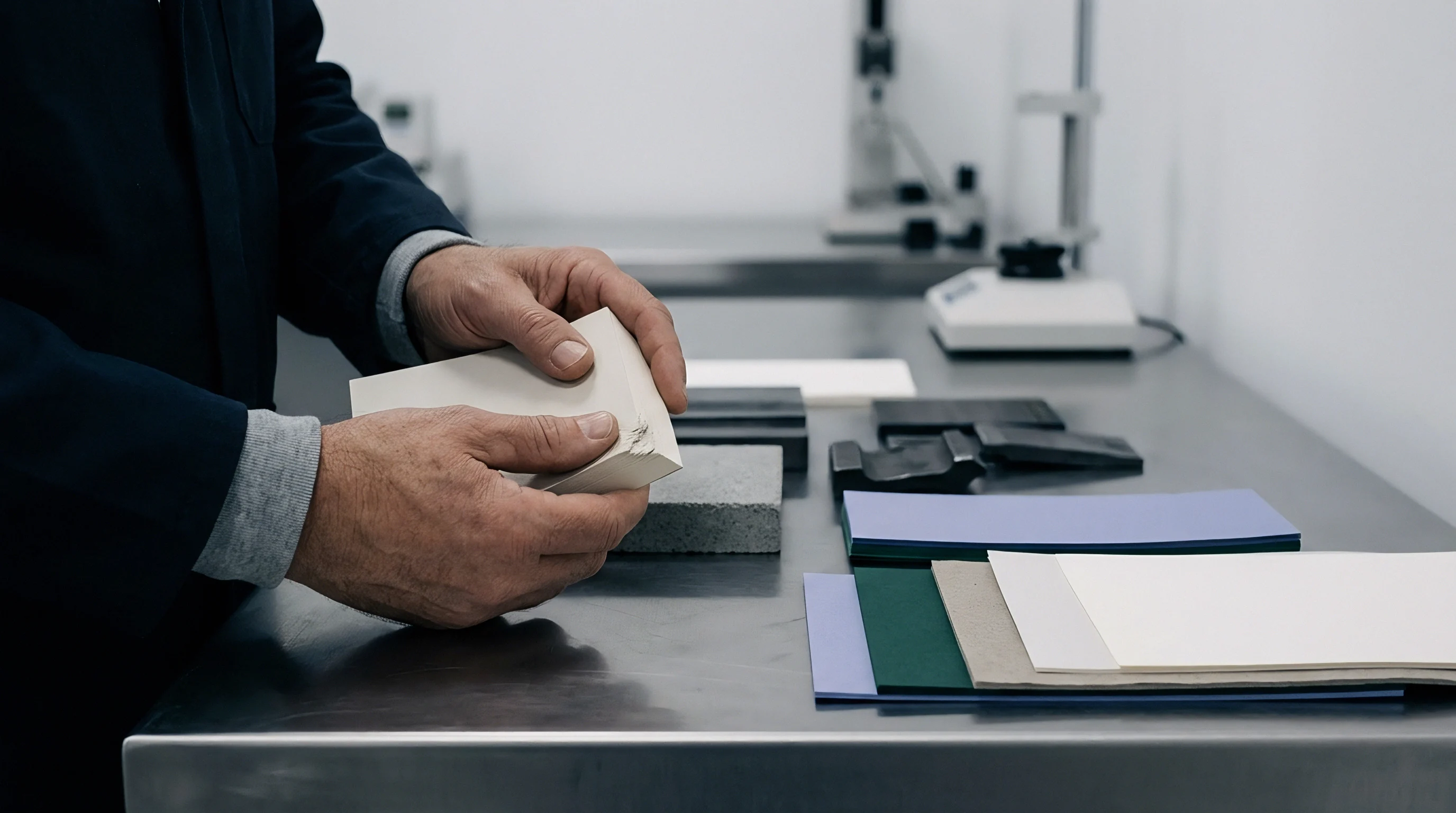
Nip
Steel rolls in the press section extract water by squeezing the web through a mechanical nip. Subsequent calender rolls smooth the surface for printing by passing the paperboard through high-pressure contact zones. Heavy calendering lowers surface roughness, but it crushes internal bulk and degrades stiffness.
Modern multi-ply machines use soft-nip calenders with heated polymer rolls to smooth the outer coating layers without destroying core bulk.
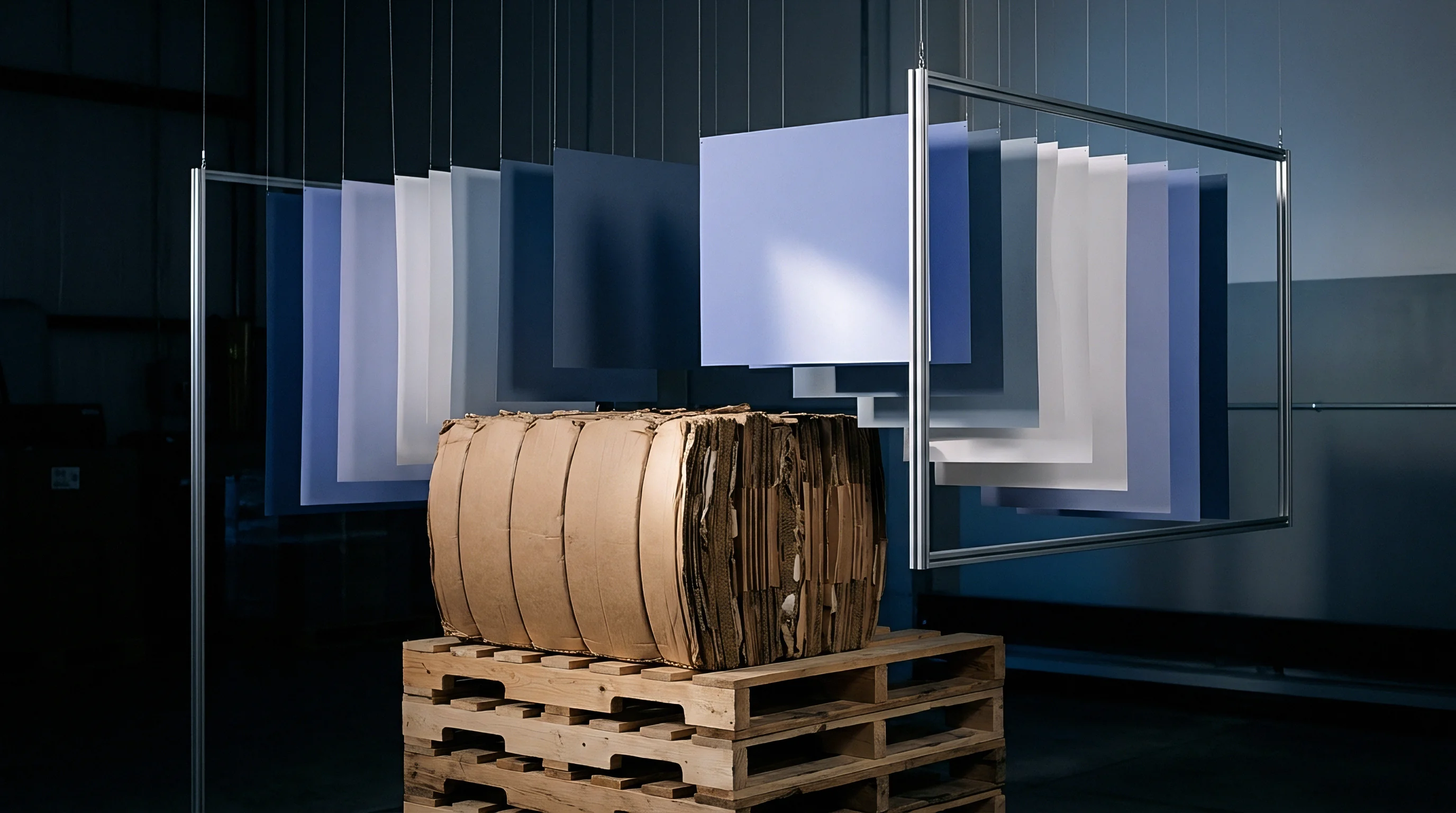
Why Does Bulk Vary across Board Grades?
Substrate construction governs volumetric density across commercial paperboard categories. Fiber selection, refining intensity, and machine pressing strategies alter the finished bulk profile. The following operational parameters define core performance limits:
- Mechanical Core Collapse ~ Excessive roll pressure in the wet press section flattens tubular wood fibers, causing permanent bulk destruction.
- Over Calendering Smoothness Loss ~ Steel calendering nips reduce total sheet caliper aggressively to meet ink gloss standards, reducing bending resistance.
- Recycled Fiber Shortening ~ Repeated repulping cycles degrade fiber length, yielding compressed, high-density sheets with minimal bulk retention.
- Z Direction Delamination ~ Inadequate starch spraying between multi-ply layers allows core separation under heavy nip compression.
Mechanical pulp delivers higher bulk for its weight. Folding Boxboard places mechanical pulp in the center with chemical pulp on the outer plies, pushing material further from the neutral bending axis. Solid Bleached Sulfate uses chemical fiber throughout, which produces uniform density but lower caliper for a given weight.

Z Direction Density Profiles in Multi Ply Board
Multi-ply forming feeds specific fiber furnishes through separate headboxes. The outer plies require fine, well-refined chemical fibers to form a smooth print surface, while the inner plies use coarse, high-freeness fiber to build caliper efficiently. The resulting density gradient through the thickness dictates how the sheet responds to bending forces.
Denser outer layers take the tension and compression during folding, protecting the lower-density core from premature failure.
Core bulk dictates structural stiffness more effectively than total sheet mass.
Increasing the caliper of the central ply boosts bending resistance without requiring extra raw material weight.


Tolerance
On-line gamma-ray and infrared sensors monitor the moving paperboard web at speeds over 800 metres per minute. Automated slice lip actuators on headboxes adjust slurry flow across the machine to control basis weight profiles. Even with automated controls, reel variability is unavoidable in paper manufacturing, leaving sourcing specialists to manage commercial tolerance bands set by trade custom.

Cross Machine Profile Deviations and Reel Variability
Thermal expansion, wire wear, and turbulent drying air create caliper and grammage variations across the machine width. Because the edges dry faster than the center, moisture and thickness gradients develop across the web. Board taken from reel edges behaves differently in stiffness than board cut from the center.
Trade standards typically allow a grammage variance of ± 4 percent to ± 5 percent from target specifications.
| Board Classification | Grammage Tolerance | Caliper Tolerance | Moisture Content Target | Cross Direction Variance |
|---|---|---|---|---|
| Solid Bleached Sulfate (SBS) | ± 4.0% | ± 5.0% | 6.5% ± 1.0% | Max 3.0% delta |
| Folding Boxboard (FBB) | ± 3.0% | ± 4.0% | 7.0% ± 1.0% | Max 2.5% delta |
| White Lined Chipboard (WLC) | ± 5.0% | ± 7.0% | 6.5% ± 1.5% | Max 4.0% delta |
| Coated Unbleached Kraft (CUK) | ± 4.0% | ± 5.0% | 7.0% ± 1.0% | Max 3.0% delta |
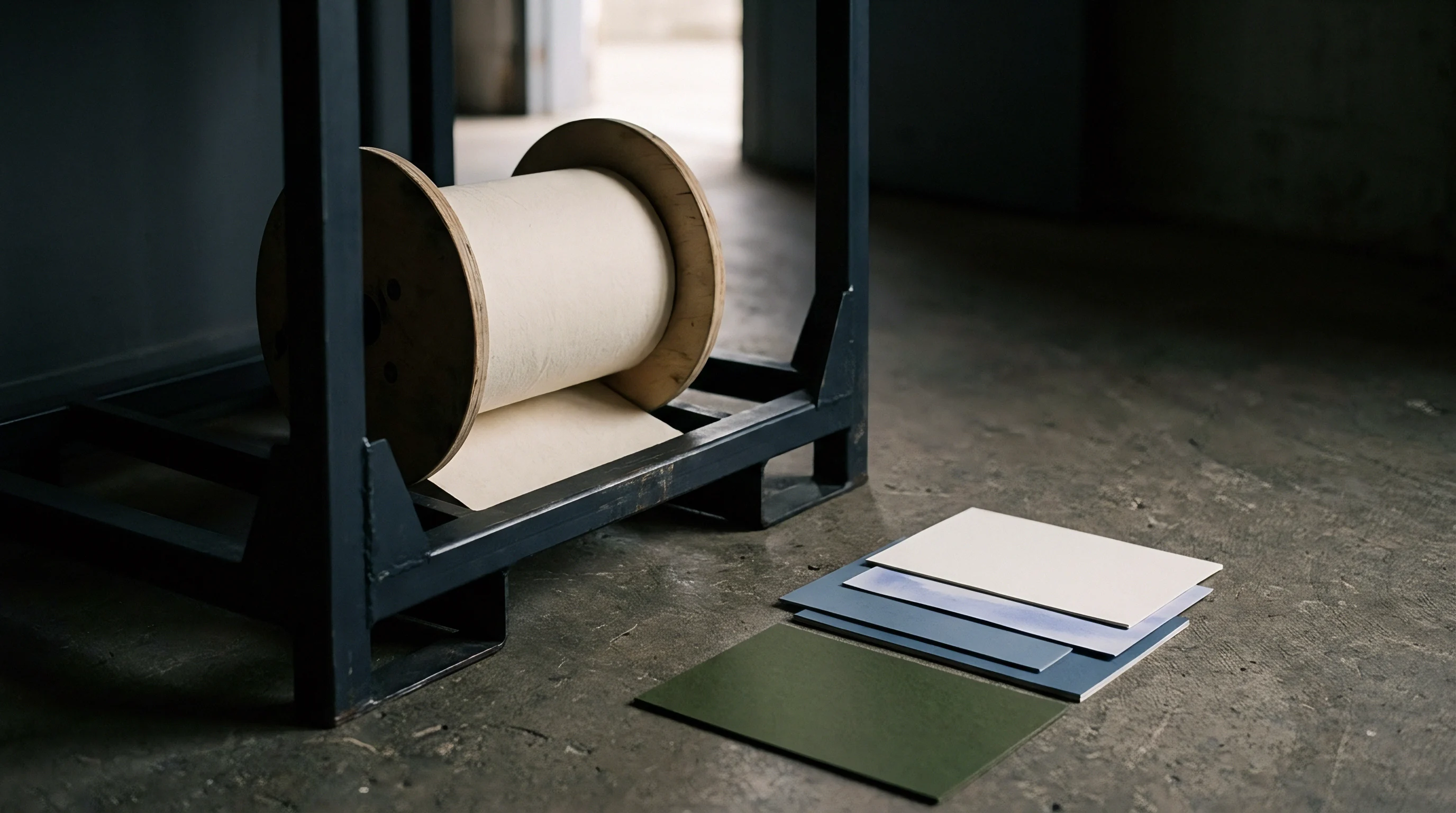
Goods in Inspection Sampling Sequences
Receiving inspection verifies delivered board against mill MTR documentation. Sourcing protocols mandate systematic physical sampling upon pallet receipt:
- Isolate three random pallets from distinct master reel lots within the shipment.
- Strip the outer protective stretch wrapping and discard the top five protective sheets.
- Extract ten full-size sample sheets across the sample set using a clean cutting tool.
- Condition specimens inside an ISO 187 controlled chamber for twelve hours.
- Punch 100 square centimetre discs and record individual weights on a calibrated balance.
- Measure single-sheet caliper across five points per sheet using an ISO 534 dead-weight micrometer.
Unidentified caliper variations cause line jams on automatic cartoning equipment, register errors during die-cutting, and reduced warehouse stacking strength once the board reaches the press room.


Conversion
Caliper directly governs structural bending resistance. Elastic modulus and physical thickness combine to determine sheet stiffness, which scales with the cube of caliper thickness (S propto E · t3). Assuming constant elastic modulus, doubling sheet thickness increases bending resistance eightfold, giving packaging cartons much higher corner strength.

Bending Resistance Dynamics in Packaging Operations
Converters evaluate bending stiffness using Taber 15-degree or L&W 5-degree test methods under ISO 2493. High-speed packaging lines depend on consistent board stiffness for clean blank feeding, crisp creasing, and square carton assembly. Under-caliper stock bends under vacuum suction cups, causing double-feeds and line stoppages.
Substrate yield directly drives overall packaging material costs, but choosing a board with insufficient caliper leads to side-wall bulging on filled retail cartons.
Taber bending stiffness scales directly with the cube of sheet caliper.

Crease Integrity and Score Line Delamination
Creasing scores the paperboard to establish precise, flexible fold lines without cracking top coatings. As the male creasing rule forces the sheet into the female matrix channel, it deliberately breaks down internal bonding within the middle plies. This controlled shear lowers resistance to folding while leaving the outer liner fibers intact.
High-density recycled boards made from short fibers tend to crack along the outer liner when folded, whereas virgin kraft fibers absorb creasing strain without fracturing. Managing crease torque is critical to maintaining stability on high-speed folder-gluers.
Preventing score line delamination under high-speed folder-gluer shear forces requires maintaining a minimum internal fiber bonding threshold.


Valuation
Mills quote paperboard by metric tonne, but converters sell finished cartons by surface area. That disconnect makes yield calculation a primary financial tool in procurement. Moving to a higher-bulk substrate delivers the required caliper and stiffness at a lower basis weight, yielding more printable square metres per purchased tonne.

Yield Calculations for Parent Sheet Procurement
Calculating printable sheet yield per metric tonne requires combining sheet dimensions with grammage figures:
Yield (Sheets per Tonne) = 1,000,000 / (Grammage in g/m² × Sheet Length in metres × Sheet Width in metres)
Consider two competing 400 micrometre substrates for a retail packaging run of 1,000,000 sheets measuring 0.70 m by 1.00 m. Option A uses Solid Bleached Sulfate (SBS) at 350 grams per square metre. Option B uses Folding Boxboard (FBB) at 275 grams per square metre, reaching the same 400 micrometre caliper through its high-bulk mechanical pulp core.
| Substrate Option | Caliper (µm) | Grammage (g/m²) | Yield (Sheets/Tonne) | Required Tonnage | Price / Tonne | Total Substrate Cost |
|---|---|---|---|---|---|---|
| Option A: SBS | 400 µm | 350 g/m² | 4,081 sheets | 245.0 tonnes | $1,400 | $343,000 |
| Option B: FBB | 400 µm | 275 g/m² | 5,194 sheets | 192.5 tonnes | $1,550 | $298,375 |
Despite its higher price per tonne, the Folding Boxboard saves $44,625 on the job by reducing total required tonnage by 21.4 percent. Lower shipment weight adds further freight savings, particularly in ocean transit.
Commercial Headroom in Downgauging Strategies
Substrate substitution requires balancing financial projections against converting performance. Reducing board weight lowers extended producer responsibility fees linked to packaging mass in European markets. Sourcing specialists evaluate index pass-through clauses, freight minimums, and die-cutting waste allowances before confirming specification changes.
Minimum order quantities often dictate grade selection for non-standard sizes or custom calipers. Adjusting sheet layout slightly to match a mill’s standard machine width avoids expensive trim waste at the reel.