Polymeric Paperboard Barrier Coating Test Methods and Compliance Documentation
Verify polymer barrier paperboard through creased Cobb testing, migration simulant suites, Cepi repulpability yields, and lot-matched Declarations of Compliance.

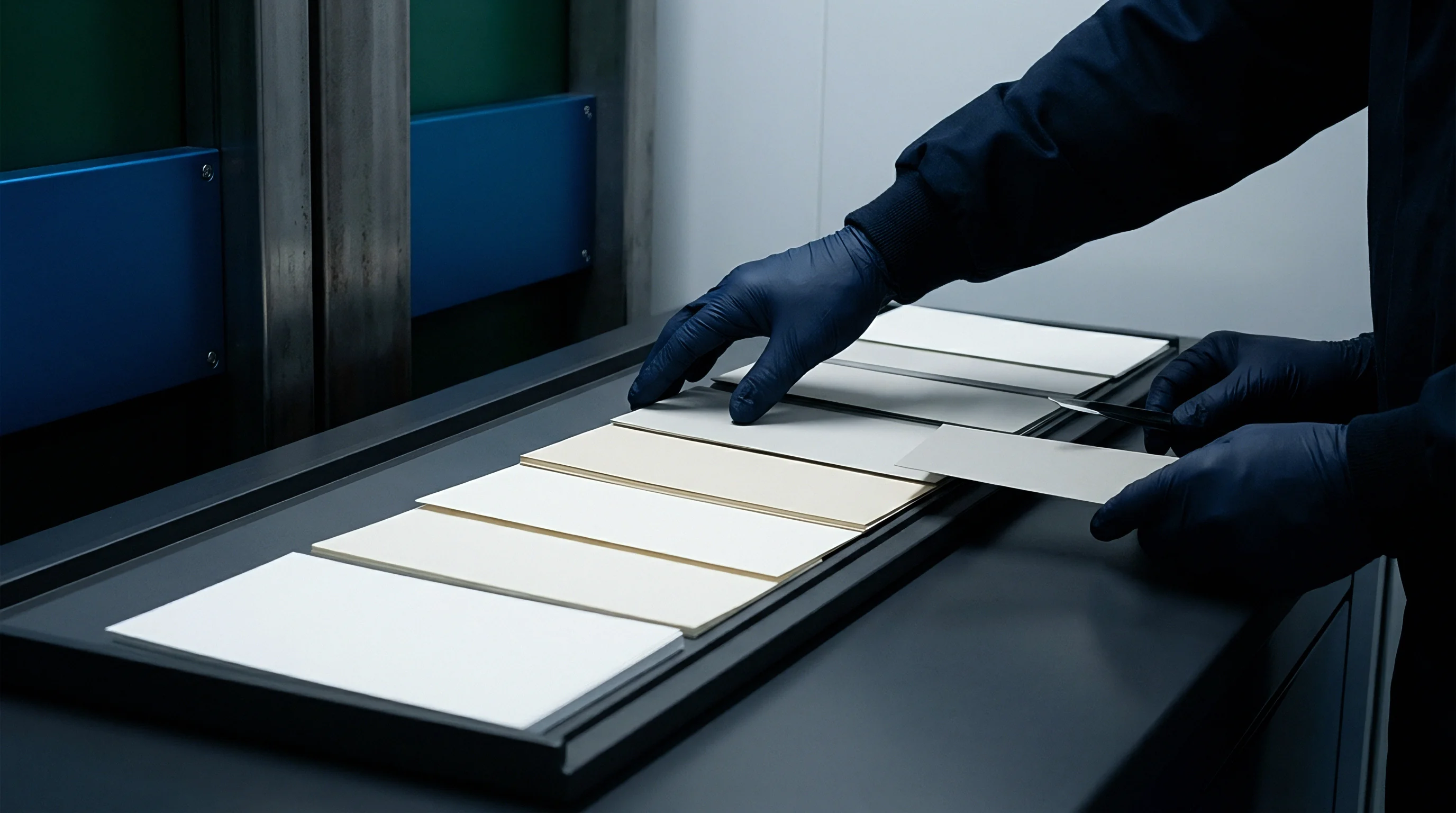
Formulation
Extrusion coatings and aqueous dispersions fail through entirely different mechanisms during converting and storage. Applied via high-speed melt extrusion, low-density polyethylene forms a continuous hydrophobic film over raw cellulose fibers, locking onto solid bleached sulfate or folding boxboard substrates by penetrating surface pores. Coat weight directly dictates pinhole frequency and matrix flexibility.
At coat weights under twelve grams per square meter, micro-pinholes often form around exposed surface fibers or trapped air. Weights above twenty-five grams per square meter improve continuity, but the resulting internal film stress makes the polymer prone to micro-cracking along creased edges.
Aqueous dispersions rely on synthetic acrylics, styrene-butadiene copolymers, or bio-based polyhydroxyalkanoates suspended in water. Applied by blade, rod, or curtain coaters, the liquid carrier must evaporate rapidly inside drying tunnels so polymer particles can coalesce into a film. If drying is incomplete, trapped moisture swells the underlying paperboard fibers and creates micro-fissures across the barrier.
Conversely, over-drying makes acrylic films brittle, leading to severe cracking during high-speed die-cutting.
Bio-polymers bring distinct thermal and chemical limits to the converting line. Polylactic acid demands high extrusion temperatures that degrade the polymer and drop its viscosity if moisture control slips. Polyhydroxyalkanoate coatings provide strong inherent grease resistance, yet their narrow thermal window makes pinholes a constant risk during cooling.
Ultimately, the resin chemistry determines which physical and analytical tests are required to confirm batch compliance.
| Coating Chemistry | Application Method | Typical Coat Weight | Primary Barrier Target | Failure Vulnerability |
|---|---|---|---|---|
| Low-Density Polyethylene | Melt Extrusion | 12 – 30 g/m² | Water Vapor and Liquid Water | Crease cracking and low heat resistance |
| Polyethylene Terephthalate | Melt Extrusion | 15 – 35 g/m² | Grease, Oils, High Temperature | Substrate delamination under flexure |
| Acrylic Aqueous Dispersion | Blade or Rod Coater | 6 – 15 g/m² | Grease, Mineral Oils, Water Vapor | Incomplete particle coalescence pinholes |
| Polylactic Acid | Extrusion or Dispersion | 15 – 25 g/m² | Water Vapor, Fats, Short Term Liquids | Hydrolytic degradation under humidity |
| Polyhydroxyalkanoates | Dispersion or Extrusion | 10 – 20 g/m² | Grease and Liquid Water | Thermal degradation during drying phase |
Converting reshapes the physical integrity of coated board. Printing inks, functional varnishes, and mechanical scoring all take a toll on the barrier, with folded package corners concentrating stress until the polymer stretches past its yield point. Reliable verification therefore requires testing unprinted flat sheets alongside fully converted, creased units pulled directly from production runs.
Proprietary additive blends are often assumed to eliminate the need for secondary barrier testing on creased samples. Yet converter quality records consistently show that raw resin specification sheets cannot predict the micro-structural defects introduced during high-speed rotary scoring.


Permeation
Verifying a physical barrier requires measuring liquid absorption, vapor transmission, and chemical penetration across both flat and creased board. Water absorption is evaluated via the standard Cobb method under ISO 535, exposing a one hundred square centimeter patch of the coating to distilled water over controlled intervals. A two-minute test captures initial surface wetting, whereas a thirty-minute run reveals liquid migrating through pinholes or boundary flaws.
For long-term liquid packaging, testing extends to twenty-four hours to track capillary action along embedded cellulose fibers.
Water Vapor Transmission Rate testing measures the mass of moisture moving through a set barrier area over twenty-four hours. Conducted under ISO 2528 or ASTM E96, procedures demand tight atmospheric control: standard conditions call for twenty-three degrees Celsius and fifty percent relative humidity, while tropical profiles run at thirty-eight degrees Celsius and ninety percent relative humidity. Coatings that hold up well in temperate environments frequently suffer logarithmic spikes in vapor transmission under tropical heat and humidity, softening the cellulose core until the carton collapses under compression.
Water vapor transmission rates measured at tropical conditioning routinely double compared to baseline figures recorded under standard temperate environments.
Oxygen Transmission Rate testing under ASTM D3985 uses a coulometric sensor to count gas molecules passing through the coating. Evaluators must balance dry carrier gas baseline tests against humidified runs at seventy-five or ninety percent relative humidity. Moisture-sensitive polymers such as ethylene vinyl alcohol rapidly lose their gas barrier as ambient humidity climbs, making dry-condition measurements dangerously misleading for chilled or high-moisture food applications.

How Do Folding Mandrels Fracture Barrier Layers?
Mechanical converting forces the outer polymeric layer into tension while compressing the underlying fiber core. Standard test protocols assess crease integrity on samples prepared under strict laboratory conditions. Under ISO 16532-2, a calibrated roller creates standardized folds to distribute stress evenly across the test sheet.
Running grease resistance tests along these crease lines confirms whether the polymer stretches elastically or fractures under strain.
Grease testing pits chemical resistance against surface tension dynamics. The TAPPI T 559 kit test uses mixtures of castor oil, toluene, and heptane across sixteen standardized ratios, where lower numbers mimic heavy mineral oils and higher numbers introduce aggressive solvents that rapidly wet non-polar surfaces. Because solvent-heavy mixtures can dissolve certain dispersion coatings ~ producing false failures where natural fats would cause no harm ~ testing with actual simulant oils under ISO 16532-1 gives a far more realistic picture over prolonged heat exposure.
Film continuity screening isolates pinholes using conductive liquids or dye penetration. Direct-current detectors apply a voltage across the sheet, completing a circuit wherever moisture fills a micro-void to flag discrete breaches. Alternatively, surfactant-based dye solutions seep into physical pores within five minutes, staining the underlying white fiber to mark failure points clearly under visual inspection.
Physical barrier values derived from flat sheets inevitably degrade once board is shaped into finished packaging geometries.

Migration
Chemical safety rules require quantifying mobile compounds that migrate from polymeric coatings into food. Commission Regulation 10/2011 and Council of Europe Resolution AP 2002 1 establish the framework for overall and specific migration limits. Overall migration measures the combined mass of non-volatile substances transferred into simulant media, capped at ten milligrams per square decimeter of contact surface ~ or sixty milligrams per kilogram of food when intended for infant packaging.
Simulant selection mirrors the intended food type, matching media properties to real-world solubility dynamics:
- Simulant A 10 Percent Ethanol models neutral-pH aqueous foods.
- Simulant B 3 Percent Acetic Acid evaluates acidic foods under lower pH conditions.
- Simulant C 20 Percent Ethanol covers alcoholic foods and organic liquid suspensions.
- Simulant D1 50 Percent Ethanol handles lipophilic foods, dairy items, and oil-in-water emulsions.
- Simulant D2 Vegetable Oil serves as the primary medium for foods with free surface fats.
- Simulant E Poly 2 6 Diphenyl p Phenylene Oxide acts as a dry adsorbent for solid dry foods stored or processed at high temperatures.
Migration protocols lock down contact temperature and duration. Profiles range from twenty-four hours at forty degrees Celsius for short ambient contact to ten days at sixty degrees Celsius for extended shelf storage. Hot-fill or microwave applications demand testing at one hundred degrees Celsius or above under EN 1186; at these temperatures, volatile species evaporate quickly, making hermetically sealed test cells essential to gather accurate migration data.
| Simulant Type | Simulant Composition | Standard Exposure Conditions | Target Compound Classes | Analytical Method |
|---|---|---|---|---|
| Simulant A | 10% Ethanol (v/v) | 10 days at 40°C | Water-soluble monomers, organic acids | Gravimetric evaporation residue |
| Simulant B | 3% Acetic acid (w/v) | 10 days at 40°C or 2 hours at 70°C | Heavy metal ions, amine catalysts | ICP-MS or ICP-OES spectroscopy |
| Simulant D2 | Vegetable oil (Olive or Sunflower) | 10 days at 60°C | Plasticizers, low-MW oligomers, slip agents | GC-FID or GC-MS after extraction |
| Simulant E | Poly(2,6-diphenyl-p-phenylene oxide) | 10 days at 60°C or 30 min at 175°C | Mineral oil saturated hydrocarbons, photoinitiators | Solvent extraction followed by HPLC-GC-FID |
Specific migration testing targets individual compounds with distinct statutory limits. Identifying residual monomers, photoinitiators, plasticizers, thermal stabilizers, and antioxidants calls for targeted gas or liquid chromatography paired with mass spectrometry. Primary aromatic amines originating from polyurethane adhesives or azo pigments face a strict non-detectable threshold at a 0.01 milligrams per kilogram limit.
Regulation 10/2011 also caps heavy metal migration for elements including aluminum, barium, cobalt, copper, iron, lithium, manganese, nickel, and zinc.
Testing for mineral oil contamination separates hydrocarbons into two main groups: Mineral Oil Saturated Hydrocarbons and Mineral Oil Aromatic Hydrocarbons. Recycled paperboard often introduces heavy hydrocarbon loads from residual offset printing inks, making functional barrier coatings essential. Evaluated under EN 16995 via online coupled High-Performance Liquid Chromatography with Gas Chromatography and Flame Ionization Detection, a coating qualifies as an effective barrier if migration stays below 0.5 milligrams per kilogram for saturated hydrocarbons and below 0.1 milligrams per kilogram for aromatic hydrocarbons over the declared shelf life.
A polymeric coating functions as an effective migration barrier only when total mineral oil aromatic hydrocarbon transfer remains below one hundred micrograms per kilogram of packaged food.
Screening for Non-Intentionally Added Substances identifies reaction side-products, polymer degradation species, and raw material impurities. High-resolution time-of-flight mass spectrometry detects unknown peaks above an analytical threshold of ten parts per billion, after which toxicological evaluation under the Threshold of Toxicological Concern framework evaluates consumer exposure risks.
Analytical migration results remain valid only for the exact layer structure, coat weight, and food contact area-to-volume ratio specified in the test certificate under Regulation 10/2011 Article 17.

Recyclability
End-of-life qualification requires proving both fiber recovery efficiency and chemical safety. Recycling mills repulp recovered packaging in water to separate cellulose fibers from non-paper layers. Polymeric coatings complicate this process if they shatter into fine particles or cling tightly to fiber bundles.
Under the Cepi Harmonised Recyclability Test Method or PTS-RH 021/97, standardized protocols calculate overall fiber yield, coarse reject percentages, and sticky particle formation.
- Disintegrate fifty grams of dry paperboard sample in two liters of water at forty degrees Celsius for thirty thousand revolutions in a standardized pulper.
- Screen the resulting pulp slurry through a six-hundred-millimeter diameter laboratory screen fitted with one-hundred-and-fifty-micrometer sieve slots.
- Collect and dry the coarse rejects remaining on top of the screen slot plate to calculate mass percentage relative to initial sample weight.
- Pass the accepted fiber suspension through a secondary sheet-former to produce handsheets for visual contamination inspection.
- Count macro-stickies and un-disintegrated polymer flake counts per square meter using automated image analysis software.
Passing criteria require recovering over eighty-five percent of dry fiber weight while keeping coarse rejects under fifteen percent. Thick polyethylene coatings typically peel away in large, intact sheets that screen out cleanly without blinding pulper plates. Thin dispersion coatings, by contrast, frequently break down into fine particles that slip through screen slots, contaminating the accepted pulp and forming sticky deposits on paper machine drying cylinders.
The European Packaging and Packaging Waste Regulation mandates Recyclability Performance Classes, sorting package designs by their design-for-recycling compliance and practical repulpability yields:
- Performance Class A mandates fiber recovery efficiency exceeding ninety-five percent with zero operational processing impediments during re-pulping.
- Performance Class B requires fiber recovery efficiency between ninety and ninety-five percent with minor non-paper residue formation.
- Performance Class C specifies fiber recovery efficiency between eighty and ninety percent, setting the minimum legal threshold for market entry.
- Performance Class D identifies designs yielding under eighty percent fiber recovery, triggering mandatory packaging redesign or financial eco-modulation fee penalties.
Compostability testing under EN 13432 offers an alternative compliance path for heavily contaminated food packaging. Certification hinges on four criteria: chemical characterization, disintegration, ultimate aerobic biodegradation, and ecotoxicity. Chemical standards cap heavy metals, fluorine, and volatile solids, while strict prohibitions on per- and polyfluoroalkyl substances restrict total fluorine to under fifty milligrams per kilogram via EN 14582 combustion ion chromatography.
Industrial compostability certification under EN 13432 demands ninety percent organic carbon conversion to carbon dioxide within one hundred and eighty days.
Disintegration testing under ISO 16929 exposes complete packaging samples to pilot-scale aerobic composting for twelve weeks. The resulting matrix is passed through a two-millimeter sieve, where passing requires less than ten percent of the original dry mass to remain on the screen. Finally, ecotoxicity testing assesses the compost’s effect on plant growth under OECD Guideline 208, requiring cereal germination rates and biomass yields to hit ninety percent of control compost levels.
Submitting dispersion-coated paperboard containing non-biodegradable synthetic polymers for industrial composting results in immediate batch failure during twelve-week disintegration screening.

Declaration
Documentary proof links lab results to regulatory market access across international supply chains. A complete packaging dossier begins with Forest Stewardship Council or Programme for the Endorsement of Forest Certification chain-of-custody records. Under FSC-STD-40-004 v3-1, fiber claims move through percentage or credit accounting methods: percentage systems pass exact fiber ratios directly onto delivery paperwork, while credit systems log certified inputs into a rolling tally redeemable within twelve months.
Food contact compliance centers on the written Declaration of Compliance mandated by Regulation 1935/2004 Article 16 and Regulation 10/2011 Annex IV. Traceability must hold unbroken from resin producer through coating applicator to final converter, with intermediate suppliers issuing partial declarations for their specific chemical inputs or processing steps.
| Supply Chain Tier | Mandatory Document Type | Primary Standard Reference | Key Information Elements |
|---|---|---|---|
| Raw Resin Manufacturer | Chemical Composition Statement | Regulation 10/2011 Annex I | Monomer positive list entries, SML restrictions, dual-use additives |
| Paperboard Mill | Substrate Safety Declaration | BfR Recommendation XXXVI / EN 645 | Cold/hot water extractives, heavy metal content, virgin fiber sourcing |
| Coating Applicator | Intermediate Food Contact DoC | EU 1935/2004 Article 16 | Coat weight parameters, curing verification, residual solvent analysis |
| Packaging Converter | Final Declaration of Compliance | EU 10/2011 Annex IV | Ratio of food contact area to volume, dual-use additive disclosures, NIAS evaluation |
| Test Laboratory | Accredited Test Report | ISO/IEC 17025 | Simulant specifications, temperature profiles, quantitative migration values |
Every legally sound Declaration of Compliance requires specific mandatory data points; leaving out even one invalidates the compliance status of the entire shipment:
- Entity Identity records the legal name and physical address of the business operator issuing the compliance declaration.
- Substrate Traceability establishes direct lot code linking between the declaration document and physical delivery invoices or roll tags.
- Regulatory Assertion cites specific statutory instruments and framework standards governing the material composition.
- Dual-Use Additive Disclosures identifies food additives or flavorings governed by Regulation 1333/2008 or Regulation 1334/2008 present within the polymer layer.
- Functional Barrier Confirmation details specific migration limits verified and confirms non-intentionally added substance toxicological risk assessment completion.
- Contact Boundaries sets explicit operating limits including permissible food types, contact duration, and temperature ranges.
Supplier chain-of-custody codes must be verified against public databases. A valid code on an invoice offers no protection if the paperboard grade listed on the delivery note sits outside the supplier’s certified scope. Scope verification requires cross-checking the certificate code against the online FSC or PEFC database to confirm material coverage.
How do legal teams resolve compliance discrepancies when an intermediate converter alters the surface-to-volume ratio assumed in the raw material supplier’s initial migration declaration?

Discrepancy
Customs border authorities and market surveillance agencies inspect landed packaging against declared documentation. Any mismatch between mill test reports and finished product performance creates immediate liability for the importer. A common discrepancy occurs when mill certificates state migration values measured on pristine flat sheets, ignoring new pathways introduced during converting ~ such as uncured flexographic inks or edge-wicking along exposed cuts.
Physical verification at import docks follows statistical acceptance sampling under ISO 2859-1. For an order of forty metric tons of dispersion-coated paperboard across eighty individual reels, an Acceptable Quality Level of 1.0 percent under Normal Inspection Level II calls for sampling thirteen reels for pinhole and coat weight testing. Finding just two non-conforming reels in that sample set triggers the rejection of the entire forty-ton shipment, holding the order at customs.
Customs holds accumulate demurrage, storage fees, and re-testing expenses daily. Re-testing at accredited ISO/IEC 17025 facilities averages fifteen hundred euros for overall migration testing and up to four thousand euros for complete specific migration and mineral oil barrier analysis. Financial exposure escalates dramatically if non-compliant packaging reaches store shelves, where regulatory authorities can order market recalls and levy administrative fines tied to global annual turnover under Unfair Commercial Practices directives.
Mitigating risk requires embedding clear technical acceptance clauses directly into supply contracts, shifting financial liability for batch rejections to the party issuing the Declaration of Compliance. Contracts ought to mandate lot-specific migration and barrier reports generated within twelve months of manufacture; relying on five-year-old resin reports leaves glaring vulnerabilities during regulatory audits.
A strong compliance file binds raw resin disclosures, mill substrate certificates, converter ink declarations, and lab test reports into a single auditable dossier. QA staff should audit certificate scope lines against physical reel tags before releasing board to production. Ultimately, legal accountability for the imported packaging rests with the registered importer of record listed on customs paperwork.