Substrate Deformation Kinetic Modeling for Functional Barrier Degradation Thresholds in Polymeric Paperboard Coatings
Polymeric barrier degradation across paperboard creases follows strain rate kinetics where strain exceeding coating yield limits creates pinholes and invalidates functional compliance.


Strain
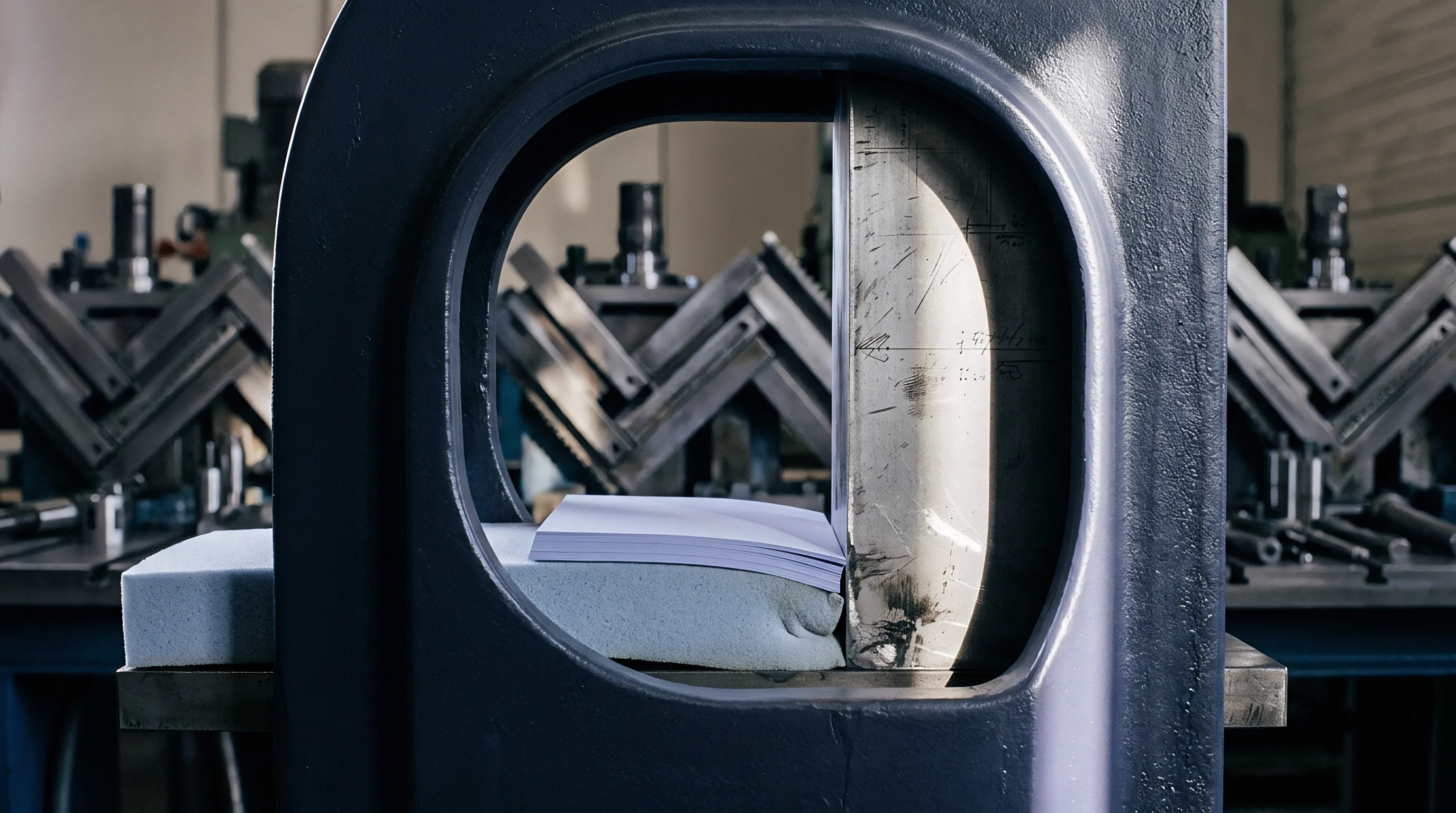
Folding polymer-coated paperboard forces the outer surface into severe tensile extension while compressing the inner fiber mat. During scoring and creasing, mechanical forces concentrate along the male rule entry line, establishing a steep strain gradient through the board thickness. The polymer barrier layer on the top linerboard undergoes localized elongation dictated by substrate thickness, score geometry, and moisture content, with dry board cracking far more quickly.
Structural Stress Distribution across Coated Interfaces
In a typical creasing operation, paperboard acts as a layered orthotropic composite, accumulating tensile deformation on the convex side of the fold. When strain in the outer polymer film passes the matrix yield point, irreversible deformation begins. The magnitude of this strain depends directly on distance from the neutral bending plane.
As deformed cellulose fibers lose cohesion, peak tensile stresses transfer directly into the adjacent polymer coating.
Extruded polyolefins, aqueous dispersions, and bio-based polymers respond differently under mechanical stress. High-density polyethylene strain-hardens after initial yielding, while unplasticized polyhydroxyalkanoates fracture brittly at lower elongation thresholds. The ratio of board thickness to crease groove width sets the radius of curvature at the fold apex: narrow female dies compress the board tightly, forcing the outer polymer skin past five percent strain within milliseconds.

Anisotropic Crease Elasticity and Substrate Yield
Paperboard mechanical response differs between the machine direction and the cross direction. Fiber alignment along the machine direction increases bending stiffness and allows tighter fold radii, but tensile strain in the polymer coating reaches maximum intensity when folding perpendicular to that dominant fiber orientation. The outer paperboard plies usually delaminate under shear to relieve tensile strain; if these sub-surface plies fail to shear cleanly, mechanical tension transfers directly into the polymer barrier layer, forming micro-voids.
Poisson contraction inside the substrate further complicates strain kinetics. As outer cellulose fibers stretch lengthwise across the crease ridge, they contract laterally, generating complex multiaxial stress states at the coating-board interface. Polymer coatings with poorly matched Poisson ratios suffer severe interfacial shear stress, driving premature film necking that thins the local barrier right along the crease spine.
Whether interfacial adhesion chemistry can permanently offset mechanical strain localization during ultra-high-speed converting line stops remains open to empirical confirmation.

Fatigue
Polymeric barrier coatings undergo time-dependent structural relaxation and deformation creep under sustained mechanical and environmental loading. Following box formation, spring-back forces inside folded paperboard panels exert continuous static bending moments on corner creases, while ambient moisture fluctuations continually alter the viscoelastic response of both the cellulosic substrate and the functional polymer film.
Viscoelastic Creep and Moisture Amplification
Water molecules act as plasticizers inside paperboard substrates and hydrophilic polymer coatings. Humidity shifts from fifty percent to eighty-five percent relative humidity disrupt the mechanical equilibrium of the folded package: cellulosic fibers swell, increasing board thickness and driving additional tensile elongation across the outer coating layer as absorbed moisture depresses glass transition temperatures during humid transit.
Aqueous dispersion coatings based on styrene-butadiene or acrylic copolymers show pronounced sensitivity to temperature and moisture cycling. As environmental conditions pass the glass transition threshold of the polymer blend, the film transitions from a glassy state to a rubbery state. Under continuous bending tension, rubbery polymers undergo irreversible viscous flow; this structural creep thins the barrier coating over time, reducing resistance to gas and moisture transport.

Kinetic Rate Equations for Polymer Chain Slip
Model predictions for barrier degradation rely on Eyring rate process theories, where the strain rate connects exponentially to applied stress and temperature. Thermal energy enables polymer segment movement over activation energy barriers, while applied mechanical stress lowers those activation barriers to accelerate chain slip and micro-void nucleation. Higher dynamic strain rates during box forming generate localized adiabatic heating within the polymer layer, temporarily lowering melt viscosity and promoting localized film tearing.
| Polymer Coating Type | Glass Transition Temperature (°C) | Tensile Yield Strain (%) | Elongation at Break (%) | Critical Stress Intensity (MPa·m^0.5) |
|---|---|---|---|---|
| Low-Density Polyethylene (LDPE) | -120 to -100 | 10.0 to 15.0 | 300 to 500 | 1.5 to 2.0 |
| Polypropylene (PP) | -20 to 0 | 7.0 to 10.0 | 100 to 300 | 1.2 to 1.8 |
| Aqueous Acrylic Dispersion | 15 to 35 | 3.0 to 6.0 | 40 to 120 | 0.6 to 1.0 |
| Polybutyrate Adipate Terephthalate (PBAT) | -35 to -25 | 8.0 to 12.0 | 400 to 600 | 1.0 to 1.4 |
| Polylactic Acid (PLA) | 55 to 65 | 2.0 to 3.5 | 4 to 8 | 0.4 to 0.7 |
Slower scoring speeds reduce internal polymer stresses when converting brittle bio-based barrier formulations.

Fissure
Microscopic rupture of a continuous polymer film destroys its capacity to retard gas transmission, liquid penetration, and lipophilic migration. Pinholes and micro-cracks form along the outer fold axis where mechanical strain exceeds material elongation thresholds, with thicker films resisting tension particularly poorly. Once a continuous path forms through the polymer thickness, barrier performance degrades by orders of magnitude beyond predictions based on film thinning alone.

Which Crease Radius Triggers Microscopic Barrier Microcracking?
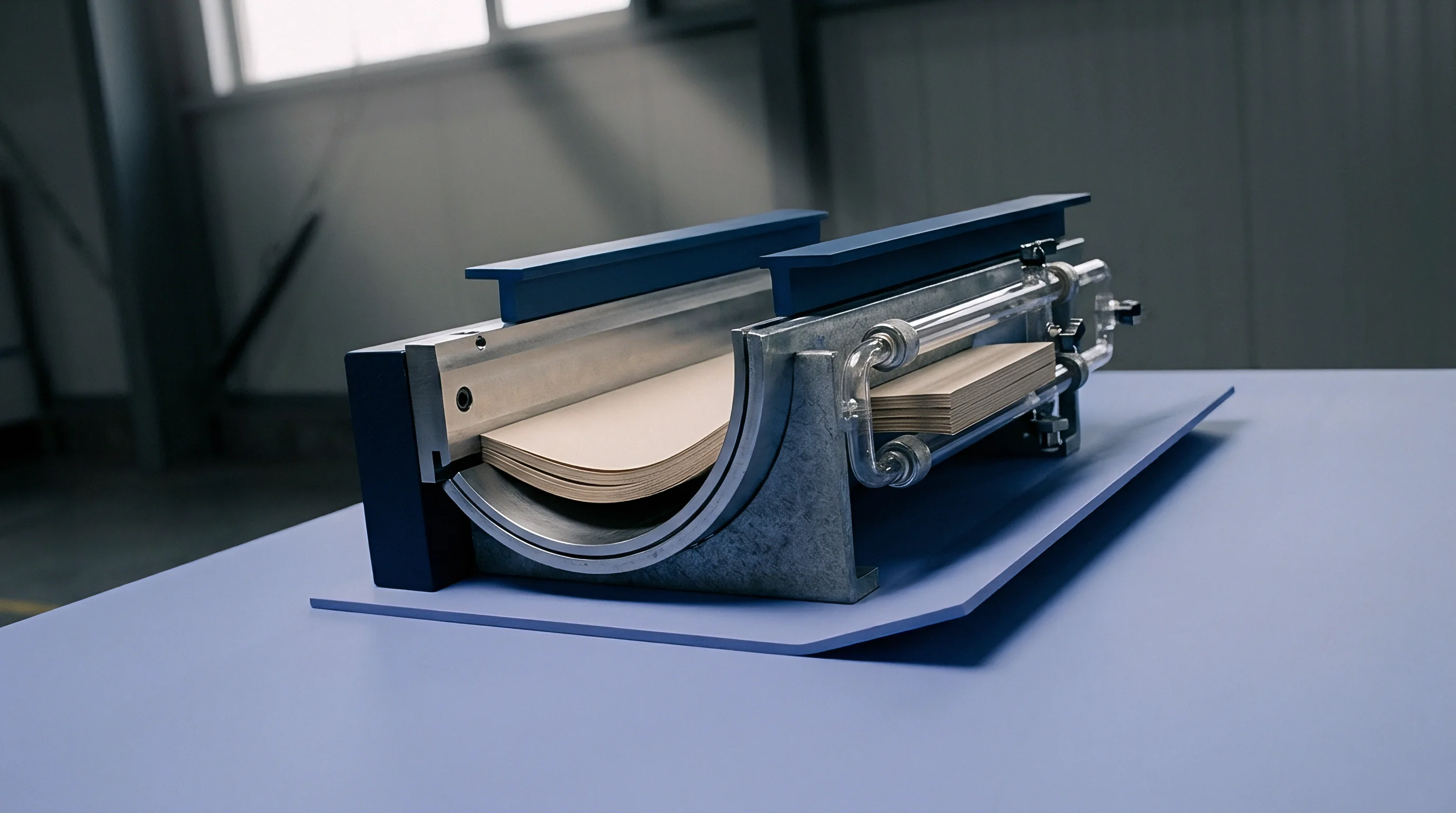
Bending geometry determines the exact point of structural failure within the barrier integument. Selecting female groove width dictates the outer radius of curvature during scoring operations: when the crease radius drops below twice the total paperboard thickness, tensile elongation in the polymer film routinely crosses five percent. At this deformation magnitude, dispersion coatings containing inorganic mineral fillers concentrate stress around pigment particles, initiating sub-surface micro-cleavage.
Pinpoint defects aggregate along paperboard surface valleys where coating thickness varies. Application methods such as curtain or rod coating yield micro-scale coat-weight variations across paperboard topographies; thin spots reach critical failure strain earlier than adjacent thick zones, establishing localized channels for fluid transport.
Mathematical Model for Film Yield Thresholds
Consider a 350 grams per square meter solid bleached board with a thickness of 450 micrometers, coated with a 15 micrometer aqueous acrylic barrier coating. Mechanical scoring uses a male rule width of 0.71 millimeters and a female groove width of 1.40 millimeters, achieving a score depth of 0.35 millimeters. Assuming the neutral axis sits at thirty-five percent of the board thickness from the compression face during ninety-degree folding, the geometric radius of curvature at the outer fold apex calculates to approximately 0.65 millimeters.
Outer surface strain calculations follow the formula: strain equals total outer distance from the neutral axis divided by bending radius. With an effective distance of 307.5 micrometers from the neutral axis to the outer polymer surface, peak tensile strain reaches 47.3 percent along the fold spine. If the measured strain at break for the acrylic formulation under a high strain rate of one hundred reciprocal seconds equals 4.5 percent, mechanical rupture occurs across the entire crease length.
Reducing paperboard moisture from seven percent to four percent shifts the neutral axis inward, increasing peak tensile strain to 52.1 percent and compounding microcrack severity.
A coating elongation below three percent under ten reciprocal seconds strain rate yields microcracks exceeding five micrometers in folded corners at twenty-three degrees Celsius.
Failure Modes in Deformed Barrier Films
Deformation kinetic models categorize structural barrier breaches into four discrete physical mechanisms:
- Pinpoint tensile tearing occurs when localized tensile stress exceeds material ultimate tensile strength across thin coating valleys along the paperboard surface topography.
- Interfacial delamination shear manifests when coating adhesion strength falls below internal substrate shear forces, causing the polymer film to detach and buckle.
- Crazing network propagation develops under sustained low-magnitude stress, forming networks of micro-voids held together by fine polymer fibrils before complete rupture.
- Pinhole coalescence under hygrothermal creep emerges when temperature and moisture cycles enlarge static micro-voids into continuous fluid channels during storage.
Exceeding the critical film elongation value during box forming guarantees immediate grease staining and rapid barrier degradation on retail shelves.


Assay
Quantifying barrier continuity across folded carton corners demands diagnostic methods tailored to microscopic pore dimensions. Standardized flat-sheet testing procedures fail to capture localized mechanical damage along score lines; laboratory protocols must evaluate the barrier under conditions that mirror converting stress and transport environments, where pinhole counts dictate shelf life.
Standardized Diagnostic Protocols for Micro-Defect Quantification
Pinhole detection in polymer-coated paperboard relies on dye penetration methods defined in EN 13676. A volatile organic solvent carrying an indicator dye is applied to the coated face for a specified contact duration, penetrating micro-cracks and pinholes to stain underlying paperboard fibers. Image analysis software then counts stained sites per unit area, providing a quantitative metric of pinhole frequency.
Mineral oil barrier performance testing follows DIN 55415 and EN 16987 standards using volatile simulants like hexane or specific saturated hydrocarbons (MOSH) and aromatic hydrocarbons (MOAH). Scored board specimens sit inside migration cells where vapor-phase transport collects on absorbent media for gas chromatography extraction. Breakthrough times along folded creases reveal functional barrier degradation long before physical delamination becomes visible under optical magnification.
Standard EN 13676 mandates zero dye penetration spots across ten square centimeters of scored board to maintain functional barrier status.

Discrepancies between Flat Sheet Reports and Folded Carton Performance
Technical datasheets published by paperboard mills state water vapor transmission rates (WVTR) and grease resistance ratings measured exclusively on un-deformed flat samples. Un-deformed acrylic dispersion coatings routinely achieve WVTR values below five grams per square meter per day at thirty-eight degrees Celsius and ninety percent relative humidity according to ISO 2528 standards. Upon scoring and ninety-degree folding, however, the same surface displays WVTR spikes exceeding one hundred grams per square meter per day due to microcrack propagation.
| Test Method Standard | Target Defect Mechanism | Detection Sensitivity Limit | Primary Operational Metric |
|---|---|---|---|
| EN 13676 Dye Test | Macro-pinholes and surface cracks | Pores larger than 5 micrometers | Stained spots per square decimeter |
| EN 16987 (MOSH/MOAH) | Vapor-phase molecular diffusion | Detection limit 0.1 mg/kg simulant | Breakthrough time in hours |
| TAPPI T 559 (3M Kit) | Surface oil and grease wetting | Kit rating 1 to 12 surface energy | Highest non-penetrating solution number |
| ASTM F1249 Modulated IR | Water vapor transmission rate | 0.005 g/m² per day water vapor | Mass flux per unit area time |
Quality assurance sequences for verifying delivered coated board lots require execution in strict linear order:
- Condition paperboard samples at twenty-three degrees Celsius and fifty percent relative humidity for twenty-four hours per ISO 187.
- Score test sheets using standardized male-female die tooling matched to target carton calipers.
- Fold scored specimens through one hundred eighty degrees along the score axis using constant velocity laboratory folding apparatus.
- Apply dye solution according to EN 13676 for exactly two minutes across the folded crease zone.
- Quantify stain spots using high-resolution optical image analysis to establish pinhole density per meter of crease length.
Elevated crease pinhole counts can stem from aggressive tooling settings rather than coating brittleness.

Statute
Compliance declarations for food-contact paperboard packaging depend on proving continuous barrier performance under real storage conditions. Regulatory authorities reject safety claims based on untested flat substrates when converted packaging contains mechanical flaws, as barrier failure along folded edges allows chemical substances to migrate from paperboard fibers, recycled pulp contaminants, or printing inks directly into food matrices.

Food Contact Migration Thresholds and Functional Barrier Criteria
European Regulation EU 10/2011 defines functional barrier criteria for plastic layers inside food packaging: a plastic layer serves as a functional barrier only if it reduces migration of non-authorized substances below specific limits. For non-genotoxic substances, migration cannot exceed 0.01 milligrams per kilogram of food. Microcracks formed during carton converting destroy functional barrier continuity, invalidating compliance under Article 13 of the regulation.
Paperboard matrices incorporating recycled fibers contain mineral oil saturated hydrocarbons (MOSH) and mineral oil aromatic hydrocarbons (MOAH). German BfR Recommendation XXXVI sets guidelines for paper and board food contact materials. When mechanical deformation breaks the internal functional coating, mineral oil fractions migrate rapidly into dry food products.
Regulatory inspection authorities sample finished packages off retail shelves, holding importers liable for migration limit breaches caused by crease failure.
Higher moisture content in paperboard substrates lowers cracking risk during high-speed scoring but increases long-term viscoelastic creep during warehouse stacking.

Recyclability Mandates under Packaging Regulations
The European Packaging and Packaging Waste Regulation (PPWR) mandates strict material recyclability criteria under Article 6, requiring packages to achieve high design-for-recycling efficiency ratings to retain market access. Heavy plastic lamination layers that resist creasing fail recyclability protocols because synthetic films cannot easily separate from cellulose fibers during standard hydrapulping operations governed by EN 13430 or CEPI recyclability guidelines.
Converters must navigate progressive compliance gates to clear converted barrier cartons for commercial distribution:
- Baseline raw material certification requires validating supplier compliance statements, FSC or PEFC chain-of-custody documentation, and raw polymer safety datasheets.
- Converting strain validation demands laboratory crease testing to verify that film elongation limits accommodate structural package designs.
- Migration test execution involves submitting folded carton samples to accredited laboratories for overall and specific migration testing under EN 1186 conditions.
- Recycling compliance audit confirms that thin functional coatings disintegrate cleanly during standard repulping operations without producing sticky contaminants.
Annex III of Regulation EU 10/2011 invalidates compliance declarations when functional barrier layer breakdown exposes the paperboard substrate to fatty food simulants.

Liability
Financial losses from barrier coating failures fall upon the party specified in purchase order technical annexes, and customs inspectors routinely seize non-compliant lots. Because migration limits permit no concessions, contract terms assign cost liabilities: when a retail customer detects grease staining or mineral oil contamination in shipped products, liability traces back through the supply chain from brand owner to packaging converter to paperboard mill.
Commercial Exposure at Customs and Shelf Level
Customs authorities operating under market surveillance frameworks enforce mandatory safety compliance at national borders. Shipments containing packaging materials with invalid or incomplete migration test files risk immediate border detention. Rejecting a fifty-tonne shipment of converted paperboard packaging creates immediate freight demurrage charges, missed production schedules, and regulatory notification logs that trigger heightened audit frequency for future imports.
Shelf-level package failures inflict compounded financial damage. Solvent or oil leakage through cracked corner folds damages outer shipping boxes, triggers retailer fines, and harms brand reputation. Recall costs for contaminated food products routinely exceed the original purchase value of the packaging materials by multiples of one hundred.
Converted carton barrier integrity relies on matching polymer yield strain to the outer tension profile of the specified scoring knife profile.

Contractual Allocation of Crease Degradation Risk
Precise purchase specifications eliminate ambiguity regarding barrier performance expectations. Generic purchase order phrases like commercial quality or standard grease resistance provide zero legal defense during technical disputes; valid supply contracts define maximum allowable pinhole counts per meter of score line after standardized folding, explicit WVTR upper limits on converted samples, and mandatory test methods.
Supply agreements must explicitly reference manufacturing humidity limits, score tooling geometry tolerances, and batch sampling rates. Inclusion of indemnification clauses shifts financial responsibility for product recalls to the converter or mill if delivered paperboard fails to meet defined strain-at-break parameters under agreed testing conditions. Technical compliance annexes form the primary defense against commercial claims arising from barrier degradation.