Fibre Length Distribution Degradation in Recycled Boxboard
Fibre length degradation in recycled boxboard reduces sheet stiffness and score integrity, requiring chemical bonding additives or higher basis weight to preserve performance.
Fibre
Fibre Length Degradation Mechanisms in Recycled Stock
Recycled containerboard and boxboard furnish degrades physically with every cycle of collection, repulping, and refining. Mechanical stress in hydrapulpers, high-density cleaners, pressure screens, and refiners shortens arithmetic and weighted mean fibre lengths while thinning z-directional cell walls. Softwood kraft fibres starting between 2.5 mm and 3.5 mm suffer transverse cuts, micro-fibrillar collapse, and irreversible lumen closure (hornification).
Hardwood fibres, originally 0.8 mm to 1.4 mm, break down rapidly into micro-fines that pass a 200-mesh screen. The resulting fibre length distribution loses its log-normal shape, shifting toward a population dominated by fragments below 0.2 mm.
Chemical changes compound the mechanical damage. As hydrogen bonds inside the cell wall collapse during steam cylinder drying, boxboard fibres lose swelling capacity, locking their fibrillar structure in a rigid state. Repulping alone cannot recover the lost water retention value, so mills refine the stock to rebuild swelling and inter-fibre bonding.
Refining strips open the primary wall and secondary S1 layer to uncover the S2 layer. This recovers swelling, but it also shortens fibres further and creates loose fines that clog drainage on the wet end.
Fibre length distribution dictates sheet formation and structural performance. Long fibres form the primary load-bearing network that distributes tensile stress across the web. Short fibres and fines pack into the intervening spaces, increasing density and surface smoothness at the expense of tear strength, z-directional internal bonding, and score fatigue resistance.
If the recycled furnish contains too high a fraction of fibres under 0.5 mm, the network lacks the inter-fibre overlap needed to distribute local converting stresses.
Fractionation Behavior in Bauer-McNett Classifiers
Evaluating fibre degradation in the lab relies on physical separation across standard wire meshes. Bauer-McNett classification under TAPPI T 233 splits furnish samples into morphological fractions through a cascade of submerged screening chambers. The long-fibre fraction retained on the 14-mesh screen carries most of the load in boxboard.
As material goes through repeated recycling loops, the mass retained on 14-mesh and 28-mesh screens drops off, shifting pulp weight into the 100-mesh, 200-mesh, and passing-200-mesh fines fractions.
A large proportion of fines passing 200-mesh indicates an exhausted furnish. These fines come in two forms: primary fines from parenchyma cells and vessel elements, and secondary fines peeled off cell walls during refining. Primary fines contribute almost no bonding and mostly wash through the forming wire into the white water.
Secondary fines have high specific surface area and exposed hydroxyl groups, which increases drainage resistance on the wire while giving a minor boost to sheet density. Recirculating secondary fines builds up hydraulic resistance across the wet end, slowing machine speeds and demanding higher doses of retention chemicals.
Under ISO 16065-2 testing, the length-weighted mean fibre length of post-consumer recycled boxboard furnish drops below 1.20 mm once the fine fraction passing 200-mesh exceeds 28 percent by dry weight.
Morphological analysis reveals that mechanical shortening hits different fibre types unequally. Thick-walled latewood fibres break transversely far more often during stock prep than thin-walled earlywood fibres. Being stiff, latewood fibres bridge across refiner bar edges where shear concentrates.
Earlywood fibres flatten under load instead, absorbing energy by collapsing longitudinally rather than snapping across the axis. This preferential breakage depletes the stiff long fibres critical for bending stiffness and compressive strength in structural plies.

Swelling and Hornification Mechanics
Hornification shrinks internal surface area through irreversible cross-linking during drying and heating. As water evaporates from inter-fibrillar spaces within the cell wall, capillary tension pulls adjacent microfibrils together, allowing hydroxyl groups on neighboring cellulose chains to form direct hydrogen bonds. When re-wetted in the pulper, water fails to break these rigid internal bonds, leaving the fibre wall stiff and unswollen.
This loss of swelling capacity directly impairs fibre conformability during sheet consolidation. Flexible fibres bend around each other under couch roll pressure and wet pressing, establishing broad contact zones that develop into strong hydrogen bonds during drying. Hornified fibres remain stiff tubes that contact only at crossover points.
The resulting drop in bonded area weakens tensile index, burst strength, and internal bonding in the finished board, forcing higher reliance on synthetic strength resins or surface sizing.
Cell wall collapse is quantified through Water Retention Value testing under ISO 23714. Virgin unbleached softwood kraft pulp typically registers water retention values over 1.80 grams of water per gram of dry fibre. After five drying and repulping cycles without intermediate refining, that value drops below 1.10 g/g ~ a decline that correlates directly with lower wet-web strength on the machine and poor internal bond performance during converting.
Refining
Mechanical Energy Application and Bar Drag Physics
Stock preparation in recycled boxboard mills must balance strength development against further shortening of already damaged fibres. Low-consistency systems at 3.5 to 4.5 percent solids use double-disc or conical refiners with bar patterns designed to impart shear. The mechanical intensity delivered to the slurry depends on Specific Edge Load (Joules per meter) and Specific Refining Energy (kilowatt-hours per metric tonne of dry fibre).
High edge loads chop fibres, whereas low edge loads compress and fibrillate cell walls without severe loss of length.
Recycled furnish requires low specific edge loads between 0.4 and 0.8 J/m to protect fragile fibres. Pushing refining systems above 1.2 J/m sharply accelerates arithmetic mean length loss. Plate patterns need narrow bars (1.5 mm to 2.0 mm) and tight grooves to maximize impact frequency while keeping energy per impact below the failure threshold of weakened cell walls.

Fibrillation versus Transverse Cutting Mechanics
Refining alters fibre morphology through external fibrillation and transverse cutting. Fibrillation peels thin ribbons from the outer secondary wall, raising micro-fibrils that project into the surrounding slurry. These projections increase the surface area available for hydrogen bonding during drying without shortening the main shaft.
Transverse cutting occurs when a fibre is caught perpendicular to crossing bar edges, snapping the main axis and permanently shortening the fibre population.
The balance between fibrillation and transverse cutting establishes the mechanical limits of recycled board. Low-intensity, high-shear refining promotes fibrillation, preserving the long-fibre backbone required for tear strength and bending stiffness. Excessive normal force from worn bar edges or tight plate gaps crushes fibres instead, destroying length and producing inert fines.
Free fines generated by aggressive cutting reduce web permeability on the forming wire, restricting drainage and driving up dryer steam demand.
Enzymatic pre-treatment prior to refining offers a method to limit mechanical fibre cutting. Endoglucanases selectively hydrolyze amorphous cellulose on hornified fibre surfaces, softening the cell wall matrix. Subsequent refining can then expand the cell wall at lower edge loads, attaining target freeness without heavy transverse cutting.
Refining recycled boxboard furnish at a Specific Edge Load above 1.2 J/m reduces average fibre length by over 30 percent while yielding lower burst strength than controlled low-intensity processing at 0.5 J/m.

Drainage and Strength Trade-Offs on the Fourdrinier Wire
Fibre shortening directly cuts the hydraulic conductivity of the wet web during sheet formation. Schopper-Riegler and Canadian Standard Freeness tests measure how rapidly water drains through a consolidated pulp pad under gravity. Degraded recycled stock loses freeness rapidly during refining because short fragments and fines pack into the voids between longer fibres, building a dense filter cake on the forming wire.
Slow drainage on the table limits the basis weight a single wire can form at target machine speeds. Mills running high percentages of degraded furnish must lower headbox consistency ~ often below 0.5 percent solids ~ to maintain formation quality and prevent flocculation. Lowering headbox consistency means handling far more water per tonne of production, which overloads flat suction boxes and forces machine slowdowns.
Chemical programs help control fines-driven drainage resistance. Dual-component retention systems using high-molecular-weight cationic polyacrylamides and colloidal silica aggregate fines onto longer fibres. This prevents loose fines from migrating deep into the web, keeping capillary channels open for water removal without disrupting formation.
Forming
Multi-Ply Architecture Strategy for Degraded Stock
Modern recycled paperboard machines ~ producing Coated Recycled Board or multi-ply Folding Boxboard ~ use multi-ply forming sections to optimize furnish allocation. With three to five headboxes depositing separate stock layers onto a combined wet web, mills can place short, degraded recycled fibres in inner core plies while reserving long virgin fibres or clean post-industrial stock for outer top and bottom plies.
Placing short-fibre stock in central core plies preserves sheet bulk at lower raw material cost. Bending stiffness scales with the third power of caliper and the elastic modulus of the outer plies. Structuring the sheet like an I-beam ~ high-modulus, long-fibre stock on the outer faces and lower-density stock in the center ~ lets the core carry shear stress while outer plies handle tensile and compressive loads under flexure.
- Top Liner Ply ~ Virgin bleached hardwood or softwood kraft furnish providing high surface smoothness, brightness, and ink holdout without structural weakness.
- Under Liner Ply ~ De-inked post-industrial pulp or clean post-consumer furnish acting as a barrier to hide dark core plies and prevent bleed-through.
- Filler Core Plies ~ Low-grade post-consumer newsprint and mixed recycled boxboard with high fines content to build bulk and cross-direction caliper profile uniformity.
- Back Liner Ply ~ Unbleached post-consumer recycled pulp or long-fibre unbleached kraft providing crack resistance during box scoring and folder-gluer operations.
Z-Directional Orientation and Internal Bond Strength
Fibre orientation within plies and across ply boundaries dictates internal bond strength, measured by Scott Bond under TAPPI T 569. Jet-to-wire speed ratios at the headbox determine whether fibres align predominantly along the machine direction or remain randomly oriented. Strong machine-direction orientation boosts tensile strength along the web axis, but weakens fibre entanglement across the sheet thickness.
Inter-ply adhesion relies on fibres entangling across wet-web interfaces before the couch press. When core plies carry high proportions of short, hornified recycled fibres, inter-ply bonding drops because short fragments fail to bridge into adjacent wet webs. Mills frequently spray cooked cationic potato or corn starch between forming webs to achieve target Scott Bond values above 150 J/m² on multi-ply CRB grades.
Wet press configurations also shape z-directional density. Shoe presses with extended nip dwell times up to 30 milliseconds consolidate the wet sheet structure without crushing fragile core fibres. This extended nip pressing brings semi-swollen fibre surfaces into close contact, promoting hydrogen bonding and helping compensate for the lost swelling capacity of hornified stock.
Bench
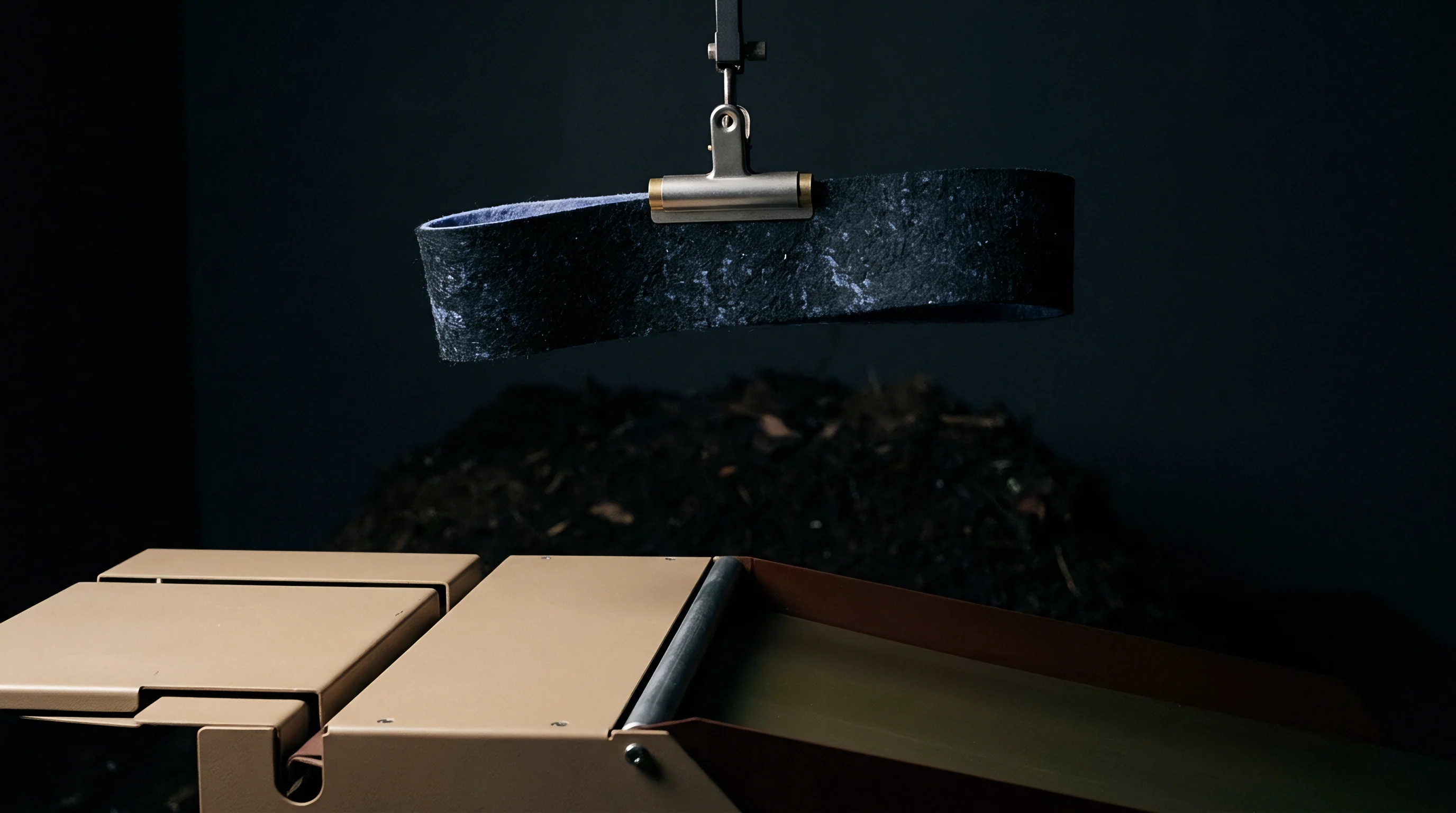
Optical Fibre Analysis Protocols and Calibration
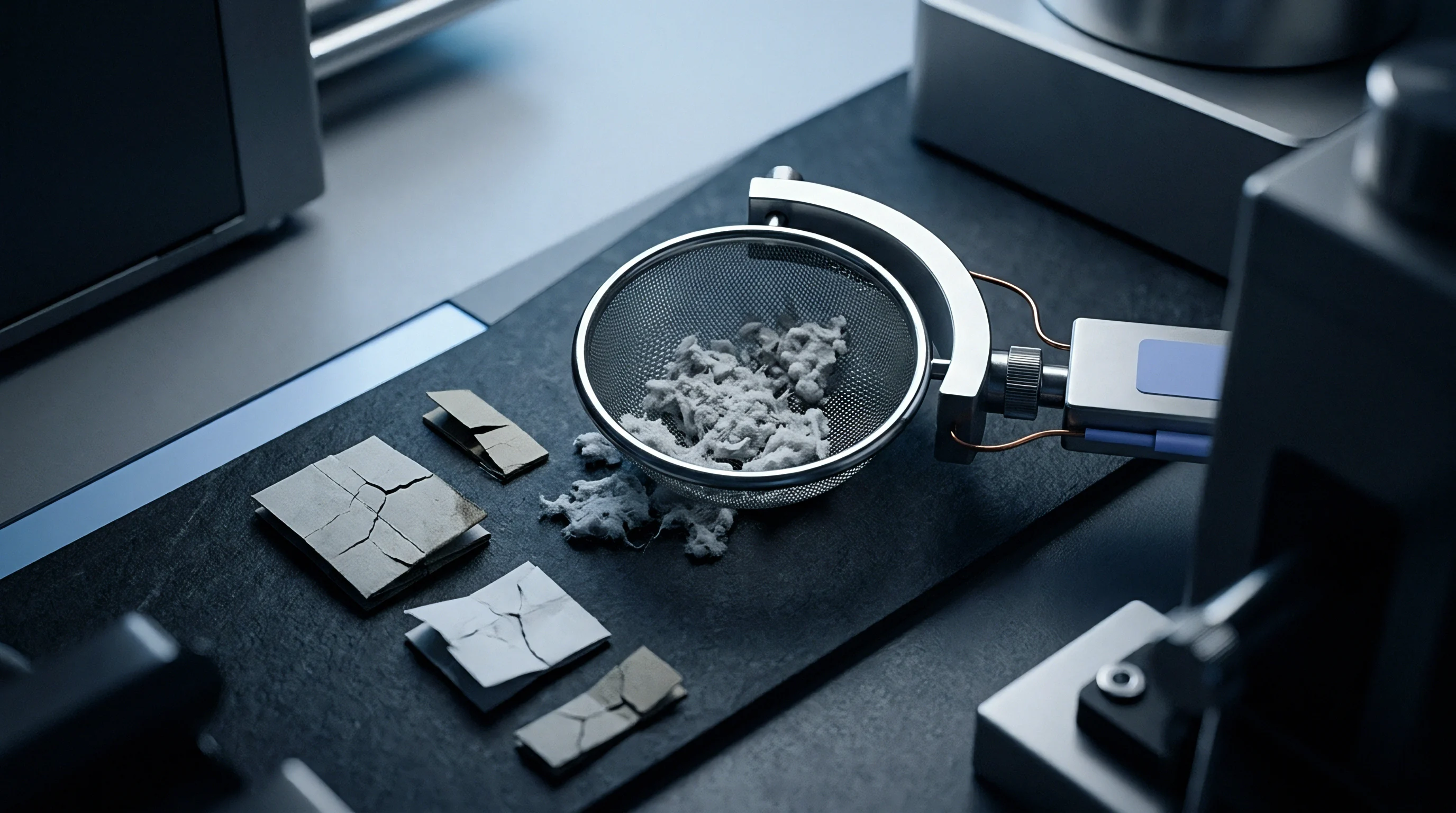
Laboratory measurement of fibre degradation relies on automated optical image analyzers operating under ISO 16065-1 and ISO 16065-2. These instruments evaluate thousands of suspended fibres passing through a capillary flow cell illuminated by polarized light or a laser diode. High-resolution CCD cameras capture two-dimensional projections to calculate arithmetic, length-weighted, and weight-weighted mean lengths, alongside mean width, curl index, and kink index.
Calibration requires strict adherence to standardized cut-off limits. Optical counters must evaluate particles down to 0.05 mm to capture fines, though fragments under 0.20 mm are typically excluded from length-weighted metrics so they do not distort the data. Sample preparation demands complete pulp disintegration without mechanical cutting; ISO 5263 disintegration using 30,000 revolutions in water separates fibre bundles without altering the underlying length distribution.