Multi-Ply Sheet Architecture Optimization for Post-Consumer Recycled Containerboard
Optimizing multi-ply recycled containerboard requires strategic furnish distribution and precise starch application to maximize stiffness while lowering total fiber cost.
Forming
Layering Strategies across Modern Multi-Fourdrinier Lines
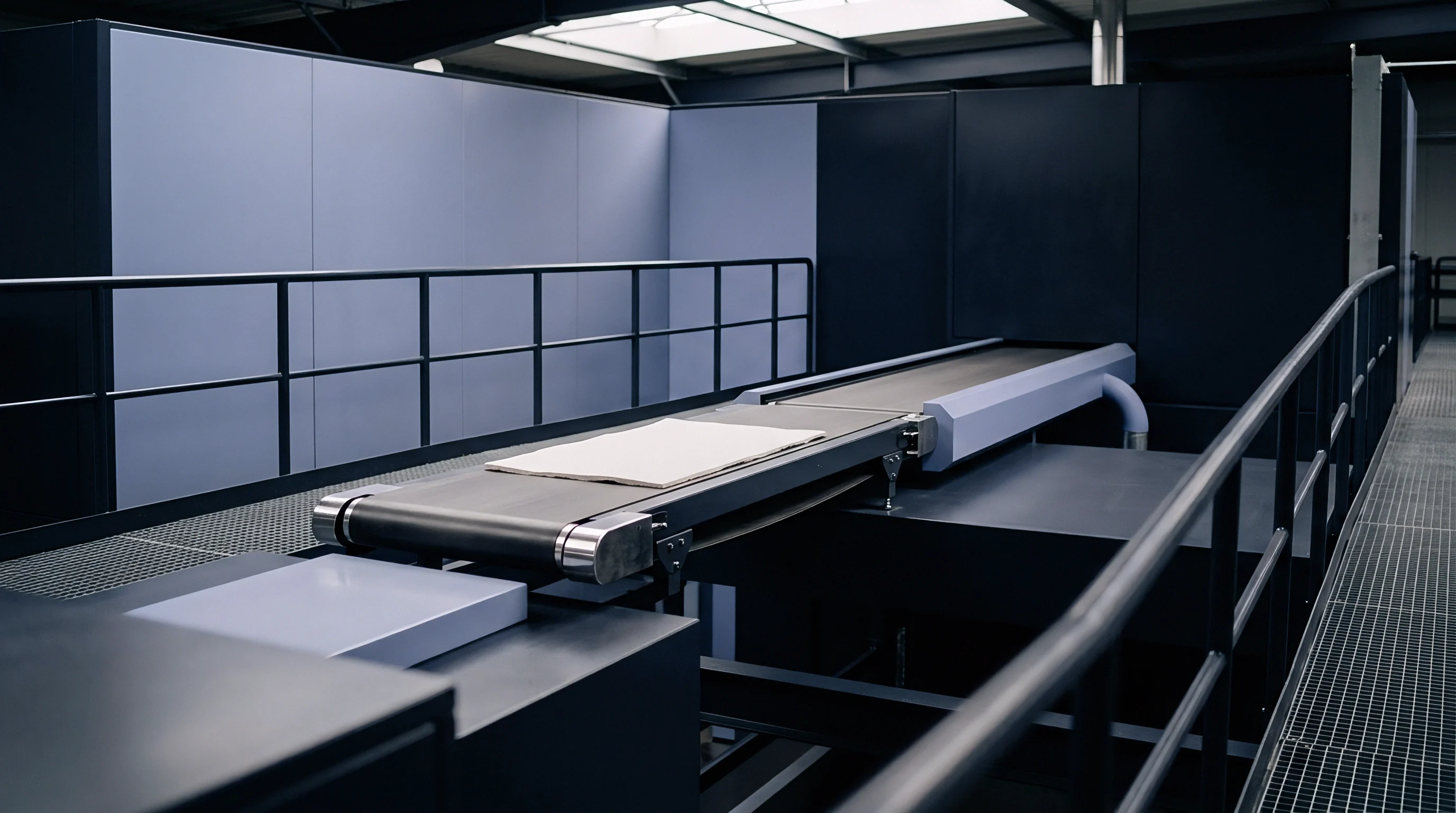
Modern containerboard machines making multi-ply recycled liners split the furnish stream across three headbox feeds. The top ply needs a clean surface for reliable print receptivity, whereas the core layers take up short-fiber fines and bulk-building fractions. Running a total grammage of 175 grams per square metre ~ stratified as 20 percent top, 60 percent core, and 20 percent bottom ~ delivers the mechanical stiffness needed in high-speed corrugated converting.
Above 900 metres per minute, hydrodynamic shear at the slice board aligns recycled fibers along the machine direction, raising the ratio of MD to CD tensile performance.
Pulping post-consumer corrugated containers drops average fiber length from 2.2 millimetres to 1.4 millimetres over three repulping cycles. Headbox dilution needs to stay between 0.35 percent and 0.45 percent consistency to avoid micro-flocculation in the core layer. Opening the slice beyond target limits drops stock velocity relative to wire speed, producing drag that destabilizes jet impingement on the forming fabric.
Vacuum profiles across the initial suction boxes control water removal rates to preserve ply cohesion; if dewatering happens too quickly, fines get washed from the sheet underside, leaving an unbonded boundary vulnerable to cross-direction shear.
Iso 536 testing confirms that basis weight drift across the paper web stays within two percent when stock consistency is governed by active optical sensors.
Dewatering rates on individual forming wires dictate inter-ply bond strength before the combined web reaches the wet press section. Sudden suction pulls starch and fines away from the top-core boundary. Drainage must step up gradually through low-vacuum hydrofoils before high-vacuum suction boxes pull on the consolidated sheet.
Couch roll moisture in each ply decides how effectively hydrogen bonds form across the boundary layer; joining plys above 86 percent moisture lets the fiber networks interlock under mechanical nip pressure, preventing delamination during high-speed printing.
| Ply Location | Headbox Consistency (%) | Dewatering Vacuum (kPa) | Target Moisture at Couch (%) |
|---|---|---|---|
| Top Layer | 0.38 | 12 to 18 | 84.5 |
| Core Layer | 0.48 | 15 to 24 | 85.2 |
| Bottom Layer | 0.40 | 10 to 16 | 84.0 |
Disturbing initial consolidation compromises web stability across its full width. Mill operators balance wire speed against jet angle to minimize fiber orientation skew. An off-angle stock jet causes asymmetric contraction during thermal drying, locking residual stress into the finished board.
When converting machinery processes board with uneven internal stress, the sheet twists along flute lines during die-cutting. Continuous ultrasonic scanning across the reel catches density variations before rolls move to storage vaults.
Web tension directly influences multi-ply adhesion prior to press section consolidation.
Excessive web tension stretches the wet sheet before consolidation, pulling fiber networks apart at the ply boundary. Wet-end press nips consolidate the stratified sheet under linear nip pressures ranging from 120 to 350 kilonewtons per metre. Extended-nip presses provide longer dwell times in the shoe nip, allowing water extraction without crushing the low-density core.
Standard double-felted shoe presses preserve sheet bulk while raising solid content to 48 percent prior to entering the dryer section. Preserving bulk in the core ply maintains sheet stiffness at lower total grammage, saving fiber tonnage across long production runs.
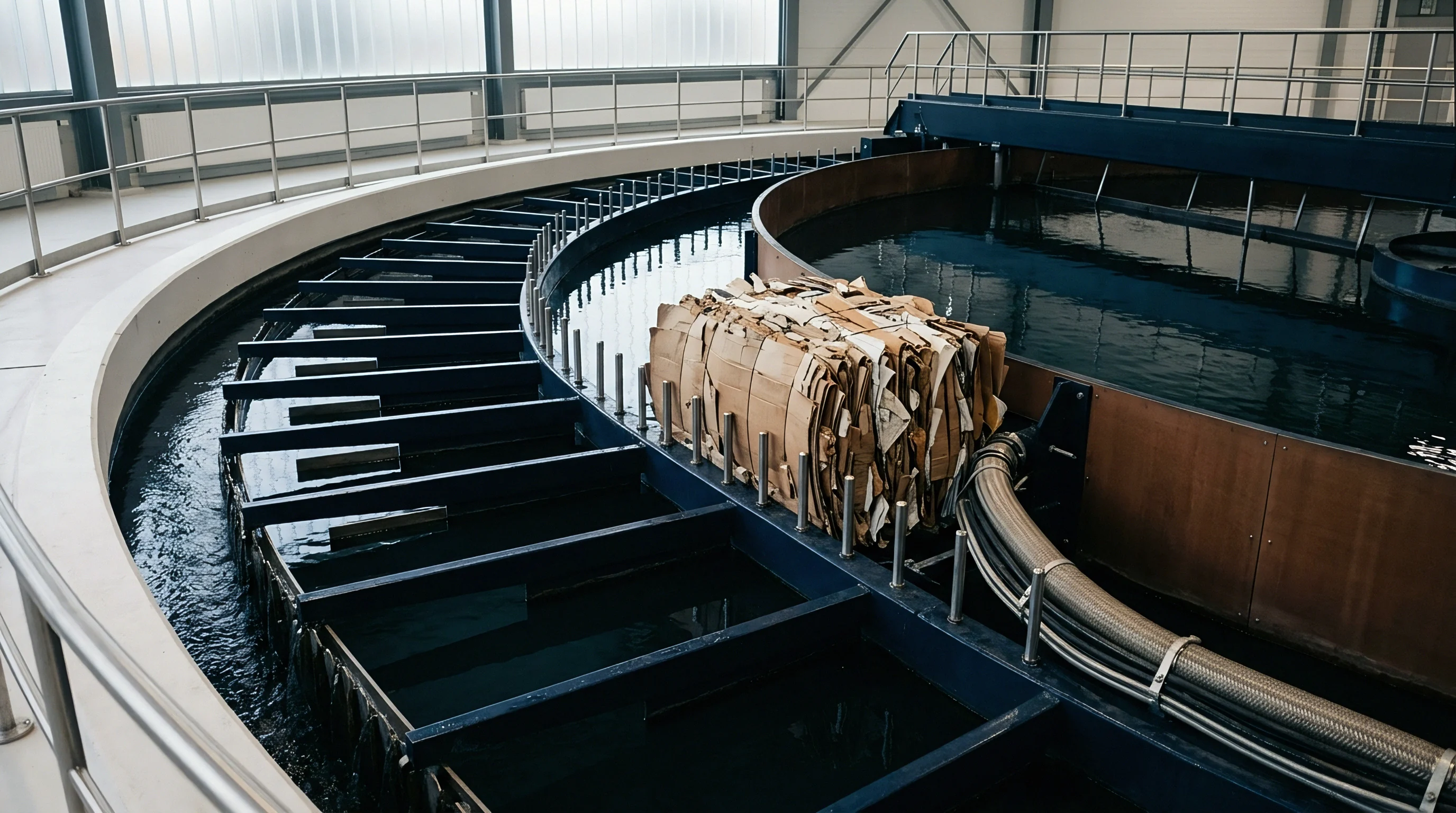
Mills running high percentages of old corrugated containers face continuous shifts in raw material quality. Contaminants like wax, hot-melt adhesives, and stickies degrade internal bond metrics if not removed by multi-stage fine screening. Micro-screens with slot widths of 0.10 millimetres catch pressure-sensitive adhesive particles before stock reaches the headbox.
Clean stock guarantees consistent contact between fibers across adjacent layers, preventing localized soft spots in the structural core. Operational teams monitor couch vacuum levels to gauge sheet density before final consolidation.
High-speed optical sorting can help screen degraded recycled fibers to maintain cross-direction ring crush values, limiting reliance on virgin kraft imports.
Bonding
Developing Z-Directional Strength in Low-Freeness Stocks
Internal bond strength, measured as Scott Bond per TAPPI T 569, reflects the energy needed to delaminate paperboard along its internal plane. Post-consumer recycled containerboard loses hydrogen bonding capacity through hornification, where cellulose fibers crystallize during repeated drying cycles. Hornified fibers resist swelling, remaining rigid during stock preparation and reducing total contact surface area.
Refining recycled stock restores swellability but shortens fiber fragments, generating fines that slow drainage on the wire.
Targeted refining strategies separate long softwood fibers from short hardwood and recycled fractions. Refining the long-fiber fraction at low intensity ~ typically 0.8 to 1.2 watt-seconds per metre ~ hydrates the fiber wall without causing catastrophic length reduction. Fiber length distributions must be monitored continuously with optical analyzers to keep the population weighted mean above 1.6 millimetres.
Core plys utilize short-fiber fractions treated with cationic dry-strength agents to rebuild Z-directional tensile strength without incurring excessive refining energy costs. Adding cationic polyacrylamide at 1.5 to 2.5 kilograms per metric ton elevates Scott Bond values from 140 Joules per square metre up to target thresholds of 210 Joules per square metre.
TAPPI T 569 testing requires standard specimen conditioning at 23 degrees Celsius and 50 percent relative humidity prior to impact testing.
Unbonded interfaces invite moisture penetration during outdoor freight transit. Sizing agents like alkenyl succinic anhydride applied to outer plys control liquid absorption, maintaining structural integrity in high humidity. Sizing must be evenly distributed across outer surfaces without migrating into the core interface where it would impede inter-ply hydrogen bonding.
Internal sizing chemistry functions best when wet-end pH stays tightly controlled between 6.8 and 7.4. Deviations in pH cause sizing emulsification failure, leading to liquid absorption spikes measured via Cobb water absorption tests per ISO 535.
- Refining Energy Input controls fiber fibrillation levels to maximize surface area contact without degrading free drainage across forming fabrics.
- Cationic Starch Addition strengthens inter-fiber hydrogen bonds inside recycled core layers where degraded fines concentrate during web formation.
- Polyacrylamide Dosing bridges microscopic gaps between stiff hornified fibers to lift internal bond resistance under mechanical shear stress.
- Surface Size Application limits moisture ingress along outer faces to preserve mechanical stiffness in humid distribution environments.
Inter-ply adhesion relies on polymer entanglement across the wet interface. When couch rolls press wet plys together, fine fibers and dissolved starches migrate across the boundary layer. Temperature in the wet press section influences polymer chain mobility, accelerating bond formation before the sheet enters high-temperature dryers.
Maintaining press section temperatures above 50 degrees Celsius lowers water viscosity, promoting inter-ply compaction under lower nip pressures. Insufficient pressing leaves air pockets between layers, which expand inside dryer cylinders and form destructive surface blisters.
Dryer section temperature profiles directly impact internal stress accumulation. Rapid surface drying creates a moisture gradient where outer plys contract faster than the wet core. Differentials in shrinkage generate internal shear stresses that weaken inter-ply strength before rolls are wound on the drum reel.
Gradual temperature progression across the first two dryer groups prevents premature surface sealing, allowing steam to escape without disrupting internal fiber bonds. Steam pressure in early dryer cylinders must be throttled to hold sheet surface temperatures below 85 degrees Celsius until solid content passes 65 percent.
Inter-ply delamination during board conversion can stem from uncalibrated corrugator double-facer temperatures rather than low Scott Bond values on the mill MTR.

Starch

Application Dynamics and Rheology at the Size Press
Applying wet-end and surface starch compensates for structural deficits in multi-ply recycled containerboard. Native corn and wheat starches undergo chemical modification to achieve the solubility and charge density required for paper machine applications. Cationic starches carrying a degree of substitution between 0.035 and 0.050 bind to negatively charged recycled fibers, improving retention and mechanical strength metrics.
Wet-end starch addition rates max out around 15 kilograms per metric ton; excess starch stays in white water loops, causing biological growth and elevated chemical oxygen demand in mill effluent treatment plants.
Film presses apply cooked starch solutions directly to the consolidated sheet at dry solids content between 8 and 12 percent. Modern metering rod film presses maintain uniform film thickness across high machine speeds, preventing sheet re-wetting failures. Starch solution viscosity must be held within 80 to 120 millipascal-seconds measured at 60 degrees Celsius via Brookfield viscometer.
Over-cooked or shear-degraded starch penetrates deep into the core ply, wasting expensive chemistry without improving surface strength or printing performance. Precise film pressure coats outer fibers to form a continuous surface film that resists wax pick and linting on offset print units.
- Prepare native starch slurries in automated jet cookers operating at temperatures above 135 degrees Celsius to achieve total granule gelatinization.
- Adjust cationicity and solids content before transferring cooked starch to machine run tanks fitted with continuous viscosity loops.
- Monitor size press pickup rates continuously to maintain surface application weights between 1.5 and 2.5 grams per square metre per side.
- Balance dryer cylinder temperatures post-size-press to prevent surface picking and ink-receptivity degradation on finished rolls.
Starch pickup controls ring crush resistance measured via ISO 12192. Higher starch pick-up elevates short-span compressive strength by reinforcing individual fiber-to-fiber contacts within the sheet surface matrix. Starch cost represents a major operational expense, requiring precise dosing strategies to balance performance against total landed reel cost.
Advanced size presses utilize co-extrusion technology to place high-viscosity starch on outer faces while lower-viscosity starch penetrates sub-surface layers. Optimized starch distribution delivers maximum mechanical strength using minimum total dry starch solids.
| Starch Type | Viscosity (mPa·s at 60°C) | Solids Content (%) | ISO 12192 SCT (kN/m) |
|---|---|---|---|
| Cationic Corn Starch | 95 | 10.5 | 2.45 |
| Oxidized Wheat Starch | 110 | 12.0 | 2.30 |
| Enzymatic Tapioca Starch | 85 | 9.0 | 2.55 |
Enzymatic conversion of native tapioca starch provides an economical alternative to chemically modified starches on high-capacity paper machines. On-site conversion uses alpha-amylase enzymes to break down starch polymer chains under controlled thermal conditions. Reaction temperature, pH, and dwell time determine final molecular weight distribution and viscosity profiles.
Fluctuations in water quality alter enzyme activity, causing viscosity swings that destabilize film press coating weight. Continuous inline viscometers adjust enzyme dosing automatically to stabilize size press pickup across variable machine operating speeds.
Dryer sections following size presses require non-contact infrared dryers to set starch coatings before wet webs touch dryer cylinders. Touching hot metal surfaces with wet starch leads to picking, where starch pulls fibers directly off the sheet surface. Flaking fiber fragments contaminate dryer felts, leaving divots in subsequent paper web sections.
Infrared units raise web temperature rapidly, setting starch hydrogels within milliseconds of application. Clean surface runs yield smooth sheet profiles that reduce ink consumption during flexographic packaging print runs.
Contractual terms dictate that size press starch pickup variations exceeding 0.4 grams per square metre trigger mandatory price adjustments on delivered linerboard shipments.
Converting

Score-Crack Resistance and Flute Alignment Performance
Corrugating multi-ply recycled containerboard demands careful control of paper moisture content and crease geometry. Recycled fibers possess lower ultimate elongation at break compared to virgin kraft fibers. When combined board passes through scoring wheels on high-speed corrugators, outer plys suffer extreme tensile strain.
Sheet moisture below 6.5 percent leads directly to score cracking along the fold line, exposing inner core flutes and dropping box compression test values by up to 25 percent. Pre-conditioning steam showers elevate sheet moisture to target levels between 7.5 and 8.5 percent prior to scoring operations.
Score wheel profiles must match sheet thickness and multi-ply stiffness metrics to prevent outer liner rupture. Point-to-flat scoring tools distribute strain across a wider deformation zone compared to point-to-point configurations. Creasing depth must be calibrated precisely to deform inner core plys without shearing outer liner fibers.
Over-creasing fractures the stiff starch layer deposited during size press operation, initiating micro-cracks that propagate along the flute line. Correct tool alignment ensures clean 180-degree folds without surface cracking, maintaining structural integrity across converted shipping containers.
Single-wall corrugated board converted at eight percent moisture resists score line fracture during automated high-speed case erecting cycles.
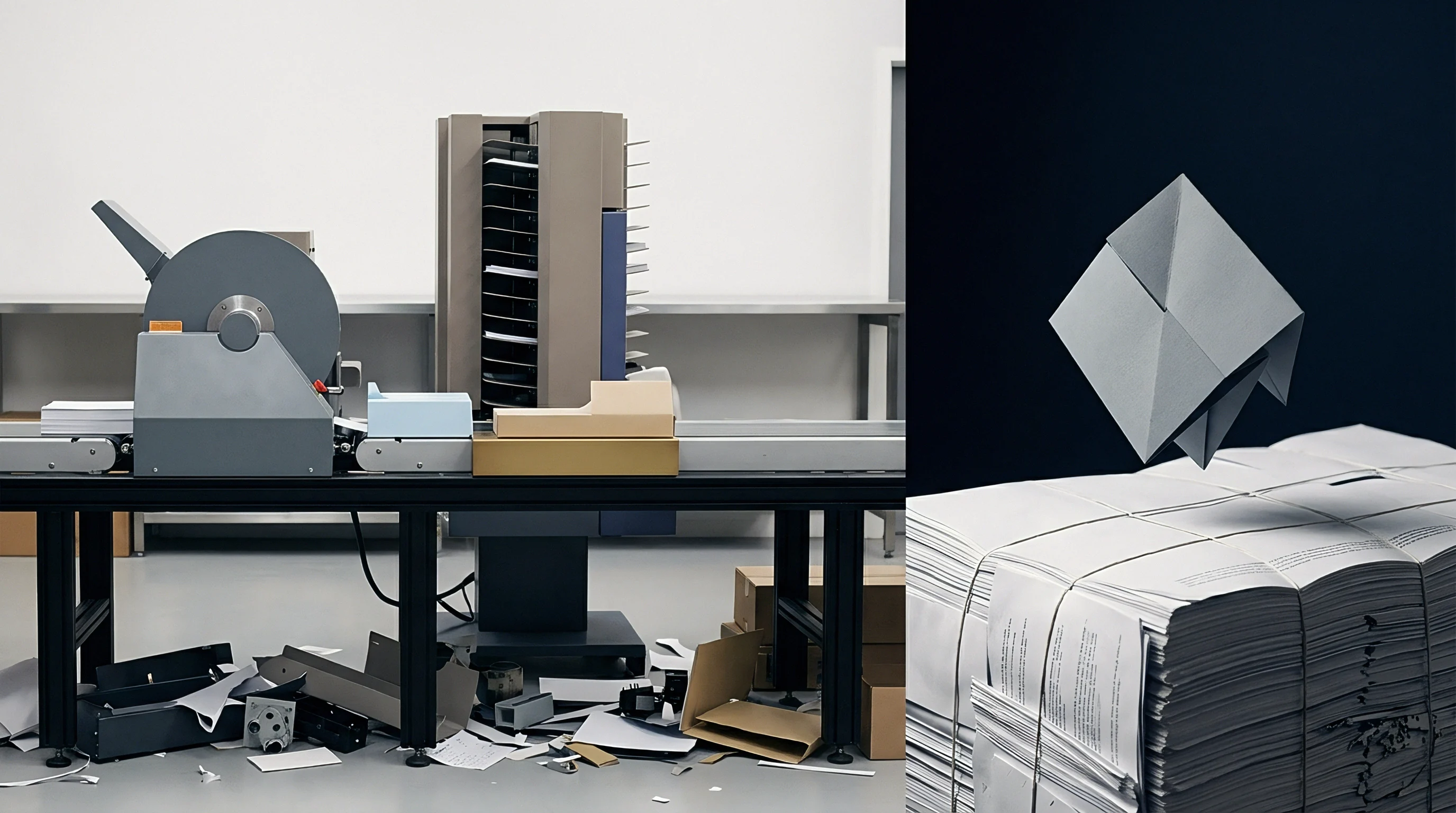
An unexpected failure occurred during a high-speed production run when a converting plant processed 140-gram recycled linerboard during mid-winter conditions. Unheated warehouse storage dropped roll temperatures down to four degrees Celsius. When cold board hit hot corrugating rolls operating at 175 degrees Celsius, thermal shock caused immediate delamination along inter-ply boundaries.
Moisture inside the core vaporized instantaneously, popping outer plys off the fluting web before starch adhesive could set. Maintaining roll storage rooms above 18 degrees Celsius prevents thermal shock delamination on high-speed corrugating lines.
Flat crush resistance depends on medium stiffness and adhesive bond integrity between flute tips and liner plys. Corn starch adhesives applied at corrugator glue units must gelatinize completely within the brief contact window inside the press nip. Gelatinization temperature, controlled between 58 and 62 degrees Celsius, ensures rapid bond formation without over-wetting recycled liner plys.
Water absorption from corrugator glue softens core plys, reducing short-term stack strength if board passes directly to die-cutting units. Staging converted board in holding bays for two hours allows moisture equilibration across all plys.
Automatic flexographic folder-gluers run at speeds up to 400 boxes per minute, placing intense mechanical stress on folded scores. Linerboard with poor cross-direction tear strength tears along the slot line during folding. Multi-ply architecture mitigates tear propagation by varying fiber orientation across adjacent layers.
Top plys optimized for machine-direction alignment provide tensile strength, while core plys with random fiber orientation absorb impact energy during folding operations. Balanced mechanical properties across plys protect converted boxes from corner failure under stacking loads.
Score lines must bend clean without tearing or delaminating under continuous automated handling.

Economics
Yield Arithmetic and Fiber Furnish Optimization Mechanics
Substrate selection directly determines landed packaging costs, trim waste percentages, and end-of-life recycling fees. Papermakers evaluate furnish costs per metric ton against target mechanical performance metrics to optimize multi-ply sheet architecture. Replacing virgin kraft fibers with post-consumer recycled containerboard lowers raw material input costs but increases refining energy consumption and chemical additive demand.
The economic breakdown balances lower fiber purchase costs against higher wet-end starch, retention aid, and sludge disposal expenses generated during recycled stock processing.
Downgauging sheet basis weight while maintaining structural stiffness represents the primary path to unit cost reduction. Utilizing a three-ply architecture allows mills to concentrate clean recycled fibers on outer surfaces while loading inexpensive mixed paper fractions into internal plys. Reducing total basis weight from 160 grams per square metre down to 145 grams per square metre yields a 9.3 percent reduction in total fiber mass per manufactured box.
For a packaging converter consuming 20,000 metric tons annually, this basis weight reduction delivers 1,860 metric tons in raw material savings, translating to substantial landed cost reductions across high-volume production schedules.
- Furnish Substitution Ratio balances low-cost mixed waste streams against structural performance thresholds to maximize overall profitability per mill run.
- Chemical Additive Costs track wet-end strength chemistry requirements needed to offset strength losses caused by recycled fiber degradation.
- Energy Consumption Metrics incorporate continuous refining power and drying steam demands associated with low-drainage recycled stock webs.
- Extended Yield Calculations convert raw paperboard tonnage into usable square metres of converted corrugated packaging delivered to customer facilities.
Yield calculations must account for trim waste generated during roll slitting and corrugator converting. Deckle optimization programs schedule roll widths to maximize paper machine deckle utilization, holding edge trim waste below 1.5 percent. Converting plants incur additional spoilage during make-ready setups and machine splices.
High-quality multi-ply linerboard with uniform caliper profiles reduces make-ready scrap on flexographic printing lines by eliminating uneven impression pressure. Uniform caliper profile minimizes press downtime, raising total operational equipment effectiveness across multi-shift production cycles.
| Furnish Strategy | Grammage (g/m²) | Fiber Cost ($/MT) | Additive Cost ($/MT) | Landed Cost ($/1,000 m²) |
|---|---|---|---|---|
| 100% Virgin Kraft Liner | 150 | 720 | 15 | 110.25 |
| Multi-Ply High-Recycled Liner | 160 | 480 | 45 | 84.00 |
| Optimized Stratified Recycled Liner | 145 | 450 | 52 | 72.79 |
Producer responsibility schemes impose financial fees based on packaging recyclability and recycled content levels. Containers designed with high post-consumer recycled content qualify for reduced fee tiers in major international jurisdictions. Utilizing 100 percent post-consumer recycled containerboard eliminates non-compliance surcharges, yielding immediate financial benefits at point of sale.
Packaging buyers factor these regulatory fee offsets directly into total landed cost models when selecting substrate specifications for global distribution networks. Detailed audit dossiers confirm recycled content credentials before shipments cross regional regulatory borders.
Shipping costs track overall packaging weight, making downgauging critical for long-distance transport logistics. Lightweighted multi-ply corrugated boxes reduce tare weight per pallet, allowing shippers to maximize freight volume without exceeding gross vehicle weight limits. Fuel savings realized across extended supply chains further enhance the commercial viability of optimized containerboard structures.
Logistics managers calculate freight savings alongside board purchasing costs to establish total cost of ownership across all packaging lines.
Containerboard batches failing inter-ply bond specifications can trigger widespread delamination during automated folder-gluer operations, incurring up to twelve thousand dollars in wasted material and downtime.