Standard Dockside Physical Testing Procedures for Uncoated Containerboard Shipments
Dockside testing demands immediate outer wrap stripping, vapor-sealed sampling, and moisture-adjusted burst and compression checks before terminal exit.
Dock
Break-bulk discharge of containerboard reels exposes raw Kraftliner and semi-chemical fluting directly to open marine air, terminal handling equipment, and tarmac precipitation. A steel clamp truck lifting an unconditioned four-tonne roll exerts radial compressive forces exceeding 180 kilopascals on the outer plies. If the clamp pressure settings mismatch the roll diameter, deep longitudinal creases develop through the outer twenty layers.
Surface scuffs, moisture tracking from wet container floors, and header band fractures present immediate physical liabilities before cargo clears the terminal gates. The primary objective on the wharf apron is rapid segregation of sound reels from damaged stock, establishing verifiable physical baselines before transport inland transfers legal liability to the motor carrier.
Incoming maritime consignments arrive on terminal berths where ambient relative humidity frequently ranges from 75 to 90 percent. Uncoated containerboard exhibits swift hygroscopic sorption under these conditions. The exposed outer wraps and roll ends absorb moisture within forty minutes of hatch opening.
This sorption alters the elastic modulus of cellulose fibers, reducing cross-directional rigidity and rendering the paper vulnerable to deformation during handling. Wet rolls ovalize under clamp pressure. The resulting out-of-round geometry generates web flutter and tension spikes on high-speed corrugator unwind stands.
A surface moisture reading above 9.5 percent taken with a calibrated dielectric meter on the outer roll wraps indicates marine boundary layer absorption during ocean transit.
Containerized shipments face distinct mechanical risks inside the closed metal boxes. Ocean transit through equatorial shipping lanes causes interior condensation cycles, commonly termed container sweat. Droplets fall from corrugated container roofs onto the top faces of horizontally nested rolls or roll headers.
Water stains dissolve surface starches, collapse internal fiber bonds, and initiate local microbial degradation. Chemical indicators like silver nitrate spray tests instantly differentiate seawater spray from fresh water sweat by precipitating white silver chloride upon contact with marine brine.
Quayside Reel Inspection
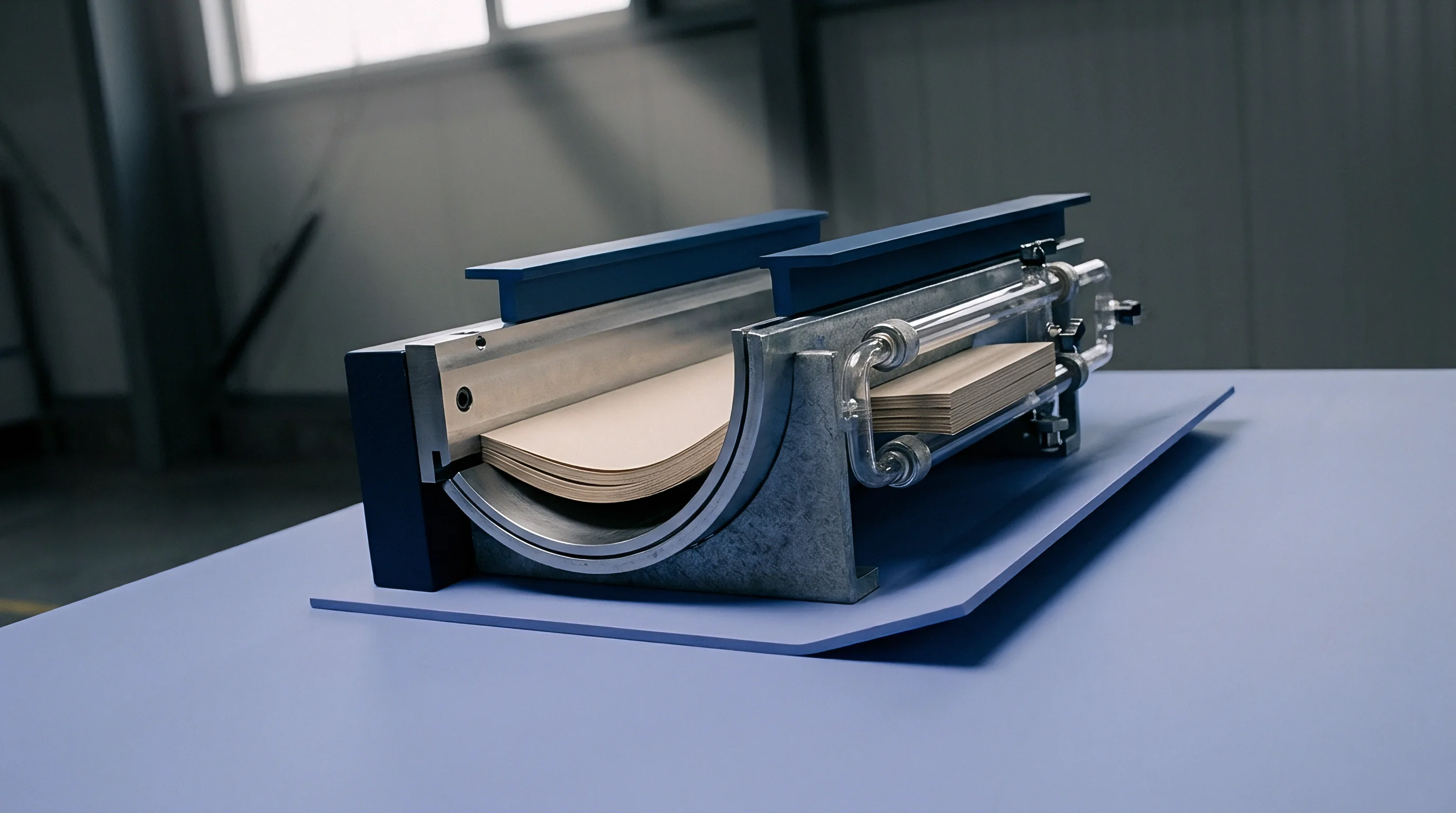
Surveillance begins immediately as the stevedore crane lowers the roll cluster onto the concrete apron. Inspectors examine the outer kraft wrapper, moisture barrier plies, and end caps for visible mechanical lacerations, tear lines, and grease contamination. Roll out-of-roundness measurements proceed using curved aluminum calipers across two perpendicular diameters at the roll face.
An eccentricity delta exceeding 25 millimeters prevents smooth unwinding on shaftless reel arms at converting speeds above 350 meters per minute.
Edge crush injuries along the roll chime create severe downstream production halts. When a crane bridle or dropped roll impacts the wharf floor, the roll chime mushrooms outward. This physical compression crushes the edges of hundreds of continuous paper winds.
Inspectors probe these crushed zones with narrow steel depth gauges to determine how many centimeters of trim waste will result. Paper absorbs sea fog fast. Wet edges tear first.

Discharge Envelope Damage
Terminal staging areas introduce severe mechanical risks through rough ground surfaces, pooled rainwater, and careless machinery movement. Direct contact with unpaved or poorly drained tarmac draws standing water into the roll ends through capillary suction along the cross-directional sheet plane.
- Gouge fractures slice across multiple wraps of the roll belly, severing paper fibers and producing high-tension web breaks during high-speed corrugator splicing operations.
- Chime mushrooming flattens roll edges during vertical drops, fusing adjoining web layers and preventing clean edge trimming on slitter-rewinders.
- Moisture ring staining marks deep water ingress along the winding axis, rotting internal plies and causing structural collapse of flute walls during corrugation.
- Arbor tube ovality distorts inner winding channels under excessive clamping force, preventing the insertion of pneumatic expander chucks on corrugator unwind stands.
Failure to document external transit defects on the wharf apron transfers entire financial losses for web break downtime, uncooperative paper splices, and collapsed flutes onto the converting facility.

Specimen
Physical verification of imported linerboard and fluting requires extraction of test material directly on the wharf or terminal warehouse floor without contaminating the inner winding. Standard containerboard grades consist of unbleached softwood kraft pulp, neutral sulfite semi-chemical hardwood pulp, or recycled fibers sourced from old corrugated containers. Each furnish responds differently to handling, moisture uptake, and cutting stresses.
Dockside sampling operations extract flat, undamaged sheets from beneath protective wraps to measure true substrate performance independently of transit-induced surface wear.
Technicians strip away damaged outer layers until reaching intact, uniform winding. For an uncoated containerboard roll, removing the outer three to five wraps eliminates sheet zones altered by ambient dockside humidity. This sacrificial paper represents significant mass, yet testing compromised outer plies yields misleadingly low tensile, ring crush, and burst readings.
Once fresh paper appears, operators cut continuous full-width strips across the machine direction using heavy utility knives with fresh trapezoidal blades. Steel blades dull on recycled furnish.

Reel Outer Layer Stripping
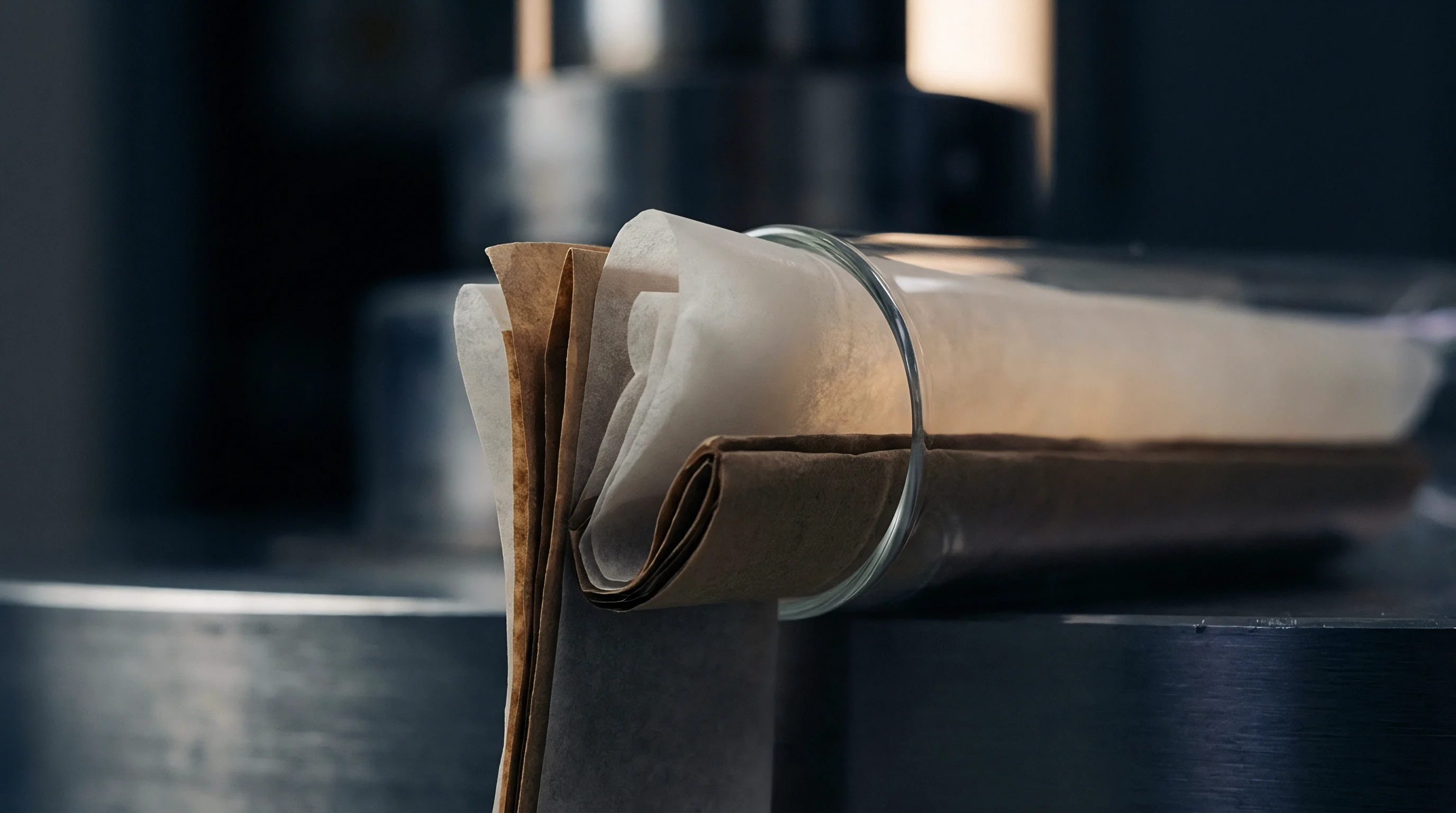
Cutting through the protective winding demands precise depth control to prevent scoring underlying good stock. A continuous diagonal incision across the roll belly releases the packaging jacket along with the outermost four layers of containerboard. Technicians peel back this mantle in one continuous pull, inspecting the newly revealed surface for transverse buckles or caliper steps.
If tension lines or micro-creases show on the fifth layer, the strip sequence repeats until reaching smooth, flat substrate.
Inner paper layers maintain the moisture content sealed into the roll at the mill dry end. Immediate insertion of extracted sheets into airtight polyethylene bags preserves this factory state. Technicians purge excess air from the plastic sleeves before heat-sealing or zip-locking the margins.
Exposure of a naked 125 g/m² recycled testliner sheet to marine air alters its physical test parameters within ninety seconds. Caliper gauges tell the truth.

Dockside Extraction Sequence
Gathering verifiable physical samples from large maritime shipments demands strict adherence to systematic mechanical execution.
- Mantle stripping removes five complete circumferential wraps across the entire roll width to eliminate transit moisture and mechanical friction damage.
- Cross-web slitting divides the clean paper web into three equal lateral sections using a guarded rotary cutter to capture cross-machine property variations.
- Specimen bagging seals the cut sheets into vapor-barrier foil pouches within forty seconds of exposure to preserve original moisture equilibrium.
- Lot tagging affixes weather-resistant barcode labels identifying vessel bay, roll serial number, mill heat, and wharf temperature to each sample pouch.
Cross Web Basis Weight Variance
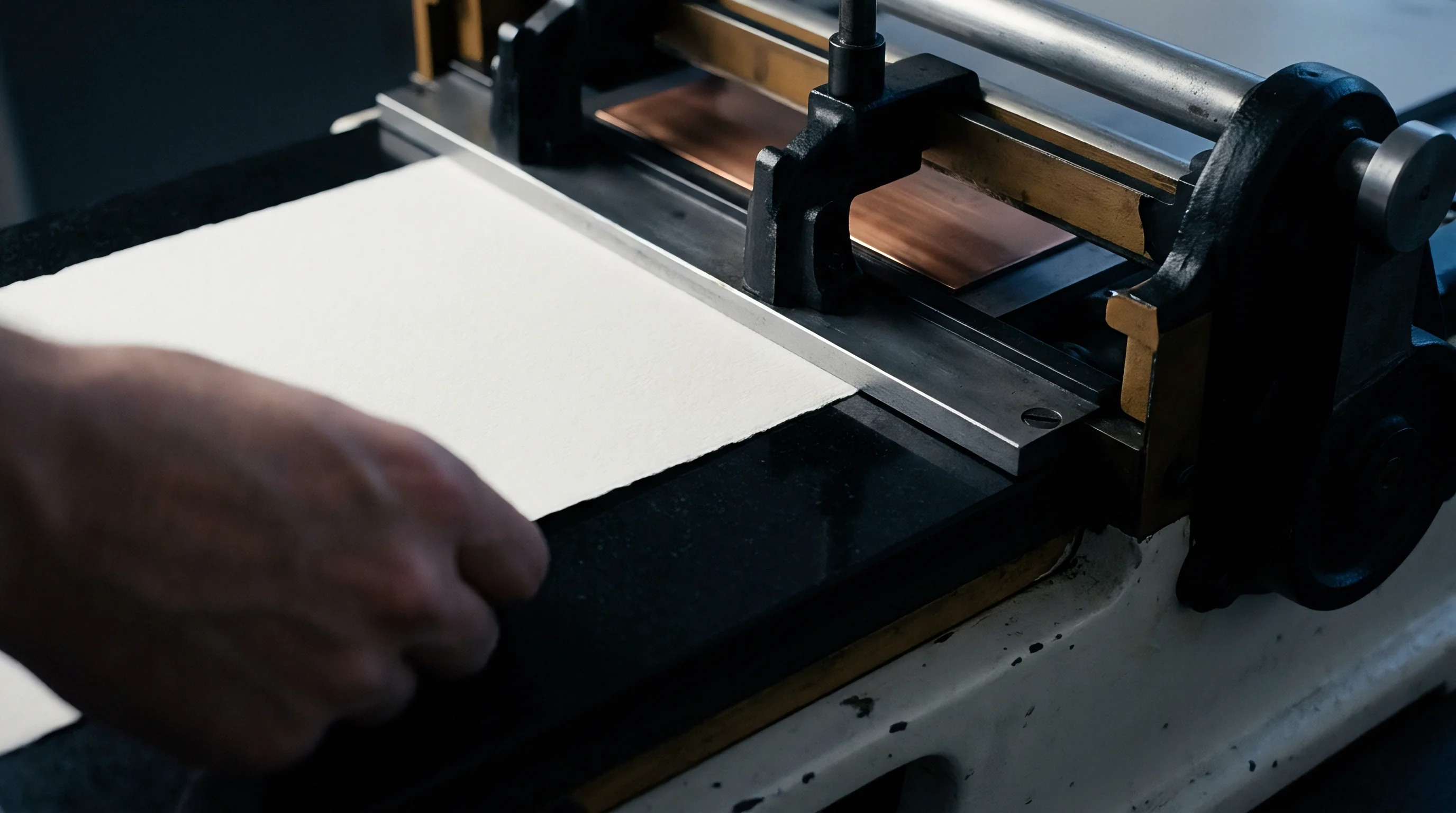
Grammage stability across the full web width directly governs corrugated board runnability and flat crush resistance. Containerboard machines running at 1,000 meters per minute can experience stock headbox slice lip deviations, producing basis weight waves. Dockside testing isolates specimens across three distinct positions: drive side, center, and operator side.
Technicians cut precision 100-square-centimeter circular specimens using calibrated punch cutters, weighing each on an electronic analytical balance accurate to 0.001 grams.
| Grade Description | Nominal Grammage (g/m²) | Acceptable Grammage Band (g/m²) | Nominal Caliper (μm) | Standard Caliper Band (μm) | Target Bulk (cm³/g) |
|---|---|---|---|---|---|
| Virgin Kraftliner | 125 | 121 to 129 | 172 | 164 to 180 | 1.38 |
| Virgin Kraftliner | 175 | 169 to 181 | 245 | 234 to 256 | 1.40 |
| Virgin Kraftliner | 250 | 242 to 258 | 355 | 340 to 370 | 1.42 |
| High-Performance Testliner | 140 | 135 to 145 | 202 | 192 to 212 | 1.44 |
| Recycled Testliner 3 | 150 | 144 to 156 | 228 | 216 to 240 | 1.52 |
| Semi-Chemical Fluting | 127 | 122 to 132 | 190 | 180 to 200 | 1.50 |
| Recycled Medium (Wellenstoff) | 130 | 124 to 136 | 205 | 193 to 217 | 1.58 |
Evaluating caliper across the web width identifies localized bulk loss from calender roll pinching or rewinder nip compaction. Dead-weight micrometer instruments apply a static pressure of 50 kilopascals through a circular anvil face of 200 square millimeters under standard conditions. Uneven thickness across the roll creates baggy edges during unwinding, generating uneven flute heights and dry streaks on the corrugator glue applicator.
Basis weight drifts across webs. Mill certificates flatter raw tonnage.
A delivery agreement specifying ISO 186 sampling protocols invalidates dockside reject claims whenever testing relies on samples pulled from outer roll protective wraps.
Standard purchase specifications dictate that physical claims against weight or caliper must rest strictly on samples drawn from the unperturbed core-adjacent windings of the shipment.
Puncture
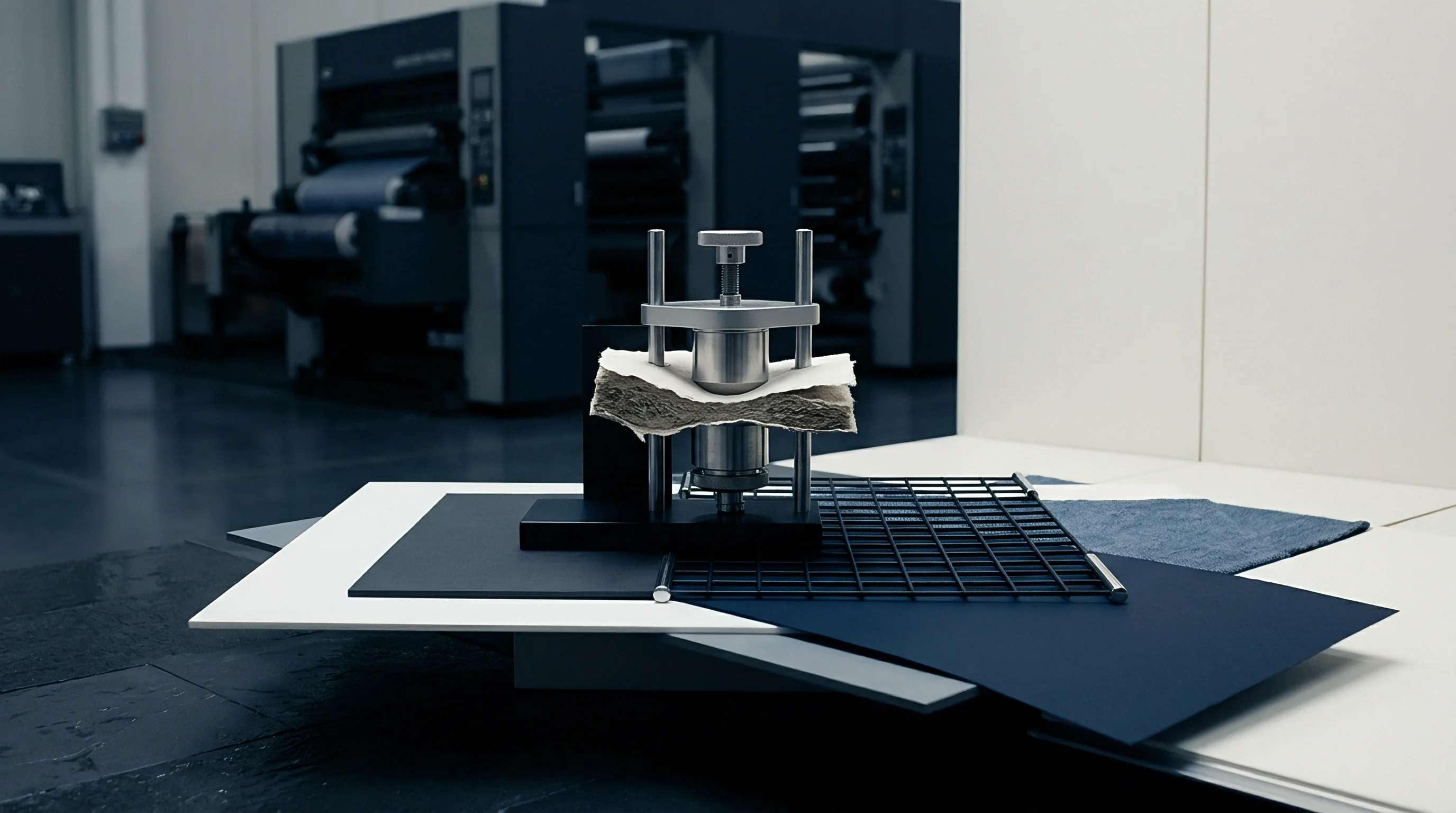
Rupture testing evaluates the hydraulic burst pressure and dynamic penetration resistance of the containerboard sheet under dockside conditions. The Mullen burst test remains the foundational commercial benchmark for international linerboard shipping containers. An electric hydraulic motor drives a flat rubber diaphragm against an annularly clamped circular area of the sheet until fiber rupture occurs.
Pure virgin kraftliner furnishes absorb hydraulic burst loads through high-energy long softwood fibers, distributing tensile strain in all web directions. Recycled fibers, shortened by multiple processing cycles, rupture at substantially lower pressure thresholds.
Field verification utilizing portable hydraulic or pneumatic burst testers requires strict attention to clamping pressure. If the clamping ring slips during pressure ramp-up, the sheet develops pinhole tears at the perimeter, yielding an artificially low burst reading. Clamping pressures must reach 800 kilopascals to lock 250 g/m² kraftliner securely without crushing the sheet structure.
Clamp trucks crush roll ends. Burst test diaphragms stiffen in winter.
Burst Strength Membrane Calibration
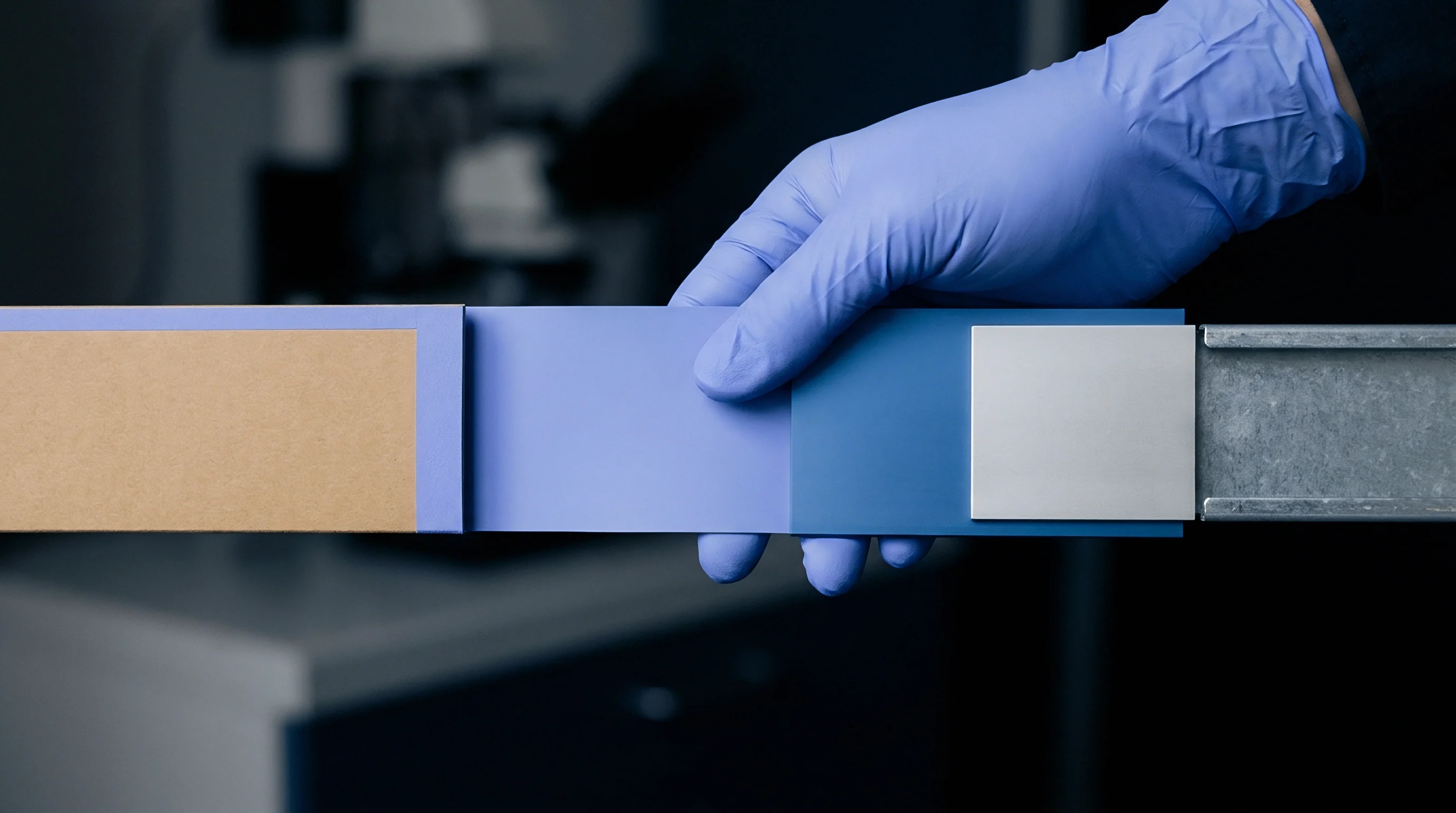
Temperature shifts on terminal quays alter the elastic modulus of the synthetic rubber diaphragm inside the tester. Cold morning air stiffens the rubber, adding hydraulic resistance that artificially inflates the indicated burst pressure reading. Technicians run initial calibration checks against standard aluminum foil control shims before testing containerboard lots.
The baseline diaphragm resistance value must deduct cleanly from the gross burst pressure to isolate pure paper strength.
Distinguishing between true fiber rupture and perimeter shear failure confirms valid test execution. Pure fiber rupture creates an H-shaped or triangular tear pattern centered directly within the orifice. If tears trace the circumference of the steel clamping ring, the test piece suffered edge shear caused by excessive clamping force or misaligned rings.
Such invalid tests must undergo immediate discarding and replacement with fresh cuts.

Short Span Compression Alignment
Box compression performance depends far more on the compressive strength of individual liner and fluting plies than on hydraulic burst resistance. The short span compression test, designated as STFI, clamps a tiny specimen strip between two steel jaws separated by a gap of exactly 0.70 millimeters. This microscopic gap prevents the slender paper column from buckling, forcing the cellulose wall structures into pure compressive mechanical failure.
| Test Parameter | Standard Method | Wharf Field Instrument | Field Operating Tolerance | Failure Indication Threshold |
|---|---|---|---|---|
| Basis Weight | ISO 536 / TAPPI T 410 | Quadrant scale or digital balance | ± 1.5 percent of nominal | Deviation > 3.5 percent from contract |
| Sheet Caliper | ISO 534 / TAPPI T 411 | Dead-weight spring micrometer | ± 3.0 percent of nominal | Thickness drop > 6.0 percent |
| Mullen Burst | ISO 2759 / TAPPI T 807 | Pneumatic portable tester | ± 4.0 percent of baseline | Burst drop > 8.0 percent |
| Short Span Comp. (STFI) | ISO 9895 / TAPPI T 826 | Benchtop load cell unit | ± 2.5 percent of certified | CD crush drop > 5.0 percent |
| Cobb60 Sizing | ISO 535 / TAPPI T 441 | Metal cylinder with rubber roller | ± 2.0 g/m² pickup | Water uptake > 45 g/m² on outer liner |
| Field readings represent measurements conducted at dockside ambient temperatures between 12 and 28 degrees Celsius without pre-conditioning chambers. | ||||
Cross-direction compression values reveal furnish composition flaws instantly. High-yield semi-chemical medium with intact lignified fibers exhibits stiff resistance along the corrugation direction. Low-quality recycled waste sheets suffer fiber crushing at lower forces.
Water dissolves internal starch bonds. Dry fiber retains tensile capacity.
Paper rolls that show visible outer scuffing often retain complete mechanical integrity beneath the third wrap.

Sizing Penetration under Wharf Conditions
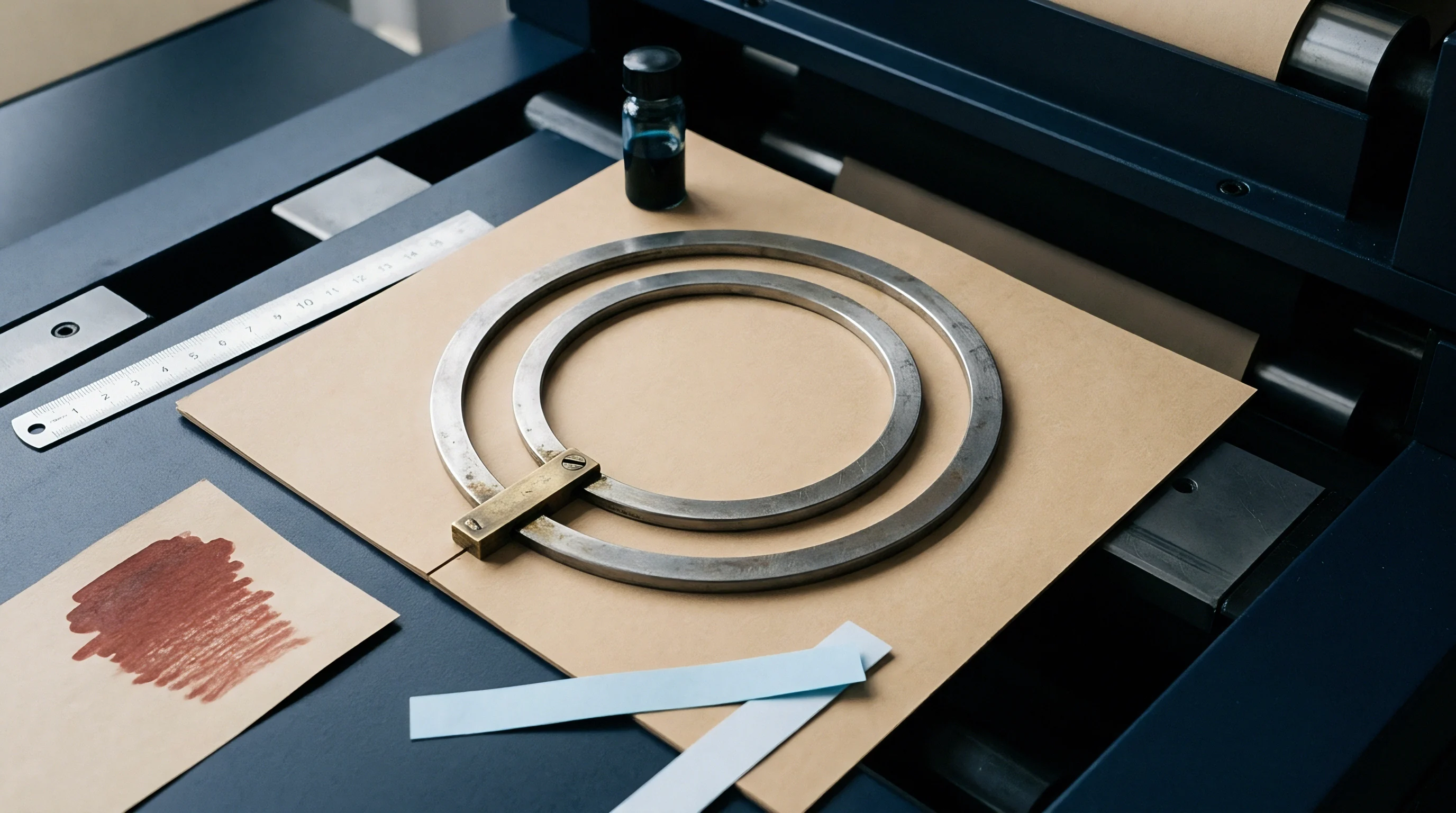
Water resistance prevents containerboard from absorbing atmospheric moisture, ocean spray, and starch adhesive water during downstream converting. The Cobb test determines the mass of liquid water absorbed by a 100-square-centimeter sheet surface over a 60-second exposure interval. Technicians clamp metal test rings securely onto paper samples, pour 100 milliliters of distilled water over the surface, and start digital timers.
After 45 seconds, the water pours off, the specimen drops onto blotter paper, and a ten-kilogram brass roller passes over it twice to remove excess water before reweighing.
High Cobb absorption values on the exterior face of Kraftliner indicate failed internal sizing during papermaking. Internal sizing agents, such as alkyl ketene dimer or alkenyl succinic anhydride, coat the fiber surfaces to establish steep contact angles against liquid water. Under-sized linerboard drinks moisture rapidly, leading to sagging corrugated box walls in humid distribution channels.
Delamination stops the corrugator instantly.
Mills routinely explain degraded dockside burst values by arguing that transit humidity softens fiber bonding without reflecting underlying chemical furnish deficiencies.
Drift
Ocean shipments encounter profound thermodynamic shifts as vessels traverse varying marine environments. A container vessel loaded in northern European ports at 5 degrees Celsius and 80 percent relative humidity sails through warm tropical waters where air temperatures exceed 32 degrees. The moisture inside the cargo shifts dynamically.
Warm air carries greater moisture mass than cold air, driving water vapor outward from the warm paper rolls toward the steel vessel hull. When the hull cools rapidly in temperate discharge ports, this moisture condenses, raining down on exposed cargo. This phenomenon, known as cargo sweat, alters the physical equilibrium of the entire shipment.
Laboratories measure containerboard properties strictly within controlled conditioning environments maintained at 23 degrees Celsius and 50 percent relative humidity, adhering to ISO 187 standards. Dockside wharves, conversely, run on raw maritime weather. A sheet containing 6.5 percent moisture inside the mill rewinder may reach 10.5 percent moisture after seven days on a foggy river terminal.
Every one percent gain in containerboard moisture content degrades cross-directional short span compression strength by approximately six to eight percent. Burst strength falls by three to five percent per point of moisture gain. Paper expands across machine directions.
Will Equilibrated Humidity Shift Dockside Strength Calculations?
Marine surveyors and mill technical representatives frequently argue whether rolls showing depressed wharf test values will recover their specified strength once stored inside a dry, heated converting plant. The physical answer depends on whether moisture uptake produced permanent fiber debonding. Water absorption breaks hydrogen bonds between cellulose fibrils.
When the sheet dries under zero mechanical restraint in an unconditioned warehouse, the fibers shrink independently, curling and wrinkling instead of reforming tight linear bonds.
Re-equilibrated containerboard never fully recovers its certified factory strength values. Compression resistance shows a hysteresis loop where desorbed paper retains lower structural stiffness than virgin paper tested during initial sorption at matching humidity levels. Converting plants running corrugated box lines cannot wait three weeks for multi-tonne rolls to equilibrate toward their roll cores.
Internal wound layers remain moist for months because tight winding prevents vapor escape.

Field De-Rating Tables
To evaluate shipments fairly on the dock apron without waiting for laboratory conditioning chambers, inspectors apply empirical de-rating factors based on absolute sheet moisture content. Portable pin-type or non-destructive capacitive moisture meters yield rapid readings across the roll belly and exposed chimes.
| Measured Sheet Moisture (%) | Equilibrium Relative Humidity (%) | Burst Retention Factor (%) | STFI Compression Retention (%) | Ring Crush Retention (%) |
|---|---|---|---|---|
| 6.5 | 45 to 50 | 100.0 | 100.0 | 100.0 |
| 7.5 | 55 to 60 | 96.5 | 93.5 | 94.0 |
| 8.5 | 65 to 70 | 92.0 | 86.0 | 87.0 |
| 9.5 | 75 to 80 | 87.0 | 78.0 | 79.5 |
| 10.5 | 82 to 86 | 81.5 | 69.5 | 71.0 |
| 12.0 | 90 to 95 | 72.0 | 57.0 | 59.0 |
When field readings indicate 10.5 percent moisture, inspectors divide the measured STFI compression value by 0.695 to estimate normalized standard performance. If the resulting adjusted number falls below the contractual mill specification floor, the underlying substrate furnish is inherently defective, independent of environmental water absorption. Tension snaps wet webs.

Tonnage Yield Losses
Excess water weight in containerboard represents purchased paper that cannot convert into usable corrugated boxes. Commercial contracts establish transactions on a metric tonnage basis, yet converting plants sell finished corrugated packaging by surface area and unit count. Moisture pickup inflates cargo mass while depressing unit yield.
Consider a 500-metric-ton ocean consignment of 175 g/m² kraftliner landed at 10.0 percent moisture against a contractual purchase baseline of 7.0 percent moisture. The total consignment weight contains 15 metric tons of excess water. The buyer pays for this water at the full paper tonnage contract rate of 750 dollars per metric ton, representing a direct financial penalty of 11,250 dollars on the invoice.
Furthermore, running this soggy containerboard forces corrugator line speeds down from 300 meters per minute to 180 meters per minute to allow corrugator hot plates to evaporate internal moisture before the glue line sets. Corrugators jam on warped medium.
Whether downstream heat application on the corrugator can fully restore the fiber bonding capacity lost during marine transit without generating web blisters remains unsettled.
Dispute
Commercial resolution of non-conforming containerboard shipments hinges on evidentiary rigor established during dockside discharge. When laboratory checks confirm that burst, compression, or moisture deviations breach contractual thresholds, buyers initiate cargo claims or demand commercial rebates. Mills defend their positions using process automation charts from paper machine winders, asserting that goods left the manufacturing hall fully compliant with purchase specifications.
The wharf apron is the legal divide where ownership, maritime risk, and converting accountability clash.
Standard marine bills of lading stamped with clean on board notations place initial burdens of proof onto the receiver. If roll exterior packaging shows no mechanical tearing or water staining, carriers deny transit damage claims, classifying internal defects as inherent vice of the cargo. Consequently, the buyer must produce verifiable physical evidence demonstrating that the substrate itself failed certified performance parameters under standard testing mechanics.
Under standard marine sales terms, failure to lodge formal survey notices within seventy-two hours of discharge forfeits the buyer’s right to claim transit damages against the ocean carrier.
Mill Certificate Reconciliation
Every delivered roll carries a barcoded mill label detailing batch number, roll identifier, basis weight, roll length, and certified test parameters. Technical auditors reconcile these documentation values against dockside measurements. Discrepancies between certified burst values and dockside field results often reveal grade substitution.
Under commercial pressure to meet delivery quotas, mills occasionally blend higher fractions of recycled mixed waste into virgin kraftliner recipes without updating grade designations.
Furnish verification proceeds via fiber analysis under polarized light microscopy. Kraftliner specifications permit up to 20 percent recycled fiber content in specific commercial markets while maintaining the virgin label. A dockside sample revealing 45 percent recycled mechanical and deinked pulp constitutes breach of contract.
Such furnish dilution degrades fiber length distributions, reducing cross-machine tear strength and lowering long-term box stacking resilience in cold storage facilities.

Arbitration Retain Preservation
When physical parameters deviate beyond commercial tolerance bands, rigorous sample retention secures legal arbitration outcomes.
- Triplicate sample cutting generates three matched sets of uncreased containerboard sheets measuring one square meter from identical cross-machine winding zones.
- Airtight aluminum lamination seals arbitration sheets inside moisture-proof foil packaging with desiccated silica packets to stabilize physical conditions.
- Joint surveyor endorsement records signatures from receiver, shipowner, and terminal representatives across the tamper-evident package seam tape.
- Independent laboratory assignment directs sealed sample canisters to accredited third-party pulp and paper research institutions for referee testing under standard conditioning.
Commercial Settlement Mechanics
Resolving compromised containerboard shipments involves three distinct settlement pathways: outright rejection, tonnage rebate adjustment, or downgrading for secondary packaging duty. Outright rejection remains an extreme operational measure, incurred only when moisture saturation causes roll mold, severe core deformation prevents chuck insertion, or delamination halts corrugator feeding entirely. Storing rejected tonnage on ocean wharf berths generates crushing demurrage and terminal storage penalties that swiftly outstrip cargo value.
Most commercial disputes settle through contractual price adjustment formulas. If testing shows that 175 g/m² kraftliner delivers 8 percent below specified cross-directional STFI compression limits, the buyer cannot produce certified packaging meeting guaranteed box crush values without blending higher-caliper components. The buyer applies a compensatory percentage rebate directly to the delivered metric tonnage invoice, recovering downstream packaging redesign expenses.
Good paper runs clean, and poor rolls reveal their furnish flaws the moment the first wrap meets the knife.