Verification Procedures for Interfacial Adhesion Peel Strength in Metallized Foils
Interfacial peel strength verification in metallized foils mandates ninety-degree fixture isolation to prevent substrate yield and accurately measure metal-polymer bond mechanics.


Bond
Interfacial adhesion between vacuum-deposited metal layers and flexible polymeric substrates dictates the structural integrity of high-barrier packaging laminates. Physical vapor deposition places a microscopic layer of pure aluminum, typically ranging from twenty to fifty nanometers in thickness, onto base films such as biaxially oriented polyethylene terephthalate, biaxially oriented polypropylene, or cast polypropylene. The resulting composite surface exhibits complex mechanical and chemical properties.
Thermodynamic adhesion, driven by Van der Waals forces, hydrogen bonding, and covalent metal-oxygen-polymer bonds, defines the theoretical energy baseline needed to separate these distinct phases. Practical adhesion, measured during mechanical peel testing, incorporates both this fundamental surface energy and the irreversible plastic deformation energy dissipated within the polymer substrate and adhesive matrix during failure. Across flexible packaging runs, we observe interfacial metal pick-off whenever baseline force drops below 0.8 N/15mm.
When an aluminum vapor plume lands on a polymer surface inside an industrial vacuum chamber operating at pressures below 10-4 mbar, condensed metal atoms nucleate to form continuous metallic crystallites. This condensation releases heat, inducing localized surface rearrangement. Oxygen present on the polymer surface or within the residual vacuum atmosphere immediately oxidizes the incoming aluminum, creating a thin interfacial transition layer composed of non-stoichiometric aluminum oxide.
The mechanical resistance of this ultra-thin zone to spatial separation governs whether a metallized foil survives subsequent converting passes. Mechanical slitting, adhesive extrusion lamination, and cold-seal coating subject this critical interface to complex shear, tensile, and peel stresses. Weak interfacial bonding manifests as metal pick-off, where microscopic or macroscopic aluminum islands detach from the web and transfer to laminating rolls or adjacent film layers on a rewound roll.
Metal separation destroys the electronic and physical path continuity required for barrier performance. Water vapor and oxygen molecules migrate through pinholes and micro-fractures left behind when aluminum lifts off the carrier film. Standard dry lamination using polyurethane adhesives poses severe risks if interfacial bond strength fails to exceed the cohesive strength of the adhesive layer itself.
In such scenarios, peeling stress applied to the finished packaging material splits the metallized layer from the base film rather than separating the lamination adhesive from the metal face. Quantifying this interfacial strength requires verification methods capable of isolating interfacial detachment from secondary energy-dissipating mechanisms such as substrate stretching, tearing, or adhesive necking.

Interfacial Structures in Vacuum Deposited Metal
Deposition conditions inside high-speed vacuum metallizers establish the molecular topology of the metal to polymer boundary. Dynamic web tension and cooling roll contact maintain substrate temperatures below glass transition thresholds during vapor deposition. Metal atoms arriving at thermal speeds form a dense packing structure on treated web surfaces.
Substrates with high surface energy present dense nucleation sites, yielding a fine-grained aluminum matrix with minimal interfacial voiding. Low surface energy web zones promote sparse nucleation, causing columnar grain structures with structural voids that lower mechanical shear resistance.
Surface treatment applied immediately prior to metal deposition introduces functional oxygen and nitrogen groups onto the polymer backbone. Polar carbonyl, hydroxyl, and carboxyl species provide reactive sites for evaporated aluminum atoms. Covalent bonding between aluminum and surface oxygen atoms generates organometallic interfacial linkages that substantially boost practical peel resistance.
Aluminum oxide formation continues upon web exposure to ambient air post-metallization, developing a passivating oxide layer three to five nanometers thick over the outer metallic face. The mechanical bond thus consists of three distinct sub-layers: the treated polymer surface, the organometallic interfacial phase, and the bulk aluminum crystallite layer capped by passivation oxide. Weakness at any point within this composite stack precipitates immediate functional degradation on the converting floor.
Adhesion failure along the metal interface permanently degrades gas barrier performance regardless of secondary lamination quality.
Cohesive strength within the non-stoichiometric interfacial layer depends directly on vacuum chamber deposition energy and web speed. Rapid web transportation through the vapor zone limits the thermal dwell time required for optimal organometallic bond formation. Elevated production speeds often yield lower interfacial adhesion unless offset by elevated pretreatment power levels.
Industrial converting requires continuous verification to ensure batch-to-batch consistency before webs enter high-speed lamination lines.

Thermodynamic Energy and Measured Peel Force
Separating a metallized layer from a polymer web demands an applied force that far exceeds the thermodynamic work of adhesion. Fundamental surface thermodynamic calculations yield ideal separation energies on the order of tens to hundreds of millijoules per square meter. Empirical mechanical peel tests record total failure energy values several orders of magnitude higher, reaching tens or hundreds of joules per square meter.
This vast discrepancy stems from the viscoelastic plastic deformation occurring within the flexible substrate and any attached backing materials during testing. Applied tensile load concentrates at the immediate peel front, inducing localized web bending, necking, and shear elongation.
Mathematical modeling of peel mechanics separates total measured peel work into thermodynamic adhesion energy, adhesive plastic dissipation, and substrate flexural work. Standardizing test fixture geometry, jaw rate, and sample width isolates the true interfacial detachment force. Deviations in peel angle significantly alter the magnitude of flexural deformation work recorded by the load cell.
Testing metallized flexible films at a sharp 180-degree angle induces severe substrate bending, inflating measured force values and masking underlying interfacial weaknesses. Fixtures maintaining a strict 90-degree separation angle minimize flexural bending stresses, yielding precise figures that reflect actual surface boundary resistance.
| Substrate Base Film | Surface Pretreatment | Primer Chemistry | Peel Strength Range (N/15mm) | Dominant Failure Locus |
|---|---|---|---|---|
| BOPET 12 micron | In-line Corona (42 dyne) | None | 1.2 – 1.8 | Interfacial Metal Lift |
| BOPET 12 micron | Atmospheric Plasma | Polyethyleneimine (PEI) | 2.8 – 3.5 | Cohesive Film Tear |
| BOPP 18 micron | Flame Treatment | None | 0.6 – 1.0 | Primary Metal Pick Off |
| BOPP 18 micron | Vacuum Nitrogen Plasma | Chemical Acrylic Primer | 1.8 – 2.4 | Adhesive Layer Split |
| Cast PP 30 micron | In-line Corona (38 dyne) | None | 0.4 – 0.7 | Interfacial Metal Lift |
| Met-Paper 60 gsm | Offline Corona (44 dyne) | Waterborne Shellac/Acrylic | 1.0 – 1.5 | Paper Substrate Failure |
Failure modes fall into distinct physical categories based on interface integrity. Interfacial detachment occurs when aluminum detaches completely from the base polymer, leaving a clear substrate and transferring all metal to the peel tape or adhesive. Cohesive failure within the metal layer split-lines the aluminum film itself, indicating exceptional interfacial bonding that exceeds metal shear strength.
Cohesive failure within the laminate adhesive layer demonstrates that interfacial aluminum adhesion exceeds the mechanical limits of the bonding resin. Substrate yield or tearing occurs when film tensile limits are reached before interfacial detachment initiates. Accurately classifying these failure modes prevents misleading operational decisions during film qualification protocols.
Incorrect characterization of interfacial adhesion strength leads to catastrophic field failures, unresolvable supplier disputes, and expensive scrap generation across high-speed packaging passes.

Plasma
Polymer webs possess inherently low surface energy and chemically inert surfaces prior to conversion. Polyolefins like polypropylene exhibit surface energy values between 29 and 31 dynes per centimeter, which are insufficient to establish mechanical or chemical bonding with evaporated metal atoms. Polyethylene terephthalate offers higher baseline surface energy around 42 dynes per centimeter, yet remains vulnerable to adhesion failure without target oxidation.
Surface activation treatments raise surface energy by bombarding the polymer surface with high-energy electrons, ions, excited species, and free radicals. Corona discharge and gas plasma treatments break non-polar carbon-carbon and carbon-hydrogen bonds along the polymer chain, generating free radicals that react with atmospheric gases to form polar functional sites.
Corona treatment operates in ambient air between a high-voltage electrode and a grounded dielectric roll. Electrical discharges ionization atmosphere, creating ozone and reactive oxygen species. While effective for immediate processing, corona treatment generates low molecular weight oxidized material on the polymer face.
These short-chain molecules form a weak boundary layer that limits long-term bond strength. Gas plasma treatment performed in vacuum or under atmospheric enclosures uses controlled gas mixtures such as nitrogen, argon, or helium-oxygen blends. Plasma processing achieves precise chemical functionalization without forming excessive weak boundary layers, drastically improving long-term thermal stability and interfacial shear strength.

Surface Energy Dynamics and Surface Oxidation
Extending functional surface life requires maximizing polar group concentration while preventing thermal crosslinking or chain scission. Contact angle measurement techniques calculate total surface energy alongside discrete polar and dispersive components. Thermodynamic analysis proves that high polar energy fractions directly correlate with superior interfacial adhesion in vacuum metal deposition.
Unmodified polypropylene displays virtually zero polar energy content. Corona treatment elevates total surface energy to 40-44 dynes per centimeter, primarily through an increase in polar functional groups.
Polar carboxyl, carbonyl, and hydroxyl groups act as primary chemical anchors during aluminum nucleation. Evaporated aluminum atoms react with surface oxygen to establish stable aluminum-oxygen-carbon organometallic bonds. Higher density of polar groups yields shorter spacing between nucleation sites, promoting continuous film formation at low nominal metal deposition thicknesses.
Deficient polar density yields isolated metal islands that bond poorly to the underlying matrix, causing premature detachment under mechanical stress.
Evaluation of post-treatment functionalization utilizes static contact angle goniometry with polar and non-polar liquids. Applying the Owens-Wendt-Rabel-Kaelble calculation model resolves the surface energy constituents into dispersive and polar components. Continuous processing lines utilize dyne test solutions for rapid bench validation.
Liquid mixtures of formamide and ethyl cellosolve yield dyne ratings through surface wetting behavior, providing operational indicators of film readiness before vacuum chamber load cycles.

Treatment Decay during Storage and Rewinding
Surface activation decays over time through polymer chain rotation and surface migration. Hydrophobic recovery occurs as mobile, non-polar polymer segments rotate from the bulk interior to the surface to minimize interfacial free energy. Storage temperature, relative humidity, and web winding tension accelerate this degradation process.
In testing rolls after three months in storage, we note surface tension losses exceeding five dynes per centimeter.
Atmospheric plasma treatment operating under nitrogen environments yields stable polar energy fractions that resist hydrophobic decay over extended storage cycles.
Additive migration further complicates surface stability. Slip agents like erucamide or oleamide, antistatic additives, and low molecular weight oligomers diffuse to the surface post-extrusion. These migrating additives bloom across the functionalized face, masking polar active sites and forming a weak, lubricous boundary layer.
Evaporated metal deposited over additive-contaminated surfaces bonds to the transient film rather than the polymer backbone, causing total interfacial detachment during lamination or printing.
Converting operations require strict storage window controls and incoming raw material verification. Pretreatment decay profiles dictate maximum allowable storage durations between web treatment, metallization, and primary converting. Processing web material beyond critical storage windows guarantees poor interfacial adhesion and field delamination failures under environmental stress.
- Interfacial Metal Lift-Off ~ Aluminum detaches cleanly from the base polymer web due to inadequate polar functionalization or additive blooming, leaving a clear substrate.
- Cohesive Layer Splitting ~ Mechanical failure occurs within the ultra-thin aluminum oxide passivating layer, reflecting internal stress concentration during high-speed rewinding.
- Weak Boundary Detachment ~ Failure takes place along a film layer of migrated low molecular weight oxidized species, where bond force never reaches fundamental substrate limits.
- Adhesive Matrix Failure ~ Separation develops inside the lamination resin, confirming that interfacial metal-to-film bond strength exceeds the cohesive limits of the adhesive system.
Film suppliers often claim that low initial dyne levels are acceptable because residual surface energy suffices for lamination, but this argument routinely conceals severe hydrophobic decay that destroys interfacial bond integrity during conversion.
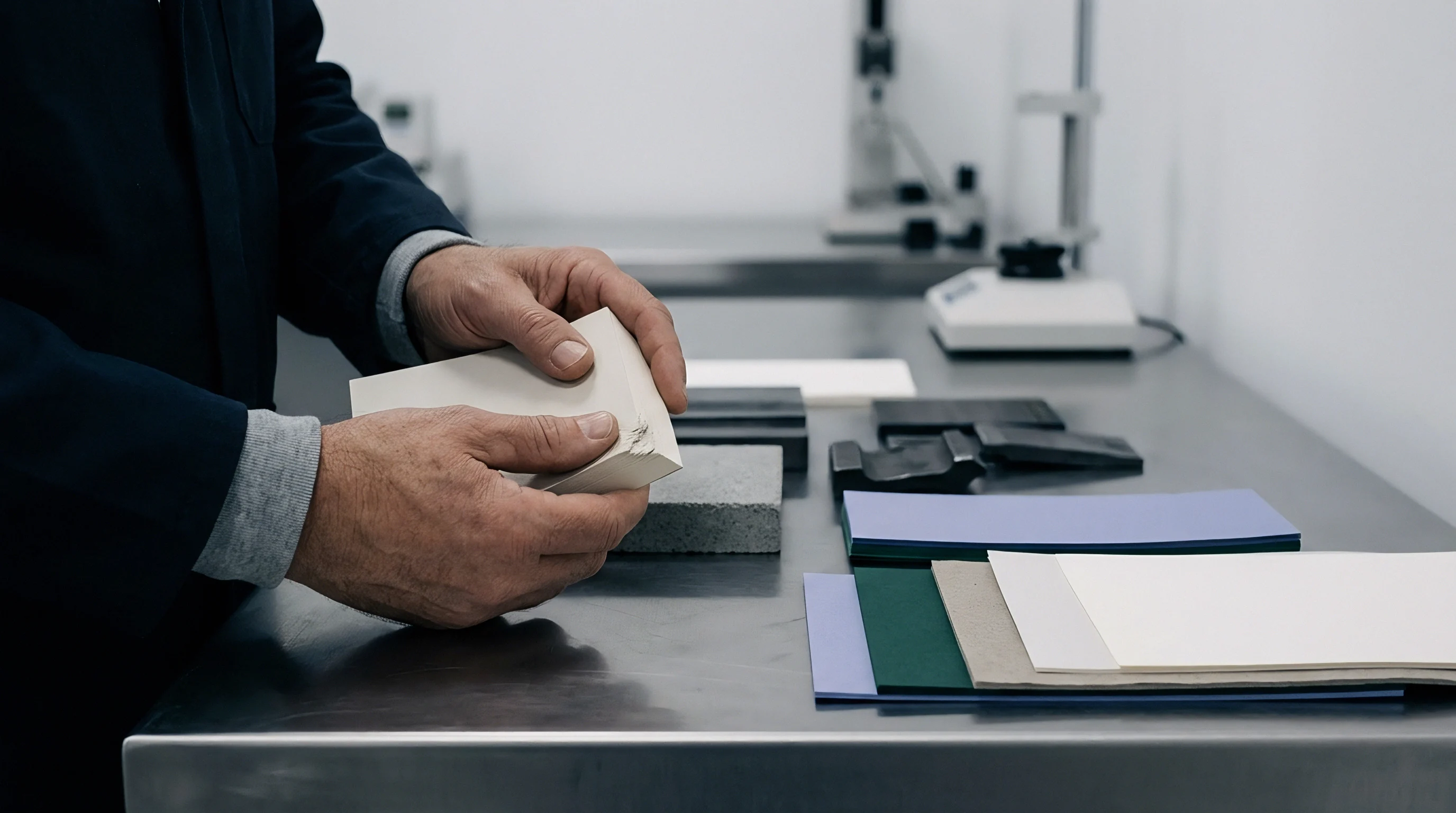
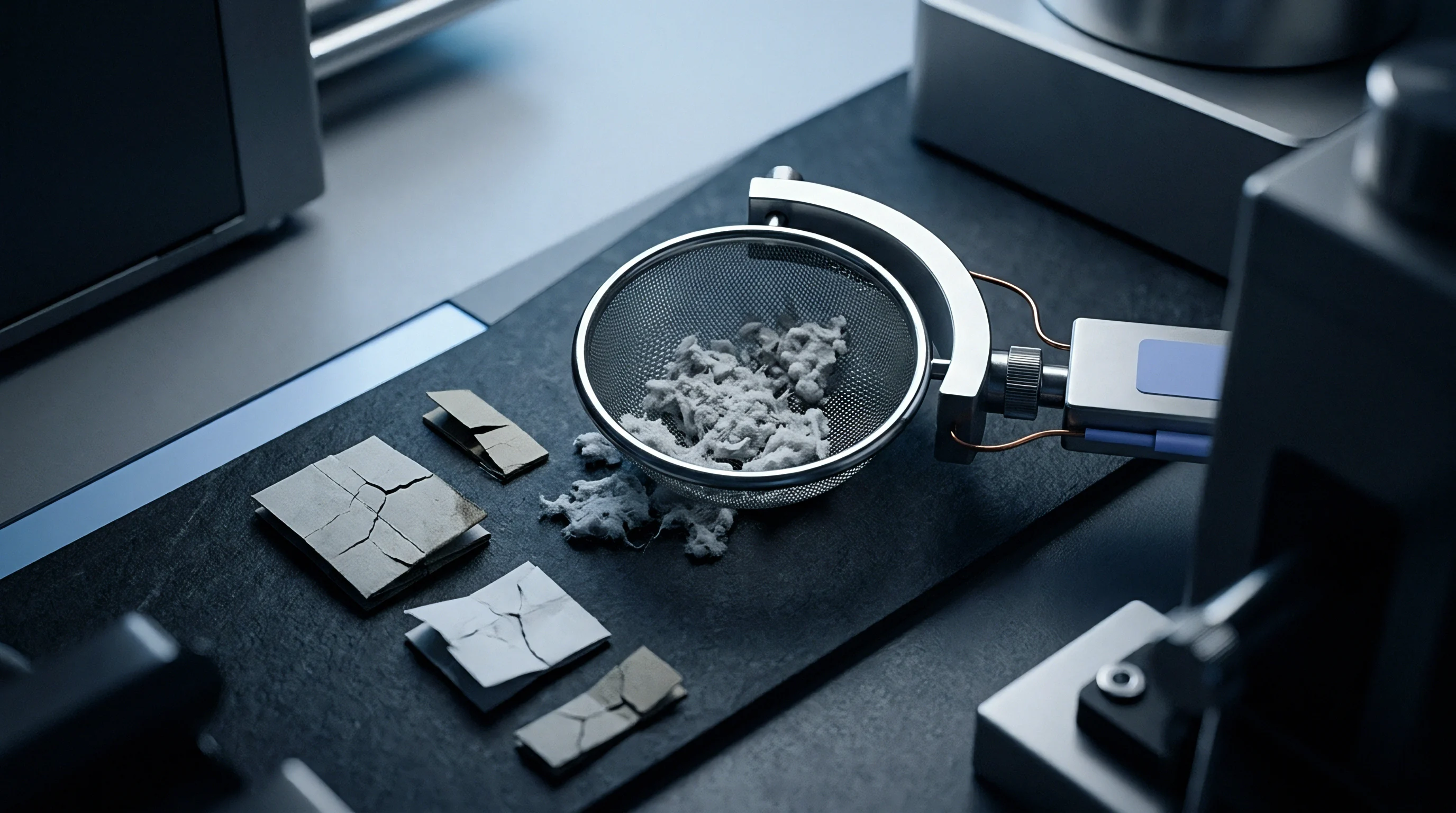
Delamination
Interfacial delamination during mechanical verification proceeds through distinct micro-mechanical stages. Application of external tensile force creates a highly concentrated stress field at the trailing edge of the contact boundary. Mechanical energy accumulates elastically within the substrate, backing material, and test adhesive until local energy density exceeds the fracture toughness of the interfacial bond.
Crack initiation occurs at stress concentration points, such as surface micro-voids, dust contamination sites, or local metal thickness variations. Once initiated, crack propagation proceeds along the path of minimum mechanical energy resistance.
Fracture mechanics defines the energy release rate required to drive interfacial separation. Total strain energy release rate incorporates both the pure interfacial fracture energy and viscoelastic energy dissipation occurring within adjacent polymer layers. Strain rate sensitivity plays a decisive role during test execution.
Viscoelastic polymers exhibit higher yield stress and diminished compliance at elevated crosshead speeds. High-speed testing restricts plastic deformation zones near the crack tip, yielding lower apparent failure energy figures that closely approach fundamental thermodynamic adhesion limits. Conversely, low-speed testing allows extensive viscoelastic deformation in carrier films, artificially inflating recorded peel force values.

Stress Concentration Mechanics at Peel Fronts
Geometry of the testing fixture dictates the distribution of normal and shear stresses across the peel front. In a standard peel test, applied force converts into tensile normal stress perpendicular to the interface and shear stress parallel to the substrate surface. The ratio of tensile stress to shear stress depends directly on the peel angle.
A 180-degree peel configuration imposes extreme flexural bending, creating massive compressive stress on the inner radius of the bend and high tensile stress on the outer face. This extreme flexural work distorts load cell data, rendering it impossible to isolate true interfacial metal adhesion from substrate mechanical properties.
A strict 90-degree peel configuration isolates normal tensile stresses at the crack tip while minimizing shear and flexural deformation work. Maintaining a true 90-degree orientation throughout test travel requires specialized kinematic fixtures, such as sliding sleds or bearing-mounted rolling wheels. Free-loop T-peel tests subject both backing films to variable bending radii, introducing unquantifiable plastic deformation work into the measured peel curve.
Accurate verification protocols isolate pure interfacial failure by controlling sample width, crosshead velocity, backing stiffening, and separation geometry.
| Standard Designation | Peel Angle (Degrees) | Separation Velocity | Mandatory Sample Width | Primary Mechanical Output |
|---|---|---|---|---|
| ASTM D903 | 180 | 305 mm/min | 25.4 mm | Total Strip Adhesion (Includes Flexural Work) |
| ASTM D6862 | 90 | 254 mm/min | 12.7 mm or 25.4 mm | Isolated Interfacial Peel Resistance |
| ISO 8510-2 | 90 | 100 mm/min | 15.0 mm or 25.0 mm | Standardized Interfacial Fracture Force |
| FINAT FTM 1 | 180 | 300 mm/min | 25.0 mm | Laminated Tape Stripping Resistance |
| FINAT FTM 2 | 90 | 300 mm/min | 25.0 mm | Low Bending Strain Adhesion Metric |
Verification protocols mandate precise environmental control during sample conditioning and testing cycles. Temperature and relative humidity directly govern the viscoelastic response of polymer substrates and testing adhesives. Testing performed outside standard ISO 187 atmospheric parameters yields high variance in recorded peel force.
Standard laboratory conditioning maintains 23 degrees Celsius and 50 percent relative humidity for a minimum of twenty-four hours prior to sample preparation and execution.

Are High Speed Peels Representative of Converting Stress?
Converting machines subject metallized packaging films to dynamic shear and peel stresses at line speeds exceeding four hundred meters per minute. Laboratory crosshead speeds operating between fifty and three hundred millimeters per minute operate several orders of magnitude slower than actual converting passes. Dynamic mechanical analysis proves that high deformation rates shift polymer behavior closer to glass transition regimes, altering fracture mechanics at the metal interface.
High-speed peel testing units operating up to ninety meters per minute reveal that interfacial fracture modes often shift from cohesive adhesive split to brittle interfacial metal lift as separation rate increases.
During forensic cross-section microscopy under high magnification, we identify interfacial micro-voids at the aluminum nucleation zone. Dynamic stress waves propagating through the web during high-speed slitting or lamination reflect off these microscopic density discontinuities. Local stress amplification along void boundaries initiates interfacial crack growth without requiring macro-level mechanical peel forces.
Standard low-speed bench verification fails to capture this strain-rate dependent brittle detachment mechanism.
Standard specifications that omit sample backing stiffening permit unquantified plastic elongation, invalidating peel force measurements across thin flexible foils.
Characterizing fracture energy across variable jaw separation rates requires constructing master adhesion curves using time-temperature superposition principles. Evaluating interfacial resistance across multiple testing velocities maps the transition from ductile viscoelastic failure to brittle interfacial separation. Packaging buyers relying exclusively on single-point, low-speed test methods remain vulnerable to unexpected interfacial delamination during high-speed converting runs.
- Certificates of Analysis Validation ~ Independent chemical composition verification of metal layer thickness, passivating aluminum oxide composition, and surface dyne levels prior to web processing.
- Environmental Pre-Conditioning Documentation ~ Certified atmospheric logs confirming twenty-four hour sample exposure to 23 degrees Celsius and 50 percent relative humidity per ISO 187 rules.
- Backing Reinforcement Verification ~ Documented use of high-modulus polyimide tape backing to suppress substrate strain below 0.5 percent during tensile testing travel.
- Failure Locus Surface Mapping ~ Quantitative spectroscopy data from X-ray photoelectron spectroscopy or Time-of-Flight Secondary Ion Mass Spectrometry proving complete metal retention or interfacial detachment.
- Kinematic Alignment Calibration ~ Metrology certification confirming test bench 90-degree sled tracking accuracy within plus or minus 0.25 degrees across full stroke length.
Whether lab-scale high-speed peel fixtures can fully replicate the complex multiaxial shear and compressive nip stresses experienced inside industrial lamination nips remains an open question under active thermodynamic investigation.


Fixture
Accurate verification of interfacial adhesion demands physical testing apparatus designed to eliminate parasitic forces. Standard universal testing machines equipped with basic pneumatic vice grips are inadequate for testing ultra-thin metallized foils without specialized modifications. Gripping thin metallized films directly in jaw clamps creates intense local stress concentrations, causing specimen breakage at the grip line rather than interfacial peel detachment.
Furthermore, alignment errors as small as two degrees off true perpendicular introduce lateral shear components that distort load cell readings.
Specimen preparation mandates strict physical geometry. Standardized specimen cutter dies yield uniform specimen widths with smooth, nick-free edges. Edge imperfections introduced by dull razor blades act as immediate stress concentrators, initiating premature edge tears that propagate across the web strip at artificially low force thresholds.
Specimen width must be controlled to within plus or minus 0.1 millimeter. Utilizing high-modulus backing tape, such as polyimide or rigid polyester tape with acrylic pressure-sensitive adhesive, stiffens thin carrier films, forcing failure to proceed along the targeted interfacial plane.
Kinematic Alignment in Fixed Angle Fixtures
Maintaining a constant 90-degree peel angle requires continuous, passive transverse movement of the test specimen as the crosshead advances vertically. Fixed non-sliding tables force the peel angle to decrease continuously during crosshead travel, transforming a nominal 90-degree test into an uncalibrated oblique peel. Kinematic 90-degree fixtures feature low-friction linear ball-bearing sleds or rolling wheel drums driven by lightweight pulley systems linked directly to crosshead displacement.
When checking crosshead alignment on bench universal testers, we align load cells within half a degree of perpendicularity. Sled movement resistance must not exceed 0.05 Newtons to prevent friction forces from adding to recorded peel data. Precision load cells matched to expected force ranges ensure high signal-to-noise ratios.
Testing low-adhesion metallized foils using high-capacity load cells introduces electronic noise and quantification errors that obscure minor force fluctuations along the peel profile.
Kinematic sleds equipped with low-friction linear bearings eliminate parasitic friction, ensuring load cell data reflects true interfacial detachment energy.
Calibration procedures verify test bench force accuracy and crosshead speed consistency at regular operational intervals. Automated digital data acquisition systems sample force data at minimum frequencies of 100 Hertz. High sampling rates capture transient force drops corresponding to localized metal pick-off micro-events along the specimen length.
Averaging raw data across defined steady-state peel lengths discards initiation spikes, yielding statistically valid average peel strength metrics.

Backing Tape Selection for Substrate Stiffening
Flexible packaging films such as twelve-micron PET or fifteen-micron BOPP undergo significant elastic and plastic elongation when subjected to tensile peel forces. Substrate strain alters specimen cross-sectional area and absorbs energy that would otherwise drive interfacial crack propagation. Applying a high-stiffness pressure-sensitive backing tape behind the metallized foil artificially increases flexural rigidity, suppressing substrate elongation below critical strain thresholds.
Selecting the correct backing tape requires matching adhesive bond strength and backing modulus to the target metallized substrate. The pressure-sensitive tape adhesive must bond aggressively to the non-metallized reverse face or upper metal surface without releasing chemical plasticizers that degrade interfacial properties. Standard testing protocols specify high-performance polyimide tape with silicon or acrylic adhesives displaying peel adhesion to steel exceeding 10 N/25mm.
Backing application mandates uniform rubber roller pressure to eliminate trapped air bubbles that introduce localized compliance variations during mechanical testing.
- Cut metallized foil test samples to a precise width of 15.0 millimeters using a high-precision dual-blade cutter, ensuring complete absence of edge nicks or burrs.
- Apply a strip of high-modulus polyimide backing tape over the non-metallized surface of the specimen, smoothing with a calibrated 2.0 kilogram rubber roll at a uniform speed of 10 millimeters per second.
- Mount the target pressure-sensitive verification tape or laminated test substrate to the metallized surface, leaving a twenty-millimeter unbonded starter tab at one end of the strip.
- Secure the rigid backing plate or rolling wheel substrate onto the kinematic sliding sled of the universal testing machine, verifying that the sliding axis moves freely without mechanical friction.
- Clamp the unbonded starter tab of the specimen into the upper pneumatic grip of the crosshead, adjusting pneumatic line pressure to precisely 0.4 MPa to prevent line pinch shear or jaw slippage.
- Zero the electronic load cell signal, initiate crosshead travel at a continuous velocity of 100 millimeters per minute, and record load data across a total displacement length of seventy-five millimeters.
- Discard the first fifteen millimeters of initial crack propagation data, and calculate the arithmetic mean force across the remaining steady-state peel displacement curve.
Under quality assurance purchase clauses, raw peel force graphs lacking verified kinematic sled displacement logs are legally invalid for batch rejection claims.

Ledger
Interfacial adhesion failure represents a significant financial risk in flexible packaging converting. Metallized film costs incorporate primary polymer extrusion, surface pretreatment passes, physical vapor deposition processing, and slit-rewind operations. When interfacial metal pick-off occurs on secondary dry-bond lamination lines or high-speed printing presses, raw material losses cascade across the supply chain.
Low metal adhesion forces converters to reduce processing line speeds, directly inflating machine hour rates and reducing plant output throughput.
Barring physical metal detachment, microscopic interfacial failure destroys gas barrier performance. Packaging designed to protect moisture-sensitive foodstuffs or pharmaceutical powders relies on continuous, intact aluminum barrier layers. Interfacial micro-cracking precipitates exponential jumps in Water Vapor Transmission Rate (WVTR) and Oxygen Transmission Rate (OTR).
A metallized PET film providing an OTR below 1.0 cc/m2/day degrades to over 15.0 cc/m2/day following partial metal pick-off. Defective packaging shipped to consumers results in premature product spoilage, costly brand recalls, and severe commercial liability claims.

Barrier Degradation Metrics Linked to Metal Pick Off
Quantifying the relationship between interfacial bond strength and barrier loss reveals critical operational thresholds. Baseline barrier performance remains stable when interfacial peel strength exceeds 1.5 N/15mm for PET substrates and 1.0 N/15mm for BOPP films. Dropping below these baseline figures causes micro-delamination along metal crystallite boundaries under mechanical web tension, creating pinhole networks that compromise shelf-life parameters.
Standard gas transmission testing protocols (ASTM F1249 for water vapor, ASTM D3985 for oxygen) require twenty-four to forty-eight hours per specimen test cycle. Relying solely on barrier testing for lot acceptance introduces severe production delays and inventory bottlenecks. Mechanical peel strength verification serves as an immediate surrogate metric for barrier integrity.
Establishing strict statistical process control limits for interfacial peel strength enables real-time line release decisions, mitigating latent barrier failure risks before finished laminates exit converting facilities.
| Interfacial Strength Tier | Processing Speed Impact | Scrap Generation Rate | Barrier Retention Level | Laminated Run Financial Exposure |
|---|---|---|---|---|
| Optimal (> 2.5 N/15mm) | Full Rated Speed (400 m/min) | Baseline (< 1.5%) | 100% Intact Barrier | Minimal (Standard Operating Cost) |
| Acceptable (1.5 – 2.5 N/15mm) | Standard Speed (300 m/min) | Controlled (2.0 – 3.5%) | 95-99% Intact Barrier | Low (Routine Machine Scrap) |
| Marginal (0.8 – 1.4 N/15mm) | Derated Speed (150 m/min) | Elevated (5.0 – 10.0%) | 60-80% Intact Barrier | High (Line Speed Loss & Rework) |
| Sub-Critical (< 0.8 N/15mm) | Line Halt / Processing Failure | Catastrophic (> 25.0%) | Severe Loss (< 20% Barrier) | Critical (Total Material Rejection) |
To protect convertors from latent barrier failure, we write minimum interfacial adhesion floors directly into supply contracts. Procurement agreements specify lot acceptance criteria based on randomized 90-degree peel verification testing across roll width locations. Discrepancies between supplier Certificates of Analysis and incoming bench test results Trigger immediate material quarantine, protecting manufacturing assets from catastrophic converting failures.

Financial Exposure in Laminate Yield and Conversion
Converting economics hinge on total usable laminate yield per ton of raw web substrate. Unintended metal detachment during lamination produces defective material that must be segregated and destroyed. Disposal costs for non-recyclable multi-material laminate scrap further worsen financial margins.
Extended machine make-ready times, roll changing downtime, and adhesive purge cycles caused by metal contamination on laminating nip rollers rapidly consume operational profitability.
Quantifying risk exposure involves balancing raw substrate purchasing costs against potential finished product liability. A single rejected production lot of metallized high-barrier pouch stock easily exceeds tens of thousands of dollars in direct material losses, dwarfing the minimal cost of rigorous benchtop testing instrumentation. Incorporating standardized 90-degree interfacial peel testing into routine quality control protocols provides a direct insurance policy against latent laminate delamination.
Rule-of-thumb benchmarking dictates that double-pass dry lamination requires half a Newton per fifteen millimeters higher interfacial adhesion than single-pass solventless processing to withstand repeated thermal nip cycles.