Molecular Attraction
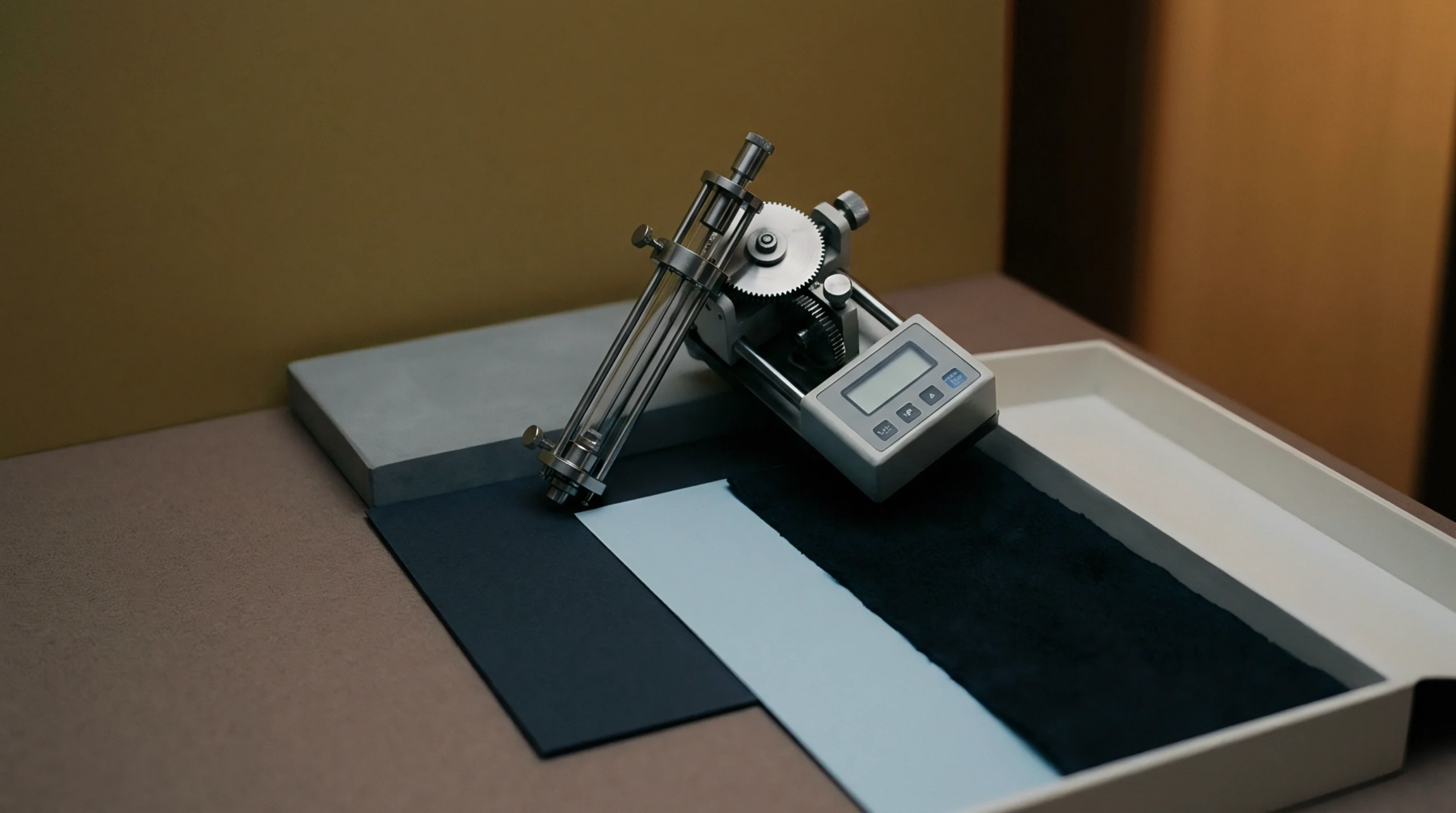
Intermolecular forces at the boundary of a solid control the wetting behaviour of liquid inks and coatings. This surface energy determines whether a fluid spreads across a substrate or beads into discrete droplets upon contact. High values indicate a substrate with high reactivity that accepts aqueous fluids readily, whereas low values often signify non-polar polymers like polyethylene that reject standard water-based adhesives.
Coating machines calibrate tension settings to match these values because uniform coverage depends on the balance between the fluid tension and the solid attraction.
Bonding Potential
Adhesive failure occurs when the energy differential between the coating and the carrier sheet creates a gap in the interface. Surface treatments like corona discharge increase the density of reactive sites on plastic films to raise the reading to a level capable of holding heavy ink coverage. Printers measure the efficacy of these treatments by applying calibrated test inks that demonstrate resistance to break-up over defined durations.
Proper management of this property prevents peeling and edge lifting during the mechanical stress of high-speed filling lines.
Testing Method
Standardized pens deliver fluids with known tension grades to provide a quick assessment of the substrate capability in a warehouse or print room environment. If the fluid line stays intact for two seconds, the substrate energy matches or exceeds the pen rating, but the appearance of retracting droplets indicates a lower energy state. Operators document these outcomes to predict ink adhesion performance before committing large material volumes to the press.
Precise measurement of this metric eliminates the risk of batch spoilage by confirming the chemical readiness of the packaging stock.