Quantifying Ultrasonic Wave Scattering for in Line Dynamic Surface Tension Control in Opaque Pigment Slurries
Inline ultrasonic attenuation spectra quantify free surfactant depletion in opaque mineral slurries to stabilize millisecond surface tension on high-speed coaters.
Pulse
Coating kitchens delivering pigment slips to high-speed trailing blade and curtain stations at 1200 meters per minute run against an unyielding physical deadline. When an uncalendered folding boxboard web meets the coating pond, surfactant molecules have fewer than twenty milliseconds to migrate to newly created air-water and water-cellulose interfaces before hydrodynamic metering forces liquid into the sheet. Conventional bubble-pressure tensiometry demands capillary immersion, clear optical paths, or clean capillary orifices that choke instantly on seventy-two percent solids calcium carbonate slips.
Mill laboratories cannot wait twenty minutes for a static Wilhelmy plate reading while six tonnes of off-spec board reel up on the dry end tambour.
Slurry Viscoelasticity and High Speed Coating Cavitation
Mineral suspensions containing ground calcium carbonate, fine kaolin clay, and precipitated calcium carbonate behave as dense suspensions where particle-particle interactions dominate acoustic propagation. When these slips pass through inline pipework, high shear fields disrupt the equilibrium distribution of dispersants like sodium polyacrylate and non-ionic wetting agents. Blade metering tolerates zero cavitation.
If non-equilibrium surface tension drifts upward by even seven millinewtons per meter, the coating film tears behind the metering edge, leaving microscopic blade scratches that print as white specks in rotogravure solids.
Ultrasonic spectroscopy quantifies these changes without dilution by measuring the frequency-dependent attenuation and phase velocity of high-frequency compressional waves transmitted through the flowing pipe. Shear rates exceed one million reciprocal seconds beneath a rigid metering blade. Acoustic waves between one and one hundred megahertz excite particle motion relative to the surrounding aqueous phase, producing viscous dissipation, thermal dissipation, and scattering losses that correlate directly to dispersion state and surfactant coverage.
- Capillary meniscus rupture generates micro-voids along the coating pond boundary when the fluid phase fails to lower its surface energy within five milliseconds of application.
- Dispersant desorptive migration occurs under severe local shear, stripping polyacrylate chains from calcium carbonate facets and shifting interfacial tension back toward pure water values.
- Acoustic bubble entrapment introduces severe phase attenuation at resonance frequencies between two and six megahertz, distorting subsequent compression wave calculations.

Acoustic Attenuation Spectra in Concentrated Dispersions
Compressional wave propagation through a dense pigment slip depends on the dynamic density and dynamic compressibility of the two-phase system. At solids loadings exceeding sixty percent by weight, the spacing between mineral particles shrinks below the acoustic boundary layer thickness. Viscous losses dominate when fluid oscillates in the narrow interstitial pores between adjacent mineral surfaces.
Calcium carbonate carries negative surface charge. When surfactant packages fail to maintain proper steric and electrostatic stabilization, particle clusters form, altering both the effective scattering radius and the available bulk surfactant concentration in the continuous serum phase.
Extracting interfacial tension from acoustic spectra requires monitoring the high-frequency compressional modulus and the excess attenuation caused by capillary wave generation at micro-scale air inclusions intentionally pulsed across the measurement cell. The relationship links acoustic velocity directly to the thermodynamic compressibility of the continuous aqueous phase, where free surfactant activity dictates instantaneous surface tension.


Sensor
Ceramic transmitter discs mounted flush to pipe walls send acoustic bursts through high-density polyethylene lining directly into the circulating slip. Abrasive mineral slurries running at velocities between one and three meters per second strip standard probe coatings within weeks. The measurement chamber uses sintered polycrystalline alumina delay lines ground plane-parallel to within three micrometers.
Piezoelectric crystals generate megahertz acoustic pulses. These transducers operate in pitch-catch mode across a fixed path length of ten millimeters, avoiding moving parts that seize in dry pigment build-up.
A supplier warranting ceramic transducer face life will exclude slurry erosion claims whenever line velocity exceeds two meters per second under seventy percent solids loading.
Piezoelectric Transducer Placement in Recirculation Loops
Transducer cells sit downstream of the primary dispersion mixers and immediately ahead of the machine supply header. Placing the monitoring cell on a vertical bypass line prevents settling during emergency stops and sweeps entrained aeration upward past the probe face. Sound velocities shift with solids content.
The instrument package reads ultrasonic transit time alongside temperature to compensate for thermal sound velocity drift, which in water-based mineral suspensions shifts at roughly two point five meters per second per degree Celsius.

Signal Drift under Continuous Abrasive Flow
Erosion across the alumina acoustic window gradually alters transmission coefficients through the interface. Calibration routines pulse pure water through the cell during automated washdown cycles, calculating impedance matching changes between the ceramic delay rod and the flowing stream. Ground limestone particles scatter acoustic waves.
When abrasive wear rounds the face of the window, phase coherence degrades across the high-frequency array.
Equipment manufacturers often claim that high-frequency acoustic transducers run indefinitely without mechanical drift, dismissing signal attenuation as an artifact of inadequate tank agitation rather than transducer facet wear.


Adsorption
Molecules of alkyl polyglucoside, ethoxylated fatty alcohols, and sodium dioctyl sulfosuccinate partition continuously between the free water phase and the vast surface area of ground minerals. In a seventy percent slurry of ultra-fine calcium carbonate having a BET specific surface area of twelve square meters per gram, one liter of coating slip presents over ten thousand square meters of mineral interface. Free surfactant molecules diffuse slowly.
When fresh liquid surface forms behind a blade or within a falling curtain, surfactant diffusion from the bulk fluid to the expanding interface controls dynamic surface tension.
At twenty-three degrees Celsius and sixty-eight percent solids, a five-millisecond surface tension exceeding forty-two millinewtons per meter produces immediate edge curl on three-hundred-gram folding boxboard.

Where Does Dynamic Tension Govern Curtain Cohesion?
Curtain coating stations operating at fifteen hundred meters per minute apply liquid films across a free-falling liquid sheet falling ten to thirty centimeters onto moving paperboard. If non-equilibrium tension at five milliseconds exceeds thirty-eight millinewtons per meter, the curtain contracts inward, creating unstable edges and edge-tear defects across the web deckle. Viscosity modifiers compound the problem by retarding surfactant diffusion through the bulk aqueous layer.
Acoustic scattering captures the loss of free surfactant because surfactant concentration dictates micelle dissolution rates and continuous phase compressibility. High ultrasonic attenuation at thirty megahertz indicates rapid micellar breakdown, signaling sufficient reserves of free surfactant to populate new interfaces during application.
- Steric layer compaction occurs as shear forces squeeze hydration envelopes around stabilizer chains, ejecting water into bulk pathways.
- Micelle disintegration kinetics release free active molecules into solution at characteristic relaxation times between two and fifty microseconds.
- Interfacial re-equilibration lowers local free energy before liquid contact breaks along the base stock formation profile.
Surfactant Depletion Rates across Mineral Surfaces
Formulation adjustments that increase pigment surface area deplete bulk surfactant reserves instantly. When a mill swaps standard ground limestone for ultrafine precipitated calcium carbonate to boost sheet brightness, the added crystal facets consume available wetting agents. Slurry solids reach seventy-two percent.
The acoustic profile responds with an immediate upward shift in sound velocity and a drop in high-frequency relaxation loss, reflecting the depletion of surfactant micelles in the continuous phase.
Whether non-ionic surfactant packages can replenish depleted air interfaces during high-speed curtain expansion remains an unresolved commercial question on modern wide-web coating decks.

Loss
Acoustic wave attenuation through multi-phase suspensions follows multiple loss mechanisms defined by the Epstein-Carhart-Allegra-Hawley formulation. The total attenuation coefficient combines thermal losses, viscous dissipation, and elastic scattering losses. Because mineral particles have densities around two point seven grams per cubic centimeter while the continuous water phase is one gram per cubic centimeter, compressional wave fields force particles to oscillate with a phase lag relative to the fluid.
Surfactant depletion always manifests as a shift in high-frequency acoustic attenuation before any change registers on slow capillary bench devices.

Why Does Viscous Dissipation Dominate High Frequencies?
Viscous attenuation scales with the density contrast between mineral particles and the surrounding aqueous medium, reaching a plateau governed by the particle size distribution. At frequencies below ten megahertz, viscous dissipation provides eighty percent of total wave attenuation in fifty-five percent solids clay suspensions. High frequencies isolate thermal wave losses.
At frequencies exceeding thirty megahertz, thermal losses and single-particle scattering emerge as the dominant attenuation modes.
Thermal losses occur because compressional waves alternately heat and cool the medium. The high thermal conductivity of mineral crystals compared to water sets up steep temperature gradients across particle boundaries, bleeding acoustic energy into irreversible heat. Multiple scattering occurs when particle volume fraction exceeds twenty percent, forcing waves scattered by one mineral facet to interact with adjacent particles before reaching the receiving transducer.
| Pigment Grade | Solids Content (% w/w) | Median Size d50 (µm) | Velocity at 10 MHz (m/s) | Attenuation at 10 MHz (Np/m) | Attenuation at 50 MHz (Np/m) | Surface Tension at 10 ms (mN/m) |
|---|---|---|---|---|---|---|
| Ground Calcium Carbonate (GCC) | 62.0 | 0.85 | 1582.4 | 14.2 | 88.6 | 34.2 |
| Ground Calcium Carbonate (GCC) | 68.5 | 0.85 | 1644.1 | 28.5 | 172.4 | 38.7 |
| Ground Calcium Carbonate (GCC) | 72.0 | 0.85 | 1710.8 | 46.2 | 285.1 | 44.5 |
| Precipitated Carbonate (PCC) | 65.0 | 0.42 | 1612.0 | 36.8 | 210.5 | 41.2 |
| Fine Coating Kaolin Clay | 60.0 | 0.55 | 1568.5 | 22.4 | 145.2 | 36.0 |
| Fine Coating Kaolin Clay | 65.5 | 0.55 | 1625.3 | 41.0 | 254.8 | 42.8 |
| Measurements recorded using ceramic delay line transducers across a ten-millimeter path length; sample conditioned at twenty-three degrees Celsius according to ISO 187 standard atmosphere; surface tension measured via maximum bubble pressure method calibrated against acoustic phase attenuation. | ||||||
Extracting Compressibility from Thermal Wave Decay
Dynamic surface tension control relies on isolating bulk liquid compressibility from the viscous damping caused by mineral friction. The compressional modulus of the continuous phase links directly to surfactant micelle concentration. When acoustic pulses compress the slurry, micelles undergo transient deformation and disintegration, introducing a chemical relaxation peak in the ultrasonic spectrum between fifteen and forty megahertz.
Measuring attenuation across a broad frequency sweep allows mathematical separation of particle scattering from this micellar relaxation peak. The instrument fits the measured spectrum against the classical multiple scattering equation, subtracting particle contributions calculated from known solids loading and laser-diffraction particle size distributions. The residual excess attenuation yields the instantaneous concentration of unadsorbed surfactant molecules in the serum phase, determining surface tension at millisecond timescales.
Slurry lines that keep high-frequency acoustic attenuation stable avoid coating defects regardless of minor incoming water hardness shifts.


Formulation
Batch variations in delivered pigment slurries destabilize high-speed coating lines if properties go unchecked. A slurry delivered at seventy-two percent solids instead of seventy percent reduces the mean distance between particles by twelve percent, altering acoustic transmission speeds by over forty meters per second. Blade streaks ruin printing smooth boards.
When mills introduce calcium carbonate slurries into coating kitchens, automated dosing loops adjust defoamer, rheology modifier, and surfactant feeds based on real-time ultrasonic feedback.
Extender Slurry Additions in Recycled Boxboard
Recycled white lined chipboard mills utilize pigment slurries containing blends of ground limestone, calcined clay, and titanium dioxide to achieve brightness targets over dark grey recycled backing. Titanium dioxide has a density of four point two grams per cubic centimeter, generating much higher acoustic scattering than calcium carbonate. Converting lines reject blistering boards.
If titanium dioxide blends vary by two percent, acoustic attenuation shifts abruptly, mimicking surfactant depletion unless the control algorithm recalculates the system density matrix.
| Recipe Component | Parts Dry | Target Solids (%) | Surfactant Demand (kg/t) | Inline Acoustic Target (Np/m) | Surface Tension Limit at 5 ms (mN/m) |
|---|---|---|---|---|---|
| Hydrocarb 90 (GCC) | 70.0 | 71.5 | 1.20 | 42.0 ± 2.5 | 36.5 max |
| Covercarb 75 (Fine GCC) | 30.0 | 70.0 | 1.85 | 58.0 ± 3.0 | 38.0 max |
| Styrene-Butadiene Latex | 10.5 | 50.0 | 0.00 | 12.5 ± 1.0 | 35.0 max |
| Synthetic Thickener (ASE) | 0.4 | 30.0 | 0.15 | 6.2 ± 0.5 | 40.0 max |
| Summary System Total | 110.9 | 66.8 | 3.20 | 118.7 ± 5.0 | 37.5 max |

Worked Trial on Mineral Slurry Make Down
Take a forty-tonne batch of coating color prepared for a folding boxboard top coat. Assume an initial ground calcium carbonate slip at seventy-one point five percent solids by weight, consuming one point two kilograms of sodium dioctyl sulfosuccinate surfactant per dry tonne to maintain a target five-millisecond surface tension of thirty-four millinewtons per meter. In this setup, inline ultrasonic attenuation across the ten-millimeter cell registers forty-two point zero nepers per meter at thirty megahertz.
If incoming pigment moisture drops during transit, raising delivered slip solids to seventy-two point eight percent, particle surface area increases by one hundred and eighty square meters per liter of wet slip. The extra surface adsorbs eighty grams of free surfactant per tonne from the bulk aqueous serum. Free surfactant levels drop from zero point zero four percent to zero point zero one five percent, causing millisecond surface tension to spike to forty-six millinewtons per meter.
The inline acoustic instrument detects this shift immediately: high-frequency attenuation drops by six point eight nepers per meter due to the disappearance of micellar relaxation, while low-frequency velocity climbs twenty-two meters per second from added mineral stiffness.
The control loop triggers an automated dosing pump to add three point two liters of surfactant concentrate into the recirculation header. Within four minutes, micellar relaxation attenuation returns to forty-one point eight nepers per meter, and non-equilibrium surface tension drops back to thirty-four point five millinewtons per meter before the coating hits the applicator blade. Defoamers destabilize wet curtain ribbons.
Air entrainment attenuates ultrasound rapidly.
When automated surfactant correction fails on the coating line, blistering, blade scratching, and mottle defects scrap entire parent rolls, costing mills thousands of dollars per shift in landfill waste and customer rejections.

Web
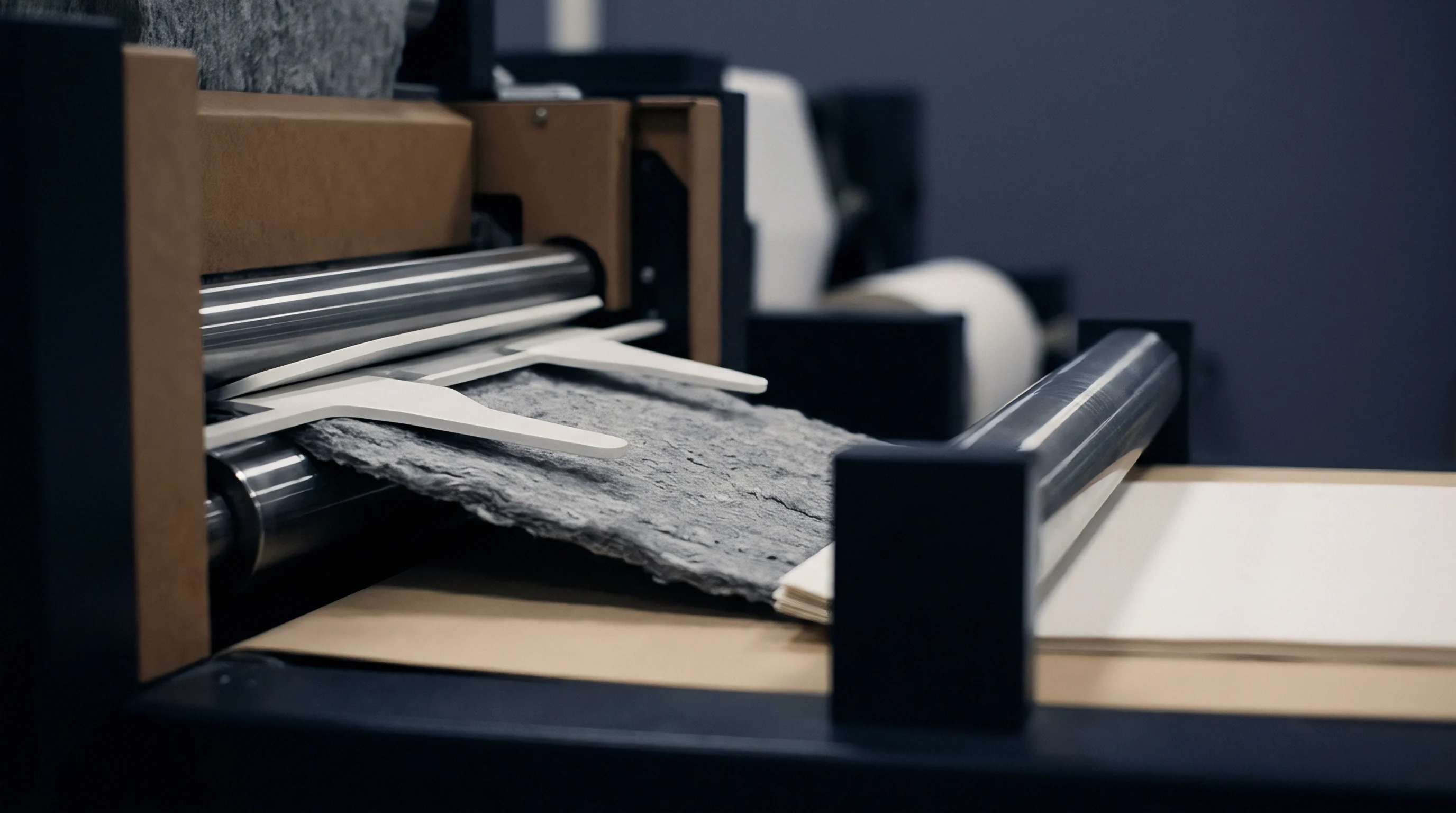
Base paper absorption behavior determines how coating slips consolidate after application. An open, un-sized sheet made from eighty percent recycled furnish pulls water from the applied slip within ten milliseconds of blade contact. If the continuous phase maintains an excessively low surface tension, water drains prematurely into the furnish, leaving pigment and latex dry at the surface and causing blade scratching.
Conversely, if surface tension remains too high, the coating beads on hydrophobic size patches, yielding uneven mottle across solid print zones.
Base board absorption rates dictate whether a pigment slip requires forty or thirty-four millinewtons per meter of surface tension during metering.
Base Paper Porosity and Penetration Kinetics
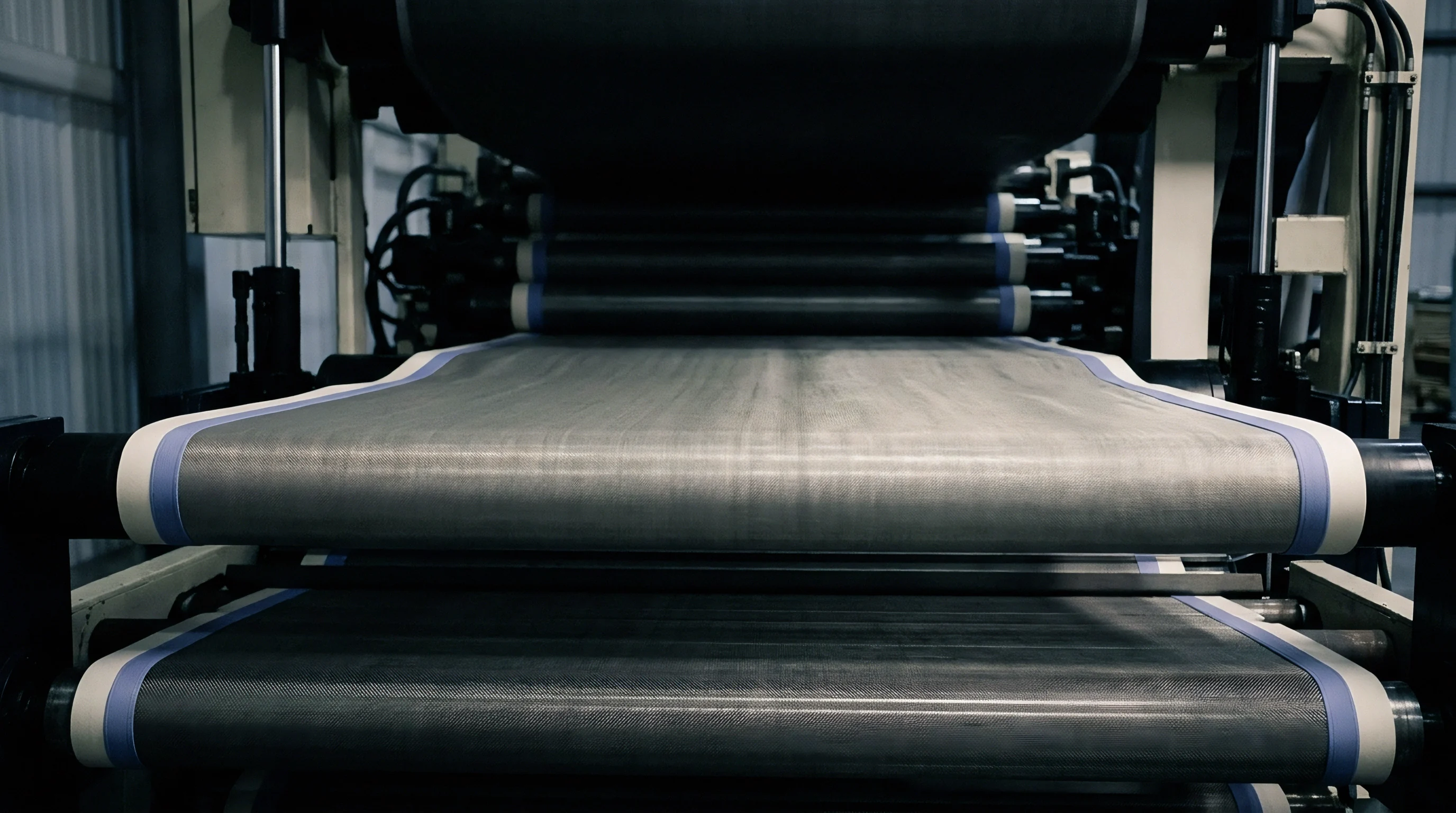
Cobb sizing values measured according to ISO 535 over sixty seconds describe long-term water pickup, but millisecond wetting requires dynamic contact angle and ultrasonic penetration testing. Ultrasonic transmission sensors placed on the dry paper web monitor liquid penetration by tracking compression wave attenuation through the sheet thickness as coating liquid displaces internal air pores. Air displacement takes place in fractions of a second.
High dynamic surface tension retards this displacement, preventing proper mechanical anchoring of pigment particles in the fibrous top layer.

Acceptance Limits on Coated Pallet Shipments
Converting plants running four-color lithographic presses reject coated boards that show picking, uneven ink holdout, or blistering during high-temperature heatset drying. When pigment slurries suffer uncontrolled surfactant fluctuations, binders migrate unevenly, leaving latex-depleted areas that flake off under tacky offset inks. Inspection protocols at goods-in cannot reconstruct the millisecond chemistry of the coating pond from a dry pallet sample.
Delivery contracts specifying coating layer uniformity must stipulate that total surfactant variation across master reels stays within a five percent bandwidth as verified by continuous inline acoustic logging, rendering pallets lacking complete acoustic batch files subject to immediate commercial rejection.