Quantifying Low Relative Humidity Impact on Viscoelastic Recovery of Aqueous Dispersion Coatings during High Speed Creasing Operations
Low relative humidity elevates dispersion binder Tg, converting viscoelastic flow into brittle fracture during millisecond creasing and breaching barrier performance.
Aridity
Aqueous dispersion coatings rely on water trapped inside the polymer matrix to keep molecular chains mobile. When ambient relative humidity drops below thirty-five percent during high-speed converting, the applied coating film loses its equilibrium moisture rapidly. Bound water on hydrophilic groups within styrene-acrylic, ethylene acrylic acid, or polyolefin dispersion matrices evaporates into the dry shop air, removing the primary plasticizer that holds the polymer system’s glass transition temperature below plant operating temperatures.
Under standard conditioning of twenty-three degrees Celsius and fifty percent relative humidity per ISO 187, water sits between polymer chains, expanding free volume and reducing intermolecular hydrogen bonding. Drop that ambient humidity to fifteen or twenty percent, however, and the partial pressure gradient forces rapid desiccation. In a typical carboxylated acrylic latex dispersion, the effective glass transition temperature climbs from seven degrees Celsius up to twenty-nine degrees Celsius.
Once this threshold shifts above ambient room temperature, the polymer turns from a ductile, energy-absorbing network into a glassy, brittle solid before the paperboard ever reaches the creasing station.
Hydro-Plasticization Mechanics in Latex Film Matrix
Surfactants, carboxylated monomers, and hydrocolloid thickeners within aqueous formulations dictate how much moisture a dry film can hold. Water functions as an internal lubricant across synthetic latex networks. As the coating dries and particles coalesce into a continuous phase, a fraction of non-freezable bound water stays anchored against polar functional groups.
When plant humidity falls, this bound moisture leaves the matrix via Fickian diffusion ~ a process accelerated by the thin profile of the coating, which typically runs between six and fifteen micrometers dry.
High-speed strain testing shows that the ultimate strain at break for an unplasticized acrylic dispersion drops from two hundred twenty percent at fifty percent relative humidity down to thirty-four percent at fifteen percent relative humidity. As moisture departs, the polymer network can no longer undergo molecular disentanglement under load. Internal stresses from the initial drying stage remain locked inside the rigid film, leaving little mechanical compliance to survive sharp geometric folds.
Testing aqueous dispersion coatings across varied climate conditions isolates the moisture thresholds where brittle performance begins. Carboxylated dispersions with high styrene ratios show the sharpest drop in mechanical compliance once ambient moisture vanishes. The loss of hydro-plasticization triggers an immediate surge in the small-strain elastic modulus, rendering the protective layer susceptible to crack initiation at low bending radii.
Glass Transition Temperature Shifts across Moisture Bands
Differential scanning calorimetry conducted per ISO 11357-2 demonstrates the direct dependence of glass transition values on ambient humidity exposure. A film conditioned at fifteen percent relative humidity exhibits a single glass transition thermal event shifted upward by as much as twenty-two kelvins compared to an identical sample stored at standard conditions. This thermal shift alters the mechanical response of the coating from rubbery dissipation to brittle fracture during mechanical creasing.
When board rolls or sheet stacks are unsealed in a dry converting plant, exposed outer edges lose moisture within minutes. The aqueous coating equilibrates much faster than the underlying cellulosic board substrate because of its high surface-area-to-volume ratio and thin cross-section. This uneven drying creates a sharp moisture gradient across the web, leaving localized zones where the coating exhibits entirely different viscoelastic properties than the core board beneath it.
Converting facilities running high-barrier waterborne dispersions require tight relative humidity control bands. Without active humidification, winter ambient air in northern hemisphere plant locations frequently drops to twelve to eighteen percent relative humidity. Under these conditions, standard acrylic and polyolefin dispersion coatings operate well below their effective glass transition thresholds during die impact.
| Relative Humidity (%) | Equilibrium Moisture Content (%) | Effective Tg (°C) | Tensile Elongation at Break (%) | Elastic Modulus (MPa) |
|---|---|---|---|---|
| 15 | 0.42 | 29.1 | 34.2 | 1420 |
| 30 | 0.88 | 18.4 | 88.6 | 890 |
| 50 | 1.65 | 6.8 | 215.0 | 310 |
| 70 | 2.80 | -2.5 | 340.0 | 115 |
| 85 | 4.10 | -11.2 | 420.0 | 48 |
| Testing conducted on free-standing 12 µm styrene-acrylic dispersion film samples using dynamic mechanical analysis at 10 Hz and high-speed tensile testing per ISO 1924-3. | ||||
Formulation adjustments offer partial mitigation against low humidity embrittlement. Incorporating permanent non-volatile plasticizers such as polyols or specialized ester derivatives prevents the complete loss of molecular mobility at low relative humidity. However, excessive liquid plasticizer addition compromises grease resistance, block resistance during reelex winding, and heat-seal strength.
Crease failures under dry conditions stem from desiccation elevating the binder glass transition temperature rather than variations in board stiffness.
Crease
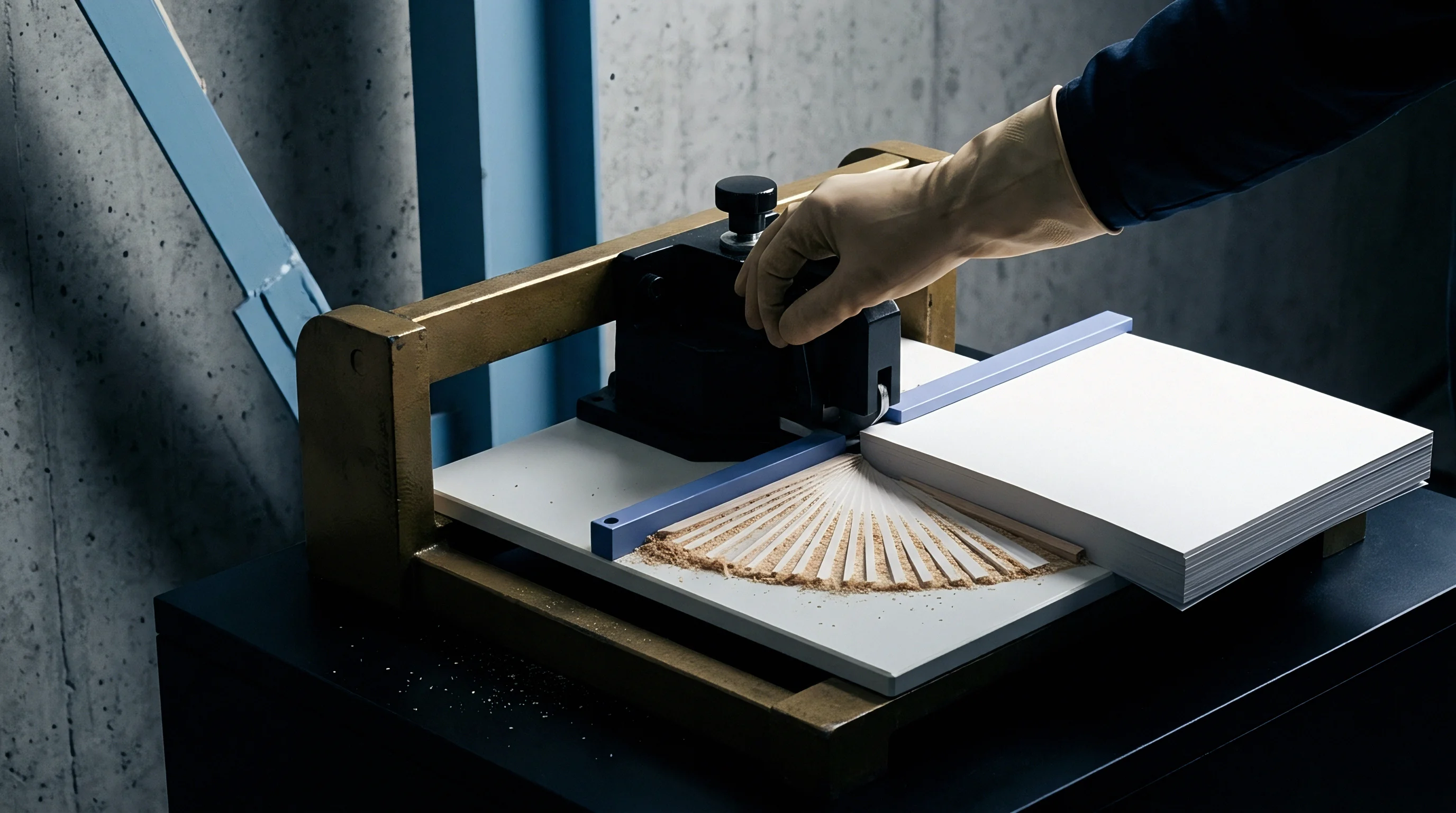
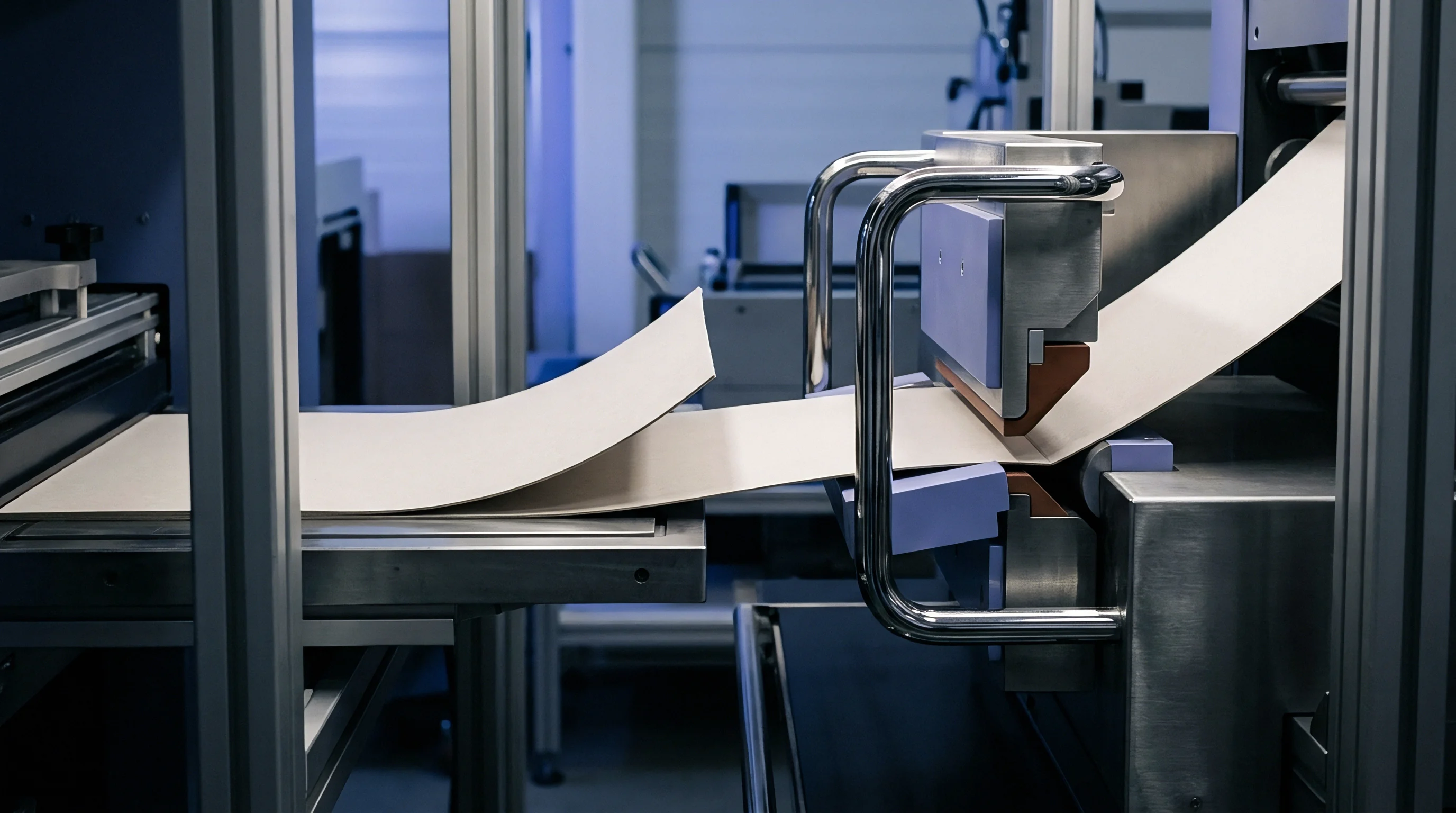
Die creasing on high-speed packaging lines imposes localized deformation on the paperboard substrate and its functional surface coating. Female channel width, male rule thickness, and rule penetration depth define the geometry of the crease indentation. Operating converting equipment at production line speeds between two hundred fifty and five hundred meters per minute reduces the total duration of the creasing impact to a time window spanning 1.2 to 3.5 milliseconds per carton blank.
Under these operating velocities, the instantaneous local tensile strain on the outer radius of the male creasing rule reaches fifty to two hundred fifty percent at strain rates exceeding three thousand reciprocal seconds. At that speed, polymer chains in the dispersion layer simply cannot rearrange unless the binder phase sits well above its glass transition temperature.
High-Velocity Die Kinematics and Local Strain Rates
Rotary and flatbed creasing dies transfer mechanical energy into the composite paperboard matrix within milliseconds. As the male creasing rule forces the board down into the female channel, the top liner carrying the aqueous dispersion coating experiences strong planar elongation combined with out-of-plane shear. The local deformation rate scales directly with press speed and inversely with rule tip radius.
Narrow rule profiles concentrate stress across smaller contact patches. A male rule tip radius of 0.35 millimeters generates local strain rates forty percent higher than a standard 0.70 millimeter tip at the same line speed. If low humidity has already driven up the binder’s elastic modulus, this concentrated strain quickly exceeds the tensile failure limit of the dry polymer.
Coating films undergo brittle shear fracture when mechanical deformation velocity exceeds molecular relaxation velocity.
Anvil clearance and groove depth settings dictate the final depth of the female crease channel. Excessive penetration depth stretches the top surface coating beyond its structural limits, while shallow penetration causes incomplete delamination within the internal fiber layers of the paperboard. Internal fiber delamination must occur cleanly to absorb the bending stress, protecting the surface coating layer from bearing the entire mechanical load during ninety-degree and one-hundred-eighty-degree box folding.
Substrate Matrix Shear and Coating Layer Strain
Paperboard relies on multiple plies engineered to delaminate under shear during creasing. When the board dries out on the plant floor, these fibers stiffen and resist internal separation, transferring much higher tensile strains straight to the surface coating during rule penetration.
Combining stiff substrate plies with a desiccated aqueous dispersion creates severe mechanical issues. Denied internal board yielding, the surface coating is forced to stretch over a sharp ridge, resulting in localized necking and outright tensile rupture right along the crease line.
The following numbered operational sequence outlines the die setup adjustments required when converting waterborne dispersion-coated boards in plant environments operating below thirty percent relative humidity:
- Measure ambient relative humidity and substrate equilibrium moisture content at the feeder using calibrated capacitive sensors.
- Select a male creasing rule carrying a minimum tip radius of 0.71 millimeters to distribute top-layer tensile strain across a broader deformation zone.
- Increase the female channel width by ten to fifteen percent over standard ISO calculations to decrease peak strain rates during male rule penetration.
- Reduce creasing rule penetration depth by 0.05 millimeter increments until internal ply delamination occurs without producing outer surface fiber rupture.
- Verify surface coating continuity post-crease using low-viscosity dyed solvent penetration test methods.
Adjusting tool dimensions provides mechanical relief to the coating layer, but cannot entirely neutralize the effects of physical desiccation. Increasing female creasing channel width mitigates coating strain only when internal paperboard plies remain sufficiently moist to yield under compression.

Relaxation
Viscoelastic materials respond to rapid mechanical deformation through a combination of elastic energy storage and viscous dissipation. Dynamic Mechanical Analysis (DMA) quantifies this behavior by measuring the storage modulus E’, representing elastic energy storage, and the loss modulus E”, representing viscous dissipation. The ratio of loss modulus to storage modulus defines the loss factor, or tan δ, which serves as a direct indicator of damping capacity and molecular mobility within the polymer layer.
When a coating film is fully hydrated, tan δ remains high at creasing strain frequencies, meaning much of the mechanical impact from the die is safely dissipated as thermal and viscous energy. Once ambient humidity drops and moisture leaves the film, however, E’ spikes while E” declines, sending tan δ down toward zero.
Why Does Coating Storage Modulus Spike below Thirty Percent Humidity?
Stripping out water forces polymer chains closer together, heightening intermolecular dispersion forces and steric hindrance. Without water molecules to shield polar interactions, carboxyl and hydroxyl groups along adjacent chains form rigid hydrogen and ionic bonds. This transient crosslinking network locks down segmental chain motion, driving up the bulk storage modulus by as much as four hundred percent at low relative humidity.
High dynamic storage modulus prevents the coating from yielding plastically during the high-speed creasing stroke. Instead of flowing and distributing strain along the fold line, the material stores mechanical stress elastically. Once this stored energy exceeds the cohesive bond strength of the polymer matrix, energy releases through rapid micro-crack nucleation and propagation along the axis of maximum shear strain.
ISO 187 conditioning at twenty-three degrees Celsius and fifteen percent relative humidity drops film elongation at break from one hundred eighty percent down to forty-two percent.
The relaxation time spectrum τ shifts toward longer durations in dry films. While a hydrated coating relieves internal stresses within milliseconds of die withdrawal, a desiccated layer holds residual tensile stresses for hours or days. These locked-in stresses prevent post-folding micro-fissures from closing or self-healing under ambient conditions.

Time-Temperature-Moisture Superposition in Dynamic Strain Recovery
Because temperature and moisture play interchangeable roles in polymer dynamics, time-temperature-moisture superposition principles apply directly. Dropping relative humidity by twenty percent at a constant room temperature creates a mechanical response comparable to chilling the work area by fifteen degrees Celsius. Creasing a dry coating at twenty-one degrees Celsius triggers the exact same brittle fracture behavior seen when running a hydrated coating at six degrees Celsius.
Micro-fissure frequency drops by thirty percent when humidity remains above forty-five percent. Polymer chain mobility governed by the Williams-Landel-Ferry (WLF) frame demonstrates that bound water acts directly on the free volume fraction of the dispersion layer. When free volume decreases due to water loss, the shift factor aM increases, shifting the relaxation spectrum toward longer times that cannot accommodate millisecond creasing speeds.
Viscoelastic parameters measured across common aqueous dispersion chemistries reveal substantial performance variance under dry converting conditions, as detailed in the following comparative analysis:
| Dispersion Chemistry Type | RH (%) | Storage Modulus E’ (MPa) | Loss Modulus E” (MPa) | Loss Factor tan δ | Post-Crease Recovery (%) |
|---|---|---|---|---|---|
| Styrene-Acrylic (Standard) | 20 | 1850 | 148 | 0.08 | 12.4 |
| Styrene-Acrylic (Standard) | 50 | 420 | 189 | 0.45 | 78.2 |
| Ethylene Acrylic Acid (EAA) | 20 | 980 | 117 | 0.12 | 31.0 |
| Ethylene Acrylic Acid (EAA) | 50 | 210 | 115 | 0.55 | 91.5 |
| Polyolefin Dispersion (POD) | 20 | 650 | 91 | 0.14 | 44.2 |
| Polyolefin Dispersion (POD) | 50 | 145 | 94 | 0.65 | 96.0 |
Fractional Strain Recovery Kinetics Post-Deformation
Post-crease viscoelastic recovery determines whether small defects formed during folding stay open or gradually seal before barrier performance fails. Fractional strain recovery tracks the ratio of recovered strain to peak applied strain over time once the load is removed. At higher humidity, secondary chain entanglement and surface-energy-driven viscous flow help close micro-cracks within seconds after folding.
In dry environments, this healing mechanism stops entirely. High effective viscosity and an elevated storage modulus pin polymer chain segments in place at the crack faces. As a result, micro-fissures created during die strike stay open permanently, forming direct capillary pathways through to the raw fibers underneath.
The following set identifies the viscoelastic indicators that signal high risk of coating failure during dry ambient converting operations:
- Loss factor depression below 0.15 measured at strain frequencies corresponding to die impact velocities.
- Storage modulus elevation beyond 1000 MPa at operating room temperatures under dry state conditions.
- Glass transition escalation positioning the binder thermal transition point above 22°C.
- Relaxation time expansion extending internal stress dissipation kinetics beyond 500 milliseconds.
- Tensile strain deficit yielding ultimate film elongation values below 50% under rapid testing speeds.
Whether specific latex core-shell morphology modifications can maintain low-temperature viscoelastic compliance without inducing blocking during high-humidity reel storage remains an active focus of industrial coating research.
Fracture
Micro-cracking along folded carton edges degrades liquid, vapor, and grease barrier performance. When an aqueous dispersion coating fractures under creasing stress, its continuity is destroyed. Pinholes and micro-fissures ranging in width from 0.5 to 15 micrometers form along the crease axis, creating paths for fluid transport through capillary action.
Standard Cobb tests per ISO 535 on flat coated board show minimal water absorption ~ typically 0.5 to 2.0 grams per square meter over sixty minutes. Run that same test across a ninety-degree or one-hundred-eighty-degree crease produced in dry air, however, and absorption spikes dramatically, frequently surpassing forty-five grams per square meter.

Micro-Cracking Diagnostics and Barrier Attenuation
Scanning electron microscopy (SEM) and optical surface profilometry reveal distinctive failure modes in dispersion coatings processed under dry ambient conditions. Brittle failure manifests as linear, sharp-edged channels extending down to the interface between the coating and the paperboard top liner. Ductile failure, seen in properly plasticized films, displays elongated, necked polymer fibrils spanning the crease gap without complete physical separation.
Microscopic continuity loss along folded carton scorelines correlates directly with accelerated shelf-life failure in liquid packaging applications.
Barrier degradation scales non-linearly with the number and width of micro-cracks. Pinhole defects compromise hydrostatic resistance, letting grease, mineral oils, and water reach the hydrophilic cellulosic base. For food packaging, this leads to edge staining, softened box corners, and spoiled product.
Post-Folding Cobb Penetrometry and Grease Resistance Integrity
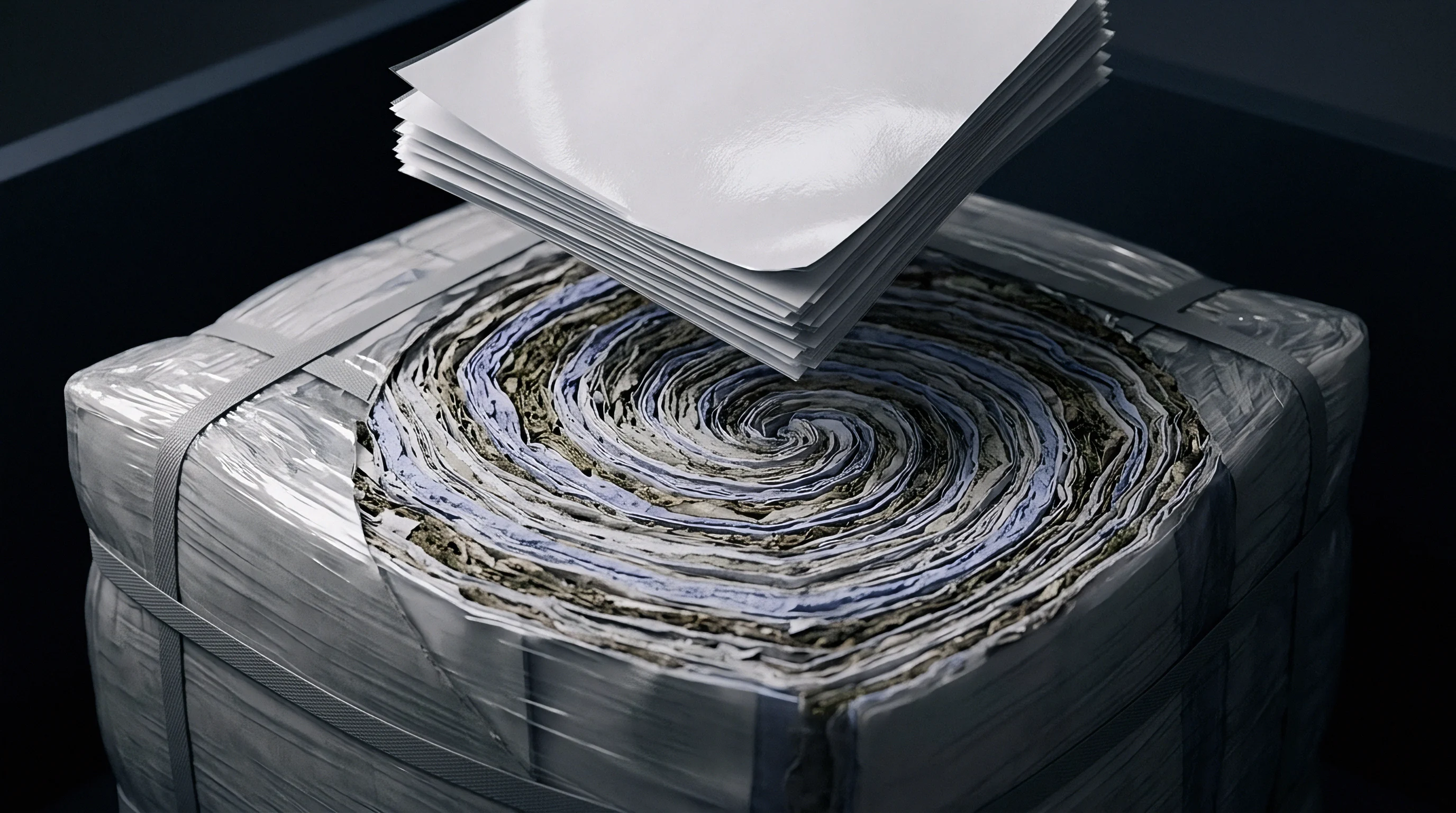
Evaluating barrier durability requires specialized post-folding test methodologies. The standard TAPPI T 559 kit test uses series of castor oil, toluene, and heptane mixtures to evaluate surface energy and solvent resistance. While uncreased sheets may achieve a pass rating at Kit 12, creasing under dry conditions drops the score line rating down to Kit 1 or Kit 2, confirming catastrophic failure of the hydrocarbon barrier.
When board plies do not delaminate cleanly due to low substrate moisture, compressive die force concentrates right beneath the creasing rule. The top liner fibers buckle upward, creating localized stress points that pierce through the brittle coating layer from below. Preventing this requires managing both substrate moisture and ambient converting humidity.
The list below details the structural failure modes observed when converting dispersion-coated paperboard under low relative humidity conditions:
- Transverse micro-fissuring characterized by parallel cracks running orthogonal to the creasing rule direction along the outer bend radius.
- Interfacial delamination where the dry dispersion film detaches from the paperboard surface clay coat due to shear stress concentration.
- Pinholes formation caused by localized tensile fracture at top-liner fiber crossover points during board extension.
- Coating flaking producing loose polymer fragments along the crease line during subsequent high-speed folder-gluer operations.
- Capillary breach forming open pathways that transport liquid and grease across the protective barrier into the cellulosic fiber core.
Substrates converted under unconditioned winter air conditions with relative humidity levels below twenty percent face immediate rejection upon delivery to liquid packaging filling plants due to edge wicking and corner staining during cold storage distribution.
Dossier
Substrate specifications must establish clear environmental parameters for both manufacturing and converting operations to avoid quality disputes. A mill certificate guaranteeing barrier properties based solely on flat-sheet testing under standard ISO 187 conditions offers no protection against field failures occurring when converting sheets at twenty percent relative humidity. Sourcing contracts should define clear technical boundaries for creased barrier performance across a broad humidity window.
Sourcing protocols have to account for humidity fluctuations across the entire supply chain. Board reels and palletized sheets held in unheated or unconditioned storage lose moisture along their outer edges quickly. This leaves dry margins that fail during converting, even if the production line itself operates in a humidified bay.
Specification Clauses for Converting Ambient Headroom
Writing effective technical specifications for waterborne dispersion coated boards requires establishing minimum performance thresholds for creased barrier integrity measured under adverse climatic conditions. Technical purchase requirements demand that delivered paperboard pass post-fold Cobb testing after pre-conditioning samples at twenty-five percent relative humidity for twenty-four hours prior to creasing.
Contractual specifications must define post-fold barrier performance limits measured under low relative humidity conditioning atmospheres to ensure field reliability.
The table below summarizes the economic impact and waste factors associated with running dispersion-coated paperboard under varying ambient humidity regimes, alongside formulation adjustment costs:
| Operating Environment / Coating Strategy | Relative Humidity (%) | Crease Scrap Rate (%) | Coating Additive Premium (€/tonne) | Net Landed Cost per 10k Cartons (€) |
|---|---|---|---|---|
| Unconditioned Winter Plant (Standard Coating) | 18 | 14.2 | 0.00 | 1142.00 |
| Partial Humidification (Standard Coating) | 35 | 3.8 | 0.00 | 1038.00 |
| Controlled Humidification (Standard Coating) | 50 | 0.5 | 0.00 | 1005.00 |
| Unconditioned Plant (Polyol-Modified Coating) | 18 | 1.8 | 45.00 | 1033.00 |
| Unconditioned Plant (High-Cost EAA Coating) | 18 | 0.8 | 120.00 | 1088.00 |
Rejection Limits and Sourcing Risk Allocation
Quality assurance protocols must incorporate incoming inspection checks that test coating viscoelastic performance at goods-in. Standard goods-in verification procedures should include rapid post-fold dye penetration testing on samples drawn from the outer layers and core of delivered rolls. Detecting moisture loss prior to mounting reels onto the converting line prevents high-speed scrap generation and protects plant throughput.
Grade substitution under unchanged product labeling is a serious commercial trap. Mills occasionally tweak polymer binder ratios or trim latex coat weights to shave costs. These lots often pass standard flat-sheet tests without issue, but their effective operating window narrows significantly when winter creasing rolls around.
Standard purchase contract terms for barrier packaging papers incorporate DIN 55437 testing requirements for crease line evaluation, specifying that any lot exhibiting post-fold water absorption exceeding ten grams per square meter after conditioning at twenty-five percent relative humidity shall be rejected at the supplier expense.