Liquid Penetration
Capillary suction in the exposed cross-section of paperboard draws liquids directly into the internal fiber matrix of the container walls. This absorption, known as edge wicking, occurs primarily where the protective polymer barrier terminates at a cut edge or a blank seam. Liquid products or condensation can bypass the surface coating through these untreated edges and compromise the structural stability of the box.
Prevention Strategy
Treatment of the raw board with internal sizing agents like alkyl ketene dimer increases the contact angle of the fibers to resist liquid migration. When edge wicking persists, it is often because of low chemical addition at the wet end of the paper machine or high acidity in the white water system. Mills must monitor these sizing levels to ensure the paperboard withstands dairy or juice packaging requirements.
Packaging Consequence
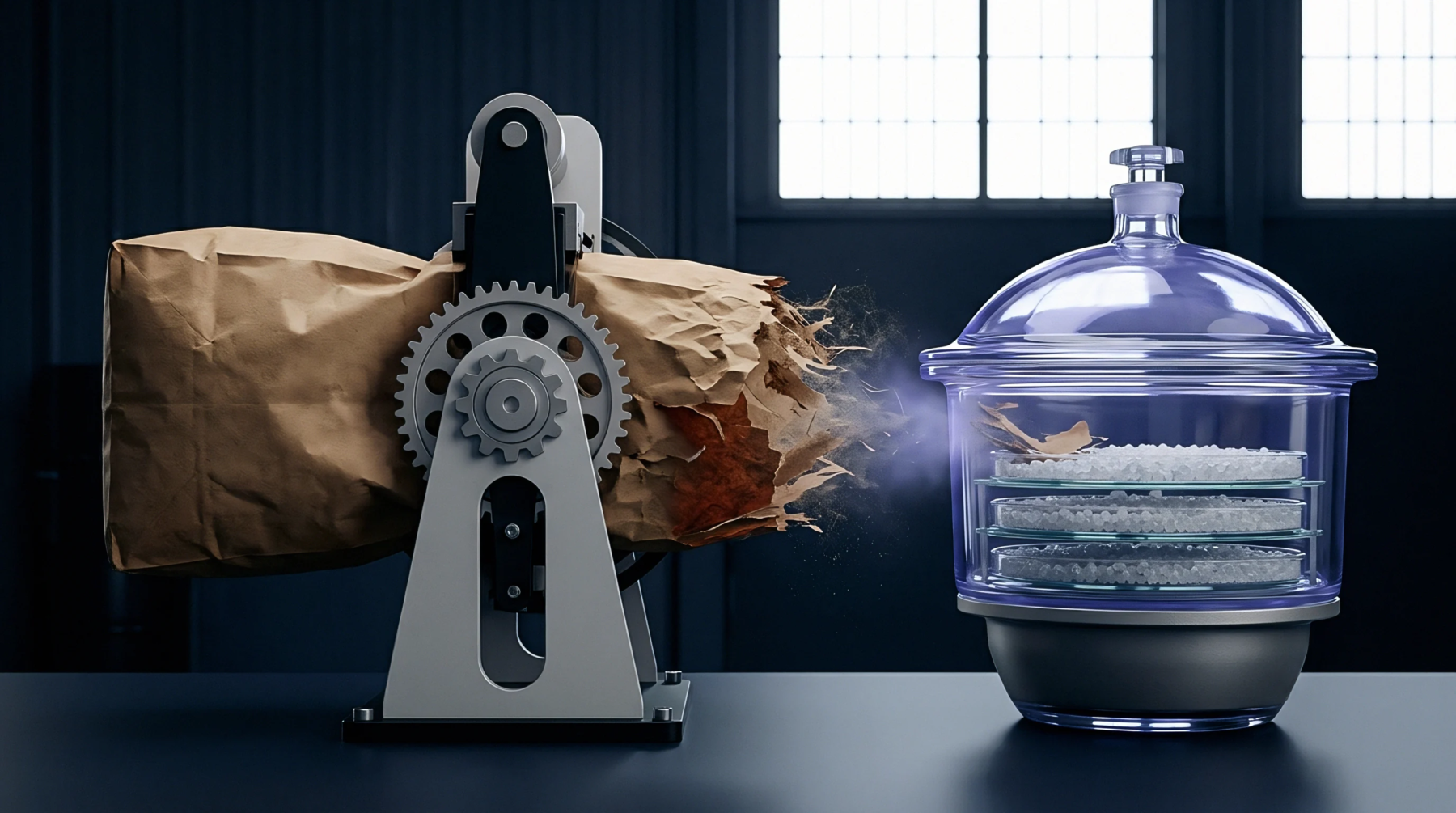
Severe penetration of liquid into the flute structure or carton wall causes the paperboard to lose its stiffness and compression strength. In extreme cases, edge wicking leads to package bulging or total structural failure on the retail shelf. Furthermore, the aesthetic appeal is destroyed by unsightly dark stains or mold growth around the seams, rendering the product unsellable.
For these reasons, converters utilize skiving and hemming techniques to fold the paperboard edge back on itself, thereby sealing the raw fibers away from any potential liquid contact.