Modeling Non Linear Barrier Degradation in Fiber Packaging under Edge Load Compression
Compressive edge loading drives non-linear barrier failure when localized liner buckling exceeds polymer yield strain, requiring coupled transport models.


Platen
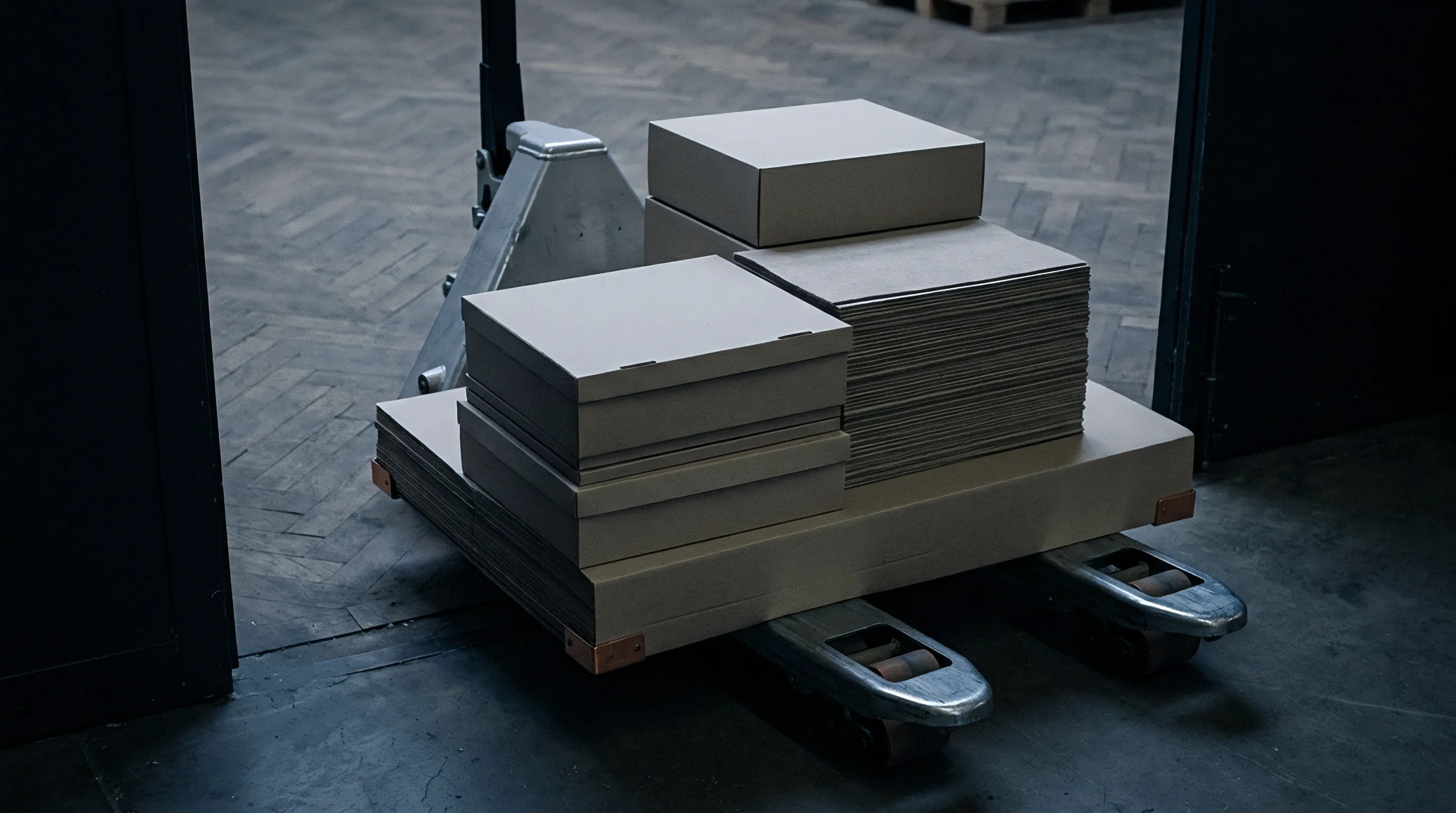
Parallel steel test surfaces exert continuous vertical downward travel against corrugated board samples cut to standard rectangular dimensions. During standard testing under ISO 3037 or TAPPI T 811, axial force drives compressive stresses directly into the linerboard faces and internal fluting medium. Structural load resistance climbs linearly across the initial displacement window until micro-instabilities initiate inside the paper matrix.
These localized compressive forces generate severe out-of-plane shear at the adhesive bond lines where the fluted tips join the barrier-coated liner.
Fiber substrates distribute stress through a networked mesh of cellulose filaments bonded by hydrogen bridges. When axial loads compress this network parallel to the fluting axes, the facings experience localized buckling waves long before gross ultimate failure occurs. Uncoated linerboards absorb initial buckling through fiber rotation, inter-fiber slip, and microscopic delamination within the thickness profile.
A functional barrier layer applied as a surface finish cannot deform through these cellular fiber mechanisms.
A 40-gram aqueous dispersion barrier loses 82 percent of its oxygen resistance once edge compression exceeds 1.8 millimeters of displacement at 23 degrees Celsius and 50 percent relative humidity.
Dispersion coatings, extrusion films, and vacuum metallized layers adhere directly to external surface fibers. As the base sheet undergoes out-of-plane bending under compressive displacement, the outer surface experiences localized tensile stretching while the inner interface suffers intense transverse shear. Micro-creasing concentrates at the peaks of localized buckles.
Tensile strain exceeds film limits.
Mechanical stress fields trigger distinct structural transformations across the converted board architecture:
- Flute tip cleavage strips the functional barrier away from corrugated adhesive glue lines under severe out-of-plane rotational forces.
- Transverse shear cracking splits continuous polymer membranes along localized fiber displacement ridges across the liner face.
- Intra-wall delamination divides multi-ply cartonboard sheets into independent plies, multiplying internal void volumes.
- Core cell collapse flattens vertical flute channels, forcing brittle mineral coatings into sharp compressive creases.
The score line gives way.
Tool wear alters score depth.
Die penetration crushes core flutes.
A barrier film formulated without ductile elongation cracks at the crest of every structural wave formed during compression.
Deflection
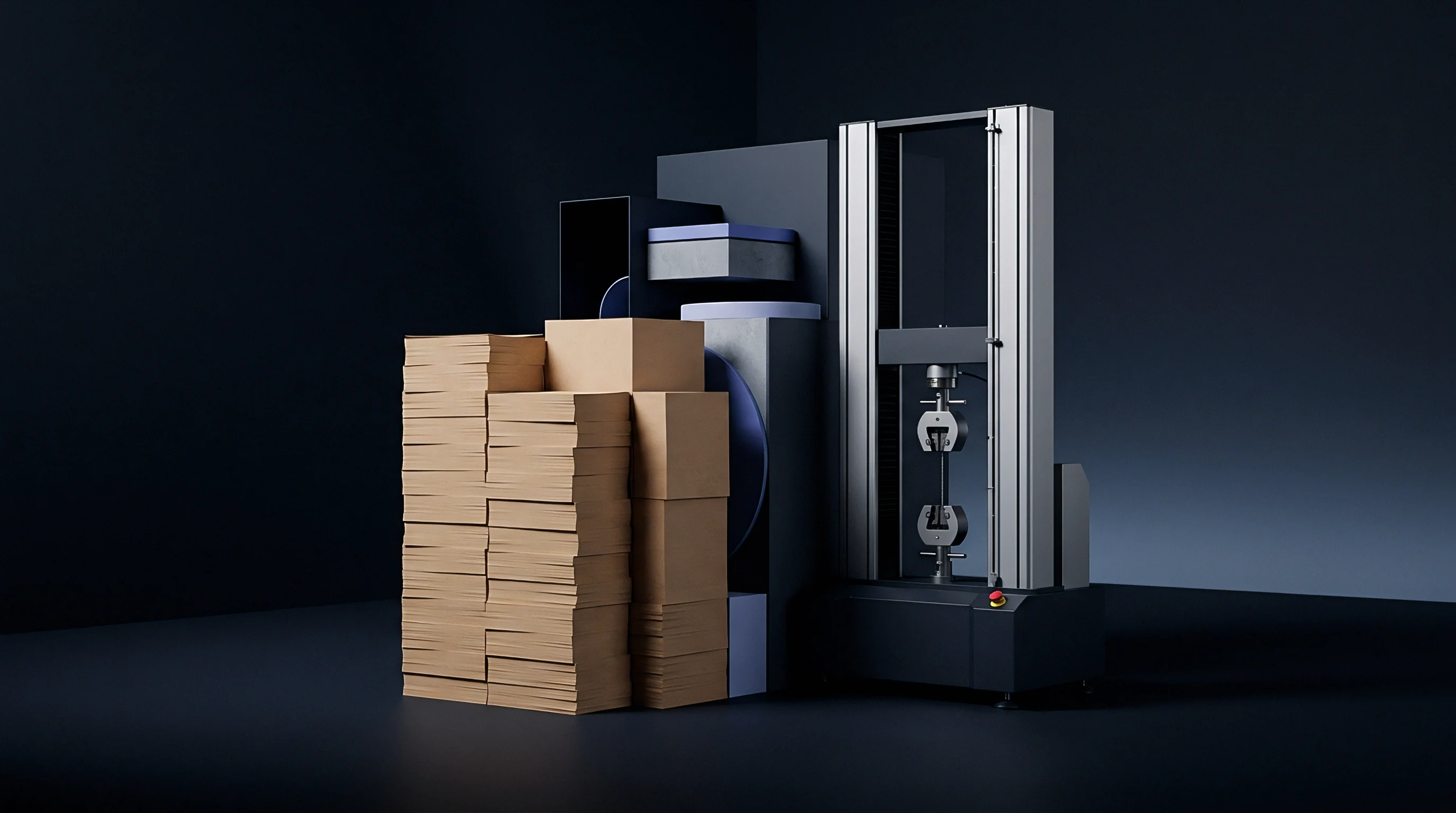
Displacement sensors track continuous specimen shortening under constant platen velocities of 12.5 millimeters per minute. Below forty percent of peak compression capacity, the water vapor transmission rate across coated corrugated test pieces remains stable. Once structural displacement advances past sixty percent of the ultimate failure load, barrier resistance exhibits sharp non-linear decay.
Aqueous dispersion formulations, synthetic polyolefin films, and bio-based polyesters behave differently during structural board flattening. Mineral pigment binders in dispersion coatings undergo micro-particulate detachment, creating microscopic capillary channels through the coating film. Polyethylene extrusion coatings withstand greater elongation before rupture, yet undergo pinholing when crushed fiber clumps puncture the thin plastic skin from beneath.
Will Creep Displacement Rupture Extrusion Liners?
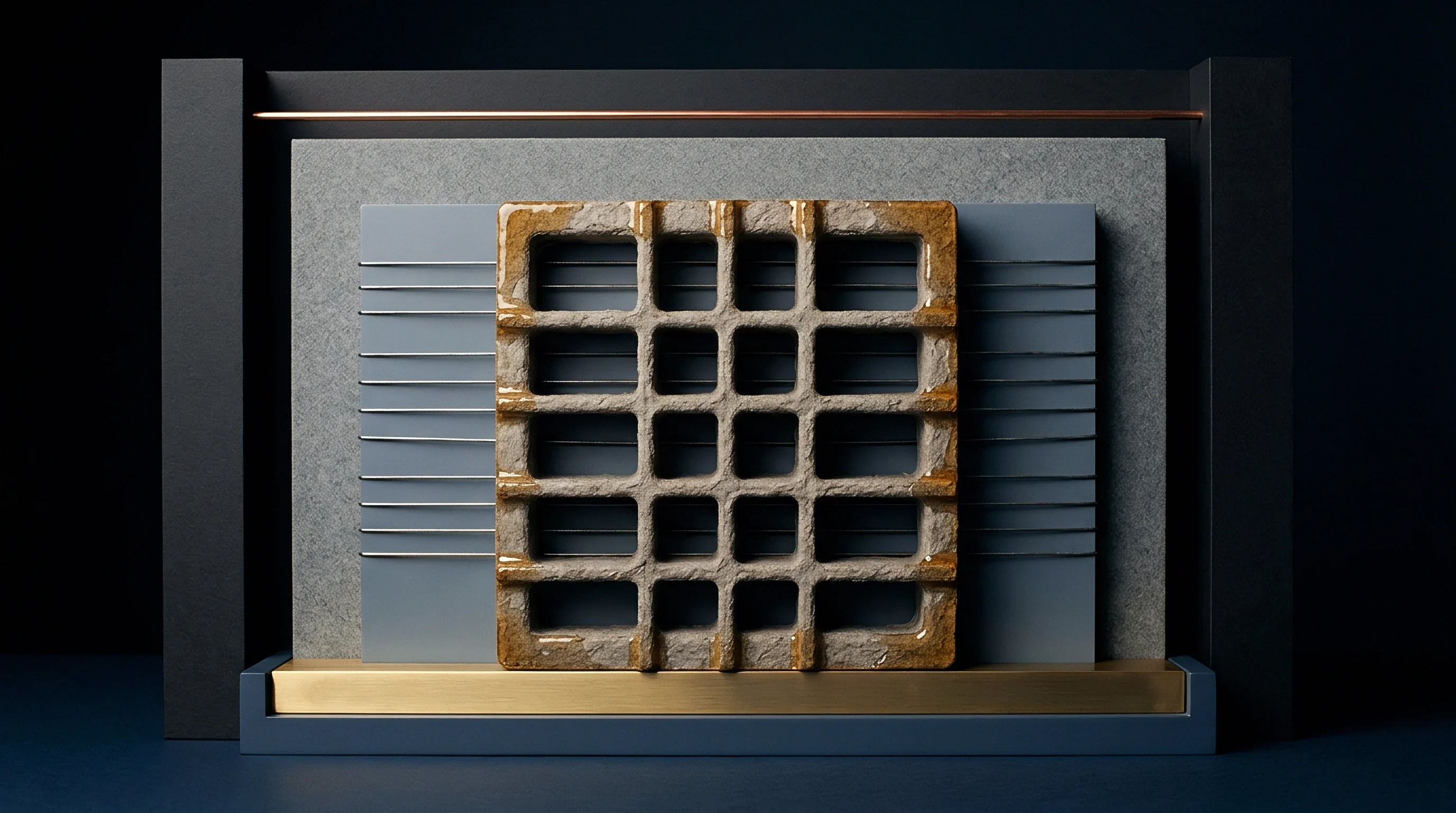
Static stack weight inside warehouse pallets subjects corrugated containers to continuous edgewise forces over multi-week storage cycles. Secondary creep displacement occurs at stress levels substantially lower than short-term laboratory compressive limits. Under ninety-day dead loads, moisture absorption lowers critical buckling loads.
Moisture accelerates polymer chain slip.
Pinholes multiply across flute tips.
| Substrate Specification | Barrier Finish System | Initial WVTR (g/m²·day) | Post-Compression WVTR (g/m²·day) | Initial OTR (cc/m²·day) | Post-Compression OTR (cc/m²·day) |
|---|---|---|---|---|---|
| B-Flute 175 gsm Kraftliner | 18 gsm Aqueous Acrylic Dispersion | 4.2 | 48.6 | 12.5 | 210.0 |
| B-Flute 175 gsm Testliner | 22 gsm Low Density Polyethylene | 2.1 | 14.8 | 450.0 | 1820.0 |
| E-Flute 200 gsm Kraftliner | 15 gsm Polybutylene Succinate | 8.5 | 82.0 | 35.0 | 410.0 |
| EB-Flute 250 gsm Kraftliner | 25 gsm Water-Based Polyhydroxyalkanoate | 6.4 | 71.2 | 18.0 | 380.0 |
| B-Flute 175 gsm Semi-Chemical | 12 gsm Metallized Polyethylene Terephthalate | 0.8 | 38.4 | 1.2 | 145.0 |
Delamination releases trapped gas volumes.
Physical measurement confirms that barrier decline does not scale in direct proportion to compressive distance. The rate of transmission loss accelerates violently once the linerboard experiences irreversible plastic yield. Converting operators note that mill certificates guaranteeing barrier performance on flat roll stock offer zero assurance once sheets pass through corrugating nips and edgewise testing jaws.
Converters frequently claim that standard board varnishes survive stack loads as long as gross box compression values meet transit specifications.
Fracture
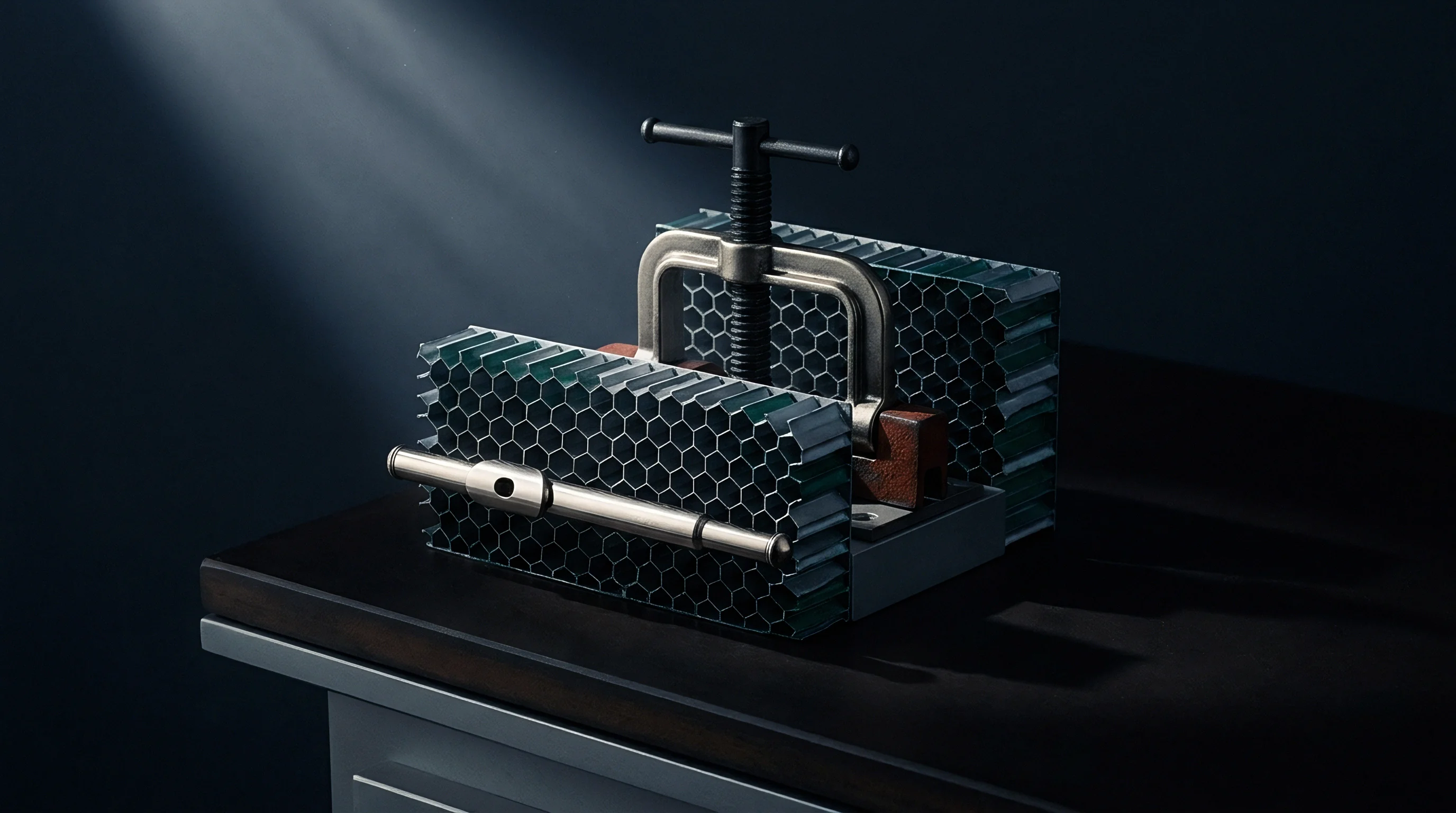
Continuous barriers experience microscopic rupture events across the contact zones of compressive shear planes. When brittle mineral particles within water-based barrier coatings pack together under high lateral strain, interfacial debonding occurs between latex polymers and talc plate structures. Void creation creates tortuous leak paths across previously sealed surface boundaries.
Gas transmission climbs steeply.
Brittleness governs crack propagation.
Shear stress peaks at boundaries.
Percolation physics explains the abrupt failure curve observed in barrier-coated paper packaging. Isolated micro-voids generate minimal increases in gas permeation as long as individual defects remain disconnected. As edgewise compression increases, the number density of micro-tears crosses a critical structural threshold.
Micro-fissures intersect, creating continuous macro-capillaries directly through the functional coating layer into the porous cellulosic core.
Localized shear failure along corrugated score lines destroys continuous film continuity long before the parent box structure reaches gross compression collapse.
Evaluation of barrier integrity following edge compressive loading involves structured physical inspection protocols:
- Specimen preconditioning stabilizes board moisture content at fifty percent relative humidity and twenty-three degrees Celsius under ISO 187 parameters.
- Controlled compression loading subjects rectangular specimens to specified axial deflection targets inside guided clamp tooling.
- Surface crack detection applies low-surface-tension dye penetrant solutions conforming to TAPPI T 432 across the compressed face.
- Permeation testing records oxygen and water vapor transmission rates across compressed zones using dynamic accumulation sensors.
Pallet compression compounds cyclic fatigue.
Aqueous dispersions fail in shear.
Specifying TAPPI T 811 edge crush compliance without an accompanying water vapor transmission threshold after compression leaves corrugated barrier lots exposed to uncompensated moisture spoilage.
Section 7 of the standard supply contract states that barrier guarantees apply exclusively to uncreased, uncompressed sheet stock, effectively voiding supplier financial liability for moisture damage occurring after palletized warehouse storage.

Calibration
Predictive modeling of barrier loss links mechanical stress fields to transport phenomena equations. Classical box compression models derived from the McKee formula calculate container stack strength using caliper, edgewise crush resistance, and flexural stiffness. These structural formulations completely ignore barrier degradation.
To calculate functional packaging shelf life under transport loading, engineering models must couple finite element mechanical strain predictions directly into mass transport diffusion algorithms.

Is Delamination Predictable under Compressive Strain?
Numerical simulation of layered corrugated structures demonstrates that out-of-plane shear stress peaks adjacent to adhesive flute bond lines. When compressive force pushes the outer liner into sinusoidal buckling waves, interlaminar peel stresses pull the coating away from the paper surface. Cohesive paper failure occurs at lower energy thresholds than direct adhesive failure between the polymer and the cellulose fiber.
Yield points shift under humidity.
Laminators run cold on make-ready.
| Coating System | Yield Strain Threshold (ε_y) | Critical Damage Exponent (m) | Permeability Scaling Factor (k) | Model Fit (R²) |
|---|---|---|---|---|
| Styrene-Acrylic Dispersion (20 gsm) | 0.018 | 3.45 | 14.2 | 0.96 |
| Polyvinyl Alcohol Blend (16 gsm) | 0.012 | 4.12 | 22.8 | 0.94 |
| Low Density Polyethylene (20 gsm) | 0.035 | 2.10 | 6.4 | 0.98 |
| Bio-Based Polylactic Acid (25 gsm) | 0.014 | 3.80 | 18.5 | 0.95 |
| Constants derived from empirical curve fitting of normalized water vapor flux across axial compressive strain sweeps using two-parameter power law formulations. | ||||
The mathematical formulation for post-compression permeability couples an empirical power law to baseline transmission rates:
P_effective = P_initial × (1 + k × (strain / strain_threshold)^m)
When compressive strain remains below the yield strain threshold, the damage factor remains zero, holding permeability at baseline levels. As strain exceeds the threshold, the exponential multiplier rapidly scales effective permeability upward. For brittle water-based barriers with damage exponents exceeding 3.5, a ten percent increase in compressive strain beyond yield produces a fourfold rise in water vapor transmission.
Crystalline polymer coatings fractured during flute collapse permit immediate vapor channel formation through uncoated fiber pathways.
Current research leaves unanswered how cyclic dynamic vibrations encountered during road transit interact with static stack creep to depress the critical damage exponent below ambient laboratory values.

Surcharge
Choosing barrier chemistries to withstand compressive strain changes production costs, finishing waste rates, and extended producer responsibility fees. Heavy polyethylene extrusion coatings resist compressive fracture far better than mineral-filled aqueous coatings, yet trigger severe disposal penalties across European jurisdictions. Packaging waste regulations penalize fiber packs containing plastic laminate layers exceeding five percent of total packaging weight.
Aqueous barrier coatings maintain recyclability credentials under EN 13430, passing repulpability protocols without special mill processing fees. These brittle dispersion formulations demand higher dry coat weights and expensive plasticizing additives to match the crack resistance of synthetic laminates under edge load. Applying a secondary inline pass of water-based flexographic primer adds eight to twelve percent to converting machine run costs.
Tooling changes to increase flute heights from B-flute to EB-flute reduce localized compressive strain at the expense of corrugated sheet yield per metric ton.
Make-ready waste climbs steadily when bringing thick barrier boards up to color and registration. Running dispersion-coated liners through corrugator single-facers requires reduced nip pressures and lowered preheater temperatures to prevent premature coating softening. These line adjustments reduce corrugator run speeds from 250 meters per minute down to 170 meters per minute, lifting hourly production overhead charges.
Specifying barrier paperboards without modeling compressive degradation leads to product rejections at retail distribution centers, where spoiled moisture-sensitive goods force immediate financial chargebacks against packaging converters.