Integrating Real-Time Edge Bleed Defect Data into Multi-Machine Dynamic Cutting Stock Formulations
Integrating real-time scanner defect maps into multi-machine slitting formulations eliminates downstream press downtime by dynamically routing edge flaws into trim.

Sensor
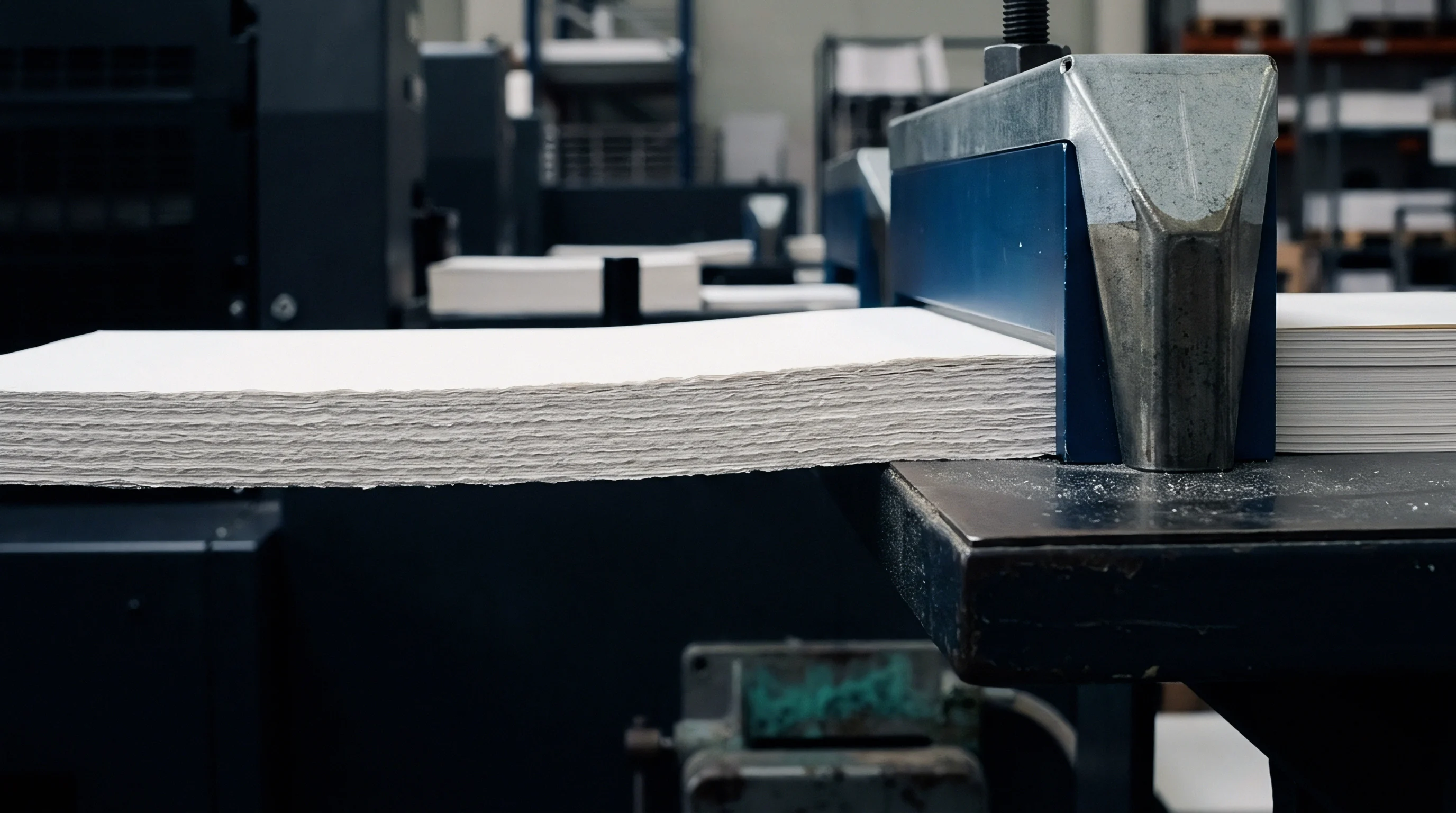
Line cameras positioned above the winder inspect moving paper webs at speeds exceeding 1,200 metres per minute, recording surface anomalies across calibrated cross-direction zones. High-speed line-scan charged-coupled device arrays capture continuous optical reflectance data across coated folding boxboard and bleached kraft webs, identifying edge bleed, micro-voids, and size-press splash before the master reel meets the slitting station. When coating formulation viscosity drops below 850 millipascal-seconds under high shear, hydrophobic barrier chemistry migrates past the intended deckle boundaries, generating lateral bleed zones that degrade boundary tensile strength and flexographic ink holdout.
Feeding these spatial defect coordinates directly into multi-machine cutting algorithms prevents severe press trips, edge delamination during rotary die-cutting, and rejected converting batches.
Optical inspection rigs classify edge bleed anomalies according to severity, cross-direction position, machine-direction duration, and penetration depth. Sizing penetration beyond 1.5 millimetres into the trim zone creates uncalendered ridges that alter the reel profile, inducing uneven winding tension across slit coils.
A surface bleed exceeding 0.8 millimetres from the sheet border reduces edge-wicking resistance under TAPPI T441 by twenty-eight percent at thirty minutes.
Inline cameras map these spatial anomalies into discrete binary coordinate matrices. The automated inspection system pairs each defect with precise machine-direction encoder pulses, generating structured bounding boxes that feed linear cutting formulations across downstream rewinding units.


Geometry
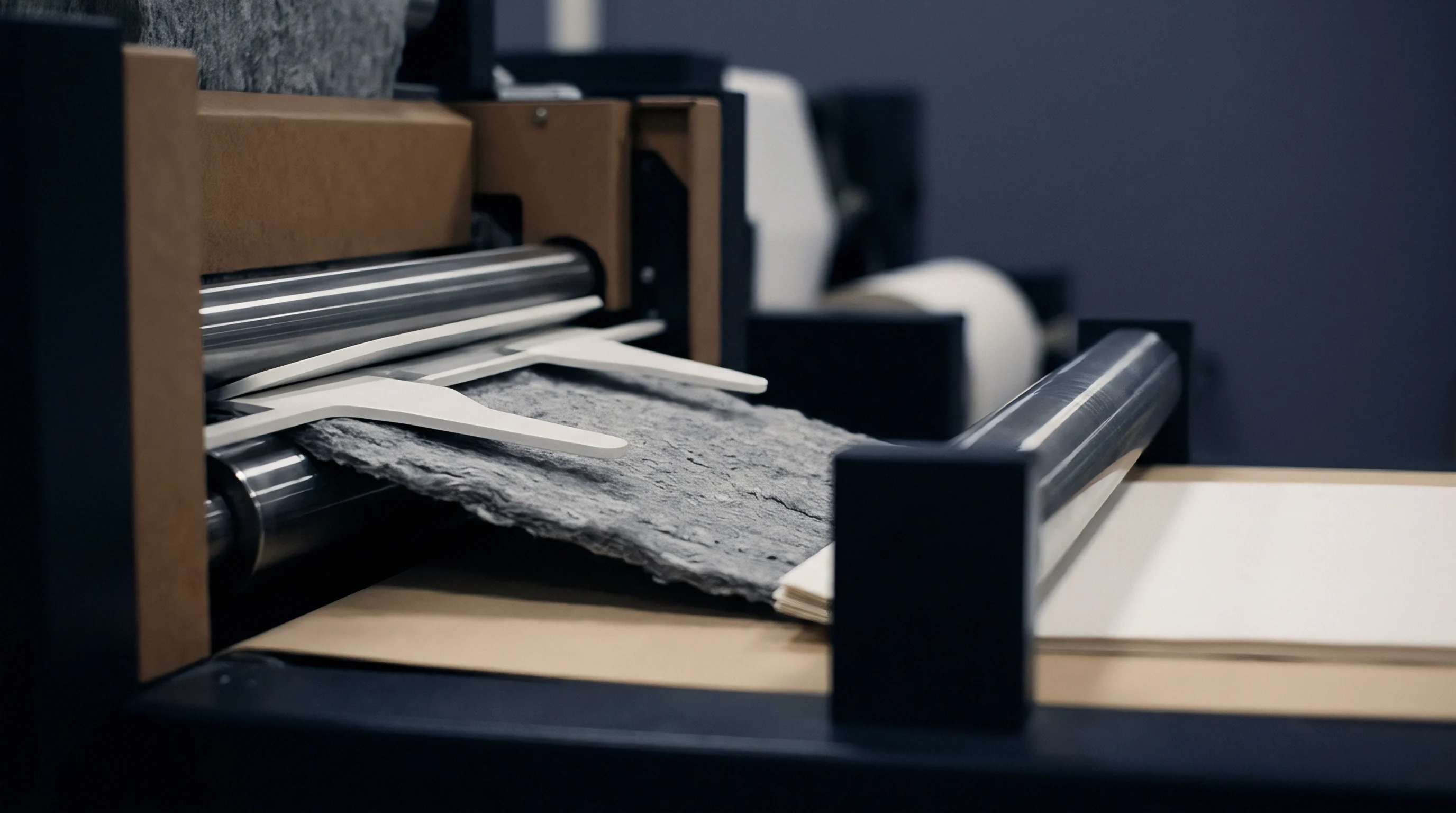
Spatial defect maps redefine the classical one-dimensional cutting stock problem into a constrained two-dimensional bin-packing structure. Standard formulations evaluate slit widths purely against master deckle utilisation, treating the mother roll as a homogeneous surface. Integrating real-time scanner arrays forces the formulation to treat the parent roll as a non-uniform topological terrain with exclusion zones.
Where Does Defect Clustering Shift Slit Boundaries?
Localized defect clusters dictate whether a slit pattern remains feasible or triggers a dynamic knife repositioning event. When line scanners detect an edge bleed fault extending across a 12-millimetre cross-direction swath for 450 continuous metres, the pattern engine evaluates three mathematical adjustments: shifting the external trim boundary outward, inserting a narrow filler roll destined for low-specification applications, or reallocating the wide parent coil to a secondary winder with different slitter geometries.
| Defect Category | Cross Direction Threshold | Machine Direction Run | Slit Relocation Action |
|---|---|---|---|
| Edge Bleed Migration | > 1.2 mm past deckle | > 50 m | Shift trim margin 5 mm inward |
| Coating Streak Void | > 0.5 mm width | > 120 m | Drop target reel grade to secondary tier |
| Blade Line Scoring | > 0.2 mm width | > 300 m | Split pattern across alternate knife bank |
| Size Press Misting | > 2.0 mm diameter | Isolated | Allow in corrugated medium schedule |
Mathematical solvers apply column generation routines with defect exclusion intervals. Let the master web width be defined as W, while demand orders require roll widths wi with assigned quality tolerances qi. Defect locations impose spatial coordinates where particular high-grade packaging orders cannot sit.
- Binary Exclusion Intervals lock specific cross-direction segments against high-grade pharmaceutical carton slit assignments.
- Trim Boundary Adjustments displace the outer slitter knives laterally to absorb irregular edge bleed into salvageable broke pulping streams.
- Defect Partitioning Subroutines decompose the continuous machine-direction web into discrete zones, generating distinct knife patterns for pristine and defective sections.
Knife repositioning requires finite operational downtime. Solvers evaluate whether the yield gain from salvaging wide rolls outweighs the mechanical setup time of motorized knife banks.
Under standard delivery contracts, roll edge defects extending beyond two millimetres void the visual inspection guarantee under ISO 8791 surface roughness specifications.
Converting lines running pharmaceutical blister cards reject rolls with even minor edge bleeding, while secondary corrugated fluting converters accept edge bleeding without penalty.

Line
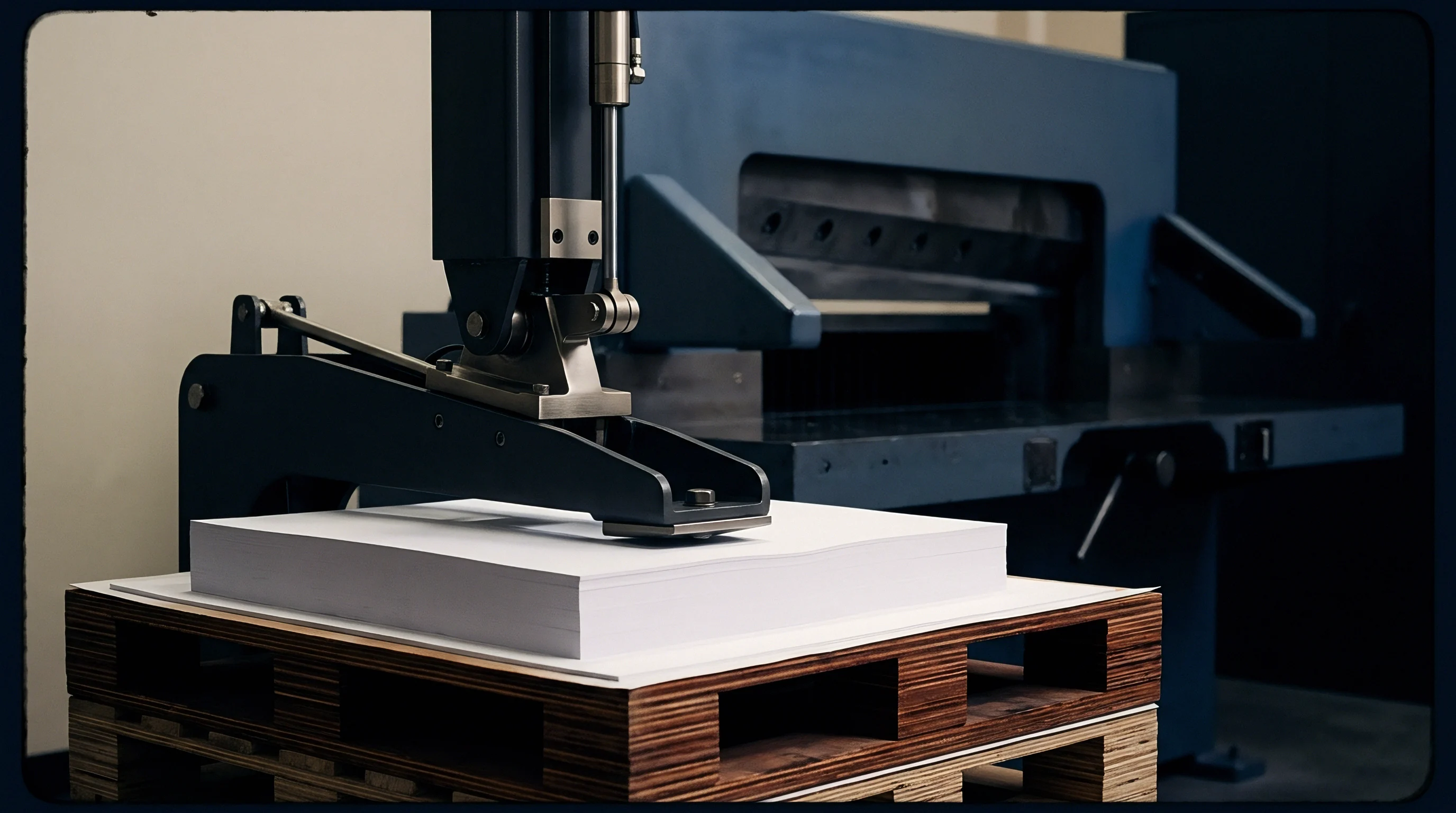
Balancing cutting patterns across multiple slitter-winders prevents bottlenecks when primary cutting lines encounter heavily faulted parent reels. High-speed production environments operate two to five slitter-winders downstream of a high-tonnage paper machine. Each slitter possesses distinct knife positioning speeds, web tension limits, minimum slit widths, and knife bank configurations.

Should Secondary Converters Absorb Lateral Bleed Runout?
Primary winders handle high-speed continuous trimming on pristine mother reels, whereas secondary utility winders absorb reels carrying extensive edge bleed and coating streaks. When the upstream scanner detects continuous edge bleed exceeding four percent of parent web width, the formulation routes that specific reel to a winder configured with automated knife positioning. This machine allocation strategy isolates high-maintenance pattern changes to flexible secondary lines, allowing primary winders to maintain peak throughput on standard orders.
| Winder ID | Max Web Speed (m/min) | Minimum Slit Width (mm) | Knife Setup Time (s) | Target Substrate Class |
|---|---|---|---|---|
| Winder 01 (Primary) | 2,200 | 350 | 180 | Pristine SBS / FBB Board |
| Winder 02 (Primary) | 1,800 | 280 | 120 | Coated Kraftliner |
| Winder 03 (Secondary) | 1,100 | 150 | 25 | Defective Reels / Utility Slits |
| Winder 04 (Sheeter) | 450 | 400 | 300 | Custom Sheet Folio Stock |
Allocation models treat the fleet of slitters as parallel constrained processors. The formulation balances three competing parameters: total fiber yield, machine setup time, and delivery due-date compliance across customer order portfolios.
- Upstream Defect Aggregation records full-roll coordinate arrays from primary paper machine scanning frames.
- Pattern Generation Filtering executes integer linear programming to pair clean roll coordinates with high-specification print customer orders.
- Secondary Routing Dispatch assigns reels containing edge bleed over threshold tolerances to utility slitters equipped with rapid knife actuators.
- Finished Coil Verification logs downstream acoustic roll structure data to confirm edge stability before palletizing.
A continuous data loop between slitter PLCs and the plant execution system tracks actual knife positions against predicted defect maps. Unplanned web breaks trigger instant pattern re-optimization for the remaining roll length.
Paper rolls produced on outer deckle positions exhibit up to twelve percent higher moisture variation than center-slit coils under ISO 187 conditioning.
Ignoring winder mechanical limits during pattern generation causes slit edge dishing and roll interweaving during high-speed rewinding.

Winder
Mechanical slitting knives interact directly with altered fiber structures in edge bleed zones. Sizing chemicals and mineral coating pigments accumulate along web edges, blunting shear knives rapidly and increasing slitter dust generation. Knife wear accelerates ten-fold when running through dried barrier coatings compared to uncoated base sheets.
Real-time pattern engines prevent slitter wear by positioning knives outside defect zones whenever possible. When a customer roll boundary coincides with a continuous bleed streak, the system shifts the slit line into clean stock, converting the defective streak into narrow edge trim destined for the broke conveyor.
| Blade Material | Slit Distance in Bleed Zone (km) | Edge Roughness Ra (μm) | Dust Mass Index (mg/m) |
|---|---|---|---|
| Standard Tool Steel | 15 | 4.8 | 12.4 |
| Tungsten Carbide | 85 | 2.1 | 3.1 |
| Ceramic Coated Carbide | 160 | 1.4 | 1.2 |
| Powder Metallurgy Steel | 110 | 1.8 | 2.0 |
Web tension management during pattern changes prevents interweaving between adjacent slit rolls. As knife positions shift to avoid edge defects, differential tension develops across the rewind shafts.
Tension differentials across adjacent slit coils must remain within twenty newtons per metre to prevent core slippage on center-wind shafts.
Operators adjust rider roll nip pressure profiles according to defect density maps, dampening vibration along web sections carrying heavy coating bleed.
Penalty
Misclassifying edge bleed defects during dynamic formulation runs generates cascading financial losses across converting plants and corrugating lines. Delivering rolls with undetected edge bleed to high-speed web offset presses causes edge picking, blanket contamination, and catastrophic web breaks. Commercial packaging contracts impose severe debit notes when edge wicking causes carton delamination in refrigerated supply chains.
A worked example demonstrates the commercial value of real-time defect integration across a 400-tonne production run of 300 gsm folding boxboard. Assume a market pulp and converting cost base of 950 USD per tonne for finished prime board, with broke pulping value standing at 280 USD per tonne.
Under static cutting formulations, reels containing edge bleed run through fixed knife configurations. This produces 18 tonnes of edge-contaminated prime rolls that ship to converters, triggering customer rejections, freight return penalties, and press cleanup downtime billed back at 450 USD per hour. Total rejection and penalty costs reach 24,600 USD across the run.
Dynamic formulations incorporate sensor defect maps directly into multi-machine patterns. The system shifts slit boundaries by 8 millimetres, converting the contaminated edge zone into broke trim while re-slitting the remaining web into narrow carton formats for dry-food packaging. Trim waste increases by 4.2 tonnes, representing a fiber value downgrade of 2,814 USD.
The mill delivers 395.8 tonnes of verified prime stock with zero customer rejections, netting an immediate operational cost avoidance of 21,786 USD on the batch.
Contractual agreements between mills and major brand converters specify defect reporting tolerances under precise liability clauses. Mills failing to integrate verified defect mapping into winder schedules absorb direct downtime liabilities for all downstream printing stoppages.