Load Regulation
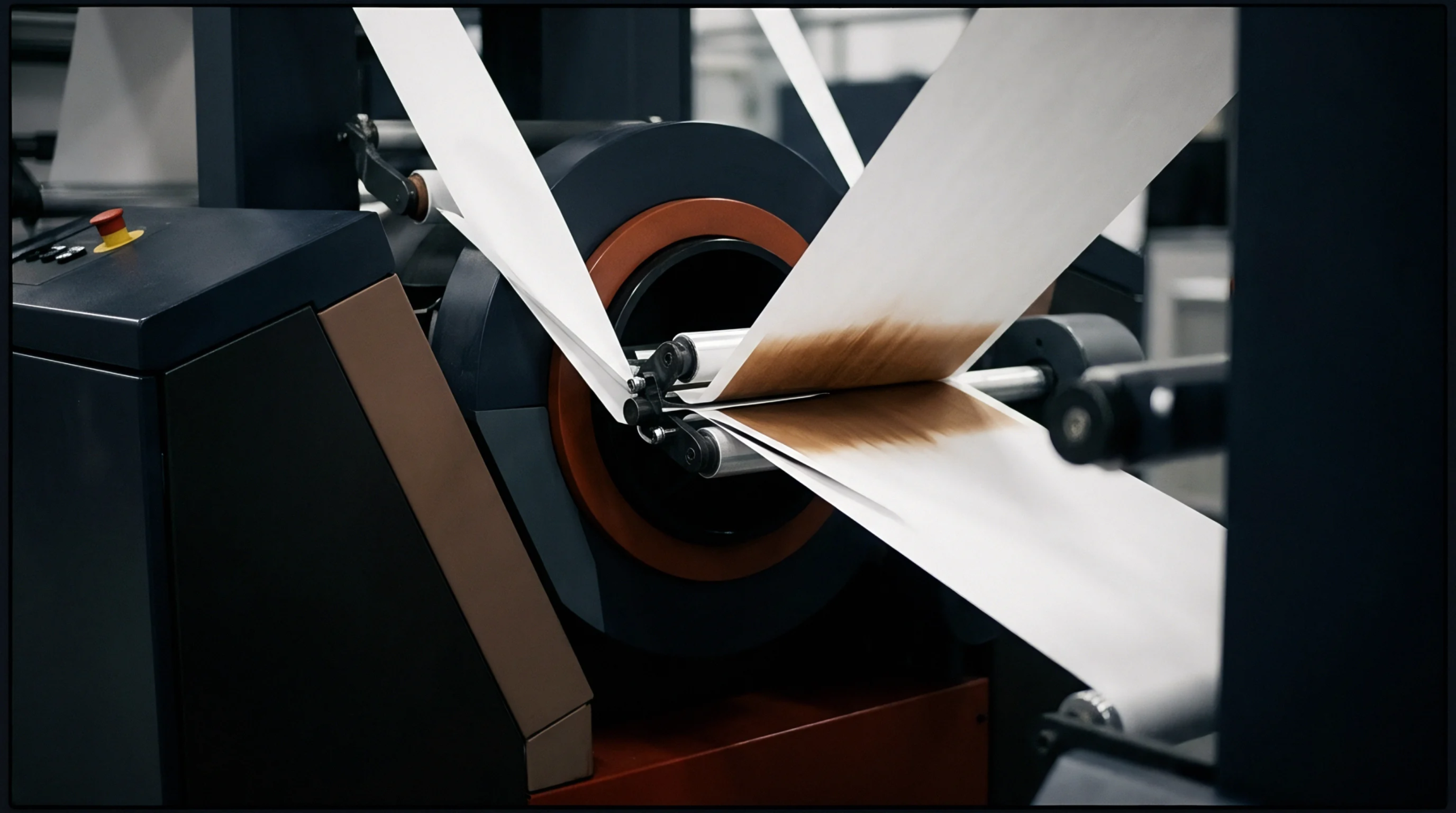
The mechanical force exerted along a continuous moving substrate determines how a paper or film strip behaves through converting machinery. Precise web tension control prevents register drift on gravure print units and stops wrinkles from forming across wide coating spans. This property balances pulling force against rotational resistance at driven draw rolls.
The boundary of this mechanical state lies at the cutter blade where kinetic pull terminates into flat sheets.
Torque Feedback
Electric drives maintain this longitudinal stress by continuously adjusting motor armature current against load cells mounted on idler rollers. Programmable logic controllers compute diameter reduction on unwinding parent rolls to lower braking torque linearly as the reel shrinks. High speed flexographic printing requires tolerances within two newtons to keep dot gain uniform across lightweight folding boxboard grades.
Friction losses in mechanical bearings alter these calculations whenever lubrication viscosity shifts under sustained thermal loads.
Roll Deflection
Excessive pull collapses hollow cores and creates telescoping edges on wound packaging stocks. Low pulling forces let the strip drift laterally, which ruins the transverse alignment needed for automatic carton gluing lines. Mill laboratories measure tensile strength using standardized strips to establish safe operating ceilings for fragile specialty papers before production trials begin.
Proper longitudinal force distribution guarantees flat delivery at the sheeting station.