Single Sided Lamination Scrappage Mechanics and Board Curl Controls
Single-sided lamination curl stems from thermal shrinkage and one-way moisture gradients, causing severe converting scrap that requires mechanical breaker controls.

Nip
A 350 gsm folding boxboard sheet leaves the laminator delivery stack with a 24-millimeter upward curl measured along a 200-millimeter chord. The sheet lifts. Immediate inspection at the delivery table confirms that the distortion tracks the cross direction, bending concave toward the laminated face.
Single-sided thermal lamination introduces severe asymmetry by marrying two materials with radically different physical properties under elevated thermal and mechanical stresses. The paperboard substrate consists of a hygroscopic, viscoelastic network of cellulose fibers, whereas the applied surface film consists of a non-porous, oriented thermoplastic film, typically biaxially oriented polypropylene (BOPP) or polyethylene terephthalate (PET). When these two webs unite under pressure between a heated steel cylinder and a rubber-covered counter-pressure cylinder, differential strain locks directly into the composite sheet.

Thermal Expansion Mismatch across Polymeric Films
Biaxially oriented polypropylene contracts at nearly twenty times the rate of wood pulp during cooling from peak bonding temperatures. Thermal lamination processes run at cylinder surface temperatures between 95 and 125 degrees Celsius, softening the extruded ethylene-acrylic acid or ethylene-vinyl acetate copolymer adhesive layer to wet the board fibers. Polypropylene possesses a linear thermal contraction coefficient between 1.0 x 10^-4 and 1.5 x 10^-4 per Kelvin.
Bleached kraft cellulose fibers exhibit an axial thermal expansion coefficient of approximately 0.5 x 10^-5 per Kelvin. Heating relaxes the film under web traction, but the exit from the pressure zone triggers immediate heat loss to the ambient factory air.
Biaxial tension governs cooling shrinkage. As the molten copolymer solidifies around 75 degrees Celsius, the cooling film contracts rapidly against the dimensionally stable, cooler paperboard substrate. This thermal contraction generates a persistent in-plane tensile stress within the film plane.
The board substrate resists this shrinkage through its bending stiffness, which scales with the third power of caliper. When board grammage falls below 300 gsm or caliper drops under 400 microns, the structural rigidity of the cellulose core fails to restrain the tensile force of the contracting film, forcing the laminated sheet into an upward curl toward the plastic surface.
Thinner boards bend toward the heated film layer whenever thermal contraction overrides structural caliper stiffness.
Differential Stress Fields in Coated Substrates
Mineral pigment layers on carton board alter the mechanical resistance of the top linerboard face. Solid bleached sulfate (SBS) and folding boxboard (FBB) carry double or triple mineral coatings consisting of calcium carbonate and kaolin clay bound with styrene-butadiene latex. These mineral coatings provide a smooth surface for adhesive transfer, yet they lack tensile elasticity.
Web tension applied to the film during unwinding introduces mechanical elongation before adhesive bonding occurs. Laminators running with brake tensions exceeding 40 Newtons per meter stretch the oriented film elastically by 0.5 to 1.2 percent. Polymer chains snap back rapidly.
When the adhesive crosslinks or solidifies at the contact point, this elastic elongation remains trapped within the polymer layer. Post-cooling elastic recovery pulls the composite into immediate curl, compounding the thermal contraction stresses already acting along the laminate face.
Failure to balance thermal input and web elongation against board caliper generates severe residual stresses that distort pallets, resulting in automated feeder stoppages and rejected print runs across carton converting plants.
Moisture
Ambient relative humidity shifts drive rapid dimensional movements inside the fibrous core of paperboard. Industrial converting facilities operating outside the standardized ISO 187 conditioning envelope of 23 degrees Celsius and 50 percent relative humidity encounter pronounced dimensional instability in laminated stacks. Hydrophilic cellulose fibers absorb and desorb atmospheric water vapor through hydrogen bonding within the amorphous regions of the fiber wall.
Hygroexpansion occurs as absorbed water forces cellulose microfibrils apart, swelling individual fibers primarily in their transverse diameter.
Single Sided Vapor Barriers and Asymmetric Sorption
Polymer films block gas exchange across the top surface, forcing atmospheric water to enter solely through the open fibrous reverse. Solid bleached sulfate board delivered from the mill carries an equilibrium moisture content between 5.5 and 7.0 percent by weight, corresponding to an ambient equilibrium relative humidity of roughly 45 to 50 percent. Thermal lamination dries the board surface during heated cylinder contact, stripping 0.5 to 1.5 percent of total moisture from the top plies.
Once stacked on pallets, moisture regain occurs exclusively through the unlaminated wire side or carton reverse. Moisture leaves through raw edges. The unlaminated bottom plies expand as they regain equilibrium moisture, while the laminated top plies remain sealed and thermally contracted.
This asymmetrical hygroexpansion differential establishes a mechanical couple that curves the board upward.
A two percent shift in equilibrium moisture content across single-sided laminated folding boxboard induces twelve millimeters of chord curl deflection.
Cellulose fibers resist uneven elongation. When finished pallets transfer to dry converting halls running below 35 percent relative humidity during winter heating seasons, desorption occurs exclusively through the unlaminated reverse. The wire side plies shrink through moisture loss, while the polymer-laminated face retains its dimensions.
This inverted moisture gradient causes downward curl toward the wire side, turning carton blanks concave downward. The direction and magnitude of board warp fluctuate continuously as ambient humidity drifts away from the lamination hall baseline.
| Substrate Grade | Caliper (µm) | Base Moisture (%) | Conditioning RH (%) | CD Hygroexpansion (%) | Deflection Height (mm) |
|---|---|---|---|---|---|
| Folding Boxboard (FBB) | 350 | 6.2 | 30 | -0.28 | -9.4 |
| Folding Boxboard (FBB) | 350 | 6.2 | 50 | 0.00 | +3.2 |
| Folding Boxboard (FBB) | 350 | 6.2 | 70 | +0.35 | +16.8 |
| Solid Bleached Sulfate (SBS) | 380 | 6.5 | 30 | -0.22 | -6.1 |
| Solid Bleached Sulfate (SBS) | 380 | 6.5 | 50 | 0.00 | +2.1 |
| Solid Bleached Sulfate (SBS) | 380 | 6.5 | 70 | +0.29 | +11.5 |
| White Lined Chipboard (WLC) | 420 | 7.0 | 30 | -0.34 | -12.2 |
| White Lined Chipboard (WLC) | 420 | 7.0 | 70 | +0.41 | +21.4 |
Hygroexpansion Coefficients and Grain Orientation Dynamics
Cross-direction fiber swelling exceeds machine-direction movement by factors ranging from two to four in chemical wood pulps. Fourdrinier paper machines orient fiber axes preferentially parallel to the web travel direction, generating an orthotropic sheet structure. Machine direction (MD) tensile stiffness and elastic modulus exceed cross direction (CD) properties, whereas cross-direction hygroexpansion coefficients dominate dimensional movement.
CD hygroexpansion coefficients average 0.08 to 0.14 percent expansion per one percent change in sheet moisture content, compared to 0.02 to 0.04 percent in the machine direction. Cross-direction curl appears as cylindrical bending along the machine axis. Sheets cut with short-grain orientation direct this severe cross-direction dimensional movement along the long sheet edge, producing pronounced edge lift that frustrates sheet separation systems on downstream machinery.
Laminating film suppliers state that edge lift stems entirely from improper warehouse humidity control rather than thermal nip tension settings.
Decurler
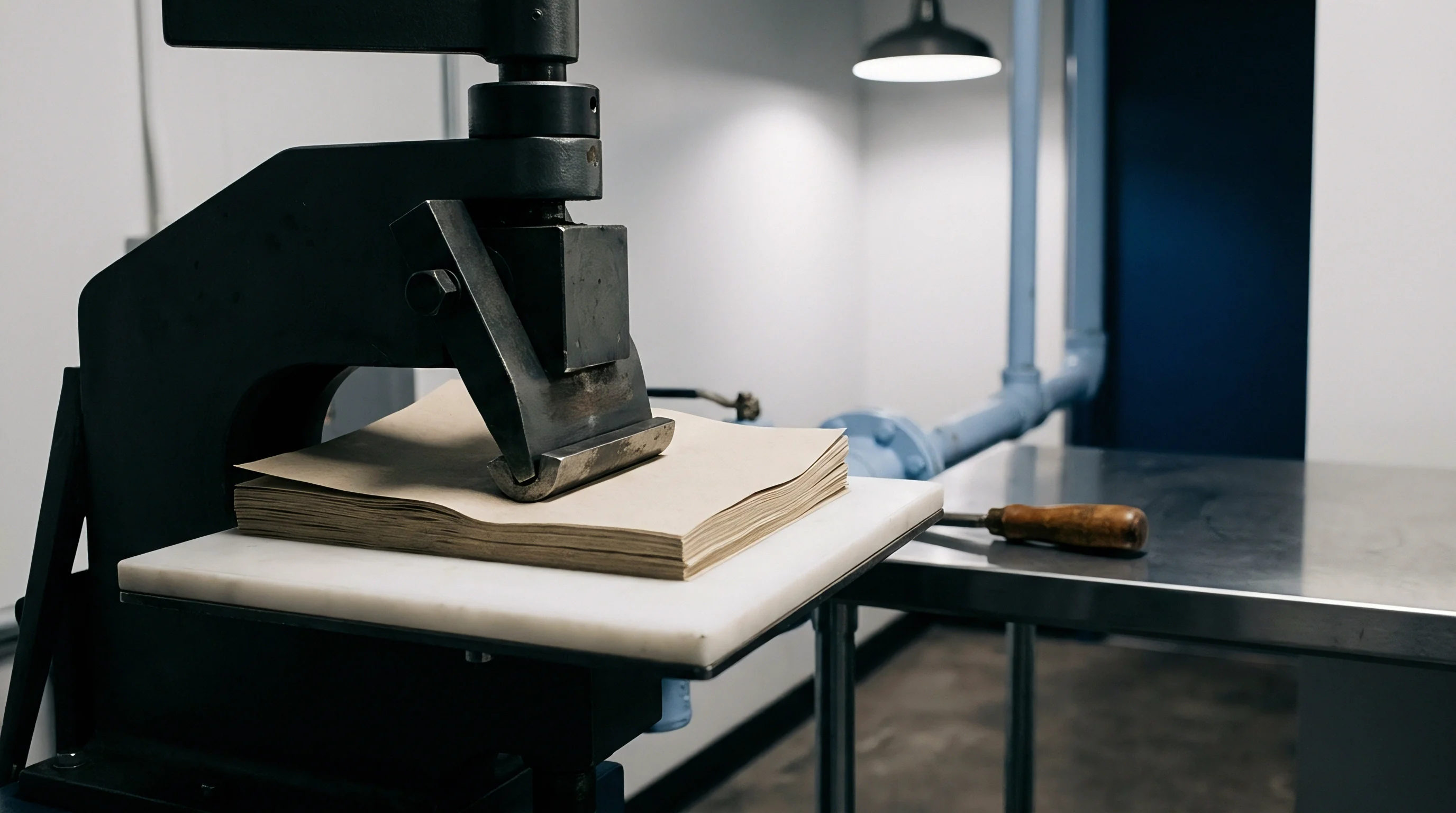
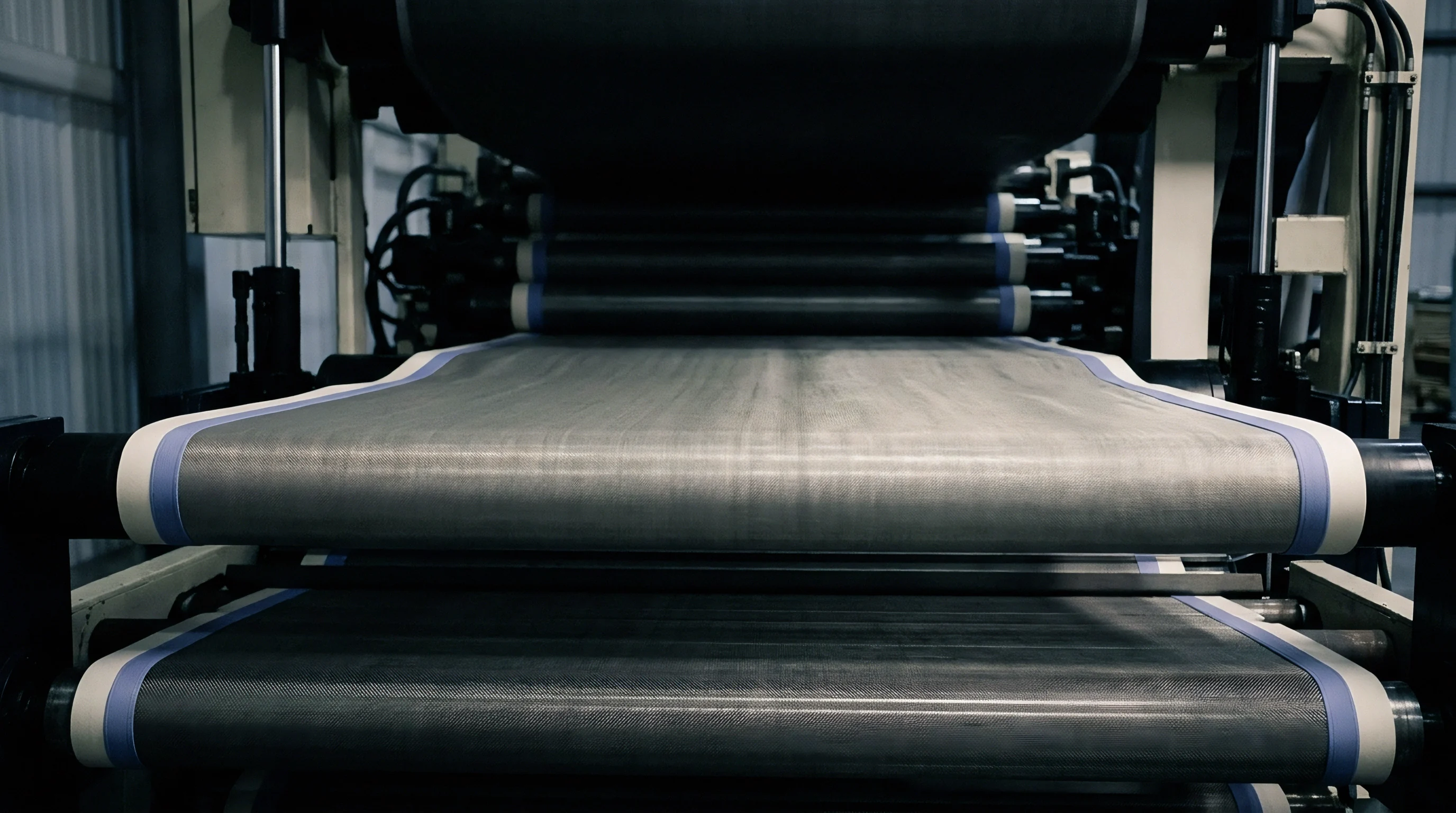
Mechanical counter-bending systems force laminated webs over narrow steel edges to neutralize internal bending moments. Industrial roll-to-sheet thermal laminators incorporate adjustable breaker bars or small-radius decurler mandrels positioned immediately downstream of the cooling chill roller. The laminated web passes around the decurling edge with the polymer film face placed in compression and the unlaminated board reverse placed in high tension.
Bending the board over a sharp radius introduces plastic deformation into the fibers on the wire side, permanently stretching the bottom linerboard to counteract the shrinkage of the laminated top liner.
Will Breaker Bar Radii Correct Heavy Caliper Bending?
Thick paperboards require larger tool dimensions to prevent delamination of the center mechanical pulp plies during reverse deflection. High-caliper substrates, such as 450 gsm folding boxboard, possess high bending stiffness that resists deformation around ultra-fine radii. Forcing a thick cartonboard around a three-millimeter decurling bar generates extreme localized shear stresses between board layers.
- Mandrel radius selection determines the neutral axis location and prevents excessive tensile elongation of the surface film during reverse bending.
- Wrap angle adjustment regulates the mechanical penetration depth into the fibrous core to match specific sheet calipers.
- Web tension synchronization maintains continuous contact across the counter-flexing bar to stop transverse diagonal twist.
- Chill roll exit temperature ensures the copolymer adhesive hardens completely before mechanical reverse flexing occurs. Delamination happens if the bondline remains warm.
Reverse bending over a breaker bar creates permanent mechanical elongation within unlaminated bottom fibers.
Interfacial Shear and Core Delamination Risks
Excessive reverse wrap angles generate severe interlaminar tension that tears middle plies apart before restoring planarity. Folding boxboard incorporates a middle ply composed of stone groundwood or thermo-mechanical pulp, engineered to provide bulk and stiffness at lower density. Shear forces crack inner plies.
The z-directional tensile strength of mechanical pulp plies ranges between 120 and 200 kilopascals, compared to values above 350 kilopascals for solid bleached kraft plies. When the operator increases decurler engagement to eliminate a stubborn upward curl on heavy board, the mechanical pulp core shears internally. The board appears flat at the delivery jogger table, but the internal matrix suffers permanent structural failure.
Subsequent flatbed die cutting causes carton edges to collapse and split along creases.
Careful operators keep breaker bar penetration minimal on multi-ply boards to balance visual flatness against structural box integrity.
Spoilage
Distorted board blanks create immediate feeding jams in high-speed automatic converting lines. The production economics of single-sided laminated packaging depend directly on downstream processing yield through autoplaten die cutters and high-speed folder-gluers. Curl arc heights greater than six millimeters along a 300-millimeter chord disrupt automatic suction feeders, optical sheet registers, and carton delivery chutes.
Machine down-time accumulates rapidly, generating substantial scrap waste through feeder trips, misregistered cutting patterns, and warped glued cartons.
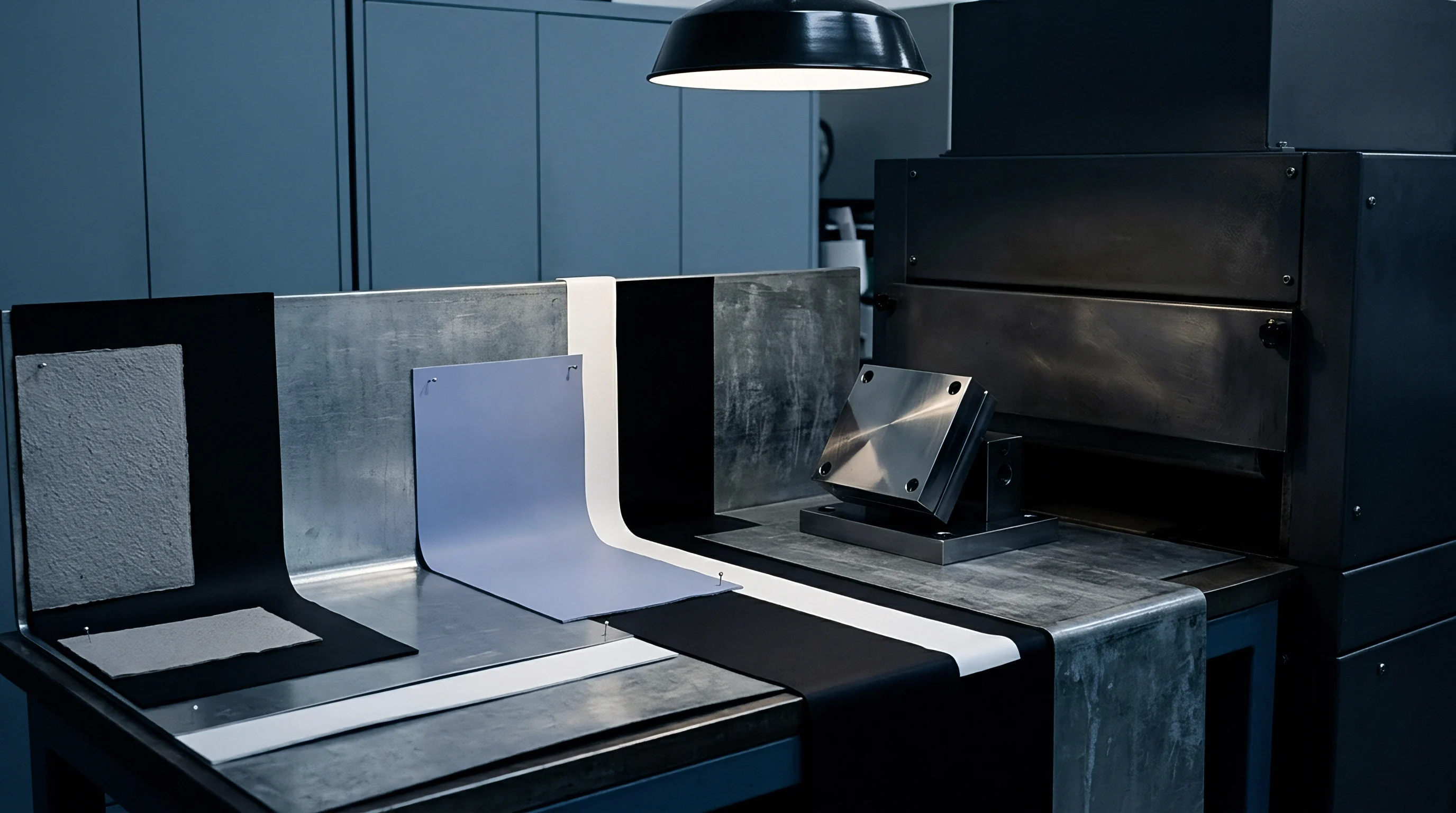
Platen Die Cutting Feeder Interruptions
Vacuum suckers slip against curved paper surfaces, causing sheet registration errors greater than 0.5 millimeters. Autoplaten die cutters, such as standard format 106-centimeter machines running at 7,500 sheets per hour, rely on pneumatic feeder heads equipped with lifting and forwarding suckers. Upward edge curl lifts sheet tails away from the suction plane or causes sheet edges to catch on the front register lay fingers.
Suction cups lose grip. A sheet entering the front lays with a five-millimeter edge curl trips the ultrasonic double-sheet detector or arrives skewed at the side lay, halting the press instantly.
Side guides reject skewed blanks. Feeder stops purge unprinted, laminated make-ready sheets, while sudden platen halts leave sheets clamped under dwell, causing localized heat distortion and pressure markings. Running 350 gsm single-sided laminated FBB exhibiting eight-millimeter cross-direction curl reduces die-cutter net operating efficiency from a standard 82 percent down to 54 percent.
Each restart produces two to four miscut sheets that scrap expensive printed stock, multiplying overall conversion losses.
| Curl Height (mm) | Feeder Jam Rate (Stops/1000 Sh) | Die Register Spread (mm) | Folder-Gluer Scrap (%) | Net Job Loss (%) |
|---|---|---|---|---|
| 0 to 3 | 0.2 | ±0.10 | 0.6 | 1.2 |
| 4 to 6 | 1.1 | ±0.25 | 1.8 | 3.5 |
| 7 to 9 | 4.6 | ±0.55 | 5.2 | 9.8 |
| 10 to 14 | 12.8 | ±1.20 | 14.1 | 22.4 |
| > 15 | 28.4 | Unrunnable | Unrunnable | 45.0+ |
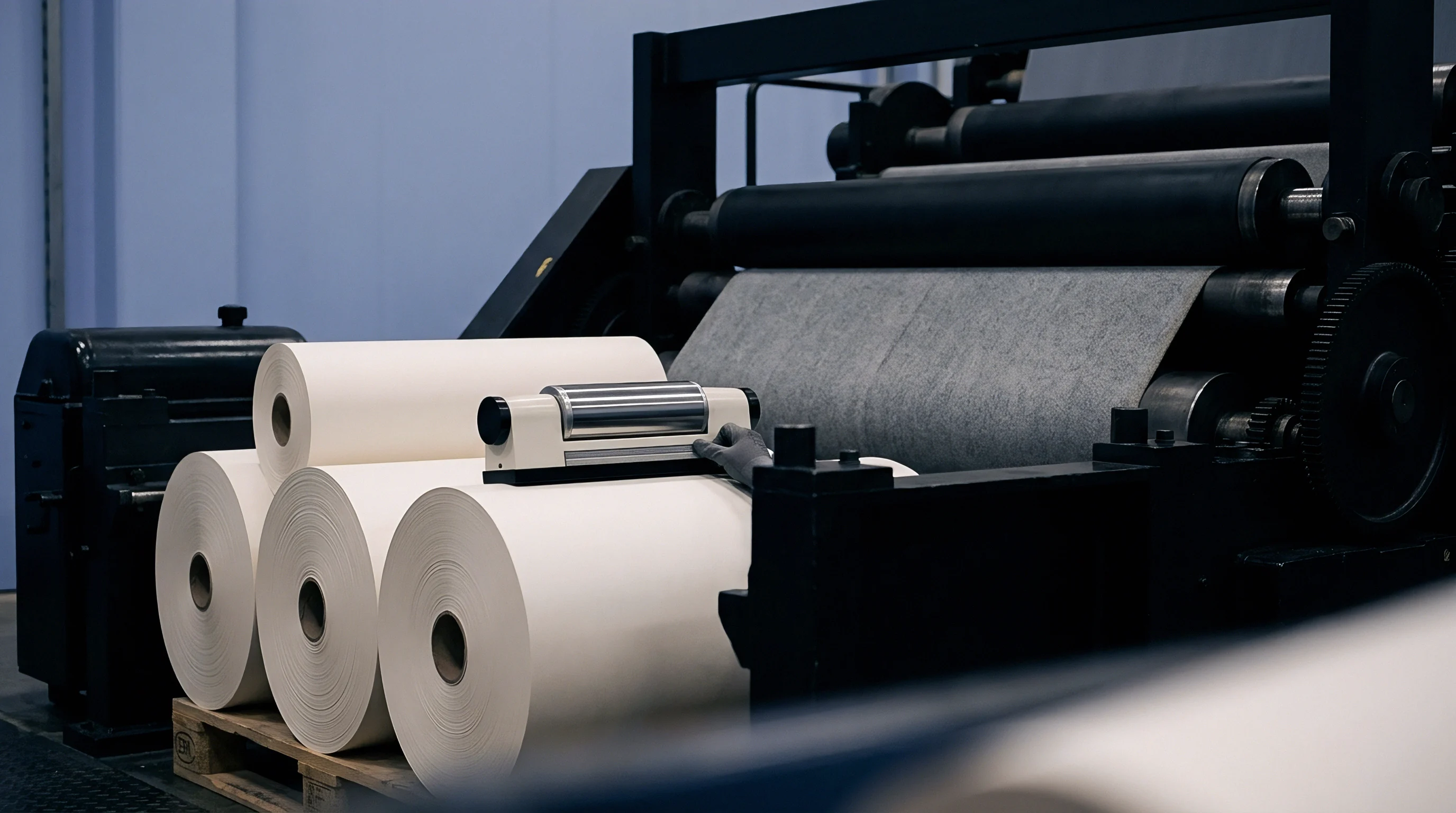
Is Thermal Film Tension Recoverable across Conditioning Cycles?
Polypropylene layers retain locked mechanical strain indefinitely once heated polymer chains cool under sustained line traction. Storing curled laminated pallets under controlled temperature and humidity conditions allows cellulose fibers to reach moisture equilibrium, mitigating the hygroexpansion component of board distortion. The locked mechanical strain within the oriented plastic film does not dissipate through conditioning.
Thermal and elastic shrinkage stresses remain intact within the polymer film unless exposed to temperatures approaching the crystalline melting point of the resin, which would destroy the paperboard structure and blister the adhesive. Stacks conditioned for two weeks in standardized climate rooms recover only 20 to 35 percent of their original flatness if the initial defect was caused by excessive film unwind tension or nip heating.
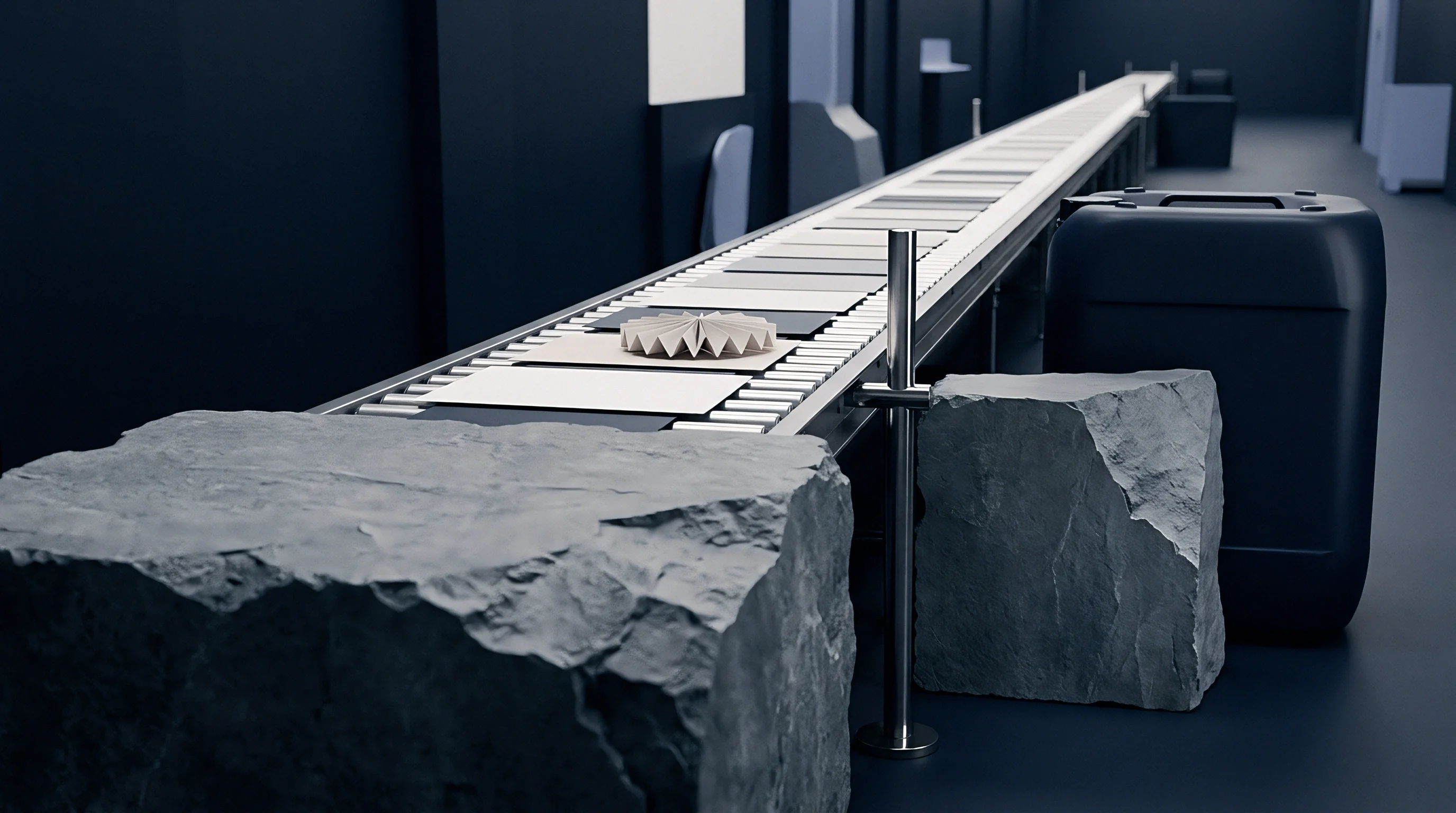
Folder Gluer Skew and Jam Frequencies
Curled carton blanks drift against belt side guides, throwing side seams out of parallel alignment during high-speed folding runs. Folder-gluers operating at belt speeds between 300 and 500 meters per minute depend on precise friction feed systems where bottom feed belts pull blanks from a vertical hopper. Warped blanks sit unevenly against the feed gates.
Feed gates jam instantly. When blanks feed with an upward bow, the leading edge fails to tuck cleanly beneath the feed gauge shoes, causing double feeds or skewed entries into the pre-breaking section.
Static charges compound feeder friction. As asymmetrical blanks pass through folding belts, unequal friction between the laminated top surface and the rough board reverse twists the folding panels. Glue flaps misalign against side walls, creating fishtail cartons with glue line offsets exceeding the allowable 0.8-millimeter specification.
Automatic packing units reject twisted cartons at the discharge station, adding carton reject waste to earlier die-cutting spoilage.
- Feed hopper starvation occurs when arched carton blanks bridge across guide rails and break continuous stack contact.
- Side seam fishtailing develops from asymmetrical friction pulling curled blanks sideways during high-speed belt transport.
- Pre-breaker fold cracking results from localized fiber brittleness along scores in desiccated, heat-treated boards.
- Packing station ejection triggers automatically when optical inspection sensors detect open or misaligned manufacturer joints.
Process planning teams evaluate substrate alternatives before finalizing single-sided thermal film specifications on warp-sensitive work.
- Cast polypropylene films provide lower tensile modulus and reduced cooling shrinkage compared to stiff biaxially oriented grades.
- Water-based wet lamination eliminates thermal shock by applying cold acrylic adhesives, preventing board dehydration.
- Counter-layer barrier varnishes applied to the board reverse equalize moisture sorption kinetics across changing factory environments.
- Heavier caliper selections increase composite section modulus to resist polymer film contraction forces across long runs.
Whether alternative water-based coatings or symmetrical double-pass treatments can fully match the scuff resistance of single-sided thermal films without doubling production energy usage remains an open economic calculation for packaging converters.

Claim
Commercial disputes over warped finished cartons arise when buyers discover unusable pallets on automated packaging lines. Converting service contracts often feature ambiguous language regarding flatness tolerances, leaving brand packaging buyers exposed to severe operational losses when curled sheets jam converting lines. Standard board manufacturing standards, such as DIN 53101, define curl measurement methodologies using chord deflection height on precision templates, yet commercial contracts rarely specify acceptable thresholds for post-lamination stability.
Measurement Standardization under Controlled Atmosphere
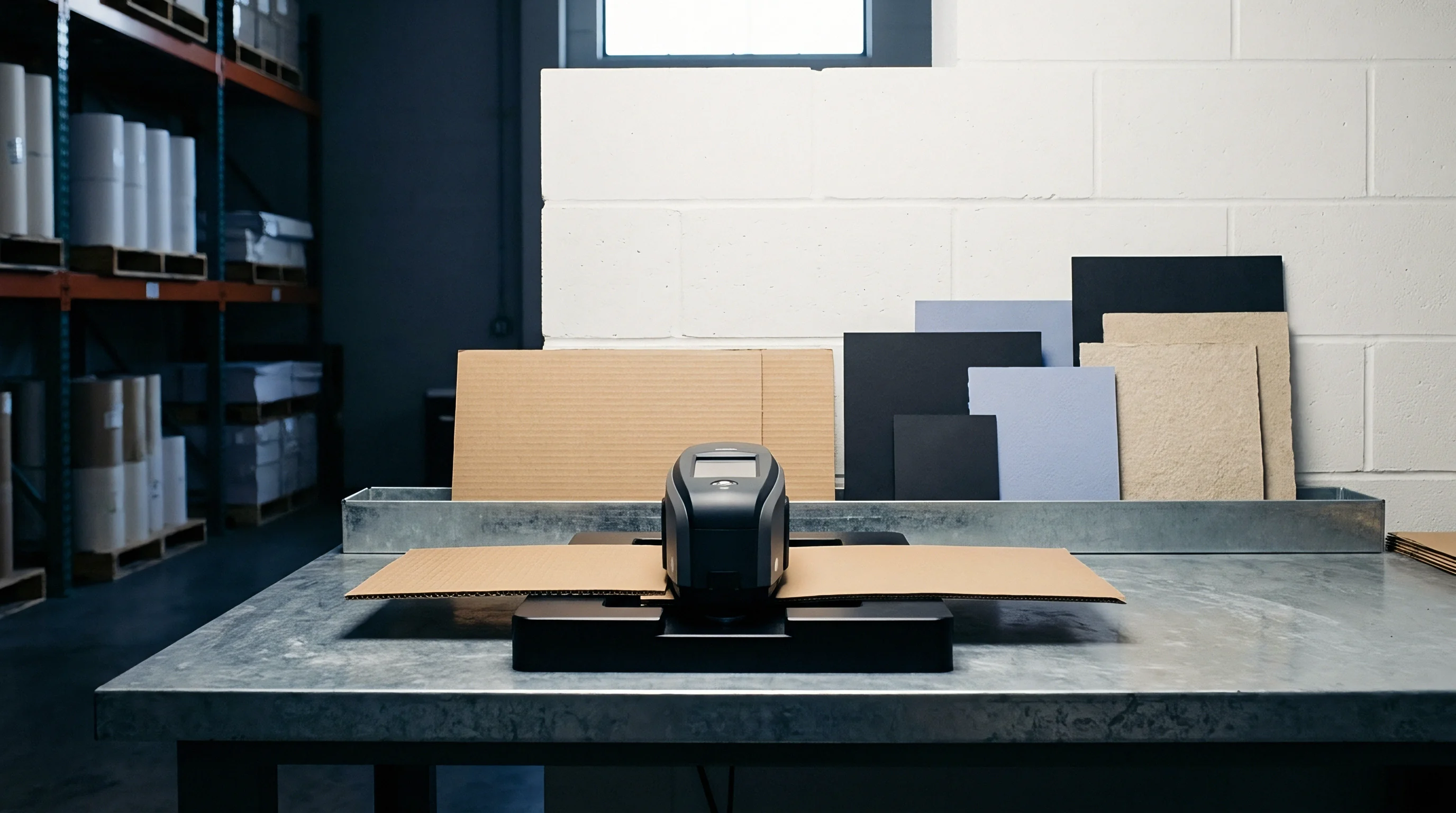
Laboratory verification of arc deflection strictly follows TAPPI T 427 conditioning procedures at fifty percent relative humidity. Testing involves cutting rectangular specimens measuring 200 millimeters by 200 millimeters from the center and edges of suspicious pallets. Technicians place specimens concave-side up on a granite surface table, measuring the maximum vertical displacement between the granite surface and the lifted specimen corners using a digital dial indicator.
Immediate post-lamination curl differs substantially from equilibrium curl measured after 48 hours of ISO 187 conditioning. Uncontrolled storage environments distort readings, generating competing test results between converter quality audits and customer incoming inspections.
Contractual rejection clauses enforce dimensional compliance by establishing maximum permissible arc deflection limits under standard atmospheric conditioning.
Liquidated Damages and Material Scrap Allocation
Purchasers offset financial losses by debiting finishing suppliers for downstream press downtime and ruined substrate volume. When single-sided laminated boards trigger unresolvable curl, the resulting spoilage includes printed board inventory, die-cutting tooling charges, and scheduled platen machine hours. Calculating financial recoveries requires precise allocation of material yields versus operational machine delays.
| Cost Component | Baseline Expected Cost | Actual Cost (14 mm Curl) | Net Financial Variance |
|---|---|---|---|
| Printed Board Substrate | €14,800 | €18,200 | +€3,400 |
| Thermal Lamination Pass | €3,200 | €3,940 | +€740 |
| Die-Cutting Machine Hours | €1,850 | €3,420 | +€1,570 |
| Folder-Gluer Waste Scrap | €420 | €2,350 | +€1,930 |
| Downstream Press Standby | €0 | €2,100 | +€2,100 |
| Total Incurred Production Cost | €20,270 | €30,010 | +€9,740 |
Consider a standard manufacturing clause specifying that sheet curl must not exceed five millimeters across a 300-millimeter chord when measured after 24 hours of conditioning under ISO 187 parameters: this provision transfers full financial liability for downstream machine stoppages and spoiled substrate inventory directly to the trade laminator.