Extensional Viscoelastometry and High Shear Thixotropic Structural Recovery Mechanics in Polymer Barrier Coated Substrates
Polymer barrier coating performance relies on balancing extensional viscosity to prevent misting with rapid thixotropic recovery to eliminate pinhole defects.
Dynamics
In high-speed coating flows on paperboard substrates, fluid deformation under pure shear fails to capture the hydrodynamic stress fields developed during metering. Metering blades and applicator rolls subject waterborne polymer barrier dispersion formulations to extensional strain rates surpassing 100,000 reciprocal seconds within sub-millisecond dwell times. The fluid response under uniaxial extensional stretching dictates whether a liquid barrier layer maintains a coherent continuous film or fractures into micro-droplets, misting, and filament threads.
Filament stretching isolates extensional response.
Filament Breakup Kinetics and Trouton Ratio Variance
Deformation along the flow axis generates transient tensile stresses within polymer chains dissolved or suspended in the aqueous phase. The ratio of extensional viscosity to shear viscosity, defined as the dimensionless Trouton ratio, remains near three for Newtonian liquids but escalates to values between fifty and five hundred in high-molecular-weight barrier polymers such as polyvinyl alcohol, carboxymethyl cellulose, and modified acrylic emulsions. When the Trouton ratio rises rapidly during transient extension, capillary breakup extensional rheometry measures filament lifespan under self-generated capillary pressure.
Polymer formulations with excessive extensional strain hardening form persistent liquid bridges that fail to snap cleanly at the blade exit, creating web splitting defects and misting that contaminates downstream equipment rolls.
Extensional viscosity measurements obtained via capillary breakup apparatus track mid-filament diameter decay over millisecond timelines. High solids elevate extensional resistance. The characteristic relaxation time derived from exponential diameter decay reflects polymer chain entanglement density and hydrodynamic drag within the aqueous vehicle.
Formulations displaying transient extensional relaxation times below two milliseconds break into uniform droplets that collapse into the wet layer under surface tension, whereas formulations exceeding eight milliseconds yield elongated filaments that settle as uneven ridges across the substrate surface.
Coating formulations conditioned at 23 degrees Celsius and 50 percent relative humidity exhibiting an extensional relaxation time exceeding 5.2 milliseconds generate a 35 percent increase in web misting density at line speeds above 800 metres per minute.
Quantifying the balance between extensional strain hardening and shear-induced thinning dictates the operational window for coat weight uniformity. Liquid filaments drawn out during web parting experience rapid cross-sectional contraction. Capillary breakup determines filament life.
High extensional viscosity stabilizes the filament against capillary cleavage, prolonging thread survival until mechanical tearing occurs, which leaves raised coating spikes on the paperboard substrate.
High Shear Rate Metrology in Metering Gaps
Deformation inside the narrow nip beneath a rigid or flexible metering blade generates extreme shear gradients that drop apparent shear viscosity by two orders of magnitude compared to low-shear bench measurements. Rotational viscometers operating under ISO 3219 conditions at shear rates below 10,000 reciprocal seconds fail to predict liquid behavior inside a metering gap operating at 500,000 reciprocal seconds. Capillary viscometry and slit rheometry provide realistic viscosity curves across operational shear rate regimes, revealing non-Newtonian shear-thinning transitions and shear-thickening inflection points caused by particle jam transitions in mineral-pigmented or nanocellulose-filled barrier coatings.
| Barrier Polymer Formulation | Solids Content (%) | Shear Viscosity at 100,000 s⁻¹ (mPa·s) | Extensional Relaxation Time (ms) | Trouton Ratio Peak (-) |
|---|---|---|---|---|
| High Hydrolysis Polyvinyl Alcohol (PVA) | 12.5 | 45 | 6.8 | 280 |
| Styrene-Acrylic Dispersion | 48.0 | 18 | 0.9 | 14 |
| Ethylene Acrylic Acid (EAA) Emulsion | 35.0 | 28 | 1.4 | 32 |
| Microfibrillated Cellulose (MFC) / PVA Hybrid | 8.5 | 82 | 8.4 | 410 |
High shear rate slit rheometry data shows that dispersion particle size distribution directly alters the onset of shear thickening. Bimodal particle distributions maintain lower high-shear viscosity than monodisperse systems at equivalent total solids, enabling higher running speeds before blade bleed and coat weight fluctuations emerge on the converting line. What fundamental molecular relaxation mechanism dictates whether an extensional filament collapses into a smooth surface layer or snaps into discrete pinholes during high-speed hot air flotation drying?
Blade
Mechanical metering under a steel or ceramic blade applies extreme compressive and hydrodynamic forces to the liquid barrier layer. The dwell time under the blade tip ranges between ten and fifty microseconds at modern mill line speeds. Rheological structural breakdown occurs almost instantaneously as hydrogen bonds, polymer entanglements, and colloidal particle networks disassociate under severe velocity gradients.
Coat weight controls barrier integrity.

Rheological Breakdown under Extreme Hydrodynamic Strain
Viscosity drops rapidly during blade passage, allowing the liquid layer to spread smoothly over the top surface of the paperboard web. Internal structural network destruction follows non-linear kinetic pathways governed by the shear rate magnitude and total strain energy imparted to the fluid. Formulations engineered for high barrier performance often incorporate high molecular weight polymers that store elastic energy during deformation.
Viscosity drops under severe deformation. Elastic energy storage produces normal forces that push the blade away from the backing roll, causing coat weight buildup and profile drift across the machine direction.
High hydrodynamic pressure inside the wet wedge upstream of the blade tip forces the aqueous phase to penetrate the pore network of the base paperboard substrate. Base sheet absorbency, measured by short-time Cobb water absorption or liquid penetration testing, dictates how rapidly liquid vehicle leaves the coating layer during metering. Rapid vehicle dewatering increases solids concentration in the boundary layer beneath the blade, raising local shear stress and accelerating structural breakdown of the dispersion network.

Capillary Levelling versus Film Pinholing Mechanics
Surface levelling following blade departure relies on the competition between capillary pressure forces driving film smoothing and thixotropic viscosity recovery opposing fluid motion. The capillary levelling pressure operates inversely to film surface topography wavelength. Wet coating layers with high surface tension and low zero-shear viscosity recover flat profiles rapidly, whereas formulations with high yield stress arrest capillary flow before surface irregularities flatten completely.
Pinhole formation ruins gas barrier.
- Dewatering of base substrate occurs as capillary pressure pulls water from the wet layer into substrate pores during the microsecond passage under the blade nose.
- Viscoelastic stress relaxation dissipates residual normal forces stored in the polymer backbone during gap exit.
- Capillary levelling flattens surface ridges created by exit-split filaments before liquid immobilisation occurs.
- Thixotropic structural rebuild restores network yield stress, arresting further liquid movement before thermal drying starts.
When operational speeds exceed the critical levelling window, film split ridges lock into place as dry coat mass, yielding micro-roughness that compromises gas barrier performance. Chemical suppliers claim that higher thickener addition eliminates pinhole defects without altering extensional viscosity, yet mill trials demonstrate that synthetic associative thickeners increase extensional relaxation times and aggravate web misting on high-speed curtain coaters.


Structure
Rebuilding the internal polymer-particle network after blade metering determines the ultimate pinhole density and barrier integrity of the dried coating film. Following shear cessation at the blade exit, colloidal particles and polymer chains undergo Brownian movement and electrostatic attraction, re-establishing spatial networks. Yield stress prevents liquid runoff.
The dynamic storage modulus rises relative to the loss modulus, transitioning the material from liquid-like behavior back to solid-like viscoelastic behavior.

What Governs Capillary Levelling in High Speed Coating Operations?
Capillary forces derived from liquid-air surface tension drive surface levelling of ridges and striations left by filament breakup. The kinetic rate of levelling depends directly on wet film thickness, surface tension, and the time-dependent complex viscosity of the liquid film. Viscous resistance increases exponentially as thixotropic structural rebuild progresses.
If the thixotropic recovery time constant is too short, viscosity rises before capillary forces flatten surface undulations, locking in an uneven topographic profile that degrades water vapor and oxygen barrier performance.
Substrate absorption starves surface levelling. Water loss into the base paperboard increases localized solids content, shifting the dynamic crossover time where the storage modulus exceeds the loss modulus. Mechanical measurements using rotational oscillation rheometers following a high-shear destruction step model this structural rebuild process, defining the precise time window available for capillary levelling before structural gelation occurs.
Standard ISO 187 conditioning mandates testing barrier packaging substrates at 23 degrees Celsius and 50 percent relative humidity, where a 1.0 gram per square metre decrease in dispersion barrier coat weight increases water vapor transmission rates by up to 45 percent.

Viscoelastic Time Constants and Barrier Continuity
Thixotropic structural recovery kinetics follow multi-step exponential curves characterized by short-term physical particle alignment and long-term polymer chain entanglement rebuild. The structural recovery time constant quantifies the rate of storage modulus regeneration after shear cessation. Formulations exhibiting short recovery time constants beneath 0.5 seconds arrest levelling prematurely, yielding orange-peel surface textures and high pinhole frequency.
Recovery time constants exceeding five seconds allow excessive coating penetration into the base sheet pores, causing strike-through and thin spots that compromise chemical resistance.
| Barrier Polymer System | Coat Weight (g/m²) | Modulus Crossover Time G’=G” (s) | Thixotropic Index (1/10 Shear Ratio) | Pinhole Density (count/m²) | WVTR at 38°C / 90% RH (g/m²·day) |
|---|---|---|---|---|---|
| Styrene-Butadiene Latex Blend | 10.5 | 0.4 | 4.2 | 14.2 | 22.0 |
| Pure Acrylic Dispersion | 11.2 | 1.8 | 2.1 | 0.8 | 6.5 |
| Bio-Based Starch Polymer Composite | 12.0 | 0.1 | 8.5 | 38.0 | 110.0 |
| Polyvinylidene Chloride (PVDC) Emulsion | 9.8 | 2.5 | 1.6 | 0.2 | 1.2 |
According to standard supply agreement terms for technical barrier paperboard, a delivered reel failing to meet continuous pinhole frequency limits below one defect per square metre under stain penetration testing triggers immediate lot rejection and mandatory mill replacement.
Barrier
Gas and moisture transport through polymer barrier coated paperboard occurs primarily via molecular diffusion across the continuous polymer matrix and convective leak flow through structural pinholes and microscopic voids. Barrier integrity demands complete coverage. Defect-free polymer films exhibit water vapor transmission rates governed by Fickian diffusion laws, where permeability depends directly on polymer free volume, crystallinity, and hydrophobicity.
Transmission Rate Degradation from Microscopic Voids
Microscopic voids created by unlevelled filament split marks or air bubble entrainment disrupt the continuous diffusion barrier. Low coat weight exposes raw fibres. Pinholes act as low-resistance transport pathways that dominate total moisture and oxygen transmission across the packaging material.
A single unlevelled pinhole measuring ten micrometres in diameter increases local oxygen flux by several orders of magnitude compared to an intact ten-micrometre polymer film layer.
Thixotropic recovery lag allows surface tension forces to pull wet coating away from hydrophobic contaminants or air bubbles on the substrate surface. Dewetting spots form micro-cavities that thin the barrier film down to the raw fibre matrix. Rheological balance dictates runnability.
Balancing high shear thinning with controlled thixotropic recovery ensures that liquid flows into surface depressions while preventing film withdrawal from raised fibre bundles.
- Capillary Dewetting Voids develop when low zero-shear viscosity combined with high liquid surface tension causes wet coating to retract from low-energy hydrophobic fiber contaminants before thermal drying locks the film.
- Filament Split Striations arise from high extensional viscoelastometry relaxation times that prevent liquid threads from collapsing back into a smooth planar film post-metering.
- Substrate Absorption Craters result from rapid local vehicle dewatering into open base-sheet pores, causing regional solids buildup and uneven coating film shrinkage during solvent evaporation.
- Air Entrainment Micro-Cavities form when shear-induced bubble dispersion under high-speed blade agitation fails to collapse before thixotropic yield stress rebuild traps air bubbles in the drying matrix.
A continuous polymer barrier layer free of pinholes exhibits a water vapor transmission rate of 2.5 grams per square metre per day at 38 degrees Celsius and 90 percent relative humidity under ASTM F1249 test conditions.
Substrate Porosity and Absorptive Dewetting Interactions
Pore size distribution and surface roughness of the base substrate dictate the volume of liquid barrier dispersion required to achieve film continuity. Highly porous kraft linerboards absorb liquid vehicle rapidly, accelerating boundary layer gelation beneath the applicator roll or blade gap. Rapid drying locks surface defects.
If absorption occurs faster than capillary levelling, the top coating surface tracks base sheet topography, resulting in variable barrier layer thickness across hills and valleys.
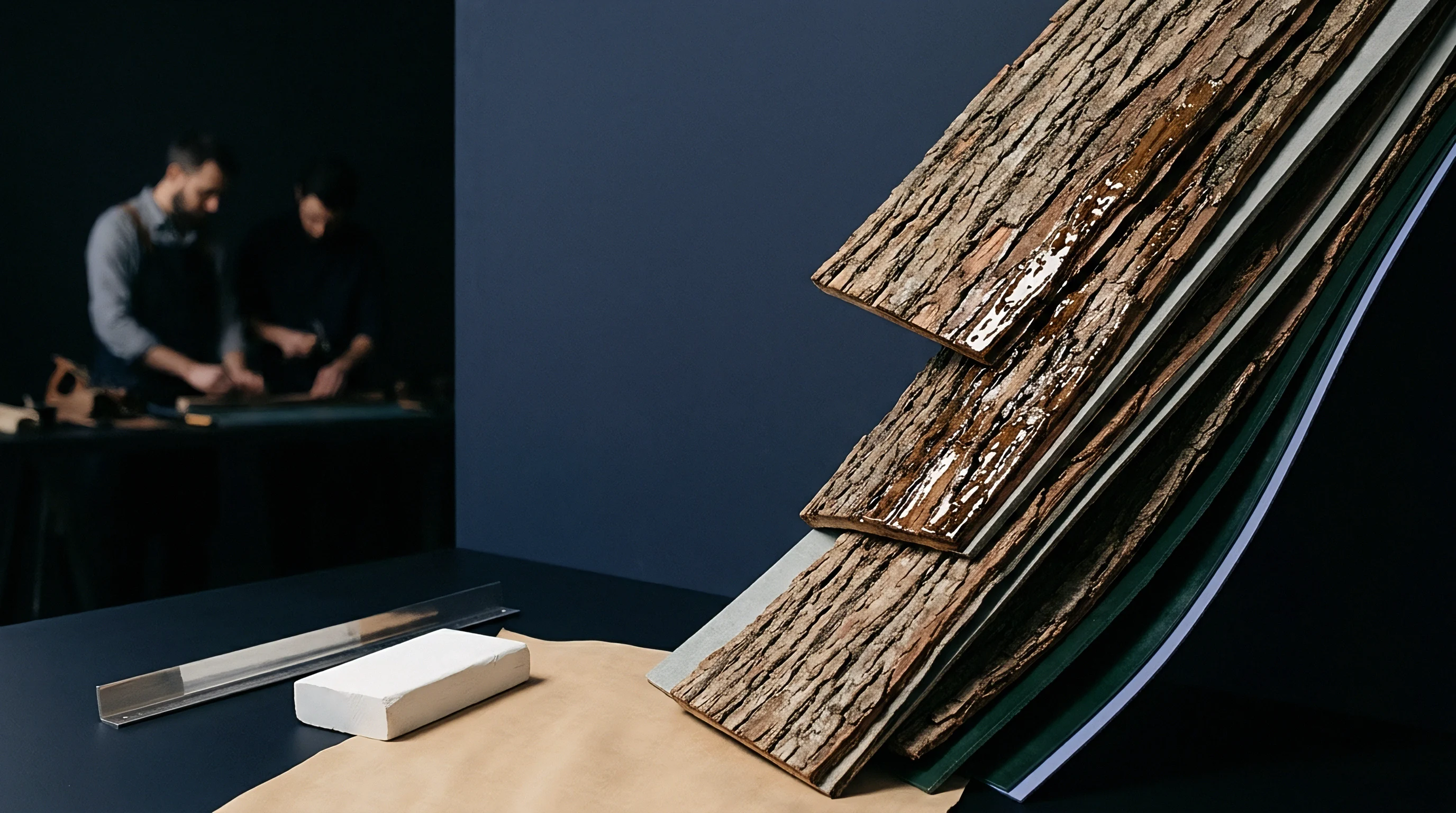
Pre-coating base boards with starch, microfibrillated cellulose, or mineral pigment seals surface pores, narrowing the pore radius distribution and slowing liquid absorption rates. Smooth base sheets with uniform surface energy allow thinner application of expensive barrier polymer dispersions without sacrificing continuity. Rapid thixotropic recovery prevents excess penetration into base sheet voids while maintaining sufficient surface fluidity to smooth blade-induced ridges.
Coating films application over unsealed raw fiber stocks requires double the polymer mass to achieve equivalent water vapor protection compared to pre-coated substrates.


Recharge
Optimizing solid content, processing temperature, and chemistry on high-speed web coaters requires precise management of rheological recovery windows. Moisture absorption weakens kraft board. Small adjustments in solids fraction shift fluid response across extensional, shear, and thixotropic regimes, altering converting headroom and final pack performance.
Solid Content Optimization for Recovery Window Extension
Concentrating dispersion solids from forty-five to fifty-two percent increases production yield and reduces drying energy expenditure in flotation ovens. Higher solids content reduces the distance between dispersed polymer particles, accelerating thixotropic network rebuild after shear cessation. Improper shear thinning increases coat weight.
If solids levels cross a critical volume threshold, zero-shear viscosity increases exponentially, shortening the capillary levelling time window below the threshold needed to eliminate blade lines.
Diluting solids extends the levelling window but increases liquid absorption into the base sheet, elevating base fibre swelling and wet-web strength degradation. Formulators use responsive associative thickeners that deform under shear to lower high-shear viscosity while providing controlled thixotropic yield stress recovery. Hydrophobically modified alkali-swellable emulsions alter zero-shear viscosity without significantly elevating extensional relaxation times, maintaining stable curtain stability and web parting behavior.
Thermal Viscoelastometry Modulation in Drying Tunnels
Temperature gradients inside infrared and hot air drying tunnels alter the viscoelastic dynamics of freshly applied barrier layers. Heating wet polymer films lowers liquid surface tension and dynamic viscosity, accelerating initial capillary levelling. Excessive early heat input induces rapid vehicle evaporation at the film-air interface, generating a dry surface skin over a wet sublayer.
Skin formation arrests top-surface levelling while trapping water vapor bubbles that rupture into macro-pinholes during final drying stages.
A worked conversion example illustrates the sensitivity of landed sheet economics to coat weight precision and rheological stability. Consider a barrier coating operation running solid bleached sulfate (SBS) board at a web width of 1.6 metres and line speed of 600 metres per minute. The target aqueous dispersion dry coat weight is 10.0 grams per square metre at a dry polymer density of 1.10 grams per cubic centimetre, corresponding to a wet film thickness of 22.2 micrometres at 45 percent solids.
Assuming a coating slurry cost of 3,200 USD per dry metric tonne and base paperboard raw material cost of 1,150 USD per metric tonne at 230 grams per square metre base weight, total material input cost equals 1,239 USD per dry tonne of finished barrier board.
If extensional viscosity instability causes blade chatter and forces an operational coat weight increase of 1.8 grams per square metre to pass pinhole stain testing, dry polymer consumption rises to 11.8 grams per square metre. Across a 40-tonne production run, this coat weight drift consumes an additional 309 kilograms of dry barrier polymer, increasing total material expenditure by 988.80 USD per run. If thixotropic recovery lag generates pinhole defects that result in a 2.5 percent lot rejection rate at converter goods-in inspection, the cost penalty from lost margin, freight, and re-running reaches 3,450 USD per 40-tonne order.
Precise control over extensional relaxation time and thixotropic rebuild kinetics protects barrier performance while preserving landed sheet yield.
Unordered decision parameters for qualifying aqueous barrier dispersion stocks include:
- Extensional Relaxation Time Thresholds verified via capillary breakup extensional rheometry to sit beneath 3.0 milliseconds at operational solids to prevent curtain rupture and filament misting.
- High Shear Viscosity Targets calibrated between 15 and 35 mPa·s at 100,000 reciprocal seconds to minimize blade pressure requirements and avoid normal force coat weight buildup.
- Thixotropic Rebuild Crossover Times verified between 1.0 and 2.5 seconds using rotational oscillation stress-relaxation step tests to balance surface levelling against liquid penetration into base pores.
- Minimum Film Formation Temperature Limits set at least 15 degrees Celsius below peak web temperature in the first drying zone to ensure polymer particle coalescence without skinning defects.
Failing to control rheological recovery kinetics during high-speed application forces mills to apply excessive coat weights to pass barrier specifications, degrading production yield and raising cost per thousand finished sheets beyond competitive market levels.

Audit
Verifying polymer barrier coating continuity and rheological compliance demands analytical methods that mirror converting floor strain conditions. Mill test reports providing single-point low-shear Brookfield viscosity data fail to reflect fluid behavior in high-speed coating gaps. Sourcing practices mandate comprehensive rheological characterization alongside physical barrier verification prior to commercial stock commitment.
Verification Protocols for Barrier Dispersion Integrity
High-shear capillary rheometry and rotational oscillatory recovery testing establish baseline material fingerprints for incoming barrier dispersion batches. Batch-to-batch variation in polymer molecular weight distribution or surfactant concentration alters extensional relaxation times without changing low-shear viscosity measurements. Goods-in inspection protocols that test only solids percentage and low-shear viscosity miss processing defects that cause web splitting and pinholing on production equipment.
Physical verification of dried barrier layers involves pinhole stain testing according to EN 13676, water vapor transmission testing via ASTM F1249, and oxygen transmission testing via ASTM D3985. Cross-sectional scanning electron microscopy validates coating film thickness uniformity across hills and valleys of the base paperboard surface. Quality assurance programs correlate laboratory extensional viscoelastometry parameters directly with pinhole defect counts obtained on converted packaging stock.

Yield Losses and Converting Wastage Mechanics
Substrate substitution and coat weight optimization impact both landed material cost and end-of-life recycling stream compliance. Applying excessive waterborne dispersion coat weight to overcome poor surface levelling increases raw material expenses while pushing total synthetic polymer content above threshold limits established by European recyclability schemes such as CEPI guidelines. Keeping polymer barrier content below ten percent by weight preserves repulpability certification while reducing extended producer responsibility fees.
| Substrate Base and Barrier System | Base Weight (g/m²) | Barrier Weight (g/m²) | WVTR at 38°C/90% RH (g/m²·day) | Repulpability Pass Rate (%) | Landed Cost per 1,000 m² (USD) |
|---|---|---|---|---|---|
| Solid Bleached Sulfate + dispersion Acrylic | 230 | 8.0 | 8.5 | 98.5 | 312.00 |
| Folding Boxboard + PVDC Emulsion | 215 | 6.0 | 1.5 | 82.0 | 345.00 |
| Kraft Linerboard + Bio-Starch Polymer | 175 | 12.0 | 45.0 | 99.8 | 265.00 |
| Recycled White Lined Chipboard + EAA Dispersion | 250 | 10.0 | 12.0 | 94.0 | 288.00 |
Quality assurance clauses in substrate supply contracts specify that delivered barrier board lots must maintain uniform cross-machine coat weight profiles within plus or minus 0.5 grams per square metre of target specification across the entire roll width. When mill test certificates report coat weight variance exceeding this tolerance band, converter edge trim waste increases during slit-rewinding due to profile-induced tension variations across the web. Mill quality audits confirm that controlling extensional rheology and thixotropic recovery during initial coating application reduces cross-machine profile variance, protecting converter line performance and stabilizing finished packaging unit costs.