Standard Laboratory Conditioning Protocols for Coated Folding Boxboard Evaluation
Valid boxboard physical testing requires ISO 187 conditioning at 23°C and 50% RH to prevent hysteresis errors in stiffness, yield, and creasing metrics.

Atmosphere
A micrometer spindle closing on a strip of coated folding boxboard records a thickness value governed directly by the ambient relative humidity of the testing facility. Standardized physical evaluation of paperboard substrates relies on strict climate stabilization governed by international standard ISO 187 and TAPPI T 402. These standards specify an ambient equilibrium environment maintained at 23.0 degrees Celsius with a tolerance of plus or minus 1.0 degree Celsius, paired with a relative humidity of 50.0 percent with a tolerance of plus or minus 2.0 percent.
Moisture alters stiffness instantly. Cellulose fibers inside the structural plies of folding boxboard are highly hygroscopic, exchanging water molecules with the surrounding air until chemical potential reaches parity.
Cellulose binds water molecules tightly. The absorption of moisture expands the internal fiber matrix, swelling individual cell walls and altering physical dimensions across both machine direction and cross direction. In multi-ply folding boxboards, such as GC1 or GC2 grades containing mechanical or chemi-thermomechanical pulp (CTMP) cores sandwiched between bleached chemical pulp liners, moisture pickup occurs unevenly across layers.
CTMP cores possess higher bulk and open fiber matrices that absorb water vapor rapidly, whereas dense chemical pulp liners absorb moisture at different rates, introducing internal stresses that induce curl and twist.
| Substrate Grade | Furnish Type | 30 Percent RH (% Dry Basis) | 50 Percent RH (% Dry Basis) | 75 Percent RH (% Dry Basis) |
|---|---|---|---|---|
| GC1 Folding Boxboard | Bleached Chemical Liner / CTMP Core | 4.8 | 6.7 | 9.8 |
| GC2 Folding Boxboard | Unbleached Chemical Back / CTMP Core | 5.1 | 7.1 | 10.3 |
| GD2 Recycled Board | Recycled Liner and Core / Pigmented Coating | 5.4 | 7.5 | 11.1 |
Sorption hysteresis dictates that a paperboard sample reaching 50 percent relative humidity from a higher moisture state retains more water than a sample reaching that same relative humidity from a drier state. A sheet brought down from 75 percent relative humidity settles at approximately 7.4 percent moisture content on a dry weight basis, whereas the same sheet brought up from 30 percent relative humidity settles at roughly 6.6 percent. This difference of nearly 1.0 percent water mass generates measurable shifts in tensile strength, Z-direction toughness, and bending resistance.
At 50 percent relative humidity and 23 degrees Celsius, fully conditioned virgin folding boxboard achieves a stable moisture content of 6.8 percent on a dry weight basis.
Laboratories that bypass dry-side pre-conditioning produce certificates that misstate the physical strength of the delivered lot. Testing unconditioned stock leads to false compliance passes that result in full-pallet score cracking and rejected packaging lots at the customer line.
Chamber Conditioning Mechanics
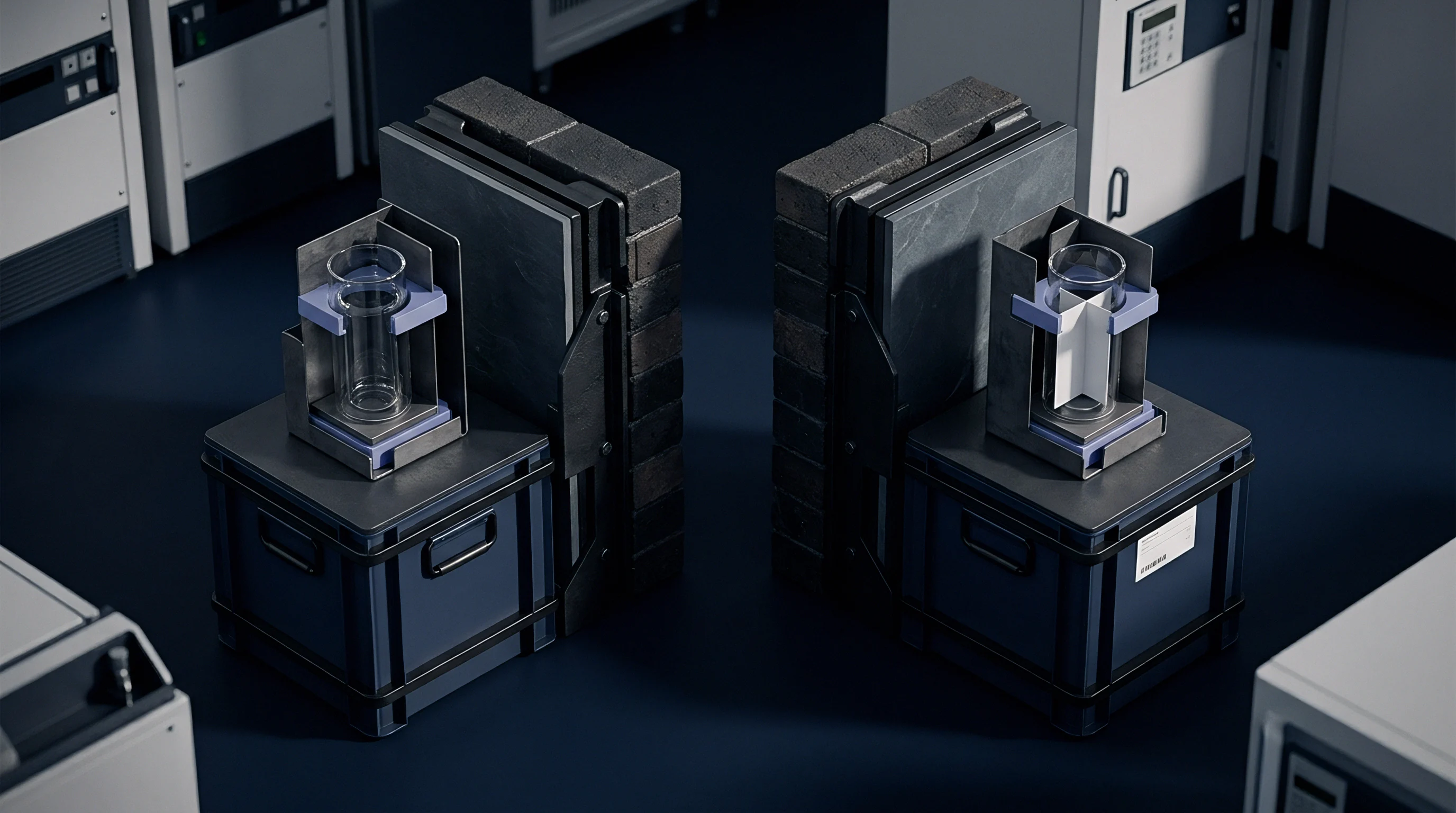
Ventilation systems inside test enclosures drive heat and vapor exchange across the surface boundary layer of the specimen. ISO 187 mandates continuous air circulation around every test sample, setting air velocity limits between 0.15 meters per second and 0.50 meters per second. Air movement drives rapid conditioning.
When test strips hang motionless in stagnant air, localized boundary layers saturated with desorbed moisture form adjacent to the coated surface, retarding the approach to equilibrium.
Specimen orientation dictates boundary layer dissipation. Sheets suspended vertically with minimum 25-millimeter gaps between adjacent samples reach moisture stability six times faster than sheets laid flat on solid metal benching. Stacks block humidity transport.
Conditioning sealed or tightly stacked reams without unstacking leaves core sheets at unconditioned mill moisture levels for up to seven days while edge regions adjust to lab air.
- Cut representative full-width sheet samples from the reel or pallet stack, discarding the top three protective sheets.
- Place samples in a pre-conditioning atmosphere operating between 10 percent and 35 percent relative humidity at a temperature below 40 degrees Celsius for a minimum of two hours to drive specimen moisture below target equilibrium levels.
- Transfer pre-dried sheets to the primary conditioning chamber operating at 23 degrees Celsius and 50 percent relative humidity.
- Suspend individual sheets vertically using clips, maintaining uniform spacing to enable uninhibited air circulation across both coated and uncoated faces.
- Monitor specimen mass using a analytical balance accurate to 0.001 grams at two-hour intervals until two consecutive weighings yield a mass change of less than 0.1 percent of total sample mass.
ISO 187 pre-conditioning mandates drying board samples at 10 to 35 percent relative humidity below 40 degrees Celsius prior to main equilibration to prevent false stiffness readings from hysteresis retention.
Paper mills frequently claim that reel core moisture remains within specification because sample slips were conditioned for twenty-four hours, ignoring that dense board stacks take days to equilibrate.

Pliability
Bending resistance evaluation performed according to ISO 2493 relies on the flexural rigidity of the intact pulp matrix. Test instruments measure the force required to deflect a standard 38-millimeter wide specimen through a 15-degree arc at a free distance of 50 millimeters. Wet fibers slip under load.
When relative humidity rises above specified tolerances, water acts as a plasticizer within the cell wall, loosening inter-fiber hydrogen bonds and dropping Taber or L&W stiffness readings significantly below true structural values.
Why Does Unconditioned Board Crack at the Score?
Low relative humidity conditions deplete essential moisture from the CTMP core and top liner, severely reducing fracture toughness during creasing. When converting dry board at 35 percent relative humidity, the tension liner fails under elongation, causing visible coating fracture along the outer score line. Conversely, high moisture content increases ductility but collapses internal shear resistance, producing soft, spongy score lines that pop open on high-speed cartoning equipment.
| Conditioning RH Level | MD Bending Stiffness (mN) | CD Bending Stiffness (mN) | Crease Stiffness Ratio (%) | Observed Failure Mode |
|---|---|---|---|---|
| 30 Percent RH (Dry) | 410 | 195 | 68 | Top coating cracking, score rupture |
| 50 Percent RH (Standard) | 360 | 170 | 52 | Clean fold, intact liner, square carton |
| 70 Percent RH (Humid) | 295 | 135 | 38 | Bulging panels, score rolling, carton lean |
Evaluating mechanical properties outside standardized atmospheric control yields invalid physical data. The following primary failure modes occur during conversion when paperboard is tested or processed outside climate standards:
- Coating Fracture occurs when dry stock with moisture content below 5.0 percent is folded over narrow matrix channels, rupturing the mineral layer.
- Delamination Resistance Loss appears under elevated humidity, causing internal plies to separate during high-speed glue application.
- Score Roll develops when excessive moisture softens mechanical pulp fibers, causing the creased bead to flatten rather than form a precise internal hinge.
- Bending Stiffness Deficit manifests when high ambient humidity drops structural panel rigidity, causing filled cartons to bulge and fail stack-compression tests.
Board conditioned from the dry side always exhibits lower equilibrium moisture and higher bending resistance than board brought down from a humid state.
Standard supply contracts incorporate ISO 187 compliance clauses that render stiffness certificates legally invalid unless ambient test temperature and humidity readings are continuously logged alongside specimen test results.

Binder
Mineral coating layers applied to folding boxboard contain synthetic latexes and starch adhesives that undergo physical changes under varying atmospheric moisture states. Styrene-butadiene and styrene-acrylic latex particles form a continuous polymer film that binds kaolin clay and calcium carbonate pigments to the pulp substrate. Latex binders soften with moisture.
Water absorption lowers the glass transition temperature of water-soluble binder fractions, changing surface energy and altering oil-based ink absorption rates.
IGT pick resistance testing performed under ISO 3783 measures the surface strength of the coated layer during high-speed print offset impression. Elevated moisture reduces internal binder cohesive strength, leading to picking, blistering, or total coating delamination under high-tack inks. Cobb water absorptiveness testing per ISO 535 evaluates water uptake over a 60-second window, providing a direct measurement of sizing efficiency and surface hydrophobic performance.
Atmospheric conditioning errors skew Cobb readings by pre-filling microscopic pore networks within the coating structure, falsely indicating lower water absorption capacity than the dry sheet actually possesses.
Unconditioned stock skews landed yield. Surface smoothness measurements taken via Parker Print-Surf (ISO 8791-4) under non-standard relative humidity reflect distorted fiber swelling rather than true coating topography, causing print shops to apply excessive impression pressure that damages the underlying pulp structure.
Laboratory humidity control failures distort paperboard caliper and stiffness test certificates long before print registration errors manifest on the converting floor.
How far latex binder formulation can be altered to resist moisture-induced micro-cracking without sacrificing high-speed offset varnish holdout remains a subject of active trial across chemical supply labs.
Gradient
Thermal and moisture equilibrium rates vary dramatically between single laboratory test strips and full commercial pallet loads. Edge waviness destroys feeder performance. When a cold pallet wrapped in moisture-impermeable film enters a warm pressroom, ambient moisture condenses on outer plastic wrappings.
Opening wrapped pallets prior to thermal equalization causes rapid ambient moisture absorption along sheet edges, expanding cross-direction dimensions while core regions remain static, producing heavy edge waves that jam high-speed press feeders.
Core samples remain humid longer. Goods-in inspection auditing demands systematic sampling across depth profiles to capture internal gradient shifts. Sword-type moisture probes inserted between stacked sheets provide fast relative humidity readings within the stack structure, allowing quality control engineers to audit shipments before stripping protective packaging.
- Thermal Equalization Check requires verifying that internal pallet temperature matches room temperature within 2.0 degrees Celsius prior to unwrapping stretch film.
- Edge Condition Audit involves visually inspecting sheet margins for tight edges or edge waviness indicative of unconditioned moisture exchange.
- Sword Probe Insertion demands driving the relative humidity probe deep into the core center, allowing five minutes for sensor stabilization before logging readings.
- Envelope Cut Sampling requires extracting test sheets from three distinct stack levels, sealing them immediately in vapor-proof aluminum bags for laboratory conditioning.
Wrapped pallets left sealed on the pressroom floor reach thermal equilibrium long before edge wavy borders flatten out.
Valuation
Commercial transactions for paperboard substrates convert raw tonnage into usable square meters of packaging material. Water weight adds pure transport cost. Buying paperboard on a gross weight basis without accounting for moisture content introduces financial risk, as buyers pay full pulp price for excess water absorbed during transit or unconditioned storage.
International trade standards establish nominal commercial moisture targets, typically set between 6.0 percent and 8.0 percent depending on furnish classification and mill specification.
| Parameter | Contract Specification | As-Received Condition | Lab-Conditioned State |
|---|---|---|---|
| Billed Mass (Tonnes) | 50.00 | 50.00 | 49.03 |
| Average Moisture Content (%) | 6.50 | 8.35 | 6.50 |
| Basis Weight (g/m²) | 300.0 | 305.6 | 300.0 |
| Delivered Area (m²) | 166,667 | 163,612 | 163,433 |
| Effective Area Deficit (m²) | Base | -3,055 | -3,234 |
| Commercial Value Impact (€) | Base (€60,000) | -€1,100 | -€1,164 |
An elevated moisture content of 8.35 percent on a 50-tonne shipment adds 970 kilograms of non-structural water weight to the consignment. The buyer receives 3,055 fewer square meters of usable board than specified in the order, reducing net carton yield by thousands of units while paying full price per tonne. Re-evaluating grammage and caliper following full laboratory conditioning exposes the true dry-pulp yield, providing the numerical baseline required to execute commercial debit notes against mill suppliers for out-of-specification moisture delivery.