Standard Laboratory Fractionation Methods for Recycled Paper Pulp
Laboratory pulp fractionation isolates fiber length and contaminant fractions to substantiate yield declarations, chain of custody records, and border taxes.

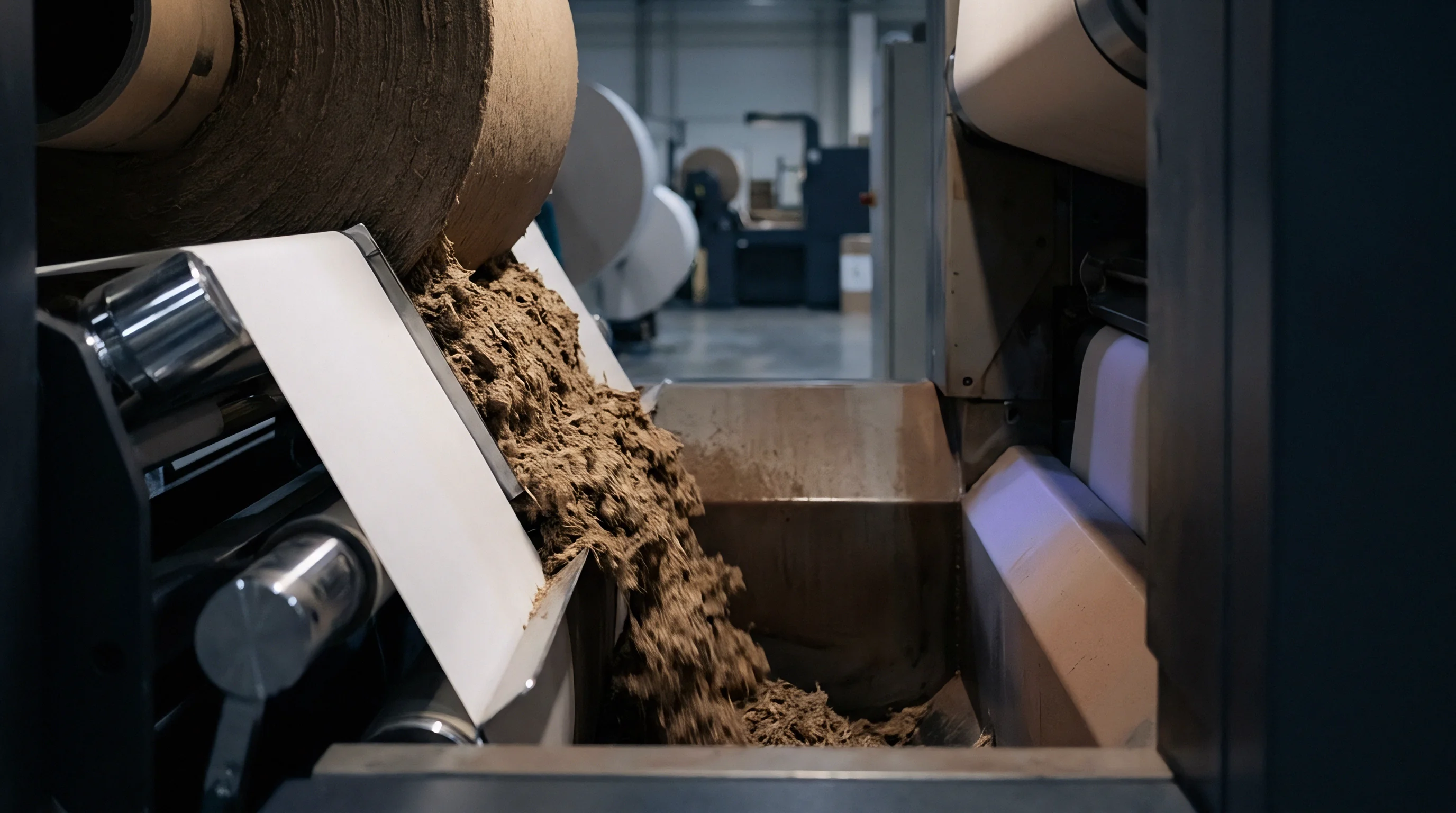
Wire
Ten grams of oven-dry recycled pulp enter the first brass classification chamber under a constant wash of three liters per minute. The suspension encounters successive metal cloths arranged in descending order of coarseness. Water currents sweep shorter fragments through the woven barriers while longer structures remain pinned against the metal cloth until the washing cycle finishes.
The flow rate governs separation. Centrifugal action inside each vessel keeps the stock mobile, preventing premature blinding that would trap short components in coarse compartments. In secondary fiber processing, where furnish arrives with severe hornification and fragmented cell walls, this hydro-mechanical sorting isolates the structural potential of the material.
Fiber length distribution establishes the tear and tensile thresholds of recycled linerboard and fluting. When secondary fibers undergo successive drying cycles, their swelling capacity drops and internal fibrils collapse. Fractionation isolates the sound tracheids from brittle fragments, directing long fractions toward surface plies where bonding governs burst strength, while short elements settle into the middle plies.
Standard methods like TAPPI T 233 and ISO 16065-1 define the physical boundaries of these compartments. Long tracheids stay behind.
A standard Bauer-McNett cascade running 10.0 grams of bone-dry recycled kraft pulp for twenty minutes retains less than forty percent of total mass on the 14-mesh screen.
The distribution of mass across screens indicates the degradation history of the raw material. Old corrugated containers subjected to four recycling loops display pronounced migration of mass from the coarsest mesh toward the finest settling tank. Testing laboratories rely on standard wire counts to benchmark batch consistency against purchase specifications.

Mechanical Fiber Length Classification
Automated optical analyzers measure individual particle silhouettes in dilute suspensions, whereas gravitational cascade classifiers measure drained dry mass. Optical image analysis calculates arithmetic average length, length-weighted length, and weight-weighted length through capillary flow cells. The Bauer-McNett classifier measures mass fractions directly by capturing pulp on calibrated screens.
A laboratory technician combines both datasets to diagnose secondary fiber quality: mass fractions establish yield economics, while optical distribution curves reveal cell wall damage and curl indices.
| Chamber Stage | Tyler Mesh Designation | Sieve Opening (mm) | Target Pulp Component | Recycled OCC Mass Retention (% w/w) | Virgin Softwood Kraft Retention (% w/w) |
|---|---|---|---|---|---|
| First Tank | 14 Mesh | 1.190 | Long tracheids, intact softwood | 32.4 | 68.2 |
| Second Tank | 28 Mesh | 0.595 | Medium softwood, intact hardwood | 18.6 | 16.5 |
| Third Tank | 48 Mesh | 0.297 | Short hardwood, broken tracheids | 14.1 | 8.1 |
| Fourth Tank | 100 Mesh | 0.149 | Pulp fragments, fibrillar debris | 11.2 | 3.8 |
| Drain / Tank 5 | 200 Mesh | 0.074 | Primary fines, mineral filler residues | 8.5 | 1.4 |
| Effluent | Passing 200 Mesh | Less than 0.074 | Colloidal fines, soluble organics | 15.2 | 2.0 |
Recycled pulp demonstrates twice the fine fraction of virgin chemical pulp. High fractions of material passing the 200-mesh wire correlate with drainage retardation on the paper machine wire and elevated vacuum energy demands in the forming section. Secondary fibers stiffen with age.
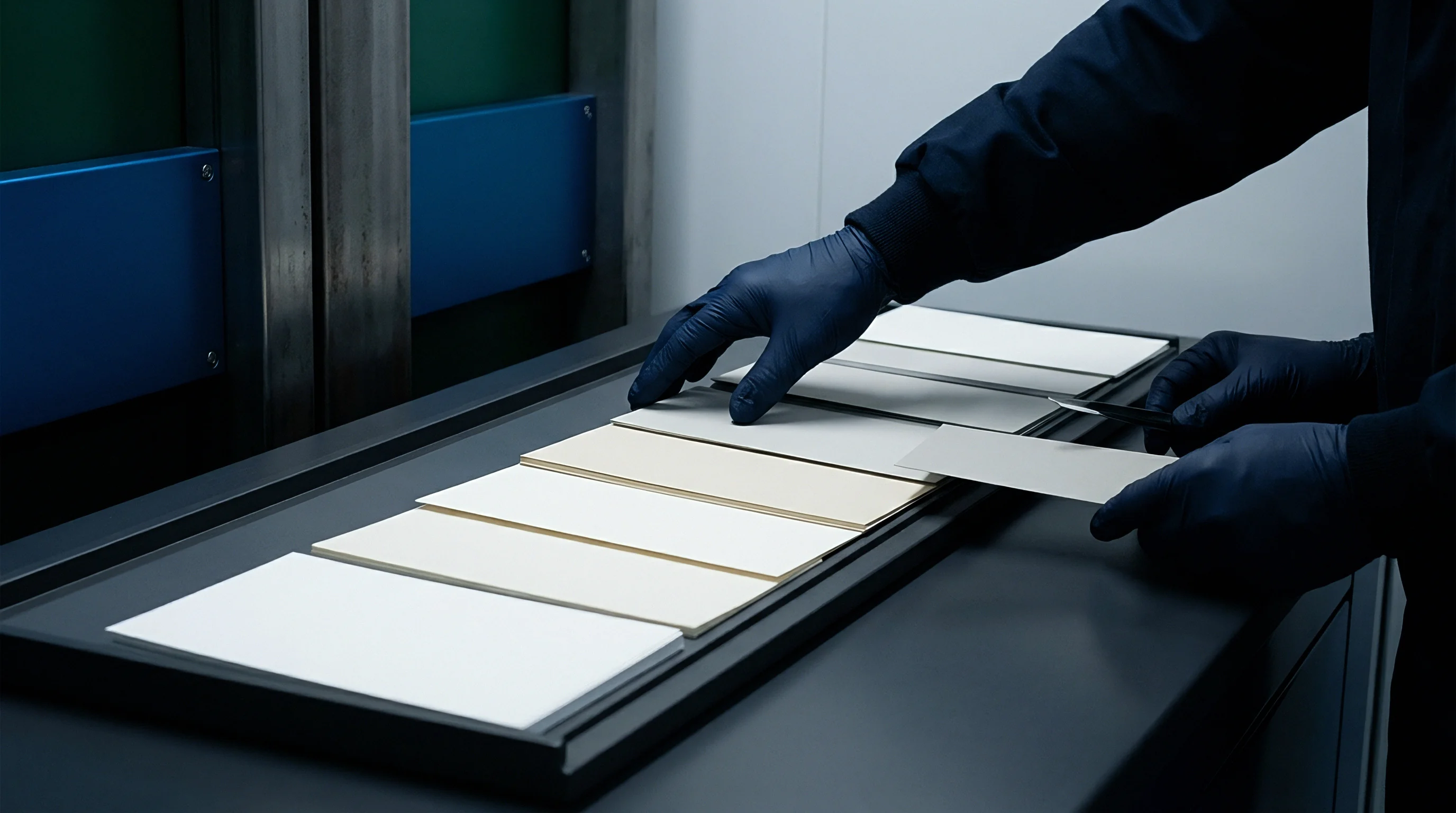
Bauer McNett Hydraulic Separation Stages
Each vertical chamber houses an agitator turning at 580 revolutions per minute opposite a vertical screen plate. The impeller creates an elliptical flow pattern that draws the pulp across the face of the wire without driving the particles perpendicularly through the apertures. This tangential sweeping motion preserves the distinction between particle length and particle diameter.
Fibers longer than the aperture align with the current and sweep past the openings, whereas particles shorter than the mesh opening pass through the boundary layer into the overflow ducting leading to the subsequent chamber.
- Screen blinding occurs when sticky micro-contaminants coat the wire cloth, restricting hydraulic flow and distorting the mass retention curve across downstream chambers.
- Water flow fluctuations displace fibers between chambers prematurely, creating artificial fines readings.
- Incomplete disintegration leaves undispersed flakes on the coarsest wire mesh, which skews long-fiber indices upward and invalidates drainage predictions.
- Sample hornification reduces fiber swelling, causing hornified recycled fibers to orient parallel to the wash water and slip through the wire openings.
Maintaining water temperature at twenty degrees Celsius stabilizes fluid viscosity, eliminating seasonal drift in classification efficiency. Variations in municipal supply temperature alter hydrodynamic drag across the woven metal cloth, shifting the cut-off threshold of intermediate chambers. Technicians calibrate incoming water pressure through constant-head supply tanks to preserve laminar entry into the initial chamber.
Coarser screens retain long reinforcement fibers while fines pass with the drainage water.


Slot
Contaminant particles in secondary pulp display irregular geometries that defeat wire mesh sieves. Pressure screens fitted with micro-machined plates separate particles based on cross-sectional thickness and stiffness rather than axial length. Shives, adhesives, coating chips, and polymer laminates pass through coarse wire screens when their length aligns with flow lines, yet they cannot traverse a narrow aperture.
Laboratory evaluation of recycled stock relies on slotted screening to quantify macro-stickies and unpulped paper flakes before furnish enters commercial production lines.
The Somerville fractionator, standardized under TAPPI T 275 and TAPPI UM 242, utilizes an engineered plate with machined apertures spaced across a brass diaphragm. A flat vibrating diaphragm pulsates the liquid column from below at 700 strokes per minute while calibrated water sprays sweep the upper face. The bar spacing determines clearance.
Acceptable flexible fibers orient under hydraulic suction, flex their cell walls, and pass downward into the drain. Rigid shives and tacky polymer agglomerates remain stranded on top of the plate.
Compliance with TAPPI UM 242 rejects any secondary fiber lot whose Somerville 0.15-millimeter slot residues exceed 1.2 percent by weight.
Slot geometry governs screening selectivity. Smooth mechanical milling produces straight-walled apertures, whereas electron-discharge machining creates contoured profiles that induce localized micro-vortices. In industrial stock preparation, contoured profiles maximize hydraulic capacity, but standard analytical testing demands straight-sided slots to ensure reproducible cut-offs across independent test houses.

Where Do Recovered Fibres Cross Screen Boundaries?
A flexible cellulosic particle undergoes conformational bending when approaching a narrow orifice under localized pressure gradients. An unrefined recycled fiber easily folds into a hairpin configuration, traversing a 0.15-millimeter opening with minimal resistance. A rigid shive composed of unseparated lignified tracheids cannot fold.
Its flexural rigidity exceeds the hydraulic drag force exerted by the vibrating liquid column, arresting the particle above the metal boundary. Uncut shives ruin surface smoothness.
| Fractionator System | Standard Designation | Plate Aperture Width (mm) | Slurry Consistency (% w/w) | Feed Charge (Dry Grams) | Target Contaminants Isolated |
|---|---|---|---|---|---|
| Somerville Screen | TAPPI T 275 / UM 242 | 0.150 | 0.24 | 24.0 | Macro-stickies, woody shives, flakes |
| Haindl Fractionator | PTS Method RH 011/94 | 0.100 | 0.15 | 15.0 | De-inking stickies, micro-shives |
| Pulmac MasterScreen | TAPPI T 274 | 0.100 | 0.10 | 10.0 | Deformable adhesives, ink crusts |
| Vennotti Fractionator | ISO 5263-2 Annex C | 0.200 | 0.30 | 30.0 | Wet-strength flake contamination |
Pulp cleanliness commands a price. Secondary furnish containing excessive quantities of debris crossing into accepted stock causes breaks on high-speed web presses and forms pinholes in barrier-coated folding boxboard. Slotted testing establishes whether raw bale lots justify the energy expenditure of dispersion or mechanical refining.
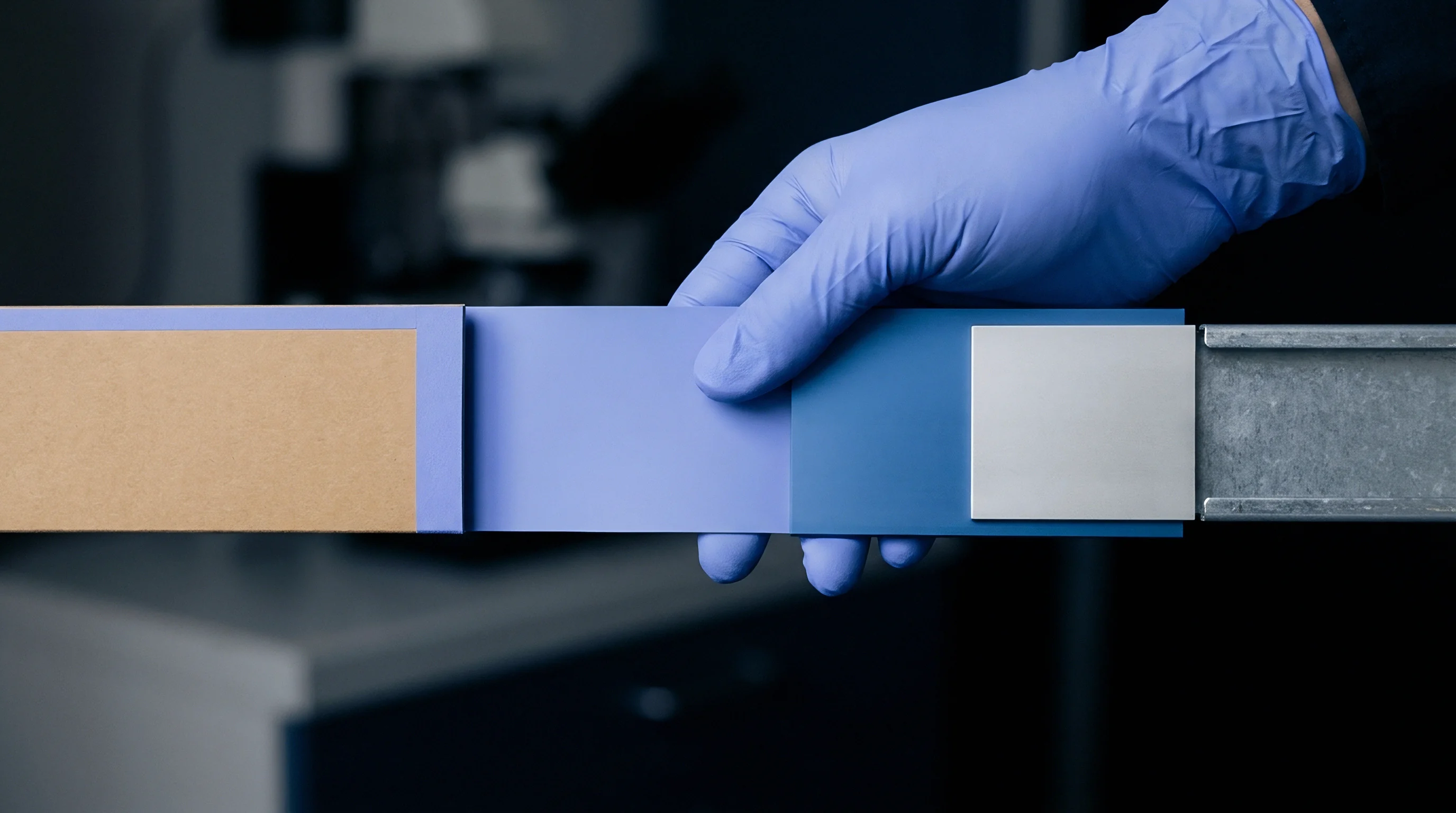
Somerville and Haindl Operating Principles
The Haindl apparatus applies continuous rotary suction rather than planar vibration to process pulp slurries through a 0.10-millimeter slotted basket. This tighter dimension captures deformable stickies that squeeze through the wider apertures of the Somerville device. Hot water circuits maintained at sixty degrees Celsius simulate mill operating temperatures, allowing analysts to observe whether hot-melt adhesives become fluid enough to extrude through the screen under running conditions.
Baled furnish quality varies widely.
- Disintegration staging prevents fiber cutting while dispersing paper flakes, where excessive rotor speed destroys the mechanical shives needed for qualification.
- Slurry introduction meters exactly twenty-four grams of dry-basis pulp into the Somerville reservoir, avoiding overflow losses that forfeit test validity.
- Continuous water wash maintains constant head pressure over the slotted plate for twenty minutes, flushing acceptable fibers through the 0.15-millimeter slots.
- Residue collection captures retained stickies and shives onto quantitative filter paper, providing the mass basis for mill grade penalties.
Differences between laboratory screens generate frequent disputes between recycled pulp mills and paper converters. The Somerville unit relies on atmospheric drainage aided by a diaphragm pump, whereas the Pulmac system introduces pneumatically driven backflushes to prevent particulate blinding. A pulp batch exhibiting a modest 0.8 percent Somerville reject can register a 1.9 percent reject value on a Pulmac MasterScreen fitted with 0.10-millimeter slots due to the retention of smaller stickie particles.
The mill claims secondary stickies formed during laboratory drying rather than existing in the raw baled furnish.
Jar
Turbulent shear forces dominate drainage and chemical additive retention on high-speed twin-wire forming sections. Gravity classification screens cannot isolate fines generated under high mechanical agitation. The Britt Dynamic Drainage Jar resolves this limitation by decoupling drainage filtration from fiber mat building.
Standardized under TAPPI T 261, the instrument introduces variable-speed propeller agitation directly above a perforated separation plate, washing colloidal fines away from long tracheids while fluid mechanics keep the fibrous web from settling.
Fine particles in recycled paper systems encompass two distinct materials. Primary fines consist of ray cells and cell fragments present in the original timber, whereas secondary fines comprise fibrillar lamellae peeled from fiber walls during mechanical refining and repulping. Secondary fines hydrate heavily, producing swollen gels that elevate sheet density and bonding strength.
The Britt apparatus quantifies the ratio of these fines to total mass without permitting the fibers to create a self-filtering mat that would trap small particles.
Propeller agitation above 750 revolutions per minute stops fiber mat formation on the perforated plate.
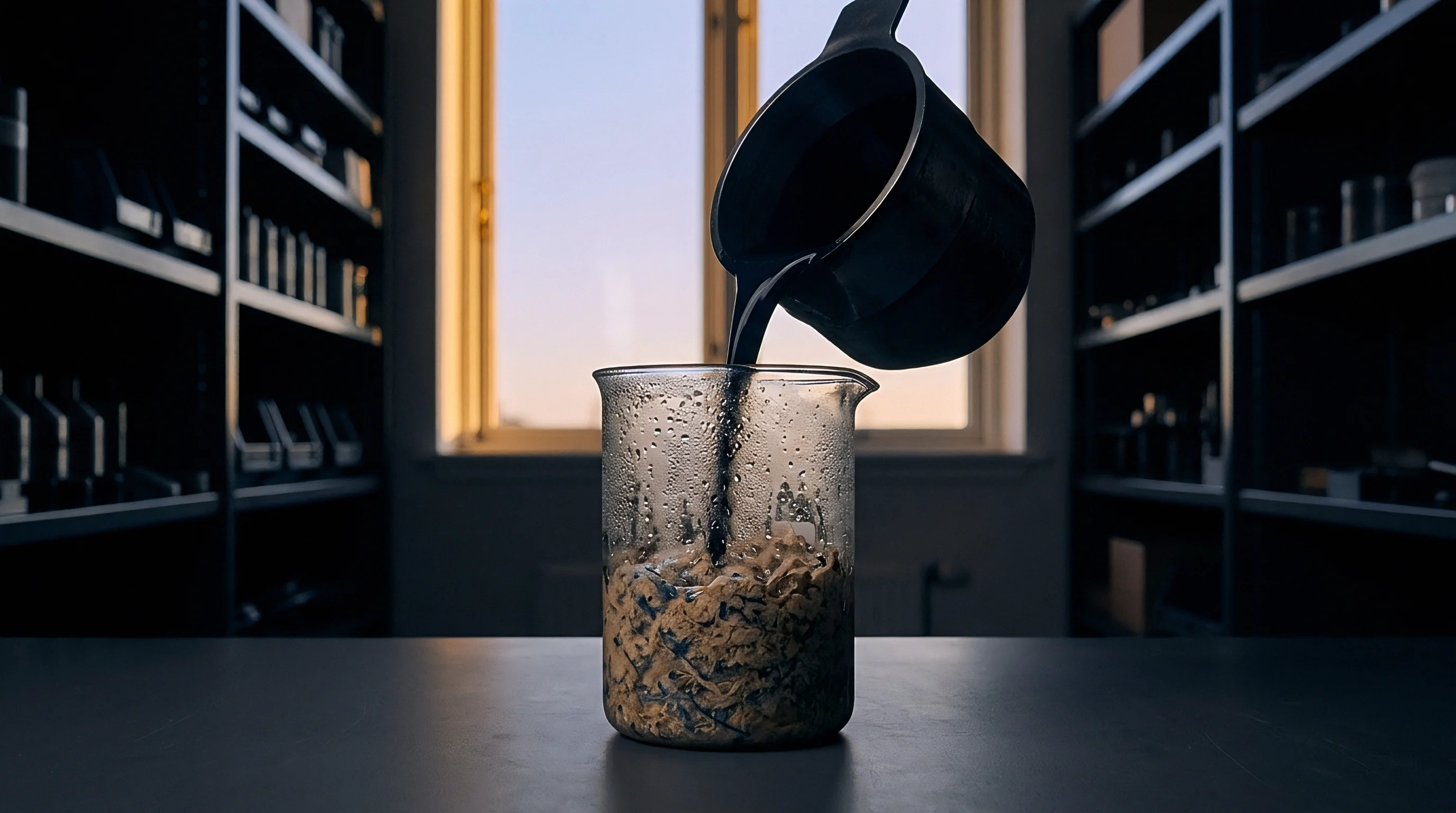
Agitation defeats mat building. The test technician charges the vessel with five hundred milliliters of stock at 0.5 percent consistency, starts the motor at 750 revolutions per minute, and opens the drain clamp. The initial filtrate contains suspended fines, ash, and micro-stickies, free from the mechanical entrapment inherent to standard freeness testing.

Turbulent Drainage Dynamics
Propeller height above the perforated plate governs the velocity gradient across the screening interface. If the impeller sits too high, a quiescent stagnant boundary forms above the metal plate, allowing long fibers to interlock into a filter bed. If the impeller descends too close to the plate, the mechanical shear shears fibers against the metal edges, generating artificial fines.
The standard geometry specifies a clearance of exactly 3.2 millimeters between the bottom edge of the two-bladed propeller and the upper face of the perforated screen.
The screen consists of a flat electroformed nickel plate with conical holes measuring 76 micrometers in diameter. These conical apertures widen toward the discharge side, preventing particle wedging. In de-inked pulp evaluation, the filtrate collected during the first thirty seconds carries the fine fraction, which is then passed through ashless filter paper and ignited in a muffle furnace at 525 degrees Celsius to split organic fines from inorganic pigments.

Colloidal Contaminant Partitioning
Micro-stickies escape visual detection on slotted Somerville plates because their dimensions fall well below one hundred micrometers. These synthetic polymers remain dispersed as colloidal suspensions under alkaline pulping conditions. When furnish undergoes shear in the Dynamic Drainage Jar, these non-structural elements drain directly into the accepted filtrate.
Fines carry mineral mass.
Analytical laboratories isolate these colloidal stickies from the Britt jar effluent using liquid-liquid extraction with dichloromethane or methyl tertiary-butyl ether. Gravimetric and infrared spectroscopic assays quantify the extracted sticky mass per metric ton of bone-dry pulp. Chemical additives such as cationic starch and synthetic retention aids modify the electrical double layer around these particles, causing them to agglomerate and deposit onto forming wires.
Whether colloidal stickies agglomerate under shear or remain in suspension during high-speed drainage remains disputed among packaging laboratories.


Ledger
Fractionation balances establish the legal and fiscal integrity of paper mill delivery tallies. Secondary fiber trades under rigid trade definitions where contaminant levels govern financial deductions. European standard EN 643 establishes commercial thresholds for non-paper components, unusable materials, and moisture tolerances across specific grades.
Laboratory screening reports serve as formal documentary instruments during contract arbitrations when delivered bales fail processing expectations.
Incoming shipments of grade 1.05 (old corrugated containers) carry commercial tolerances for non-paper elements capped at 1.5 percent by weight. If laboratory screening on a five-kilogram composite sample extracts 2.8 percent Somerville slot rejects and 6.2 percent Bauer-McNett fines passing 200 mesh, the buyer enters a quality claim against the supplier invoice. Testing reports accompany commercial dispute filings, detailing sieve sizes, water temperatures, and dry-mass reconciliation balances.
Certificates follow paper lots.
Are Mill Yield Claims Verifiable under Audit?
Every commercial recycling claim requires mass balance verification that tracks fiber loss across stock preparation. Chain-of-custody protocols under FSC-STD-40-004 and PEFC ST 2002 demand that credit accounts reflect genuine operational fiber recovery factors. If a mill claims a ninety-two percent fiber recovery factor while laboratory Somerville and Bauer-McNett fractionation assays confirm a twelve percent rejection of unusable fines and stickies, the ledger balance collapses under third-party audit scrutiny.
Inspectors examine the conversion factor calculations used to write certified packaging volume onto shipping invoices. An unsupported ten percent discrepancy between certified input fiber and actual packaging output triggers chain-of-custody certificate suspension. Discrepancies invite regulatory scrutiny.
- Standard grade alignment verifies incoming secondary fiber deliveries against EN 643 specifications to exclude prohibited non-paper fractions.
- Mass balance reconciliation confirms that laboratory Somerville rejects and Bauer-McNett fines sum to within two percent of total dry input mass.
- Chain of custody continuity checks certificate numbers on delivery notes against public database records, ensuring paperboard claims match mill production batches.
- Laboratory accreditation status inspects ISO 17025 certificates for the specific fractionation methods cited in the technical data sheet.
A rigorous audit checks whether the sample preparation matched standard TAPPI T 205 disintegration parameters. Unscrupulous operators sometimes reduce disintegration revolutions from the standard thirty thousand down to five thousand, deliberately leaving paper flakes intact so they register as coarse screen rejects, justifying artificial commercial deductions against scrap paper merchants.
Standard Grade Mass Balances
Consider a commercial packaging contract covering three hundred metric tons of recycled testliner manufactured from baled sorted mixed office paper (EN 643 Grade 2.05). Laboratory fractionation yields 8.5 percent ash on the 200-mesh effluent, 1.8 percent Somerville slot rejects, and 12.3 percent primary fines. The effective cellulosic pulp yield cannot exceed 77.4 percent.
If the converter attempts to claim an eighty-five percent recycled material declaration under PEFC percentage accounting rules without purchasing supplementary market pulp credits, the trade compliance file fails inspection.
Commercial contracts protect buyers by establishing explicit penalties when laboratory tests show abnormal reject bands. Standard contract annex clauses specify that delivery settlement values track the certified Haindl reject percentage rather than visual bale inspection reports.


Levy
Packaging taxes and cross-border duties increasingly penalize packaging formats that incorporate non-recyclable fractions or low-yield secondary fibers. The European Packaging and Packaging Waste Regulation sets strict recyclability performance grades based on quantifiable laboratory processing yields. Under these regulatory rules, packaging substrates must demonstrate design-for-recycling compatibility before entering European Union member markets.
Laboratory fractionation testing provides the quantitative foundation for these recyclability declarations.
Substrates undergoing recyclability assessment undergo standardized disintegration followed by slotted screening and fiber classification according to harmonized testing protocols like CEPI Recyclability Test Method Version 2. Packaging structures that generate high coarse reject fractions through the Somerville 0.15-millimeter screen or excessive colloidal debris in drainage water face automatic downgrading in recyclability class. Tariffs track material purity.
Packaging furnishes with high reject fractions draw severe eco-modulation penalties at European borders.
The regulatory classification determines the eco-modulation fees levied under Extended Producer Responsibility frameworks. A package achieving Class A recyclability commands minimum compliance fees, whereas a Class C or Class D designation triggers penal fees that erode product margins. Documentation protects capital.

Packaging Regulation Yield Thresholds
Regulatory guidelines link fee assessments directly to laboratory screening numbers. If laboratory disintegration of a coated recycled folding carton yields a usable fiber mass below seventy percent due to heavy wax coatings, synthetic adhesives, and non-dispersible polymer laminates, the packaging format loses its recyclable designation entirely.
| Performance Class | Minimum Usable Pulp Yield (% w/w) | Maximum Slotted Screen Rejects (% w/w) | Maximum Adhesive Stickie Content (mm²/kg) | EPR Eco-Modulation Impact |
|---|---|---|---|---|
| Grade A | 95.0 or higher | Less than 1.5 | Less than 200 | Base tariff with maximum discount |
| Grade B | 90.0 to 94.9 | 1.5 to 3.0 | 200 to 500 | Standard base fee rate |
| Grade C | 80.0 to 89.9 | 3.1 to 6.0 | 501 to 1,200 | Elevated fee with thirty percent surcharge |
| Grade D | 70.0 to 79.9 | 6.1 to 10.0 | 1,201 to 2,000 | Penal fee with eighty percent surcharge |
| Unrecyclable | Less than 70.0 | Exceeds 10.0 | Exceeds 2,000 | Full market ban or maximum punitive tariff |
| Methods note: Parameters derived from CEPI Recyclability Testing Guidelines using Somerville 0.15 mm screening and INGEDETEC sticky classification. | ||||
Importers must assemble technical compliance dossiers containing full accredited fractionation test reports to substantiate their customs paperwork. When customs authorities conduct market surveillance audits, they pull product swatches from warehouse pallets and send them to independent laboratories for verification screening. If independent testing indicates a Somerville reject rate of 4.2 percent on a container declared as Grade A, tax agencies reclassify the entire import lot retroactively.
Commercial Exposure and Customs Classifications
Customs declarations rely on exact tariff headings that separate genuine paperboard packaging from composite materials. Packaging constructed from multi-layer recycled pulp containing excessive polymer adhesives risks reclassification under composite plastic headings. This administrative reclassification alters applicable duty rates, voids environmental tax exemptions, and prompts administrative investigations into corporate supply chains.
Brand owners transfer regulatory risk back to paperboard mills through purchase agreements requiring laboratory fractionation certification for every production run. Importers who rely on decorative marketing certificates instead of accredited test house reports bear the direct cost of border seizures and unpaid producer responsibility fees. Inaccurate laboratory fractionation dossiers trigger eco-modulation penalty reclassifications and customs holds that wipe out importer operating margins.