Predictive Mechanical Creasing Models for Standard Fiberboard Conversion
Predictive mechanical creasing models calculate rule penetration and matrix pairing to induce controlled delamination while preventing surface liner fracture.
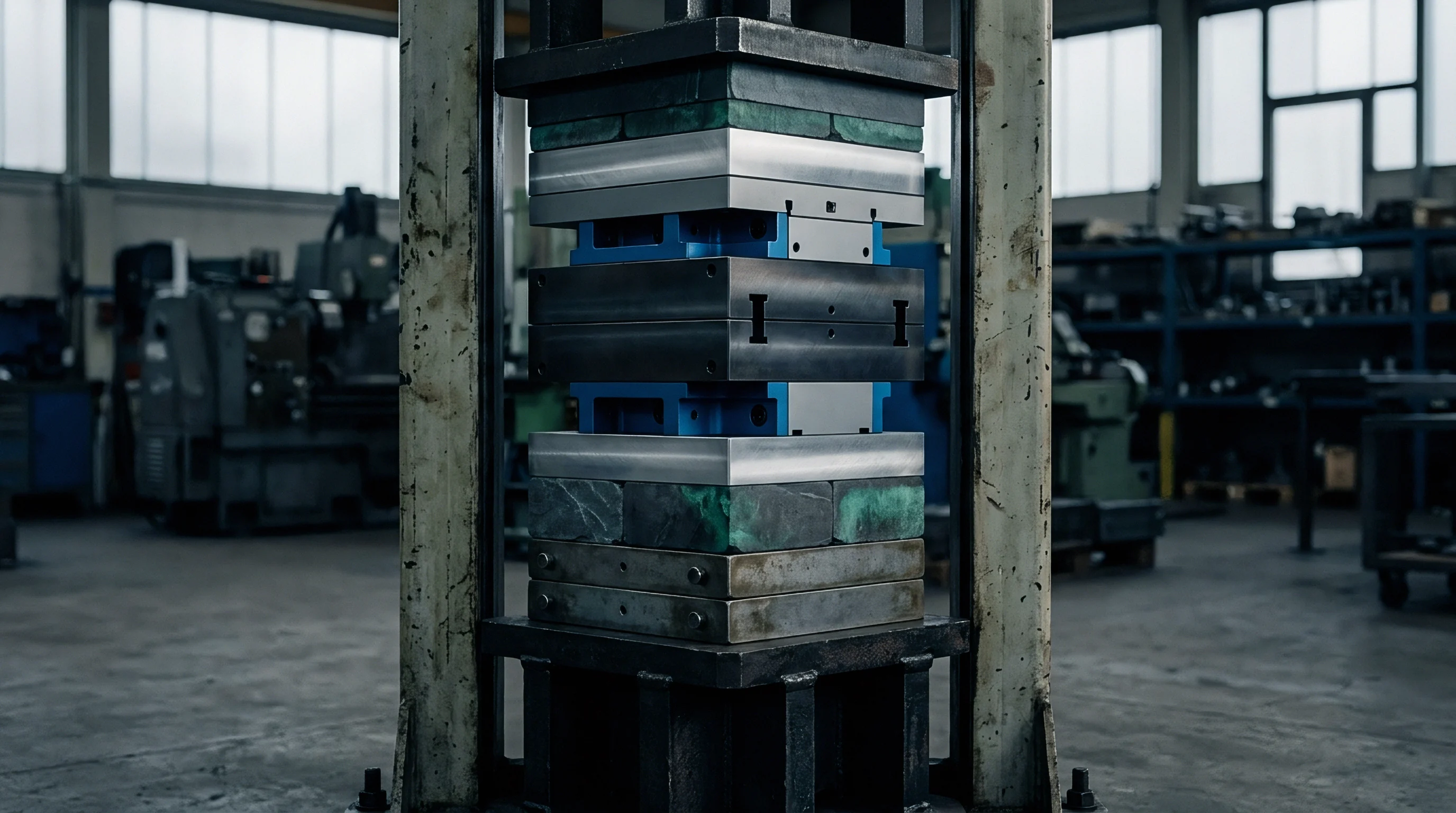
Rule
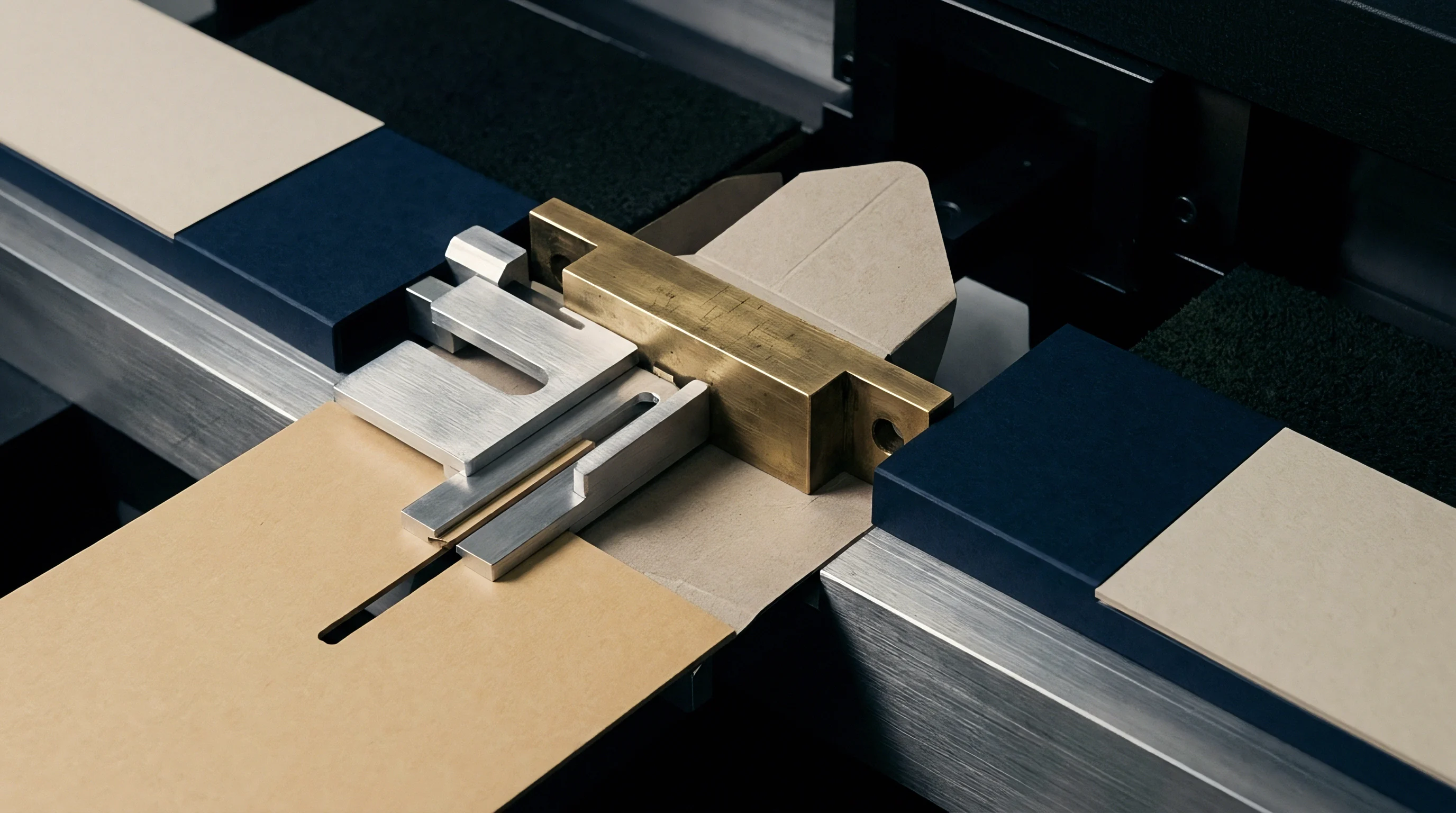
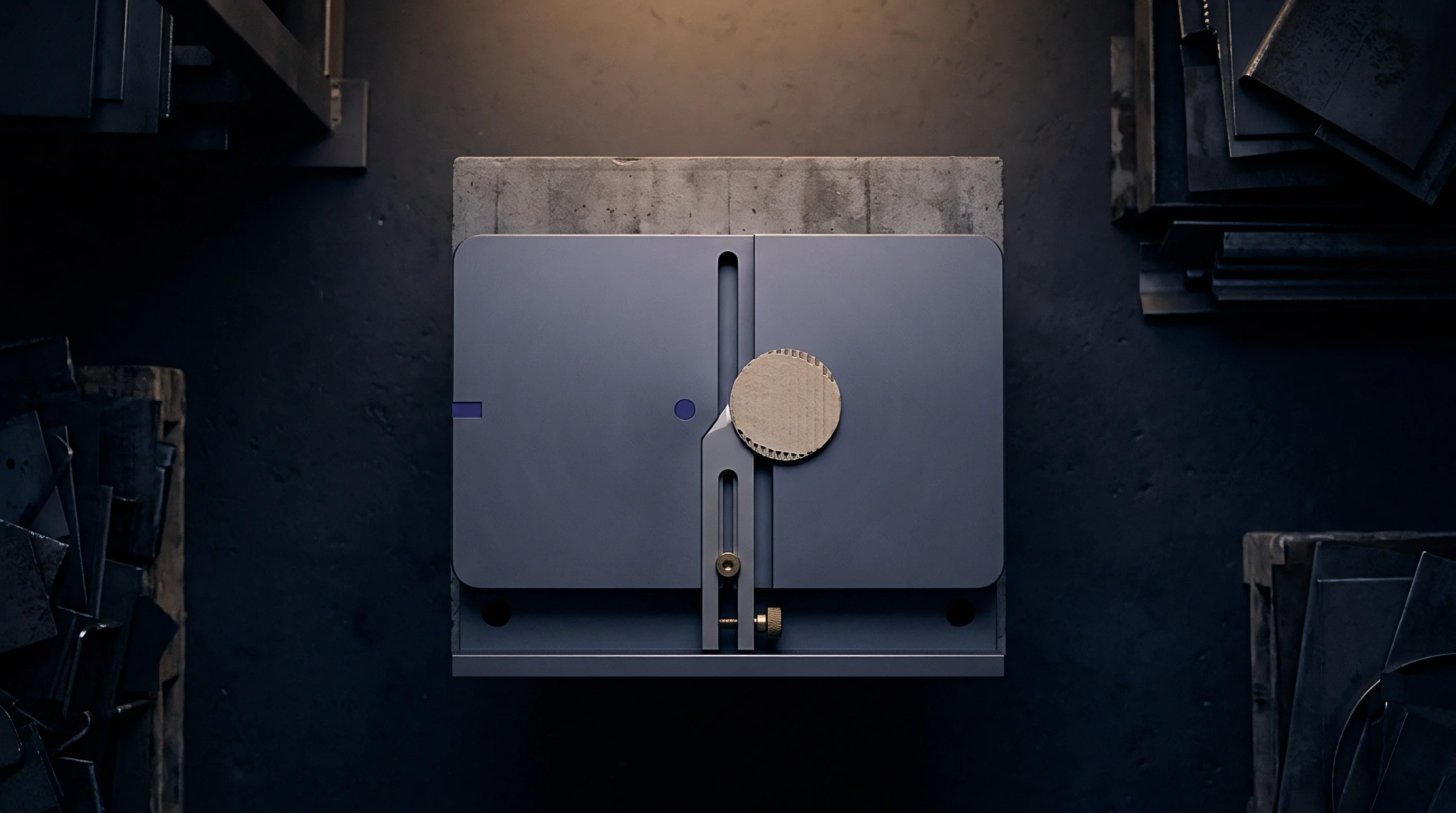
A 0.71-millimeter rounded steel edge descending into a 1.40-millimeter vulcanized counter channel compresses a 400-micrometer solid bleached board to forty percent of its virgin caliper before out-of-plane displacement begins. That initial contact zone defines whether the fiber network delaminates into discrete sliding lamellae or fractures across its surface plies. Plies shear along weak boundaries.
Predictive mechanical creasing models replace arbitrary make-ready shimming with numerical definitions of this indentation cycle, calculating stress distributions across the machine direction and cross direction before steel strikes cartonboard. Tool wear shifts scoring depth. When scoring tooling strikes paperboard without calculated penetration depths, converting lines suffer split scores, erratic folding torque, or carton jams on high-speed cartoning machines running at six hundred packs per minute.
Analytical creasing models treat the paperboard substrate as an orthotropic, elastoplastic multi-layer laminate. The steel edge penetrates the top liner, driving the core and back plies into the matrix channel. This action forces interlaminar shear stresses to exceed the internal bond strength of the fibrous plies, measured under TAPPI T 569 or ISO 16260.
The operational objective centers on inducing controlled permanent delamination without rupturing the surface liners. Running waste climbs instantly.
A 400-micrometer folding boxboard conditioned at 23 degrees Celsius and 50 percent relative humidity achieves optimal delamination when rule penetration reaches 65 percent of nominal caliper.
Variations in scoring geometry govern the deformation field. Standard rotary and flatbed platen die-cutting systems depend on exact pairings between the steel creasing profile, the matrix channel width, and the counter plate channel depth. Tool alignment dictates crease symmetry.
Misalignment exceeding 0.05 millimeters displaces the shear peak toward one side of the channel, causing asymmetric folding resistance during carton erection.
- Creasing Rule Thickness fixes the primary contact width and governs the transverse normal stress distribution delivered directly into the top linerboard.
- Counter Matrix Channel Width establishes the clearance envelope that dictates whether the core plies fail under pure bending or controlled out-of-plane shear.
- Channel Depth Setting sets the absolute limit of vertical board travel, preventing excessive crushing of the compacted crease bead against the steel plate.
- Penetration Stroke Depth determines the plastic shear strain volume within the internal fiber network, which directly controls the reduction in post-crease bending stiffness.
Converters frequently hear tooling vendors claim that minor score splits stem entirely from dry winter board deliveries rather than incorrect matrix channel selection.

Shear
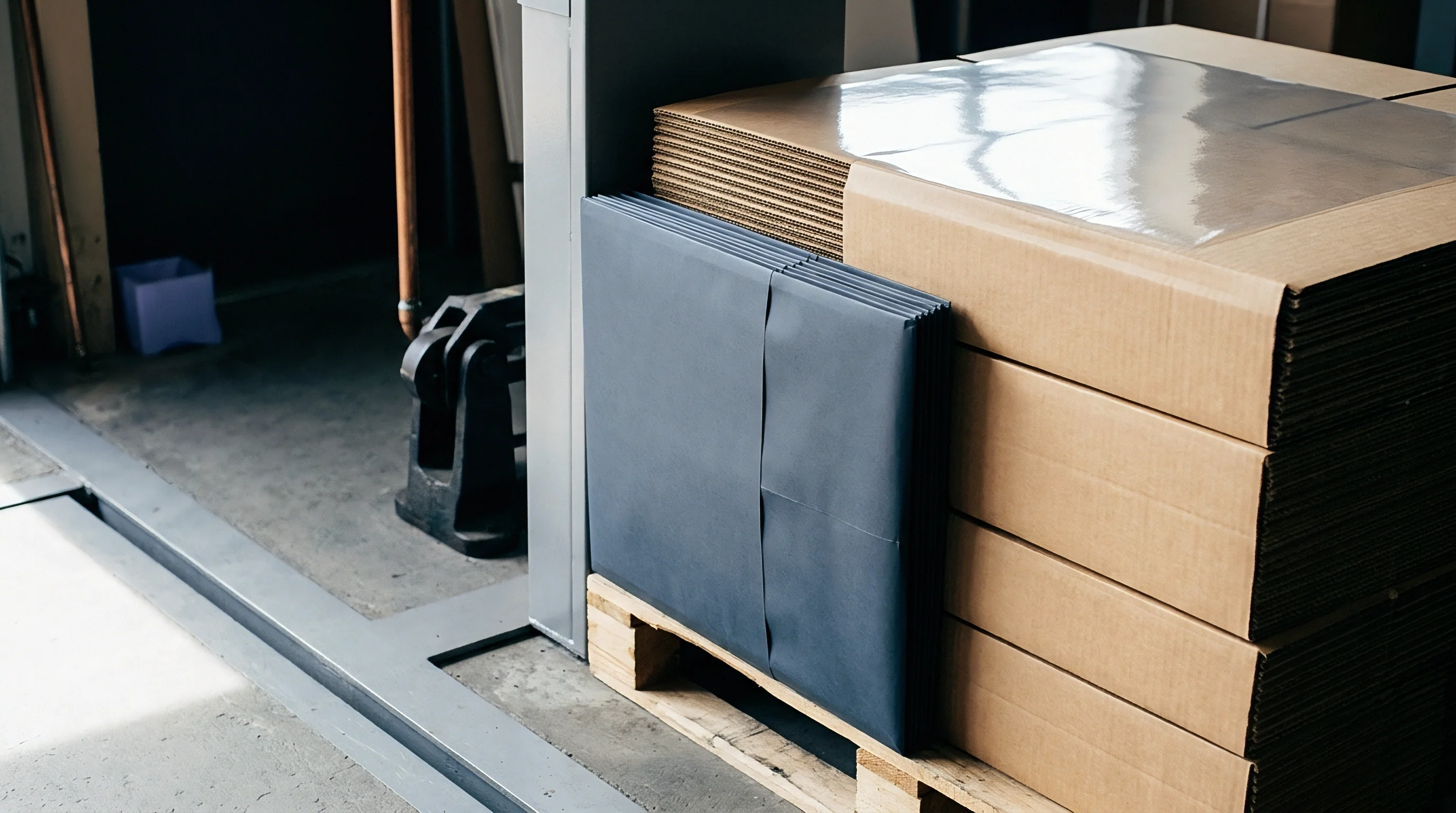
Transverse normal compression generated by the descending tool induces severe out-of-plane stresses across the board core. In standard multi-ply cartonboard, composed of bleached chemical pulp outer plies and mechanical or recycled inner plies, these out-of-plane shear stresses determine how internal layers decouple. Shear stress peaks off-center.
When the shear stress exceeds the transverse shear strength (tau_xz and tau_yz), interlaminar shear cracks propagate outward from the edges of the tool tip toward the matrix shoulders.
Where Does Delamination Initiate across Die Tooling?
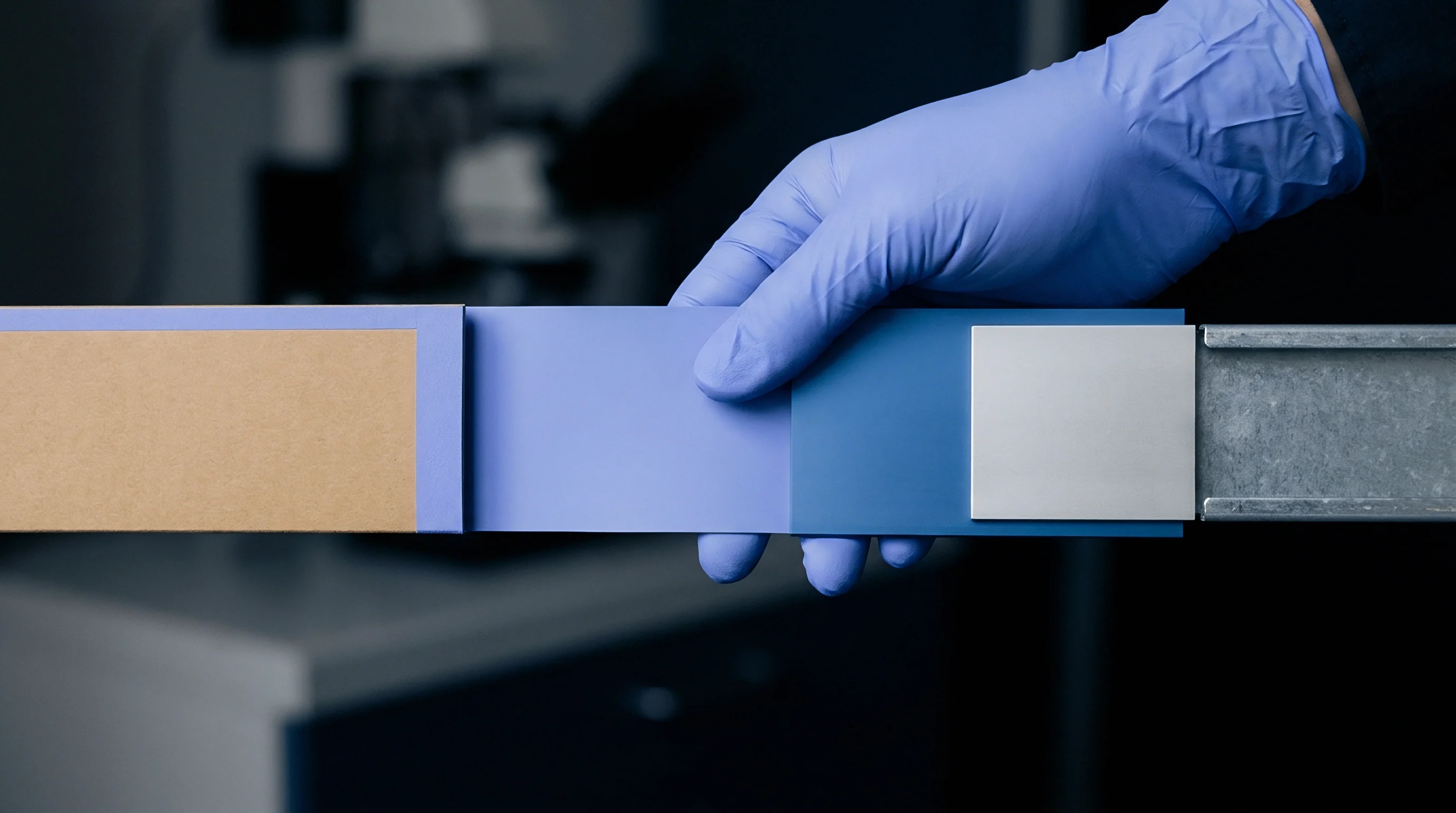
Numerical simulations using continuum damage mechanics show that delamination initiates beneath the tool shoulder radius rather than directly along the center line. As the board wraps across the matrix edges, high tensile bending stresses develop on the bottom liner while the core undergoes severe transverse shear. The delamination process splits the single thick plate into multiple thin, unbonded sheets.
Because the bending stiffness of a plate scales with the cube of its thickness, separating a four-ply board into four independent plies drops its theoretical flexural rigidity to one-sixteenth of its solid value. Rotational stiffness drops after creasing.
Fiber networks separate into discrete sliding planes only when out-of-plane shear stress exceeds interlaminar cohesive strength before top-ply tensile strain reaches its plastic limit.
To capture this behavior, predictive models implement cohesive zone formulations or continuum elasto-plasticity with Hill yield criteria modified for out-of-plane orthotropy. Thin films stretch before breaking. Interface elements embedded between plies define bilinear traction-separation laws governed by the critical energy release rate in mode II shear (G_IIc).
In packaging converting, this delamination mirrors the interlaminar shear failures observed in structural aerospace carbon-fiber laminates, where shear stresses along layer boundaries dictate macro-scale flexural compliance.
| Grade Designation | Caliper (µm) | Scott Bond (J/m²) | Transverse Shear Strength (MPa) | Mode II Energy G_IIc (J/m²) | Predicted Yield Stroke (mm) |
|---|---|---|---|---|---|
| Solid Bleached Sulfate (SBS) | 350 | 210 | 3.4 | 380 | 0.21 |
| Folding Boxboard (FBB) | 420 | 140 | 1.8 | 240 | 0.26 |
| Coated Recycled Board (CRB) | 450 | 115 | 1.4 | 190 | 0.28 |
| Unbleached Kraft Board (CUK) | 380 | 280 | 4.1 | 490 | 0.23 |
The tabulated Scott Bond and mode II fracture values represent standard laboratory measurements under TAPPI T 569, but dynamic impact velocities on full-scale flatbed die-cutters reach two meters per second. At these operational strain rates, paperboard displays viscoelastic stiffening. The transverse shear strength rises by fifteen to twenty-five percent compared to quasi-static bench tests, which shifts the required penetration stroke deeper into the matrix channel.
Predicting whether this dynamic stiffening suppresses delamination or forces premature surface cracking remains an unsettled question across high-speed packaging research.


Hinge
Once internal plies separate, the scored zone behaves as a mechanical folding joint. The residual bending moment of this folded zone governs the forces demanded by automatic packaging lines. High torque jams erecting machinery.
If the residual stiffness remains too high, cartoning machine suction cups slip from carton blanks, arresting the packaging line. If the crease is crushed completely, the carton panels bulge outward under internal pack pressure, destroying box stackability.

Predictive Moment and Springback Formulation
Predictive crease moment calculations evaluate the bending moment (M) as a function of the folding angle (theta), typically through ninety or one hundred eighty degrees. Take a folding boxboard blank with 400-micrometer thickness and virgin machine-direction bending stiffness of 24.5 milliNewton-meters, evaluated under ISO 5628. The predictive algorithm calculates the hinge behavior by dividing the deformation into three distinct operational regimes: initial elastic bending, internal delamination slip, and final compaction jamming at the inner crease bead.
Assume a symmetrical rule penetration of 0.28 millimeters into a 1.45-millimeter channel. During folding from zero to fifteen degrees, the outer plies deform elastically. Between fifteen and sixty degrees, the pre-delaminated core plies slide past one another, buckling inward to form a distinct bulge known as the bead.
This delamination slip reduces the folding moment to roughly thirty percent of the uncreased board flexural strength. Beyond sixty degrees, the inner plies compress against each other, causing the folding resistance to rise again.
DIN 55437 specifies that the crease-to-board stiffness ratio must fall between thirty and fifty percent to secure dependable carton opening on automated high-speed packaging lines.
Table 2 compares calculated crease resistance against laboratory physical trials conducted on a Lorentzen and Wettre crease tester at a ninety-degree fold angle held for fifteen seconds.
| Board Caliper and Matrix Pairing | Initial Board Moment (mN·m) | Predicted Crease Moment (mN·m) | Measured Crease Moment (mN·m) | Crease Recovery Ratio (%) | Residual Springback Torque (mN·m) |
|---|---|---|---|---|---|
| 350 µm SBS with 0.71 × 1.30 mm | 18.2 | 6.4 | 6.1 | 33.5 | 3.8 |
| 400 µm FBB with 0.71 × 1.45 mm | 24.5 | 8.6 | 8.9 | 36.3 | 4.9 |
| 450 µm CRB with 0.71 × 1.60 mm | 21.0 | 7.8 | 7.4 | 35.2 | 4.2 |
| 500 µm FBB with 1.05 × 1.80 mm | 38.0 | 14.1 | 14.8 | 38.9 | 8.1 |
Calculations that omit the internal friction between delaminated plies systematically underestimate the final holding torque at ninety degrees. Moisture changes paper stiffness rapidly. Stable carton blanks require balanced crease geometry where the bead forms cleanly toward the inside of the carton without forcing the external print surface into excessive tension.
- Crease Recovery Assessment verifies that the residual holding moment stays below fifty percent of uncreased board stiffness across production shifts.
- Bead Symmetry Inspection prevents skewed panel alignment during glue-seam compression in high-speed folder-gluers.
- Rotational Springback Calculation provides the mechanical boundary limits needed to calibrate cartoning machine vacuum pick-off heads.
When the internal bead forms smoothly toward the carton interior, the hinge operates reliably without requiring excessive scoring force.

Fracture
Surface tensile failure during folding represents an irreversible defect in standard carton conversion. Tensile failure destroys carton integrity. When a scored panel folds to ninety or one hundred eighty degrees, the exterior liner stretches across the outer perimeter of the hinge.
If the local tensile strain exceeds the ultimate failure strain of the fiber furnish, pigment coating, or barrier lamination, visible liner split occurs along the fold ridge.

Why Do Multi-Ply Fiberboards Delaminate Unevenly?
Anisotropy in multi-ply fiberboards originates from the papermaking web-forming stage. Fiber alignment predominantly follows the machine direction, producing higher tensile stiffness and lower ultimate failure strain in the machine direction than in the cross direction. Scores oriented parallel to the machine direction fold across the cross direction, where the board exhibits lower flexural stiffness but higher elongation before rupture.
Scores oriented parallel to the cross direction force fibers to bend across their stiff axes, driving outer ply tensile strains past their failure limits.
Mineral pigment coating layers composed of clay, calcium carbonate, and latex binders exhibit failure strains between 1.2 and 2.5 percent. Solid bleached pulp liners can sustain 3.5 to 5.0 percent strain before fracture, while stretchable unbleached sack paper liners reach up to 8.0 percent. When converters apply varnish passes, metallic foils, or protective barrier laminations, the strain distribution alters substantially.
Brittle UV-cured topcoats crack at 1.0 percent strain, propagating sharp crack notches directly into the underlying fiber liner.
| Surface Layer Formulation | Coating Weight (g/m²) | Elongation Limit at 30% RH (%) | Elongation Limit at 50% RH (%) | Elongation Limit at 75% RH (%) | Fracture Propagation Risk |
|---|---|---|---|---|---|
| Double Mineral Blade Coating | 24 | 1.1 | 1.8 | 2.4 | Severe without score delamination |
| UV Gloss Overprint Varnish | 6 | 0.8 | 1.2 | 1.5 | High notch sensitivity |
| Biaxially Oriented Polypropylene Film | 15 | 85.0 | 90.0 | 95.0 | Negligible liner notch effect |
| Water-Based Acrylic Barrier | 12 | 3.5 | 5.2 | 7.0 | Moderate across dry atmospheres |
| Testing follows ISO 1924-2 tensile procedures adapted for thin film and coated composite strips. | |||||
Ambient moisture content dictates whether fibers slide plastically or break under tensile stress. Dry fibers crack under tension. At thirty percent relative humidity, paperboard loses plastic compliance, causing the surface fracture threshold to drop by nearly forty percent relative to standard TAPPI conditioning.
Predictive creasing models incorporate relative humidity and temperature by adjusting the critical tensile fracture strain (epsilon_crit) within the outer boundary layer equations.
- Substrate Moisture Verification establishes whether incoming pallets meet the required six to eight percent equilibrium moisture content prior to die-cutting.
- Matrix Channel Width Expansion compensates for brittle surface coatings by reducing transverse shear compaction and easing the external tensile stretch radius.
- Make-Ready Height Calibration prevents excessive rule penetration from pre-fracturing the top liner fibers before the carton ever reaches the folding section.
Miscalculating the tensile strain limits on laminated or heavily coated folding boxboard yields finished pallets rejected by brand owners due to fiber flaking and split score lines along carton display edges.
Setup
Converting predictive mathematical formulations into stable production requires exact control over press make-ready parameters. Stiff cartons burst at corners. Press operators routinely encounter drift across long production runs as anvil counter plates wear, polyurethane ejection rubbers lose resilience, and scoring rules experience abrasive micro-wear.
Make-ready shims compress under load. A predictive model provides the exact mechanical starting window, but line operators must maintain that window under changing press speeds and ambient plant conditions.
Mechanical Validation across Production Bring-Up
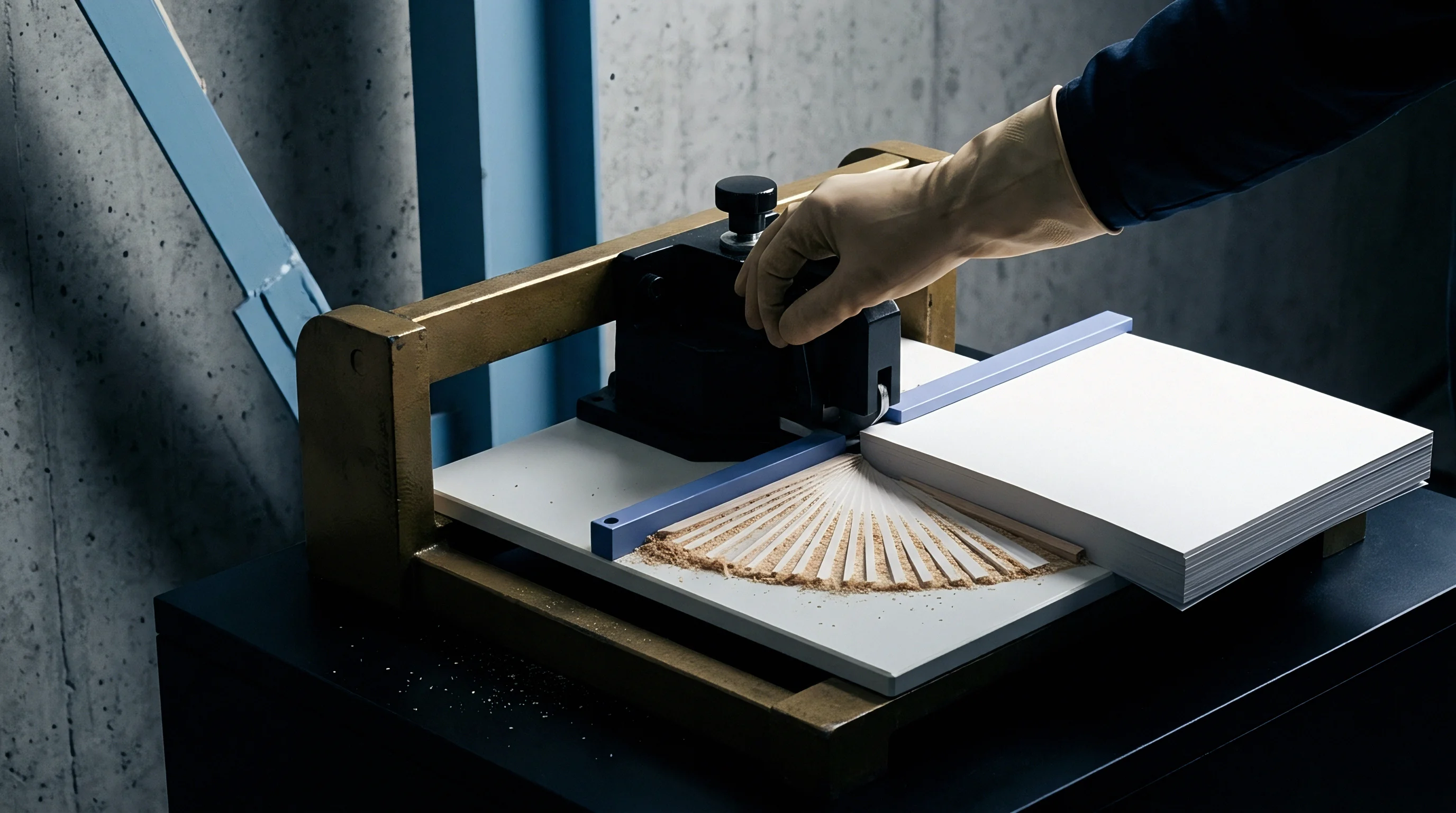
During the initial die bring-up, the operator pulls first-off test sheets to verify the crease bead profile. Optical measurement systems evaluate crease width, bead height, and internal ply separation against the numerical model. The crease folds cleanly.
If the numerical model specified a 0.71 by 1.45 millimeter creasing channel, but physical make-ready tape yields an effective penetration depth of only 0.20 millimeters instead of 0.28 millimeters, the board will fail to delaminate. The resulting blanks will display excessive folding torque and burst open during automated packing.
Optical cross-section analysis verifies internal ply delamination before full-speed die-cutting begins.
Tool wear shifts scoring parameters over long runs. Standard hardened steel scoring rules exhibit edge flattening after three hundred thousand impressions, increasing the contact radius from 0.35 to 0.48 millimeters. This increased radius distributes the compressive load over a wider contact area, lowering the localized shear stress beneath the threshold required for clean delamination.
Converting plants that fail to monitor scoring rule wear experience sudden spikes in folding resistance midway through a production job.
Specification contracts for high-speed folding cartons mandate that crease opening resistance must remain within plus or minus fifteen percent of the validated target value across the entire run, rendering unmonitored tooling wear a direct breach of supply agreements.