Quantifying Structural Flexural Modulus Loss in Recycled Paperboard Subjected to Dual-Axis Mechanical Decurling and Fluid Rehydration
Mechanical decurling and fluid rehydration permanently degrade recycled paperboard flexural modulus by shear micro-delamination and fiber plasticization.
Ply
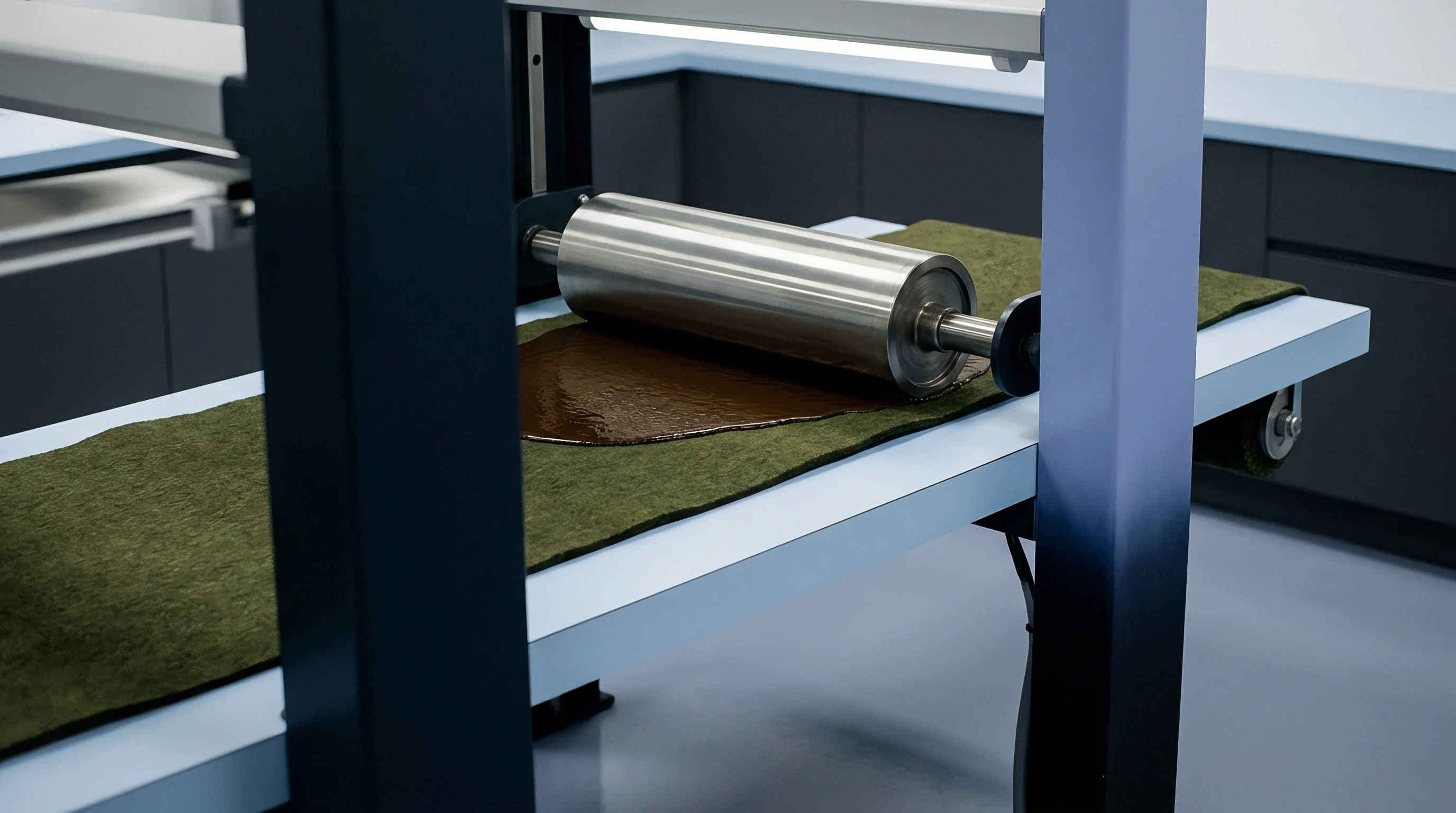
Coated recycled board, white lined chipboard, and similar recycled paperboard grades lock in significant internal tension from reel winding and the asymmetric moisture profiles created during offset printing or lamination. Mechanical decurling counters that curl by pulling the tensioned web across small-radius breaker bars or counter-bending rolls. Flattening the sheet this way makes automated feeding possible, but it compromises the underlying fiber network: bending multi-ply board over a tight pin concentrates shear stresses directly between internal plies.

Inter-Fiber Bond Failure across Multi-Layer Recycled Structures
Mechanical decurling stretches outer face plies while driving the inner core into severe z-direction compression. Shear stresses peak in the middle plies where secondary fibers predominate. Compared with virgin softwood kraft pulps, secondary fibers have thinner lumen walls, shorter fiber lengths, and poor conformability.
Under sharp reverse bending across two axes, hydrogen bonds between these re-pulped fibers break along the shear plane, fracturing the fibers under high curvature.
Rather than yielding uniformly, recycled board develops localized micro-delamination along weak interlaminar boundaries. Because composite beam stiffness relies on outer layer integrity and shear continuity through the core thickness, internal fractures disrupt stress transfer, letting individual plies slide past one another under flex. Effective flexural modulus drops sharply as a result, even when a micrometer gage shows no change in nominal thickness.
Relative humidity conditioning at fifty percent fails to rebuild inter-fiber hydrogen bonds once mechanical shear forces exceed the critical interlaminar shear strength of secondary fiber plies.
Bending Radius Thresholds and Structural Delamination
The loss of elastic modulus tracks breaker bar diameter and web wrap angle directly. Pulling a four-hundred-micrometer recycled sheet across a ten-millimeter decurling pin under web tension generates extreme shear strain along the mid-plane of the sheet, where excessive decurling permanently collapses fiber cell walls.
Dual-axis decurling ~ combining machine-direction and cross-direction counter-bends ~ multiplies these inter-ply fractures. Cross-direction counter-bending forces the breaker bar against fibers transverse to their alignment, cracking the starch and clay binder matrix applied during ply bonding. Once that matrix cracks, the board loses the structural continuity needed to maintain beam stiffness under compression.
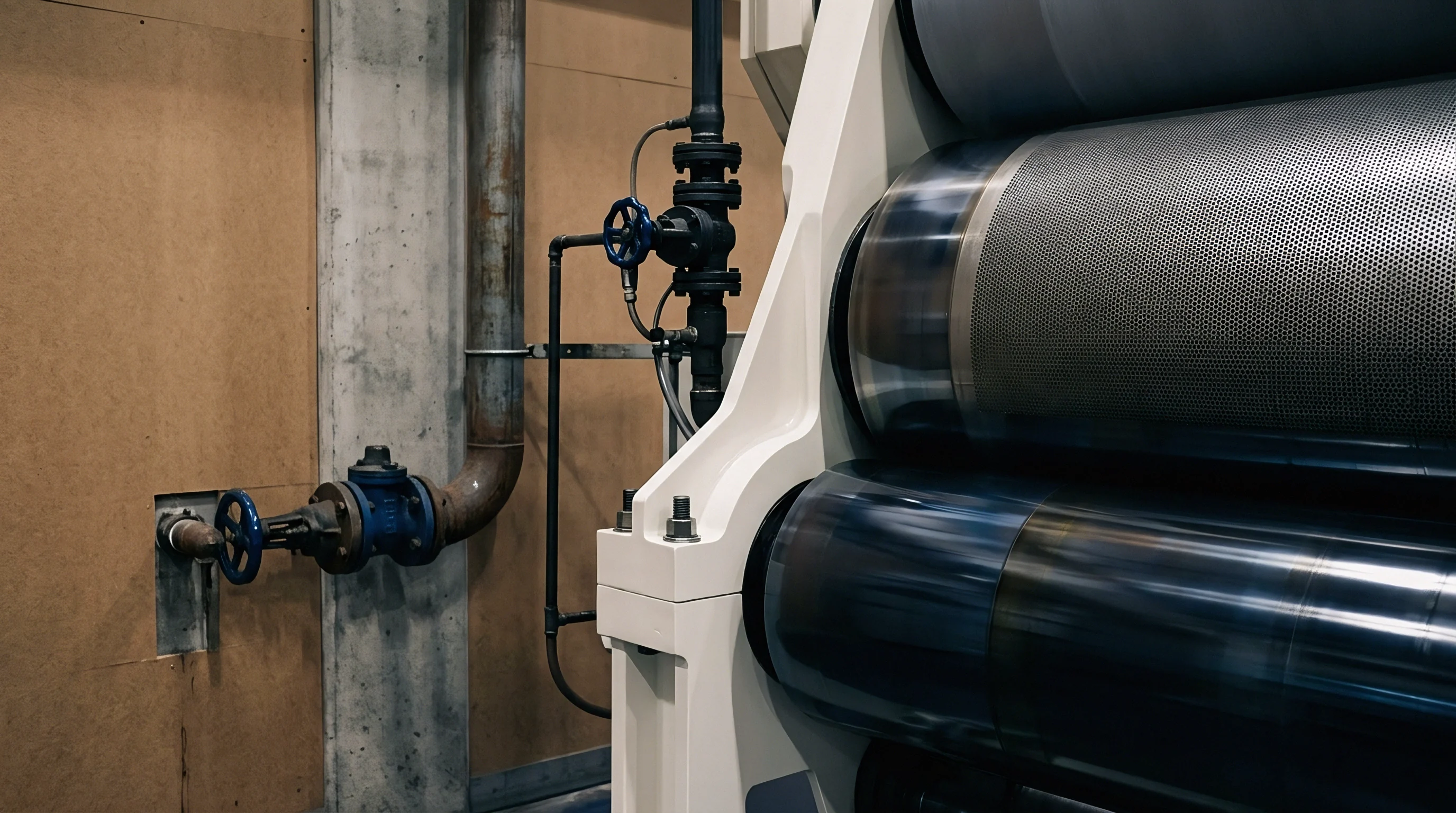
Running mechanical decurlers over tight radii without matching line speed leads directly to board failure on downstream automated packaging machinery.


Steam
Water application systems downstream of breaker rolls attempt to restore elastic balance by wetting the fiber network directly. Misting bars, steam showers, and fluidizing rollers apply moisture to dry, strained paperboard surfaces. While absorbing fluid relaxes locked-in drying strains, introducing water triggers a separate chemical degradation mechanism within recycled cellulose networks.

Hysteresis and Plasticization in Recycled Cellulose Matrixes
Cellulose molecules bind water through hydrogen bonding at free hydroxyl sites in amorphous cell wall zones. Because secondary fibers have gone through repeated wetting and drying cycles during previous uses, they undergo irreversible hornification. These hornified fibers carry fewer accessible hydroxyl sites and show a distinct absorption hysteresis loop compared to virgin pulp.
When fluid rehydrates a mechanically disrupted sheet, water molecules penetrate fiber cell walls and act as an internal plasticizer. The fiber walls swell in cross-section, weakening the hydrogen bonds that provide axial tensile stiffness. Softening the fiber network relaxes curl forces, but it permanently degrades the elastic modulus of individual fiber walls ~ and drying under ambient pressroom conditions will not reform the original crystalline hydrogen structures, as recycled fibers resist uniform re-swelling.
| Breaker Pin Radius (mm) | Fluid Regain Rate (%) | Initial Flexural Modulus (MPa) | Final Flexural Modulus (MPa) | Z-Direction Tensile Loss (%) |
|---|---|---|---|---|
| 15.0 | 0.8 | 3150 | 2980 | 4.2 |
| 10.0 | 1.2 | 3150 | 2810 | 9.6 |
| 6.0 | 1.8 | 3150 | 2420 | 18.5 |
| 4.0 | 2.5 | 3150 | 2050 | 29.1 |
Moisture Application Methods on High-Speed Sheet Converters
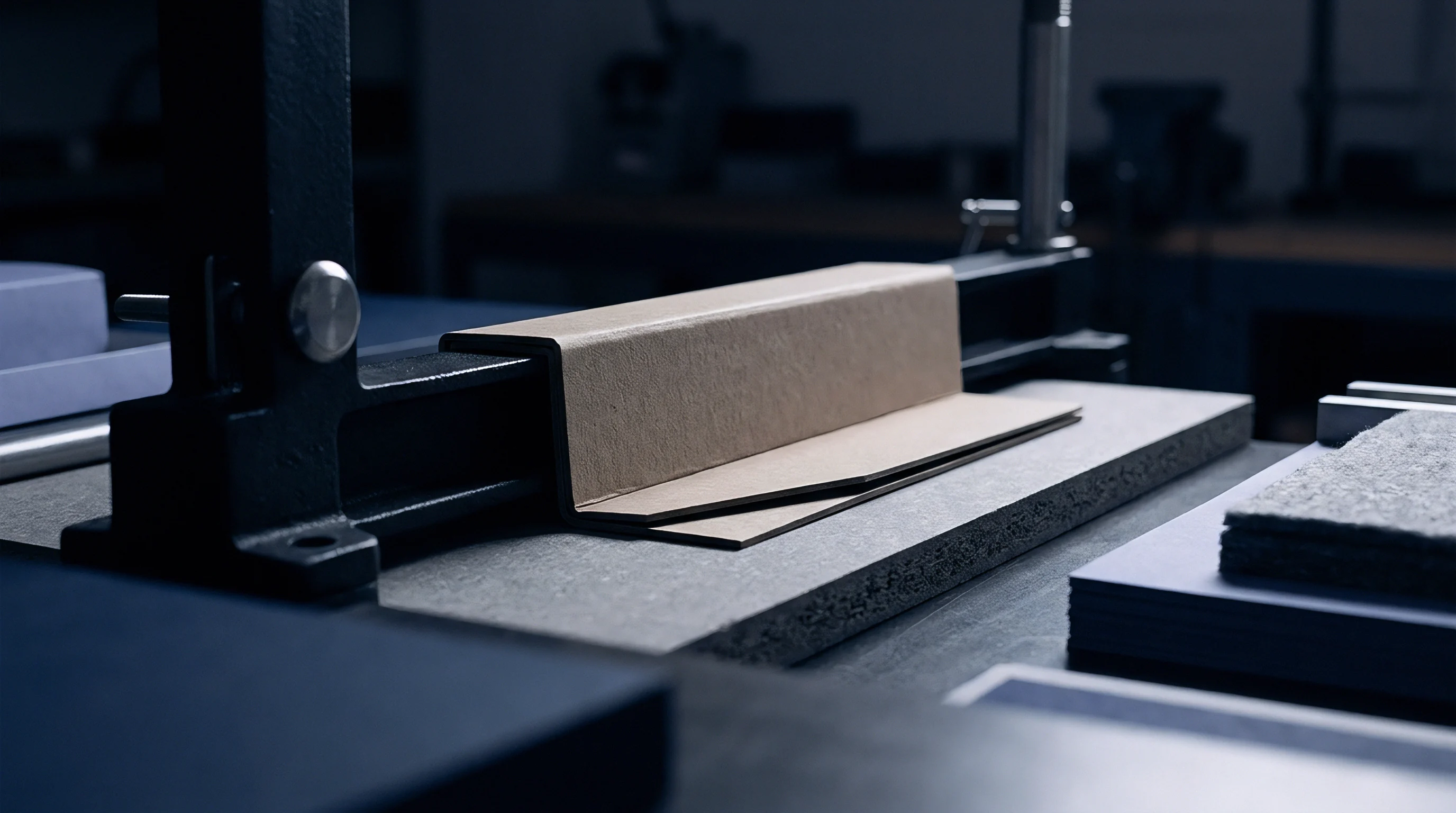
Distributing fluid evenly across web width becomes difficult over long production runs. Converting operations rely on specific fluid injection systems to manage curl without destroying board integrity:
- High-Pressure Steam Showers direct saturated vapor onto the uncoated liner side to instantly relax drying stresses without over-wetting outer clay coatings.
- Rotor Dampening Systems fling atomized water droplets onto the running web to re-establish moisture balance before sheet-shearing stations.
- Chilled Roll Condensers pass the paperboard web over cold cylinders inside humid enclosures to force controlled, uniform surface condensation.
- Surfactant-Augmented Spray Bars apply aqueous solution containing wetting agents to accelerate fluid penetration into hydrophobic recycled fibers.
Standard purchase specifications invoking ISO 287 moisture content fail to detect structural stiffness loss caused by fluid plasticization during decurling operations.
Post-print sheet distortion is often attributed to raw stock mill variability, though mechanical decurling and converting-line water spray settings contribute significantly to the problem.

Probe
Quantifying stiffness loss after mechanical decurling and rehydration requires precise testing methods. Paperboard stiffness is generally evaluated through bending resistance measured at a fixed angle or true flexural rigidity derived from beam equations. Standard laboratory protocols can easily mask internal structural damage when inappropriate bending angles or span lengths are used.

Comparing Bending Resistance Standards across Converting Facilities
Laboratories usually rely on Taber instruments operating under TAPPI T 489 or two-point bending units built to ISO 2493-1. Taber instruments apply force at a fixed distance to deflect the specimen fifteen degrees, whereas ISO 2493-1 testing frequently uses a five-degree deflection across a fifty-millimeter span.
On mechanically decurled board, five-degree deflection tests capture elastic response before major interlaminar shear failure occurs. Fifteen-degree tests push internal plies past yield, amplifying the effect of breaker-bar micro-delamination and showing a permanent drop in bending stiffness. Choosing a test method without considering this internal shear damage yields misleading performance data.
| Test Method | Standard Citation | Deflection Angle | Bending Span (mm) | Sensitivity to Interlaminar Shear Damage |
|---|---|---|---|---|
| Taber V-5 | TAPPI T 489 | 15° | 50.0 | High |
| L&W Bending Tester | ISO 2493-1 | 5° | 50.0 | Moderate |
| Kenley Bending Rig | BS 3748 | 15° | 50.0 | High |
| Four-Point Beam Rig | ISO 5628 | Variable (0.5 ~ 2°) | 100.0 | Very High (True Flexural Modulus) |
Does Fluid Rehydration Fully Restore Lost Elastic Modulus?
Applying water relaxes residual curl, but it cannot restore lost mechanical flexural rigidity. Four-point bending under ISO 5628 isolates pure bending moments from shear forces to measure true elastic modulus (Eb) across the sheet cross-section, showing how internal delamination impairs beam strength.
Testing procedures for verifying decurler damage require standardized conditioning steps to separate reversible moisture effects from permanent structural failure:
- Sample test sheets immediately after decurling and moisture application, sealing specimen strips in vapor-proof aluminum foil pouches.
- Condition specimens under standard ISO 187 atmospheric parameters of twenty-three degrees Celsius and fifty percent relative humidity for twenty-four hours.
- Measure caliper across ten points per strip using a dead-weight digital micrometer conforming to ISO 534 specifications.
- Perform four-point bending tests per ISO 5628 to calculate true flexural modulus Eb, separating pure bending resistance from shear distortion.
- Perform z-direction tensile strength testing per ISO 15754 to quantify interlaminar bonding degradation.
Two-point bending resistance readings taken at five degrees underestimate total structural degradation by masking core ply micro-delamination under low-strain elastic response.
According to Section 6.2 of ISO 2493-1, test reports must record both machine-direction and cross-direction bending force figures alongside exact specimen conditioning parameters to establish compliance under commercial conversion contracts.

Bulge
Structural failure in finished folding cartons manifests as panel bowing, creasing failure, or stack collapse when loaded in warehouse environments. Flexural rigidity (Sb) dictates how well a flat package panel resists bulging under internal product pressure or external stacking loads. Decurling operations that reduce flexural modulus directly undermine box compression test strength.
Quantifying Structural Deflection in Stacked Folding Cartons
Package engineers calculate structural panel deflection using thin-plate bending formulas. Plate flexural rigidity depends on Young’s modulus (E), material thickness (h), and Poisson’s ratio (ν):
D = fracE · h312 · (1 – ν2)
Caliper dominates section modulus. Because thickness enters the equation cubed, minor losses in core ply density or internal delamination severely compromise plate stiffness. A ten percent reduction in effective modulus (E) combined with a three percent drop in caliper from breaker bar compression results in an overall twenty-two percent drop in flexural rigidity.
Box Compression Test performance correlates directly with sheet flexural rigidity through McKee’s structural relationship:
BCT = 2.028 · ECT0.746 · (Sb,MD · Sb,CD)0.127 · Z0.496
Where ECT represents edge compression test strength, Sb,MD and Sb,CD represent flexural rigidity in machine and cross directions, and Z represents box perimeter. Because decurling lowers panel rigidity, it directly reduces BCT load limits and increases the risk of stack failure during pallet storage.

Worked Calculation of Flexural Rigidity Loss Impact on Load Bearing
To evaluate commercial impact, consider a conversion run of three-hundred-and-fifty gram per square meter coated recycled board running through a double-axis decurler followed by a steam spray bar. Assume baseline properties: caliper h = 0.450 mm, initial modulus E0 = 3400 MPa, Poisson’s ratio ν = 0.3. Initial flexural rigidity per unit width calculates as:
D0 = frac3400 · 106 · (0.450 · 10-3)312 · (1 – 0.32) = 0.02837 N·m
After aggressive decurling over six-millimeter pins and two percent water addition, mechanical damage and plasticization reduce effective modulus to E1 = 2650 MPa. Breaker roll nip pressure permanently compresses caliper to h1 = 0.438 mm. The post-decurling flexural rigidity calculates as:
D1 = frac2650 · 106 · (0.438 · 10-3)312 · (1 – 0.32) = 0.02038 N·m
The dual-axis decurling pass induces a twenty-eight percent reduction in flexural rigidity (D1 / D0 = 0.718). Applying McKee’s formula while holding ECT and perimeter constant, overall box compression capacity drops by approximately four point two percent.
| Modulus Loss (%) | Caliper Compression (mm) | Retained Flexural Rigidity (%) | Calculated BCT Reduction (%) | Max Panel Bulge under 50 N Load (mm) |
|---|---|---|---|---|
| 0.0 | 0.450 | 100.0 | 0.0 | 1.20 |
| 8.0 | 0.446 | 89.5 | 1.4 | 1.34 |
| 15.0 | 0.442 | 80.5 | 2.7 | 1.49 |
| 22.0 | 0.438 | 71.8 | 4.2 | 1.67 |
| 30.0 | 0.432 | 61.8 | 6.0 | 1.94 |
Panel deflection under internal load grows non-linearly as flexural rigidity degrades, with heavier board weights suffering greater losses. As a result, box compression strength drops rapidly, leaving tall stacks vulnerable to collapse in storage.
- Incoming Board Profiling must quantify baseline z-direction shear strength prior to setting breaker roll nip parameters.
- Decurler Pin Selection requires maintaining breaker radii above twice the total sheet caliper to prevent mid-plane delamination.
- Moisture Application Control should target total web water addition below one point zero percent by weight to minimize cell wall plasticization.
- Finished Carton Auditing mandates verifying BCT capacity against un-decurled control sheets during pre-production make-ready runs.
Mechanical decurling loss exceeding twenty percent of baseline flexural rigidity causes non-linear panel displacement when folding cartons experience top-load stacking forces in humid warehouse environments.
Whether non-destructive acoustic impulse testing can reliably replace destructive four-point bending tests for real-time online decurling adjustment remains an active question for high-speed carton lines.

Clause
Procuring recycled paperboard for high-speed packaging requires tight contract terms governing mechanical decurling and moisture conditioning damage. Converting orders and purchase contracts routinely specify nominal weight and static caliper while ignoring dynamic structural performance. When uncompensated losses in flexural modulus cause filled cartons to fail in distribution, financial exposure falls entirely on the buyer.

Drafting Tolerances for Mechanical Breaker Bar Adjustments
Procurement contracts need clear limits on flexural modulus retention after converting. Purchasing specifications should set minimum bending resistance thresholds measured under ISO 2493-1 following twenty-four hours of standard atmospheric reconditioning. Setting explicit allowable loss limits forces converters to monitor breaker bar radii, web tension, and dampening parameters with panel stiffness in mind.
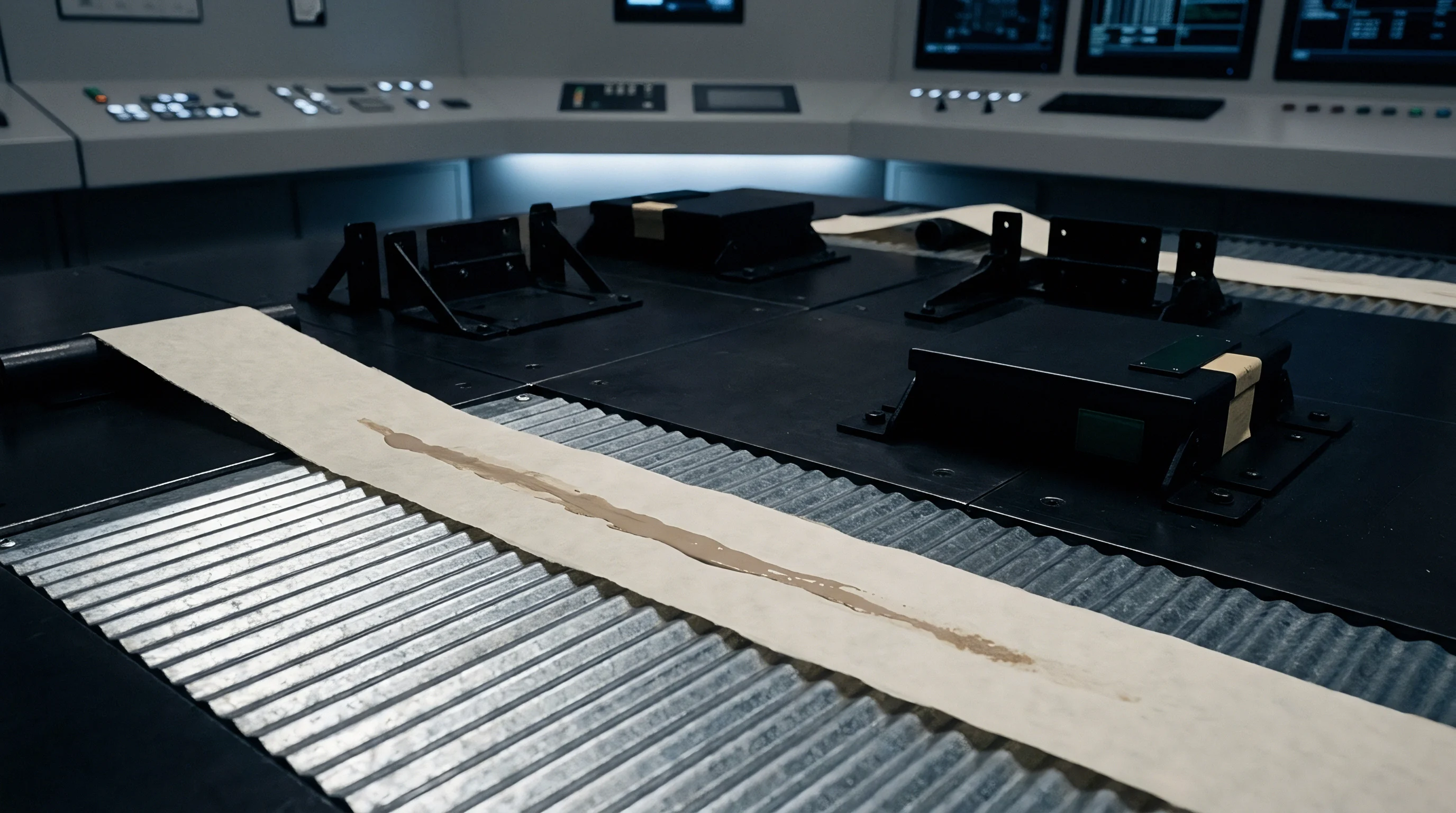
If breaker bar settings cause interlaminar shear failure, paper mills routinely disclaim warranty liability. Mill test certificates verify properties at delivery, but subsequent mechanical converting alters the fiber network’s internal structure. Supply contracts must clearly state whether post-decurling flexural modulus retention remains a mill guarantee or becomes the converter’s make-ready responsibility.
Commercial Consequences of Uncompensated Modulus Decay
Accepting paperboard that has lost significant flexural modulus during decurling creates real commercial costs. A six percent drop in BCT capacity can force operations to reduce warehouse pallet stacks by a full tier to preserve safety margins, driving up freight costs and cold-storage space requirements per unit.
Scrapping damaged board before cartoning carries clear material costs, but feeding compromised cartons into automated filling lines causes far heavier operational losses. Jams on lines running at four hundred packs per minute lead to downtime, lost product, and manual cleanup fees that moisture recovery can never undo. Specifying tight flexural modulus tolerances in raw stock contracts prevents converters from over-manipulating recycled board webs.
Excessive web breaker tension always costs more in lost package compression strength than it gains in press sheet feeding speed.