Quantifying Hydroplasticization Thresholds to Prevent Crease Microcrack Formation in Polyolefin Dispersions
Maintain polyolefin coating moisture between 0.8 and 2.0 percent to prevent brittle crease microcracking without exceeding blocking temperature thresholds.

Nip
Crease lines on folding carton board coated with aqueous polyolefin dispersion barriers experience severe local deformation during scoring and 180-degree folding. Converting lines running at 300 metres per minute exert high strain rates on the outer coated face of the fold. If the polymer film lacks sufficient elongation at the running line speed, tensile failure splits the continuous barrier into a network of microcracks.
Pinholes along the crease bead destroy water vapour barrier resistance and grease holdout. Substrate caliper and internal fibre bonding directly dictate the strain concentrated in the dispersion layer.
Mechanical Strain Distribution across Scored Board
Scoring female channels indent the back of the paperboard while the male rule pushes the central plies into delamination. Controlled internal shear failure relieves tensile tension along the outer liner. On a 450-micrometre folding boxboard, scoring geometry demands a female matrix width of 1.4 to 1.6 times the board caliper plus the rule thickness.
When the crease rule descends, the outer coated liner stretches over the crown of the score.
Polyolefin dispersion coatings typically apply at dry coat weights between 6 and 14 grams per square metre. Film thickness ranges between 6 and 15 micrometres. At these dimensions, the polymer cannot act as a free-standing structural membrane; it conforms to individual surface fibres.
Local stress concentrations peak where the dispersion bridges rough base-sheet topography. A base paper with a Parker Print-Surf roughness exceeding 3.5 micrometres at 1000 kilopascals induces uneven coating thickness.
A female score width below 1.3 times the board caliper plus rule thickness increases outer-ply tensile rupture by forty percent under standard rotary die conditions.
Thin regions over elevated fibre bundles rupture first under bending strain. Inadequate female channel depth prevents proper ply separation in the middle furnish. The outer liner then absorbs excessive tensile stress.
Microcracks emerge across the fold apex, extending deep into the dispersion matrix.
Substrate moisture content at the scoring station governs ply delamination ease. Board conditioned below 6 percent absolute moisture resists clean ply splitting. Stiffness stays elevated in dry plies.
High scoring force shears the outer liner rather than delaminating the internal plies. Pinholes develop instantly along the external hinge line. Subsequent box erection and glue-flap folding expose these fractured zones to immediate barrier failure.
Sorption
Aqueous polyolefin dispersions rely on functionalized polymers, primarily ethylene acrylic acid copolymers or ethylene methacrylic acid neutralized with volatile bases like ammonia or fixed alkali metal hydroxides. Hydrophilic carboxylic acid groups remain distributed throughout the coalesced polymer film. Atmospheric water vapor interacts directly with these polar moieties.
Moisture sorption depresses the effective glass transition temperature of the polymer matrix through molecular hydroplasticization.
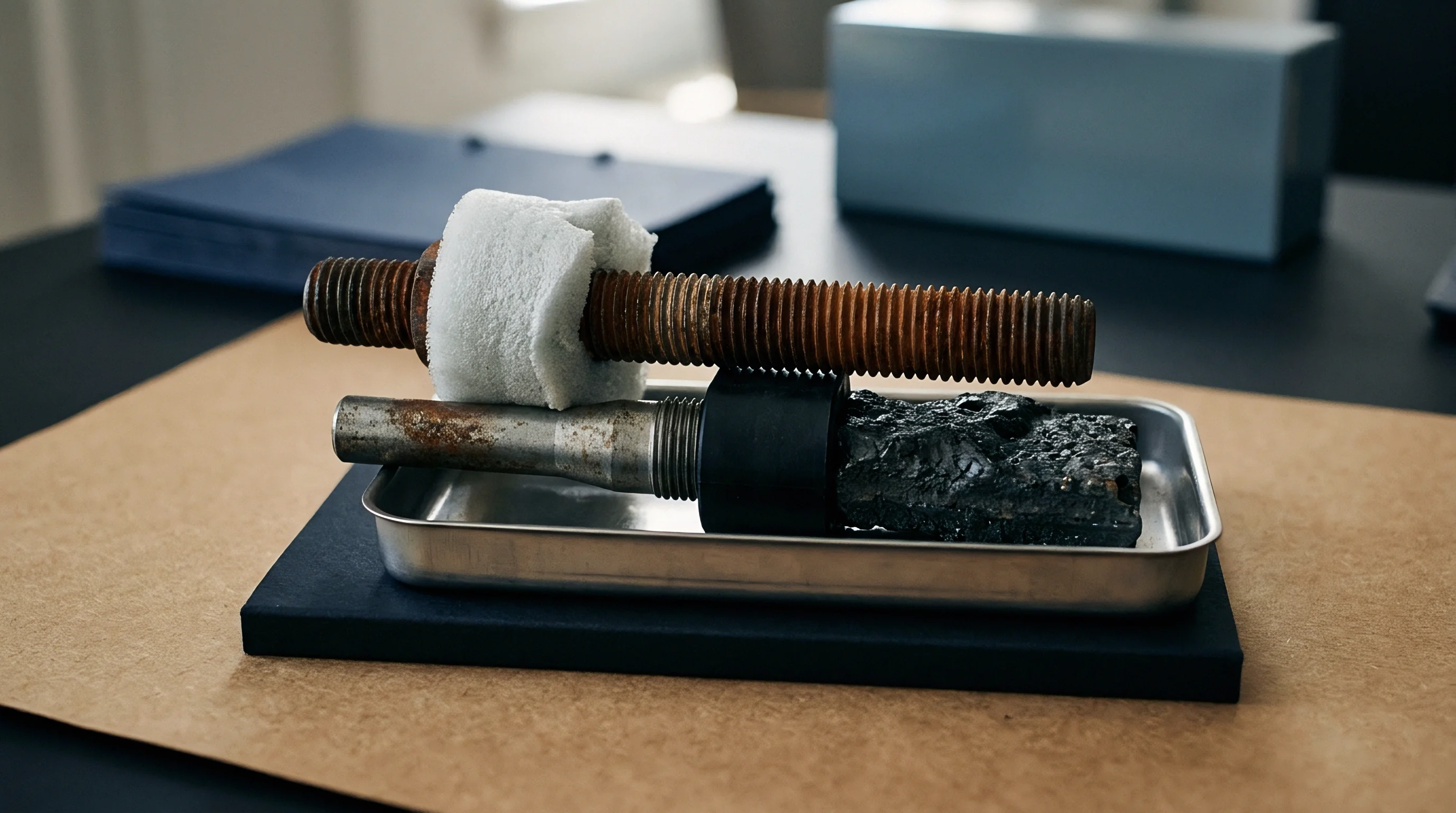
Where Do Surfactant Clusters Accelerate Localized Plasticization?
Emulsifying surfactants and neutralized carboxyl groups gather in interstitial domains between coalesced polyolefin particles. These hydrophilic clusters act as conduits for atmospheric water vapor ingress. Water molecules diffuse into these polar pockets and disrupt inter-chain hydrogen bonds between acrylic acid segments.
Polymer chain mobility increases rapidly as local moisture content rises.
Equilibrium moisture content of the polyolefin film correlates directly with relative humidity and temperature. At 23 degrees Celsius and 50 percent relative humidity, ethylene acrylic acid films with 15 weight percent acrylic acid content absorb approximately 0.8 percent moisture by dry weight. Raising ambient relative humidity to 85 percent increases water sorption past 2.4 weight percent.
This sorbed water shifts the secondary relaxations of the polyolefin backbone toward lower temperatures.
| Copolymer Base Chemistry | Acid Content Weight Percent | Relative Humidity Percent | Water Uptake Weight Percent | Glass Transition Dry Degrees C | Glass Transition Conditioned C |
|---|---|---|---|---|---|
| Ethylene Acrylic Acid (Ammonia Neutralized) | 15 | 50 | 0.82 | 28 | 14 |
| Ethylene Acrylic Acid (Ammonia Neutralized) | 15 | 85 | 2.45 | 28 | -2 |
| Ethylene Acrylic Acid (Sodium Neutralized) | 20 | 50 | 1.35 | 35 | 11 |
| Ethylene Acrylic Acid (Sodium Neutralized) | 20 | 85 | 4.10 | 35 | -12 |
| Ethylene Methacrylic Acid (Potassium Neutralized) | 12 | 50 | 0.65 | 22 | 16 |
| Ethylene Methacrylic Acid (Potassium Neutralized) | 12 | 85 | 1.90 | 22 | 4 |
| High-Density Polyethylene Dispersion Blend | 8 | 85 | 0.45 | -110 | -112 |
Hydroplasticization exerts opposing effects on film performance across converting stages. Increased chain mobility improves elongation at break. The softened coating deforms without brittle fracture during high-speed scoring.
Excessive water absorption lowers tensile strength and increases tackiness. Soft films track onto converting rollers and induce severe blocking in wound reels.
Sorption kinetics depend heavily on neutralization counter-ions. Fixed alkali ions such as sodium and potassium remain permanently bound inside the dry coating. They retain hygroscopic behavior throughout the pack lifecycle.
Volatile ammonium counter-ions evaporate during hot-air drying on the coater, regenerating free carboxylic acid groups with lower water affinity. Unresolved uncertainty persists regarding whether nano-phase phase separation between neutral polyethylene crystals and polar carboxyl zones creates hidden micro-capillary pathways that compromise long-term mineral oil barrier performance under tropical storage.

Thresholds
Establishing the operating window requires precise measurement of coating elongation against board bending strain. Barrier integrity survives creasing when film strain-to-break exceeds the local elongation imposed by the scoring rule. Tensile properties of free dispersion films measured according to ISO 527-3 demonstrate a steep transition zone determined by ambient moisture and temperature.
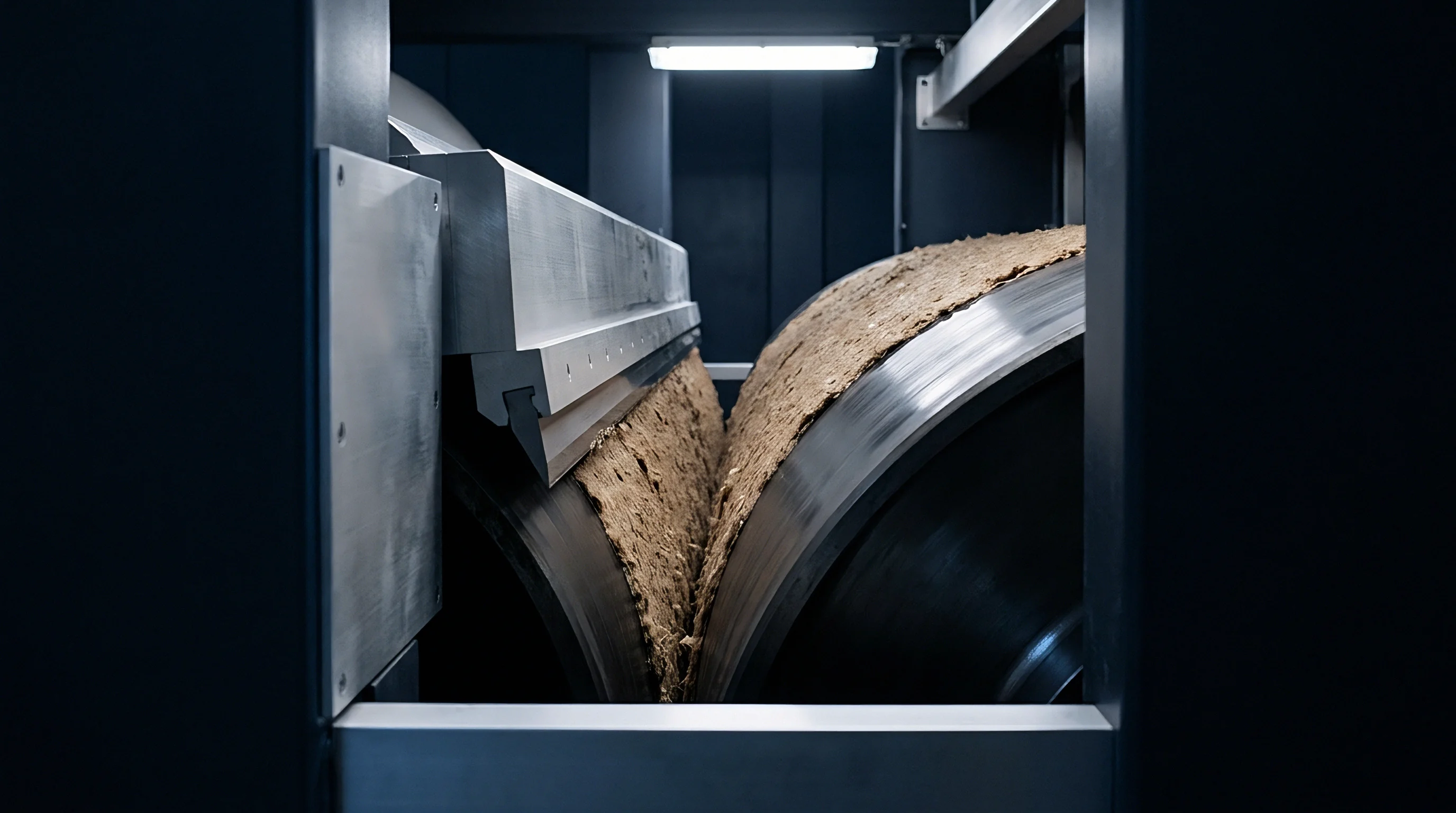
When Will High Relative Humidity Induce Barrier Failure?
Elevated moisture plasticizes the polyolefin, yet excess moisture in the underlying cellulose base alters the scoring mechanics. Testing barrier retention across creases relies on Cobb sizing according to ISO 535 and turpentine oil pinhole penetration via TAPPI T 454. Creased specimens folded 180 degrees under a standard 10-kilogram roller reveal microcrack thresholds when water absorptiveness increases by more than 2.0 grams per square metre over uncreased values.
The critical elongation threshold for unpigmented polyolefin dispersions sits at 120 percent strain at converting strain rates. High line speeds of 400 metres per minute elevate the effective strain rate at the crease bead above 50 reciprocal seconds. High strain rates shift the ductile-to-brittle transition upward.
A coating running successfully at 20 degrees Celsius on a slow pilot folder fractures on a commercial folder-gluer running at production velocity.
A water uptake increase exceeding two grams per square metre along the crease line indicates microcrack formation under ISO 535 testing.
Operating boundaries balance coating elongation against blocking risk across distinct environmental zones:
- Brittle Fracture Boundary occurs below 35 percent relative humidity and 15 degrees Celsius where polymer elongation drops beneath 60 percent.
- Optimum Converting Window spans 45 to 60 percent relative humidity at 20 to 25 degrees Celsius, delivering 140 to 220 percent elongation without surface tack.
- Blocking Onset Boundary appears above 70 percent relative humidity or temperatures exceeding 38 degrees Celsius, causing coating transfer under a stack pressure of 50 kilopascals.
- Surfactant Leaching Zone develops when liquid water contacts coatings containing unreacted surfactants, raising water absorption above 15 grams per square metre.
DIN 55437-1 defines testing protocols for scoring quality and fold crack verification on coated carton board. Under standard commercial contracts, delivery specifications enforce that barrier properties along 180-degree creases must remain within fifteen percent of flat-sheet values following conditioning at 23 degrees Celsius and 50 percent relative humidity, invalidating lot acceptance if creased water vapour transmission rates exceed the baseline limit.
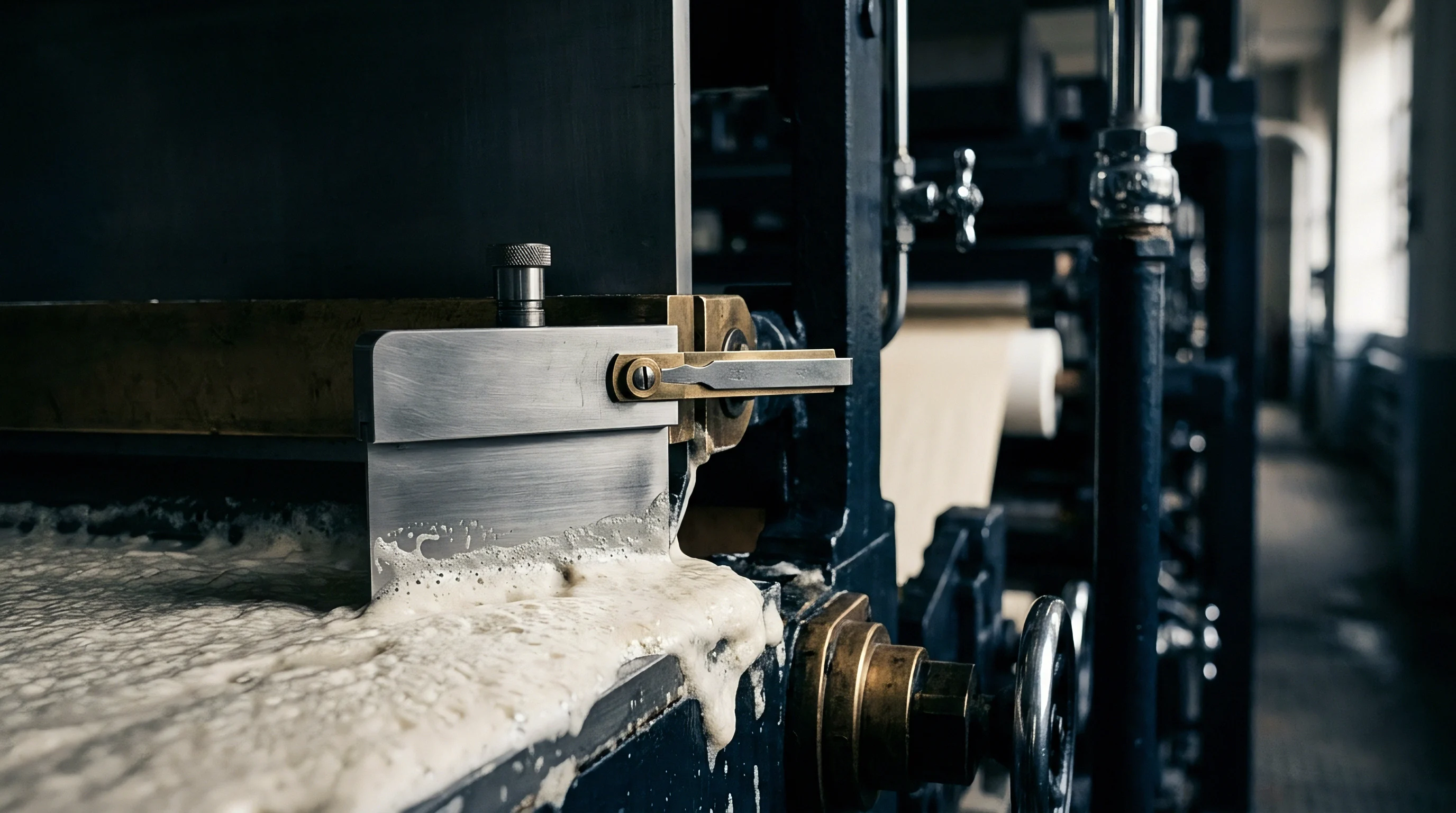
Formulation
Polyolefin dispersion performance depends on copolymer architecture, particle size distribution, neutralization chemistry, and formulation additives. Commercial aqueous barrier coatings combine low-crystallinity copolymers for flexibility with high-density components for water vapour resistance. Balancing these constituents governs the hydroplasticization response of the dried barrier film.
Crosslinking and Pigment Blending Strategies
Zinc ammonium carbonate and zirconium salts introduce ionic or covalent crosslinks between pendant carboxyl groups. Crosslinking suppresses moisture uptake in humid environments while preserving elevated tensile strength. Excessive crosslink density restricts chain movement, reducing elongation below the critical threshold for folding.
Platelet pigments like high-aspect-ratio talc or kaolin clay create tortuous diffusion paths for moisture and oil. Pigment volume concentration must remain below the critical pigment volume concentration, typically between 15 and 25 percent by volume. High pigment loading stiffens the film, increasing elastic modulus and triggering early microcrack formation during creasing.
| Formulation Composition | Talc Filler Weight Percent | Zinc Crosslinker Parts Per Hundred | Uncreased WVTR g per m2 day | Creased WVTR g per m2 day | Pinhole Count Per Metre Crease |
|---|---|---|---|---|---|
| Pure EAA Dispersion (15 Percent Acid) | 0 | 0.0 | 18.5 | 21.0 | 0 |
| EAA with High-Aspect Talc | 15 | 0.0 | 6.2 | 8.4 | 1 |
| EAA with High-Aspect Talc | 30 | 0.0 | 4.1 | 38.6 | 18 |
| EAA Blend with HDPE Dispersion | 10 | 0.5 | 3.8 | 5.2 | 0 |
| EAA Blend with HDPE Dispersion | 10 | 2.0 | 3.5 | 29.4 | 12 |
| EAA with Synthetic Wax Emulsion | 5 | 0.0 | 8.0 | 9.1 | 0 |
Particle size distribution controls packing density during film consolidation. Bimodal dispersions containing sub-micron particles mixed with 2-to-4-micrometre particles consolidate with minimal void volume. Efficient particle coalescing reduces the required dry coat weight.
Lower coat weight decreases drying energy demands on the coating line.
Converters frequently hear from chemical suppliers that microcracking stems entirely from improper die-cutting rule selection rather than dispersion glass transition drift during seasonal humidity swings.

Economics
Substrate selection and dispersion coat weight directly govern carton economics and repulpability compliance. Dispersion-coated board competes against traditional poly-extruded carton stock. While polyolefin dispersions carry higher wet-chemical costs per dry kilogram, their total economics depend on parent-sheet yield, machine running efficiency, and scrap minimization at the folder-gluer.
Landed Cost Mechanics and Waste Yield Optimization
A typical extrusion-coated solid bleached sulfate board carries 15 to 18 grams per square metre of low-density polyethylene. Aqueous polyolefin dispersions achieve equivalent water vapour barrier at dry coat weights of 8 to 11 grams per square metre. Lower coat weights reduce total basis weight, increasing finished carton yield per metric tonne of board.
Yield calculations illustrate the financial balance across large converting volumes. Consider a 100-tonne packaging production run on 300-gram-per-square-metre folding boxboard:
- Baseline Extrusion Coating applies 18 grams per square metre of polyethylene, yielding 3,144 square metres per metric tonne with raw polymer costing 1.65 euros per kilogram.
- Aqueous Dispersion Alternative applies 9 grams per square metre dry coating, yielding 3,236 square metres per metric tonne with formulated dispersion costing 3.40 euros per dry kilogram.
- Converting Line Spoilage on scored blanks averages 4.5 percent on poorly plasticized dispersion coatings during dry winter conditions, compared to 1.2 percent on standard extrusion grades.
- Repulpability Processing Fees under European CEPI recyclability protocols add 45 euros per tonne for polyethylene laminates, whereas certified dispersion coatings pass standard mill hydrapulpers without surcharge.
Scrap generation from microcrack defects multiplies total unit cost. A carton batch failing crease barrier inspection at goods-in cannot be reworked. Rejection of finished folded cartons destroys value already added through printing, die-cutting, and window patching.
Paperboard conditioned within the target moisture range folds cleanly without coating rupture across every converting shift.
Proper base board sizing and smoothness reduce required dispersion pick-up. Applying a 1.5-gram-per-square-metre mineral pre-coat seals sheet porosity, preventing excessive binder loss into the furnish. The polyolefin topcoat remains on the surface where it forms an unbroken, flexible film.
Consistent relative humidity in the converting plant protects board moisture. Cold stock brought directly from unheated transit warehouses into warm press halls causes immediate edge condensation and web distortion. Temperature equilibration inside original moisture-barrier wrapping preserves score performance.