Standardised Evaluation
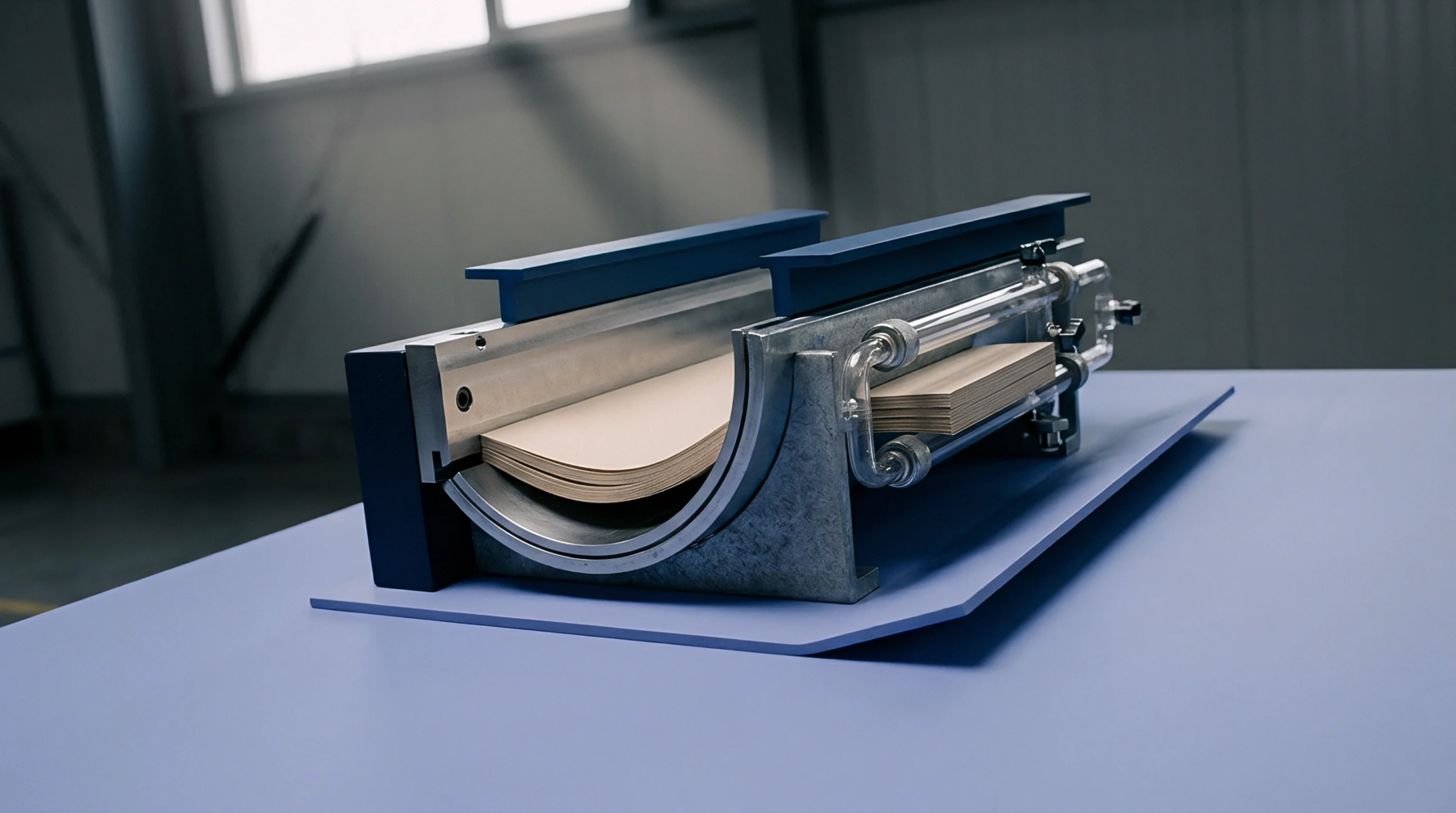
Technical testing protocols for the creasing properties of paperboard and corrugated material follow the specifications defined by the German Institute for Standardisation. The din 55437-1 document provides the method for creating test creases under laboratory conditions to ensure reproducibility between the mill and the converter. It defines the geometry of the groove and the rule to simulate the action of a flatbed die cutter.
Tooling Specification
Matching the groove width to the thickness of the board remains the central requirement of the procedure. The din 55437-1 standard lists the exact dimensions for the female matrix and the male creasing rule for different board weights. It specifies that the width of the groove must be approximately the board thickness multiplied by a factor plus the width of the rule itself.
Quality Metric
Achieving a consistent fold without rupturing the surface fibres is the goal of following this measurement standard. Samples prepared according to din 55437-1 undergo further testing to measure the moment of resistance during a ninety degree bend. This data allows a packaging designer to predict how well a carton will run on a high speed filling line where robotic arms must open the blanks without hesitation.
Consistent creasing performance reduces the risk of machine jams and damaged goods during the distribution cycle.