Boundary Layer Condensation Dynamics in Enclosed Corrugated Board Cargo Units
Boundary layer condensation degrades corrugated board compression strength through localized dewpoint phase transitions manageable via virgin liners and desiccants.

Vault
Enclosed sea containers and dry van highway trailers develop thermal microclimates driven by radiative heat exchange with the outside environment. Steel container walls respond quickly to ambient temperature shifts during oceanic or intermodal transport. Solar radiation heats internal air during daylight hours, expanding the air mass and evaporating moisture from hygroscopic cargo.
Nighttime cooling reverses this energy flux, drawing heat back out through corrugated steel bulkheads. This thermal exchange creates distinct fluid boundary layers along interior container surfaces, where air movement slows from viscous shear stresses against the steel walls.
Boundary layer dynamic behavior depends on the Rayleigh number, which governs the transition between laminar and turbulent natural convection along vertical enclosure walls. Gravitational forces acting on density variations within the thermal boundary layer drive natural convective currents. Cold steel surfaces cool the adjacent air film, increasing local density and causing air to slide downward along the walls.
This localized cooling drops the saturation vapor pressure of the air within millimeters of the structural envelope. Moisture in the core cargo mass then migrates toward cold surfaces along partial vapor pressure gradients, condensing into liquid water whenever boundary layer temperatures drop below the local dewpoint.
Enclosed Container Boundary Layer Microclimates
Thermal gradients within closed shipping units exist at different scales. The macro-scale encompasses the full cubic volume of a standard forty-foot intermodal container measuring 12.19 meters in length by 2.43 meters in width and 2.59 meters in height. Micro-scale dynamics occur within millimeter-thick velocity and thermal boundary layers formed along interior corrugated ribs.
Temperature differentials between core cargo stacks and boundary air films reach up to 18 degrees Celsius during thermal transition events. Cooling along upper container roof panels frequently outpaces side wall heat loss overnight due to clear-sky longwave radiative cooling.
Static air zones within stacked pallet void spaces restrict forced convective mixing. Conduction through corrugated paperboard packaging occurs far slower than convective cooling along metallic enclosure walls. Corrugated board shows thermal conductivity values between 0.05 and 0.08 Watts per meter-Kelvin depending on fluting density and paperboard grammage.
Thermal resistance across the packaging array insulates inner cargo while boundary layers go through rapid cooling cycles. Air film velocity in free convective boundary layers along vertical container panels ranges between 0.15 and 0.45 meters per second under stagnant external conditions. Low air velocities reduce the convective heat transfer coefficient, steepening local thermal gradients between bulk cargo and exterior walls.
Saturation vapor pressure drops from 3.78 kilopascals at 28 degrees Celsius to 1.60 kilopascals at 14 degrees Celsius, forcing localized water accumulation along the structural container wall.
Free Convective Mass Transfer along Cold Exterior Walls
Convective mass transfer in enclosed spaces follows the buoyancy-driven transport of sensible and latent heat. Air density variations from local cooling generate vertical boundary layer shear flows. Prandtl numbers for air within marine shipping environments hover near 0.71, showing that momentum diffusion rates exceed thermal diffusion rates across the air gap boundary.
Grashof number calculations for full-height container walls confirm turbulent flow regimes near the upper structural corner seams when temperature differentials exceed 5 degrees Celsius.
Local Nusselt numbers describe the ratio of convective to conductive heat transfer across boundary interfaces. Boundary layer thickness grows in proportion to distance down the vertical profile from the ceiling. Thermal resistance within boundary layers concentrates near ceiling corner joints, where air turns from horizontal ceiling flow into vertical wall flow.
Water vapor transport toward cold steel walls remains proportional to the vapor concentration gradient between core cargo matrix air and the saturated boundary layer film.
Thermal Differential Driven Saturation Dynamics
Phase change dynamics within boundary layers depend on atmospheric water vapor pressure differentials rather than dry-bulb temperature alone. Saturated vapor pressure follows non-linear relationships dictated by the Clausius-Clapeyron relation. A localized temperature drop of 10 degrees Celsius cuts the moisture-holding capacity of boundary layer air roughly in half.
Relative humidity in the boundary layer film reaches 100 percent well before the bulk air in central cargo pallets shows any rise in humidity readings.
Convective boundary layers act as moisture pumps inside closed freight units. Warm air ascending through core cargo pathways absorbs evaporated water from paperboard containers and wood pallets. Rising air drifts toward cold ceiling surfaces, where thermal energy dissipates into the outside atmosphere.
Cold air descends along side walls, carrying moisture toward lower container zones. This continuous convective loop extracts water from interior packaging and deposits a concentrated liquid film along exterior boundaries.
The exact threshold where turbulent boundary eddies transition back into laminar static layers near bottom corner castings under variable maritime rolling motion still requires further fluid dynamic modeling under operational sea states.

Dew
Dewpoint crossing within boundary air layers marks the onset of liquid phase condensation on container interior surfaces and adjacent packaging. Absolute humidity defines the physical mass of water vapor per unit volume of dry air, measured in grams per cubic meter. When localized wall cooling drops boundary layer air temperature to the dewpoint matching bulk air absolute humidity, water phase transition occurs.
Liquid water initially forms microscopic droplets via heterogeneous nucleation on interior metallic surfaces or adjacent cellulosic packaging faces.
Surface wetting behavior follows liquid-solid contact angle physics governed by Young-Dupré equations. Cold steel container interiors coated with oxidized industrial paint systems present variable surface energies, promoting filmwise condensation or discrete droplet formation. Condensation droplets coalesce into larger liquid masses under surface tension gradients and gravitational forces.
Runoff occurs when gravitational forces on a droplet overcome surface adhesion, sending liquid water down container side walls or causing overhead drippage directly onto top-tier corrugated shipping units.

Phase Change Dynamics at Packaging Film Interfaces
Corrugated board outer liners positioned adjacent to cold container walls experience direct exposure to high relative humidity microclimates. Boundary layer relative humidity continuously exceeds 90 percent during thermal transit cycles. Vapor pressure gradients push water molecules into the porous fiber matrix of kraft and recycled paperboard liners via capillary action and vapor phase diffusion.
Cellulose microfibrils contain abundant hydroxyl groups that form hydrogen bonds with absorbed water molecules, initiating hygroscopic expansion and fiber wall softening.
Moisture transfer through protective stretch wrapping or plastic film wraps presents secondary condensation mechanics. Imperfect film wrapping creates micro-void spaces between plastic barriers and corrugated box faces. Water vapor penetrating outer film wraps becomes trapped within stagnant air gaps.
Boundary layer dynamics inside these micro-voids induce condensation directly onto outer paperboard facings. Trapped liquid water cannot evaporate efficiently, accelerating local absorption into the paperboard structure.

Vapor Pressure Differentials across Stacked Cargo Unit Boundaries
Water vapor flux between packaging layers operates under partial vapor pressure driving forces. Atmospheric air at 30 degrees Celsius and 80 percent relative humidity exerts a partial vapor pressure of 3.39 kilopascals. Air within a cold boundary layer at 15 degrees Celsius and 95 percent relative humidity exerts a partial vapor pressure of 1.62 kilopascals.
This pressure differential of 1.77 kilopascals drives continuous vapor transport from interior cargo stacks outward toward enclosure boundaries.
Diffusion rates through corrugated structures depend on sheet tortuosity, density, and open porosity metrics. Uncoated recycled medium grades exhibit higher vapor transport coefficients than dense, highly refined virgin kraftliner sheets. As moisture diffuses outward, fiber saturation points are reached sequentially from the outermost box wall toward internal packaging components.
Localized saturation degrades structural integrity long before full pallet equilibrium is achieved.
Condensation Droplet Coalescence and Surface Wetting Mechanisms
Droplet coalescence patterns along container roof panels control the spatial distribution of overhead drippage, often designated as container rain. Surface condensation grows through vapor deposition until adjacent droplets touch. Micro-droplets measuring under 50 micrometers merge rapidly to minimize total surface free energy.
Larger droplets remain suspended by surface tension until critical mass is reached, typically at diameters between 3.5 and 5.0 millimeters on painted metal surfaces.
Vibrations caused by vehicle motion or vessel engine harmonics reduce the critical mass required for droplet detachment. Dynamic agitation triggers liquid discharge from overhead structures well before static surface tension forces give way. Falling liquid droplets impact top-tier corrugated boxes, causing concentrated liquid absorption spots.
Liquid water spreads radially through top linerboard surfaces, initiating mechanical strength loss along box top flaps and load-bearing vertical scores.
Under-performing container desiccant formulations are often attributed to sudden ambient thermal drops, which are framed as unpreventable weather events outside normal transit specifications.
| Bulk Air Temperature (°C) | Bulk Relative Humidity (%) | Absolute Humidity (g/m³) | Dewpoint Temperature (°C) | Boundary Wall Temp (°C) | Boundary Layer RH (%) | Condensation Status |
|---|---|---|---|---|---|---|
| 35.0 | 75.0 | 29.7 | 30.1 | 28.0 | 100.0 | Active Condensation |
| 30.0 | 80.0 | 24.3 | 26.2 | 24.0 | 100.0 | Active Condensation |
| 25.0 | 85.0 | 19.6 | 22.3 | 21.0 | 100.0 | Active Condensation |
| 20.0 | 70.0 | 12.1 | 14.4 | 16.0 | 90.2 | No Condensation |
| 15.0 | 65.0 | 8.3 | 8.4 | 7.0 | 100.0 | Active Condensation |
| Values calculated at standard sea level atmospheric pressure of 101.325 kPa using Clausius-Clapeyron psychrometric conversions. | ||||||
- Container Rain Drippage Liquid droplets detaching from ceiling structures fall onto top tier cargo, saturating top flaps and causing localized panel failure.
- Side Wall Contact Saturation Pallets loaded against container ribs absorb liquid condensation directly from cold steel panels through capillary suction.
- Micro Void Vapor Trapping Imperfect stretch film application locks vapor inside air pockets, accelerating surface wetting on corrugated faces.
- Corner Column Softening High humidity boundary air concentrates in vertical container corners, reducing box compression strength where load bearing is highest.

Board
Corrugated paperboard performance under boundary layer condensation depends on cellulose fiber morphology and chemical furnish structure. Fiber cell walls consist of semi-crystalline cellulose microfibrils embedded in an amorphous matrix of hemicellulose and lignin. Water molecules penetrate amorphous regions, swelling the fiber matrix and disrupting inter-fiber hydrogen bonds that provide tensile and compressive strength.
Saturated paperboard suffers substantial reductions in elasticity, flexural stiffness, and compressive load capability.
Moisture uptake follows non-linear sorption isotherms governed by ambient relative humidity and substrate history. Equilibrium moisture content for paperboard substrates conditioned according to ISO 187 at 23 degrees Celsius and 50 percent relative humidity typically measures between 6.5 and 7.5 percent dry basis. Exposure to boundary layer environments exceeding 90 percent relative humidity elevates equilibrium moisture content beyond 18 to 22 percent.
Strength loss accelerates rapidly once paperboard moisture content crosses the 12 percent threshold.

Hygro Mechanical Softening of Cellulosic Fibers
Cellulose fibers absorb water vapor via monolayer, multilayer, and capillary condensation mechanisms. At low relative humidity, water molecules bind directly to primary hydroxyl sorption sites along cellulose chains. Increasing relative humidity drives secondary hydration layers around bound water molecules, swelling the amorphous matrix.
Fiber cell wall thickness increases by up to 15 to 20 percent as water forces microfibrils apart, while axial fiber length expansion remains under 1 percent due to longitudinal microfibril orientation.
Fiber swelling degrades the out-of-plane shear modulus and flexural rigidity of the combined corrugated board. The bonding network formed during web drying on the paper machine relies on hydrogen bonds per unit volume. Water absorption replaces fiber-to-fiber hydrogen bonds with fiber-to-water interactions.
Structural modulus reductions follow exponential decay curves relative to increasing sheet moisture content, compromising the mechanical integrity of fluting shapes.

Compressive Failure Modes under Saturated Boundary Conditions
Box Compression Test performance relies directly on the Edge Crush Test values of the combined board according to McKee formula relationships. Standard McKee formulations establish that box compression strength scales directly with edge crush resistance and bending stiffness. Boundary layer moisture absorption degrades both parameters simultaneously.
Flute tip debonding, face crease failure, and vertical panel buckling represent primary structural failure modes under high moisture conditions.
Creep deformation accelerates under cyclic humidity conditions, a phenomenon known as mechanosorptive creep. Combined static stacking loads and fluctuating boundary layer humidity cause progressive strain accumulation in paperboard liners. The rate of deformation under mechanosorptive creep significantly exceeds creep rates observed under constant high-humidity storage.
Paperboard panels bulge outward, scorelines buckle, and vertical load column alignment collapses under stacking loads.
Uncoated recycled linerboards lose structural integrity twice as fast as virgin unbleached kraftliner under identical condensation pulses.
Furnish Quality Variations between Virgin and Recycled Liners
Furnish selection determines substrate resistance to boundary layer condensation failure. Unbleached virgin kraftliner utilizes long softwood fibers derived from pine or spruce species processed via chemical sulfate pulping. Retained natural lignin acts as a mildly hydrophobic binder, while long fibers create an entangled structural network with high burst and tensile resistance.
Virgin kraftliner retains superior mechanical properties when wet compared to recycled furnish equivalents.
Testliner and recycled fluting papers rely on recovered fiber streams subjected to multiple recycling loops. Recycled fibers exhibit structural hornification, a process where cellulose cell walls lose swelling capability and internal bonding potential upon repeated drying. Recycled paperboards incorporate higher mineral filler contents, such as calcium carbonate or clay, to maintain surface smoothness and basis weight.
High filler loading reduces inter-fiber bonding density, increasing pore capillary size and accelerating liquid water sorption when exposed to boundary layer dew.
| Paperboard Grade | Furnish Type | Grammage (g/m²) | Cobb60 Value (g/m²) | Moisture Content at 50% RH (%) | Moisture Content at 90% RH (%) | ECT Retention at 90% RH (%) |
|---|---|---|---|---|---|---|
| Unbleached Kraftliner | 100% Virgin Softwood | 175 | 28.5 | 6.8 | 16.2 | 68.5 |
| Semi-Chemical Medium | Hardwood Virgin/Recycled | 150 | 35.0 | 7.1 | 17.8 | 58.0 |
| Testliner Grade 1 | 100% Recycled Fiber | 175 | 42.0 | 7.4 | 20.5 | 44.2 |
| Recycled Medium (Wesseln) | 100% Recycled Fiber | 140 | 48.0 | 7.6 | 22.1 | 36.8 |
| Wet-Strength Kraftliner | Virgin + PAE Resin | 175 | 18.0 | 6.5 | 14.8 | 82.4 |
| Test methods: ISO 535 (Cobb60), ISO 3037 (ECT), ISO 287 (Moisture Content). Conditioning per ISO 187 and ASTM D4332. | ||||||
Substrate selection that ignores boundary layer moisture kinetics leads to warehouse stack collapses, secondary product crushing claims, and expensive transport litigation.
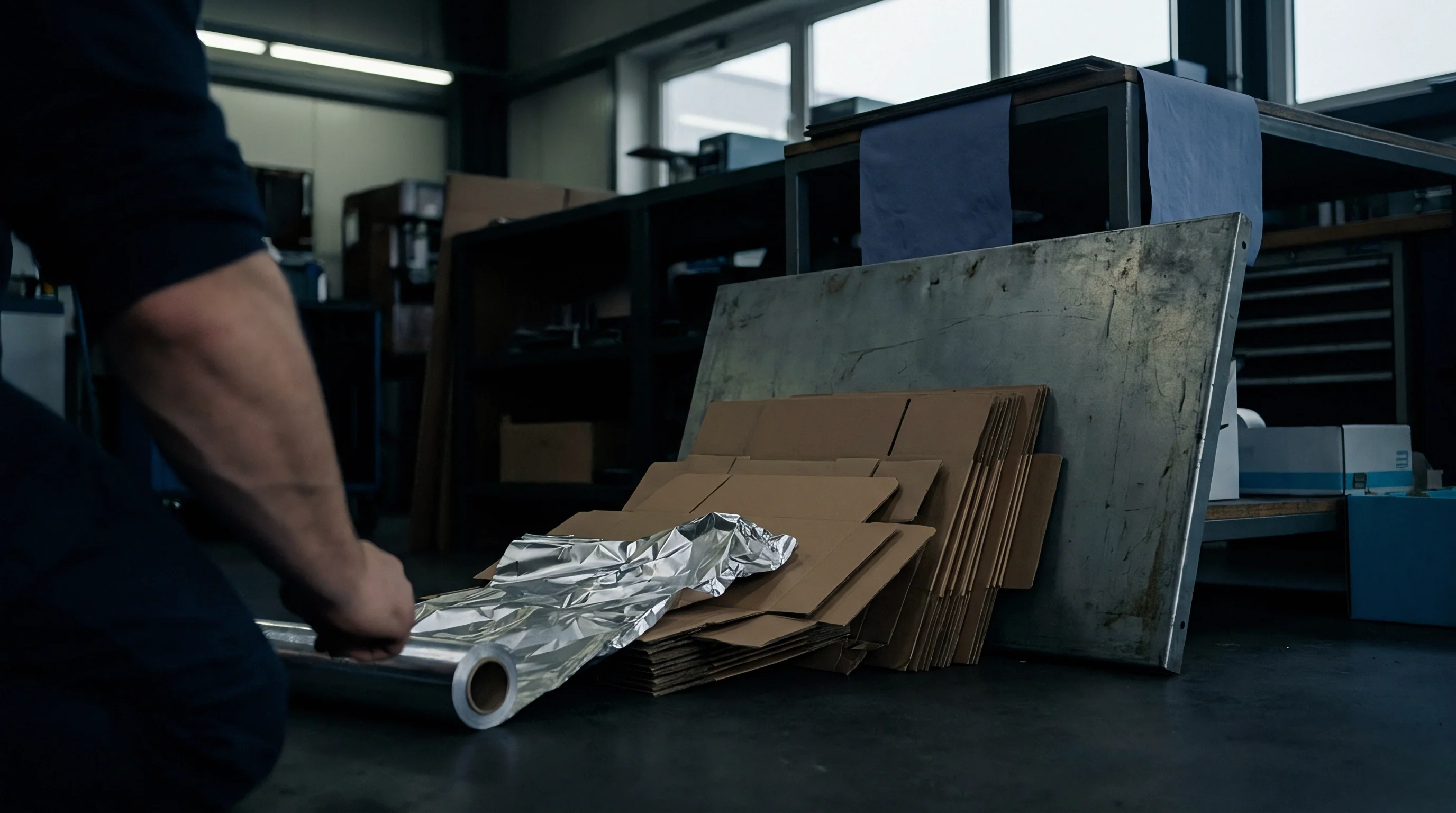
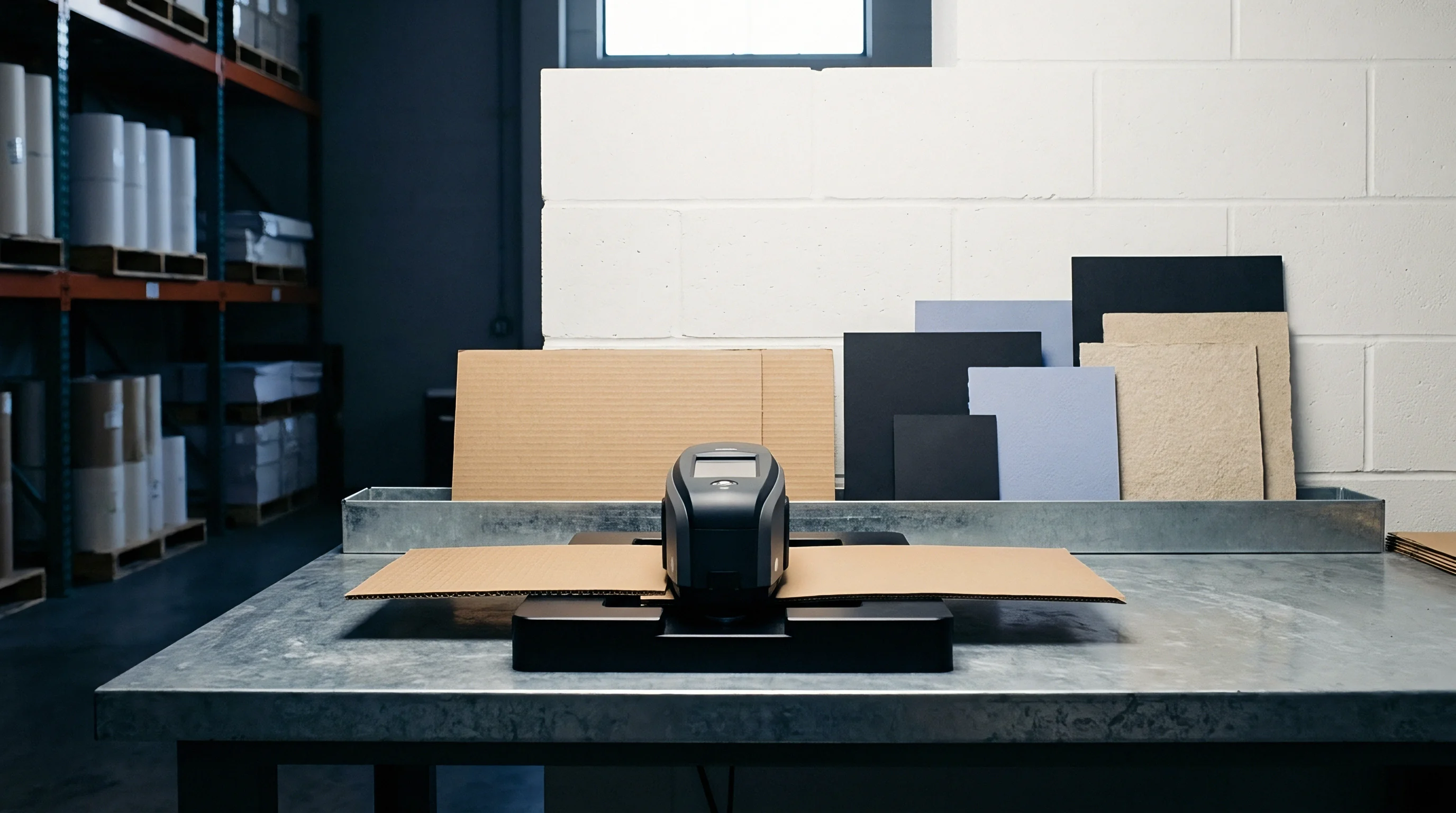
- Conditioning the corrugated board sample inside environmental test chambers controlled at 23 degrees Celsius and 50 percent relative humidity according to ISO 187 standards.
- Measuring baseline sheet thickness using digital micrometers under 100 kilopascal dead-weight load conditions specified by ISO 534 protocols.
- Subjecting outer liner surfaces to liquid water contact for exactly 60 seconds within ISO 535 Cobb sizing test assemblies.
- Blotting excess surface liquid using standardized absorbent blotting papers under standardized roller pressure parameters.
- Determining mass increase per square meter to establish water absorption rate metrics for substrate qualification.
- Performing Edge Crush Testing according to ISO 3037 on wet-conditioned test specimens to quantify compressive strength retention degradation.
Sorption
Moisture transport within corrugated board structures operates through linked vapor diffusion and liquid capillary transport networks. Boundary layer dynamic pressure gradients force water vapor into internal flute channels. Fickian diffusion governs vapor transport through the air volume enclosed within flute voids and porous paperboard matrices.
Convective mass transfer coefficients at the boundary layer interface dictate the initial mass flux of water entering the outer liner surface.
Mathematical modeling of mass flux utilizes Fick’s first law, where diffusion flux correlates directly with the concentration gradient and moisture diffusivity coefficient. Moisture diffusivity within paper sheets exhibits extreme non-linearity, increasing by orders of magnitude as internal fiber moisture levels rise. Fiber swelling alters internal pore geometry, expanding macro-pores while contracting micro-capillaries, altering local vapor permeability characteristics.
Fickian Moisture Diffusion through Paperboard Cross Sections
Out-of-plane moisture transport across combined board faces controls structural degradation speed. The Z-direction diffusion rate depends on paperboard density, surface sizing treatments, and internal starch adhesive bonds. Native starch adhesive lines applied during corrugating operations form hydrophilic zones that readily absorb liquid water.
Water penetrating the outer linerboard encounters the starch adhesive seam, weakening double-backer or single-facer bond lines.
Diffusion coefficients for virgin kraftliner range from 1.2 x 10^-11 to 4.5 x 10^-11 square meters per second under ambient conditions. Elevated boundary layer humidity accelerates these coefficients significantly. As moisture saturates the outer liner sheet, water transport shifts from purely vapor phase diffusion to liquid phase capillary transport along micro-channels between individual pulp fibers.

Are Internal Flute Channels Accelerating Vapor Transport?
Flute geometry creates continuous directional conduits along packaging walls. Standard A, B, C, E, and F flute profiles establish hollow air columns running parallel to corrugated box corners. Natural convective air currents develop within vertical flute channels when thermal differentials exist between top and bottom container boundaries.
Stacked boxes aligned with open flute channels permit vertical air movement, converting passive diffusion into active thermal chimney transport.
Moist boundary layer air enters open flute architectures at container corners or edge gaps. Air ascending through flute channels deposits condensation along cold internal paper faces. Micro-climate humidity inside flute cavities frequently reaches 100 percent relative humidity while bulk room sensors record lower ambient averages.
Closed edge designs or edge-sealed corrugated structures restrict boundary air access, reducing internal condensation kinetics within structural flutes.

Convective Mass Transfer Coefficients in Stagnant Cargo Gaps
Mass transfer coefficients between container boundary layer air and packaging surfaces depend on local boundary layer flow patterns. Stagnant air pockets formed between tightly loaded pallets exhibit low Sherwood numbers, indicating mass transport dominated by molecular diffusion. Loose pallet placement creates open channels that promote boundary layer air penetration deep into cargo stacks, expanding condensation surface areas.
Boundary layer airflow detachment occurs around sharp pallet edges or irregular stacking profiles. Airflow separation creates localized recirculation eddies where water vapor concentration builds up rapidly. Local convective mass transfer rates spike in zones of boundary layer reattachment, causing localized patches of intense liquid condensation uptake on exposed box panels.
Hydrophobic barrier coatings must cover exposed fluting edges completely to block boundary moisture entry during ocean transport.
Audit
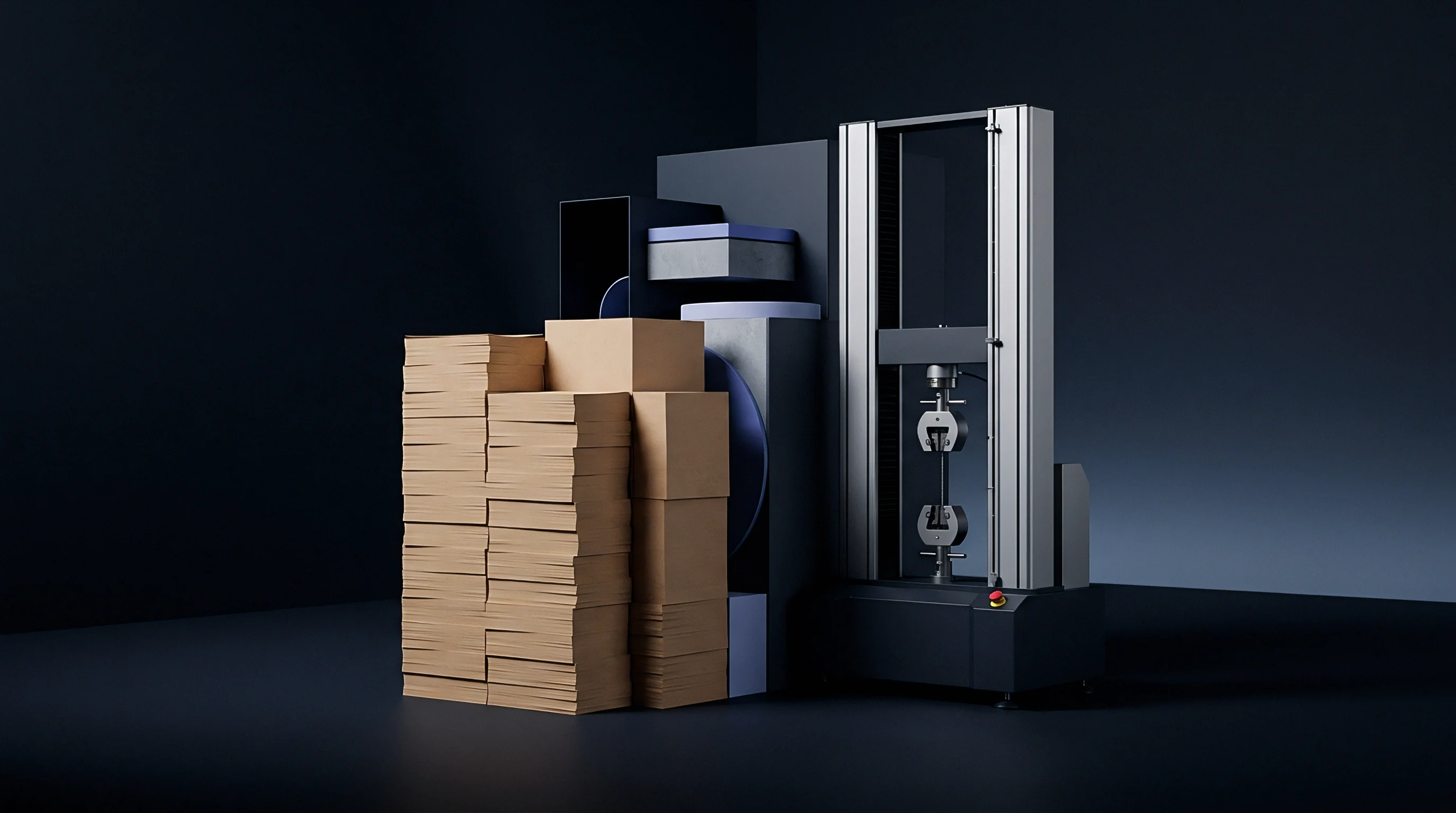
Verification of packaging resistance to boundary layer condensation dynamics demands systematic testing protocols that reproduce operational microclimates. Environmental simulation chambers evaluate combined corrugated board assemblies under dynamic temperature and humidity profiles. Testing schedules modeled after ASTM D4332 and ISO 2233 simulate ocean shipping conditions by cycling ambient relative humidity between 60 and 95 percent while imposing sudden thermal drops that trigger condensation events inside container volumes.
Field verification requires real-time diagnostic monitoring arrays deployed across marine container shipments. Wireless multi-sensor data loggers placed at high-risk cargo locations capture environmental trends during multi-week ocean transit. Sensor placement focuses on upper roof panels, vertical side wall interfaces, and lower corner casting regions where boundary layer cooling reaches peak severity.
Environmental Chamber Protocols and Climatic Simulation
Laboratory climatic simulation utilizes programmable environmental test chambers capable of rapid thermal transition rates. Protocol design replicates the diurnal solar heating and nocturnal radiative cooling profiles observed in tropical shipping lanes. Test cycles maintain 38 degrees Celsius at 85 percent relative humidity for 12 hours, followed by rapid cooling to 18 degrees Celsius within 60 minutes.
This thermal shock forces atmospheric water out of solution, generating heavy artificial condensation across test specimens.
Structural evaluations measure Box Compression Strength before, during, and after environmental chamber exposure according to ISO 12048 protocols. Compression testing executed inside climate chambers under saturated conditions yields realistic structural retention ratings. Test reports relying solely on post-drying strength measurements mask irreversible structural damage caused by mechanosorptive creep under wet conditions.

In Situ Wireless Temperature and Relative Humidity Sensor Arrays
Logistical audit procedures utilize low-power wireless sensor networks recording temperature, relative humidity, and calculated dewpoint metrics at calibrated intervals. Capacitive thin-film polymer humidity sensors provide measurement accuracy within plus or minus 2 percent relative humidity across 0 to 100 percent saturation ranges. Fast response thermal sensors record steel container wall temperatures alongside internal air film values to detect real-time dewpoint crossing events.
Data analysis maps spatial microclimate gradients throughout the loaded container layout. Side wall boundary layer sensors consistently record saturation 48 to 72 hours before core pallet loggers register elevated humidity levels. Early boundary layer saturation leads to localized box failure while internal pallet monitoring suggests stable conditions, leading to false diagnostic conclusions if sensor placement is executed incorrectly.
ASTM D4332 environmental conditioning specifies 90 percent relative humidity at 27 degrees Celsius to simulate tropical transit failure thresholds.
Mapping Localized Condensation Pattern Risks
Condensation risk mapping combines container thermal modeling with measured cargo moisture parameters. High-risk zones concentrate along top-tier packaging rows and outer perimeter pallet vertical faces adjacent to corrugated container walls. Thermal imaging cameras deployed upon container opening reveal temperature variations across pallet faces, highlighting zones exposed to cold boundary layer contact.
Substrate moisture meters utilizing non-destructive high-frequency capacitive principles measure localized water distribution across paperboard panels. Moisture distribution maps identify liquid accumulation trends matching container structural rib configurations. Diagnostic audits isolate whether water ingress stems from container structural leaks or boundary layer dewpoint phase transition dynamics.
- Sensor Placement Verification Transducers sit within 15 millimeters of metal interior side walls to capture boundary layer conditions accurately.
- Calibration Parameter Checks Relative humidity sensors undergo two-point salt solution calibration verification per ASTM E337 protocols before deployment.
- Diurnal Profile Simulation Environmental chamber software programs match real-world shipping temperature swings with rapid thermal transition ramps.
- Dewpoint Delta Tracking Instrument arrays continuously calculate the mathematical difference between local wall temperature and air dewpoint values.
Standard marine insurance charter clauses stipulate that cargo packaging must withstand ISO 2233 tropical humidity profiles, shifting financial liability for moisture damage onto the shipper if paperboard specifications fail standard environmental chamber audits.
Tariff
Protection of cargo against boundary layer condensation dynamics involves technical substrate selection, functional barrier coatings, and active desiccant moisture control strategies. Material selection directly influences landed packaging economics, freight tariffs, and environmental fee structures. Substrate upgrades from recycled linerboards to wet-strength virgin kraftliners require higher initial material expenditures per metric tonne while drastically reducing transit damage losses.
Active moisture mitigation utilizes calcium chloride or clay desiccant formulations engineered to absorb excess atmospheric water vapor. Container desiccant bags suspended along upper tie-down rings capture water vapor before boundary air films reach dewpoint thresholds. Desiccant dosage calculations depend on total interior air volume, cargo moisture content, voyage duration, and anticipated thermal transition severity.
Desiccant Dosage Economics for Long Haul Transit
Calcium chloride desiccants blended with starch gelling agents absorb up to 300 percent of their dry weight in water vapor under saturated boundary conditions. Standard 40-foot container protection requires between 2.0 and 4.0 kilograms of active desiccant media for neutral dry cargo shipments. High moisture cargo loads, including agricultural goods or wooden pallets with moisture content exceeding 15 percent, mandate desiccant payloads scaling up to 12.0 kilograms per container unit.
Desiccant procurement costs add modest operational expenses relative to total container freight values. Deploying high-capacity calcium chloride desiccant arrays incurs a cost of roughly 45 to 90 US dollars per container load. This expenditure prevents cargo damage claims that frequently exceed tens of thousands of US dollars per saturated shipping container.
Barrier Coating Performance against Unit Price Premiums
Functional chemical coatings applied during paperboard converting alter surface energy characteristics and liquid water absorption kinetics. Water-based acrylic coatings and fluoropolymer-free hydrophobic emulsions lower surface energy, raising contact angles above 90 degrees. Coated linerboards maintain low Cobb values under boundary layer liquid contact, preventing water penetration into structural fiber matrices.
Coating economics involve analyzing application weight per square meter against performance gains. Water-resistant dispersion coatings applied at 4 to 6 grams per square meter dry weight increase combined board costs by 8 to 14 percent. Fully repulpable barrier chemistry preserves recyclability parameters, avoiding end-of-life disposal fees associated with traditional poly-coated or wax-impregnated packaging substrates.
Sourcing virgin kraftliner adds immediate freight weight while eliminating moisture-driven pallet collapses during ocean transit.
Total Landed Cost Calculations for Moisture Sensitive Cargo
Landed cost calculations incorporate base paperboard purchase price, functional coating premiums, active desiccant costs, container freight fees, and failure rate risk allocations. Downgauging grammage using high-performance virgin papers achieves equal or superior wet compression strength compared to heavy recycled boards. Lower material weight reduces overall shipment mass, generating freight savings on long-distance transport routes.
Commercial risk mitigation balances packaging material expenditure against potential product loss exposure. Sourcing decisions grounded in boundary layer psychrometrics eliminate unbudgeted secondary damage claims, customs re-inspection penalties, and customer rejection fees. Packaging specifications engineered for severe boundary microclimates preserve cargo structural integrity across complex global supply chains.
| Protection Strategy | Material / Dosage Cost (USD) | Cobb60 Sizing Target (g/m²) | ECT Retention at Saturation (%) | Cargo Damage Loss Risk (%) | Net Landed Protection Cost (USD) |
|---|---|---|---|---|---|
| Standard Recycled Board (Baseline) | 0.00 | 45.0 | 35.0 | 12.5 | 2,500.00 |
| Virgin Kraftliner Upgrade | 120.00 | 28.0 | 68.0 | 2.1 | 540.00 |
| Acrylic Barrier Coating Application | 185.00 | 12.0 | 78.0 | 1.2 | 425.00 |
| Container Desiccant Array (4 kg CaCl2) | 60.00 | 45.0 (unaffected) | 55.0 (humidity reduced) | 3.0 | 660.00 |
| Combined Virgin Liner + Desiccant | 180.00 | 28.0 | 82.0 | 0.3 | 240.00 |
Contractual freight specifications written for international ocean freight routes specify that all top-tier corrugated shipping units must maintain minimum Edge Crush Test values after 72 hours of exposure to 90 percent relative humidity environments. Sourcing practices that integrate wet-strength furnish formulations alongside hydrophobic surface treatments hold total landed damage rates below 0.5 percent across high-humidity transit corridors, preserving net operational margin without requiring excess safety factor over-packaging.