Predictive Modeling of Boundary Lubricant Depletion Kinetics in High Speed Automated Packaging Lines
Boundary lubricant depletion during high-speed packaging stems from mechanical wiping exceeding diffusion replenishment, demanding non-migratory slip selection.


Kinetics
Flexible packaging substrates rely on surface additive molecules that migrate from the amorphous polymer core to form a thin boundary film. High speed accelerates boundary loss. This boundary layer lowers the coefficient of friction between the moving web and stationary machine components, preventing web chatter, misregistration, and catastrophic line stoppages.
During high-speed converting and automated packaging operations, continuous sliding contact over guide rollers, turn bars, and forming collars subjects this ultra-thin organic layer to continuous shear stress and frictional heating. Understanding how these boundary lubricants replenish or deplete under production conditions is essential for maintaining mechanical performance on automated packaging lines running at high speeds.

Amide Diffusion Mechanisms
Fatty acid amides such as erucamide and oleamide dissolve into polyolefin melts during extrusion at concentration levels between 500 and 1500 parts per million. As the extruded polymer crystallizes during cooling, the low solubility of these long-chain aliphatic molecules in the crystalline phase forces them into the amorphous regions. Amide migration kinetics follow Fickian diffusion. driven by a chemical potential gradient between the bulk polymer and the unoccupied surface boundary.
The mathematical expression governing bulk-to-surface additive mass transport depends heavily on temperature and polymer morphology:
Diffusion Coefficient Equation ~
D = D_0 exp(-E_a / (R T))
In this relationship, D_0 represents the pre-exponential diffusion factor, E_a is the activation energy for additive movement through the amorphous matrix, R is the universal gas constant, and T is the absolute temperature in Kelvin. Linear low-density polyethylene exhibits higher additive diffusion rates than oriented polypropylene due to its lower glass transition temperature and greater free volume within the amorphous fraction.Oleamide, possessing a shorter carbon chain length of eighteen carbons with one double bond, diffuses faster than erucamide, which contains twenty-two carbons. Consequently, oleamide forms a lubricating surface layer rapidly following film extrusion, whereas erucamide migrates gradually, establishing stable long-term boundary lubrication across multi-week storage periods.
Surface Concentration Equilibrium
Boundary lubrication depends on a continuous monolayer residing at the solid-air boundary. The equilibrium surface concentration represents a dynamic balance between the flux of additive molecules arriving from the interior and the loss of surface molecules due to mechanical transfer, evaporation, or oxidative degradation. When film rolls undergo slitting or unwind operations, contact between the functional side and the opposing backing layer transfers a fraction of the surface amide to the opposite interface.
Frictional heating elevates surface temperature. This thermal energy increases the localized diffusion coefficient, accelerating mass transport to the contact zone. Excessive thermal exposure at heat-sealing stations volatilizes short-chain amides, stripping the local boundary film and raising the coefficient of friction.
An erucamide surface density below 0.05 micrograms per square centimeter causes kinetic friction coefficients to rise rapidly above 0.35 on stainless steel forming collars. When surface depletion outpaces bulk replenishment, raw polymer-to-metal contact occurs, initiating stick-slip mechanics and severe web tension spikes.
An erucamide surface density below 0.05 micrograms per square centimeter causes kinetic friction coefficients to rise rapidly above 0.35 on stainless steel forming collars.
Whether synthetic siloxane additives can fully replace migrating amides without compromising heat-seal initiation temperature or print surface receptivity remains open to ongoing industry evaluation.

Slip
Friction behavior on high-speed automated packaging machinery determines whether flexible films move smoothly through tension rollers or jam against metal collar assemblies. Static tests understate dynamic friction. Slip performance relies on the continuous presence of boundary lubricant molecules that separate the solid polymer substrate from sliding contact surfaces.
When machine speeds increase beyond three hundred meters per minute, contact dwell times drop below millisecond thresholds while local contact pressures increase, shifting tribological behavior from hydrodynamic or mixed lubrication directly into the boundary lubrication regime.

Boundary Tribology and Surface Drag
Contacting surfaces experience two distinct frictional regimes during automated package forming. Static friction governs the initial force required to move a stationary web, whereas kinetic friction dictates the drag force sustained across continuous high-speed movement. Uncoated guide rolls strip boundary wax.
Boundary additives lower both static and kinetic friction by forming a low-shear organic film over micro-asperities on the film surface. Without this sacrificial layer, high localized contact stresses force direct polyolefin contact against polished or matte steel components, leading to micro-welding, surface scoring, and elevated drag.
The mathematical representation of boundary contact shear stress integrates additive film shear strength with solid contact area parameters:
Boundary Shear Stress Model ~
tau = tau_0 + alpha P
Here, tau_0 defines the intrinsic shear strength of the boundary additive monolayer, alpha represents the pressure-dependence coefficient of the additive film, and P represents the localized contact pressure across micro-asperities. For effective slip additives, tau_0 remains below 2 megapascals, allowing the monolayer to yield under minimal tangential force while preventing destructive abrasive contact against underlying base polymer chains.

Lubricant Chemistry Comparison
Selecting an additive package requires evaluating the chemical structure of the additive against processing temperatures and line velocity targets. Erucamide offers high thermal stability up to 240 degrees Celsius, making it suitable for high-speed form-fill-seal equipment where heat-seal bars transfer thermal energy into adjacent web pathways. Oleamide degrades at lower temperatures, producing volatile emissions and carbonized residues on heat-sealing jaws.
Non-migratory additives, including ultra-high molecular weight siloxanes, cross-link into the matrix, eliminating migration variability but yielding higher baseline friction coefficients than fatty amides.
The following table compares primary lubricant chemistries utilized in automated packaging converters, evaluating migration kinetics, thermal limits, and tribological behavior:
| Lubricant Chemistry | Molecular Structure | Diffusion Rate in LLDPE (cm²/s) | Thermal Degradation Limit (°C) | Equilibrium Kinetic COF | Food Contact Limit (EU 10/2011) |
|---|---|---|---|---|---|
| Oleamide | C18H35NO (Monounsaturated) | 1.2 x 10⁻¹⁰ | 180 | 0.12 – 0.18 | 60 mg/kg food mass |
| Erucamide | C22H43NO (Monounsaturated) | 3.5 x 10⁻¹¹ | 240 | 0.15 – 0.22 | 60 mg/kg food mass |
| Ethylene Bis-Stearamide | C38H76N2O2 (Synthetic Bis-Amide) | 8.0 x 10⁻¹³ | 280 | 0.25 – 0.32 | No specific migration limit |
| UHMW Organosiloxane | Cross-linked Siloxane Network | 0.0 (Non-migratory) | 320 | 0.28 – 0.35 | 1.2 mg/kg food mass |
Testing film friction in accordance with ASTM D1894 at 150 millimeters per minute fails to detect velocity-dependent lubricant stripping that occurs on packaging lines operating above 200 meters per minute.

Failure Modes in Boundary Film Tribology
Ineffective boundary lubrication triggers distinct failure modes during converting and packaging line operations, interrupting continuous output:
- Friction Spike Jamming occurs when local boundary lubricant depletion causes web tension to exceed drive roller torque thresholds.
- Forming Collar Scuffing develops as unlubricated polymer contacts raw steel, dragging particulate debris into heat sealing jaw zones.
- Optical Haze Banding arises when excess amide migration produces non-uniform crystalline clusters that scatter transmitted light.
- Print Ink Delamination results from migrating slip molecules aggregating at the substrate-ink interface and reducing ink anchor bond strength.
Film formulations utilizing longer carbon chain amides maintain surface lubricity over extended storage periods better than those relying on short chain additives.


Depletion
Friction-induced wiping along stainless steel forming collars physically strips boundary lubricant molecules off the polymer surface during continuous web movement. Higher shear yields rapid depletion. As line velocities scale from fifty to eight hundred packages per minute, mechanical removal of the protective monolayer occurs faster than bulk-to-surface diffusion can restore local surface concentrations.
This kinetic imbalance leads to progressive friction accumulation across long packaging runs, culminating in sudden web fractures, misfeeding, or jammed forming shoulders.
Mechanical Wiping and Thermal Stripping
High velocity web transport over fixed metal forming shoulders creates intense frictional heat localized at the contact points. Formers generate localized contact stress. The combined effect of mechanical shear and localized heating strips surface-bound fatty acid amides.
Wiped additive molecules transfer onto metal surfaces or aggregate along machine guides as sticky, grey deposits containing degraded polymer wax and organic amides. Cold lines delay lubricant equilibrium.
The rate of boundary lubricant removal along a continuous sliding contact zone follows first-order depletion kinetics relative to web speed and normal force:
Boundary Depletion Kinetic Model ~
dC_s / dt = -k_w v P_n C_s + (D (C_b – C_s) / delta)
In this rate equation, C_s denotes the surface lubricant concentration in micrograms per square centimeter, C_b represents the bulk additive concentration, k_w is the mechanical wiping rate constant, v represents web velocity, P_n defines normal pressure across the contact zone, D is the bulk diffusion coefficient, and delta represents the effective boundary layer thickness. When the wiping term k_w v P_n C_s exceeds the diffusive flux term (D (C_b – C_s) / delta), net boundary depletion occurs, forcing surface friction upward.
Elevated web line tension compresses the soft boundary lubricant film against metal guide rolls, accelerating mechanical wiping and forcing raw polyolefin contact.
How Does Sliding Speed Accelerate Amide Stripping?
Web line speeds exceeding three hundred meters per minute reduce the time available for internal additive molecules to diffuse back to the wiped surface layer. Heat seals strip local lubricant concentrations. At high speeds, the dwell time inside the active wiping zone drops below the characteristic diffusion time required for bulk-to-surface transport, leaving micro-asperities exposed to raw sliding friction.
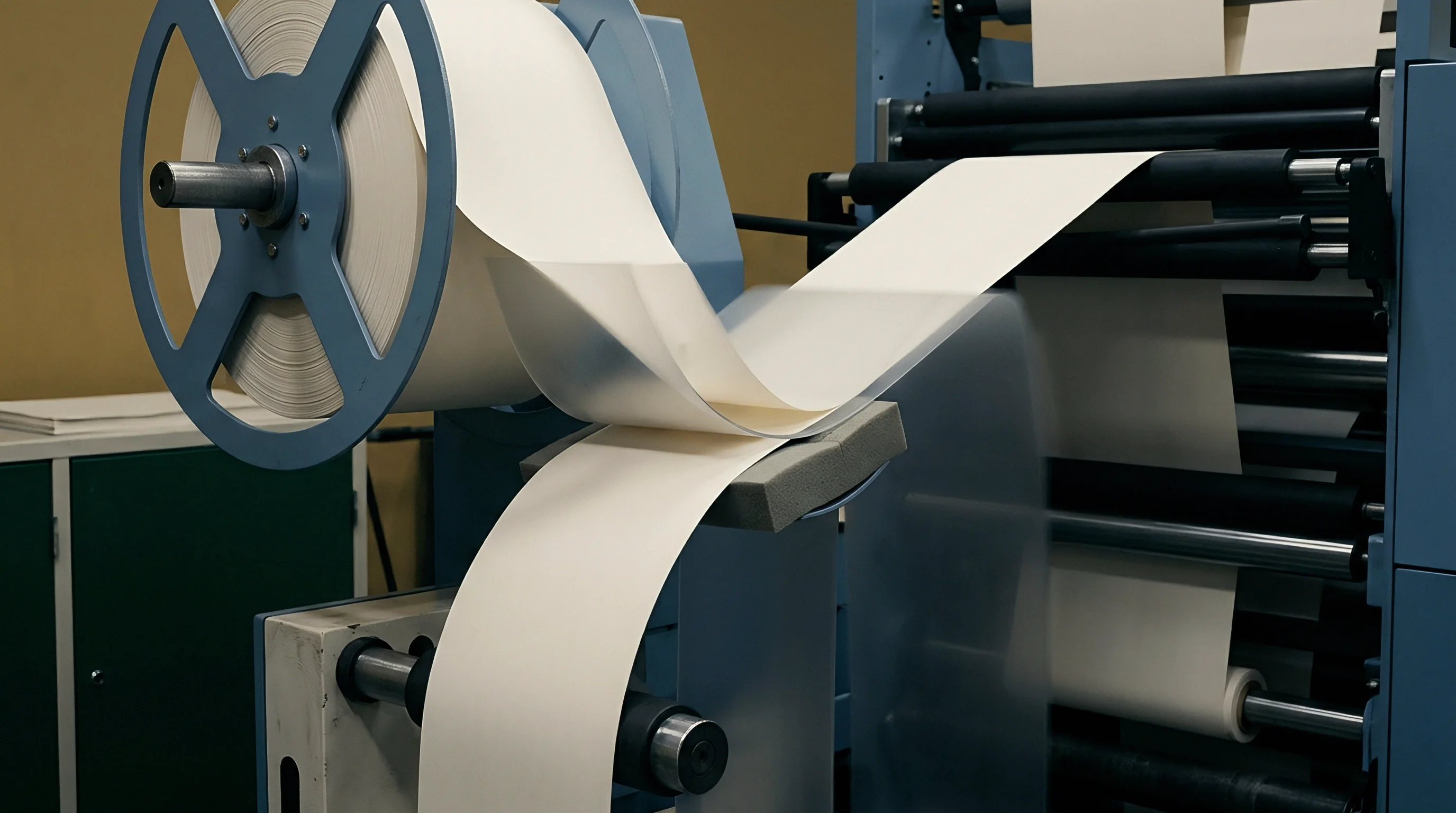
Worked Mathematical Calculation of Additive Loss
Consider a vertical form-fill-seal operation processing a fifty micron linear low-density polyethylene film loaded with one thousand parts per million of erucamide. The line operates at a web velocity of 1.2 meters per second over a 420 stainless steel forming collar with a total contact length of 0.15 meters. Assume an initial surface erucamide concentration of 0.18 micrograms per square centimeter and a bulk erucamide concentration equivalent to 0.09 micrograms per square centimeter per micron of film thickness.
The wiping rate constant k_w under a normal line tension of 120 Newtons per meter measures 1.5 x 10⁻⁴ square centimeters per Newton-meter. The diffusion coefficient D for erucamide in this polymer matrix at 25 degrees Celsius equals 3.5 x 10⁻¹¹ square centimeters per second. The effective diffusion boundary layer thickness delta spans 5.0 microns.
Calculating the instantaneous mechanical depletion rate yields:
Mechanical Depletion Rate Calculation ~
Rate_wiping = (1.5 x 10⁻⁴) (1.2 m/s) (120 N/m) (0.18 ug/cm²)
Rate_wiping = 3.888 x 10⁻³ ug/(cm² s)
Calculating the simultaneous bulk-to-surface diffusive replenishment rate yields:
Diffusive Replenishment Rate Calculation ~
Rate_diffusion = (3.5 x 10⁻¹¹ cm²/s) ((4.5 ug/cm³ – 1.8 ug/cm³) / 0.0005 cm)
Rate_diffusion = 1.89 x 10⁻7 ug/(cm² s)
Comparing the two rates demonstrates that the mechanical wiping rate exceeds the diffusive replenishment rate by four orders of magnitude. The bulk diffusion process cannot maintain the surface layer during continuous running. Surface erucamide density drops from 0.18 to 0.04 micrograms per square centimeter after 45 seconds of continuous web movement over the forming shoulder, causing kinetic friction to jump from 0.16 to 0.42.
The process requires either active cooling of the shoulder or supplementing the film formulation with non-migratory tribological modifiers.
Depletion modeling execution follows a structured diagnostic procedure to identify boundary layer stability limits across specific packaging line configurations:
- Sample incoming film rolls to baseline bulk additive concentration using solvent extraction and gas chromatography.
- Measure initial surface lubricant density across the web using attenuated total reflectance infrared spectroscopy.
- Pass film through an instrumented test rig replicating packaging line velocity, web tension, and collar geometry.
- Quantify post-contact surface additive density across wiped contact zones to establish mechanical stripping rates.
- Calculate the effective diffusion coefficient under operating temperature to determine boundary replenishment time.
Failing to account for mechanical wiping kinetics during film design results in unexpected line jams, surface scratching, and catastrophic seal contamination across high-speed packaging runs.


Verification
Standard bench testing methods frequently fail to predict packaging line stoppages caused by lubricant stripping. Inline tribometry captures dynamic decay rates. Conventional offline friction meters evaluate film samples under static, low-speed sliding conditions that do not reflect the dynamic mechanics, frictional heating, and high shear rates encountered on modern automated packaging equipment.
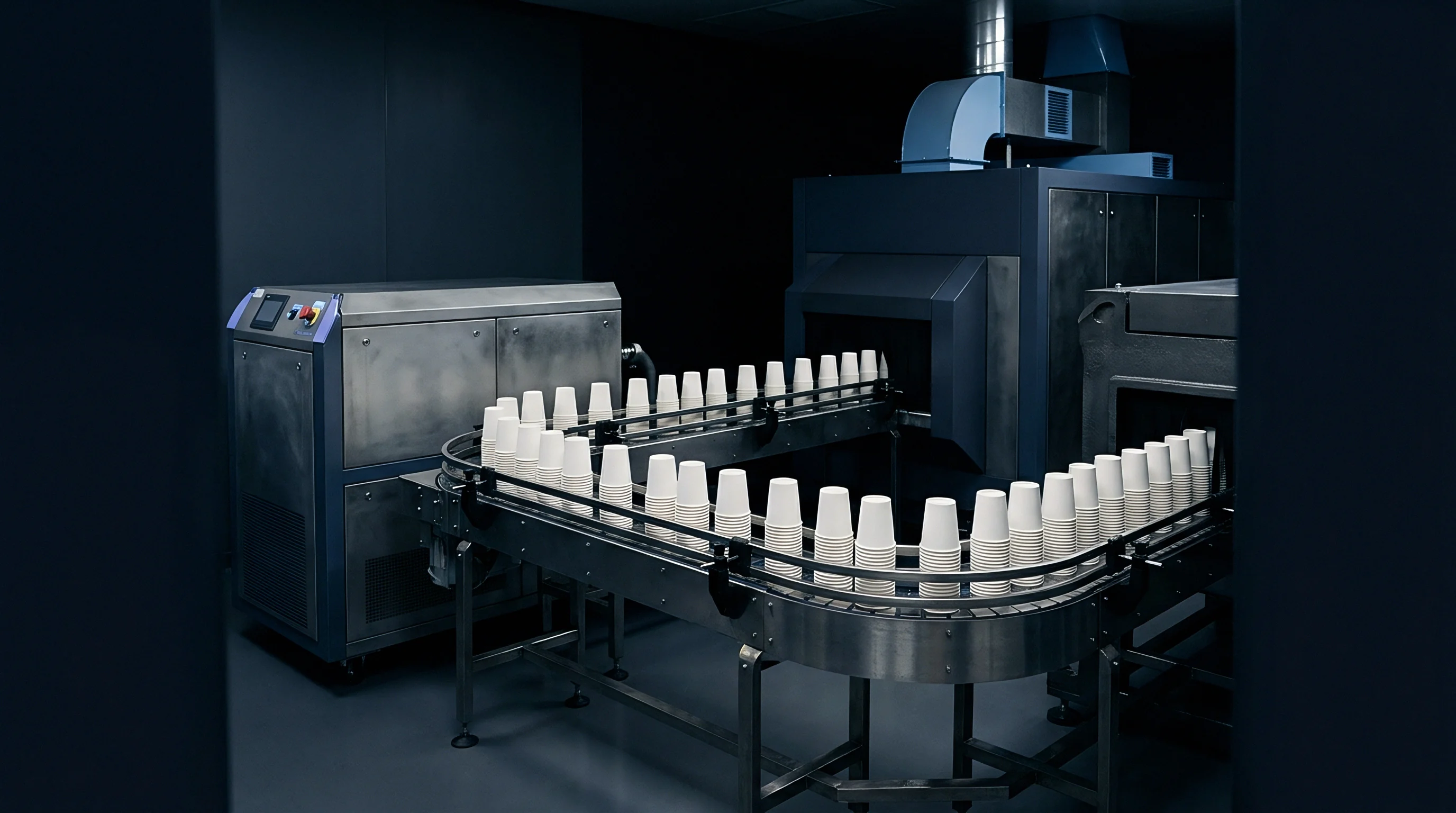
Bench Methods Vs Dynamic Packaging Conditions
Laboratory sled measurements following ASTM D1894 evaluate static and kinetic friction coefficients at sliding velocities of one hundred fifty millimeters per minute. Friction spikes trigger automated stoppages. This low velocity allows migrating amides ample time to reform a boundary layer during the test.
On an automated packaging line running at 400 meters per minute, sliding speeds exceed bench test velocities by more than two thousand times.
High-speed tribometers utilize rotating rings or continuous web loops equipped with load cells to record friction continuously over miles of film transport. Solvent washing removes surface blooms. High-speed measurement isolates velocity-dependent thermal softening and mechanical stripping of the additive layer, providing realistic friction profiles matched to commercial packaging speeds.
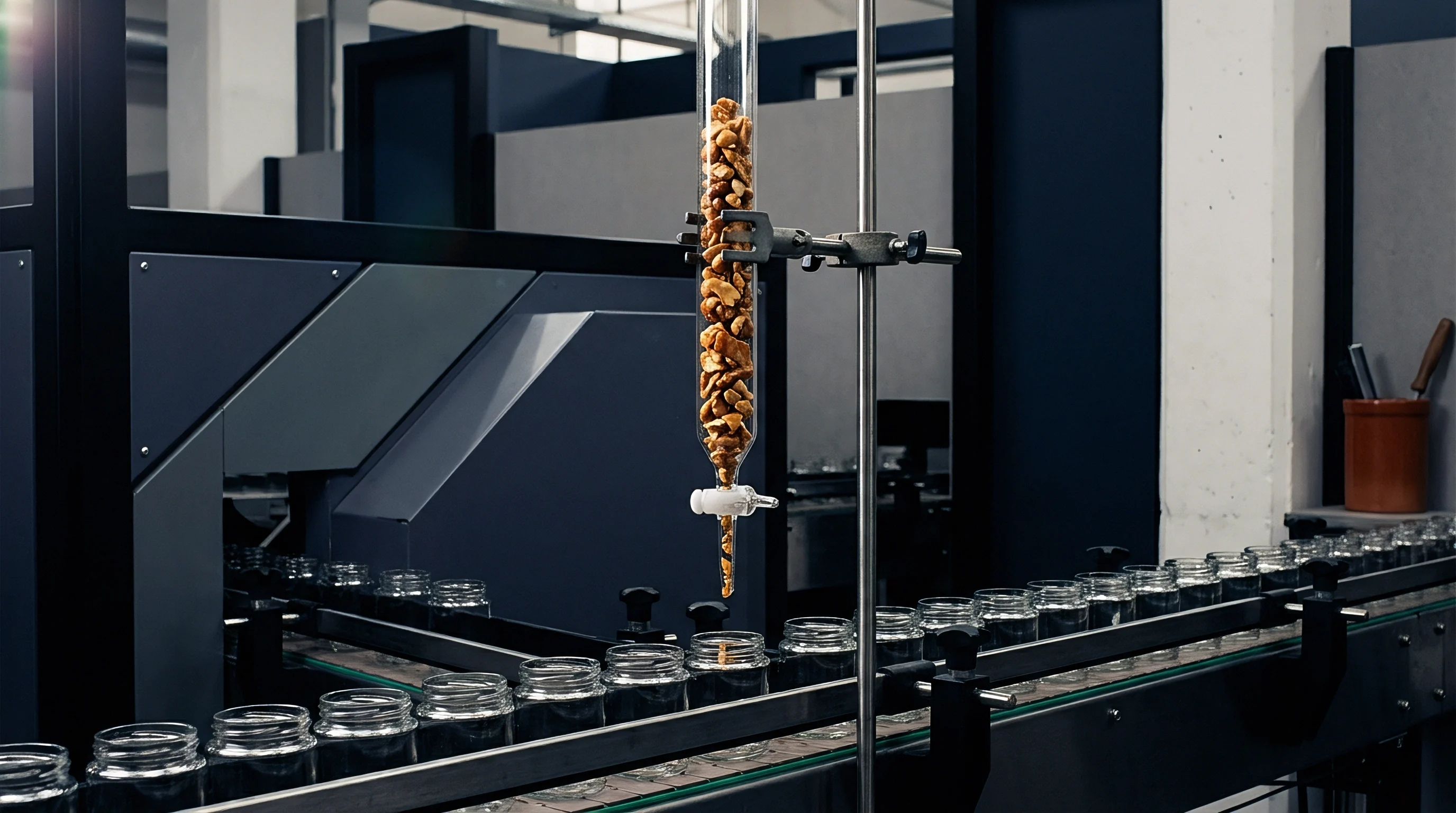
Spectroscopy and Contact Angle Surface Profiling
Attenuated total reflectance Fourier-transform infrared spectroscopy maps the surface density of fatty acid amides by tracking the primary carbonyl absorption band located at 1640 reciprocal centimeters. Comparing the absorbance intensity of this amide I peak against an internal polyolefin reference peak at 1460 reciprocal centimeters yields precise surface coverage values measured in micrograms per square centimeter.
Water contact angle measurements provide rapid verification of surface hydrophobic changes associated with amide migration. Unmodified polyethylene surfaces exhibit water contact angles around 92 degrees. A fully bloomed erucamide monolayer raises the contact angle to 108 degrees due to dense packing of hydrophobic hydrocarbon tails facing outward.
A sudden drop in contact angle across machine contact points indicates mechanical stripping of the boundary additive layer.
The table below compares analytical verification techniques utilized for assessing surface lubricant coverage and tribological behavior:
| Test Method | Primary Parameter Measured | Test Speed / Dwell Time | Sensitivity Threshold | Suitability for Line Depletion |
|---|---|---|---|---|
| ASTM D1894 Sled Test | Static and Kinetic COF | 150 mm/min (Slow) | COF +/- 0.02 units | Poor (Fails to capture stripping) |
| High-Speed Web Tribometry | Dynamic COF vs Distance | 50 – 600 m/min (Real-time) | COF +/- 0.005 units | Excellent (Replicates production line) |
| ATR-FTIR Spectroscopy | Amide Carbonyl Surface Density | Spectroscopic (Static) | 0.01 ug/cm² | High (Quantifies chemical loss) |
| Dynamic Contact Angle | Surface Free Energy / Wettability | Droplet Dwell (30 sec) | +/- 1.0 degree | Moderate (Screening tool for bloom) |
Film converters frequently claim that elevated coefficient of friction values recorded at the customer packaging plant stem entirely from improper warehouse climate control rather than masterbatch degradation or erratic additive dispersion.
Formulation
Designing flexible film structures capable of maintaining stable boundary lubrication requires managing physical interactions between polymer layers, print inks, and functional coatings. Corona treatment creates competing polar sites. Converting processes alter additive behavior through chemical binding, physical entrapment, or accelerated extraction into porous materials.

Corona Treatment and Solvent Trap Effects
Surface oxidation applied to improve ink adhesion generates polar carboxyl and hydroxyl groups on the polyolefin web. These polar sites attract the hydrophilic amide head-groups of slip additives, anchoring them upside-down against the substrate. This upside-down orientation exposes hydrophobic tails inward, preventing proper monolayer formation and raising surface friction.
Corona treatment levels exceeding 44 millinewtons per meter tie up migrating amides, requiring elevated masterbatch dosing to overcome polar immobilization.
Entrapped printing solvents inside ink layers interact directly with fatty acid amides. Retained ethyl acetate or isopropanol acts as a solvent phase, dissolving surface amide blooms and drawing them back into the ink layer. Solvent entrapment delays boundary layer reformation, causing high friction on freshly printed rolls that dissipates only after extended drying or warehouse curing cycles.
Corona surface treatment creates polar sites that bind migrating amide molecules, reducing the free lubricant concentration available to lower boundary friction.

Regulatory Compliance and Migration Boundaries
Direct food contact regulations enforce strict overall migration limits on additive packages incorporated into primary packaging layers. European Union Regulation 10/2011 limits fatty acid amide migration into fatty food simulants to 60 milligrams per kilogram of food mass. Over-dosing slip additives to combat line depletion risks non-compliance with global food safety standards if excessive additive levels migrate into packaged dry or fatty foods.
Formulation strategies must account for converting processes and environmental factors that disrupt boundary layer integrity:
- Solvent Retention in printing inks dissolves boundary amide layers and delays subsequent surface migration.
- Excessive Corona Oxidation increases polymer surface energy above 44 millinewtons per meter, trapping polar lubricant heads.
- High Lamination Pressure drives mobile additives into adhesive layers, reducing the effective reservoir available for surface replenishment.
- Elevated Storage Temperatures accelerate bulk diffusion, leading to premature bloom and variable friction coefficients across master rolls.
Incorporating an explicit maximum coefficient of friction tolerance clause linked to ISO 8295 under ambient packaging room conditions shifts the financial liability for machine jamming back to the film converter.


Economics
Friction variability directly alters unit processing costs across automated packaging operations. Unscheduled downtime on automated form-fill-seal lines running at six hundred packs per minute accumulates financial penalties rapidly through missed output and wasted substrate. Optimizing additive kinetics preserves operating margins while protecting line efficiency goals.

Yield Losses and Line Jam Financial Modeling
When lubricant depletion causes kinetic friction to surpass machine operational thresholds, packaging lines experience frequent misfeeds, poor seal registration, and automated stoppage trips. Clearing a jammed forming collar requires stopping production, purging damaged packaging material, and cleaning degraded additive residues off metal tooling. A single ten-minute downtime event on a high-speed packaging line costs between 1,200 and 3,500 Euros in lost throughput and scrapped film stock.
The table below details financial and operational loss metrics associated with friction degradation across automated packaging operations:
| Operational Failure Mode | Root Tribological Cause | Direct Scrap Impact (% Run) | Downtime Duration per Occurrence | Estimated Cost per Incident (€) |
|---|---|---|---|---|
| Forming Collar Web Jam | Kinetic COF > 0.38 from wiping | 3.5% – 8.0% | 15 – 35 minutes | €1,800 – €4,500 |
| Seal Jaw Misregistration | Stick-slip vibration on guide rolls | 1.2% – 3.0% | 5 – 12 minutes | €600 – €1,500 |
| Optical Haze Rejection | Excess bloom / crystallization | 100% of affected roll | Zero (Discovered at QC) | €4,000 – €12,000 per lot |
| Inadequate Seal Strength | Amide contamination in seal interface | 2.0% – 5.0% | 10 – 20 minutes | €1,200 – €3,000 |
Optimizing additive concentrations based on predictive depletion kinetics balances low masterbatch raw material costs against the severe operational penalties incurred during high-speed line stoppages.