Molecular Migration
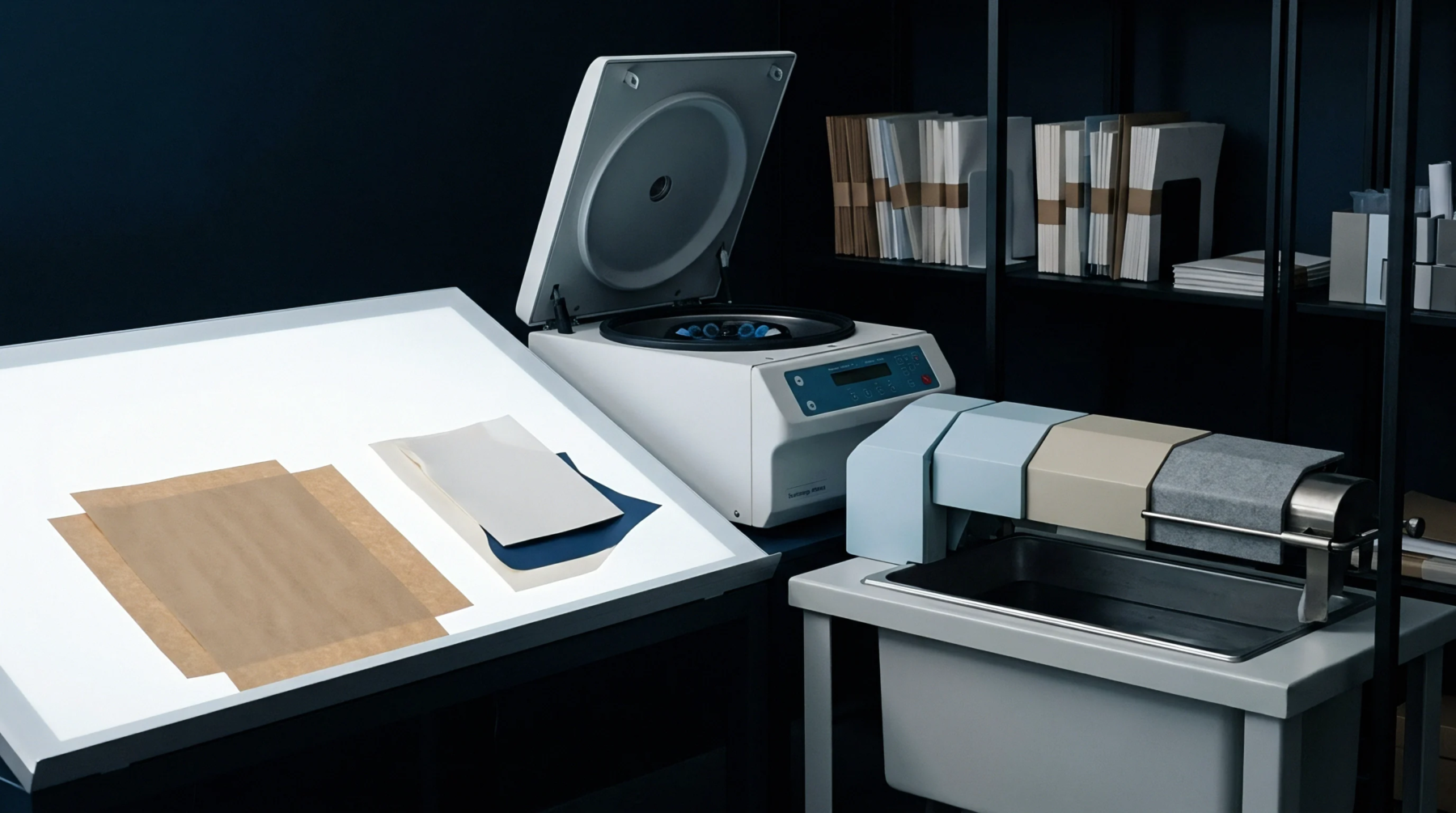
Permeation resistance inside a packaging substrate relies upon the diffusion coefficient to quantify how rapidly gas molecules traverse a dense polymeric film or paper coating. Fickian transport governs this specific movement, determining the exact rate at which oxygen or water vapour penetrates barrier boards during extended shelf life storage. Laboratory testing measures this physical parameter by clamping a treated paper sample between two chambers, introducing a test gas to one side, and recording the downstream concentration increase over a defined time interval.
High density polyethylene extrusion coatings typically yield lower transfer rates than standard cellulose webs, preventing premature oxidation inside pharmaceutical blisters and food cartons.
Gradient Kinetics
Temperature variations alter molecular velocity within cellulose matrices, causing the diffusion coefficient to increase exponentially as thermal energy accelerates molecular vibration. Moisture content acts as a secondary driver, swelling interfibrillar hydrogen bonds and opening pathways that facilitate rapid gas transfer through porous containerboards. Mathematical models incorporate these environmental factors to predict barrier degradation under tropical shipping conditions, ensuring converters select appropriate laminate structures for humidity sensitive contents.
Boundary Restrictions
Henry law solubility limits govern the applicability of this transport metric, separating surface sorption phenomena from the subsequent internal migration of penetrant molecules. Non-linear concentration profiles invalidate standard mathematical solutions when migrating compounds chemically react with sizing agents or recycled fibres inside the sheet. Extended exposure testing confirms that steady state transport assumptions fail below specific relative humidity thresholds, requiring specialized mathematical corrections for ultra dry packaging environments.