Molecular Sealant
Polymerized resins form a film on cellulose fibres to prevent the migration of oils or fats into paper substrates. An acrylic copolymer barrier establishes this chemical resistance by crosslinking monomers during the curing phase of production. This synthetic layer occupies the microscopic voids between surface fibres without obscuring the base material geometry.
Conversion Requirement
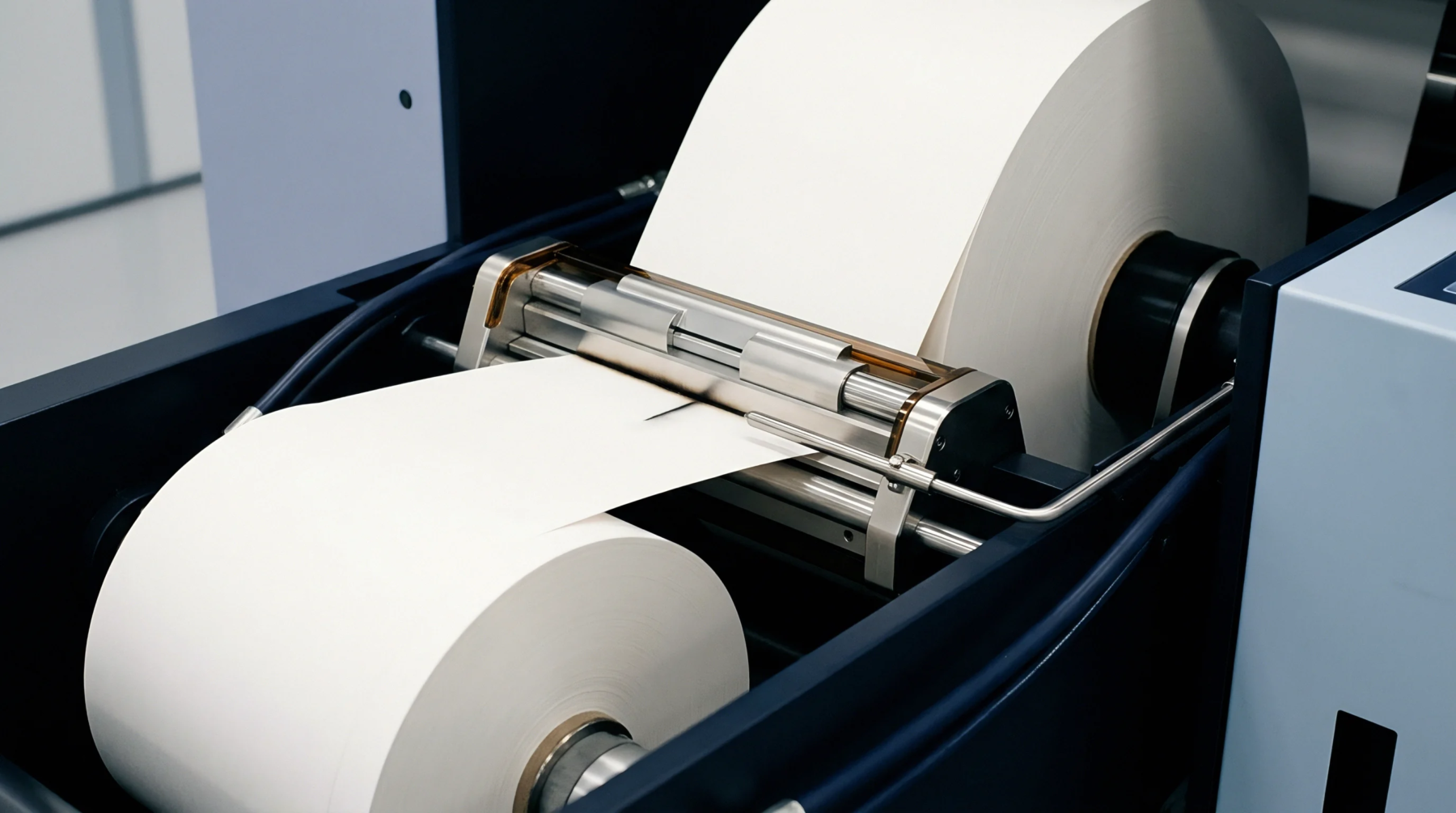
Converting operations apply the emulsion to the surface prior to the final drying stage on the machine. Proper thickness calibration prevents the liquid from penetrating deep into the paper matrix where it would degrade the mechanical properties of the sheet. Heat controls the activation of these molecules during the drying sequence.
Uniformity of the application determines the resistance level across the entire web width. Variations in coat weight create weak points where grease leakage occurs despite the presence of the material. Converters monitor the viscosity of the solution to maintain a stable film thickness on high speed production lines.
Precise tension settings in the winder protect the integrity of the film while the roll reaches its final density.
Performance Constraint
Oxygen transmission rates fluctuate according to the ambient humidity levels surrounding the finished package. High moisture environments plasticize the resin network, which increases the porosity of the coating under pressure. Dimensional stability of the underlying paper determines the cracking threshold of the material when the substrate undergoes folding or scoring.
Thicker applications increase the protection level against gas diffusion at the cost of reduced flexibility during the box forming process. Chemical bonds within the structure hold the coating against abrasive forces encountered during transit.