Waterborne Barrier Dispersion Viscosity Tuning on Metering Roll Coaters
Tuning dispersion viscosity on metering roll coaters requires matching high-shear nip viscosity to capillary limits while stabilizing bath solids and pH drift.
Bath
An applicator pan circulating an aqueous acrylic dispersion at 48 percent solids exhibits an immediate viscosity climb when recirculation flow falls below eight liters per minute. Skin forms across the quiet corners of the pan within six minutes. The metering nip, running against a chrome transfer roll at 320 meters per minute, shears that stagnant emulsion and pulls dry skin particles straight into the contact zone, cutting hairline streaks down four hundred consecutive meters of board before an operator spots the fault.
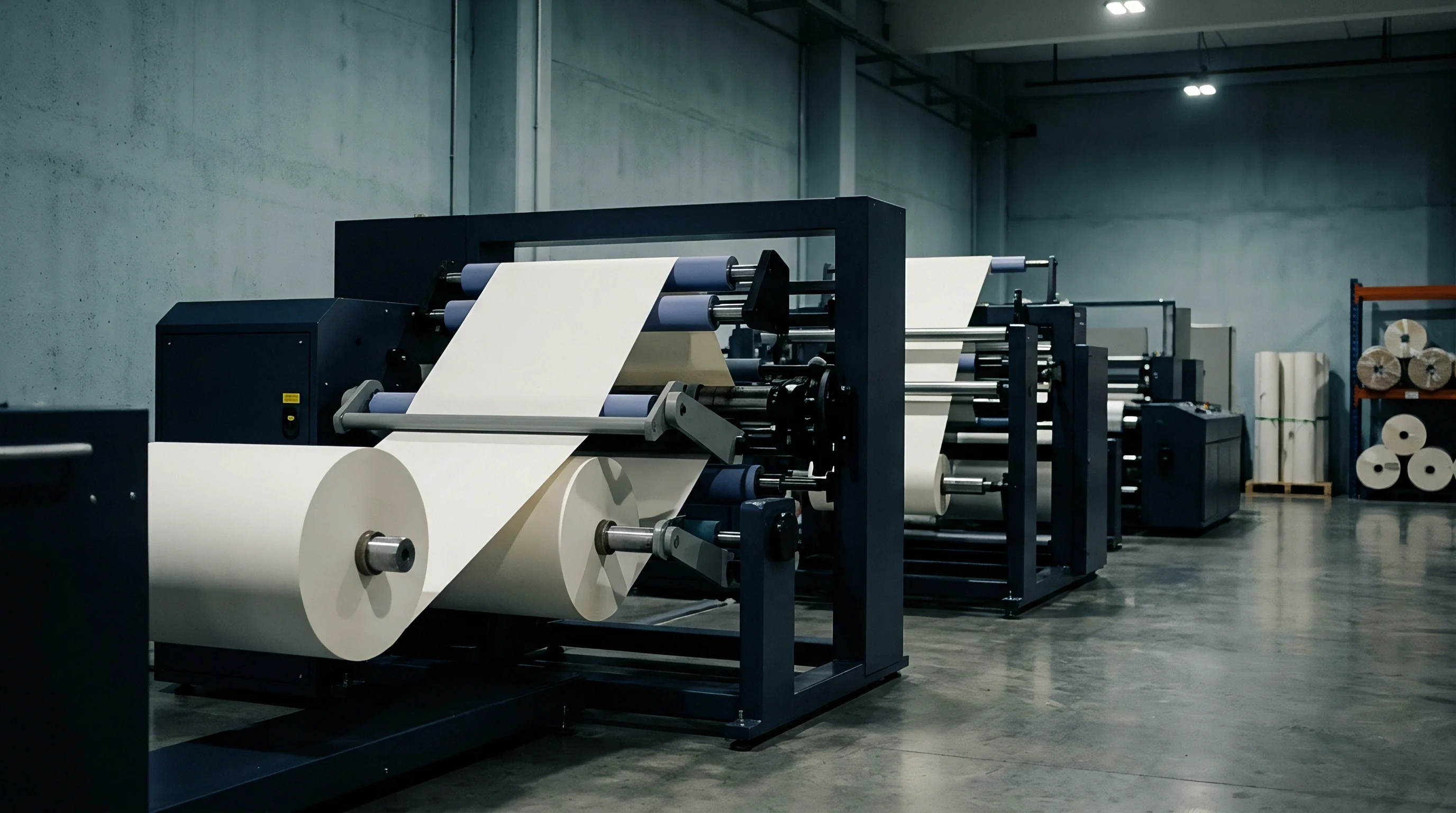
Waterborne barrier dispersions demand active liquid handling before the web meets the transfer roll. These formulations, typically styrene-butadiene emulsions, acrylic copolymers, or ethylene acrylic acid dispersions, rely on delicate surfactant stabilization packages. In a metering roll coater, the fluid leaves an agitated supply tank, passes through a temperature-conditioning heat exchanger, floods the applicator pan, and splits across the rotating rolls.
High roll surface speeds generate continuous shear rates inside the pan ranging between 1,000 and 5,000 reciprocal seconds, while the actual metering nip drives local shear past 500,000 reciprocal seconds.
A circulation drop below twelve liters per minute triggers skinning across the dead zones within two hundred seconds.
Evaporation strips water from the free liquid surface, concentrating solids at the air-fluid boundary. A rise of two percent in solids content elevates low-shear viscosity by forty percent in a typical carboxylated styrene-butadiene latex. Mechanical turnover prevents this surface stagnation.
Metering roll coaters equipped with sub-surface distribution pipes, overflow weirs on both deckle edges, and low-pressure progressive cavity delivery pumps maintain steady volumetric renewal. Diaphragm pumps introduce cyclic pressure pulses that generate standing waves in the pan, creating localized coat weight bands across the cross-direction profile.
Chemical temperature shifts accelerate these instabilities. Waterborne barrier lattices thin out as thermal energy increases, dropping roughly three to five percent in Brookfield viscosity for every one-degree Celsius rise between 20 and 35 degrees Celsius. If the applicator pan runs without jacketed water cooling, friction from the internal shear of the metering rolls warms the coating fluid during a long shift.
Viscosity drops, film thickness decreases, and the delivered dry barrier weight falls beneath the pinhole-free threshold. The fluid supplier invariably claims the run failed because the mill allowed baseboard moisture to drift outside target limits.
Rheology
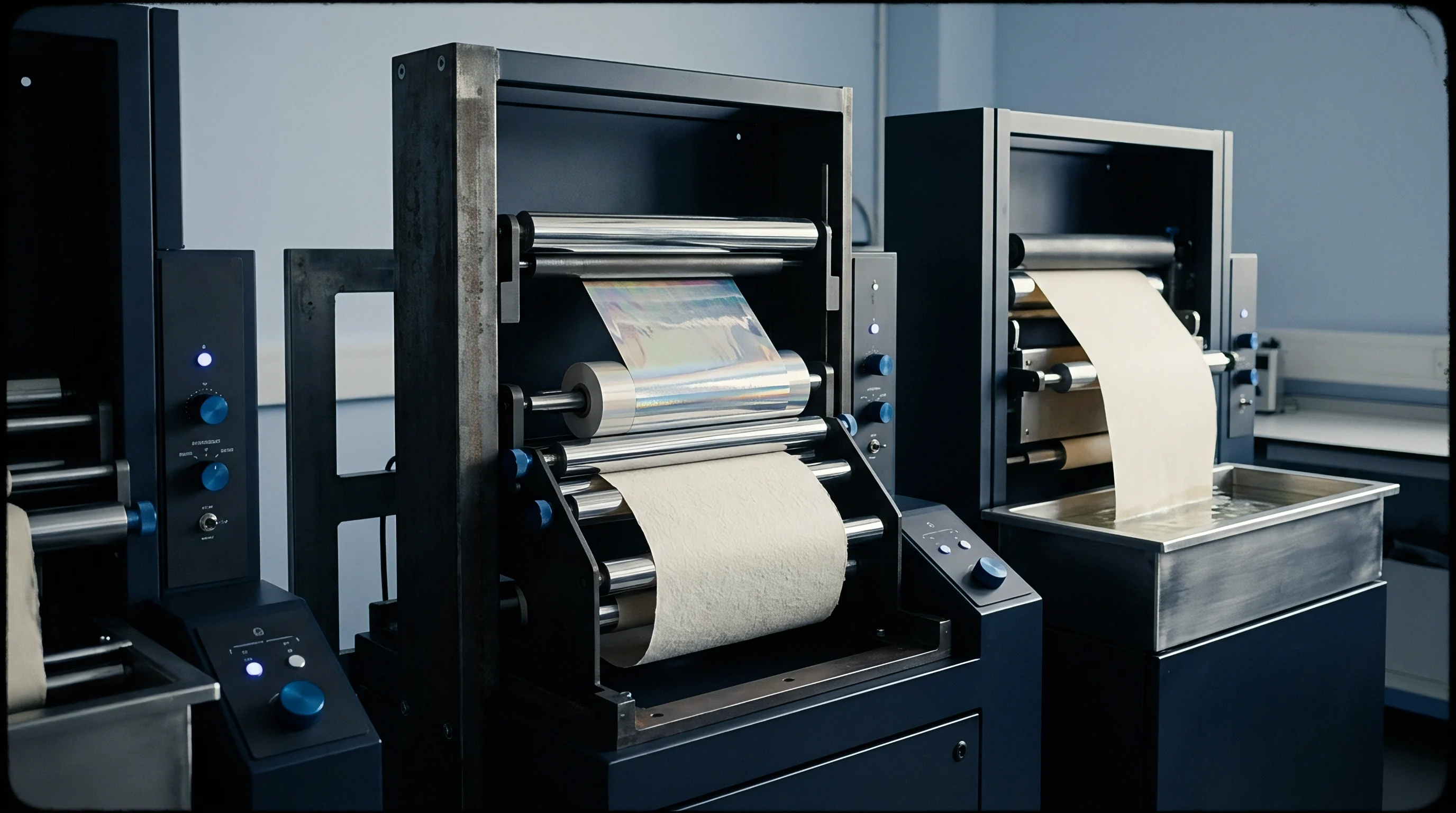
Brookfield measurements conducted at sixty revolutions per minute tell half the truth about metering behavior. A dispersion measuring 450 millipascal-seconds on a benchtop rotational spindle often shears down to twelve millipascal-seconds when forced through the metering nip at production speed. The fluid encounters two completely separate physical regimes on the coating deck: low-shear delivery in the tray, followed instantly by extreme high-shear extension between the rigid rolls.
High Shear Thinning and Thickener Selection
Polymer chemists modify waterborne barrier fluids with associative thickeners to govern roll transfer without causing splattering. Hydrophobically modified ethoxylated urethanes construct temporary micellar networks that break down cleanly under the intense shear of the roll gap, then rebuild structure over several seconds. Hydrophobically modified alkali-soluble emulsions, by contrast, yield steep pseudoplastic profiles with rapid recovery rates.
The exact relaxation time dictates whether the wet film levels out smoothly or freezes into uneven tracks.
| Polymer Dispersion Type | Solids Level (%) | Low Shear Viscosity (mPa.s at 10 s⁻¹) | High Shear Viscosity (mPa.s at 100,000 s⁻¹) | Surface Tension (mN/m) |
|---|---|---|---|---|
| Styrene-Butadiene Latex | 50.0 | 380 | 22 | 41.2 |
| Acrylic Copolymer | 46.5 | 520 | 18 | 36.5 |
| Ethylene Acrylic Acid | 42.0 | 290 | 34 | 33.0 |
| Polyvinyl Alcohol Aqueous Phase | 12.5 | 850 | 78 | 48.0 |
High solids content compacts the inter-particle distance between polymer spheres. At fifty percent solids by volume, steric repulsion and electrostatic double layers dominate fluid resistance to flow. Adding three parts of synthetic layered silicate or talc to improve grease resistance narrows that clearance further, creating a steep yield stress.
The fluid resists flow until the applicator roll applies sufficient force to overcome this threshold.
Hydrogen Ion Equilibrium and Alkaline Drift
Ammonia-neutralized acrylic dispersions lose volatile amine vapor continuously under the constant agitation of open coaters. This evaporation shifts bath pH downward, moving an alkaline bath from pH 9.2 down toward pH 8.1 across an eight-hour run. Because alkali-soluble thickeners rely on carboxylate anion repulsion along the polymer chain for coil expansion, this drop in pH causes polymer chains to coil tightly back upon themselves.
- Alkaline Drift reduces effective hydrodynamic volume of associative polymers, lowering low-shear viscosity by half over a standard operating shift.
- Surfactant Desorption destabilizes hydrophobic particle shells, promoting micro-flocculation that manifests as abrasive grits lodged in the metering nip.
- Foam Generation accelerates as mechanical entrainment traps micro-bubbles in stabilized fluid cells that resist ultrasonic degassing systems.
- Surface Energy Increase hinders dynamic wetting across fast-moving cellulosic fibers, raising contact angles beyond sixty degrees.
Online dosing systems compensate for this evaporation by metering dilute ammonium hydroxide directly into the return loop. Failure to control pH causes unpredictable coat weight variation, even when the gap between metering rolls remains mechanically fixed to within two micrometers. Whether synthetic associative thickeners can completely eliminate the operational necessity of volatile amine neutralization on continuous high-speed roll coaters remains an active industry debate.
Ribbing
Meniscus splitting between counter-rotating or co-rotating rolls generates periodic waves parallel to the machine direction. When the capillary number exceeds a critical threshold, the uniform liquid film exiting the roll nip destabilizes into distinct ridges. Surface tension attempts to smooth these ridges flat, while fluid viscosity and rapid drying resist leveling, leaving permanent corrugated streaks across the coated paperboard.
Capillary Number Boundaries in Roll Nips
The transition between smooth deposition and ribbing depends directly on the ratio of viscous forces to capillary forces. The capillary number combines fluid high-shear viscosity, roll peripheral speed, and equilibrium surface tension. Increasing roll speed pushes the contact meniscus past its stability limit.
Lowering fluid surface tension through fluorosurfactant alternatives delays air entrainment, yet it destabilizes the downstream film split when dynamic surface tension fails to match line velocity.
Dynamic surface tension above forty-two millinewtons per meter at ten milliseconds surface age forces air entrainment at the metering nip.
Smooth roll metering units resolve this instability by adjusting the relative speed ratio between applicator and metering cylinders. Running the metering roll in reverse relative to the applicator roll at a speed ratio between 0.3 and 0.6 introduces pure hydrodynamic shearing in the gap, shaving the liquid boundary layer cleanly. In forward-roll operations, the split is shared equally, doubling the amplitude of film-split ridges on the web.
Defect Manifestation across Converting Passes
Ribbing ruins barrier integrity. The valleys between ridges carry less than half the average coat weight, creating microscopic pathways where grease and water vapor penetrate the substrate. A target coat weight of ten grams per square meter that splits into ridges of fourteen grams and valleys of six grams fails standard kit testing, despite delivering the correct total dry weight across the roll balance.
- Viscosity Suppression lowers the capillary number at the nip by incorporating low-molecular-weight glycols or warming the recirculating fluid bath.
- Reverse Roll Ratio Optimization shears fluid filaments before elongation breaks them into droplets, converting three-dimensional misting into a uniform boundary sheet.
- Smoothing Rod Engagement levels surface ridges immediately following the roll nip, using a rotating chrome or wire-wound rod to mechanically distribute wet ridges before hot air impingement.
- Surfactant Balancing lowers dynamic surface tension without depressing static surface tension to levels that provoke uncontrollable foaming.
Leaving ribbing defects uncorrected yields thousands of linear meters of packaging board that pass nominal gravimetric audits yet fail oil, grease, and water vapor holdout tests entirely.

Draught
Drying air currents determine whether tuned barrier dispersions form an impermeable skin or rupture into micro-blisters. The initial drying zone of a high-speed coating line utilizes flotation dryers or impingement nozzles to drive water away from the wet dispersion layer. Excessive early air velocity strips water from the top ten percent of the wet film faster than water can diffuse upward from the baseboard interface.
Film Formation and Skinning Kinetics
Polymer particles must deform and coalesce to establish a continuous barrier layer. If the drying rate outpaces particle packing, a dry, impermeable polymer skin forms prematurely over a wet, porous underlayer. Trapped water vapor beneath this skin heats up, expands, and vents outward through pinholes that penetrate down to the paper fibers.
The barrier properties collapse immediately.
| Zone 1 Air Temp (°C) | Zone 1 Air Velocity (m/s) | Water Vapor Transmission (g/m²/day, 38°C/90% RH) | Kit Test Rating (TAPPI T 559) | Pinhole Count (per m²) |
|---|---|---|---|---|
| 80 | 15 | 14.2 | 12 | 0 |
| 105 | 22 | 28.5 | 9 | 14 |
| 130 | 30 | 76.0 | 5 | 85 |
| 155 | 35 | 160.0 | 2 | 320 |
Gentle drying profiles protect barrier formation. The wet layer requires moderate temperatures, typically between 75 and 90 degrees Celsius in the initial hood, allowing polymer particles to concentrate uniformly. As solids reach seventy percent, the film enters the consolidation phase, where capillary pressure flattens the spherical latex particles into a dense honeycomb matrix.
Only after full particle coalescence should high-temperature air impingement at 130 degrees Celsius drive off residual water.
Infrared preheating banks placed between the coating deck and the first convection dryer provide uniform volumetric heat without disturbing the wet surface with turbulent air currents. These radiant emitters raise fluid temperature rapidly above the minimum film formation temperature without establishing the steep moisture gradients caused by forced-air nozzles. Smooth fluid leveling requires calm air and gradual heating.
Scrap
Defective barrier application turns expensive virgin fiber into unsellable waste. A reel of solid bleached sulfate board running at four hundred meters per minute generates over two metric tons of paperboard waste within twenty minutes of an uncorrected viscosity excursion. Because barrier coatings alter the repulping characteristics of paperboard, running off-spec material compromises plant-wide fiber recovery economics.

Yield Arithmetic and Pass Waste
Applying barrier dispersions inline on a paper machine or offline on an extrusion-type coater adds processing risks that compound across production steps. Take a typical converting order: fifty metric tons of 250 g/m² paperboard receiving an eight g/m² waterborne barrier coating. The dry polymer formulation represents a raw material cost of 3,800 dollars per dry ton, roughly four times the base cost of the raw board.
Make-ready procedures consume significant substrate. Setting the metering roll gap, establishing circulation bath equilibrium, and aligning dryer temperatures consumes an average of 450 kilograms of baseboard before the first approved roll reaches the winder. If an operator allows the bath solids level to climb by three percent mid-run, dry coat weight jumps from eight to eleven grams per square meter.
That excess three grams consumes 150 kilograms of dry polymer needlessly across the fifty-ton lot, adding 570 dollars in direct formulation losses without providing measurable barrier gains.
Waste calculations must account for coating polymer price multiples alongside baseboard fiber tonnage.
Offline barrier operations face a double waste burden. The initial printing and coating pass carries a four percent scrap allowance. The subsequent die-cutting and creasing pass adds another three percent scrap allowance.
If the barrier dispersion was tuned improperly, the polymer film lacks sufficient elongation at break, causing micro-cracking along the 180-degree crease lines during carton forming. The converter discovers this failure only during customer packing trials, exposing the plant to complete batch rejection claims.
Standard Recyclability Testing Provisions
Recyclability protocols penalize crosslinked or insolubilized barrier chemistries. Under the PTS-RH 021/97 standard recyclability test method, coated paperboard samples undergo laboratory disintegration at four percent consistency for twenty minutes at 40 degrees Celsius. The resulting slurry passes through a 150-micrometer slotted screen to isolate non-dispersed flakes and sticky agglomerates.
Standard clauses in European supermarket contracts dictate that total coarse reject levels must remain below twenty percent of initial coated sample weight, or the entire packaging board grade faces classification as non-recyclable, triggering elevated packaging producer responsibility fees.