Analytical Testing Requirements for Food Contact Packaging Barrier Coatings
Aqueous barrier coatings on food contact paperboard require accredited migration, extraction, and permeation testing matching real food simulants and shelf temperatures.


Migration
Aqueous dispersion treatments on paperboard face rigorous regulatory exposure when exposed to liquid and fatty foodstuffs. Chemical constituents within liquid coatings, including residual monomers, cross-linking catalysts, emulsifiers, and defoamers, possess varying thermodynamic tendencies to partition out of the dry polymer matrix and enter adjacent media. Compliance verification under Regulation (EC) No 1935/2004 and Regulation (EU) No 10/2011 adapted for paper packaging relies on standardised immersion and cell-exposure testing.
Testing protocols quantify both total unspecific chemical release and individual substance transport against legal thresholds established to protect human health and prevent unacceptable organoleptic changes in food products.

Overall Transfer Limits under Standard Simulants
Test method EN 1186 establishes formal procedures using standardized test liquids to quantify total mass passing into contact media. The choice of simulant reflects the polar, non-polar, or acidic characteristics of the intended foodstuff. Simulant A (10 percent ethanol volume per volume) models hydrophilic foods, while Simulant B (3 percent acetic acid weight per volume) represents aqueous media with pH values below 4.5.
Simulant C (20 percent ethanol) evaluates low-alcohol products, and Simulant D1 (50 percent ethanol) targets lipophilic matrices including dairy products and oil-in-water emulsions. Fatty food simulation historically relied on rectified olive oil or substitute solvents such as iso-octane and 95 percent ethanol; modern testing of aqueous barrier coatings predominantly utilizes modified polyphenylene oxide, commercially designated as Tenax, or Simulant D2 for dry, fatty substrates.
Mass transfer evaluations specify distinct exposure conditions based on intended package shelf life and heating instructions. Standard ambient storage testing prescribes exposure for 10 days at 40 degrees Celsius. Hot-fill operations and elevated temperature applications require accelerated contact regimes, such as 2 hours at 70 degrees Celsius or 30 minutes at 100 degrees Celsius.
The overall migration limit stands at 10 milligrams per square decimeter of coating surface area, which translates to 60 milligrams of total substance release per kilogram of foodstuff under standard European surface-to-volume assumptions, with Tenax capturing volatile organic compounds.
| Simulant Media | Chemical Composition | Simulated Food Category | Standard Exposure Regime | Overall Migration Threshold |
|---|---|---|---|---|
| Simulant A | 10% Ethanol (v/v) aqueous solution | Clear aqueous foods, fresh fruits, vegetables | 10 days at 40°C | 10 mg/dm² |
| Simulant B | 3% Acetic acid (w/v) aqueous solution | Acidic foods with pH below 4.5, fruit juices | 10 days at 40°C | 10 mg/dm² |
| Simulant D1 | 50% Ethanol (v/v) aqueous solution | Dairy products, oil-in-water emulsions, alcoholic beverages | 2 hours at 70°C | 10 mg/dm² |
| Simulant D2 | Vegetable oil or MPPO (Tenax) | Free fatty surfaces, solid bakery fats, dry fatty items | 10 days at 40°C | 10 mg/dm² |
Mass transfer testing under EN 1186 yields valid compliance data only when sample edge sealing prevents lateral wicking into raw board fibers.

Specific Chemical Species and Substance Boundaries
Targeted chromatographic methods quantify individual monomers, catalysts, and photoinitiators. Specific Migration Limits govern regulated substances listed in Annex I of Regulation (EU) No 10/2011 and national recommendations such as BfR XXXVI. Analytical laboratories deploy gas chromatography coupled with mass spectrometry or liquid chromatography with triple quadrupole mass spectrometry to detect target compounds down to sub-part-per-million levels.
Common target analytes in water-based dispersion barriers include unreacted acrylic acid, styrene, butyl acrylate, 2-ethylhexyl acrylate, and residual cross-linking agents like aziridines or silanes.
Substrate edge wicking distorts analytical outcomes when evaluating barrier coatings applied to paperboard. Standard immersion techniques allow simulant liquid to penetrate the untreated raw edge of the paper substrate, extracting native paper additives and lignocellulosic components that never contact food in actual package geometries. Laboratories prevent this artifact by clamping samples into single-side contact cells or using specialized glass diffusion cells.
Single-sided cell exposure isolates the coated barrier face, ensuring that measured mass transfer originates exclusively from the functional coating layer.
Analytical laboratories construct specialized test files using precise protocols to document batch compliance before commercial scale-up.
- Single-sided cell clamping isolates the coated surface to prevent solvent contact with raw paper edges during immersion testing.
- Blank substrate subtraction corrects analytical chromatograms for native pulp background compounds identified during solvent extraction.
- Simulant saturation verification ensures high-fat food simulants maintain dissolution capacity for heavy hydrophobic monomers throughout exposure.
- Pinhole integrity screening identifies microscopic barrier defects that allow localized solvent penetration prior to chemical quantification.
Failure to isolate lateral fiber wicking during cell testing produces artificial non-compliance reports, forcing unnecessary polymer reformulations that add tens of thousands of Euros in re-qualification expense.
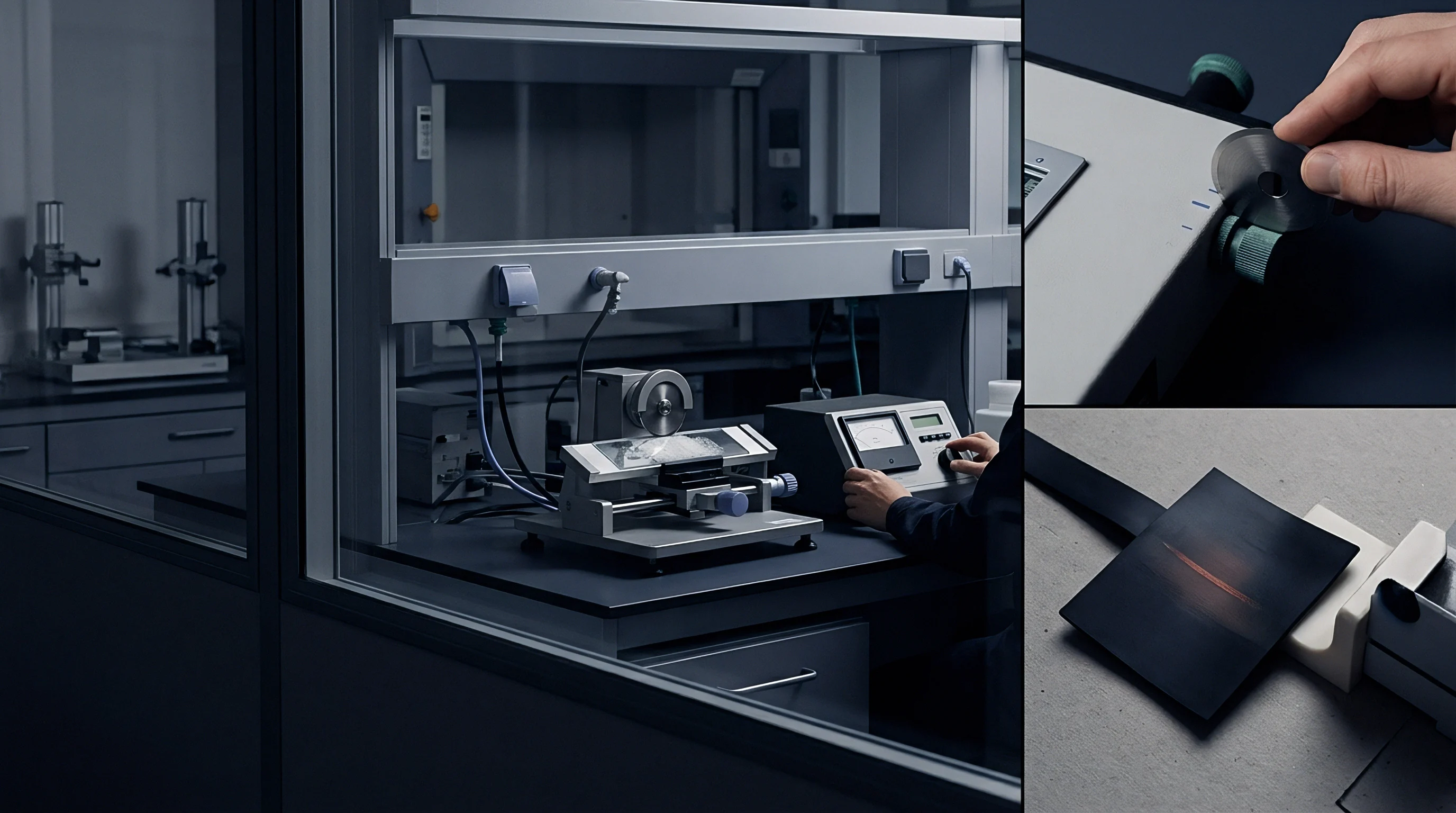

Permeation
Aqueous dispersions, biopolymers, and wax-free coatings on paperboard undergo physical evaluation to prove holdout against vapor, liquid, and lipid transit. The barrier layer must maintain structural continuity across complex paperboard surfaces characterized by surface roughness, pore networks, and hydrophilic cellulose fibers. Deficiencies in coating weight, uniform film formation, or polymer flexibility result in barrier breakdown under mechanical stress or environmental changes.
Physical testing establishes baseline performance parameters for oxygen transmission, water vapor movement, oil holdout, and liquid water absorption under standardized climate environments.

Moisture Vapor Transmission Rate Mechanics
Gravimetric cup methods according to ASTM E96 and electrolytic sensor evaluations under ISO 15106 measure water vapor passage through functional layers. Dry cup and wet cup gravimetric procedures quantify weight change across a sealed barrier disc exposed to controlled relative humidity gradients. Electrolytic and infrared detection systems provide accelerated determination by measuring mass flux across the sample mounted in an automated test chamber.
Test conditions dictate performance interpretation: standard ambient conditions run at 23 degrees Celsius and 50 percent relative humidity, whereas tropical test conditions run at 38 degrees Celsius and 90 percent relative humidity.
Aqueous dispersion coatings containing hydrophilic binder components show significant performance divergence between moderate and humid environments. Synthetic polymer dispersions, such as styrene-butadiene or acrylic copolymers, achieve water vapor transmission rates below 10 grams per square meter per day at 23 degrees Celsius and 50 percent relative humidity. Raising test humidity to 90 percent causes moisture absorption within the hydrophilic polymer segments, swelling the film and increasing polymer chain mobility.
Water vapor transmission rates frequently increase by an order of magnitude under tropical conditioning, rising above 150 grams per square meter per day. Formulators introduce crystalline waxes or cross-linking agents to mitigate humidity-induced barrier loss.
| Coating Technology | Coat Weight (g/m²) | WVTR at 23°C/50% RH (g/m²/day) | WVTR at 38°C/90% RH (g/m²/day) | Grease Resistance (Kit Value) | Cobb 60 Value (g/m²) |
|---|---|---|---|---|---|
| Aqueous Acrylic Dispersion | 8 to 12 | 12 to 25 | 120 to 220 | Kit 8 to Kit 12 | < 5 |
| Extruded Polyethylene (LDPE) | 15 to 18 | 4 to 8 | 15 to 25 | Kit 12 | < 1 |
| Bio-based PLA Extrusion | 20 to 30 | 18 to 35 | 150 to 300 | Kit 12 | < 3 |
| Polyvinyl Alcohol (PVOH) Blend | 4 to 8 | 150 to 400 | > 800 | Kit 12 | 15 to 40 |
Lipid and Solvent Resistance Testing
TAPPI T 559 kit rating protocols and ISO 16532-1 holdout procedures establish surface resistance against nonpolar fats. The TAPPI Kit test applies twelve aggressive solutions composed of varying proportions of castor oil, toluene, and n-heptane to the coated surface. Kit Solution 1 represents pure castor oil with low aggressive solvent character, while Kit Solution 12 contains maximum concentrations of heptane and toluene, exhibiting low surface tension and rapid penetrating power.
A drop of each test solution rests on the coating surface for 15 seconds; visual darkening of the underlying paperboard signals barrier penetration and marks the failure threshold.
ISO 16532-1 provides a non-solvent metric by subjecting the barrier to red-dyed palm kernel oil or olive oil at elevated temperatures, typically 60 degrees Celsius for 4 hours or up to 24 hours, where castor oil penetrates unbonded coating cracks. Aqueous barrier coatings engineered as fluoro-chemical alternatives must achieve Kit values between 8 and 12 to satisfy requirements for fast-food greaseproof packaging, pet food bags, and bakery boxes.
Flexing paperboard along scoring lines prior to barrier testing reveals microscopic polymer cracking that dry flat swatches conceal.
Physical creasing transforms barrier evaluation by introducing mechanical elongation along folded carton edges. Standard testing evaluates flat, uncreased sheet samples under ideal laboratory conditions. Packaging conversion involves scoring, folding, and gluing operations that subject the thin dispersion film to tensile stress.
High-stiffness base paperboards concentrate strain at fold lines, causing micro-fractures in rigid polymer films. Creased sample evaluation using ISO 535 Cobb water absorption tests or oil holdout protocols highlights film flexibility deficiencies. A coating maintaining a Cobb 60 water absorption value below 2 grams per square meter on flat stock may register values above 30 grams per square meter along creased scores if polymer elongation fails to absorb board strain.
A dispersion coating that maintains oil resistance on flat sheets often fails along crease lines unless polymer elongation matches board stiffness during creasing.
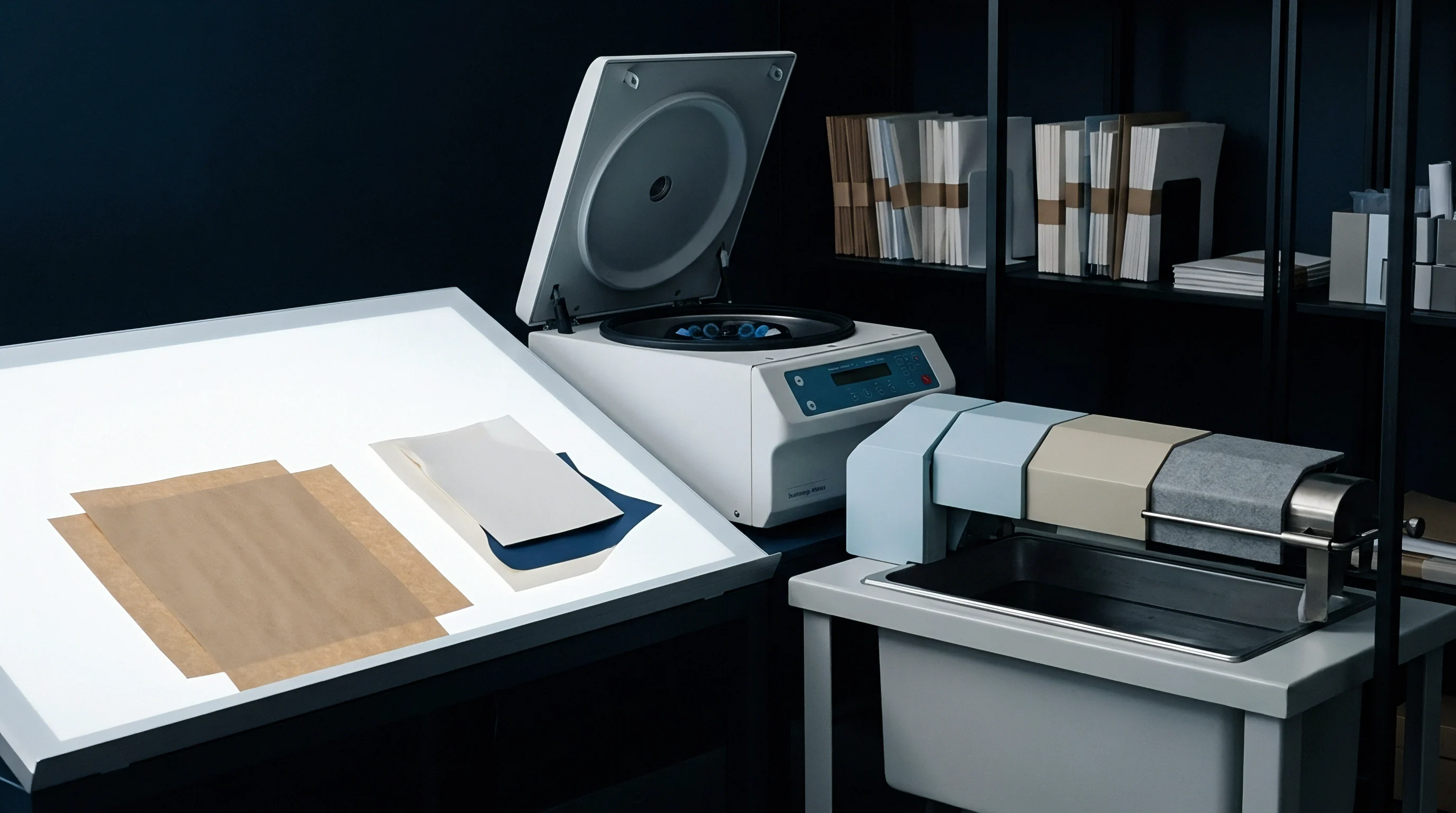

Leach
Water extraction protocols under EN 645 and EN 647 isolate soluble inorganic ions and organic monomers from treated pulp substrates. Paper and paperboard coatings intended for aqueous or fatty contact must undergo rigorous leachability profiling to prevent toxicological transfer into food matrices. Cold water extraction according to EN 645 subjects the sample to aqueous exposure at ambient room temperature, while hot water extraction per EN 647 applies elevated thermal conditioning at 80 degrees Celsius for 2 hours.
The resulting aqueous extracts undergo element-specific spectroscopy and chromatography to ensure non-intended chemical components remain below toxicological action thresholds.

Heavy Metal and Fluorinated Chemical Boundaries
European Resolution AP (2002)1 and BfR Recommendation XXXVI dictate extraction thresholds for elemental species including cadmium, lead, mercury, and chromium. Inductively coupled plasma mass spectrometry measures metal ions in water extracts down to microgram per liter limits. Limits mandate that released lead must not exceed 0.003 milligrams per liter of extract, while cadmium transfer must remain below 0.002 milligrams per liter.
Fluorine detection demands combustion ion chromatography. In addition to heavy metals, wet-strength resins introduced during papermaking release formaldehyde into hot water extracts. Specific limits mandate formaldehyde concentrations stay under 1.5 milligrams per square decimeter of paper packaging area.
Substance extraction patterns differ across recycled furnish and virgin fiber structures.
- Phthalate plasticizer leaching occurs when secondary recycled fibers introduce dibutyl phthalate or diisobutyl phthalate into cold water extracts.
- Formaldehyde extraction spikes stem from incomplete curing of wet-strength resin systems applied in base paper stock.
- Primary aromatic amine release develops through the hydrolysis of aromatic polyurethane laminating adhesives subjected to thermal processing.
- Heavy metal migration originates from contaminated pigment fillers or recycled board furnish lacking adequate de-inking treatment.
What Analytical Evidence Validates Fluorine Free Aqueous Barriers?
Combustion ion chromatography paired with liquid mass spectrometry measures total halogen content down to sub-part-per-million detection thresholds. Regulatory bans across Europe and North America prohibit per- and polyfluoroalkyl substances (PFAS) in food contact materials due to environmental persistence and bioaccumulation risk. Historical greaseproof papers relied on fluorochemical treatments such as side-chain fluorinated polymers or perfluoroalkyl phosphates to lower substrate surface energy.
Validating fluorine-free aqueous dispersion replacements requires demonstrating total fluorine content below 50 milligrams per kilogram of dry paperboard stock, with non-detectable perfluoroalkyl substances verified by targeted LC-MS/MS screening.
Total Organic Fluorine analysis acts as the primary gatekeeping tool for custom verification. Combustion ion chromatography pyro-hydrolyzes paperboard samples at temperatures exceeding 900 degrees Celsius, converting organic fluorine into hydrogen fluoride gas absorbed into an aqueous buffer. Ion chromatography quantifies the resulting fluoride ions.
A Total Organic Fluorine value exceeding 10 parts per million indicates intentional fluorochemical addition, triggering immediate regulatory rejection. Targeted LC-MS/MS protocols complement TOF screening by searching for individual regulated compounds including perfluorooctanoic acid (PFOA), perfluorooctanesulfonic acid (PFOS), and short-chain perfluorocarboxylic acids down to reporting limits of 25 parts per billion.
Compliance with BfR Recommendation XXXVI requires hot water extract formaldehydes to remain under 1.5 milligrams per decimeter square of coated surface.
Structural amine residues originating from azo pigments used in printing inks or breakdown products of polyurethane adhesive cross-linkers present genotoxic risks. Liquid chromatography coupled with tandem mass spectrometry identifies twenty-four regulated aromatic amines down to individual detection limits of 0.002 milligrams per kilogram of food simulant. Primary aromatic amines must show non-detectable signal levels under accredited testing to clear food safety qualification gates.
Incorporating standard clause EN 647 into board purchase contracts obligates the paper mill to re-test cold and hot water extracts whenever wet-strength chemical suppliers alter raw polymer batches.


Screening
High-resolution mass spectrometry coupled with gas and liquid chromatography identifies non-target organic volatile compounds residing inside coated structures. Non-Intentionally Added Substances (NIAS) encompass chemical reaction side-products, polymer breakdown fractions, thermal degradation products, and raw material impurities. While intentional coating additives undergo pre-market evaluation and listing on positive inventory lists, non-intentionally added compounds present unknown structural configurations requiring non-target screening techniques to establish safety profiles under Article 3 of Regulation (EC) No 1935/2004.
Non-Intentionally Added Substances Analysis Protocols
Gas chromatography with time-of-flight mass spectrometry detects volatile and semi-volatile species resulting from thermal degradation of polymer additives. Liquid chromatography coupled with quadrupole time-of-flight mass spectrometry targets polar, non-volatile compounds including oligomeric reaction products formed during coating curing operations. Solvent extraction techniques isolate organic species using solvents of varying polarity, such as ethanol, dichloromethane, or hexane.
Low-molecular-weight oligomers generated during the synthesis of polyacrylic binders or polyester dispersions represent a primary category of detected non-target substances in dispersion coatings.
Toxicological evaluation of identified non-target signals utilizes the Toxicological Threshold of Concern (TTC) concept when specific toxicological data is unavailable. Identified chemical structures undergo alignment into Cramer Structural Classes based on functional group alerts. Cramer Class I compounds exhibit low oral toxicity with an exposure threshold of 1800 micrograms per person per day.
Cramer Class III compounds contain chemical structures suggesting significant toxicity, placing their exposure threshold at 90 micrograms per person per day. Any structural alert indicating genotoxicity triggers a severe action threshold of 0.15 micrograms per person per day, corresponding to a 10 parts per billion concentration limit in foodstuff assuming standard consumption assumptions.

Mineral Oil Hydrocarbon Quantification Dynamics
Online coupled liquid chromatography-gas chromatography with flame ionization detection separates saturated and aromatic carbon fractions. Recycled paperboard substrates and offset printing inks contain Mineral Oil Hydrocarbons split into Mineral Oil Saturated Hydrocarbons (MOSH) and Mineral Oil Aromatic Hydrocarbons (MOAH). MOSH structures consist of open-chain paraffinic and cyclic naphthenic hydrocarbons spanning carbon numbers from C10 to C35.
MOAH structures contain mono- or polycyclic aromatic rings with alkyl side chains, posing potential carcinogenic hazards depending on ring oxidation states.
Quantification protocols mandate pre-fractionation via liquid chromatography to isolate MOSH and MOAH fractions prior to gas-phase separation. Internal standards, including cholestane, bicyclohexyl, and specific alkylated benzenes, calibrate detector response. European draft regulations and national guidance establish maximum migration boundaries for mineral oil fractions transferring from paperboard into dry foods.
MOAH limits require non-detectable levels below 0.15 milligrams per kilogram of foodstuff, while MOSH limits cap cumulative exposure to prevent tissue accumulation in human organs. Functional barrier coatings applied to recycled board must block mineral oil vapor migration, maintaining barrier efficiency over the package design life.
Calculating consumer exposure for non-target substances requires combining measured chromatographic peak concentrations with packaging surface-to-volume parameters.
Assume a food carton constructed from 350 grams per square meter paperboard coated with 10 grams per square meter aqueous acrylic barrier dispersion. The carton houses 200 grams of dry cereal with a surface-to-volume geometry where 3.5 square decimeters of coated board contact 0.2 kilograms of food. Laboratory solvent extraction of the finished board followed by GC-MS screening isolates an unidentified acrylic dimer with a peak response corresponding to 1.2 milligrams per square meter of coating area.
Step one calculates total chemical mass available inside the package geometry:
Concentration per square decimeter equals 1.2 milligrams divided by 100 square decimeters, yielding 0.012 milligrams per square decimeter.
Total substance mass present in the 3.5 square decimeter package equals 0.012 milligrams multiplied by 3.5 square decimeters, producing 0.042 milligrams total substance per package.
Step two translates total package mass into potential food concentration under worst-case 100 percent mass transfer conditions:
Migrated concentration in food equals 0.042 milligrams divided by 0.2 kilograms of foodstuff, yielding 0.21 milligrams per kilogram, or 210 parts per billion.
Step three evaluates the 210 parts per billion concentration against TTC Cramer Class thresholds. A value of 210 parts per billion exceeds the genotoxic threshold of 10 parts per billion and exceeds the Cramer Class III limit of 50 parts per billion (0.09 milligrams per person per day based on 1 kilogram daily intake). The result triggers mandatory structural identification via high-resolution tandem mass spectrometry to rule out genotoxic alerts and verify toxicological safety.
Analytical diagnostic sequences follow strict operational stages to isolate and categorize non-intentional contaminants in coated paper stock.
- Sample homogenization and solvent extraction isolates nonpolar MOSH and MOAH compounds using a mixture of ethanol and hexane for 24 hours at room temperature.
- Liquid chromatography fractionation divides extractables into distinct saturated and aromatic hydro-carbon streams prior to gas-phase analysis.
- Gas chromatography quantification measures integrated peak areas against internal standards tridecane and bicyclohexyl.
- Toxicological threshold evaluation compares identified chromatographic peaks exceeding 10 parts per billion against established Cramer structure classes.
Recycled paperboard lacking a functional barrier layer routinely transfers mineral oil saturated hydrocarbons into dry foods within sixty days of ambient storage.
Recycled fibre brings mineral oil residue, as paper mills using recovered newsprint or mixed paper fractions incorporate mineral oil inks into repulped slurry. Functional barrier dispersion coatings applied to recycled board must exhibit specific holdout against hydrocarbon vapor transport. Testing functional barrier efficiency utilizes surrogate substances such as heptane, decane, tetradecane, and benzophenone spiked into donor substrates per EN 14338.
Gas chromatographic tracking measures surrogate transport through the coating layer over time to calculate diffusion coefficients and predict long-term mineral oil blocking capability.
Low-molecular-weight oligomers detected in chromatographic profiles may represent inert process aids rather than reportable non-intentionally added substances.


Sensory
Organoleptic evaluations under EN 1230 parts 1 and 2 verify that functional surface treatments impart zero off-odors or structural taint to sensitive foodstuffs. High-barrier dispersion coatings containing synthetic polymers, residual solvents, or cross-linking additives can transfer volatile organic compounds through headspaces into food matrices without exceeding chemical migration mass thresholds. Because human olfaction detects specific volatile aldehydes, acrylic monomers, and solvent residues at odor thresholds far below chromatographic detection limits, sensory evaluation acts as a critical pass-fail gate before commercial roll-out.

Off-Odor Intensity Rating and Robinson Test Mechanics
Human panellists grade sample headspaces on a zero-to-four scale following controlled thermal storage over water or simulant substrates. EN 1230-1 evaluates direct off-odor originating from dry packaging material placed inside sealed glass jars stored at 23 degrees Celsius or 40 degrees Celsius for 24 hours. A trained panel consisting of at least six calibrated assessors evaluates the jar headspace, assigning scores from grade 0, indicating no perceptible odor, to grade 4, representing strong, offensive off-odor.
A mean panel score exceeding grade 1.5 constitutes an analytical failure.
EN 1230-2 quantifies structural flavor taint transferring into sensitive food matrices using the Robinson test framework. Milk chocolate, butter, or water acts as the receptor medium placed inside a sealed vessel alongside the coated paperboard, avoiding direct physical contact. Thermal exposure at 23 degrees Celsius for 48 hours allows volatile chemicals to partition from the packaging substrate into the receptor food.
Panellists blind-taste the exposed food medium alongside unexposed control samples to isolate ambient contamination, grading flavor deviation. Odor transfers rapidly into fatty matrices.
| Intensity Grade | Perceptual Description | Flavor Taint Impact | Commercial Compliance Action |
|---|---|---|---|
| Grade 0 | No perceptible odor or taste difference | Zero alteration of food profile | Unconditional pass for sensitive foods |
| Grade 1 | Just perceptible odor or taste difference | Slight perception, food character retained | Conditional pass for general packaging |
| Grade 2 | Moderate odor or taste difference | Noticeable off-flavor in food matrix | Rejection for chocolate, fatty foods |
| Grade 3 | Distinct off-odor or taste alteration | Strong off-taste, product unsalable | Immediate commercial rejection |
| Grade 4 | Strong, offensive off-odor or taste | Severe food contamination | Lot quarantine and batch destruction |
Chemical sources of sensory taint in aqueous coatings stem from residual polymerization reagents and drying failures. Unreacted acrylic acid, butyl acrylate, and styrene monomers release pungent, chemical aromas at parts per billion concentrations. Incomplete thermal drying on the paper machine leaves trace coalescing solvents, such as glycol ethers, trapped within the cross-linked polymer lattice.
Oxidation products formed during high-temperature drying operations, including unsaturated aldehydes like nonenal and hexanal, generate stale, cardboard-like off-odors that rapidly corrupt fatty food matrices like chocolate, dry milk powder, and butter.
Whether synthetic sensory instruments and electronic noses can replace human panellists for rapid inline taint detection remains an unsettled dispute across test laboratories.


Stipulation
Declarations of Compliance signed under Regulation (EC) No 1935/2004 state legal boundaries and tested food categories for every finished batch. Packaging supply chains move compliance risk through written self-declarations supported by accredited analytical dossiers. The Declaration of Compliance represents a legally binding document that links laboratory test results to delivered paperboard reels.
Converting operations, brand owners, and regulatory authorities inspect compliance declarations to verify that analytical testing aligns precisely with real filling line mechanics, shelf-life conditions, and food contact types.

Certificate Scope Alignment and Regulatory Gap Management
Documentation files accompanying paperboard shipments require exact matching between accredited laboratory analytical reports and commercial line parameters. A laboratory test report showing compliant overall migration under Simulant A for 10 days at 40 degrees Celsius fails to support hot-fill applications using acidic sauces. The compliance declaration must state specific constraints, including allowed food types, maximum contact temperatures, maximum storage durations, and surface-to-volume ratio boundaries validated by laboratory protocols.
Dual-use food additives and restricted monomers subject to Specific Migration Limits must appear explicitly within the documentation file.
Customs holds demand accredited lab evidence, and declarations expire upon material reformulation. Batch sampling likewise demands statistical verification. The European Packaging and Packaging Waste Regulation mandates additional design verification targeting recyclability and substance restrictions.
Barrier paperboard must comply with heavy metal limits under Directive 94/62/EC, capping the cumulative sum of lead, cadmium, mercury, and hexavalent chromium at 100 milligrams per kilogram. Furthermore, recyclability testing according to PTS-RH 021/97 or Cepi recyclability laboratory protocols demonstrates that aqueous barrier coatings disperse during repulping, achieving fiber yield above 80 percent without generating un-dispersed polymer micro-plastics or sticky residues that disrupt recycling machinery.
The importer of record accepts full legal responsibility for packaging compliance when customs authorities audit barrier documentation at entry frontiers.