Dispersion Barrier Coating Mechanics under Crease Stresses in Flexo Converting
Flexographic dispersion barrier coatings retain water and grease resistance under crease stresses only when coating elongation capacity matches board strain.

Matrix
Synthetic latex dispersions applied to paperboard form films whose elasticity determines whether the barrier survives rotary or flatbed creasing. As water evaporates and particles coalesce, aqueous polymer systems based on styrene-acrylic copolymers, ethylene-acrylic acid, or bio-based polyhydroxyalkanoates phase-separate into distinct domains. Rheology modifiers, cross-linkers, and wetting agents dictate how these particles pack as the wet film consolidates on the top liner.
Under the impact of a steel scoring rule, local deformation exposes the dry dispersion layer to simultaneous tensile stretch, shear, and through-thickness compression. Polymer domain morphology governs whether the film absorbs these combined stresses or yields to micro-cleavage.
A barrier film’s strain limits stem from its glass transition temperature, molecular weight distribution, and functional monomer ratios. Low glass transition polymers stay rubbery at ambient converting temperatures, tolerating tensile elongations over two hundred percent. Conversely, high glass transition resins yield rigid barriers with strong planar grease and water vapor resistance, yet shatter at strains under five percent.
Balancing these behaviors typically requires a dual-phase architecture. Core-shell latexes pairing a soft elastomeric core with a hard, hydrophobic acrylic shell coalesce without blocking in stacked reams, while retaining enough compliance to absorb localized crease energy.
Surfactant distribution across the drying matrix directly affects cohesive strength. Under radiant heat, mobile surfactant molecules migrate toward the film-air interface or accumulate along the polymer-substrate boundary. High boundary concentrations hinder particle welding, leaving weak shear planes where micro-cracks initiate under scoring rule impact.
In practice, latex films fail along the crease whenever elongation at break drops below eighteen percent under standard ambient conditions. Formulators counter this boundary weakness with polymerizable surfactants that lock directly into the latex backbone, suppressing migration during high-speed hot air drying.
Moisture drives polymer mobility.
Water absorption into the base paperboard alters coating drying kinetics. Hydrophilic substrates pull water from the wet film by capillary suction, forcing latex particles into close contact before drying tunnels can heat and deform them. This rapid dewatering introduces internal tensile stresses, leaving sub-surface voids that concentrate stress during conversion.
Controlling liquid uptake through internal rosin or alkyl ketene dimer sizing stabilizes drying rates, giving polymer chains enough time for full interdiffusion before the board meets the folding dies.

Polymer Phase Distribution and Elongation Thresholds
Aqueous synthetic latex particles fuse through a familiar sequence: water evaporation, close packing, particle deformation, and inter-chain diffusion. The minimum film-forming temperature establishes the minimum thermal energy required for complete particle fusion on flexographic decks. Running web temperatures below this point leaves uncoalesced particle boundaries in the dry layer, resulting in brittle film fractures along the score line under negligible strain.
Coalescing aids temporarily soften particle shells to drop the minimum film-forming temperature and promote boundary interdiffusion. These solvents must flash off completely during drying so the resin regains its baseline glass transition temperature before the web hits the rewind roll. Incomplete evaporation leaves residual plasticizer in the coating, which improves folding flexibility at the cost of oil holdout.
Mineral pigments alter the mechanical response of the barrier matrix. Platelet pigments such as hydrophobic talc and kaolin clay extend diffusion pathways for water vapor, but high pigment volume concentrations raise the elastic modulus and sharply reduce elongation at break. Once loading crosses the critical pigment volume concentration, binder starvation creates microscopic voids around mineral platelets that turn into immediate grease pinholes during scoring.

Viscoelastic Relaxation under Rapid Crease Strain
Creasing tools on high-speed carton lines deform paperboard within two to ten milliseconds. At these strain rates, dispersion coatings act according to their high-frequency viscoelastic limits. While slow folding allows polymer chains to disentangle and reorient along the strain axis, millisecond impact forces the coating to respond as a glassy elastic solid, causing stress accumulation and cracking along the crease shoulder.
Molecular weight distribution controls how fast a resin relaxes under sudden displacement. Polydisperse resins with low-molecular-weight fractions relax rapidly, dissipating localized folding stress, while high-molecular-weight fractions supply tensile strength and barrier resistance. Striking this balance is critical on high-speed lines.
Cross-linking density requires similar caution: excessive covalent bridging freezes network mobility, preventing the conformational shifts needed to absorb crease impact.
Plasticization shifts both the glass transition temperature and the relaxation spectrum of the coating. Internal plasticization via soft acrylate copolymerization builds non-migrating flexibility suitable for food packaging contact. External plasticizers lower initial stiffness effectively, but they tend to leach into underlying cellulose fibers over time, leaving the barrier prone to delayed embrittlement and cracking during secondary packaging stages.
Whether ultra-high-molecular-weight styrene-acrylic copolymers can resist shear-induced chain scission during double-crease scoring without raising wet dispersion viscosity remains an open problem in formulation chemistry.

Furnish
Fiber selection and ply structure define the mechanical substrate for aqueous barrier dispersions. Folding boxboard, solid bleached board, and coated recycled board react distinctly to scoring tools. The fold places the inner crease under compression while stretching the outer liner under tension, transferring substrate displacement directly to the barrier layer.
The fiber species used in the top liner, their refining level, and ash content determine whether the board yields smoothly or suffers delamination that shears through the overlying barrier.
Bleached softwood kraft in top plies provides long, fibrillated fibers that distribute folding stresses across a broad network. The higher tensile energy absorption of softwood fibers keeps the liner from tearing locally under the rule. Bleached hardwood kraft improves surface smoothness for coater decks, but its shorter fibers show poorer crack resistance under cross-direction scoring strains.
Furnish blends balance the smoothness required for uniform flexo deposition against the toughness needed to survive creasing.
Recycled fibers introduce structural complications for dispersion coatings. Repeated drying cycles hornify secondary fibers, reducing their bonding capacity and elastic recovery. Elevated mechanical pulp fractions or stickies generate stiffness variations across the sheet.
Under a creasing rule, stress concentrates at these unbonded fiber junctions, splitting the top liner and rupturing any acrylic or polyolefin barrier layer above it.
Softwood fibres preserve tear resistance.
Board density controls shear propagation.
Internal bond strength, measured by Scott Bond testing, determines whether plies separate cleanly during scoring. Insufficient internal bond allows delamination to run unchecked across broad Z-directional zones, producing spongy crease beads that over-stretch the coating. Excessively high internal bonding prevents ply separation entirely, forcing the board to absorb the rule’s impact through sharp local shear that tears the surface film.
Controlled delamination in inner mechanical pulp plies effectively cushions the top liner and preserves the coating.
Internal sizing dictates how far wet dispersion formulations penetrate the sheet. Over-sized board repels aqueous droplets, preventing mechanical anchoring into the fiber network and causing the barrier to flake off during folding. Unsized board draws binder deep into capillary pores, starving the surface layer of polymer and leaving a fragile, poorly coalesced film that cracks upon creasing.
Layered Structural Ply Deformation
Multi-ply boards manage scoring loads by distributing deformation through the sheet thickness. The top liner bears severe tensile strain on the outer radius or sharp compression on the inner fold. Middle plies of stone groundwood, thermomechanical pulp, or recycled furnish act as a compressive cushion, collapsing beneath the rule to generate an internal delamination hinge.
Top-liner basis weight directly affects coating strain. Liners exceeding sixty grams per square meter shift the dispersion layer further away from the neutral bending plane, increasing tensile elongation during ninety- and one-hundred-and-eighty-degree carton folds. Lighter top plies backed by compressible mechanical cores keep the barrier closer to the neutral axis, lowering the ultimate elongation required of the polymer film.
Size press starch alters top-liner elasticity and surface porosity. Starch solutions stiffen the fiber network, increasing tensile strength at the expense of flexural strain-to-failure. Replacing surface starch with elastic synthetic sizing agents improves sheet compliance, enabling the top liner to yield under creasing dies without transferring micro-fractures to the barrier layer.
Inter-Fibre Bond Rupture Mechanisms
Scoring impacts shear the hydrogen bonds that hold top-liner cellulose fibers together. Surface-parallel tensile forces pull fiber ends from the network, opening micro-voids directly beneath the coating. Deprived of physical backing, the unsupported barrier stretches unevenly across these gaps, producing pinholes that fail under hydrostatic grease pressure.
Refining fibrillates top-liner pulps, increasing specific surface area and fiber-to-fiber contact. Well-refined pulps create dense, low-permeability surfaces that provide excellent holdout for water-based coatings. However, high sheet density limits Z-directional compression, demanding greater scoring force and increasing shear along the coating-fiber interface.
| Substrate Grade | Grammage (g/m²) | Scott Bond (J/m²) | Top-Liner Fiber Furnish | Pinhole Density Post-Crease (pts/m) | Heptane Holdout Post-Crease (s) |
|---|---|---|---|---|---|
| Solid Bleached Board (SBB) | 280 | 185 | 100% Bleached Kraft (60/40 Softwood/Hardwood) | 0.2 | 1800 |
| Folding Boxboard (FBB) | 275 | 130 | Bleached Softwood Kraft Liner / Mechanical Core | 1.1 | 1450 |
| Coated Recycled Board (CRB) | 300 | 95 | Deinked Pulp / Mixed Waste Core | 8.4 | 220 |
| Unbleached Kraft Board (CUK) | 260 | 210 | 100% Unbleached Softwood Kraft | 0.0 | 1800 |
Top-liner roughness measured by Bendtsen or Parker Print Surf methods dictates film uniformity. Rough board displays pronounced peak-to-valley topography, causing flexo-applied dispersions to pool in depressions while leaving fiber crests thinly coated. During folding, stresses trigger barrier failure across these thin spots wherever coat weight falls below the critical threshold for film continuity.
Coating penetration into liner voids governs interface adhesion. Deep penetration consumes dispersion without improving surface holdout, whereas purely superficial wetting leads to flaking during conversion. Proper pulp refining coupled with balanced surfactant dynamics establishes mechanical interlocking without compromising dry film integrity.
The following failure mechanisms degrade paperboard barrier performance along package crease lines:
- Inter-ply bond shearing causes uncontrolled separation of middle furnish layers, widening the crease bead profile and over-stretching top-liner coatings.
- Fiber pull-out cracking occurs when surface cellulose fibers detach under tensile loading, creating pinholes through overlying dispersion films.
- Transverse compressive collapse crushes bulky paperboard cores, generating sharp localized bending radii that exceed polymer fracture limits.
- Coating adhesive peeling develops along score lines when wet wetting dynamics leave weak surface boundary layers between latex and fibers.
Higher softwood kraft content in the top liner provides greater flexural tolerance before micro-cracks propagate into visible surface splits.

Ridge
Creasing tooling geometry dictates how mechanical stress transfers to dispersion barriers during scoring. A male rule drives the paperboard into a female matrix channel, bending the plies to form a permanent internal bead. Tool dimensions ~ rule thickness, channel width, channel depth, and counter-plate clearance ~ set the bending radius of the coated liner.
Mismatched tooling concentrates strain, causing microscopic film ruptures even in high-elongation latexes.
Score depth dictates liner stretch.
Die clearance governs stress concentration.
Rule thickness must match the paperboard caliper and structural grade. Standard rules range from two-point (0.71 mm) for low grammage up to three-point (1.07 mm) or four-point (1.42 mm) for heavy folding boxboard. A rule that is too thin cuts into the board like a blade, severing top-liner fibers and the coating above them.
An overly thick rule requires excessive tonnage, inducing wide micro-cracking across the score shoulders.
Channel sizing balances sheet compression against side clearance. Standard practice sets channel width to the rule thickness plus one point four to one point seven times board caliper. Narrow channels pinch the board edges, generating severe transverse shear that fractures top-liner coatings.
Excessively wide channels fail to seat the board firmly, yielding an ill-defined bead that splits during subsequent folding operations.
Where Does Polymer Pinholing Originate during Crease Compression?
Pinholing along scores begins on the compressed side of the bead before the carton is folded. As the male rule enters the board, it compresses the coated liner, forcing latex domains against underlying fibers. Pigment platelets within the formulation shear against the binder under this load, opening microscopic voids along pigment-polymer interfaces.
When the carton folds through ninety or one-hundred-and-eighty degrees, this initial compression converts into severe tensile strain across the crease crown. The micro-voids opened during indentation act as initiation sites, accelerating tear propagation through the polymer layer. Microscopic inspection shows pinholes concentrating around fiber crossovers where topography generates local strain spikes.
Sheet orientation alters crease mechanics. Cross-direction scores break across aligned fibers, requiring deeper penetration to establish a stable fold and exposing the coating to higher shear. Machine-direction scores run parallel to primary fiber alignment; they require lower penetration force but remain prone to crack propagation along fiber boundaries.
Water vapor transmission rate across a ninety-degree crease increases from four grams per square meter per day to forty-two grams per square meter per day when tested at thirty-eight degrees Celsius and ninety percent relative humidity.
Press operating speed changes penetration dynamics. Shock loads from high-speed rotary dies send lateral stress waves through the sheet. Under these high strain rates, the polymer cannot relax viscoelastically, resulting in brittle failure along score margins where lower converting speeds would yield plastic deformation.

Female Die Channel Width Calibration
Female creasing channel calibration minimizes mechanical stress on the barrier. Converting operations use laser-cut steel counter-plates or milled matrices to maintain channel profiles across broad layouts. Tolerances on channel depth and width must remain within plus or minus ten micrometers to prevent localized coating rupture from uneven rule engagement.
Milled channels with rounded entry shoulders allow the sheet to draw smoothly into the matrix. Sharp channel corners scrape the coated surface during rule penetration, shearing polymer away from fiber peaks. Adding a zero point two millimeter radius to female channel shoulders lowers friction and preserves barrier continuity along the crease edges.
Counter-plate hardness influences ply deformation. Hard phenolic or steel plates yield sharp, narrow crease beads with precise folding lines, though they subject the surface coating to high localized strain. Softer polyurethane matrix tape cushions rule penetration, reducing surface fracturing while producing slightly wider beads that require higher folding torque during cartoning.

Creasing Rule Indentation Force Dynamics
The penetration profile of a creasing rule comprises elastic compression, plastic shear yield, and bottom-dead-center dwell. Force peaks during the plastic shear phase, where plies delaminate internally to absorb rule penetration. High peak loads correlate directly with coating rupture along the crease shoulders.
Platen height determines final penetration depth into the channel. Over-creasing by as little as zero point zero5 millimeters raises penetration forces exponentially, crushing the top liner and tearing the dispersion film. Proper press setup sets the rule to the minimum depth needed for internal ply separation without generating surface shear.
Convertors optimize scoring press settings using the following mechanical adjustment sequence:
- Measure paperboard caliper using an ISO 534 compliant micrometer across three web width points.
- Select creasing rule thickness matching paperboard caliper specifications per standard converting tables.
- Calculate female channel width using rule thickness plus one point six times measured board caliper.
- Install precision laser-cut steel counter-plates calibrated to target channel dimensions.
- Set converting press tonnage to minimum die engagement height and run single test sheet.
- Inspect internal crease bead formation under optical microscopy to verify controlled ply delamination.
- Perform pin-drop dye penetration testing along crease lines using TAPPI T 454 standard turpentine reagent.
- Adjust scoring rule impression height in increments of ten micrometers until dye penetration drops to zero.
Misalignment between scoring rule and die channel can scrap sixty-four metric tonnes of pre-coated barrier folding boxboard through widespread pin-drop failure.
Flexo
Flexographic decks apply aqueous dispersion barriers to moving webs using ceramic anilox rolls, chambered doctor blades, and photopolymer or elastomeric sleeves. Wet laydown, leveling, surface wetting, and tunnel drying rates govern final dry film thickness and defect density. At speeds above three hundred meters per minute, deck calibration must prevent air entrainment, foaming, and pinholing before web heating triggers latex coalescence.
Dry solids influence film thickness.
Wet film weight dictates coverage.
Anilox engraving governs wet delivery to the sheet. Coating volumes range from eight to eighteen cubic centimeters per square meter, depending on bath solids and dry coat weight targets. Coarse screens between eighty and one hundred twenty lines per inch feature open cells that deposit heavy wet films, ensuring coverage over rough fiber networks.
Finer screens lower delivery volume, yielding thin wet films prone to dewetting and pinholing over fiber peaks.
Chambered doctor blades ensure uniform metering across the roll face. Steel or ceramic-tipped blades set at reverse angles shear surplus coating cleanly from anilox lands without hydraulic buildup. However, air drawn into the chamber by high-speed cell rotation can generate fine foam in the dispersion.
When transferred to the board, entrained bubbles burst during drying, leaving microscopic craters that turn into leak paths upon folding.

Anilox Cell Volume and Wet Film Layering
Dispersion transfer from anilox cells depends on cell geometry, liquid surface tension, and web speed. Quad-grooved or tri-helical engravings empty more completely than standard hexagonal cells. Transfer efficiencies above fifty percent ensure continuous wet laydown, preventing the air entrainment patterns that break barrier continuity after drying.
Applying barrier dispersions across two consecutive stations yields a much more uniform film than running a single heavy application. Splitting laydown across two stations at six grams per square meter wet weight eliminates pinholes, as the second layer bridges voids left by the first. Dual application also allows applying an elastic, highly adherent primer directly to the raw board, followed by a hard, hydrophobic top coat engineered for water vapor resistance.
DIN 55437 specifies scoring channel tolerances that prevent micro-fracturing of top-liner mineral coatings during female die entry.
Dispersion viscosity, checked via Zahn cup or rotational viscometer, governs leveling after roll transfer. High-shear viscosity inside the doctor blade chamber must remain low for clean cell metering, while low-shear viscosity on the sheet must stay high enough to prevent excessive capillary wicking into fibers. Defoaming agents with hydrophobic particles destabilize air bubbles within three seconds of transfer, allowing the wet film to level before entering the drying tunnel.
Hot Air and Infrared Drying Kinematics
Drying tunnels balance infrared radiation and high-velocity air impingement to remove water without disrupting leveling. Overly aggressive heating causes skinning, where the surface polymer layer coalesces prematurely and seals in moisture. Trapped steam boils in later heating stages, puncturing the barrier to leave micro-blisters that burst during scoring.
Nozzle velocity in impingement hoods should remain below twenty-five meters per second during early drying stages. Higher velocities ripple the wet film, creating thickness variations that fail under crease stress. Progressive drying profiles step web temperatures from fifty degrees Celsius at the inlet to ninety-five degrees Celsius at the exit, driving full latex coalescence without embrittling cellulose fibers.
| Anilox Volume (cm³/m²) | Application Coating Stations | Dry Coat Weight (g/m²) | Tunnel Drying Air Temp (°C) | Cobb 1800s Water Absorption (g/m²) | Crease Kit Value (TAPPI T 559) |
|---|---|---|---|---|---|
| 10.0 | Single Coater Deck | 4.2 | 110 | 18.5 | Kit 4 |
| 14.0 | Single Coater Deck | 6.1 | 125 | 9.2 | Kit 7 |
| 8.0 + 8.0 | Dual Sequential Decks | 7.5 | 95 / 115 | 1.8 | Kit 12 |
| 12.0 + 12.0 | Dual Sequential Decks | 11.2 | 90 / 110 | 0.6 | Kit 12 |
Web tension control through coater decks prevents sheet stretching while the board is wet. Water absorption from the coating softens the sheet, lowering its elastic modulus and leaving the web vulnerable to necking under high draw tension. Web elongation exceeding zero point one percent ruptures forming polymer networks, introducing latent micro-fractures that emerge as pinholes during conversion.
Chill rolls at the tunnel exit drop web temperatures below the polymer glass transition before rewinding or inline die cutting. Winding hot board coated with soft latex causes blocking, where the barrier adheres to the uncoated back of the adjacent wrap. Pulling blocked wraps apart on the unwind stand strips the coating from the liner, destroying barrier integrity across the entire roll.
Convertors optimize flexographic barrier coating operations using this operational decision checklist:
- Anilox volume verification confirms wet film delivery meets minimum coat weight requirements for target paperboard roughness profiles.
- Chamber pressure adjustment eliminates air suction along doctor blade seals to prevent micro-foam transfer onto coating rollers.
- Dynamic surface tension monitoring ensures coating wetting tension remains ten millinewtons per meter below base substrate surface energy.
- Drying hood velocity balancing prevents surface skinning while maintaining complete water vapor removal before reel chill rolls.
Pinholing along folded edges may stem from excessive drying tunnel temperatures or from surface tension imbalances during wet film leveling.
Verification
Barrier testing protocols assess coating continuity on flat sheets and creased folds. Quality control must differentiate between planar performance and post-crease retention to predict packaged product shelf life. Standard methods ~ Cobb water absorption, grease Kit ratings, turpentine holdout, and water vapor transmission ~ require sample conditioning per ISO 187 at twenty-three degrees Celsius and fifty percent relative humidity.
Pinholes destroy barrier performance.
Standardized creasing protocols ensure reproducible mechanical strain across specimens. ISO 5637 and TAPPI T 512 specify sample preparation using a weighted steel roller passed over a folded strip under controlled speed and pressure. Automated laboratory creasers eliminate operator bias by fixing rule penetration depth and fold angle.
Protocols require evaluation across both machine- and cross-direction folds, as well as intersecting ninety-degree junctions.
Pin-drop dye testing with red dye or turpentine provides rapid verification of fractures along the crease. Solvents applied to the score line penetrate coating cracks within thirty seconds, staining underlying fibers to highlight failure sites. Optical imaging systems quantify the percentage of stained crack area, establishing acceptance thresholds for commercial reels.
A dispersion barrier that loses tensile strain capacity under web drying will rupture along crease lines regardless of board caliper.
Cobb absorption testing per ISO 535 measures liquid uptake through creased paperboard over defined contact periods. Standard Cobb 60 and Cobb 1800 durations assess short-term spill resistance and prolonged storage stability. Elevated Cobb values on creased samples reveal coating rupture, where water wicks laterally into middle plies, softening edges and compromising box rigidity.
Cobb Water Absorption across Folded Margins
Edge wicking through folded scores compromises carton strength in humid cold-chain environments. Clamping Cobb test rings directly over score intersections isolates damaged barrier areas under hydrostatic pressure. Water migrating through micro-cracks swells underlying cellulose, generating internal swelling stresses that widen initial fractures.
Waxing sample edges isolates crease absorption from cross-sectional perimeter wicking. Comparing planar Cobb results with wax-sealed creased values establishes a Crease Barrier Index. Values near 1.0 indicate high polymer compliance through the fold, while index values above 3.0 denote severe mechanical barrier failure during scoring.
| Dispersion Polymer Type | Glass Transition Temp (°C) | Flat Cobb 60s (g/m²) | Creased Cobb 60s (g/m²) | Flat Kit Value (TAPPI T 559) | Creased Kit Value (TAPPI T 559) |
|---|---|---|---|---|---|
| Standard Styrene-Acrylic | +22 | 0.8 | 14.2 | Kit 12 | Kit 3 |
| Soft Acrylate-Modified Emulsion | -5 | 2.4 | 3.1 | Kit 8 | Kit 8 |
| Core-Shell Dual Phase Latex | +8 | 1.1 | 1.9 | Kit 11 | Kit 10 |
| Wax-Grafted Polyolefin Dispersion | +15 | 0.5 | 8.6 | Kit 6 | Kit 2 |
Surfactant extraction during extended Cobb runs skews water uptake measurements. Residual surfactants in the coating can dissolve into the test liquid, lowering surface tension and accelerating capillary draw into micro-cracks. Rinsing test pieces with deionized water prior to Cobb testing removes free surface surfactants, yielding truer holdout figures for beverage container applications.
Turpentine and Heptane Resistance Protocol Execution
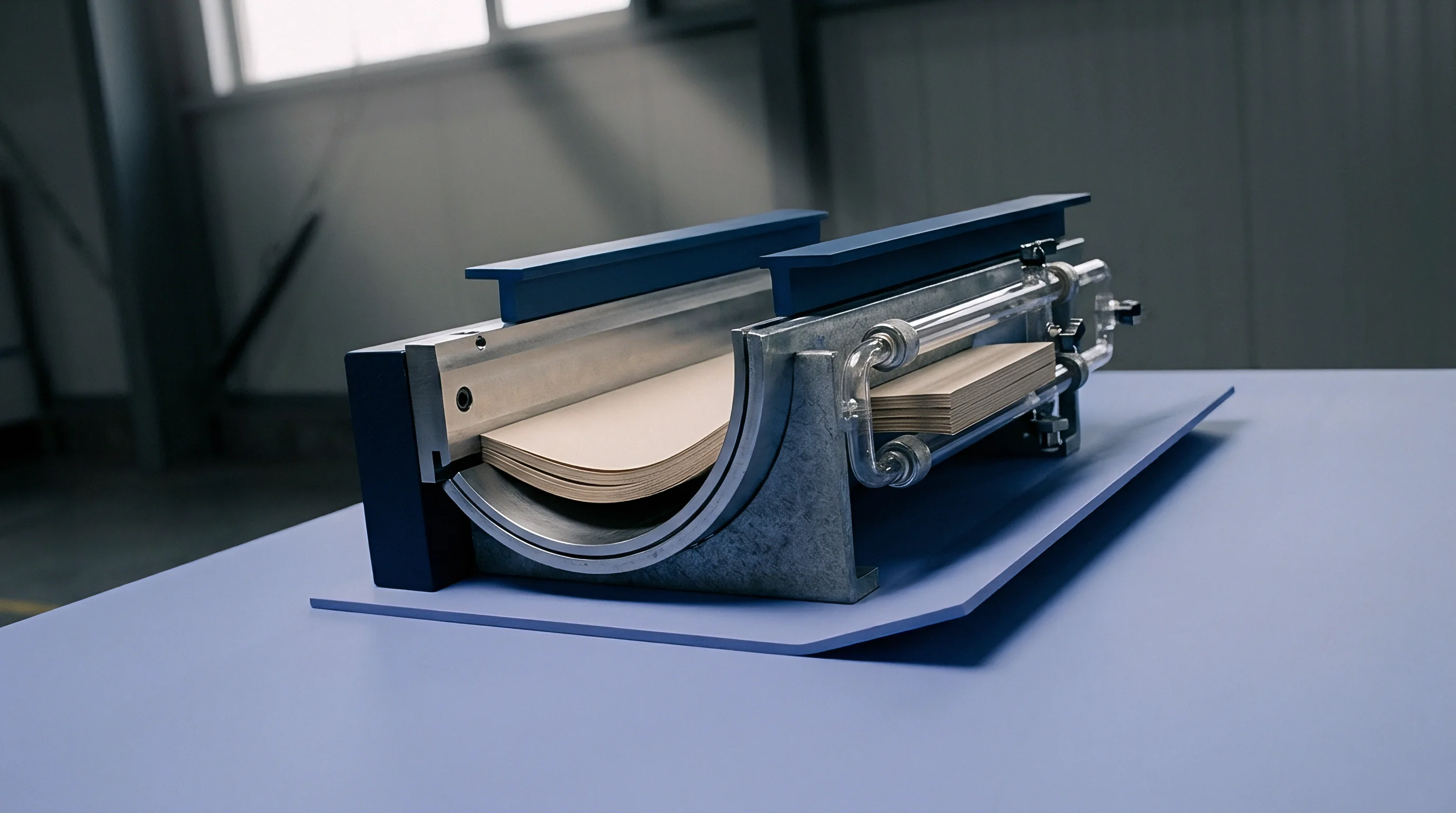
TAPPI T 454 turpentine testing evaluates solvent barrier retention across package creases. Dry silica sand deposited on creased samples receives dye-saturated turpentine, while a white backing sheet below records penetration time. Rapid staining of the backing paper under the score line indicates through-film fractures from the die.
TAPPI T 559 Kit testing uses graduated mixtures of castor oil, toluene, and n-heptane with decreasing surface tensions. Higher Kit numbers demand lower surface tension resistance from an uninterrupted coating. Dispersions achieving Kit 12 on flat sheets frequently drop to Kit 3 after folding due to stress micro-cracks over surface fiber peaks.
Quality dossiers verifying paperboard barrier integrity across converted shipments must include the following test documentation components:
- Grammage and caliper certificates verifying compliance with ISO 536 and ISO 534 dimensional specifications across all master rolls.
- Planar and creased Cobb data covering sixty-second and eighteen-hundred-second water absorption durations under ISO 187 atmospheric conditioning.
- Pin-drop dye penetration imagery displaying optical macro-scans of creased line intersections post TAPPI T 454 reagent exposure.
- Grease resistance Kit test reports recording pre-crease and post-crease performance across machine and cross-direction score lines.
Incorporating ISO 16532-2 grease penetration failure limits directly into raw material purchase contracts shifts financial liability for barrier breakdown back to the paperboard coating mill whenever delivered reams meet nominal basis weight.

Tariff
The economic case for dispersion barriers hinges on landed cost models that factor raw materials, converter yield, trim scrap, freight volume, and extended producer responsibility fees. Shifting from extruded polyethylene or foil laminates to flexo dispersions alters yield per metric tonne. Thinner, lower-density coatings reduce overall sheet grammage, yielding freight savings while meeting packaging recyclability mandates.
Yield loss alters unit margins.
Recyclability defines market access.
Paperboard is purchased by weight, but converted folding cartons are sold by unit count. Applying dispersion barriers via flexo adds six to twelve grams per square meter of dry coat weight, compared to eighteen to thirty grams per square meter for polyolefin laminates. This lower coat weight yields more square meters per purchased tonne, directly lowering substrate cost per carton.
Make-ready scrap and trim waste bear heavily on batch economics. Setting up rotary creasing stations for dispersion barriers requires trial impressions to dial in rule penetration depths. Waste during die setup reduces realized carton yield.
Standardizing counter-plate channels and pre-calibrated scoring dies keeps setup waste below zero point five percent of total job volume.

Converter Yield and Trim Waste Arithmetic
Landed unit costs integrate substrate pricing, coater machine rates, die-cutting scrap, and freight across delivered carton volumes. A standard cost model compares a three hundred gram per square meter solid bleached board coated with twenty grams of extruded polyethylene against the same base board carrying eight grams of styrene-acrylic dispersion.
The polyolefin-laminated sheet weighs three hundred and twenty grams per square meter, delivering three thousand one hundred and twenty-five square meters per metric tonne. The dispersion-coated board weighs three hundred and eight grams per square meter, yielding three thousand two hundred and forty-six square meters per metric tonne. This dispersion specification provides a three point eight percent yield advantage in usable surface area per purchased tonne, reducing landed substrate costs before considering recycling levies.
Polymer film continuity matters more than total coat weight when evaluating grease pinholing along package scores.
Transport costs depend on payload density and pallet stacking limits. Lighter dispersion-coated board packs higher carton counts per pallet before trucks hit gross weight restrictions. A four percent reduction in transport weight lowers freight costs and improves delivered carbon metrics per carton.

Recyclability Assessment under Packaging Waste Directives
Extended producer responsibility schemes in European and export markets scale fees according to repulpability and recycling stream compatibility. Frameworks such as Cepi Laboratory Test Method Version 2 assess repulpability by measuring coarse reject fractions from hydropulping. Elevated plastic reject rates trigger surcharges that alter overall packaging costs.
Extruded polyethylene forms tough, unbroken films during pulping that blind extraction screens, generating coarse reject rates above six percent of dry sheet mass. High reject levels classify polyethylene-coated cartons as non-recyclable in standard mill systems, subjecting brand owners to top-tier producer fees that can exceed five hundred Euros per metric tonne.
Aqueous dispersions break down into fine particles during hydropulping under standard alkaline conditions. These polymer fragments pass through pulper screening plates and wash out during flotation deinking, holding coarse rejects below one point five percent. Rejection rates below fifteen percent meet European recyclability thresholds, qualifying the package for baseline producer responsibility rates.
Landed paperboard costs balance against post-consumer reprocessing penalties across target jurisdictions.
Eco-modulated packaging fees favor designs that minimize non-fiber components, rewarding dispersion barriers that disperse during hydropulping. Flexo-applied coatings allow paperboard packaging to achieve fiber recovery yields above ninety-five percent under laboratory pulping conditions. Lower recycling fees applied to mono-material boards offset initial formulation costs, delivering landed packaging savings under regional circular economy rules.
Extended producer responsibility fee schedules in western European jurisdictions penalize paperboard packaging carrying unseparated synthetic polymers above five percent total weight, making thin flexographic dispersion coats essential for commercial viability.