Multi Ply Board Layering Mechanics Impact on Creasing Performance
Controlled inter-ply shear delamination inside the middle layers under rule stroke impact converts rigid board into thin lamina, eliminating score cracking.
Core
Creasing performance in multi-ply paperboard relies on controlled shear delamination within the inner plies as a creasing rule forces the sheet into a female die groove. Paperboard is an anisotropic, multi-layered fibrous structure engineered to maximize bending stiffness per unit mass. Because bending stiffness scales with the third power of caliper at constant grammage, papermakers structure multi-ply sheets with dense outer plies and high-bulk inner plies.
High-density outer plies absorb high tensile and compressive stresses during bending, whereas the low-density core keeps the working faces separated. Creasing intentionally disrupts this composite integrity. Folding an uncreased carton ninety degrees generates severe compressive strain on the inside surface and tensile strain on the outside, causing tensile fracture of the outer fibers, clay coating rupture, and erratic buckling through the inner plies.
The fold line ends up mechanically weak and aesthetically degraded, unable to hold square geometry on high-speed cartoning lines.
Creasing breaks down the board locally rather than bending it permanently. Controlled delamination between adjacent fibrous plies turns a rigid sheet into a set of thin, unbonded parallel lamina. When the creased sheet folds, these separate layers bend independently around tight radii without placing excessive tensile stress on the printed skin or forcing heavy compressive crowding along the inner liner.
How well this works depends on the z-directional shear strength profile across the internal ply interfaces of the furnish.
Controlled delamination inside the middle plies converts a single stiff beam into multiple thin flexible lamina during female die groove displacement under ISO 187 standard conditioning.
How furnish is distributed through the thickness profile determines how force spreads during the creasing strike. Folding Boxboard (FBB) relies on a symmetrical or near-symmetrical layout: fully bleached chemical pulp forms the top and back plies around a thick core of mechanical pulp, such as thermo-mechanical pulp (TMP) or chemithermo-mechanical pulp (CTMP). Long, flexible chemical pulp fibers develop high inter-fiber hydrogen bonding density, giving the outer layers strong tensile and shear resistance.
Mechanical pulps contain short, stiff, lignin-rich fibers with lower specific bonding strength, creating a high-bulk, porous core that shears more easily along the z-axis. Solid Bleached Sulfate (SBS) boards use chemical pulp across all plies, which yields uniform internal bond strength through the entire sheet thickness. Coated Recycled Board (CRB) or Multi-Ply Recycled Board uses multiple layers of recovered fiber, marked by shorter average fiber length, reduced swelling potential, and variable ash content from recycled fillers.
Z-directional tensile strength (ZDT), measured per ISO 15754, quantifies the force needed to pull the sheet apart perpendicular to its plane. In FBB, the low ZDT of the mechanical core allows delamination right along the board’s central plane, where shear stresses peak during creasing. SBS board carries much higher ZDT throughout its caliper, so initiating internal shear demands greater creasing force.
When an SBS sheet develops excessively high ZDT from over-refining or heavy wet-end starch addition, it resists internal shearing during impact. Forced displacement then concentrates strain in the surface coating and top ply, causing micro-cracking along the fold axis.
| Board Grade Type | Ply Construction and Furnish Type | Z-Direction Tensile Strength Band (kPa) | Primary Delamination Zone Location | Dominant Failure Mode During Folding |
|---|---|---|---|---|
| Folding Boxboard (FBB) | Bleached chemical top/back, CTMP or TMP mechanical core | 180 – 280 | Mechanical pulp core inner plies | Liner cracking due to insufficient core compression headroom |
| Solid Bleached Sulfate (SBS) | 100 percent bleached chemical pulp throughout all plies | 350 – 500 | Inter-ply interface between outer and middle plies | Coating fracture from high z-directional shear resistance |
| Coated Recycled Board (CRB) | Coated top, mixed waste middle plies, news/kraft back | 150 – 250 | Unbonded fiber pockets in recycled middle plies | Delamination spalling and score line splitting |
| Solid Unbleached Sulfate (SUS) | Unbleached virgin kraft pulp with high refining energy | 400 – 600 | Interface between top primary ply and secondary body | High crease stiffness recovery and panel bowing |
Inter-ply adhesion forms at the wet end of the paper machine. On multi-former board machines, individual plies form on separate wires and come together wet before entering the press section. Consolidation across the interface depends on fiber entanglement and the migration of hemicellulose and added bonding agents like cationic starch.
Excessive bond strength blocks delamination completely, forcing the sheet to behave like a monolithic beam during folding and almost guaranteeing outer surface fracture. Conversely, weak inter-ply bonding lets delamination spread well beyond the crease zone, leaving a loose, puffy score line with poor dimensional stability and loose corner squareness.
Individual ply stiffness directly shapes shear distribution during the creasing stroke. The top ply needs enough tensile strength and stretch to absorb the strain imposed as board drops into the die channel. Fiber orientation and refining dictate that stretch capacity.
Machine direction (MD) fibers show lower strain to break ~ typically 2.0 to 3.5 percent ~ than cross-direction (CD) fibers, which reach 5.0 to 8.0 percent elongation at break. Creasing parallel to the machine direction folds across CD fibers, which stretch easily without snapping. Creasing parallel to the cross direction folds across MD fibers, loading rigid fiber axes in tension and raising the risk of score line cracking.
Delamination kinetics during the few milliseconds of die impact follow classical laminate shear beam theory. When the narrow steel creasing rule contacts the upper surface of the supported board, it induces localized bending and out-of-plane shear stress. Assuming a uniform elastic modulus through the caliper, maximum shear stress lands along the neutral plane.
Multi-ply boards, however, feature a stepped elastic modulus profile. Stiff outer plies carry a Young’s modulus far higher than the porous middle ply. This structural mismatch concentrates shear strains right at the interface between the top chemical ply and the mechanical core, as well as within the core itself.
How the mechanical pulp core responds to shear determines whether the crease forms a clean hinge. Mechanical pulps contain short fibers mixed with coarse fiber bundles and fines. Under shear, these stiff fibers unseat from the matrix, creating micro-voids that merge into macro-cracks parallel to the sheet plane.
This localized fracture absorbs the impact energy of the creasing rule and lowers the bending moment needed to rotate the carton panel ninety degrees. The energy needed to bend a creased panel is the folding moment, and comparing the creased to uncreased folding moment defines the crease stiffness reduction. Effective layering lets the folding moment drop by 50 to 70 percent relative to flat board, keeping resistance low on automated lines without compromising panel flatness.
Pulp market price spikes frequently drive changes in furnish blending that elevate score cracking rates. Reducing virgin softwood kraft content in the top ply while increasing hardwood filler maintains brightness targets at lower landed pulp costs, though it compromises the tear strength and stretch capacity of the printable surface.
Score
Precision creasing demands exact alignment between the steel creasing rule, the paperboard sheet, and the female channel cut into the counterplate or matrix. Creasing rule width, rule height, channel width, and channel depth must all reflect the substrate’s caliper and yield behavior. Deviating from these dimensions by even small tolerances shifts stress distribution through the board layers, turning clean delamination into surface tensile rupture or incomplete internal breakdown.
The width of the female die groove, denoted as W, is derived as a function of the paperboard thickness, t, and the creasing rule thickness, t_r. The baseline formula widely applied across packaging converting floors is expressed as:
W = t_r + (1.5 t) for standard cartonboard setups, extending to W = t_r + (1.7 t) for stiffer, high-density substrates like virgin SBS or solid unbleached kraft. The constant accounts for the space needed when two thicknesses of compressed board enter the channel together without jamming or pinching laterally. Setting the channel too narrow drops clearance below the compressed caliper of the plies.
That subjects the board to severe transverse compression, shearing through top and back plies along the crease shoulder and ruining the outer liner.
Female die depth, D, stays close to board thickness ~ typically equal to t or slightly less, depending on matrix compression. Penetration depth governs how far board layers are displaced. If the rule is too low, penetration will not strain the middle plies past their shear yield point.
The board simply deforms elastically without permanent internal separation. As it leaves the creasing station, the sheet rebounds, keeping high bending resistance and causing severe panel bowing on the packaging line.
Counterplate materials directly dictate score stability over long production runs. Milled steel counterplates hold precise groove dimensions across millions of impressions, preserving exact clearances for delicate multi-ply boards. Phenolic resin strips and pressboard counters allow faster setups but wear down and absorb moisture.
As repeated impacts widen a matrix groove, effective clearance increases and cuts the shear stress delivered to the core. This wear causes a steady drop in crease quality over long runs, leading to erratic folding on downstream gluers.
Matching female die groove width to the sum of creasing rule thickness plus 1.6 times board caliper prevents lateral shear cutting of outer plies during high-speed flatbed die-cutting.
Rule penetration creates three distinct strain zones across the sheet profile. Directly under the rule tip, the board undergoes localized z-directional compression. Along the rule shoulders, high shear forces develop as the board bends down into the female groove.
Outside the matrix channel edges, the unconstrained sheet experiences tensile pull toward the crease center. Sound layering mechanics ensure shear stress along the rule shoulders exceeds internal core bond strength before tensile stress on the outer sheet reaches the tensile limit of the coating layer.
| Board Caliper Range (mm) | Board Grammage Range (g/m²) | Creasing Rule Thickness (pt / mm) | Matrix Channel Depth (mm) | Matrix Channel Width (mm) |
|---|---|---|---|---|
| 0.30 – 0.40 | 200 – 260 | 1.5 pt / 0.53 mm | 0.40 | 1.10 – 1.20 |
| 0.40 – 0.50 | 260 – 320 | 2.0 pt / 0.71 mm | 0.50 | 1.40 – 1.50 |
| 0.50 – 0.60 | 320 – 380 | 2.0 pt / 0.71 mm | 0.60 | 1.60 – 1.70 |
| 0.60 – 0.75 | 380 – 450 | 3.0 pt / 1.05 mm | 0.75 | 2.10 – 2.20 |
| 0.75 – 0.90 | 450 – 550 | 3.0 pt / 1.05 mm | 0.90 | 2.40 – 2.50 |
Rule tip geometry adds another variable. Standard rules feature a fully rounded or side-bevel tip radius. A tight radius concentrates force along a narrow line, accelerating shear initiation in dense SBS boards, though it raises the risk of cutting the top ply.
A broader radius spreads compressive loads over a wider area ~ good for soft, bulky FBB grades, but prone to under-shearing high-density recycled boards. Rule tips must stay smooth and free of burrs; surface roughness grabs the coating during penetration, starting micro-tears that turn into full score cracks during folding.
High-speed rotary die-cutting introduces dynamic viscoelastic effects absent in flatbed platen presses. On rotary dies, rule dwell time inside the groove is under three milliseconds. Paperboard is strain-rate sensitive: at high speeds, its apparent elastic modulus rises and it behaves more brittly.
Because the multi-ply core needs time for plastic deformation and inter-ply slip, running above 300 meters per minute with static tooling formulas often produces incomplete delamination. Rotary setups typically need slightly narrower channels and deeper rule penetration to offset brief dwell times and generate sufficient shear in the core.
Tooling engineers follow a decision protocol when specifying die configurations for unfamiliar multi-ply board runs to avoid trial-and-error waste on production presses.
- Caliper Verification ~ measure board thickness under standard ISO 534 micrometer pressure across five points of the web to establish the maximum thickness baseline.
- Z-Bond Screening ~ consult the mill certificate for internal bond values to determine whether the substrate requires aggressive shear forcing or gentle displacement.
- Rule Selection ~ select a steel creasing rule point size that matches the target fold line width without exceeding the maximum allowable crease base footprint.
- Matrix Calibration ~ choose a channel depth equal to board caliper and calculate channel width using the 1.5 factor for FBB or 1.7 factor for high-strength SBS.
- Impression Depth Adjustment ~ set initial die penetration to eighty percent of target depth and increase incrementally until the score profile achieves full internal separation without surface cracking.
A reliable die-cutting rule of thumb dictates that when switching from a virgin mechanical-core FBB to a 100 percent recycled CRB of identical caliper, widening the matrix groove width by one rule point thickness prevents lateral face rupture caused by the lower elasticity of recovered fibers.

Rupture
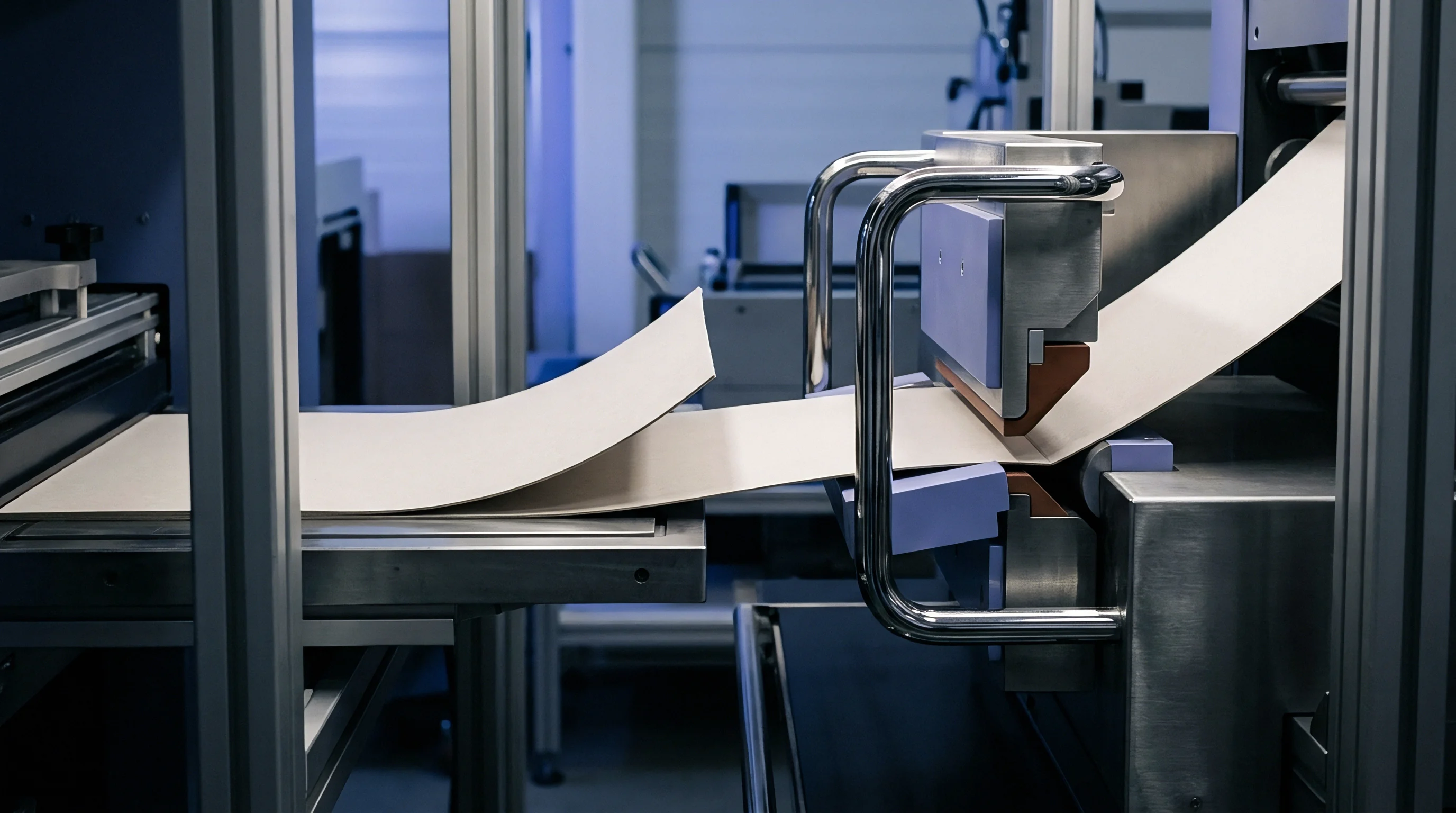
Score line rupture along the outer folded edge represents one of the most visible structural failures in printed carton packaging. This failure occurs when the localized tensile strain on the outer surface exceeds the elongation at break of either the mineral coating layer or the underlying top fiber ply. Multi-ply layering mechanics dictate how strain distributes across the fold profile.
When the internal plies delaminate cleanly into multiple independent lamina, the neutral axis of bending shifts toward each individual layer, dramatically reducing the maximum tensile strain experienced by the outermost fibers. If inter-ply shear fails to occur, the entire board caliper behaves as a single continuous beam, forcing the top surface to accommodate extreme tensile elongation.
The total surface strain, epsilon, on the outer face of a board folded through an angle theta without internal delamination can be approximated by the expression:
epsilon = t / (2 R + t)
where t is the total board thickness and R is the inner bend radius. As board caliper increases, outer surface strain rises rapidly. For a typical 0.50 mm board folded over a tight radius of 0.10 mm without delamination, outer surface strain can exceed 25 percent.
Modern mineral coatings, consisting of calcium carbonate, clay pigments, and latex binders, exhibit maximum strain capacity of only 1.5 to 3.5 percent before brittle fracture occurs. Top plies of bleached hardwood kraft pulp exhibit strain to break between 2.5 and 4.5 percent. Without effective internal ply delamination to increase the effective inner radius and redistribute strain into multiple internal buckling folds, surface rupture becomes physically inevitable.
How Does Top Ply Elongation Limit Coating Cracking?
The capability of the top fiber ply to stretch under tensile load without necking or breaking governs the physical threshold of score cracking. Softwood chemical fibers, with their longer length and higher degree of micro-fibrillar angle orientation, provide greater strain tolerance than short hardwood fibers. Mills fine-tune wet-end refining to induce internal fibrillation, which increases fiber flexibility and ultimate sheet elongation.
However, excessive refining increases density and z-directional bond strength, which inhibits the delamination required to protect the top ply. Strategic layering resolves this conflict by separating functions: the top ply is engineered with long refined softwood fibers for high tensile stretch, while the sub-surface or middle plies are engineered with lower bond strength to guarantee shear breakdown.
Mineral coating formulation acts as the first line of defense against visual score line whitening. Micro-cracks in the coating layer expose the raw white fiber structure beneath printed ink films, creating a jagged white line along dark printed panels. The ratio of pigment to binder in the coating color dictates its flexibility.
High pigment loading improves print brightness and ink holdout but reduces elasticity. Replacing rigid needle-shaped calcium carbonate pigments with platy kaolin clay pigments enhances film slip and flexibility. Incorporating synthetic latex binders with low glass transition temperatures (Tg below 15°C) significantly increases the strain to break of the dry coating matrix, allowing it to stretch over the creased shoulder without micro-fracturing.
The back ply of the paperboard experiences severe compressive forces during ninety-degree folding. In a well-formed crease, the back ply undergoes localized controlled buckling into the cavity created by the creasing rule displacement, forming an internal ridge known as the crease bead or male crease profile. If the back ply possess excessive stiffness or compressive strength, it resists this inward fold, forcing the internal plies outwards and increasing tensile strain on the top ply.
Conversely, if the back ply is too weak or poorly bonded, it cracks under compression, creating an ugly, frayed interior line that degrades box compression strength (BCT) and allows moisture ingress into the unprinted raw board core.
Delamination depth control defines where internal shear planes form across the board thickness. Optimal creasing performance requires delamination to occur in multiple parallel planes across the central 50 to 70 percent of the sheet thickness. Delamination occurring too close to the top surface leaves a thin, weak top layer prone to tensile snap.
Delamination occurring too close to the back surface leaves a thick, unseparated top block that behaves like a thick monolithic beam, driving high surface strain. Multi-ply machine headboxes control this behavior by adjusting slice jet geometry, stock consistency, and starch spraying between specific forming wires to create engineered planes of controlled weakness exactly where internal shear calculations predict peak stress.
Unmanaged score line rupture carries direct commercial costs. For example, specifying a 420 g/m² high-density SBS board with high Z-directional tensile strength (480 kPa) from heavy starch loading can prevent internal delamination during winter runs when relative humidity drops to 30 percent. Under standard tooling parameters, excessive surface tensile strain causes micro-fracturing of the triple-coated surface, resulting in bright white score cracking across dark black printed edges.
Converts face batch rejections reaching 1.2 million finished cartons, translating to losses exceeding 180,000 euros in wasted material, press time, and emergency transport.
Subsurface micro-cracking often precedes visible surface fracture. When a creased board is subjected to cyclic bending loads on high-speed cartoning machines, small micro-voids in the coating layer propagate downwards through the top fiber ply. Quality control laboratories detect this latent defect using liquid penetrant dyes applied under controlled surface pressure.
If dye penetrates through the top ply into the core layer within five seconds of application along a folded score line, the outer barrier layer has failed. This failure path permits moisture vapor, mineral oils, and atmospheric oxygen to bypass the package protection layer, drastically reducing the shelf life of sensitive dry food products packed inside.
Conditioning
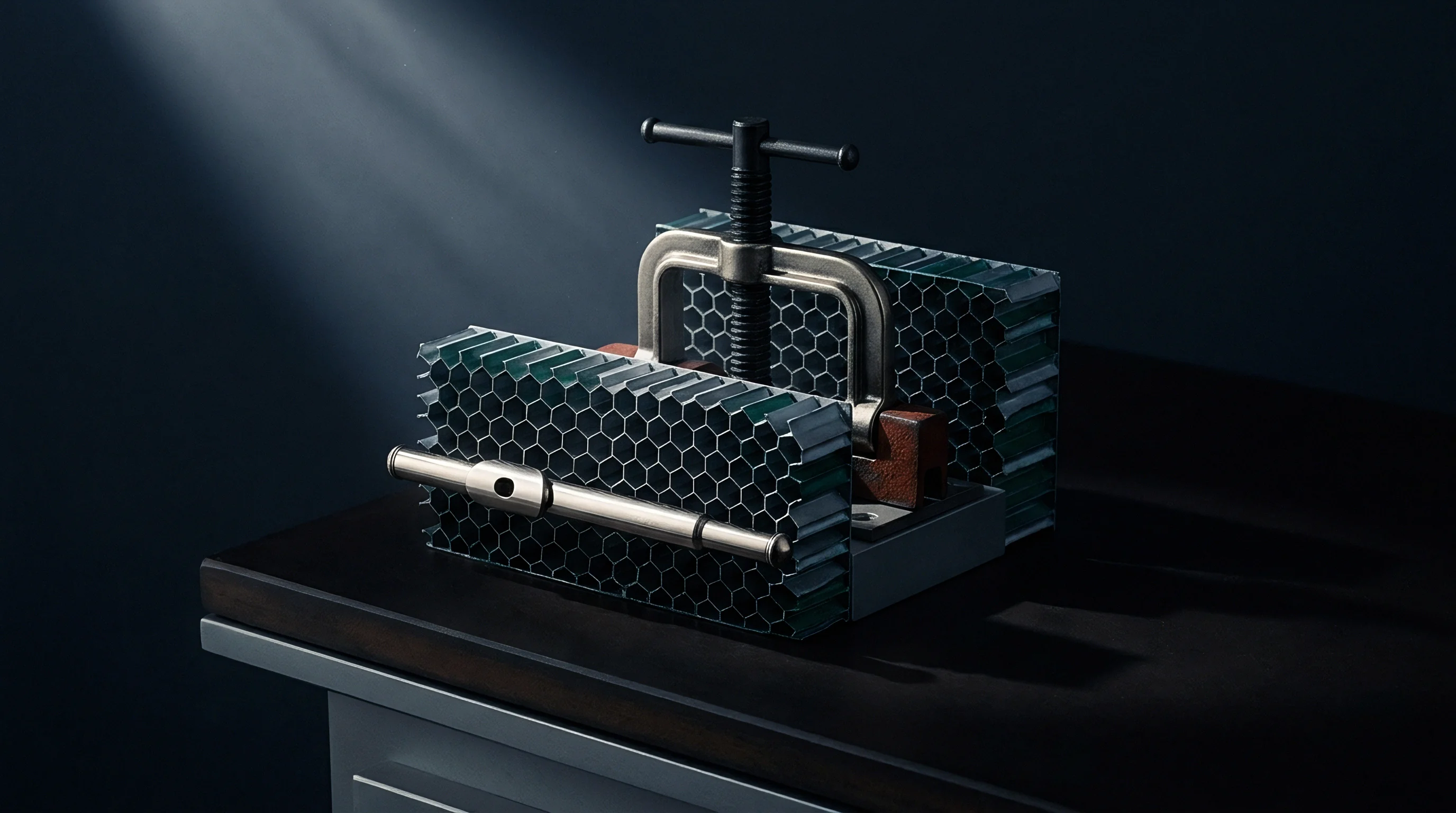
Paperboard is a hygroscopic cellulosic material with mechanical properties governed by moisture content. Equilibrium moisture in multi-ply board varies with ambient relative humidity (RH) and temperature, following a distinct sorption hysteresis curve. Standard testing and substrate qualification take place under ISO 187 conditions at 23°C and 50 percent relative humidity.
Plant floors and storage areas, however, range from dry winter environments at 20 percent RH to humid summer conditions at 80 percent RH. Moisture shifts alter the inter-fiber hydrogen bond network, changing the Z-directional shear strength, stiffness, and strain capacity of every ply in the sheet.
Below 40 percent relative humidity, paperboard loses moisture, causing individual cellulose fibers to shrink crosswise and stiffen. The loss of bound water inside fiber walls reduces the strain-to-break capacity of the top ply. At the same time, inter-fiber hydrogen bonding density increases, raising the Z-directional tensile strength and elastic modulus of the mechanical core.
Under these dry conditions, the board resists internal shear delamination during creasing. Instead of separating into flexible lamina, the stiff core transfers impact force directly to the embrittled coating, triggering score cracking during folding.
Above 65 percent RH, paperboard absorbs water vapor, which acts as a plasticizer within the cellulose matrix. Bound water disrupts inter-fiber hydrogen bonds, lowering elastic modulus and tensile strength while increasing strain tolerance. Although the softened top ply stretches without cracking, the Z-directional tensile strength and shear modulus of the core drop significantly.
Under creasing action, the core delaminates too readily across a wide, unconstrained zone. The resulting crease lacks structural definition, has low creasing stiffness, and exhibits strong spring-back, leading to erratic squareness and jams on automated packing lines.
Board conditioned below 35 percent relative humidity exhibits elevated z-axis shear resistance, increasing outer ply surface strain during folding by up to forty percent.
Moisture gradients across the caliper generate internal residual stresses that distort score geometry. When a dry board pallet sits in humid air, outer plies absorb moisture rapidly while the core remains dry for days. This differential expansion places outer plies in localized compression and the core in tension.
Striking a sheet in this non-equilibrium state creates asymmetrical shear stress, pushing the delamination zone off-center toward the dry face and producing a lopsided crease profile.
Starch and chemical binders interact strongly with moisture content. Wet-end cationic starch, added to boost internal bonding and burst strength, is highly hydrophilic. At elevated moisture levels, starch networks soften and weaken the inter-ply interface.
Surface sizing starches, applied to improve surface strength and ink holdout, form a brittle crystalline film when dry. In dry winter plant conditions, this rigid surface film acts as a stress concentrator: bending strains during folding snap the film instantly, sending micro-shocks down into the top ply and starting surface cracks even on boards with properly layered cores.
Hygrometric expansion metrics must be accounted for when managing long production runs stored in unconditioned warehouses between printing and converting operations. Machine direction moisture expansion is relatively small, typically 0.05 to 0.10 percent per 10 percent change in relative humidity. Cross direction moisture expansion is substantially larger, ranging from 0.20 to 0.40 percent for the same humidity shift.
A full skid of board allowed to dry out on its edges while wrapped in damaged stretch film develops tightly bound dry edges and a moist center, known as tight edges. Passing a sheet with tight edges through a flatbed die-cutter causes uneven creasing rule penetration depth across the sheet width, resulting in cracked scores along the perimeter and unformed scores in the center panel.
The critical operational question remains: what exact moisture threshold boundary separates acceptable score micro-cracking from total barrier failure when converting high-density SBS board under unconditioned winter converting conditions?

Caliper
Downgauging board caliper while trying to maintain structural performance is a major cost driver in packaging. However, reducing caliper directly shrinks the geometric space available for multi-ply layering mechanics. Bending stiffness scales with the cube of thickness; reducing board caliper by ten percent drops uncreased bending stiffness by nearly twenty-seven percent unless offset by higher bulk or modulus.
When caliper drops below 0.35 mm, the space allocated to the mechanical pulp core becomes extremely thin. The central delamination zone narrows, leaving fewer fiber layers to absorb shear displacement and narrowing the operating window for effective creasing.
The creasing stiffness ratio (CSR), or creasing stiffness reduction, provides a quantitative metric for evaluating crease efficiency as caliper changes. CSR is defined as the ratio of the bending resistance of the creased score line (B_creased) to the bending resistance of the uncreased flat board (B_uncreased), expressed as a percentage:
CSR = (B_creased / B_uncreased) 100
Bending resistance is measured using a two-point bending test method according to ISO 2493-1 or TAPPI T 556, typically evaluated at a 15-degree or 90-degree bend angle. A high CSR value (above 60 percent) indicates that the crease is too stiff, retaining high elastic memory that resists folding and causes folded carton panels to bow outwards. A low CSR value (below 20 percent) indicates an over-creased, structurally dead score that lacks the recovery force required to maintain square carton shape on high-speed filling lines.
Optimal converting targets establish a CSR window between 30 and 45 percent for standard automated packaging operations.
| Initial Caliper (mm) | Target Caliper (mm) | Bulk Adjustment (cm³/g) | Uncreased Bending Resistance Loss (%) | Optimal CSR Target Window (%) | Required Tooling Change |
|---|---|---|---|---|---|
| 0.60 (FBB) | 0.50 (FBB) | 1.45 to 1.60 | -28.5 | 32 – 40 | Reduce matrix width by 0.20 mm |
| 0.50 (SBS) | 0.40 (SBS) | 1.00 to 1.05 | -36.0 | 35 – 45 | Reduce matrix width by 0.16 mm |
| 0.45 (CRB) | 0.38 (CRB) | 1.20 to 1.30 | -31.2 | 28 – 38 | Reduce matrix depth by 0.07 mm |
| 0.35 (FBB) | 0.30 (FBB) | 1.50 to 1.65 | -30.6 | 40 – 50 | Switch to 1.5 pt rule and narrow matrix |
Anisotropy in fiber orientation significantly influences creasing behavior across caliper ranges. During sheet forming on the paper machine wire, fibers align predominantly in the machine direction (MD). As a result, the ratio of MD to CD bending stiffness ranges from 1.8 to 3.0.
When creasing parallel to the machine direction (MD crease, folded across CD fibers), the creasing rule encounters lower bending resistance, and the inner plies delaminate relatively easily. However, when creasing parallel to the cross direction (CD crease, folded across MD fibers), the stiff MD fibers resist shear displacement into the die channel. To achieve the same target CSR on CD creases as on MD creases, converting operators must apply higher penetration depth or select slightly narrower female die channels.
High-bulk board developments attempt to offset stiffness loss from downgauging by introducing ultra-high-bulk mechanical pulps or microsphere expansion technologies into the core layer. While expanding core bulk maintains sheet caliper at reduced grammage, it alters the core porosity and density distribution. Ultra-low-density cores possess low compressive strength perpendicular to the sheet plane.
Under the creasing rule impact, an ultra-low-density core collapses mechanically under direct compression rather than undergoing shear delamination. This z-directional collapse flattens the board under the rule tip without creating distinct shear planes, resulting in poor crease bead definition, high spring-back force, and elevated panel bowing after folding.
The yield economics of downgauging depend entirely on whether the converted sheet can hold dimensions without generating high spoilage rates at the packaging plant. A brand owner substituting a 0.50 mm SBS sheet with a 0.42 mm high-bulk FBB grade saves approximately twelve percent on raw substrate mass per unit area. This weight reduction directly lowers freight costs and producer responsibility fees.
However, if the narrower caliper tolerances reduce the converting window on the flatbed die-cutter, small fluctuations in board moisture or thickness drift across the web can trigger score line cracking. A spoilage increase of just two percent on high-speed printing and gluing lines completely eliminates the gross margin gained from substrate downgauging.
Standard purchase contract agreements specify mechanical performance parameters through strict technical tolerances that dictate batch acceptance protocols.
Delivery acceptance mandates that substrate caliper remain within plus or minus five percent of nominal specification across ninety-five percent of sampled reels under ISO 534 test protocols.
When caliper strays beyond this five percent tolerance band, die-cutting tooling calibrated for nominal board thickness fails. Board running on the thick side of the band undergoes excessive compression along the matrix shoulders, cutting the outer liner. Board running on the thin side of the band receives insufficient deformation, yielding incomplete delamination and unacceptably high crease stiffness values that jam downstream cartoning equipment.
Audit
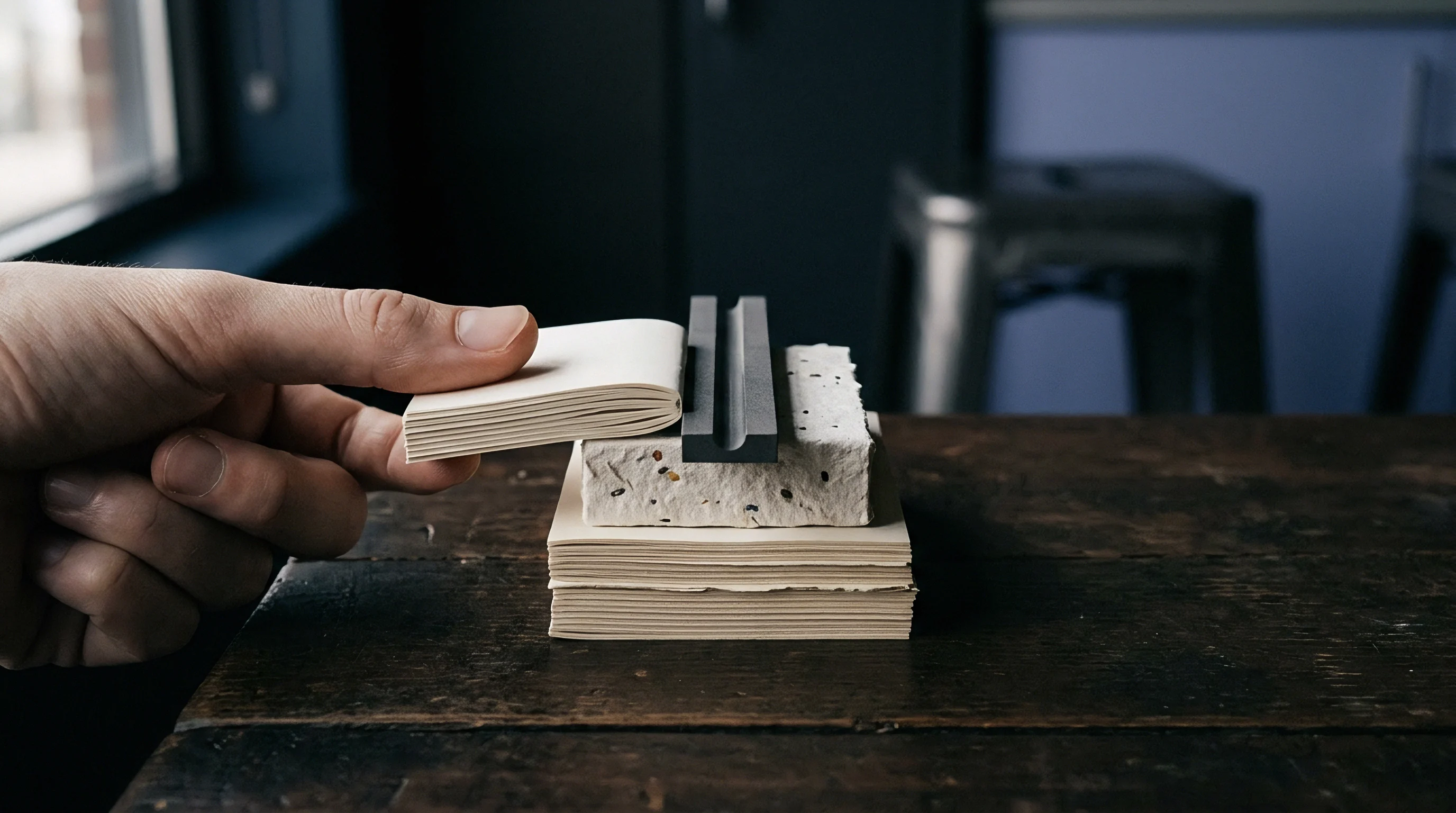
Incoming stock qualification protocols establish whether a delivered pallet lot meets the layering and mechanical requirements necessary for high-speed converting. Relying solely on mill-supplied technical data sheets exposes packaging plants to severe operational risks, as published figures report average values generated under ideal laboratory conditions. Laboratory testing at goods-in must evaluate both basic physical parameters and dynamic creasing behavior before releasing stock to the printing press floor.
Quality assurance procedures begin with non-destructive physical verification followed by structural destructive testing. The protocol requires systematic sampling across the front, center, and back of the mill roll width or pallet delivery layout to capture cross-web variations induced during paper machine forming and calendering.
- Sample five sheets from three distinct pallets within the delivered lot, avoiding top and bottom protective sheets.
- Condition the test specimens in an ISO 187 environmental chamber at 23°C and 50 percent relative humidity for a minimum of twenty-four hours prior to mechanical evaluation.
- Measure grammage according to ISO 536 using a calibrated digital balance and cut template, recording values to within 0.1 grams per square meter.
- Determine caliper according to ISO 534 using a dead-weight micrometer applying a constant static pressure of 100 kPa over a 2.0 square centimeter anvil area.
- Calculate specific bulk by dividing caliper in micrometers by grammage in grams per square meter, establishing the density baseline for the core structure.
- Perform Z-directional tensile testing according to ISO 15754 using a specialized tensile tester with double-sided adhesive tape to measure internal bond strength.
- Execute laboratory crease testing using a standardized lab creaser equipped with variable rule heights and matrix width inserts, generating test scores in both MD and CD.
- Evaluate creased bending resistance on a two-point bending tester per ISO 2493-1 at a 90-degree fold angle to calculate the exact crease stiffness reduction percentage.
Inter-ply delamination quality is visually inspected using cross-sectional optical microscopy or high-resolution digital magnification along a freshly cut crease line. A clean, well-formed score exhibits distinct, continuous internal horizontal fissures within the middle plies, with no vertical micro-cracks extending into the top printed liner or back liner plies. The internal crease bead formed on the back surface must display a smooth, parabolic profile without surface rupture or jagged fiber separation.
If cross-sectional analysis reveals that delamination has failed to form, or has formed as a single violent crack splitting through the top ply, the lot is flagged for non-conformance.
Economic assessment of substrate performance links physical laboratory metrics directly to converting line productivity and landed pack costs. The landed cost of a folding carton comprises substrate material costs (typically 50 to 65 percent of total pack cost), converting labor and press time, printing inks and coatings, die-cutting tooling amortization, and spoilage scrap allowance. A low-cost substrate exhibiting marginal creasing performance increases total unit costs if it reduces press speeds or elevates waste factors during die-cutting and folding-gluing operations.
The financial impact of creasing performance on net unit yield is illustrated by analyzing a standard folding carton production run under two different substrate options. The job involves manufacturing 500,000 dark-printed retail display cartons on a standard 720 mm x 1020 mm sheet format running six cartons per sheet layout.
Option A utilizes a lower-cost, high-density Coated Recycled Board (CRB) priced at 950 euros per metric tonne. Option B utilizes a premium Folding Boxboard (FBB) with an engineered CTMP mechanical core priced at 1,180 euros per metric tonne. Both boards are specified at a caliper of 0.45 mm, but the CRB requires a higher grammage of 360 g/m² to achieve structural requirements, whereas the high-bulk FBB achieves equivalent caliper at a grammage of 300 g/m².
For Option A (CRB), the total substrate mass required to deliver 83,333 parent sheets (plus 5 percent setup spoilage, totaling 87,500 sheets) equals 23.21 metric tonnes. At 950 euros per tonne, the raw material substrate cost totals 22,050 euros. During die-cutting and high-speed folding-gluing, the lower Z-directional shear consistency of the recycled middle plies causes intermittent score line cracking along dark printed panels.
To control cracking, the converting press operator reduces flatbed die-cutter speed from 8,000 sheets per hour to 5,500 sheets per hour, extending press run time by 5.2 hours at an operating rate of 250 euros per hour, adding 1,300 euros in direct labor and machine costs. Furthermore, score line cracking forces an increase in final quality control rejection scrap from 1.5 percent to 4.2 percent, destroying an additional 13,500 finished cartons valued at 1,890 euros in lost production output. The net landed cost for Option A totals 25,240 euros, translating to 50.48 euros per thousand finished cartons.
For Option B (FBB), the lower grammage of 300 g/m² reduces the total substrate mass required for the same 87,500 parent sheets down to 19.34 metric tonnes. Despite the higher purchase price of 1,180 euros per tonne, the total raw material substrate cost equals 22,821 euros, presenting a initial raw material premium of only 771 euros. The engineered CTMP core provides uniform, repeatable inter-ply shear delamination during creasing.
The die-cutter runs at full rated speed of 8,000 sheets per hour without surface cracking, avoiding additional press hour penalties. Production scrap remains at the baseline level of 1.5 percent. The net landed cost for Option B totals 23,871 euros, translating to 47.74 euros per thousand finished cartons.
The premium substrate, despite costing 24 percent more per metric tonne, delivers a net savings of 1,369 euros on the completed production job by optimizing yield, maintaining converting line speed, and eliminating score failure scrap.
Stock qualification dossier retention ensures complete historical traceability when material performance disputes arise between converted carton plants and substrate mills. A complete qualification dossier must contain the original mill test certificate detailing batch reel numbers, the goods-in verification report documenting actual measured caliper, bulk, and ZDT figures, the ambient plant temperature and relative humidity logs recorded during converting, the die-cutting press setup parameters including rule point size and matrix channel dimensions, and samples of cross-sectionally audited score lines. When a converting failure occurs, cross-referencing the qualification dossier against the mill certificate reveals whether the root cause stems from out-of-spec substrate inter-ply bond strength, incorrect tooling selection on the converting floor, or unconditioned plant atmospheric conditions.