Dynamic Vapor Sorption Mechanics in Recycled Packaging Substrates
Recycled packaging substrates exhibit non-Fickian moisture uptake and severe hysteresis, reducing compressive strength by over 20 percent under cyclic humidity.


Web
Multiple repulping cycles alter cellulose fibre geometry, stripping microfibrils and causing irreversible pore closure within unbleached kraft and testliner matrices. When secondary fibres are rehydrated and dried during paper manufacture, hydrogen bonds form within the internal fibrillar structure of the cell wall, restricting cell wall swelling upon rewetting. This phenomenon, known as hornification, permanently reduces the lumen volume and internal surface area available for moisture uptake.
Recycled containerboard substrates containing high fractions of old corrugated containers (OCC) demonstrate distinct sorption behavior compared to virgin pine or birch pulps. Fines generated during mechanical repulping increase the total specific surface area of the sheet while simultaneously packing inter-fibre voids, creating a dense, highly tortuous network for moisture vapor transport.

Secondary Fibre Hornification and Pore Structure
Repeated wetting and drying cycles during repulping cause internal fibrils to collapse irreversibly. The rigidified cell walls accept less bound water at low relative humidity levels, yet the compacted sheet structure retains moisture in interstitial voids via condensation at high relative humidity. Dynamic vapor sorption (DVS) gravimetric measurements reveal that recycled containerboard exhibits lower equilibrium moisture content below 45 percent relative humidity than virgin unbleached kraft linerboard, but matches or exceeds virgin moisture content above 75 percent relative humidity.
The structural changes in secondary fibres alter both the speed of moisture adsorption and the total volume of water retained at saturation.
Secondary fibres subjected to multiple repulping cycles show up to a 35 percent reduction in specific internal surface area compared to unbleached virgin softwood kraft pulp conditioned at 23 degrees Celsius and 50 percent relative humidity.
Fibre swelling mechanics govern the mechanical performance of recycled packaging sheets in humid transport corridors. As relative humidity increases from 50 percent to 85 percent, individual recycled fibres expand preferentially in cross-sectional diameter rather than along their longitudinal axis. This anisotropic expansion weakens inter-fibre hydrogen bonds, causing rapid degradation of compression strength in testliner plies.
The presence of residual starch, sizing agents, and mineral fillers within recycled furnish further complicates vapor uptake profiles. Synthetic sizing chemicals like alkyl ketene dimer (AKD) or alkenyl succinic anhydride (ASA) modify surface energy, delaying liquid water wetting while leaving vapor phase diffusion through micro-pores unhindered.
Physical degradation paths within secondary fibre matrices follow distinct structural channels during moisture flux:
- Hornified Lumen Collapse restricts bound water accumulation within the primary cell wall while accelerating liquid condensation in micro-cracks at relative humidity levels above 70 percent.
- Interstitial Fine Packing increases tortuosity across the sheet thickness, delaying vapor equilibrium while concentrating localized moisture gradients that trigger ply delamination.
- Residual Starch Hydration absorbs water rapidly under elevated humidity, plasticizing the amorphous polymer regions and accelerating out-of-plane panel creep.
- Debonded Fibre Intersection zones create micro-capillaries that facilitate vapor migration deep into the core plies of multi-ply testliner combinations.
Mills frequently attribute unexpected box collapse under dynamic transit conditions to raw material variability across secondary fibre supply sheds, claiming incoming OCC bales met baseline Cobb and burst strength thresholds prior to converting.


Diffusion
Kinetic moisture uptake rates in secondary paper substrates accelerate under transient humidity steps owing to damaged inter-fibre bond zones. Moisture transport through porous recycled board occurs via two parallel pathways: vapor phase diffusion through inter-fibre pore spaces and surface or bound-water diffusion along the cellulose cell walls. Fickian models fail to capture the late-stage kinetic behavior of recycled testliner because polymer chain relaxation within hornified cell walls occurs on a time scale similar to water molecule transport.
This non-Fickian or anomalous diffusion behavior generates localized moisture gradients across the sheet thickness, inducing internal shear stresses before moisture equilibrium is reached throughout the substrate mass.

Kinetic Sorption Modeling and Fickian Deviations
Dynamic vapor sorption instrumentation quantifies mass change as a function of relative humidity steps, delivering continuous gravimetric tracking at microgram resolution. In a standard automated stepping protocol, the substrate sample experiences relative humidity increments from 0 percent to 90 percent in 10 percent intervals, holding each step until the mass change per time ratio drops below 0.002 percent per minute. The initial phase of sorption into virgin kraftliner aligns closely with Fickian kinetics, yielding linear mass gain against the square root of time.
Recycled substrates exhibit non-Fickian relaxation tails, where slow volumetric structural reorganisation of the damaged cellulose matrix continues long after vapor concentration gradients across the pore space have dissipated.
| Substrate Grade | Recycled Content (%) | Grammage (g/m²) | Diffusion Coeff D_eff (10⁻¹¹ m²/s) | Diffusion Coeff D_eff (10⁻¹¹ m²/s) | Relaxation Time Constant τ (s) |
|---|---|---|---|---|---|
| Virgin Unbleached Kraftliner | 0 | 175 | 2.84 | 1.42 | 1240 |
| High-Performance Testliner 2 | 100 | 170 | 4.12 | 0.86 | 3890 |
| Standard Testliner 3 | 100 | 150 | 5.65 | 0.51 | 5420 |
| Recycled Fluting Medium | 100 | 120 | 6.30 | 0.43 | 6100 |
| Data measured on dynamic vapor sorption gravimetric analyzer; sample mass 15.0 mg ± 0.5 mg; flow rate 200 cm³/min dry nitrogen gas carrier; equilibrium criteria mass change under 0.002% per minute over a 10-minute sliding window. | |||||
Stepwise relative humidity changes reveal that effective diffusion coefficients in recycled substrates are highly concentration-dependent. At low relative humidity, rapid transport occurs through wide inter-fibre pores created by broken secondary fibres. At relative humidity levels exceeding 60 percent, bound water layers thicken, blocking capillary necks and reducing the effective gaseous diffusion rate while triggering structural swelling.
The delayed relaxation time constant measured in 100 percent recycled testliner reflects the kinetic barrier of hydrating tightly bound, hornified cellulose crystalline domains.
- Dry the board sample inside the instrument chamber under flowing dry nitrogen gas at 0 percent relative humidity and 23 degrees Celsius until mass stabilization occurs within 0.001 percent per 15 minutes.
- Apply a single step relative humidity increase from 0 percent to 50 percent to establish baseline initial uptake kinetics before significant swelling occurs.
- Record mass change continuously at 1-second sampling intervals to calculate the initial slope of normalized mass gain against the square root of time.
- Step relative humidity incrementally in 10 percent intervals up to 90 percent relative humidity, holding each step until structural mass equilibrium is established.
- Calculate the concentration-dependent effective diffusion coefficient for each relative humidity increment using the analytical solution to Fick’s second law for a finite plane sheet.
Evaluating mass flux through multi-ply packaging combinations requires differentiating between bulk substrate permeation and seam migration pathways. Edge wick testing according to standard methods shows that water vapor flux through cut edges of recycled board exceeds surface flux by up to two orders of magnitude. The exposed cross-section exposes opened lumen channels, interstitial voids between laminated plies, and starch adhesive lines to direct atmospheric contact.
When converted boxes experience dynamic environmental cycling during sea freight transit, vapor penetration along crease lines and cut edges initiates localized ply separation long before the bulk surface reaches moisture saturation.
How do residual wet-strength resins in recycled furnish modify late-stage non-Fickian relaxation constants during multi-day high-humidity exposures?


Capillarity
Condensation dynamics within micro- and mesoporous cavities control equilibrium moisture sorption states across varying partial pressures of water vapor. The Kelvin equation relates the critical pore radius at which liquid condensation occurs to the relative pressure of water vapor above the substrate surface. In virgin paper matrices, uniform pore size distribution yields a smooth capillary condensation curve.
Secondary fibre processing disrupts this uniform structure, creating a bimodal pore size distribution characterized by narrow intra-fibre cell wall fissures and large inter-fibre interstitial spaces. Dynamic vapor sorption isotherms reflect this structural alteration through distinct slope changes in the mesoporous regime between 40 percent and 80 percent relative humidity.
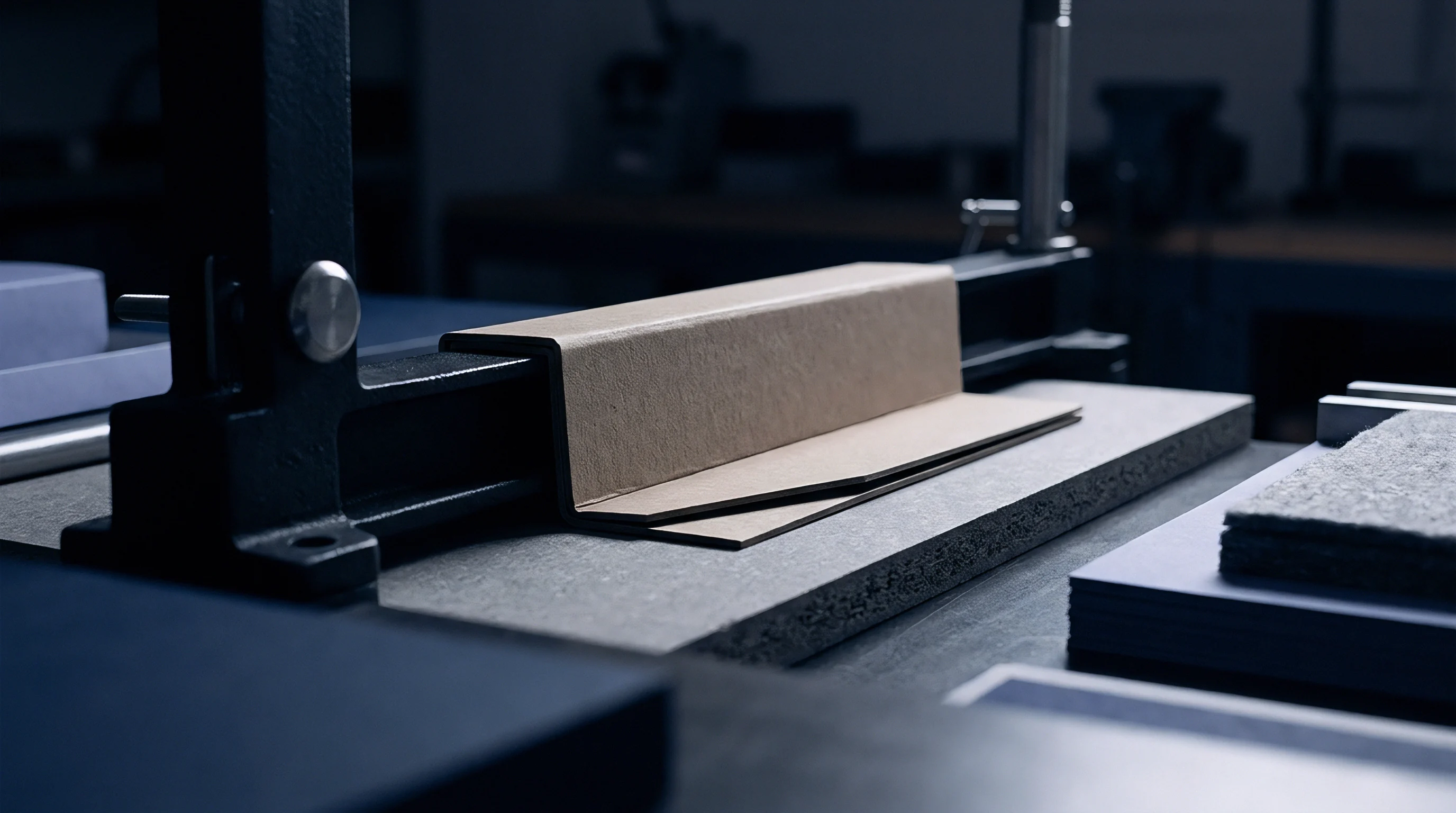
Capillary Condensation and Isosteric Heat of Sorption
Pore radius determinations derived from water vapor adsorption isotherms demonstrate that recycled containerboard contains a higher fraction of pores under 2 nanometers in diameter due to cell wall fibril collapse. These micropores fill at low water activity, binding water molecules tightly to exposed hydroxyl groups. Conversely, large inter-fibre pores exceeding 50 nanometers in diameter remain empty until elevated relative humidity levels, whereupon rapid capillary condensation takes place.
Liquid water condensation inside inter-fibre capillaries plasticizes adjacent fibre-fibre bonds, destabilizing the load-bearing skeleton of corrugated packaging under stacking loads.

What Drives Isosteric Heat Shifts in Recycled Fibre Networks?
Calculating the differential isosteric heat of adsorption reveals the thermodynamic energy released as water vapor binds to the substrate surface. Applying the Clausius-Clapeyron equation to dynamic vapor sorption isotherms measured at 23 degrees Celsius and 35 degrees Celsius provides the specific heat of adsorption across varying moisture contents. At zero moisture content, the differential heat of sorption for recycled testliner reaches approximately 2500 kilojoules per kilogram of water absorbed, far exceeding the latent heat of vaporization of water (2440 kilojoules per kilogram).
This elevated binding energy confirms that initial water molecules adsorb directly onto energetic primary sites within damaged cellulose micro-fibrils.
Iso-sorption enthalpy values drop rapidly toward the latent heat of condensation once moisture content in recycled packaging substrates exceeds 8 percent dry basis.
As moisture content increases past 8 percent dry basis, the differential heat of sorption approaches the latent heat of vaporization, indicating that additional water accumulates as liquid water in capillary spaces rather than as chemically bound water. Recycled board grades exhibit a steeper decline in isosteric heat of adsorption than virgin board as moisture uptake progresses. This thermodynamic drop mirrors the scarcity of accessible hydroxyl groups within hornified fibre walls, forcing water molecules to cluster early into liquid bulk water within inter-fibre capillaries.
Substrates with low mechanical refinement retain high capillary condensation rates at high humidity regardless of surface sizing applications.


Hysteresis
Adsorption and desorption curves diverge across relative humidity cycles due to structural relaxation and localized swelling in recycled paperboard sheets. Sorption hysteresis defines the equilibrium moisture content gap between a substrate that is gaining moisture from a dry state and one that is drying from a wet state at identical ambient relative humidity and temperature. In recycled packaging materials, hysteresis loop magnitude directly impacts structural stiffness predictions.
A corrugated box exposed to 75 percent relative humidity after high-humidity storage holds significantly more water—and exhibits lower box compression test (BCT) strength—than the same box arriving at 75 percent relative humidity from a dry warehouse environment.
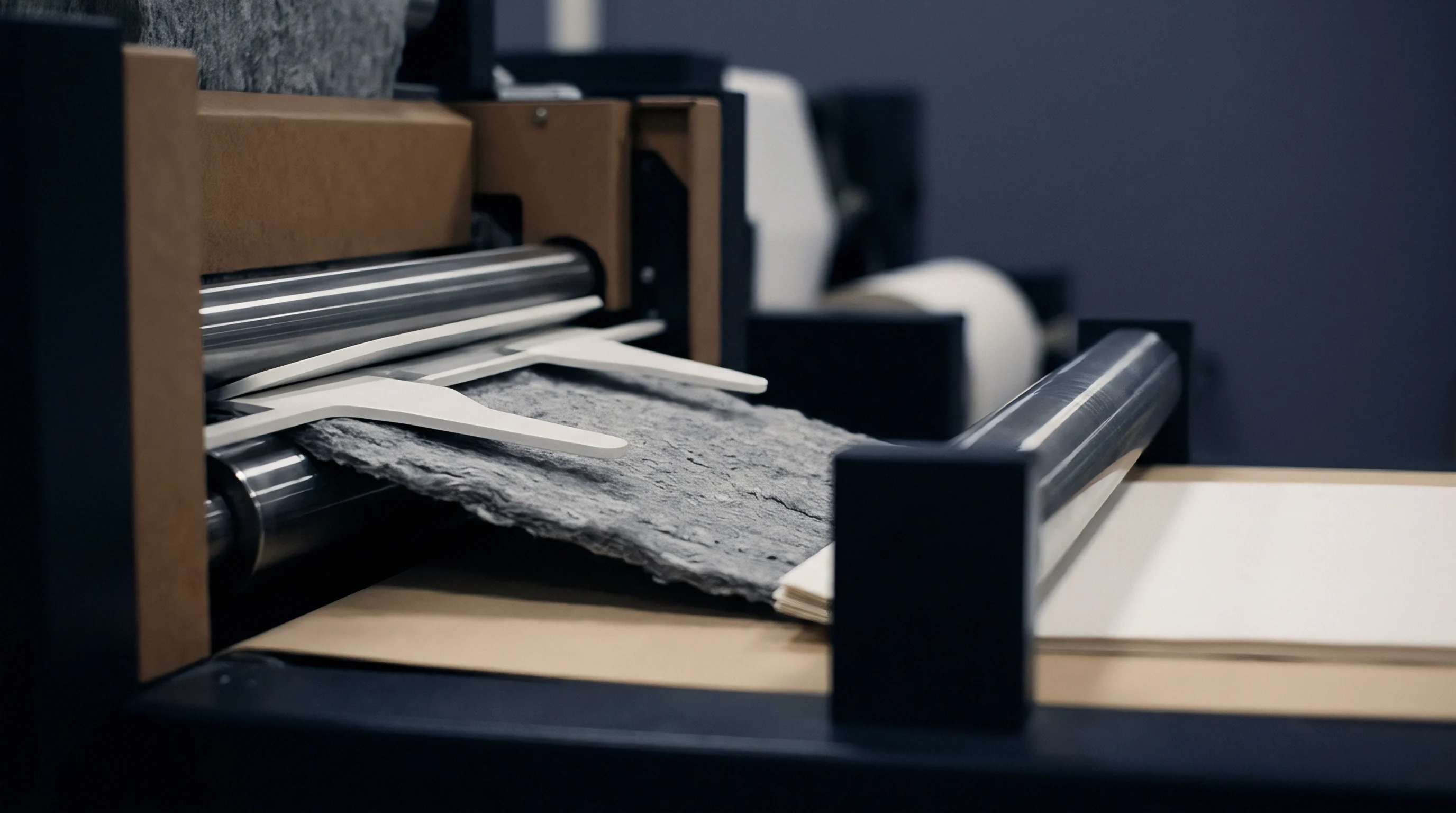
Thermodynamic Origin and Structural Memory
Ink residue, recycled fines, and mechanical micro-cracks alter the hysteresis loop geometry across sorption-desorption cycles. The ink bottle pore mechanism explains part of this behavior: narrow capillary necks delay desorption because liquid water cannot evaporate until the ambient vapor pressure drops below the critical Kelvin radius of the narrow neck, trapping water within the larger pore cavity behind it. Furthermore, structural relaxation of cellulose polymers during adsorption alters the availability of hydroxyl binding sites during the subsequent desorption path, leaving previously inaccessible sites available for water retention.
| Substrate Classification | BET Monolayer Capacity X_m (g/100g) | GAB Moisture Capacity C_GAB | Hysteresis Loop Area Index (50% RH) | EMC Adsorption @ 80% RH (%) | EMC Desorption @ 80% RH (%) |
|---|---|---|---|---|---|
| Virgin Bleached Hardwood Kraft | 4.12 | 12.4 | 0.142 | 11.2 | 13.1 |
| Virgin Unbleached Softwood Kraft | 4.85 | 15.8 | 0.185 | 12.4 | 14.8 |
| Recycled Testliner 2 (100% OCC) | 3.65 | 8.9 | 0.264 | 12.8 | 15.9 |
| Recycled Medium (Unsized) | 3.21 | 7.2 | 0.298 | 13.5 | 16.8 |
Applying Guggenheim-Anderson-de Boer (GAB) and Brunauer-Emmett-Teller (BET) sorption models to continuous dynamic vapor sorption data yields quantitative parameters describing monolayer water coverage and sorptive capacity. The BET monolayer capacity value (X_m) drops progressively with increased recycled content, confirming the loss of active surface hydroxyl groups due to hornification. However, the GAB parameters, which account for multi-layer state water molecules, demonstrate that recycled substrates retain a larger capacity for liquid phase water accumulation in multi-layer state regimes above 70 percent relative humidity.
To evaluate the structural consequence of sorption hysteresis, take a 100-tonne shipment of 150 g/m² recycled testliner specified for container manufacturing. At 23 degrees Celsius and 80 percent relative humidity on the adsorption curve, the substrate reaches an equilibrium moisture content of 12.8 percent dry basis. If the same material undergoes a high-humidity transit excursion to 90 percent relative humidity before settling back to 80 percent relative humidity on the desorption path, its equilibrium moisture content remains elevated at 15.9 percent.
This 3.1 percent absolute moisture increase reduces the short-span compressive strength (SCT) according to the empirical relationship where each 1 percent increase in moisture content above 8 percent causes a 7 percent reduction in compressive strength.
Calculating the compressive loss for the 3.1 percent moisture gap yields a 21.7 percent drop in short-span compressive capacity purely due to hysteresis memory. Design calculations based on standard adsorption data underestimate structural failure risk when containers undergo transient humidity spikes during transit.
Relying on standard single-point equilibrium moisture metrics when engineering recycled packaging for high-humidity transit routes leads to catastrophic warehouse stack collapse under load-bearing creep conditions.
Asymmetry
Differential moisture absorption between top liner and fluting plies creates localized strain, driving panel bowing and compression loss in corrugated boxes. Recycled board sheets frequently exhibit distinct structural and chemical differences across their z-direction thickness profile. Multi-ply testliner combines high-quality recycled furnish on the top ply for printability with lower-grade OCC or mixed waste on the back ply for bulk.
When exposed to dynamic humidity fluctuations, these distinct plies adsorb moisture at varying rates and expand to different degrees, inducing mechanical warpage across the composite sheet.

Hygral Expansion and Dimensional Distortion
Moisture-induced dimensional instability in multi-ply recycled substrates stems from anisotropy in hygral expansion coefficients. Machine direction (MD) expansion typically ranges from 0.005 to 0.015 percent change in length per 1 percent change in moisture content, whereas cross-machine direction (CD) expansion ranges from 0.04 to 0.10 percent per 1 percent moisture change. In multi-ply combination boards where fibre orientation distribution varies between plies, uneven CD expansion generates internal shear stress along the starch adhesive bond line.
Under cyclic humidity conditions, this internal stress leads to micro-debonding between the liner and fluting medium.
Dynamic humidity cycling between 50 percent and 85 percent relative humidity accelerates out-of-plane panel deflection in recycled corrugated combined board by a factor of three relative to static high-humidity storage.
Out-of-plane distortion manifest as washboarding or panel curling severely impacts packaging runnability on high-speed automated packing lines. Washboarding occurs when the fluting medium constrains the hygral expansion of the linerboard at the glued flute tips while allowing the unbonded liner spans between flutes to expand freely. As moisture increases, the unbonded liner spans buckle outward, creating periodic ridge patterns across the board surface that reduce print quality and compromise flat crush resistance.
Evaluating hygral expansion risk requires structured verification parameters before converting multi-ply recycled substrate lots:
- Z-Direction Density Gradient Analysis confirms structural symmetry across composite plies to prevent unequal moisture transport rates during dynamic humidity transitions.
- Cross-Direction Hygral Coefficient Matching restricts the differential expansion between top liner and fluting medium to less than 0.02 percent length change per percentage point moisture delta.
- Starch Gelatinization Pin Adhesion Testing establishes whether adhesive bonds withstand localized shear stresses generated during cyclic moisture swelling without delaminating.
- Creep Rate Quantification under Transient RH measures time-dependent deformation under static load during continuous 50 percent to 85 percent relative humidity cycling.
Contractual sales specifications governed by standard supply agreements, such as FEFCO Quality Guidelines Section 4.2, explicitly disclaim responsibility for packaging panel distortion caused by ambient relative humidity fluctuations exceeding 20 percent within a 12-hour window.

Recourse
Commercial contracts covering recycled packaging substrates shift moisture-induced failure risk onto the buyer whenever specification sheets omit dynamic sorption parameters. Standard paper grade specifications report static physical properties measured exclusively under ISO 187 standard conditioning at 23 degrees Celsius and 50 percent relative humidity. These static figures—bursting strength, Cobb water absorption, ring crush test, and grammage—fail to predict material behavior when exposed to humid supply chain environments where dynamic vapor sorption dynamics dominate substrate mechanics.

Regulatory Compliance Scopes and Certification Gaps
Proving compliance under international packaging frameworks requires matching material performance claims against rigorous documentary evidence. The EU Packaging and Packaging Waste Regulation (PPWR) mandates minimum recycled content thresholds alongside strict recyclability performance grades (Grades A, B, or C). However, achieving high recycled content fractions often compromises moisture durability, creating a conflict between environmental compliance declarations and structural packaging performance.
A compliance file carrying a valid FSC Recycled certificate proves fibre origin traceability through chain-of-custody tracking under FSC-STD-40-004, but provides zero guarantee regarding the physical performance or moisture stability of the delivered substrate under load.
| Regulatory / Scheme Claim | Governing Standard / Instrument | Standard Test Conditions / Scope | Physical Failure Mode Excluded from Scope | Party Carrying Frontier Financial Exposure |
|---|---|---|---|---|
| Chain of Custody Fibre Origin | FSC-STD-40-004 / PEFC ST 2002 | Documentary audit of volume credit transfer system | Substrate mechanical collapse or moisture failure | Packaging Buyer / Importer of Record |
| PPWR Recyclability Grade | EN 13430 / Cepi Recyclability Guidelines | Repulpability test at 40 °C, aqueous repulping 10 min | Hygral expansion, creep collapse under moisture flux | Packer / Filler placing unit on market |
| Food Contact Suitability | Regulation (EC) No 1935/2004 / BfR XXXVI | Overall migration into simulants (ISO 1186 / EN 645) | Vapor-phase migration accelerated by humidity sorption | Brand Owner / Importer of Record |
| Heavy Metal Limits | Directive 94/62/EC / EU PPWR Article 5 | Total Pb, Cd, Hg, Cr(VI) under 100 mg/kg via ICP-OES | Chemical extractability changes under high substrate moisture | Converter / Substrate Supplier |
Food contact declarations for recycled packaging substrates present severe compliance risks related to moisture-accelerated contaminant migration. Under BfR Recommendation XXXVI for paper and board in contact with food, recycled furnish must not transfer mineral oil saturated hydrocarbons (MOSH) or mineral oil aromatic hydrocarbons (MOAH) into foodstuffs. High relative humidity and substrate water absorption accelerate the migration kinetics of volatile low-molecular-weight substances through the porous network.
A migration test certificate showing compliance under static dry conditions fails to defend a brand owner when dynamic moisture sorption mobilizes volatile contaminants during real-world storage and shipping.
Structuring robust procurement contracts requires inserting precise dynamic moisture testing requirements directly into technical specification schedules. Standard clauses must require suppliers to supply dynamic vapor sorption isotherms (0 percent to 90 percent relative humidity at 23 degrees Celsius) and non-Fickian relaxation coefficients alongside standard Cobb 60 values. Incorporating defined maximum allowable BCT loss limits (such as a maximum 25 percent strength reduction after 48 hours at 85 percent relative humidity) transfers legal responsibility for structural failure back to the mill, ensuring that incoming paperboard batches withstand real-world logistics conditions.
Border enforcement actions under national packaging waste laws focus strictly on documented compliance files, held by the importer of record prior to customs clearance. When a customs authority detains a packaging shipment due to structural collapse or illegible, moisture-distorted compliance markings, financial losses accumulate rapidly through demurrage fees, mandatory repackaging costs, and potential product rejection. Assembling a defensible compliance dossier requires pairing chain-of-custody scope certificates with dynamic sorption test evidence that covers the actual environmental range of the intended distribution corridor.