Paperboard Middle Ply Furnish Compression Mechanics under Static Bench Conditions
Middle ply CTMP bulk provides structural moment of inertia, while short-span compression bench testing quantifies network collapse risks under load.
Core
Multi-ply paperboard structures concentrate high-yield mechanical fibers within interior structural zones to maximize panel moment of inertia. Spacing the refined chemical liner plies further away from the neutral bending axis increases bending stiffness without adding excess weight. The structural resistance of the interior layer against out-of-plane forces determines how well a carton retains its box shape under warehouse stacking loads.
Mechanical fibers, including chemi-thermomechanical pulp (CTMP) and stone groundwood, retain their stiff three-dimensional cell wall geometry during stock preparation, though fibers deform under load. Synthetic binders and native starch addition reinforce the fiber-to-fiber bonded contacts throughout the web interior, where density governs sheet stiffness.
Mechanical Pulp Yield and Network Thickness
High-yield chemi-thermomechanical pulps preserve natural fiber stiffness while occupying substantial geometric volume per unit mass. Processing wood chips through mild sulfite pre-treatment followed by pressurized mechanical refining leaves high concentrations of native lignin within the cell walls, increasing wet yield. The presence of lignin keeps individual fibers stiff, hydrophobic, and resistant to wet-end pressing forces during sheet formation.
This physical bulk creates space between the top and bottom liners, allowing a board with high interior bulk to achieve superior bending resistance compared to a single-ply sheet of equal basis weight.
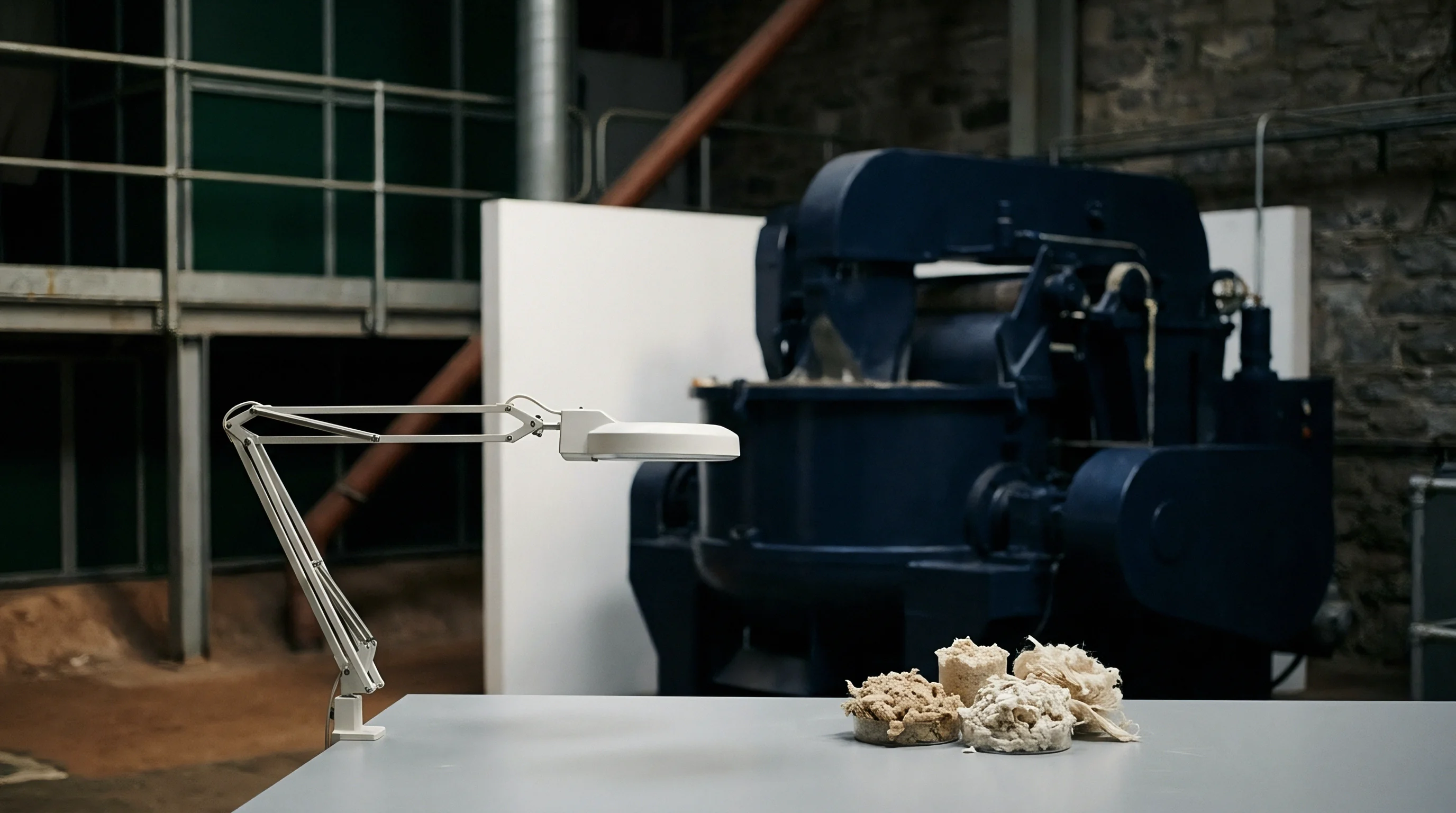
Middle ply furnish formulations balancing bleached softwood kraft and CTMP demonstrate distinct mechanical responses under bench testing, where softwood adds tensile network strength. Increasing the proportion of coarse mechanical pulp raises sheet caliper, yet decreases total tensile energy absorption per unit grammage. The mechanical fiber network relies heavily on physical entanglement and localized resin bonding rather than extensive inter-fiber hydrogen bond networks.
When subjected to static compression perpendicular to the sheet plane, coarse mechanical fibers compress elastically up to a critical structural threshold before microfibril wall collapse occurs.
Coarse mechanical fibers in the middle ply act as structural spacers that maximize bending stiffness per unit mass.

Recycled Fiber Stratification in Interior Layers
Reclaimed newsprint and corrugated waste streams introduce variable fiber lengths into multi-vat cylinder and multiformer wet ends, where recycled fibers lose length over time. Multiple hornification cycles reduce the swelling capacity of reclaimed cellulose, rendering individual fibers stiffer and less flexible during web consolidation. Recycled furnish layers exhibit lower volumetric bulk than virgin CTMP layers at identical grammage.
Higher wet-end compaction pressure becomes necessary to achieve target bonding strength in recycled middle plies, which directly compromises board thickness.
Mineral contaminants and fine particles accumulate in reclaimed fiber loops, affecting structural stability under load as high ash lowers bond strength. Fine calcium carbonate particles and residual clays settle between fiber intersections, reducing the effective contact area available for inter-fiber bonding. Under static compressive bench testing, high-ash interior plies exhibit premature shear slipping long before fiber walls undergo plastic deformation.
Sizing agents and cationic starches must be metered precisely into recycled slurries to offset this structural loss.
- Fibrillar network shear displacement occurs when interior mechanical pulp bundles sliding past each other under lateral compression collapse web volume before individual fiber walls fracture.
- Fiber wall micro buckling develops in low-density CTMP zones subjected to high out-of-plane forces during static stacking, permanently reducing board caliper.
- Ash-induced bond disruption appears in high-recycle content middle plies where filler clay particles block hydrogen bonding, dropping localized compression index below eighteen newton-meters per gram.
- Transverse delamination splitting manifests along weakly bonded ply interfaces during scoring, converting compressive force into uncontrollable structural shear failure.
Minor density variations across interior plies often fall within standard manufacturing tolerances even when box performance degrades on high-speed folder-gluer lines.
Platen
Laboratory evaluation of interior furnish strength relies on controlled compressive loads applied perpendicular and parallel to the sheet plane. Bench instruments measure the exact point where structural consolidation turns from elastic recovery to irreversible plastic collapse. Evaluating individual middle-ply splits isolated from multi-ply board reveals true furnish performance without liner masking effects.
Short span compression testing (SCT) under ISO 9895 provides the primary index for axial fiber network stability, though platen speed alters peak force. Compression resistance parallel to the machine direction reflects orientation distributions established at the headbox.

Short Span Strength Measurement Dynamics
Clamp spacing set to 0.7 millimeters prevents structural column buckling while measuring intrinsic fiber wall yield points under axial force. At this short span, compressive failure occurs purely through cell wall compression and fiber-to-fiber bond failure rather than macro-level sheet bending. Mechanical pulp fibers with intact lumen geometry exhibit high initial resistance to axial compression, but yield sharply once cell walls buckle.
Chemical fibers exhibit a broader plastic deformation zone, absorbing energy gradually under static bench conditions.
Static compression values vary considerably between machine direction (MD) and cross-machine direction (CD). Headbox jet-to-wire speed ratios align a higher percentage of fibers along the machine axis, resulting in CD compression resistance values that routinely drop forty to fifty percent below MD values. Bench testing protocols must measure both directions to predict carton panel bulge resistance under stacking pressure.
Testing isolated middle-ply sheets requires precise wet-splitting techniques or mechanical surface grinding to remove top and bottom liner stock without destroying interior fiber geometry.
Out-of-Plane Z-Direction Compression Bench Testing
Applying static compressive loads perpendicular to the board surface quantifies internal void volume collapse and z-directional structural consolidation. Hydraulic or mechanical test bench platens compress standard circular or rectangular test specimens at constant displacement rates as applied pressure collapses interior voids. As out-of-plane stress increases, high-bulk mechanical furnish compresses through three distinct mechanical phases: initial elastic void reduction, localized fiber wall failure, and ultimate densification.
- Cut representative paperboard specimens to standard dimension of 100 square centimeters using a precision circular blade punch, taking care to prevent edge crushing.
- Condition specimens at 23 degrees Celsius and 50 percent relative humidity according to ISO 187 standard environment for twenty-four hours prior to mounting.
- Calibrate upper and lower bench platens for parallel alignment within two micrometers to ensure uniform load distribution across the specimen surface.
- Apply continuous axial compressive force at a rate of 10 millimeters per minute until structural failure or specified strain limit occurs.
- Record peak compressive force, out-of-plane displacement curve, and permanent thickness reduction post-load release.
Bench instruments record stress-strain curves that expose differences between high-yield mechanical pulps and recycled furnishes under static load. High-yield CTMP maintains its structural thickness across low stress ranges, protecting overall panel stiffness. Recycled furnishes compress earlier, exhibiting higher total strain per unit force.
This compression behavior directly impacts how a finished folding boxboard responds to heavy top loads during long-term pallet storage.
| Furnish Type Specification | Sheet Density (g/cm³) | SCT Index MD (Nm/g) | SCT Index CD (Nm/g) | Z-Compression Stress at 10% Strain (kPa) |
|---|---|---|---|---|
| 100% Bleached Chemi-Thermomechanical Pulp (CTMP) | 0.42 | 28.5 | 18.2 | 380 |
| 70% CTMP / 30% Bleached Kraft Softwood Blend | 0.51 | 32.1 | 21.4 | 450 |
| 100% Deinked Recycled Fiber (DIP) | 0.68 | 22.4 | 13.8 | 290 |
| 100% Unbleached Reclaimed Corrugated (OCC) | 0.62 | 25.8 | 15.2 | 340 |
| Method note: Data obtained per ISO 9895 (SCT) and ISO 15754 (Z-direction) under conditioned state of 23 C and 50% relative humidity. | ||||
Short span compression strength drops by four percent for every one percent increase in sheet moisture content above eight percent at 23 C.
Ignoring short-span compression values during substrate specification leads directly to crushed sidewalls and fallen stacks in high-bay pallet storage.

Decay
Atmospheric relative humidity destabilizes the hydrogen bonds holding the wood fiber network in compression under constant bench loads. Water molecules enter the amorphous regions of cellulose and hemicellulose, acting as plasticizers that reduce the glass transition temperature of natural wood polymers while weakening hydrogen bonds and softening the matrix. Under elevated humidity, interior plies suffer accelerated thickness loss and lateral strain under steady compressive weight, where caliper drives bending resistance and static load induces creep.
Relative Humidity and Equilibrium Moisture
Water vapor absorption by interior cellulose microfibrils reduces inter-fiber shear modulus and accelerates stress relaxation under static weight. Paperboard stored at seventy-five percent relative humidity absorbs up to three percent additional moisture by weight compared to standard ISO 187 conditioning. Moisture absorption swells individual fibers transversely while expanding inter-fiber pore dimensions.
The structural resistance of mechanical fiber plies degrades rapidly under these conditions as natural lignin-carbohydrate complexes lose rigid mechanical strength.
Hysteresis causes paperboard reaching equilibrium from a wet state to retain higher total moisture content than board reaching equilibrium from a dry state at identical ambient humidity. A board exposed to high humidity during freight transit retains elevated internal moisture even after arriving at a climate-controlled converting facility. Bench testing executed on samples without prior desiccation yields artificially low compression strength figures due to this retained water.
Compliance with ISO 187 requires preconditioning paperboard samples below thirty percent relative humidity before final equilibration to prevent hysteresis from inflating strength values.
Static Creep Mechanics under Continuous Stacking Loads
Sustained compressive loads applied over hours or days induce permanent plastic deformation in mechanical pulp cell walls. Static creep occurs in two distinct phases: primary creep where deformation rate decelerates, and secondary creep where strain proceeds at a steady state under constant load. Environmental relative humidity fluctuations accelerate creep failure through the mechano-sorptive effect.
Cyclic humidity changes cause localized stress redistribution within the fiber network, driving progressive micro-fractures along fiber bonds.
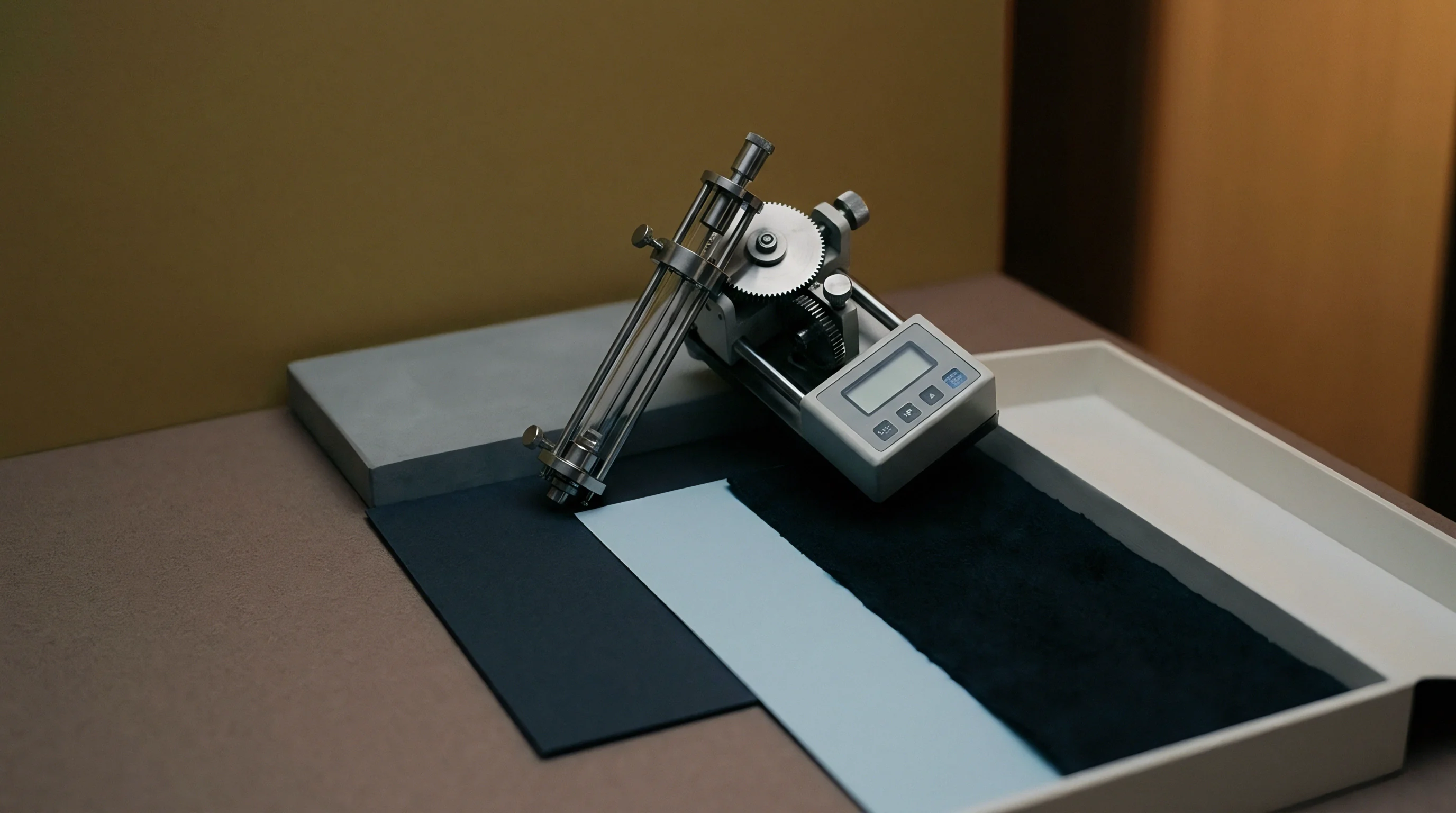
Bench instruments measuring long-term static creep utilize continuous vertical load platens equipped with high-precision linear variable differential transformers. Testing reveals that recycled middle plies exhibit significantly higher creep rates than virgin CTMP plies under identical static pressures. Recycled fiber plies lack the resilient elastic micro-structure necessary to absorb continuous load without structural consolidation, and ambient moisture accelerates this network collapse.
- Equilibrium moisture verification using gravimetric oven-drying under ISO 287 to confirm sheet water content remains within six to eight percent limits before bench compression testing.
- Relative humidity history check evaluating prior environmental exposure to prevent testing hysteresis-swollen board exhibiting false compressive creep figures.
- Z-axis thickness recovery measurement recorded twenty-four hours after releasing static compression loads to distinguish elastic deflection from irreversible structural consolidation.
Whether cross-linking additives added during wet-end sizing can permanently prevent moisture-induced creep without ruining the repulpability of the board remains an open question for chemical suppliers.
Crease
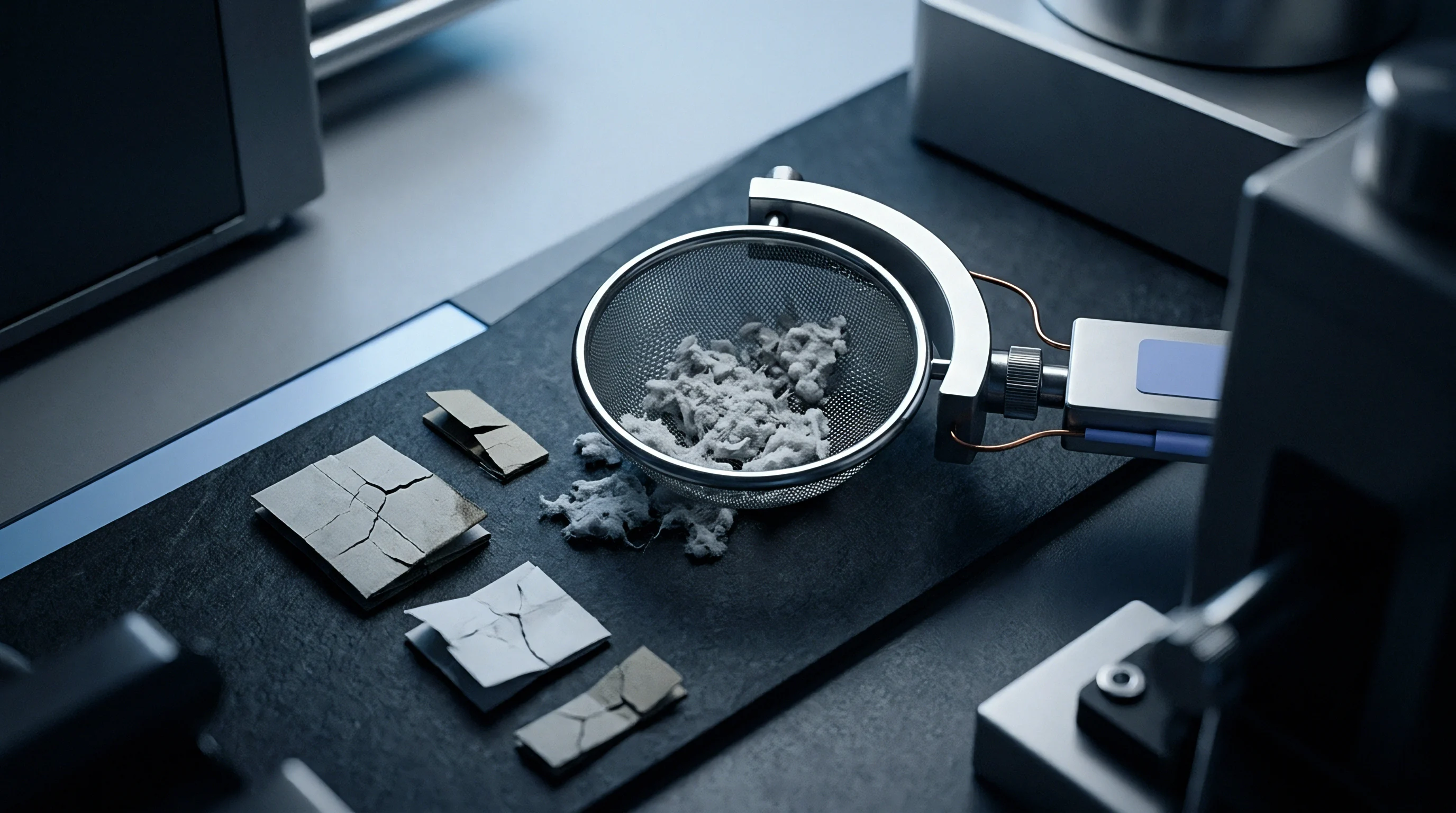
Score lines created during die-cutting displace fiber and force interior fiber zones to compress locally while outer liners undergo tensile deformation. Proper creasing requires controlled delamination within the interior ply so the board can bend ninety degrees without cracking the outer printed liners. If the interior ply offers excessive compression resistance, bending stresses transfer outward, fracturing the top liner along the fold edge.
If the interior ply collapses completely without internal shear failure, the fold line lacks crisp geometric definition.
Does High Middle Ply Ash Compromise Score Integrity?
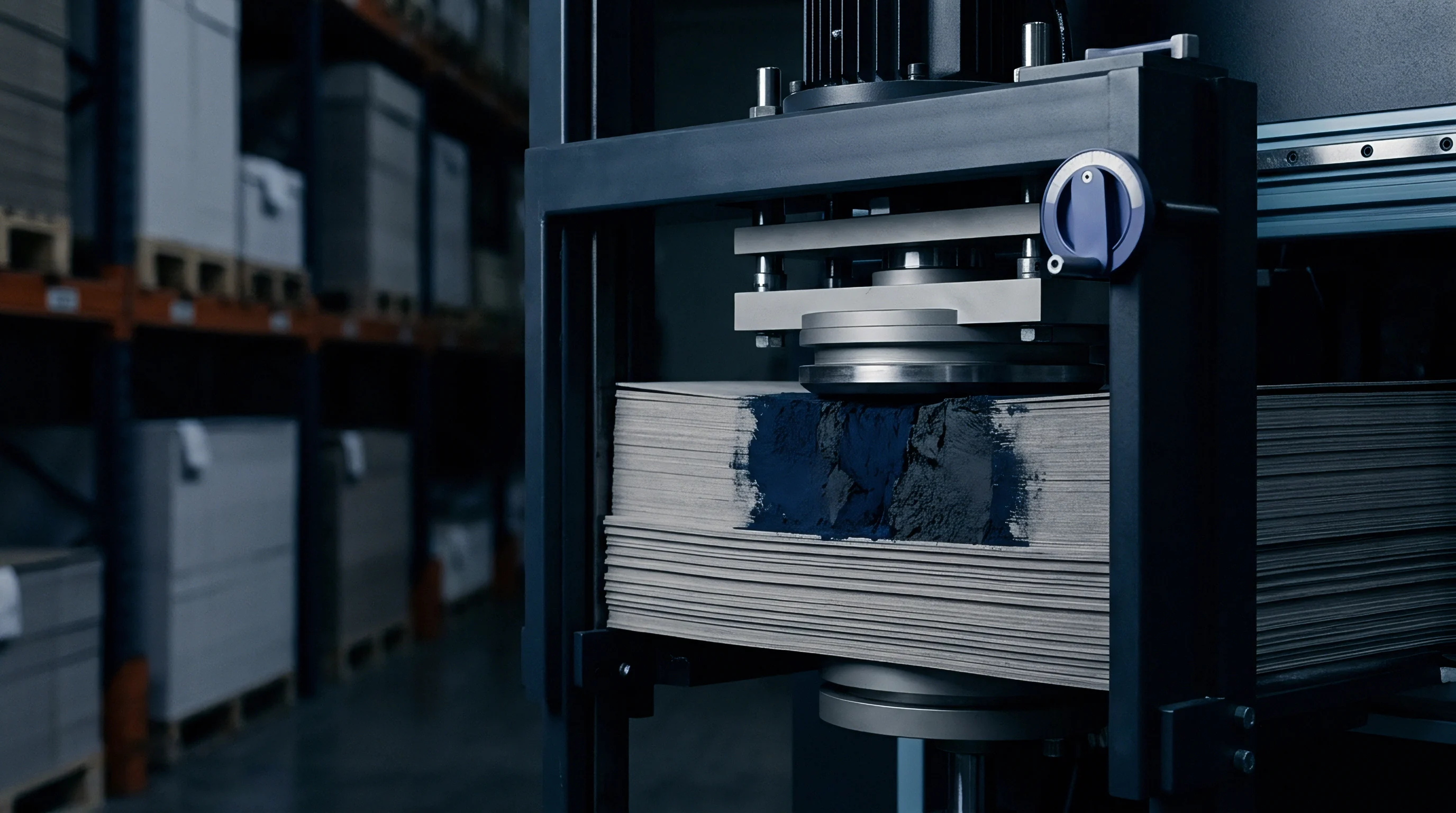
Mineral filler particles distributed through reclaimed furnishes decrease internal fiber bonding energy and cause erratic delamination under rule pressure. High concentrations of calcium carbonate or clay reduce inter-fiber cohesive energy within middle plies. During die-cutting, crease rules push board material into female matrix channels, inducing intense local compression and shear stresses.
High-ash interior layers delaminate prematurely across broad zones rather than forming narrow, targeted micro-fractures.
Uncontrolled delamination weakens the bending moment along the score line, destroying package squareness on automated packing lines. High ash content also accelerates wear on steel die-cutting rules, widening matrix tolerances and altering local compression forces over long production runs. Converting plants must increase creasing rule pressure when handling high-ash recycled boards, which increases the risk of cutting clean through the bottom liner.

Delamination and Bending Stiffness Retention
Controlled micro-cracking inside the bulk interior layer lowers the bending moment required to form a clean ninety-degree panel fold. Bending stiffness measured by Taber or Lorentzen & Wettre instruments under ISO 2493 drops significantly post-scoring. A high-quality folding boxboard retains fifty to sixty percent of its uncreased bending stiffness post-folding, preserving panel flatness while allowing easy carton opening on automatic pack-lines.
Mechanical pulps exhibit superior scoring behavior due to their fibrous micro-structure and high bulk. CTMP middle plies absorb localized compressive stress through controlled cell wall micro-buckling without complete network disintegration. The sheet internal delamination remains localized directly beneath the creasing rule tip, maintaining sharp panel edges.
Recycled board plies require deeper matrix grooves and wider rule widths to achieve equivalent foldability without surface fracturing.
Delamination within the middle furnish during creasing allows the outer plies to fold without outer surface tensile failure.
Standard trade purchase contracts state that board failing to retain seventy percent of its pristine Taber bending stiffness post-scoring fails physical incoming quality assurance.

Ledger
Substrate economic calculations turn on the relationship between basis weight, caliper bulk yield, and delivered sheet area. Paperboard is purchased by weight in metric tonnes but consumed by surface area as individual box blanks, where yield governs net board cost. Specifying high-bulk CTMP interior plies allows converters to reduce basis weight while maintaining target caliper and bending stiffness.
Basis weight downgauging directly lowers raw material consumption, freight cost, and environmental producer responsibility fees.
Mechanical Pulp Substitution and Downgauging Calculations
Replacing bleached kraft furnish with chemi-thermomechanical pulp raises caliper at equivalent grammage, enabling significant basis weight reduction. A 350 gram per square meter board configured with a 100 percent CTMP middle ply achieves a caliper of 500 micrometers. Producing that same 500-micrometer thickness using recycled or solid unbleached kraft furnish requires a basis weight of 410 grams per square meter.
Downgauging by sixty grams per square meter saves fourteen percent in substrate weight for identical package dimensions.
Consider an order of one million carton blanks requiring 500 micrometers of finished caliper, where each blank has an area of 0.25 square meters. The total required surface area equals 250,000 square meters. Utilizing the 350 gram CTMP board demands 87.5 metric tonnes of paperboard.
Specifying the 410 gram recycled board demands 102.5 metric tonnes of stock. At a substrate price of 1,200 dollars per metric tonne, the CTMP specification yields a direct substrate savings of 18,000 dollars per production run.
Yield Variations across Furnish Configurations
Converting plants purchasing paperboard by weight receive higher total surface area per tonne when specifying high-bulk mechanical middle layers. The volumetric yield advantage translates directly into lower transportation costs from the mill to the converter. Lighter reels yield more printable linear meters per outer diameter roll, reducing reel changeover frequency on high-speed printing presses and die-cutters.
| Board Furnish Architecture | Caliper (µm) | Bulk (cm³/g) | Taber Stiffness CD (mNm) | Tonnage Required per 100k m² | Substrate Cost per 1000 Blanks ($) |
|---|---|---|---|---|---|
| Virgin FBB: CTMP Interior Ply | 500 | 1.43 | 19.5 | 35.0 | 315.00 |
| Blended FBB: 50% CTMP / 50% DIP Interior | 440 | 1.26 | 14.8 | 35.0 | 297.50 |
| Recycled WLC: 100% Reclaimed Middle Ply | 390 | 1.11 | 11.2 | 35.0 | 262.50 |
| Downgauged Virgin FBB (Target 500 µm Caliper) | 500 | 1.43 | 19.5 | 35.0 | 315.00 |
| Equivalent Caliper Recycled WLC (450 g/m²) | 500 | 1.11 | 19.2 | 45.0 | 337.50 |
Optimizing interior furnish selection requires balancing raw mechanical bulk gains against the higher pressing forces demanded during high-speed carton converting. A balanced sheet specification achieves target panel stiffness at minimal basis weight without risking score fracture or warehouse stack failure.