Directional Stiffness
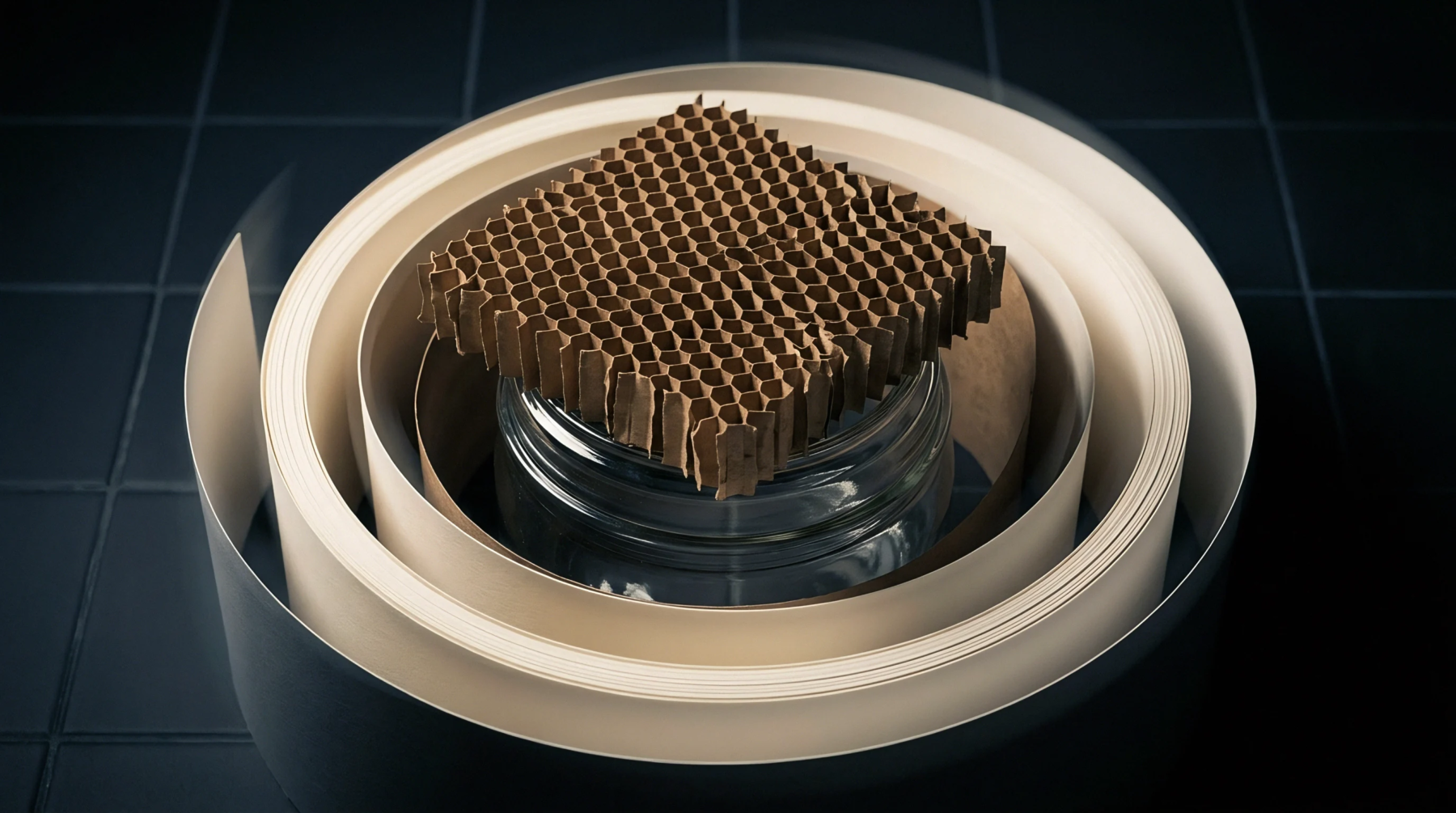
Resistance of paper or paperboard to deformation under compressive forces applied perpendicular to its surface represents a fundamental mechanical property for structural performance. This characteristic, defined as the out of plane compressive modulus, determines how well the material maintains its thickness when subjected to heavy loads during printing and converting. Crush resistance represents an influential variable in predicting the behavior of corrugated board.
Measurement Protocol
Double-plate compression testers measure the deformation of the sample under a steadily increasing normal force. Calculating the out of plane compressive modulus involves dividing the applied stress by the resulting strain within the initial elastic region of the test curve. Maintaining uniform sample thickness and flat, parallel platens is essential to prevent edge effects from distorting the measurement.
The results are highly sensitive to the moisture content of the board, as water molecules soften the hemicellulose matrix. For this reason, testing must be carried out in a temperature and humidity controlled environment to ensure consistency across different batches of material.
Converting Application
Compression of paperboard during the calendering and embossing processes depends directly on this material property. When the out of plane compressive modulus is too low, the board may suffer permanent thickness reduction during printing, which degrades both the structural strength and the surface print quality. Maintaining high modulus values prevents this compression and ensures that the finished carton retains its protective capacity.