Recycled Stock
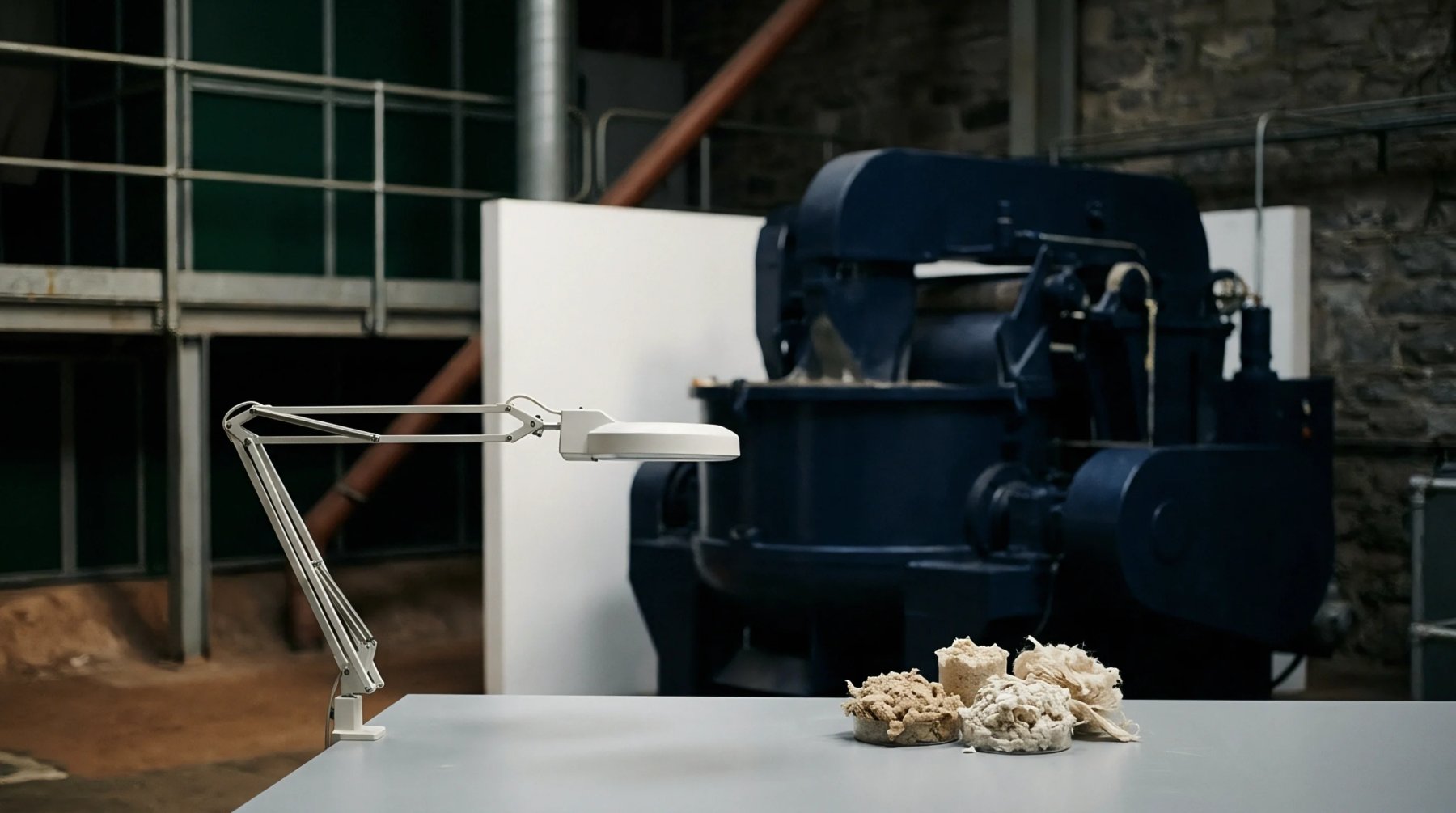
Recycled cellulosic fiber obtained by processing recovered paper to extract print pigments and adhesive contaminants constitutes a primary raw material for graphic and packaging paper production. Commonly known as deinked pulp, this material provides an alternative to virgin wood fibers in manufacturing paperboards and tissue grades. Production of this material focuses on maximizing brightness while minimizing residual ink levels to ensure the pulp meets specific runnability and optical standards on high speed paper machines.
Ink Extraction
Flotation and washing processes govern the mechanical separation of hydrophobic ink particles from hydrophilic wood fibers. In the flotation cell, injected air bubbles attach to the dispersed ink chemistry and carry them to the surface as foam. This mechanism depends heavily on surfactant chemistry to modify the surface tension of the pulp slurry.
Agitation and washing then remove smaller particles that escape the foam layer. Alkaline chemicals, primarily sodium hydroxide and sodium silicate, are introduced during the pulping stage to swell the fibers and release bound ink.
Sheet Integrity
Papermaking utilizing secondary fiber must account for reduced fiber length. Because recycling shortens fibers, deinked pulp exhibits lower tensile strength than virgin kraft pulp. Additives are therefore applied to restore sheet strength.