Silent Paper Grade Furnish Substitution Mechanics at Machine Gate
Furnish substitutions at the machine gate require wet end NIR tracking and ISO 1924 tensile verification to prevent runnability failures and yield losses


Gate
Wet end stock delivery systems settle pulp slurry composition milliseconds before deposition onto the forming wire. Paper mills operate under continuous pressure from raw pulp market volatility, energy tariffs, and regional timber availability. When market pulp prices spike for long-fiber bleached softwood kraft, mill engineers introduce furnish adjustments directly at the headbox approach piping, altering the ratio of long softwood fibers, short hardwood fibers, chemithermomechanical pulp, and recycled deinked fibers without changing the nominal grade name on the reel tag.
The machine gate represents the physical junction where stock dosing, filler additions, and wet end chemistry converge into the headbox slice.
Visual inspection of a delivered master reel cannot detect mid-run furnish shifts. Modern gap formers and Fourdrinier machines running at speeds above twelve hundred meters per minute process stock suspensions at consistency levels between zero point five percent and one point two percent solids. To maintain target basis weight during a softwood-to-hardwood substitution, machine operators adjust slice geometry, headbox pressure, and wire speed.
The resulting web meets nominal grammage targets on the automated reel scanner, yet the sheet’s internal structural network undergoes immediate alteration.
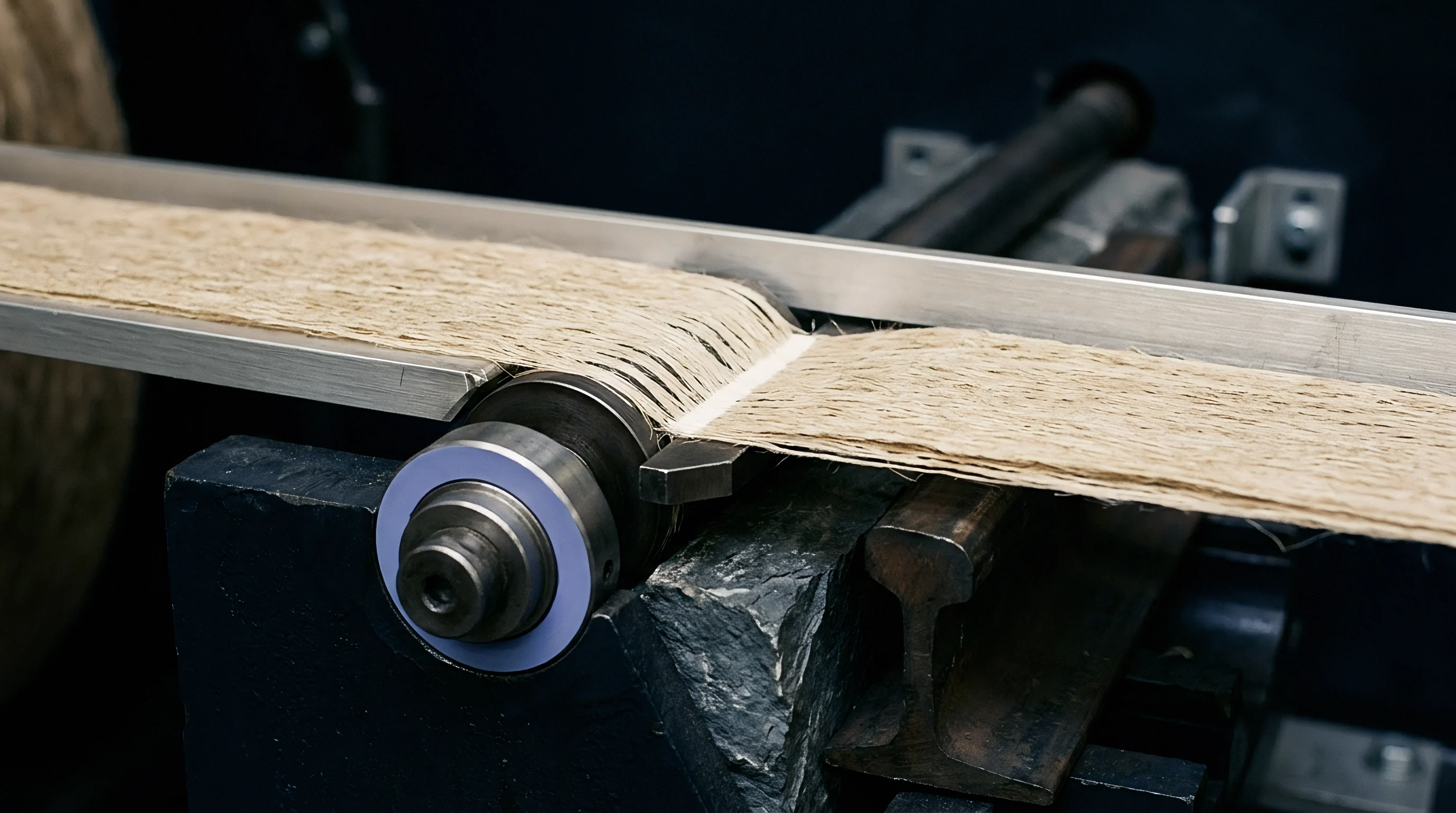
Headbox Dynamics and Furnish Delivery
Proportional pulp blending occurs in the chest sequence immediately preceding the headbox fan pump. Bleached softwood kraft supplies the long-fiber matrix necessary for web consolidation, tensile strength, and tear resistance, while bleached hardwood kraft provides short fibers that fill interstitial voids to enhance smoothness and opacity. When the mill reduces softwood content by eight to fifteen percent and raises hardwood content correspondingly, headbox consistency and slurry viscosity shift.
Long fibers exhibit a weighted average length of two point five to three point two millimeters, whereas short hardwood fibers average zero point eight to one point two millimeters. This length differential alters the shear forces required to prevent fiber flocculation in the headbox turbulence generators.
Dosing secondary recycled fibers or mechanical pulps into a virgin kraft specification introduces unrefined fines and soluble colloidal material that raise the wet end stock’s total specific surface area. This expanded surface area absorbs cationic retention aids at an elevated rate, forcing chemical additions to maintain fiber and filler retention levels across the forming fabric. When retention chemistry fails to adjust rapidly to furnish changes, white water consistency rises, carrying fine mineral particles back through recirculation loops and destabilizing wet end hydrodynamics.

Reel Identification and Physical Discrepancies
Reel tracking systems log production parameters across every tambour turned off the machine reeler. While automated quality control systems monitor online basis weight, caliper, and moisture via beta-transmission and infrared sensors, these instruments fail to measure fiber species distribution or zero-span tensile strength. A master reel produced after an unannounced furnish change exhibits identical nominal caliper and weight relative to its predecessor.
Physical discrepancies emerge when the web experiences mechanical stress in secondary converting processes.
Cross-directional basis weight profiles drift when short-fiber furnish distributions respond differently to slice lip actuator adjustments. Long-fiber networks maintain structural cohesion under localized drainage variations, whereas short-fiber networks exhibit localized density fluctuations. These variations register as sudden localized changes in internal sheet bond strength and directional stiffness.
Goods-in inspection teams opening master reels at converting facilities encounter reels that meet purchase order specifications on weight while failing severely during web tension changes.
Minor adjustments in fibre blend ratios are treated within mill operations as standard flexibilities needed to maintain machine efficiency across varying pulp deliveries.
Blend
Fibre morphology governs the mechanical network properties of the finished sheet. When a papermaker substitutes softwood kraft with hardwood kraft, chemithermomechanical pulp, or recycled furnish, the fiber-to-fiber contact area and hydrogen bonding potential change. Softwood fibers, derived from pine or spruce species, possess thick cell walls and high aspect ratios.
These fibers collapse into flat ribbons during refining, establishing extensive inter-fiber hydrogen bonds across the sheet lattice. Hardwood fibers, derived from eucalyptus or birch, maintain a rigid cylindrical cross-section, offering higher bulk per unit weight but lower individual fiber entanglement strength.
Mineral filler substitution accompanies fiber furnish swaps. Mills introduce ground calcium carbonate or precipitated calcium carbonate to replace expensive virgin fiber volume. Filler particles sit between fiber contact zones, blocking hydrogen bond formation.
Increasing total dry ash content from eight percent to fourteen percent elevates sheet opacity and surface smoothness while reducing internal sheet cohesion. The structural balance between fiber species selection, mechanical pulp fraction, and mineral loading dictates whether a packaging board withstands folding without score cracking or whether an offset printing sheet resists surface picking under tacky inks.

Morphological Shifts across Fiber Species
Refining intensity modulates the bonding capability of altered fiber blends. Softwood pulps require high specific edge load refining, typically one point5 to two point five Watt-seconds per meter, to fibrillate cell walls without excessive fiber shortening. Hardwood pulps demand lower specific edge loads, between zero point five and zero point eight Watt-seconds per meter, to prevent severe fiber cutting.
When a mill runs a mixed furnish through a single refining line without segregated stock chest preparation, softwood fibers remain under-refined while hardwood fibers suffer catastrophic length reduction, losing sheet bulk in the process.
A ten percent increase in hardwood kraft pulp content reduces sheet tear index by sixteen percent under ISO 1974 test conditions at 23 degrees Celsius and 50 percent relative humidity.
Chemithermomechanical pulp introduces rigid, unrefined lignin-rich fibers into the furnish. These fibers maintain high bulk and bending stiffness per unit grammage, making them attractive for folding boxboard center plies. Mechanical pulps exhibit low specific bonding strength, so replacing bleached chemical softwood with mechanical pulp lowers z-directional tensile strength and burst performance.
Converting lines running high-speed carton erecting machinery experience flap failure when z-direction strength drops below critical operational thresholds.
Mineral Fillers and Internal Cohesion
Particle size distribution of mineral fillers directly influences wet end retention and dry sheet structure. Precipitated calcium carbonate features engineered scalenohedral particle morphology, providing exceptional light scattering efficiency and brightness. Ground calcium carbonate features rhombohedral particles with broader size distributions, packing tightly into the sheet matrix.
Substituting ground calcium carbonate for precipitated calcium carbonate increases sheet density and reduces air permeability without altering basis weight.
| Furnish Blend Ratio (Softwood / Hardwood / CTMP / Filler) | Grammage (ISO 536) g/m² | Caliper (ISO 534) µm | Tensile Index MD (ISO 1924-2) Nm/g | Tear Index CD (ISO 1974) mN·m²/g | Scott Bond (TAPPI T 569) J/m² |
|---|---|---|---|---|---|
| 70% Softwood / 20% Hardwood / 0% CTMP / 10% GCC | 80.2 | 102.1 | 68.5 | 8.4 | 210 |
| 50% Softwood / 40% Hardwood / 0% CTMP / 10% GCC | 80.1 | 98.4 | 54.2 | 6.8 | 185 |
| 40% Softwood / 40% Hardwood / 10% CTMP / 10% GCC | 79.8 | 106.3 | 46.1 | 5.9 | 145 |
| 40% Softwood / 30% Hardwood / 15% CTMP / 15% PCC | 80.4 | 111.0 | 39.8 | 5.1 | 118 |
Mineral loading reduces internal sheet bond strength systematically. Scott bond energy measurements drop linearly as ash content increases. At high filler loading levels, cationic starch additions must increase from eight kilograms per tonne to fourteen kilograms per tonne to compensate for missing fiber-to-fiber bonds.
Starch additions increase dry strength but alter wet end charge balances, affecting drainage rates on the forming table.
Adding short hardwood fibers improves surface smoothness for printing while reducing the tear resistance necessary for high-speed carton folding.


Drainage
Headbox stock slurry dewatering rates determine the forming wire speed limit and web consolidation characteristics. Drainage performance on Fourdrinier tables and twin-wire formers relies on stock freeness, expressed in Canadian Standard Freeness or Shopper-Riegler values. Long softwood fibers form an open, highly permeable fiber mat that drains rapidly under vacuum pulse dewatering.
Hardwood fibers and recycled fines pack densely against the forming fabric, creating high flow resistance across the initial drainage zone.
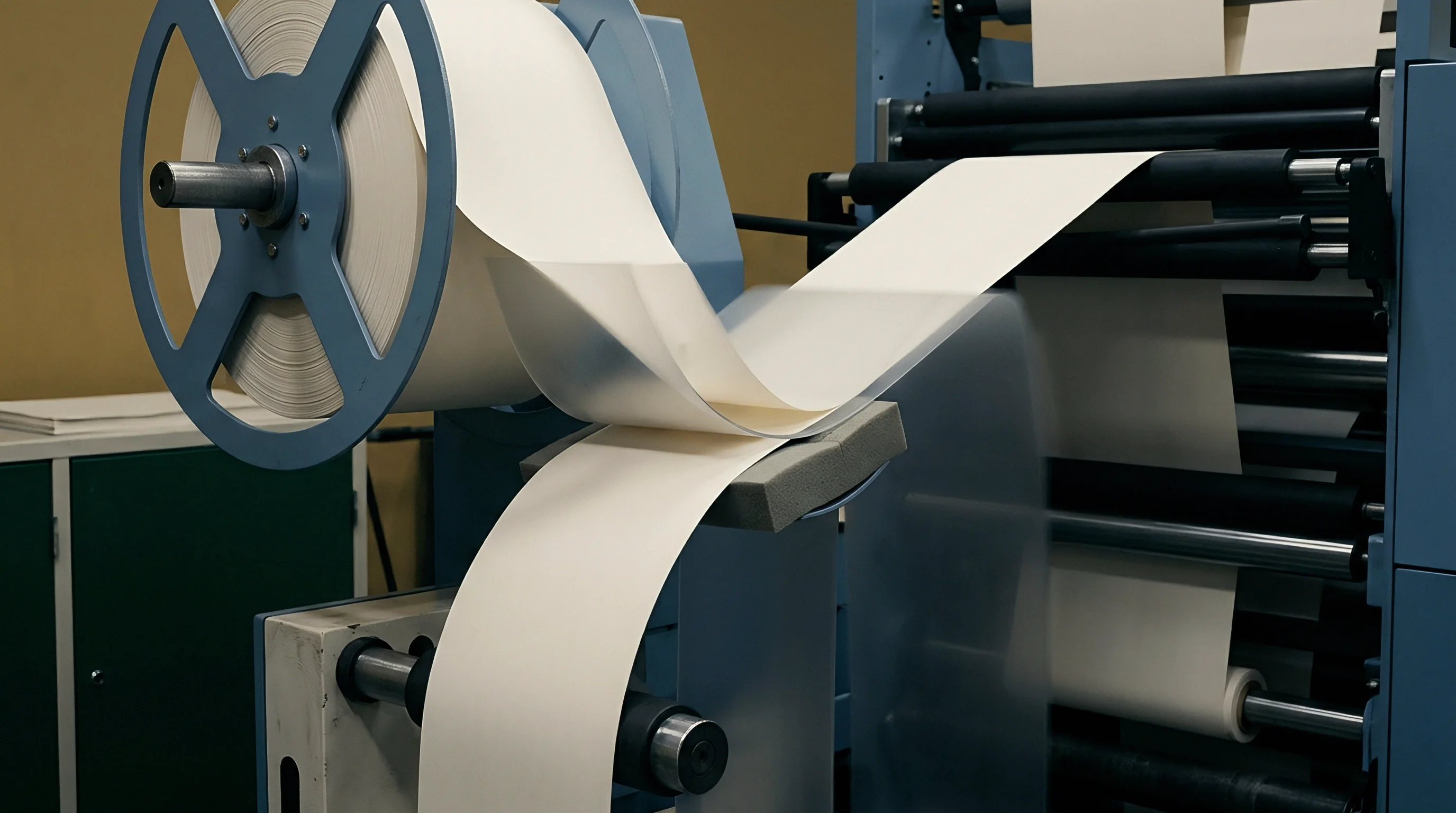
Which Wet End Metrics Signal Unannounced Pulp Swaps?
Stock freeness drops sharply when hardwood ratios or recycled pulp fractions increase. A baseline softwood furnish exhibiting four hundred fifty milliliters Canadian Standard Freeness drops to three hundred twenty milliliters when hardwood content rises by twenty-five percent. Drainage rates dictate wire speed.
To maintain production velocity without flooding the couch pit, machine operators increase vacuum levels on suction boxes. Higher vacuum levels compress the wet web, reducing initial bulk and increasing wet web consolidation density prior to the press section.
Vacuum adjustments create physical markers within the sheet structure. High differential pressures across wet suction boxes pull fine mineral particles and short fibers toward the wire side of the sheet, generating structural two-sidedness. Wire-side filler depletion alters surface absorbency and ink acceptance during print runs.
Printing registration errors and density variations track directly to structural two-sidedness induced by emergency vacuum compensation at the wet end.

Retention Chemistry and Web Formation
Micropolymer retention systems manage fine fiber particles and mineral fillers during water removal. Cationic polyacrylamides combine with bentonite clay or colloidal silica to form microflocs capable of surviving shear stress near hydrofoils. When high-fines furnish substitutions occur, retention chemical demand exceeds dosing pump capacity.
Fines pass through forming fabrics, escalating white water solids concentrations from fifteen hundred milligrams per liter to over four thousand milligrams per liter.
Higher refining energy restores sheet strength in short-fiber furnish blends at the expense of wet-end dewatering speed.
Excessive fines recirculation causes severe operational hazards across converting equipment. The following structural failure modes occur when unannounced furnish shifts disrupt web drainage and retention physics:
- Score line cracking ~ Reduced long-fiber softwood ratios create brittle fold lines on high-speed packaging machinery.
- Surface picking ~ Insufficient internal bonding releases short hardwood fibers under high-viscosity offset printing inks.
- Web delamination ~ Weak Z-direction tensile strength causes multi-ply boards to split during rotogravure drying stages.
- Flute crushing ~ Low compressive strength in recycled medium components degrades corrugated board stack integrity.
Reduced wet web tensile strength at the transfer point between the wire section and press section forces operators to increase web draw tension. Elevated draw tension stretches the semi-wet paper sheet, inducing latent internal strains that manifest as sheet curl and web instability during heat-set printing and high-temperature laminating operations.
Whether mill operators can balance vacuum levels to mask wet-end freeness changes without inducing internal strain patterns across the drying section remains an open question on wide high-speed gap formers.
Sizing
Internal hydro-phobic chemical additives alter liquid contact angles across cellulose fiber networks. Papermakers utilize alkyl ketene dimer or alkenyl succinic anhydride sizing agents to resist liquid penetration in liquid packaging, offset printing, and outer corrugated liner applications. When low-grade recycled pulp or unrefined mechanical fibers replace virgin chemical fibers, hydrophobic sizing efficiency declines.
Impurities, residual surfactants, and high specific surface areas consume sizing molecules, forcing mills to adjust internal and surface chemical applications.

Internal Sizing Chemistry Adjustments
Alkenyl succinic anhydride acts rapidly in alkaline papermaking conditions, establishing covalent ester bonds with cellulose hydroxyl groups during sheet drying. High fines loading sequesters hydrophobic molecules, leaving insufficient active sizing agent on primary fiber surfaces. Mills compensate by increasing alkenyl succinic anhydride dosing from one point two kilograms per tonne to two point five kilograms per tonne.
Unreacted sizing agents undergo hydrolysis in the wet end white water, forming sticky calcium salts that deposit on press felts and dryer cans.
Alkyl ketene dimer sizing relies on thermal curing through dryer sections to achieve full contact angle development. When mills substitute furnish to lower costs, thermal mass changes across wet press sections lead to variable dryer temperature profiles. Incomplete curing of alkyl ketene dimer manifests as sizing delay, where delivered reels display low initial water resistance at goods-in testing but gain water resistance weeks later in client storage, altering ink acceptance in the process.
Under ISO 535 specifications, a five-gram water absorption increase per square meter invalidates water-resistant barrier guarantees on outer corrugated liners.

Surface Starch Pick Strength Compensation
Size press starch application restores surface strength lost during low-cost furnish substitution. Ethylized or oxidized corn starch applied at metering rod size presses seals surface pores, increasing surface pick resistance and Gurley air resistance. High starch film weights buy surface strength at the expense of sheet toughness and ductility.
Thick starch surfaces create brittle outer layers that fracture during ninety-degree carton folding operations.
Verifying reel consistency against certified mill test reports requires disciplined physical sampling at goods-in reception. Sourcing engineers execute the following procedure to catch surface and internal sizing discrepancies:
- Draw three full-width web strips across the reel width within ten minutes of roll slitting.
- Seal each strip in vapor-barrier foil before atmospheric transport to prevent ambient humidity exchange.
- Condition specimens in an ISO 187 environmental chamber at 23 degrees Celsius and 50 percent relative humidity for twenty-four hours.
- Execute ISO 535 Cobb water absorption testing on five separate cut sections across the web profile.
- Measure surface pick velocity using IGT testing oil in accordance with ISO 3783 standards.
Unannounced size alterations leading to glue-line adhesive failure across forty thousand folding cartons create an eighteen thousand dollar re-trim expense.
Tolerance
Laboratory verification of paper physical properties depends on strict environmental stabilization. Paper substrates are hygroscopic, absorbing or desorbing moisture until equilibrium with surrounding air is established. Standard conditioning under ISO 187 specifies twenty-three degrees Celsius and fifty percent relative humidity.
Physical test figures generated outside these conditions carry no contractual validity, as unconditioned samples yield misleading data.

Standardized Testing and Atmospheric Conditioning
Grammage determination under ISO 536 requires precision balance measurements on conditioned test pieces cut to exact dimensions. Caliper determination under ISO 534 utilizes a dead-weight micrometer applying fifty kilopascals pressure across a two-square-centimeter anvil. When furnish substitution occurs, basis weight may remain within nominal target limits while sheet bulk fluctuates significantly.
Bulk, defined as caliper divided by grammage, reflects fiber packing efficiency and internal sheet architecture.
| Physical Property | Test Standard | Measurement Units | Acceptable Process Variance Band | Substitution Failure Threshold |
|---|---|---|---|---|
| Grammage | ISO 536 | g/m² | ± 2.0 % | > ± 3.5 % |
| Thickness (Caliper) | ISO 534 | µm | ± 3.0 % | > ± 5.5 % |
| Tensile Strength MD | ISO 1924-2 | kN/m | ± 4.0 % | > – 8.0 % |
| Tear Resistance CD | ISO 1974 | mN | ± 5.0 % | > – 10.0 % |
| ISO Brightness | ISO 2470-1 | % R457 | ± 1.0 unit | > ± 2.5 units |
| Bendtsen Roughness | ISO 8791-2 | mL/min | ± 10.0 % | > + 25.0 % |
| Note: Conditioning carried out under ISO 187 parameters (23°C, 50% RH). Variance bands calculated relative to certified master baseline records. | ||||
Tensile testing under ISO 1924-2 yields tensile strength, stretch at break, and tensile energy absorption. Long softwood fibers generate high tensile energy absorption values, allowing paper webs to absorb sudden tension spikes on printing presses. Substituting short hardwood fibers or CTMP reduces tensile energy absorption without necessarily altering static tensile peak load.
Drops in tensile energy absorption alert sourcing engineers to unannounced furnish downgrades long before physical web breaks occur on production lines.
Delivered reels consistently show narrower basis weight variations along the machine direction than across the transverse web profile.
Statistical Process Control Limits versus Process Drift
Distinguishing normal machine process drift from deliberate furnish substitution requires statistical process control analysis. Mill processes exhibit normal Gaussian distribution curves for basis weight and thickness across long runs. Standard process drift causes minor random fluctuations around the mean value, whereas deliberate furnish substitution generates distinct multimodal distributions or systematic step-changes in secondary structural properties like tear index and air permeability.
Paperboard featuring substituted mechanical pulp exhibits a six percent yield loss during high-speed converting runs. Sourcing teams use structured acceptance protocols to evaluate delivered lots prior to commercial release. Quality assurance personnel follow this decision framework when receiving master reel consignments:
- Grammage verification ~ Measured basis weight falls within two percent of specification across the fifteen-point web sampling grid.
- Tensile index threshold ~ Machine direction tensile energy absorption meets or exceeds thirty-five Joules per square meter.
- Tear resistance ratio ~ Cross-direction tear resistance maintains an eighty-five percent floor relative to virgin stock baseline measurements.
- Brightness variance ~ ISO brightness remains within one point five units of certified mill certificates to confirm pulp bleaching consistency.
Standard supply contracts incorporating Section 4.2 of the TAPPI T 1200 guidelines permit buyers to reject entire master rolls when three consecutive cross-web samples exceed a five percent variance from baseline tensile energy absorption.

Clearing
Commercial adjustment of paper purchasing contracts relies on converting physical property changes into direct landed unit cost arithmetic. Paper is bought by weight, but converters run by the sheet. Sourcing practices purchase paper reels by metric tonnage while calculating converting profitability on delivered surface area or finished sheet counts.
When a mill silently substitutes furnish to run higher bulk or higher density stock, the sheet count yield per tonne shifts immediately, destroying converting margins.

Yield Arithmetic and Sheet Count Variance
Grammage drift destroys margin, just as moisture pickup warps flat sheets. Consider a packaging contract specifying eighty grams per square meter woodfree paper converted into standard packaging inserts. A delivery arriving at eighty-two point five grams per square meter sits within general weight tolerances yet yields three percent fewer converted sheets per metric tonne.
On a hundred-tonne order, this yield reduction represents three tonnes of lost finished product value.

Worked Example: Yield Impact of Softwood-to-Hardwood Substitution
A packaging converter contracts for five hundred metric tonnes of solid bleached sulfate board at a baseline grammage of two hundred fifty grams per square meter and a nominal caliper of three hundred micrometers. Target yield is eight thousand square meters per tonne, or four million square meters total surface area. The agreed price sits at twelve hundred dollars per metric tonne landed, representing a total contract commitment of six hundred thousand dollars.
During mill production, the papermaker substitutes softwood kraft with eucalyptus hardwood kraft and ground calcium carbonate filler to cut pulp costs. To maintain stiffness, the mill increases basis weight to two hundred sixty-two grams per square meter while keeping nominal thickness at three hundred micrometers. The deliverable shifts to the following yield profile:
Re-calculated yield equals one thousand000 divided by zero point two six two, yielding three thousand eight hundred sixteen point8 square meters per metric tonne. Five hundred metric tonnes now yields one million nine hundred eight thousand four hundred square meters of usable board. The yield deficit amounts to ninety-one thousand six hundred square meters, equivalent to a loss of twenty-two thousand nine hundred USD in converted surface area value.
Contractual penalty clauses convert physical verification figures into commercial credits. Sourcing agreements include automatic price adjustments tied to pulp benchmark indices, dry fiber content, and net sheet yield. When laboratory testing confirms unannounced furnish changes that degrade structural headroom without triggering total lot rejection, buyers enforce clawback provisions that adjust landed tonnage billing down to actual sheet yield value.
Commercial recovery mechanisms rely on clear master supply agreements linking physical ISO test thresholds directly to invoice settlement schedules. Sourcing desks specify baseline furnish ratios, minimum tensile energy absorption limits, and strict density bands in original supply contracts. When incoming goods auditing uncovers silent furnish downgrades at the machine gate, buyer leverage depends entirely on method-backed test data, atmospheric conditioning logs, and explicit contract penalty formulas.