Machine Direction Fiber Orientation Mechanics in Packaging Board
Jet-to-wire velocity ratios govern machine-direction fiber orientation, setting board anisotropy ratios that dictate box compression and score crack resistance.
Jet
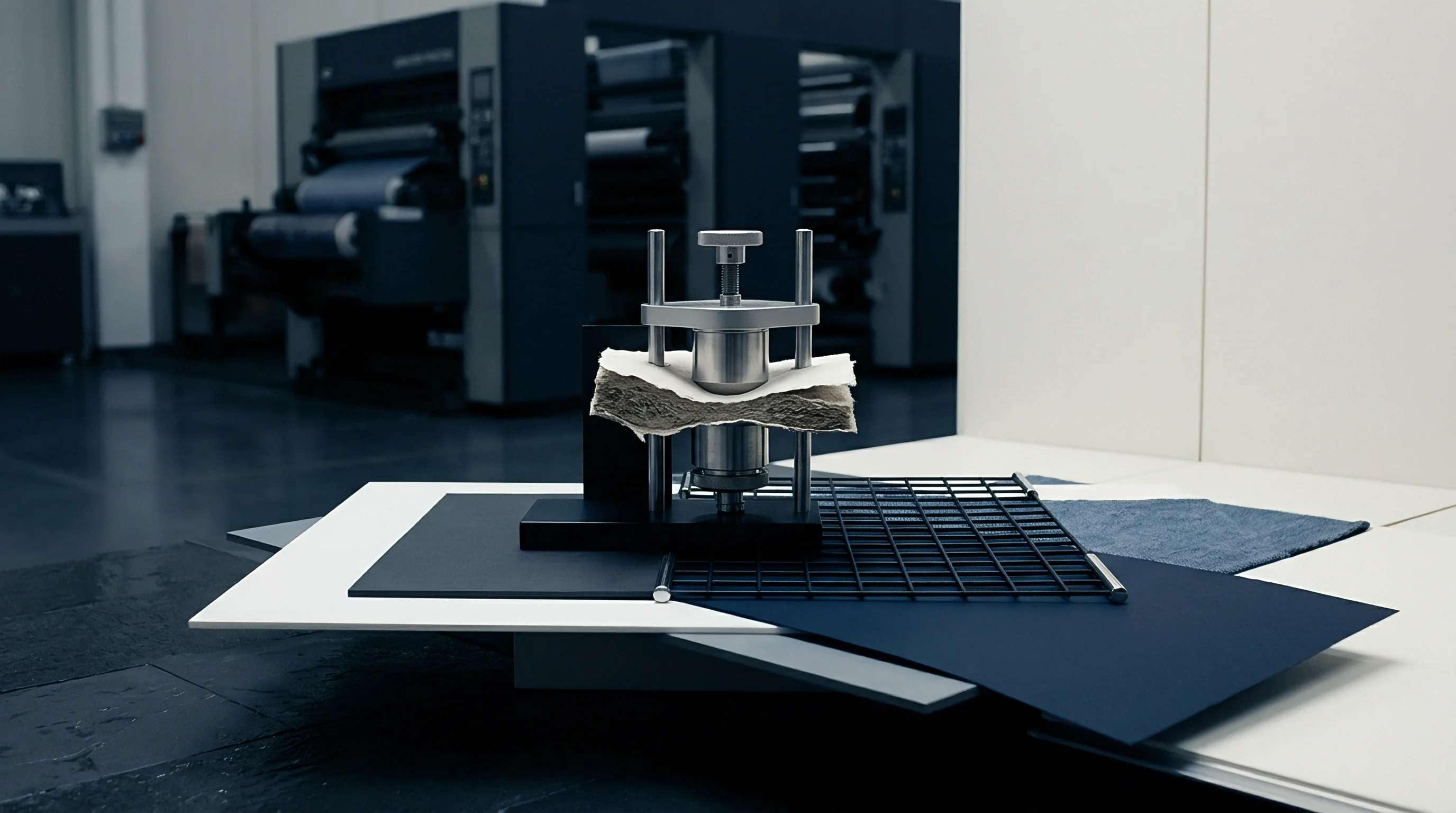
Suspension velocity relative to the forming wire governs the spatial distribution of wood fibers as the stock enters the drainage zone. In modernfourdrinier and multi-ply gap formers, dilutely dispersed cellulosic fibers exit the headbox slice nozzle at speeds dictated by hydraulic pressure head. When fluid discharge velocity perfectly matches moving fabric speed, fibers land on the wire mesh in randomized planar directions.
Disruption of this velocity equilibrium forces suspended filaments to rotate under intense fluid shear forces, aligning their long axes along the predominant flow vector.
Fibers align along the machine axis. Hydrodynamic drag pulls individual filaments. Velocity differentials create shear stresses within the slurry slice layer.
When stock exits faster than the wire moves, a condition known as rush, momentum forces fibers into parallel machine-vector trajectories. Conversely, operating the forming fabric faster than stock delivery, termed drag, stretches the fluid filament, dragging individual fibers into identical directional alignment. Controlling this velocity ratio serves as the primary mechanical lever for establishing structural paperboard properties.

Hydrodynamic Shear inside Headbox Nozzles
Suspension acceleration through a tapered convergence generates velocity gradients that rotate suspended cellulosic structures along flow streamlines. Within the headbox chamber, turbulence generators break up fiber flocs to ensure uniform grammage distribution. Shear fields within nozzle slice openings realign dispersed elements.
High shear rates align longer softwood tracheids more readily than shorter hardwood fibers, generating differential orientation responses across mixed furnish blends. Slice lip adjustments alter local flow rates across the width, changing local alignment angles relative to the true machine centerline.
Cross-machine flow components distort the primary alignment vector. Sidewall friction and lateral contraction inward from deckle edge boundaries induce transverse hydrodynamics. The resultant vector angle between true machine direction and principal fiber alignment is designated as the alignment skew angle.
Skew angles exceeding two degrees cause severe sheet instability, leading to diagonal twist warp in finished packaging structures. Fiber alignment dictates sheet strength. Precision slice positioning and profiling eliminate unwanted transverse flow, restricting fiber axes within narrow angular distributions.
Speed Differential across the Drainage Zone
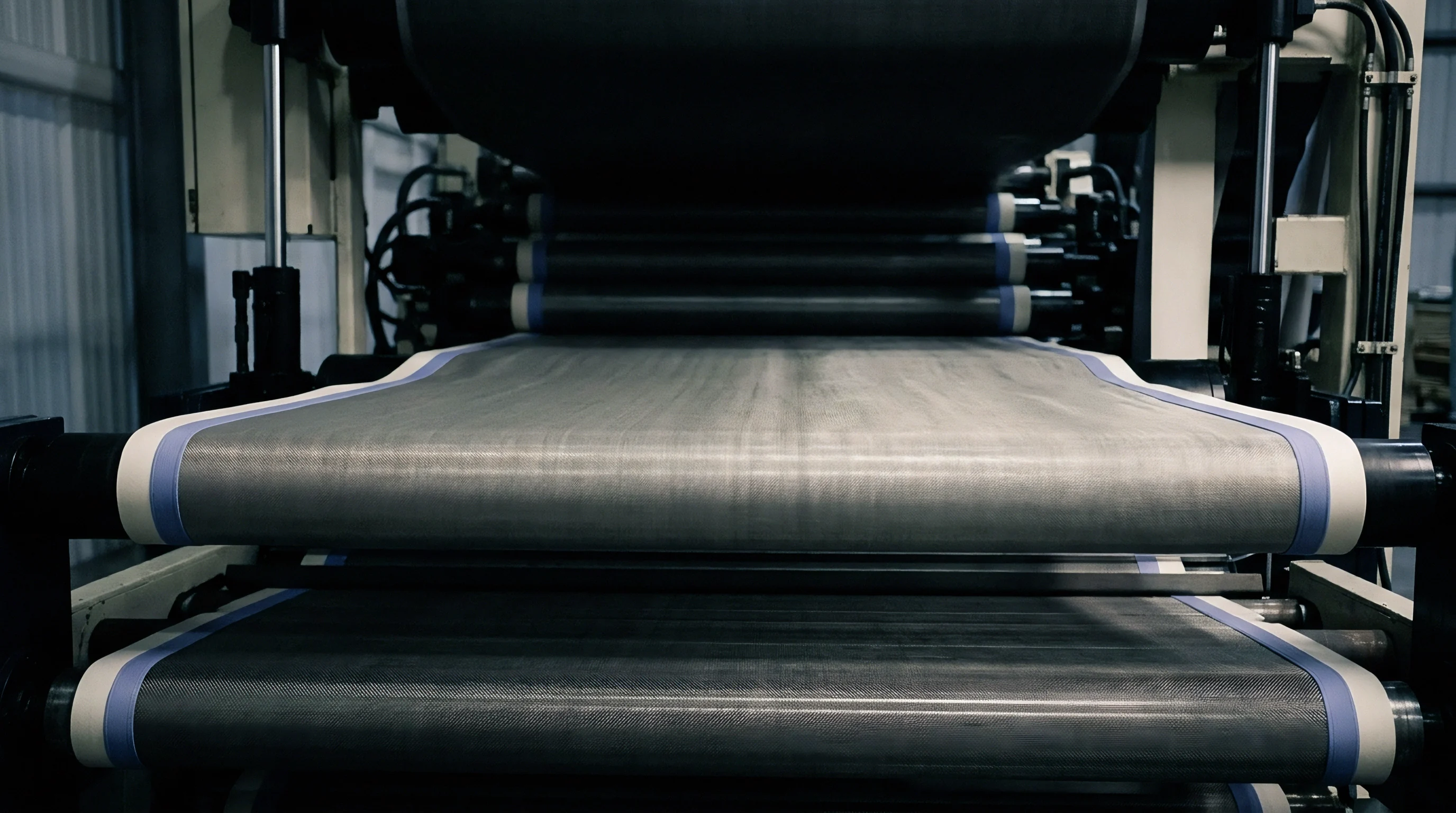
Operating the forming fabric faster than the incoming liquid stream pulls suspended wood elements into longitudinal alignment along the machine vector. Mechanical dewatering begins the instant fluid strikes wire mesh, freezing aligned fibers into a solid web matrix. Higher jet-to-wire speed differentials accelerate drainage rates, capturing oriented surface layers while fluid inertia continues orienting middle sheet zones.
Jet impingement geometry determines whether alignment remains uniform through the z-axis depth or creates parabolic orientation gradients between top and bottom board surfaces.
Quantifying the velocity relationship requires precise measurement of jet velocity (vj) derived from headbox total pressure and wire speed (vw). The non-dimensional jet-to-wire ratio (vj / vw) governs physical anisotropy levels across the manufactured board reel. Ratios between 0.98 and 1.02 produce balanced, low-anisotropy sheets suitable for multi-directional bending applications.
Ratios below 0.92 or above 1.08 yield highly anisotropic boards with machine-direction tensile strength exceeding cross-direction values by factors greater than three to one.
Suppliers frequently attribute edge-lane tension imbalance to unavoidable thermal expansion across the headbox slice manifold rather than improper jet velocity control.

Grid
Structural anisotropy across the three primary axes of paperboard determines how physical forces distribute through single and multi-ply packaging sheets. Fiber alignment distributions exhibit distinct polar symmetry, representable as second-rank planar tensors. The principal tensor axis aligns closely with machine direction, while the perpendicular axis defines cross-direction mechanics.
Mechanical properties like elastic modulus, hygroexpansion, and bending resistance vary continuously as a function of planar angle, following ellipse geometry mapped by ultrasonic pulse velocities.
Multi-ply boards complicate tensor mechanics through z-directional variation. Surface plies freeze first. High shear at top and bottom forming wires yields dense, highly oriented outer skins.
Middle plies, formed at lower jet-to-wire differentials or using bulk-yielding recycled furnish, maintain lower anisotropy levels. This structural configuration optimizes sheet moment of inertia, placing stiff, oriented fibers at maximum distances from the neutral bending plane to maximize flexural rigidity per unit mass.
ISO 18522 ultrasonic testing at 23 °C and 50 percent relative humidity registers Tensile Stiffness Index ratios above 2.8 in high-drag containerboard liners.

Ultrasonic Stiffness Vector Measurement
High-frequency acoustic propagation times recorded under ISO 18522 standards quantify elastic modulus variance across thirty-six planar angles. Acoustic velocity travels fastest along aligned cellulosic fiber walls, yielding direct correlation with elastic stiffness. Automated laboratory testing units measure Tensile Stiffness Index (TSI) profiles across full reel widths within minutes of sampling.
Tensile Stiffness Orientation (TSO) angles identify the exact deviation between structural stiffness maxima and machine centerlines.
Ultrasonic pulse velocity reveals orientation. Measuring ultrasonic velocity requires conditioned samples at 23 °C and 50 percent relative humidity under ISO 187 parameters. Variations in moisture content distort acoustic velocity readings, as absorbed water plasticizes inter-fiber hydrogen bonds and dampens acoustic wave propagation speeds.
Regular calibration against reference aluminum plates maintains measurement accuracy within acoustic testing apparatuses.
| Substrate Grade | Basis Weight (g/m²) | Jet-to-Wire Ratio Range | TSI MD/CD Ratio (ISO 18522) | Bending Stiffness MD/CD Ratio (ISO 2493-1) | MD Tensile Strain at Break (%) |
|---|---|---|---|---|---|
| Solid Bleached Sulphate (SBS) | 280 | 0.96 – 1.04 | 1.6 – 2.0 | 1.8 – 2.2 | 2.1 – 2.8 |
| Folding Boxboard (FBB) | 350 | 0.92 – 1.08 | 2.2 – 2.8 | 2.5 – 3.1 | 1.4 – 1.9 |
| Coated Unbleached Kraft (CUK) | 330 | 0.90 – 1.10 | 2.6 – 3.4 | 2.8 – 3.6 | 1.2 – 1.6 |
| White Lined Chipboard (WLC) | 400 | 0.95 – 1.05 | 1.8 – 2.4 | 2.0 – 2.6 | 1.6 – 2.2 |
| Conditioned testing executed at 23 °C and 50% relative humidity per ISO 187. Standard deviations across reel width average ±0.12 for TSI ratio and ±0.15 for bending ratio. | |||||

Anisotropy Profiles across Commercial Board Grades
Multi-layer forming configurations deposit tailored furnishes across individual plies to optimize structural performance while controlling raw material mass. Coated unbleached kraft board utilizes long virgin softwood fibers in outer plies subjected to high rush or drag, maximizing machine-direction stiffness for heavy-duty beverage carriers. Folding boxboard balances mechanical pulp middle plies with chemical pulp outer skins, maintaining controlled anisotropy ratios to avoid warping while providing exceptional stiffness per grammage unit.
Recycled boards display variable orientation profiles due to furnish contamination and shortened fiber lengths. Recovered fibers lose intrinsic tensile strength over repeated repulping cycles, requiring higher machine-direction alignment to meet minimum stiffness thresholds. This reliance on orientation to compensate for reduced fiber length creates elevated cross-direction tear sensitivity, leaving recycled stocks vulnerable to edge cracking during converting operations.
- Crease Delamination Rupture occurs when excessive machine-direction orientation reduces transverse inter-fiber bonding strength, causing outer ply splitting along scores during folder-gluer operations.
- Cross-Direction Score Cracking stems from extreme tensile strain concentrations acting perpendicular to highly aligned machine-vector fiber bundles during folding.
- Diagonal Twist Distortion arises when Tensile Stiffness Orientation angles deviate beyond two degrees from the physical blank axis, driving panel warping under moisture fluctuations.
- Edge Tear Propagation accelerates in high-anisotropy substrates when tearing shear forces act parallel to primary fiber orientation fields.
High bending stiffness along the machine vector never compensates for inadequate cross-directional tear strength during rapid converting operations.


Clamp
Scoring matrix depth and creasing rule geometry dictate whether a folded board corner holds structural integrity or suffers tensile rupture. When creasing rules press paperboard into female die channels, internal plies must shear apart cleanly along z-axis planes, creating a internal hinge mechanism. Highly anisotropic boards exhibit distinct creasing responses depending on whether scorelines run parallel or perpendicular to the primary fiber orientation axis.
Creasing parallel to the machine direction requires lower penetration force, as male rules easily separate loosely bound parallel fibers. Creasing across the machine direction forces rules to bend aligned fiber bundles, generating high strain along outer liner layers. Improper creasing parameters lead to unsightly outer liner cracks, exposing underlying unbleached plies or breaking surface clay coatings.
Deep creases relieve bending stress. Proper die geometry matches creasing rule dimensions to local board anisotropy profiles.
EN 1230 score evaluation standards reject packaging stock exhibiting ply rupture along machine-vector folds exceeding five percent of total score length.

Converting Rupture Mechanics along Scorelines
Internal sheet plies require controlled delamination during female matrix penetration to relieve extreme surface tension during sharp ninety-degree folds. Board anisotropy alters internal shear strength distribution, controlling the width and depth of delamination zones. Fiber alignment along scorelines increases transverse shear resistance, hindering clean ply separation and forcing bending strains into outer surface layers.
Score cracks rupture outer liners. Matrix depth calculations incorporate fiber alignment metrics alongside traditional board thickness measurements.
Dimensional instability during score creasing causes registration drift across die-cutting stations. Anisotropy controls score crack resistance. Boards with extreme fiber alignment expand and contract unevenly when exposed to ambient moisture shifts in printing plants.
Cross-direction hygroexpansion coefficient values reach five to ten times machine-direction expansion rates, causing blank dimensions to shift during extended storage prior to folding and gluing.

Standardized Crease Qualification Sequence
Evaluating board performance on high-speed carton lines requires strict mechanical protocols applied at conditioned room equilibrium. Automated creasing testers measure bending moment curves continuously as creased samples fold through ninety degrees. The ratio of creased bending moment to uncreased bending moment defines crease stiffness efficiency, providing quantitative metrics for line setting validation.
- Sample square specimens measuring one hundred millimeters per side from center and edge reel lanes, marking the true machine direction explicitly.
- Condition all test specimens inside a controlled environmental chamber operating at 23 °C and 50 percent relative humidity for twenty-four hours per ISO 187 standards.
- Measure baseline uncreased bending stiffness in both principal machine axes using ISO 2493-1 two-point bending test procedures.
- Perform test creasing operations across machine and cross directions using incremental matrix width steps ranging from 1.4 to 2.2 times board caliper.
- Measure folded crease bending resistance at ninety-degree deflection angles on an instrumented creasing moment tester.
- Inspect folded scorelines under ten-times optical magnification to record surface clay coating micro-cracks and outer liner fiber fractures.
Mismatched crease depths on highly anisotropic virgin board lead to cracked outer liners, glue line failure, and complete rejection of the printed packaging run at the client packaging site.


Buckle
Box load limits rely directly on bending stiffness along vertical panel vectors rather than simple caliper or basis weight figures. Structural stability under vertical top loads depends upon interaction between machine-direction and cross-direction mechanical properties. Corrugated shipping containers and folding cartons fail primarily through elastic panel buckling under stacking compression forces, making planar anisotropy a core structural variable.
Orienting high-stiffness axes vertically increases panel resistance to outwards flexure under top loading. Aligning the primary fiber vector parallel to load forces maximizes vertical column strength. Stacking strength drops rapidly if machine direction runs horizontally around box walls, exposing lower cross-directional stiffness to primary compressive load paths.
Buckling strength governs stack height. Panel flexure limits top load.
Aligning primary stiffening fibers parallel to vertical load vectors increases top-to-bottom carton stacking resistance.

Edgewise Compression and Panel Flexure
Stacking capability depends upon the structural interaction between cross-direction short-span compressive resistance and machine-direction flexural rigidity. Edgewise Compression Test (ECT) values under ISO 3037 measure intrinsic material compression strength, which operates alongside flexural stiffness to dictate total load capability. Modified McKee relationships account for orientation anisotropy by calculating geometric means of bending stiffness across both principal axes.
Classic McKee formulations estimate box compression test (BCT) strength through short-span compression, box perimeter, and flexural stiffness. High MD:CD anisotropy ratios increase vertical flexural rigidity while reducing horizontal bending resistance. Anisotropic plate buckling mechanics show that unbalanced stiffness ratios lower critical buckling thresholds in wide rectangular panels, leading to premature container failure under prolonged warehouse loads.
| MD/CD TSI Anisotropy Ratio | MD Bending Stiffness (mNm) | CD Bending Stiffness (mNm) | Edgewise Compressive Strength (kN/m) | Calculated BCT Top-Load (N) |
|---|---|---|---|---|
| 1.4:1 | 18.2 | 13.0 | 7.2 | 845 |
| 2.0:1 | 22.5 | 11.2 | 7.1 | 890 |
| 2.8:1 | 26.8 | 9.5 | 6.9 | 820 |
| 3.5:1 | 30.1 | 8.6 | 6.7 | 765 |

Worked Calculation for Carton Top Load
Consider a rectangular tubular folding container measuring two hundred millimeters in width, one hundred millimeters in depth, and three hundred millimeters in height, fabricated from four hundred gram material. Assume an edgewise compressive strength of 7.0 kilonewtons per meter. Bending stiffness values vary with headbox jet-to-wire adjustments, yielding two distinct orientation states for structural comparison.
State A exhibits balanced orientation with machine-direction bending stiffness at 20.0 millinewton-meters and cross-direction stiffness at 12.5 millinewton-meters. Geometric mean flexural stiffness equals the square root of their product, yielding 15.81 millinewton-meters. Applying the simplified McKee equation (BCT = 5.87 · ECT · P0.49 · (Sx Sy)0.256), where P represents perimeter in meters (0.60 m), yields a calculated top-load capacity of 812 newtons.
State B exhibits aggressive drag orientation, shifting machine-direction stiffness to 28.0 millinewton-meters while cross-direction stiffness drops to 8.0 millinewton-meters. The calculated geometric mean stiffness decreases to 14.97 millinewton-meters. Despite elevated machine-direction stiffness, reduced cross-direction flexural rigidity lowers total carton top-load resistance to 788 newtons under identical raw material mass.
Fiber alignment asymmetry degrades structural efficiency in wide-panel box configurations.
- Structural Blank Layout Alignment matches carton vertical load lines to the highest acoustic stiffness vector angle recorded on reel mill certs.
- Panel Aspect Ratio Adjustment limits panel widths when sourcing stock exhibiting TSI ratios above 2.5 to mitigate lateral buckling tendencies.
- Environmental Humidity Safety Allowance adds a fifteen percent load margin for cartons operating in unconditioned environments with fluctuating relative humidity.
Whether dynamic impact resistance during transit drops faster from micro-buckling in low-density middle plies or tensile strain concentration along outer liners remains unresolved in multi-ply structural modeling.

Ledger
Commercial specifications for boxboard purchasing establish baseline stiffness targets that prevent runnability failures on automatic packaging equipment. Mills sell board by mass tonnage, but converting plants use substrate by surface area and unit stiffness. Specifying target Tensile Stiffness Index ratios alongside traditional basis weight guarantees functional sheet performance without paying for excess fiber mass.
Yield losses during web converting stem directly from cross-machine orientation drift. Reel edges exhibiting high orientation angles induce web skew during high-speed rotary sheeting, resulting in out-of-square blank cuts. Sheeting waste increases by two to three percent when edge-lane alignment angles deviate beyond three degrees from true machine centerlines.
Sheet width dictates reel yield. Trim losses escalate unit costs. Caliper alone cannot prevent collapse.
Web skew during sheet cutting converts planar fiber orientation variance into physical blank distortion.
Contractual Tolerances for Axis Alignment
Mill quality certificates report acoustic tensor values alongside traditional basis weight and thickness measurements to verify web uniformity. Standard purchasing contracts allow ±0.2 units of variation on TSI ratios across reel widths. Alignment skew angles exceeding 2.5 degrees trigger technical claims, as non-parallel fiber orientation creates twist warping in finished, glued carton blanks.
Sourcing practices mandate statistical process control data for Tensile Stiffness Orientation across three positions: front edge, center, and back edge. Reels showing systematic cross-machine orientation gradients force converter line slowdowns, as automated carton feeders struggle with distorted blanks. Setting firm contract boundaries around orientation metrics transfers technical compliance responsibility back to mill papermaking operations.

Economic Tradeoffs in Grammage Downgauging
Reducing web basis weight while adjusting wet-end headbox kinematics preserves essential box strength while lowering raw material expenditure per thousand units. A five percent reduction in grammage achieved alongside optimized orientation yields substantial material cost savings across high-volume packaging runs. Refined orientation management replaces extra pulp fiber with structural optimization.
Taking a twenty-tonne order of 350 g/m² folding boxboard priced at 1,200 monetary units per tonne, the baseline material commitment equals 24,000 units. Downgauging to a 330 g/m² board with optimized jet-to-wire alignment preserves vertical carton stiffness while reducing total weight to 18.85 tonnes for identical sheet counts. Total material expenditure drops to 22,620 units, yielding a direct savings of 1,380 units per production lot.
Technical annexes in supply agreements specify maximum allowable Tensile Stiffness Orientation deviation to three degrees, penalizing non-compliant mill deliveries through automatic unit price deductions.