Calculating Fiber Waste and Landed Sheet Costs in Packaging Converting
Landed sheet cost calculations require combining imposition trim, setup spoilage, moisture-adjusted mass, tare deductions, and scrap credits per unit.


Yield

Web Width and Imposition Geometry
A 1,250-millimeter web width of boxboard entering a rotary cutter-creaser sets fixed geometric limits. Laying out four cartons across the web at 295 millimeters per blank gives a knife-to-knife width of 1,180 millimeters. That leaves 70 millimeters of total web trim, creating an automatic 5.6 percent baseline scrap rate before running any stock.
Converting standards require at least 15 millimeters of trim per side on web-fed boxboard machinery to absorb web wander, lateral weaving, and slitter knife tolerances governed by ISO 8791 surface tests and ISO 1924 tensile tensioning. Narrower side trims risk tearing, line stops, and incomplete glue flaps.
Sheet-fed offset operations face comparable yield limits based on parent sheet sizes. For a carton measuring 230 mm × 320 mm flat, a standard 720 mm × 1020 mm parent sheet fits twelve blanks in a three-by-four layout. The active die layout takes up 690 mm × 960 mm of board, leaving trim losses of 30 mm in width and 60 mm in length ~ an 8.63 percent solid fiber loss per sheet.
Carton length must run parallel to the machine direction to maintain score strength along primary folds. Rotating the layout to save area compromises carton stiffness measured under DIN 53121 bending tests.
The landed sheet cost scales non-linearly when web trim drops below the lateral alignment threshold of the feeder head.
Trim losses grow further once side-lay registration, gripper margins, and bleeds enter the calculation. Sheet-fed presses require a 10 mm to 12 mm unprinted gripper margin on the leading edge. Rotary die-cutters need 5 mm to 8 mm gutters between cartons for double-cut knives and stripper pins.
Factoring these operational margins into edge trim pushes pre-press substrate waste to between 7 percent and 12 percent of purchased board tonnage. Evaluating proposals purely on sheet price per metric tonne leaves these structural yield losses unaccounted for.

Substrate Fiber Density and Anisotropic Shrinkage
Landed fiber costs hinge on how grammage, caliper, and volumetric bulk interact. Virgin folding boxboard (FBB) with a mechanical pulp core has a bulk factor of 1.4 to 1.6 cm³/g. Solid bleached sulphate (SBS) sits lower at 1.1 to 1.3 cm³/g because of its dense chemical pulping and heavy calendering.
A spec calling for 400 micrometers of caliper takes a 250 g/m² FBB sheet, whereas achieving that stiffness in SBS requires 330 g/m² under TAPPI T 411 conditions. Specifying SBS for equivalent caliper adds 32 percent more fiber mass per square meter.
Humidity changes drive cross-direction movement that causes subtle yield loss. Board conditioned to ISO 187 standards at 23 degrees Celsius and 50 percent relative humidity expands when moved onto an unconditioned shop floor. Recycled grades like CRB or WLC expand up to 0.4 percent across the grain when ambient humidity rises from 50 percent to 75 percent.
On a 1,400 mm parent sheet, that expansion shifts outer die-cut registration by 5.6 mm. When printed blanks miss fold lines, operators are forced to widen gutters or trim additional material from parent reels to avoid folder-gluer jams.
| Substrate Grade | Grammage (g/m²) | Caliper (µm) | Web Width (mm) | Net Yield (%) | Edge Scrap (%) |
|---|---|---|---|---|---|
| Folding Boxboard (FBB) | 250 | 400 | 1,250 | 94.4 | 5.6 |
| Solid Bleached Sulphate (SBS) | 330 | 400 | 1,250 | 92.1 | 7.9 |
| Coated Recycled Board (CRB) | 350 | 420 | 1,400 | 90.8 | 9.2 |
| Uncoated Kraft Back (CUK) | 310 | 450 | 1,050 | 93.5 | 6.5 |
Finding true yield requires watching for basis weight variations across the reel. Mill heavy-edges quietly drain margin when stock is bought by reel weight. A mill certificate listing a nominal 300 g/m² within a 3 percent tolerance can hide profiles spanning from 294 g/m² at the web center up to 309 g/m² at the edges.
Converting those heavier edges means paying for extra fiber that adds no structural strength, quietly raising the unit cost per thousand cartons.
Bypassing imposition rules and knife clearances distorts substrate budgets. Ignoring edge clearance limits leads to registration drift, unformed side seams, higher scrap rates, and lower press speeds.


Allowance

Make-Ready Spoilage and Press Setup Mechanics
Press setup losses follow steady mechanical patterns based on equipment complexity and process control. A six-color sheet-fed offset press with inline aqueous coating uses 250 to 450 setup sheets before density, registration, and ink-water balance settle within ISO 12647-2 parameters. Jobs with UV inks, inline cold foil, or multi-stage embossing can take 800 setup sheets per start.
On a short run of 5,000 cartons, setup spoilage alone swallows 16 percent of total fiber before production even starts.
Setup waste scales with press speed and sheet dimensions. Flexographic web presses running at 300 meters per minute often purge 150 meters of stock while setting tension and completing web splices. Splicing losses count as fixed process scrap.
Analyzing converting loss records on multi-ply folding boxboard runs separates machine setup profiles from ongoing operational drift. Splicing waste, web-break clearouts, and impression throw-outs pull predictable board volumes that belong in the landed cost calculation before quoting.
Downstream finishing adds further spoilage. Flatbed platen die-cutters burn 50 to 100 sheets per job just aligning stripping pins, blanking tools, and counter-rills. Automatic folder-gluers at 400 meters per minute waste 200 to 400 blanks setting belts, positioning glue sensors, and calibrating optical scanners.
On multi-pass jobs, total press and post-press setup waste regularly exceeds 12 percent of net fiber needs.
Substrate setup spoilage rates increase exponentially as run lengths decrease below five thousand parent sheets.

In-Process Waste and Mechanical Instability
In-process scrap stems from substrate defects or line instability. Slitter dust, pinholes, loose coating particles, and moisture variations trigger registration drift and press trips. Inspection cameras on modern presses automatically reject sheets with surface blemishes, coating voids, or color shifts above a delta E of 1.5.
Substrates with low surface strength under ISO 3783 wax pick testing drop fibers onto offset blankets, forcing washes every 3,000 sheets and spoiling 30 to 50 sheets per wash.
Folder-gluer jams can cause heavy losses right at the end of conversion. Recycled boards with inconsistent internal bond strength (under TAPPI T 541 testing) often crack along score lines during 180-degree pre-folding. Defective blanks jam hoppers and folding belts, forcing operators to purge up to 50 cartons per jam.
High static friction under TAPPI T 815 causes double-feed trips at the press feeder, damaging blankets and interrupting runs.
- Delamination under creasing load occurs when low internal bond strength causes ply separation along primary score lines, ruining carton squareness in automated assembly.
- Coating pick on offset blankets stems from poor binder distribution in clay coatings, creating hickeys that force frequent wash cycles.
- Cross-direction score cracking occurs when short recycled fibers fail to stretch across creasing matrix channels, splitting the top liner in high-speed folding.
- Side-seam glue refusal happens when surface sizing or overprint varnish keeps water-based adhesives from penetrating the paperboard fiber within standard open times.
Attributing excess spoilage to web thickness variations within trade tolerances often disguises machine setup issues behind raw material complaints. Purchasing contracts should set firm setup limits per grade so suppliers cannot pass operational waste into the substrate account.


Arithmetic

Converting Metric Tonnes to Net Sheet Yields
Mills price substrate by the metric tonne, but converted packaging trades per thousand finished units. Bridging that commercial gap requires clean dimensional math. Sheet mass comes directly from surface area and basis weight: a 720 mm by 1,020 mm sheet covers 0.7344 square meters.
At 300 g/m², the nominal dry weight per sheet is exactly 220.32 grams, before applying ISO 287 moisture allowances.
One metric tonne (1,000 kilograms) of raw stock theoretically yields 4,538 parent sheets at 720 mm × 1,020 mm in a 300 g/m² weight. Actual converting yield always falls short of that theoretical figure. Mills bill on scale weight or nominal weight including wrappers, skids, and cores.
Paperboard cores add 12 to 25 kilograms per reel, and wooden pallets add around 30 kilograms each, cutting usable fiber by 3.5 to 5.0 percent per delivered tonne before production starts.
Finding the true landed cost per sheet means applying combined waste factors to theoretical yield. Imposition trim, make-ready loss, and running scrap build a cumulative loss multiplier. If imposition trim takes 8.5 percent, setup consumes 4.0 percent, and running waste takes 2.5 percent, net usable fiber drops to 85.5 percent of purchased mass.
That reduces effective yield per tonne from 4,538 nominal sheets down to 3,880 usable sheets at the die-cutter stacker.
Reel core and packaging tare weights reduce net usable substrate fiber weight by up to five percent per delivered pallet.
Comprehensive Worked Case and Financial Sensitivity
Take a contract for 500,000 folding cartons produced from Coated Kraft Back (CUK) board. Flat dimensions are 215 mm × 310 mm. The job uses a 700 mm × 1,000 mm parent sheet, fitting nine blanks per sheet.
Base substrate pricing is €1,420 per metric tonne ex-works. Freight adds €85 per tonne, and sheeting fees add another €45 per tonne. Grammage is specified at 330 g/m² under ISO 536.
Producing 500,000 cartons requires a net count of 55,556 sheets. Factoring in scrap allowances changes the input volume: trim and edge margins require 7.2 percent additional board area, setup consumes 2,200 fixed sheets for ink calibration and blanking setup, and running spoilage averages 2.8 percent. Gross sheet count works out to (55,556 / (1 – 0.028)) + 2,200 = 59,354 sheets.
Adding the 7.2 percent trim allowance pushes the required raw fiber equivalent to 63,959 nominal sheets.
| Cost Component | Base Rate (€) | Cost Per Tonne (€) | Cost Per 1,000 Sheets (€) | Share of Total (%) |
|---|---|---|---|---|
| Ex-Works Substrate Price | 1,420.00 / Tonne | 1,420.00 | 328.02 | 76.4 |
| Mill Sheeting Surcharge | 45.00 / Tonne | 45.00 | 10.40 | 2.4 |
| Inbound Freight & Logistics | 85.00 / Tonne | 85.00 | 19.64 | 4.6 |
| Reel Core & Skid Tare Deduction | 4.2% Net Mass | 65.10 | 15.04 | 3.5 |
| Imposition Trim Waste (7.2%) | 7.2% Yield Loss | 117.80 | 27.21 | 6.3 |
| Setup & Operational Scrap (6.8%) | 6.8% Fiber Loss | 111.25 | 25.70 | 6.0 |
| Total Landed Usable Fiber Cost | N/A | 1,844.15 | 426.01 | 100.0 |
One thousand parent sheets (700 mm × 1,000 mm at 330 g/m²) weigh 231.0 kilograms (0.700 × 1.000 × 330). The required 63,959 gross sheets equal 14.774 metric tonnes of stock. Total outlay for board, sheeting, and transport comes to €23,047.44.
Divided across 500,000 finished cartons, true landed substrate cost is €46.09 per thousand cartons (€0.0461 each) ~ compared to a nominal material cost of €32.80 per thousand units without waste. Scrap and logistics add 40.5 percent to base board costs.
- Nominal versus scale weight billing provisions clarify whether moisture absorbed during transit is billed to the converter or absorbed by the mill.
- Standard core tare deductions require suppliers to subtract 1.5 percent of gross reel weight for 76 mm cores and 2.5 percent for 152 mm core tubes.
- Trim scrap credit accounting rules ensure post-industrial scrap rebates credit directly back to the job account, offsetting raw material surcharges.
Standard purchasing contracts should explicitly state: Invoiced tonnage charges shall be calculated exclusively on net dry fiber mass derived under ISO 287 conditioning, deducting all packaging, skid, and core tare weights prior to invoice calculation.


Scrap

Post-Industrial Fiber Waste Valuation Mechanics
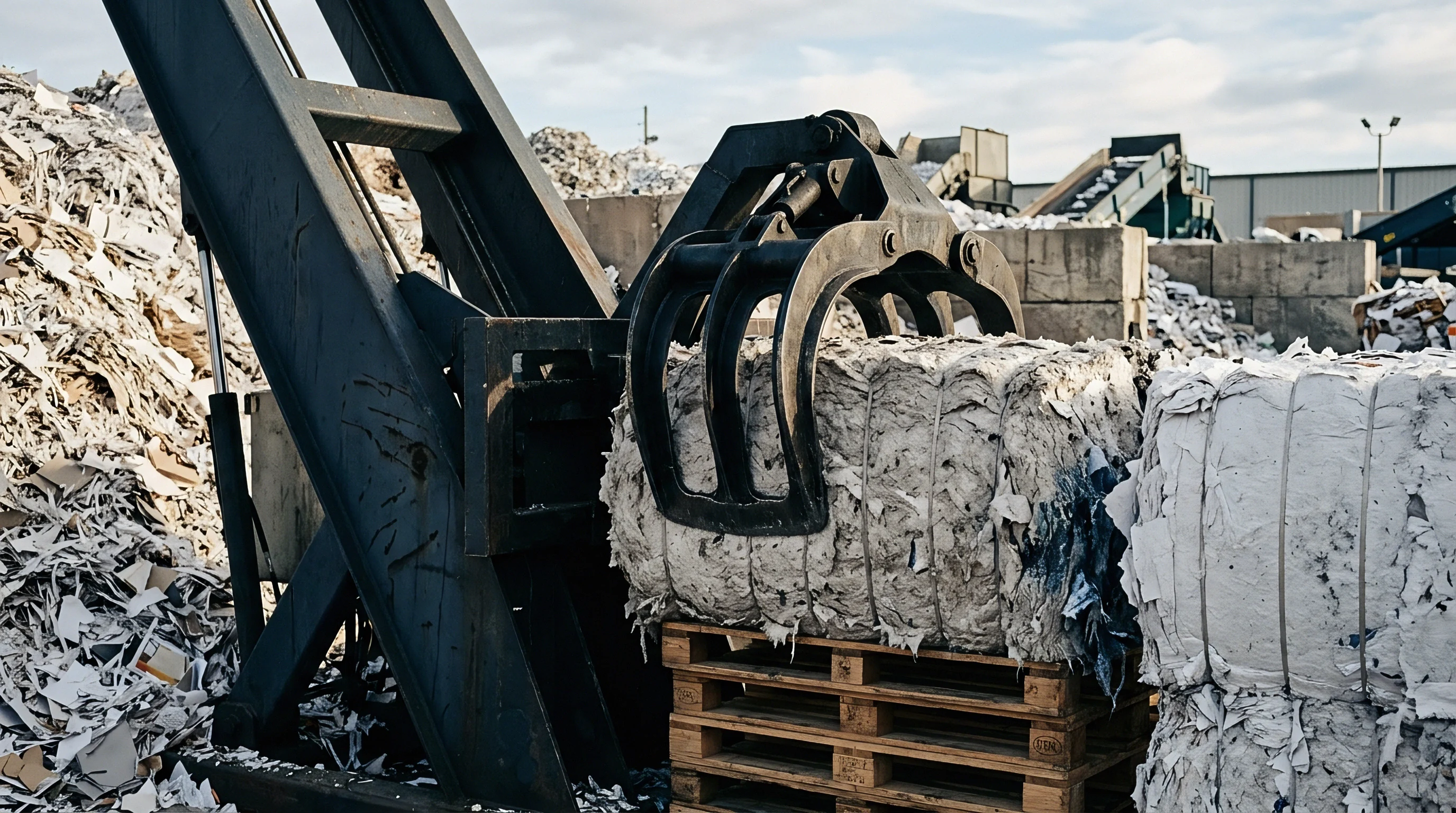
Converting scrap retains real commercial value as post-industrial fiber. Side trim, die-cutter skeletons, and make-ready sheets are drawn through pneumatic ducts and compressed into dense bales. Scrap revenues offset gross material spend, altering final sheet costs.
Unprinted virgin bleached board scrap (SBS) commands top rates under EN 643 Grade 3.18.00, recovering up to 75 percent of virgin pulp index value. Mixed recycled scrap carrying inks and varnishes recovers far less.
Automated trim separation protects scrap value by isolating clean unprinted waste from printed matrix scrap. Directing unprinted edge trim into dedicated balers avoids cross-contamination. Mixing printed UV-cured board into virgin fiber drops the whole load down the EN 643 scale, cutting rebates by €60 to €120 per metric tonne.
Plants handling large volumes of solid unbleached kraft (CUK) run segregated collection lines to maximize returns on long-fiber scrap sought after by linerboard mills.
EN 643 classification rules drop cross-contaminated scrap bales to the lowest grade price when printed UV coatings exceed two percent by mass.
Moisture levels in stored bales directly impact final rebate payouts. Recycling mills test incoming loads with microwave moisture probes calibrated to ISO 287. Standard purchasing terms set a moisture ceiling of 10 percent.
Bales between 10 and 15 percent moisture take proportional weight deductions, while anything over 15 percent faces rejection over mold concerns and lost fiber strength in re-pulping. Maintaining plant humidity and proper scrap storage protects these credits.

What Margin of Error Settles Web Trim Disputes?
Mills and converters regularly argue over web width tolerances and slitter drift. Mill slitters typically guarantee web accuracy within ±0.5 millimeters under ISO 534. As blades wear, burrs and lateral weave push variations out to ±1.5 millimeters.
On narrow rotary presses running tight 15 mm edge trims, a minus 1.5 mm drift causes edge trim tears, web breaks, and dropped blanks. A plus 1.5 mm shift simply adds useless edge mass, inflating waste without yielding packaging board.
- Sampling and grade classification involves taking core samples from ten consecutive bales per truckload to confirm fiber purity under EN 643 standards.
- Moisture verification testing measures moisture across five internal bale zones using calibrated resistance probes under TAPPI T 412 conditions.
- Tare weight adjustment calculation subtracts steel wire, packaging film, and pallet weights from gross ramp readings at the recycling mill.
- Net index pricing settlement applies weekly RISI or EUWID secondary fiber benchmarks to net dry fiber mass to calculate final credit notes.
Settling trim disputes takes continuous optical tracking at the press inlet. Laser arrays log reel width profiles in real time, recording shifts beyond target tolerances. If data shows width variance forced an operator to open side trims from 15 mm to 22 mm across a 50-tonne run, the mill absorbs the cost of that extra 7 mm of trim.
Standard contract clauses bill fiber losses from out-of-spec reels straight back to the mill.
Separating unprinted scrap right at the knife yields the highest secondary market return.

Transit

Logistics Freight Billing and Density Optimization
Freight costs depend heavily on payload density. Ocean containers and curtain-side trailers hit weight caps long before filling their volume when hauling dense board. A standard 40-foot ocean container caps out at roughly 26,500 kilograms.
High-density stock like SBS or CRB on wooden skids hits that weight limit at 70 percent volume capacity. Billed per container, freight splits across fewer total square meters, raising shipping costs per thousand sheets.
Low-density board carries the opposite penalty. High-bulk mechanical boxboard (FBB) with a bulk factor of 1.6 cm³/g fills container space long before reaching weight limits. An 85-cubic-meter trailer fills completely with just 18,500 kilograms of high-bulk pallets.
Flat shipment rates divided across less fiber mass increase freight surcharges per metric tonne by up to 43 percent compared to dense SBS. Buyers considering high-bulk alternatives must weigh these transport penalties against yield gains.
| Stock Format | Pallet Footprint (mm) | Net Substrate Mass (kg) | Tare Packaging Mass (kg) | Trailer Capacity (Pallets) | Freight Cost Per Tonne (€) |
|---|---|---|---|---|---|
| Reel Stock (1,250 mm) | 1,000 × 1,250 | 1,150 | 18.5 | 22 Reels | 62.50 |
| Sheet Pallet (720 × 1,020) | 760 × 1,060 | 850 | 38.0 | 26 Pallets | 76.80 |
| Sheet Pallet (1,000 × 1,400) | 1,040 × 1,440 | 1,200 | 45.0 | 18 Pallets | 68.20 |
| Bulk Skid (Unwrapped) | 760 × 1,060 | 980 | 22.0 | 26 Pallets | 66.40 |
Shipping substrate as reels rather than sheeted skids changes inbound packaging waste significantly. Sheeted pallets need heavy wooden bases, top caps, edge guards, strapping, and stretch wrap, adding 35 to 50 kilograms of non-reusable packaging per skid. Reel shipments use simple recyclable kraft wrappers and core plugs that make up under 1.5 percent of total gross weight.
Ordering reels for press-side sheeting cuts packaging disposal fees and increases net fiber capacity per truck.

Transit Damage and Moisture Instability Hazards
Handling errors during transit quickly damage board stock. Forklift clamp damage leaves edge gouges, deep indents, and crushed roll ends. A clamp gouge running just 20 millimeters deep on a 1,200 mm diameter reel ruins up to 6.5 percent of its usable fiber length.
Those damaged outer layers have to be stripped and dumped as scrap before the reel can go onto the sheeting unwind.
- Inspect outer shrink wrap and stretch film for tears, punctures, or condensation as soon as trailer doors open.
- Measure surface temperatures on delivered pallets with infrared thermometers to identify thermal differences against warehouse air.
- Check indicator tags and document impact marks on wooden skid runners caused by misaligned forklift forks.
- Log moisture readings across four exposed reel edges using non-destructive inductive moisture meters calibrated to ISO 287 standards.
Transit temperatures directly affect sheet flatness. Moving cold paperboard pallets straight into a warm, humid pressroom causes ambient moisture to condense along the cold edges. The outer fibers absorb water and expand while the core stays dry, creating wavy edges.
Feeding edge-wavy stock through press feeder heads leads to double-sheet trips, registration errors, and sheet wrinkling. Avoiding condensation requires letting unopened pallets sit in staging areas for 24 to 48 hours until their temperature equalizes with pressroom conditions under ISO 187.
Does unconditioned warehouse storage create more dimensional instability than transport vibration?

Ledger
Full Commercial Cost Reconciliation Protocols
Accurate cost tracking requires following every substrate transaction from raw mill invoice to final carton delivery. Discrepancies pop up when converters use nominal basis weights instead of actual moisture-adjusted scale weights. A complete ledger tracks base board charges, sheeting surcharges, freight, energy fees, setup allowances, edge trim waste, and scrap recycling credits.
Breaking out these cost drivers prevents operational waste from hiding inside raw material price increases.
Variance audits across multi-plant packaging networks confirm true landed costs. Comparing estimated fiber budgets against floor consumption exposes scrap leakage at specific converting steps. Unexplained fiber loss usually traces back to unrecorded press spoilage, misaligned web slitters, or moisture deductions at the scrap baler.
Cross-checking scrap receipts against die-cutting matrix weights gives a quick audit check on plant-level yield efficiency.
Extended Producer Responsibility (EPR) regulations add another direct cost to landed calculations. Current EPR schemes penalize packaging that uses unrecoverable fiber, heavy plastic laminates, or non-separable coatings. By contrast, mono-material boxboards qualify for eco-modulated fee discounts under EU packaging rules.
Factoring EPR fee Tiers into the substrate ledger shifts the financial comparison between virgin bleached board and barrier-coated recycled grades.
Eco-modulated EPR fee differentials can alter total landed sheet economy by up to eight percent across retail packaging categories.
Substrate choice dictates costs through every stage of conversion. By calculating web trim geometry, enforcing firm setup limits, modeling landed sheet arithmetic, segregating post-industrial scrap, and mitigating transit risks, buyers and packaging engineers can control final unit costs. Tight fiber accounting turns material purchasing into an exact, controllable process.
Ledger audits should cross-reference mill scale receipts against scrap baler credits to catch unrecorded plant waste. Comparing invoiced tonnage to net finished carton weight brings setup losses, poor imposition layouts, and missing scrap credits to light. Routine material audits help protect margins, confirm yield targets, and eliminate hidden substrate cost swings over long runs.