Inter-Ply Bond Strength Development in Recycled Fiber Formations under Variable Dewatering Pressures
Optimizing shoe press peak pressure and wet-end couch solids maximizes inter-ply bond strength in multi-ply recycled fiber formations.
Drain
Multi-ply paperboard machines bring separate fiber slurries together at the wet end to form a consolidated web with distinct functional layers. With recycled furnish, managing wet-end moisture sets up initial contact between mats before pressing starts. Repeated repulping degrades and hornifies secondary fibers, lowering swelling capacity, water retention, and drainage compared to virgin kraft pulps.
Forming plies on multi-wire or multi-cylinder formers therefore demands tight control over consistency, drainage rates, and dry solids at the couching nip where the plies merge.
Couching joins two or more wet mats under light mechanical pressure, establishing contact through hydrodynamic shear and surface tension. If a ply’s solids content stays below 8 percent at couching, fluid momentum disrupts the new interface, washing away fines and short fibers that fill gaps between layers. If drainage pushes solids past 14 percent before couching, the free water layer between plies vanishes.
Without that surface film, fiber mobility across the boundary drops, preventing fibrils on adjacent plies from entangling.
Solid Content Limits at the Couching Nip
Consolidating recycled fiber webs requires balancing water removal against interfacial mobility. On multi-Fourdrinier and top-wire formers running 100 percent recovered paper, couching solids are held within a narrow 9 to 12 percent window. Drop below it, and hydraulic turbulence scours the ply boundary.
Exceed it, and the dry interface leaves plies acting like separate sheets rather than a unified structure, causing the web to split.
Drainage rates directly shape sheet consolidation. On multi-ply formers running recycled stock, drainage shifts constantly as fines concentrations fluctuate. Old Corrugated Containers stock contains significant amounts of recycled neutral sulfite semi-chemical medium fibers, traces of bleached hardwood, and recycled kraft linerboard.
As fines accumulate in closed mill water loops, Schopper-Riegler drainage resistance can swing from 30 SR to 55 SR across operating cycles. These shifts alter where on the forming table plies reach target couching consistency. Couching too wet traps free water between layers, generating high internal hydraulic pressure in later press nips.
A couching dry solids deviation exceeding two percent from target baseline degrades initial inter-ply fibril entanglement prior to wet pressing.

Surface Fibrillation and Free Water Mobility
Interfacial strength begins with physical contact between refined fiber surfaces. Refining recycled furnish splits open primary and secondary wall layers, releasing microscopic fibrils into the liquid layer between plies. Hornification ~ the irreversible pore closure caused by past drying cycles ~ stiffens secondary fibers.
Because recycled fibers conform less readily than virgin pulp, generating equivalent surface fibrillation takes higher refining energy, dropping Canadian Standard Freeness from 450 mL down to 300 mL.
Fibril entanglement across the boundary relies on mobile fines and soluble starches suspended in interfacial water. Hydrofoils and vacuum flat boxes build pressure gradients that draw water through the sheet thickness. Applying vacuum too abruptly on the lower wire pulls interfacial fines downward, stripping the boundary layer of material needed to bridge micro-voids between larger fibers.
Gradual vacuum profiles protect fines distribution, leaving enough material at the boundary when top and bottom plies merge at the couch roll.
Operational trials on multi-ply cylinder machines show that spraying cationic corn starch at 1.5 to 2.5 grams per square meter directly onto the joining interface offsets this fines loss. Retaining starch at the interface increases local hydrogen bonding sites, counteracting the rigidity of hornified recycled fibers. Wire dewatering pressure must still be managed so this starch layer is not pulled into the sheet core before couching finishes.
Speed changes complicate wet-end water management. As wire speed rises from 400 to 800 meters per minute, fluid retention time over dewatering elements drops, forcing higher vacuum on flat boxes. That steep hydraulic gradient compresses the bottom ply prematurely, sealing its upper surface and blocking inter-ply fiber penetration during couching.
Wet-end pressure profiles therefore require constant adjustment against real-time furnish freeness and sheet solids measurements taken before the press section.
Increasing wet-end cationic starch dosage cannot fully offset poor couching solids control on recycled multi-ply machines.
Press
Mechanical wet pressing consolidates a loose fiber web into a dense structure capable of forming internal hydrogen bonds, with moisture controlling overall adhesion. Leaving the wet end at 15 to 18 percent dry solids, multi-ply recycled sheets enter the press section where water is squeezed out between rotating rolls or extended nip shoe presses. These pressure gradients drive water from individual plies while forcing adjacent fiber layers ~ including hornified recycled fibers ~ into close contact across the interface.
Dynamic dewatering in press nips involves both hydraulic and structural pressure. Total press pressure combines the structural load carried by the solid fiber matrix with the hydraulic pressure of water moving through microscopic pores. Hydraulic pressure dominates early in the nip.
As water moves into the felts, structural pressure takes over, pushing cell walls into close contact. In multi-ply recycled sheets, uneven dewatering between plies can generate internal hydraulic pressure peaks that threaten boundary integrity.

Extended Nip Shoe Pressing Dynamics
Shoe presses alter dewatering by extending nip residence time. Where standard roll presses deliver high peak pressures over brief contacts of 5 to 15 milliseconds, shoe presses use a concave shoe matched to a mating roll. This extends nip length to 250 or 300 millimeters, increasing dwell time to 40 to 90 milliseconds at commercial machine speeds.
The extra residence time lets hydraulic pressure dissipate gradually without generating fluid velocities high enough to disrupt the ply boundary.
Managing peak pressure controls both sheet density and ply adhesion. Roll presses operating at peak pressures of 6 to 9 MPa trigger sharp hydraulic spikes inside wet recycled webs, driving water laterally along the interface and disrupting bonds formed during couching. Extended shoe presses operate at lower peak pressures of 3.0 to 5.5 MPa while delivering a higher overall press impulse, expressed as the integral of pressure over time in kilopascal-seconds.
This higher impulse consolidates recycled plies steadily, expelling air and free water while bringing fibrillated surfaces into optical contact.
| Press Configuration | Nip Dwell Time (ms) | Peak Pressure (MPa) | Press Impulse (kPa·s) | Out-Press Solids (%) | Scott Bond (J/m²) |
|---|---|---|---|---|---|
| Double Roll Press | 12.5 | 7.2 | 35.0 | 41.5 | 115 |
| Roll Press + Single Shoe | 45.0 | 4.8 | 110.0 | 47.2 | 165 |
| Tandem Shoe Press | 75.0 | 3.8 | 185.0 | 52.0 | 210 |
Press impulse drives overall consolidation, helping web dryness reach up to 52 percent solids out of the press section and cutting dryer steam demand. In recycled stock, higher out-press solids correlate directly with stronger inter-ply bonding. Squeezing water out before the main dryer section brings fiber surfaces within the 0.3-nanometer range required for hydrogen bonds to form as remaining moisture evaporates.
Hydraulic Pressure Gradients and Sheet Delamination
Crushing happens when internal hydraulic pressure exceeds the green strength of the wet web inside the press nip. In multi-ply recycled board, this shows up as localized or continuous inter-ply delamination. As the web enters the nip, felt resistance and fluid viscosity restrict water escape.
Water flows vertically toward the felts and horizontally along paths of least resistance. Because the interface between plies is often more porous and less dense initially, it forms a natural path for lateral fluid movement.
Steep pressure gradients force fluid toward the sheet surfaces. If nip pressure rises faster than water can drain into the felt, internal hydraulic pressure spikes. When fluid pressure exceeds the structural shear strength of the wet interface, plies split inside the nip.
This internal splitting destroys web continuity, causing sheet breaks or hidden weak spots that only surface when the paperboard is scored and folded during converting.
Furnish variability makes these hydraulic gradients unpredictable. Batches of recovered paper containing high amounts of thermomechanical pulp or post-consumer print carry large fractions of short, stiff fibers and micro-fines. These micro-fines reduce permeability and raise hydraulic resistance during pressing.
A press section tuned for clean corrugated scrap will suffer internal crushing on low-freeness furnish unless peak pressure is backed off and the full shoe length is used.
Heating the sheet in the press section alters both water viscosity and fiber behavior. Steam boxes installed before or inside the press section raise web temperatures from 30 degrees Celsius to 60 or 70 degrees Celsius, cutting water viscosity by roughly 45 percent. This allows faster drainage through the fiber network at lower hydraulic pressures.
At the same time, warmer fibers soften and conform better across the ply boundary under pressure, making pressing more effective and lowering delamination risks.
Compressing the wet web beyond its elastic recovery limit without adequate drainage channels causes permanent fiber collapse without bond development, producing a dense, brittle sheet with poor z-directional strength.
Fines
Recycled fiber stocks contain substantial amounts of short, broken secondary fines and mineral fillers. Unlike primary virgin fines, secondary fines originate from cell wall damage during repeated repulping, refining, pumping, and drying. Their surface area ranges from 5 to 15 square meters per gram, compared to 1 to 2 square meters per gram for intact long fibers.
This large surface area makes fines central to inter-ply cohesion and wet-end chemical reactions.
Fines migrate along pressure gradients. As water moves through the multi-ply structure during dewatering, mobile fines follow fluid flow. In single-ply sheets, they collect on the drainage side; in multi-ply sheets, their movement alters the compositional gradient across each interface.
Controlling where fines settle and how effectively they are retained increases hydrogen bonding at the ply boundary.
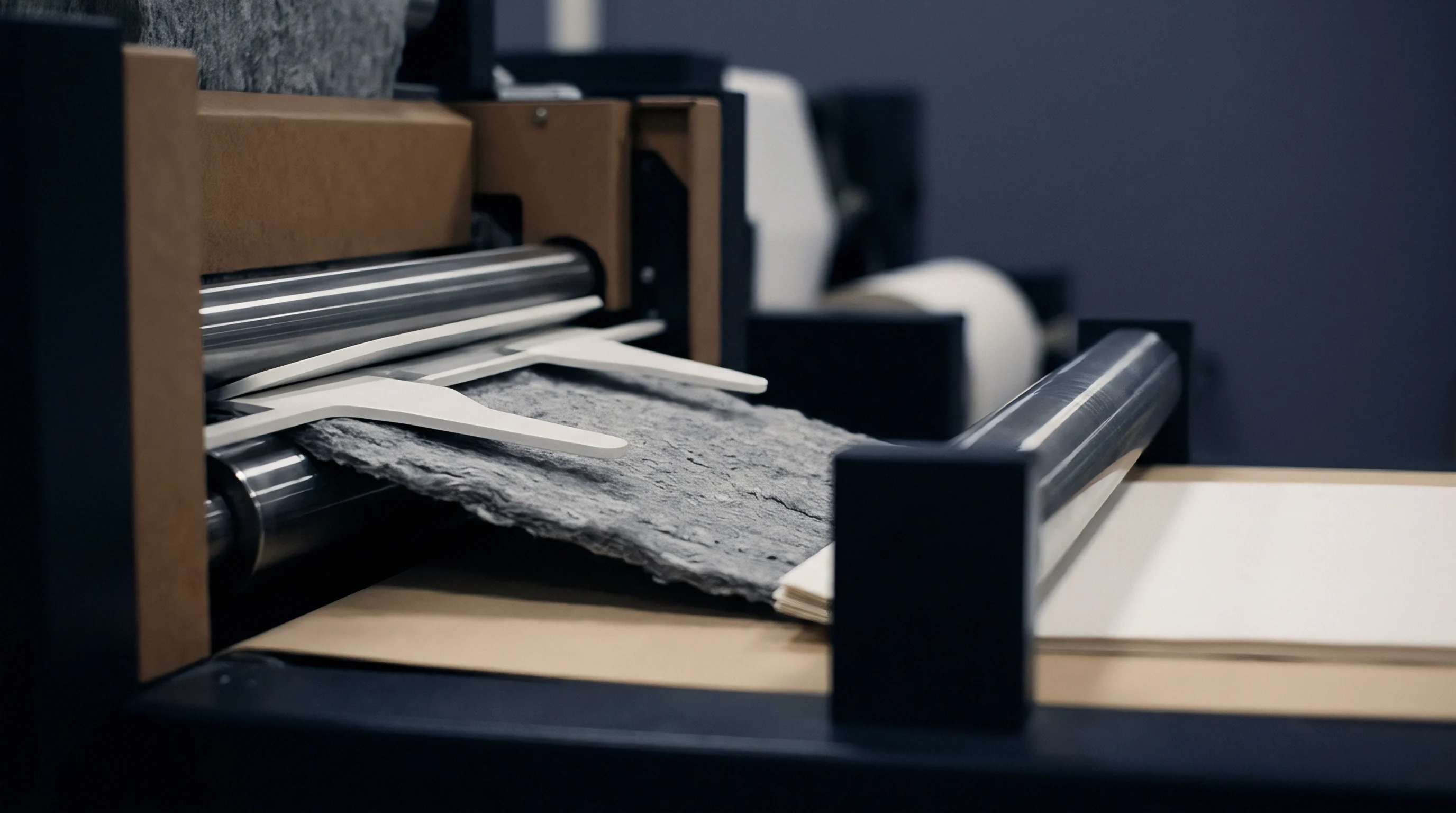
Hornification Kinetics and Bond Surface Area
Drying paper closes internal pores within cell walls ~ a process called hornification. When recycled fibers are re-slurried, these pores do not fully reopen, reducing fiber wall swelling by 20 to 40 percent relative to equivalent virgin pulp. Because stiffened fibers do not flex or conform as easily under press pressure, recycled stock forms fewer contact points per unit volume than virgin fibers.
Sheet cohesion depends on hydrogen bonds, which require hydroxyl groups on adjacent cellulose and hemicellulose molecules to come within sub-nanometer distance of one another. Hornified fibers present rigid surfaces that touch only at high spots, leaving micro-voids along the ply boundary. Fines fill these voids, acting as structural bridges for hydrogen bonding.
Without them, inter-ply strength relies on sparse contact between long fibers, resulting in poor z-directional tensile performance.
Secondary fines content below 12 percent in recycled furnish reduces inter-ply hydrogen bonding surface area by more than one-third compared to fully fibrillated virgin stock.
Refining recycled furnish restores some swelling capacity, but the mechanical action generates more short fiber fragments. Over-refining drops Canadian Standard Freeness below operational limits, raising the risk of press crushing. Chemical additives like glyoxylated polyacrylamide or amphoteric starches help maximize fines utility.
Amphoteric starch molecules bind to both negatively charged cellulose and weakly cationic sites, forming ionic bridges that hold fines at the ply interface during dewatering.
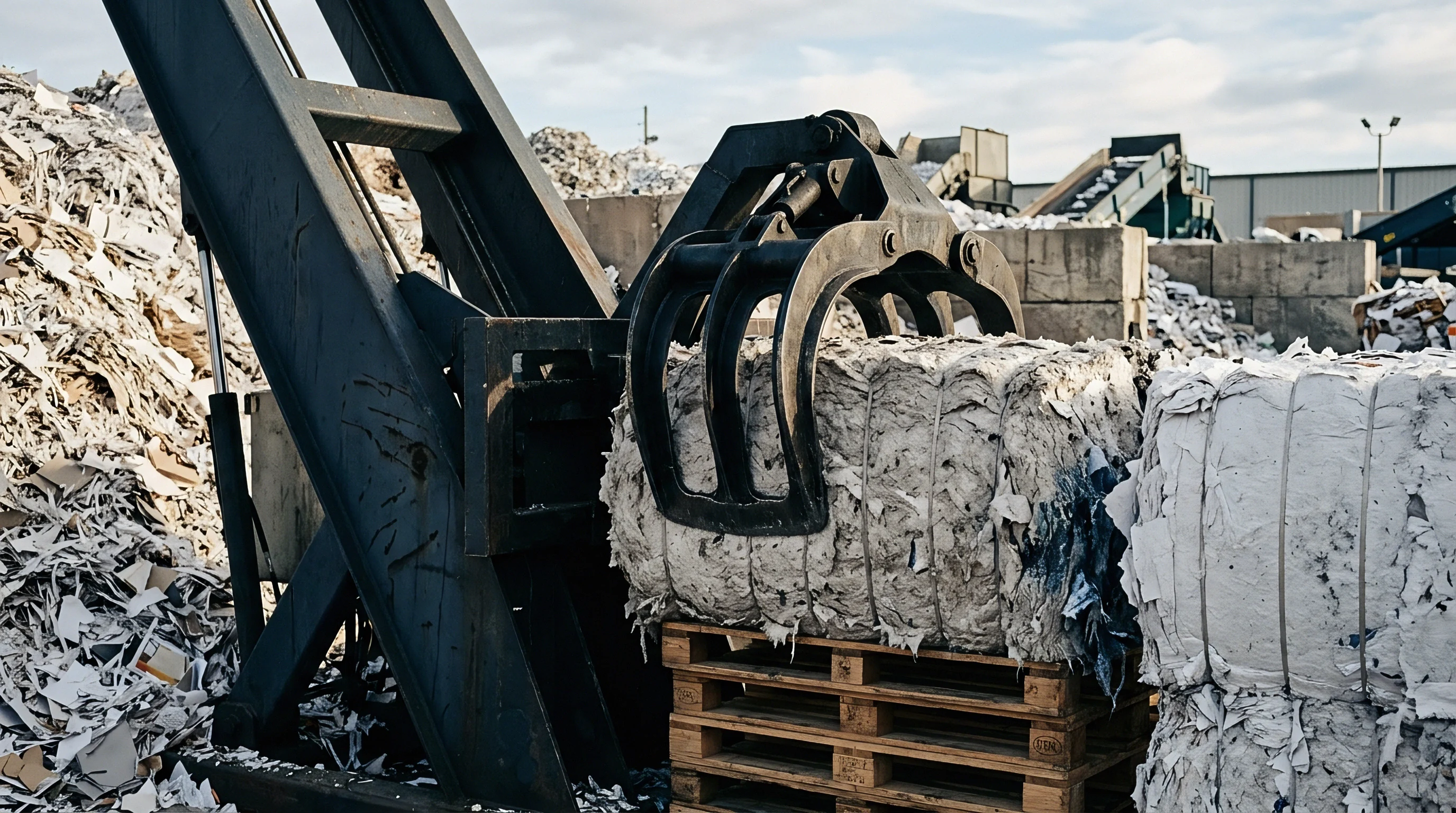
Interfacial Fines Distribution and Dewatering Resistance
The concentration of fines at the interface directly dictates local drainage resistance. Heavy fines accumulation forms a tight, low-permeability layer that blocks water from escaping inner plies during pressing. Moisture trapped beneath this barrier expands into steam upon entering the main dryer section, generating internal vapor pressure that blows plies apart.
Balancing fines retention with drainage permeability requires careful chemical control. Micro-polymer retention programs use high-molecular-weight cationic polymers alongside microparticle silica or bentonite clay. Cationic polymers gather fines into small, shear-resistant flocs, while microparticles tighten those clusters, keeping drainage channels open around them.
Controlled flocculation prevents fines from sealing into an impermeable film while keeping them near the interface to build bond strength.
Mineral fillers in recycled stock, such as calcium carbonate and titanium dioxide, compete with organic fines for space but cannot form hydrogen bonds. Calcium carbonate particles at the ply boundary disrupt cellulose-to-cellulose contact, dropping Scott Bond values by 10 to 15 Joules per square meter for every 2 percent increase in ash content. Washing and de-inking remove excess ash, though thorough cleaning lowers yield and drives up fiber costs.
Dewatering pressure must force organic fines around these inorganic particles to preserve cohesion.
Wet pressing pressures exceeding 5 MPa in the presence of cationic starch retention complexes alter the pore structure within hornified fiber cell walls, directly influencing interfacial strength.
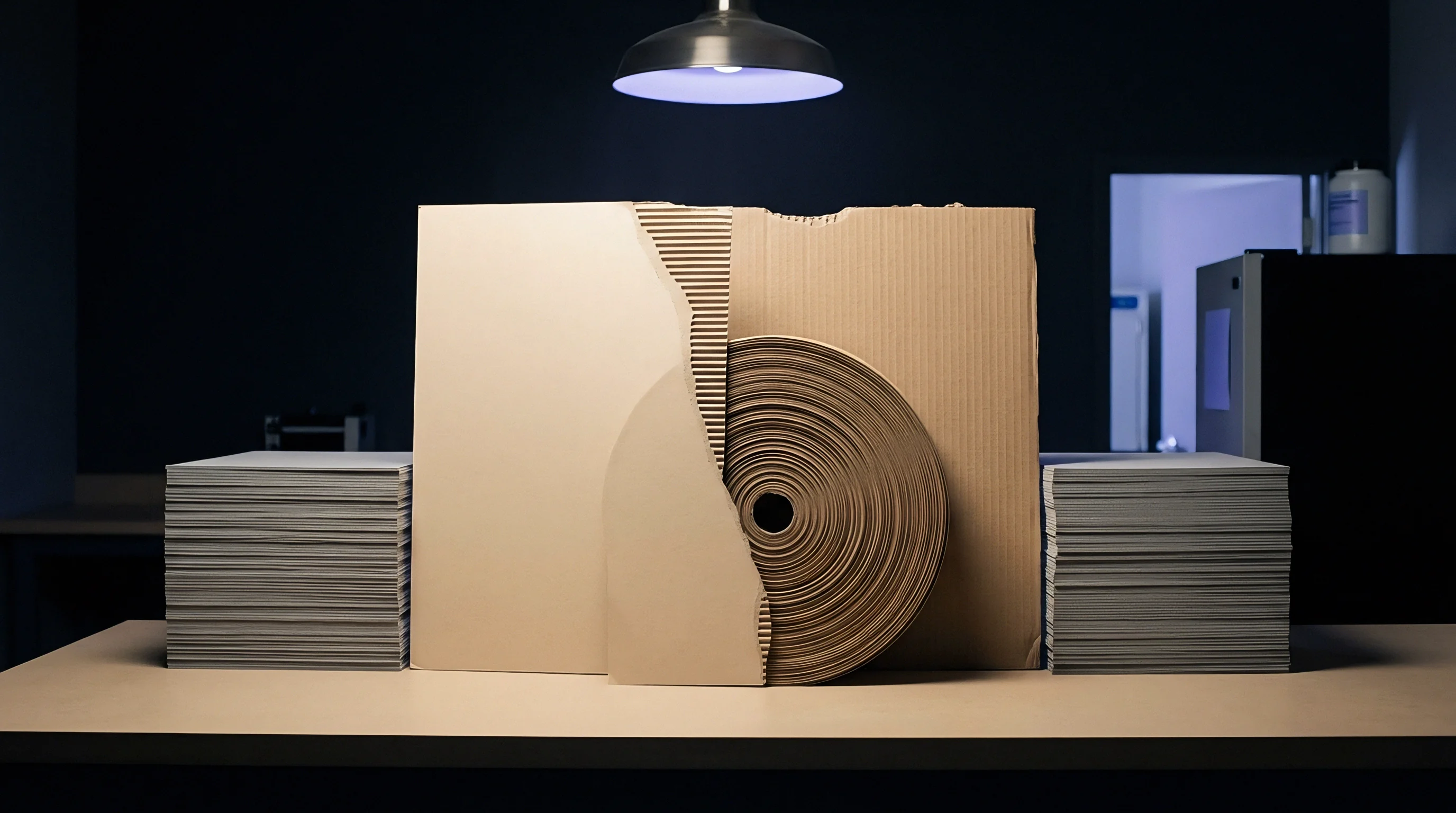

Cohesion
Internal bond strength measures the energy needed to split paperboard along its internal fiber network. In multi-ply recycled board, the interface between plies is the primary failure plane under z-directional tensile and shear stress. Laboratory testing of inter-ply cohesion indicates how effectively wet-end couching and press dewatering performed.
Standard test protocols must isolate true delamination energy from surface picking or bending moments.
Scott Bond impact testing according to ISO 16260 and TAPPI T 569 serves as the baseline laboratory measurement for internal paperboard strength. The test measures dynamic energy absorbed during out-of-plane delamination of a paperboard sample clamped between an angle bracket and a double-sided adhesive tape block. A pendulum strikes the aluminum angle, splitting the sheet through its thickness.
For multi-ply recycled linerboard and folding boxboard, Scott Bond values must meet minimum threshold specifications to withstand automated packaging line operations.
Does Scott Bond Testing Predict Box Crease Delamination?
Scott Bond testing measures high-rate dynamic shear rupture energy along the sheet’s weakest plane. While high values usually signal strong bonding from good dewatering pressure, the test uses small sample areas under rapid impact, which can hide localized micro-delaminations from uneven pressing. Z-directional tensile testing per ISO 15754 provides complementary static stress data by pulling a double-taped specimen apart at controlled low speeds, isolating true tensile strength from viscoelastic impact response.
Discrepancies between static z-tensile and dynamic Scott Bond results often appear in high-grammage recycled boards. Heavy press loading can create a dense core surrounded by weak ply interfaces. A Scott Bond impact might shear through an outer ply, whereas a z-directional tensile test splits the main internal boundary.
Using both methods in quality audits ensures complete characterization of bond integrity across all plies.
| Test Method | Standard Designation | Stress Mode | Sample Conditioning | Typical Recycled Value Range |
|---|---|---|---|---|
| Scott Internal Bond | ISO 16260 / TAPPI T 569 | Dynamic Impact Shear | 23°C / 50% RH | 95 ~ 220 J/m² |
| Z-Directional Tensile | ISO 15754 / TAPPI T 541 | Static Out-of-Plane Tensile | 23°C / 50% RH | 250 ~ 550 kPa |
| Ply Adhesion Pull | ISO 4046 / TAPPI T 833 | Low-Speed Peeling Shear | 23°C / 50% RH | 1.2 ~ 3.5 N/cm |
Impact of Dryer Section Heat Transfer on Bond Finalization
While pressing brings recycled fibers into physical contact, hydrogen bonds finalize during moisture evaporation in the steam-heated dryer section. As sheet moisture drops below 30 percent, surface tension in remaining capillary water draws adjacent fiber surfaces together. These Campbell forces exert high localized pressure ~ up to 10 MPa across microscopic gaps ~ collapsing flexible fibrils and bringing hydroxyl groups into final bonding contact.
Stiffened by hornification, recycled fibers resist Campbell forces more than virgin pulp. If wet pressing fails to deliver sufficient initial sheet density, capillary gaps remain too wide for surface tension to pull fibers together. Over-drying early in the dryer section worsens performance: rapid heating creates steam bubbles inside the core before water can diffuse out, generating micro-explosions that tear apart fresh inter-ply bonds.
Rapid early dryer heat application exceeding 110 degrees Celsius on wet recycled web profiles generates internal vapor expansion that ruptures un-solidified inter-ply boundary zones.
Graduated dryer temperature profiles prevent steam delamination. Initial cylinders run cooler, typically 60 to 80 degrees Celsius, allowing water to evaporate without boiling. Once sheet solids pass 65 percent, cylinder temperatures can safely rise to 120 or 140 degrees Celsius.
Maintaining tight control over web tension across cylinder draws prevents the shrinking sheet from pulling plies apart during critical shrinkage phases.
Non-destructive ultrasonic testing offers real-time online monitoring of bond strength. Transducers measure out-of-plane sound velocity through the moving web, where faster sound propagation correlates directly with higher density and better inter-ply bonding. Linking online ultrasonic arrays into wet press control loops allows automated adjustments to shoe press loading whenever cohesion metrics drift below quality limits.
Purchasing specifications can mandate ISO 16260 Scott Bond testing conditioned to ISO 187 standards, requiring rejection of any delivered paperboard lot with an average internal bond strength below 130 Joules per square meter across ten consecutive sample pulls.

Crease
Converting operations put inter-ply bond strength to a stringent test. Folding boxboard, coated recycled board, and multi-ply containerboard undergo heavy local deformation during die-cutting, scoring, creasing, and high-speed folding. Creasing creates controlled internal delamination along predefined lines, forming a flexible hinge that folds without tearing outer liners or cracking printed coatings.
Stressing the middle plies, creasing succeeds only if shear failure occurs precisely at internal ply interfaces.
During creasing, a male rule forces board into a female groove, subjecting the sheet to high bending and shear stresses across its thickness. A well-bonded multi-ply sheet delaminates cleanly into thin layers along internal interfaces, spreading strain evenly across the crease. If internal bond strength is too low, the sheet splits completely during scoring, causing loose flaps and structural failure.
If internal bonding is too high from aggressive pressing or excessive chemical binders, the sheet refuses to delaminate internally, forcing the outer liner to crack under tensile strain during folding.
Score Line Cracking and Delamination Resistance
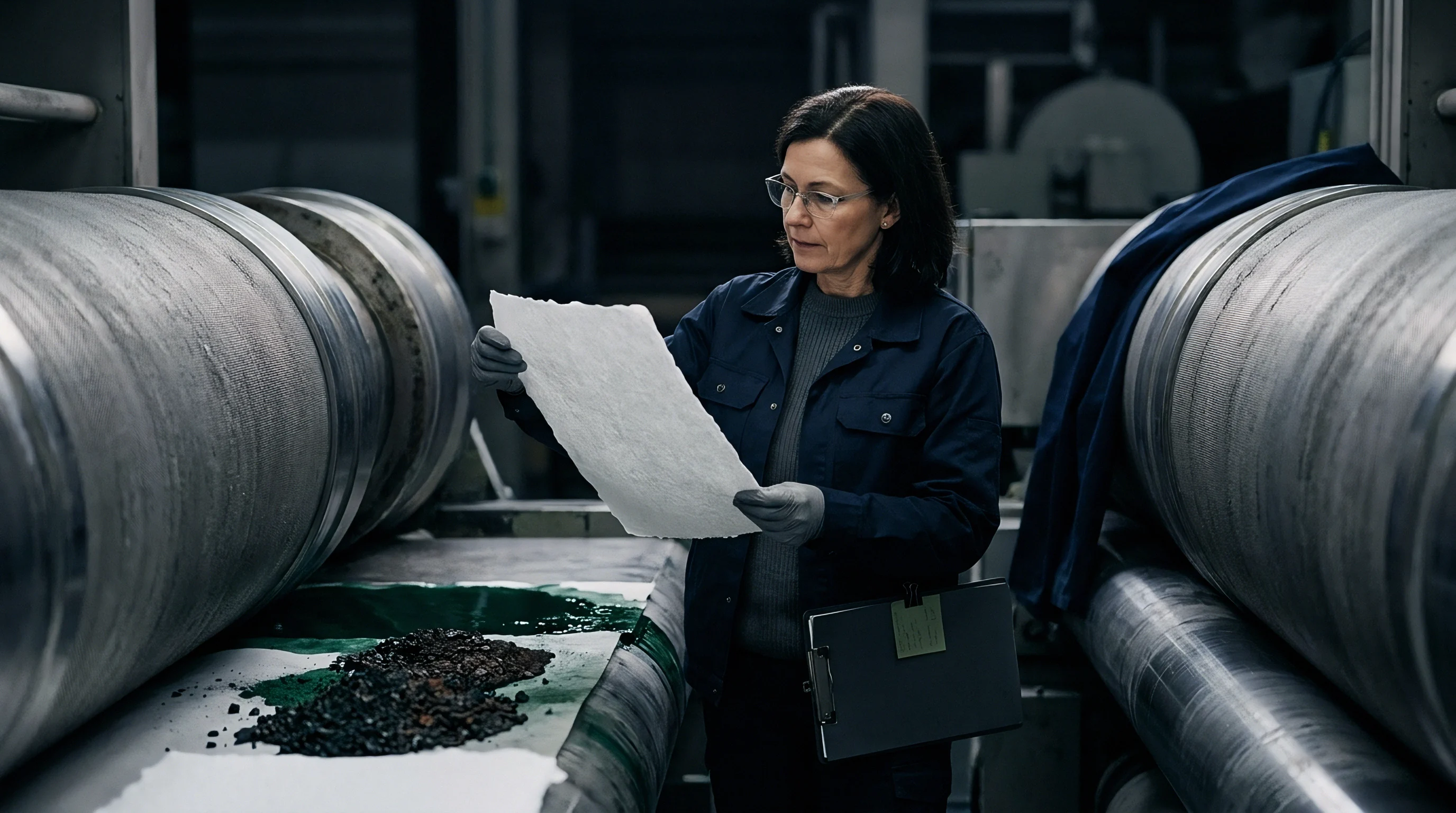
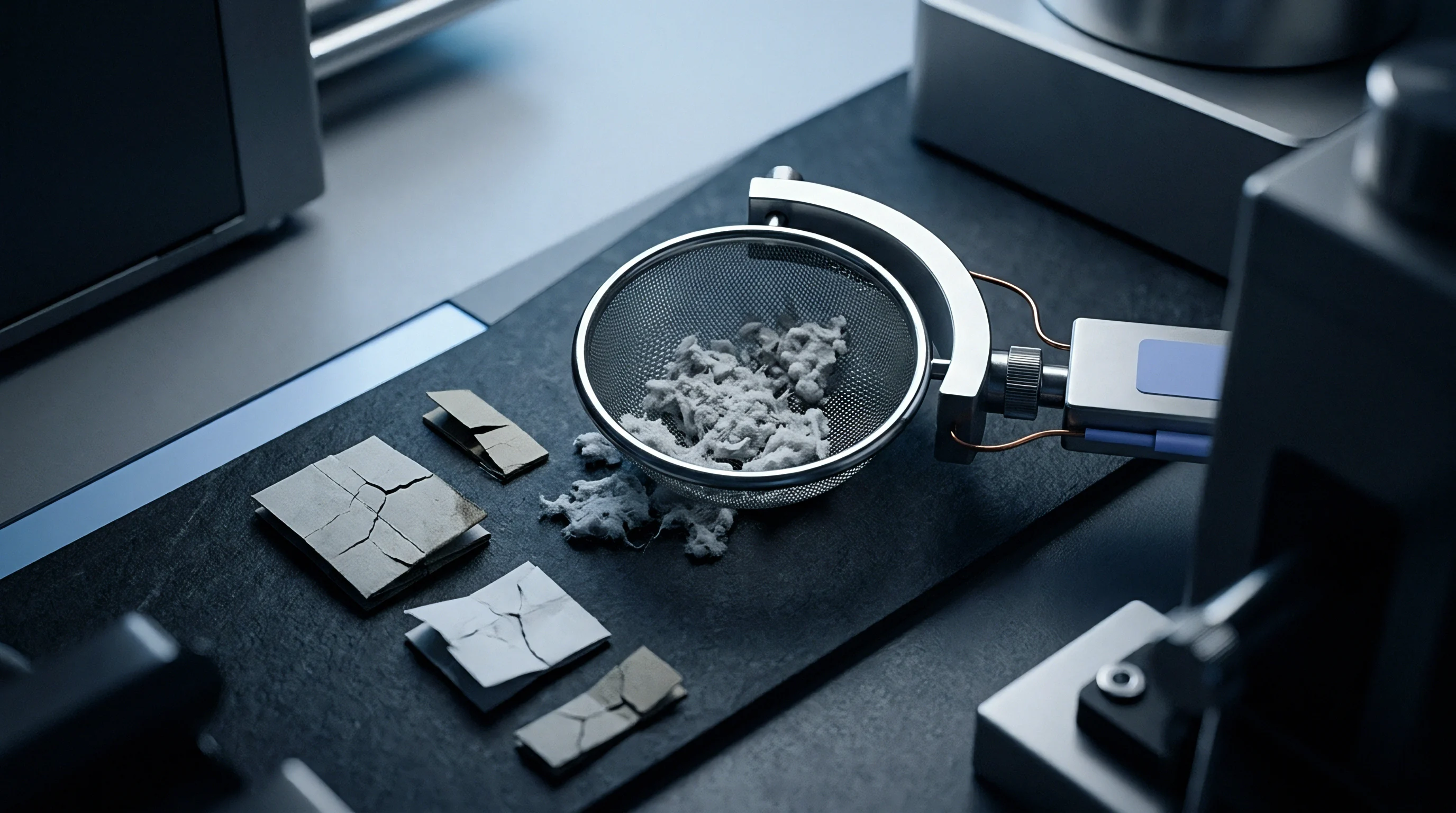
Recycled folding boxboard is more prone to score line cracking than virgin bleached sulphate board because fiber hornification reduces the outer liner’s stretch capacity. When folded 90 or 180 degrees, the top ply faces tensile elongation that can exceed its strain limit. If internal plies fail to shear cleanly during creasing, surface strain spikes, causing visible fiber fractures and coating flaking along the fold line.
Optimizing dewatering profiles during manufacturing establishes a strength gradient across the sheet thickness. Designing a board structure with strong, dense outer plies and a moderately bonded core provides the best creasing performance. The shoe press profile can apply high press impulse to outer plies while preserving porosity in the inner core, enabling clean shear delamination under creasing rules while maintaining overall box compression strength.
- Outer Liner Rupture occurs when high top-ply stiffness combined with rigid inter-ply bonding prevents internal shear movement, forcing outer surface fibers beyond their tensile strain limit during high-speed 180-degree folding.
- Deep Ply Separation manifests as wide internal voids caused by insufficient couching solids control, causing the board structure to buckle unevenly and jam automatic carton filling lines.
- Score Line Flaking happens when brittle recycled fines layers at the print interface detach under localized die-cutting shockwaves, shedding ink and coating fragments onto packaging line machinery.
- Bending Resistance Loss occurs when excessive press dewatering crushes internal core bulk, leaving middle plies unable to support column loads during stacked box storage.
Converting Line Speed and Corner Crease Integrity
High-speed folder-gluers process carton blanks at speeds up to 500 meters per minute. At these speeds, creasing and folding happen in milliseconds, placing high strain rates on inter-ply boundaries. Paper is viscoelastic, responding differently to rapid impact than to slow static loading; under high strain rates, recycled fiber networks stiffen and tolerate less elongation before breaking.
Pressing pressures determine final sheet density and z-directional elasticity, dictating how board behaves during high-speed converting. Boards produced under high peak press pressures are dense and unyielding in the z-direction. On fast converting lines, these high-density boards store elevated strain energy during creasing.
If internal bonds are brittle, that energy releases abruptly, creating jagged fractures along score lines.
Humidity swings in converting plants also alter inter-ply shear behavior. Recycled fibers absorb moisture quickly due to their high fines content and open voids between hornified fibers. As relative humidity rises from 50 to 80 percent, moisture content in recycled board increases from 6.5 to 10.5 percent.
Absorbed water plasticizes the hydrogen-bonded network, reducing Scott Bond strength by 20 to 30 percent. A board that performs well under dry warehouse conditions may experience creasing failure and box bulging under humid converting conditions.
Conditioned recycled board with balanced inter-ply cohesion yields a smooth, crack-free crease profile whenever the ratio of creasing groove width to board caliper matches sheet density.

Ledger
Substrate specifications directly affect unit economics, landed material costs, and end-of-life packaging compliance fees. Specifying recycled paperboard balances lower raw fiber costs against potential performance trade-offs, such as lower bulk and reduced internal bond strength per unit of basis weight. Wet-end engineering choices ~ specifically press section design and dewatering capabilities ~ determine whether a mill can produce strong multi-ply board using lower-cost, degraded post-consumer paper streams.
Paperboard is bought by weight and converted by area, so mill yield depends on sheet caliper and bulk, expressed in cubic centimeters per gram. High dewatering pressure in roll presses increases density and Scott Bond strength, but strips away valuable bulk. Extended nip shoe presses decouple sheet strength development from bulk loss.
By lengthening dwell time and reducing peak pressure, shoe presses reach target inter-ply bonding at lower overall densities, preserving caliper and yield per metric tonne of purchased stock.
Yield Optimization and Basis Weight Downgauging
Preserving sheet caliper through shoe press optimization enables basis weight downgauging. A brand owner specifying a 400-micrometer folding boxboard can hit required stiffness and delamination resistance targets at a lower basis weight if the manufacturing mill uses extended nip pressing. Dropping from a 320 gram per square meter sheet to a 290 gram per square meter sheet yields a 9.37 percent reduction in raw material tonnage required to produce an identical quantity of finished packaging units.
Material savings directly alter landed pack costs across large production runs. Consider a packaging run requiring 1,000,000 square meters of printed boxboard. At 320 grams per square meter, total material weight equals 320 metric tonnes.
At a landed stock price of 1,150 per metric tonne, total substrate cost equals $368,000. Downgauging to 290 grams per square meter reduces total weight to 290 metric tonnes, bringing total substrate cost to $333,500 ~ a $34,500 savings on a single order while maintaining structural performance specifications.
| Specification Option | Target Caliper (µm) | Basis Weight (g/m²) | Sheet Bulk (cm³/g) | Metric Tonnes per 1M m² | Landed Cost per 1k Sheets () |
|---|---|---|---|---|---|
| Standard Roll Press Board | 400 | 325 | 1.23 | 325.0 | $373.75 |
| Single Shoe Press Board | 400 | 300 | 1.33 | 300.0 | $345.00 |
| Optimized Tandem Shoe Board | 400 | 280 | 1.43 | 280.0 | $322.00 |
Ply bond failures quickly erase material savings. High-speed converting lines lose $1,200 to $3,500 per hour in downtime when weak inter-ply bonding causes web splits or score line jams. Purchasing lower-cost recycled board manufactured without adequate dewatering pressure control introduces real financial risk.
A price saving of $40 per tonne on low-grade board vanishes if converting line efficiency drops by even 3 percent due to delamination failure during die-cutting and folding operations.
Producer Responsibility Schemes and Circularity Fees
Extended Producer Responsibility regulations across European and North American markets impose fee structures based on packaging material composition, recyclability, and secondary fiber content. Packaging schemes incentivize post-consumer recycled content while penalizing non-recyclable multi-material laminates. Multi-ply recycled boards that achieve high inter-ply strength through mechanical dewatering and native starch addition retain 100 percent recyclability within standard paper repulping streams.
Relying on synthetic polymer adhesives or plastic films to compensate for poor bonding compromises recyclability grading. Packaging audit schemes classify laminated or heavy-plastic-coated boards under higher eco-fee bands, adding penalties ranging from $80 to $250 per tonne of placed packaging. Achieving required inter-ply bond strength strictly through wet-end dewatering pressure optimization and controlled wet pressing keeps the substrate in the lowest eco-fee category, safeguarding supply chain profitability.
Procurement teams negotiating long-term mill supply contracts often link unit pricing to verified physical mill MTR certificates detailing Scott Bond values, out-press solids percentages, and caliper tolerances across every delivered reel batch.