Cohesion Measurement
Delamination resistance describes the energy required to rupture the cross section of a multi ply paperboard product through the thickness of the sheet. Internal bond strength quantifies this resistance by measuring the force necessary to split the sheet into two separate layers. The property governs the suitability of a substrate for high speed converting operations where aggressive adhesive forces or vacuum grippers exert tension on the surface.
Coatings applied to a sheet increase the risk of picking during printing if the value remains insufficient. Mills manage this characteristic by controlling the moisture content during formation and the intensity of mechanical refining applied to the pulp slurry. Precise bonding between the individual layers of the sheet determines the structural integrity of a carton during automatic forming or heavy duty packaging applications.
Process Influence
Mechanical fibre entanglement provides the primary source of sheet integrity during the initial wet end phase of production. Chemical additives like starch or sizing agents penetrate the matrix to boost the connections between layers. Fibre orientation affects the load distribution across the width of the roll during manufacturing.
Excessive dryer temperatures induce brittleness, which degrades the energy absorption capacity of the board. Converting lines that utilize high tack adhesives require superior values to prevent structural failure at the glue joint. The material requires consistent fibre-to-fibre interaction to withstand the stress loads encountered in standard vertical compression testing.
Testing Parameter
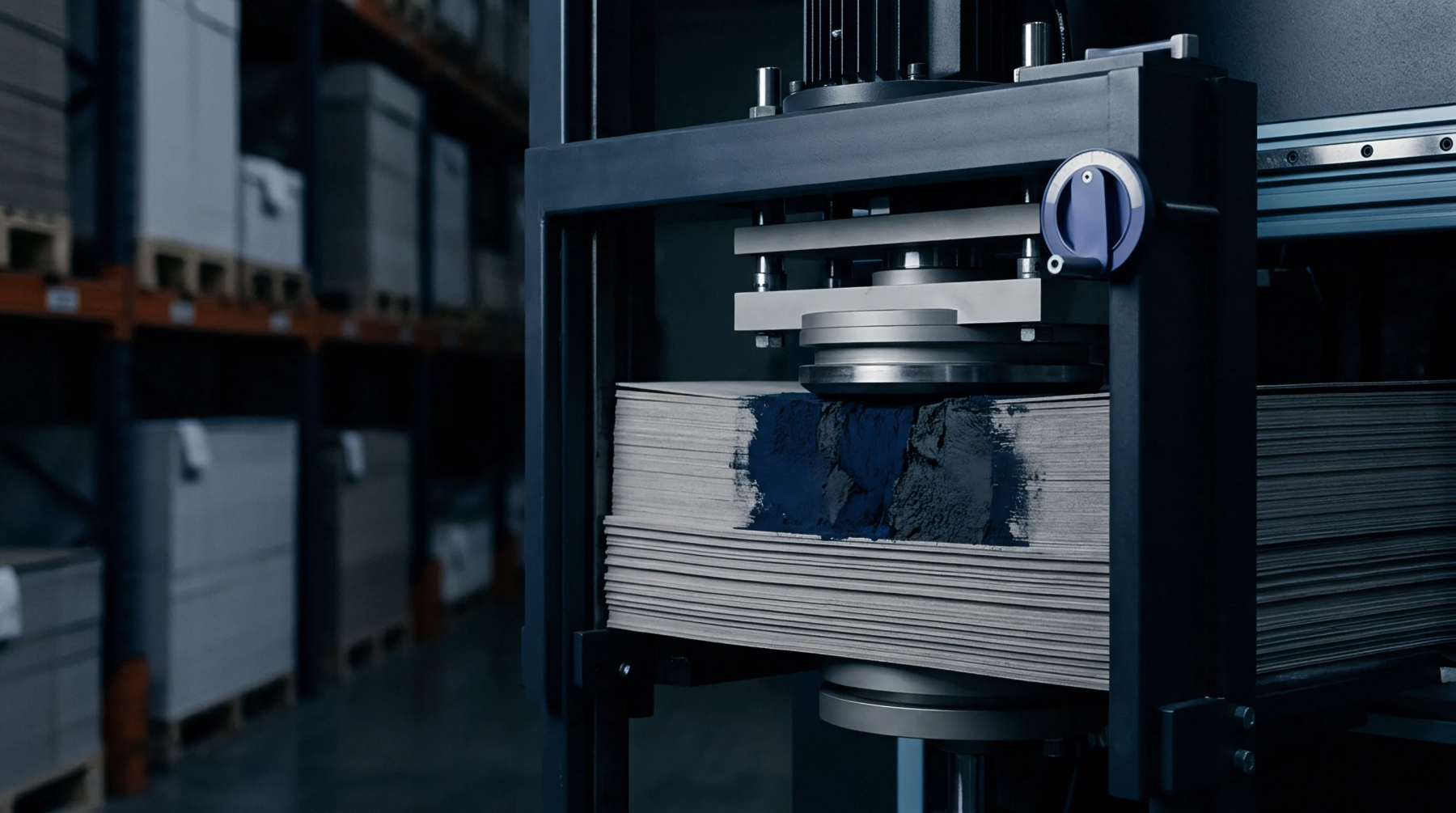
Standardized drop weight impact procedures simulate the sudden force applied to a sheet by measuring the energy dissipated during a controlled separation of the paper layers. Technicians secure the sample between two metal platens to ensure uniform distribution of the mechanical energy. A standardized steel block falls from a height to deliver a strike that forces the sheet to split at its weakest point.
Higher readings indicate better resistance to delamination under sudden impact forces. Substrates with low values fail when subjected to the stress of rapid folding or heavy filling, because the internal structure cannot redistribute the mechanical load across the fibre network. Proper calibration of the impact mechanism ensures the accuracy of the result when comparing various grades of recycled paperboard for commercial suitability.