Interfacial Ply Bond Failures under High-Strain Converting Rotary Shear Loads
High-velocity rotary die cutting causes ply bond delamination when transient inter-layer shear stress exceeds Z-direction polymer matrix cohesion limits.
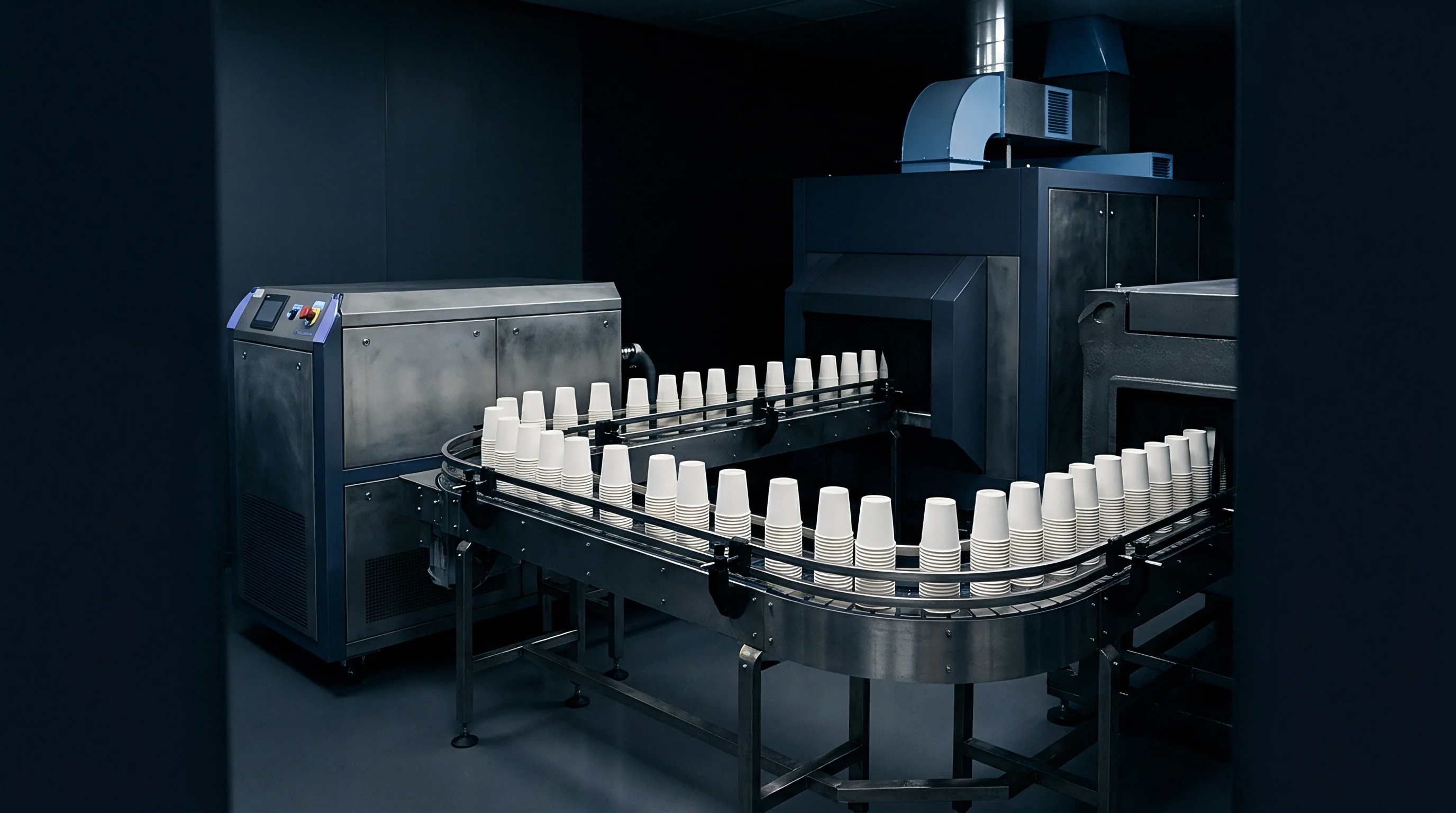

Nip
Converting lines running past six hundred meters per minute set up sharp mechanical stresses inside multi-ply board. Because the structure is couched together on the machine wire while still wet, its plies remain vulnerable to planar shear whenever rotary die cylinders force the web through narrow roll gaps. As the sheet travels between a hardened steel rule cylinder and a polyurethane anvil, the outer liners take the tensile flexure while the core plies take the transverse shear.
If the bond strength between couched fiber networks cannot match that tangential load, the plies split apart, with heavier calipers and higher web speeds worsening the strain.
On the floor, failure shows up in several ways: blistered crease channels, edge flaking along cut boundaries, or webs delaminating entirely during matrix stripping. Dynamic strain rates in the roll contact zone often exceed one thousand reciprocal seconds ~ too fast for the viscoelastic relaxation of cellulose fibers to bleed off the energy. The load concentrates right at the boundary between furnish layers.
Where folding boxboard or coated recycled grades lack sufficient interply cohesion, microscopic shear fractures quickly spread into full split planes.
Interfacial delamination under dynamic rotary shear initiates when local shear stress exceeds 210 kilopascals at a strain rate of 1200 reciprocal seconds under ISO 187 atmospheric conditioning.
Failure patterns tend to cluster around specific furnish pairings. Combining long-fiber softwood kraft on the surface with short-fiber hardwood or mechanical core stock creates a pronounced interfacial weak point, largely because the sharp jump in elastic modulus across the boundary spikes local stress in the nip.
- Interfacial blister formation occurs when compressive shear forces rupture internal starch bonds, trapping compressed air and loose fibers between separated layers.
- Crease wall cleavage develops when scoring male rule inserts drive outer fibers downward while the lower ply interface splits under localized Z-direction tension.
- Matrix strip delamination manifests during high-speed waste matrix extraction, where tangential pull forces peel weak core plies apart instead of shearing die-cut margins cleanly.
- Fluting profile collapse arises in solid bleached sulfate and containerboard laminates when interfacial shear breaks the adhesive layer holding face sheets to core materials.
Converting plants and board mills regularly dispute whether structural separation stems from ambient plant humidity and heavy die compression or inherent board defects.
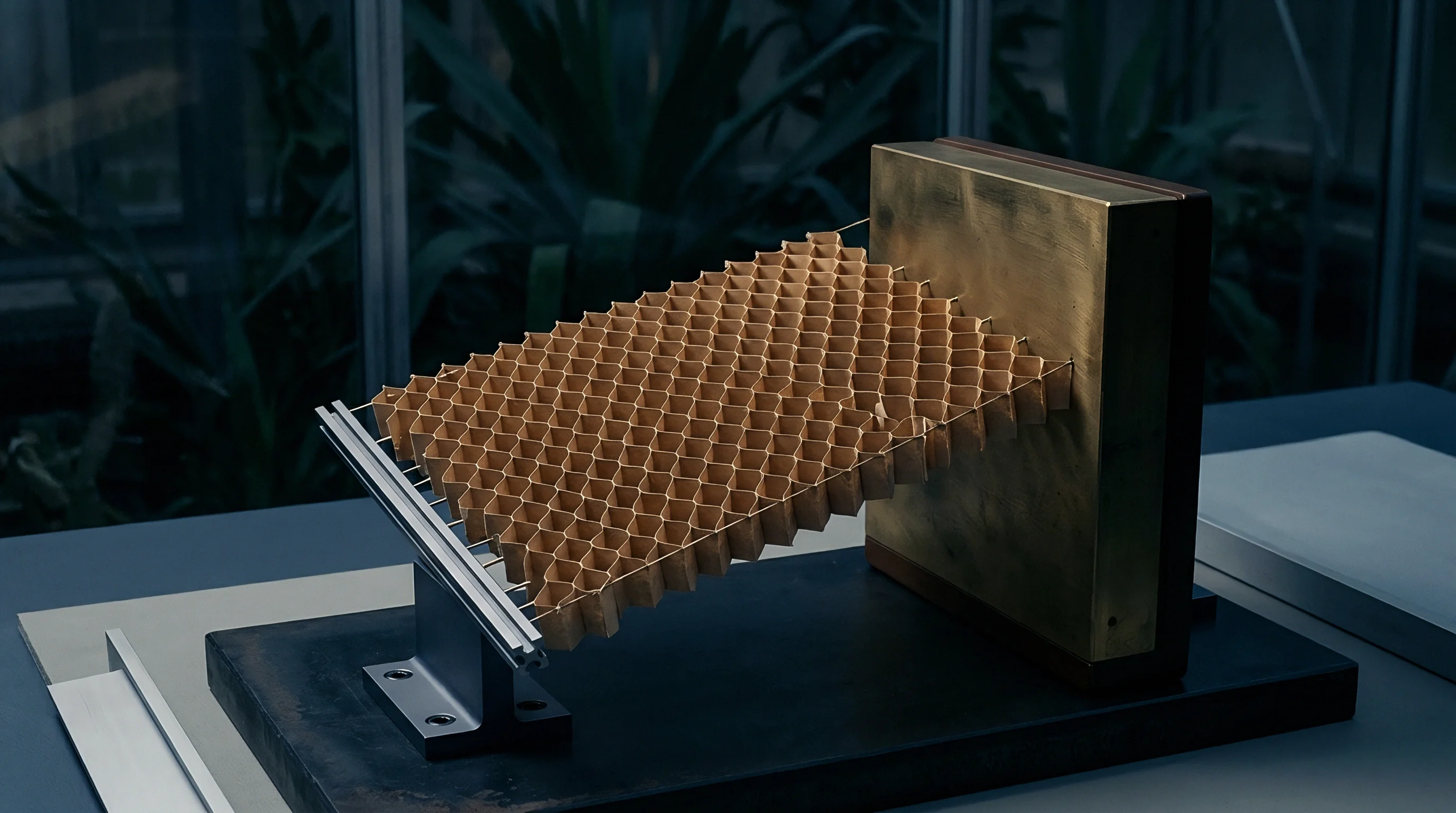
Starch
Interply strength comes down to hydrogen bonding and chemical cross-linking applied at the wet end. Multi-wire Fourdrinier and former machines bring individual webs together while moisture sits between 88 and 92 percent. Native or modified cationic starches sprayed between those plies must migrate into the fiber network before drying sets the matrix.
How deeply that gelation reaches depends on sheet temperature, solids content, and drainage over the vacuum couches; pull water out too quickly, and the polymer stays stranded on the surface instead of anchoring the plies together.
Fiber length across adjacent layers dictates how much surface area is actually open to bonding. Softwood fractions longer than 2.5 millimeters provide ample surface for mechanical entanglement and hydrogen bonds, whereas recycled furnish below 0.8 millimeters leaves a low-density boundary with few viable bond sites. Fine particles settling at the ply boundary compound the issue by soaking up cationic spray without building structural bridges into the neighboring plies.
| Substrate Grade | Ply Furnish Combination | Interply Polymer Application (g/m²) | Scott Internal Bond (J/m²) | Z-Direction Tensile ISO 541 (kPa) |
|---|---|---|---|---|
| Solid Bleached Sulfate (SBS) | 100% Virgin Softwood/Hardwood Kraft | 2.5 (Cationic Potato Starch) | 245 | 380 |
| Folding Boxboard (FBB) | Bleached Kraft Covers / Mechanical Core | 3.2 (Spray Cationic Corn Starch) | 190 | 295 |
| Coated Recycled Board (CRB) | De-inked Top Liner / OCC & News Core | 4.0 (Amphoteric Wheat Starch) | 135 | 210 |
| Unbleached Kraft Multi-Ply | 100% Virgin Unbleached Softwood | 1.8 (Native Tapioca Starch) | 280 | 425 |
| All metrics measured after conditioning specimens at 23°C and 50% relative humidity according to ISO 187 protocol. | ||||
Dryer cylinder temperatures govern starch gelation through the drying section. The polymer requires sufficient heat to cross its gelatinization threshold ~ typically 65 to 72 degrees Celsius ~ while the web still holds enough water for it to hydrate. Drying the sheet too early locks the fibers before the starch can wet out and bridge across the plies.
Conversely, low steam pressure on the lead dryers leaves ungelatinized starch granules at the boundary, which act as crack starters under shear.
Core ply fines accumulation reduces starch penetration depth and impairs inter-ply hydrogen bonding across recycled multi-ply board formats.
Lowering wet-end machine speeds allows cationic polymers sufficient dwell time to penetrate outer ply fibers before vacuum dewatering locks the interply matrix.
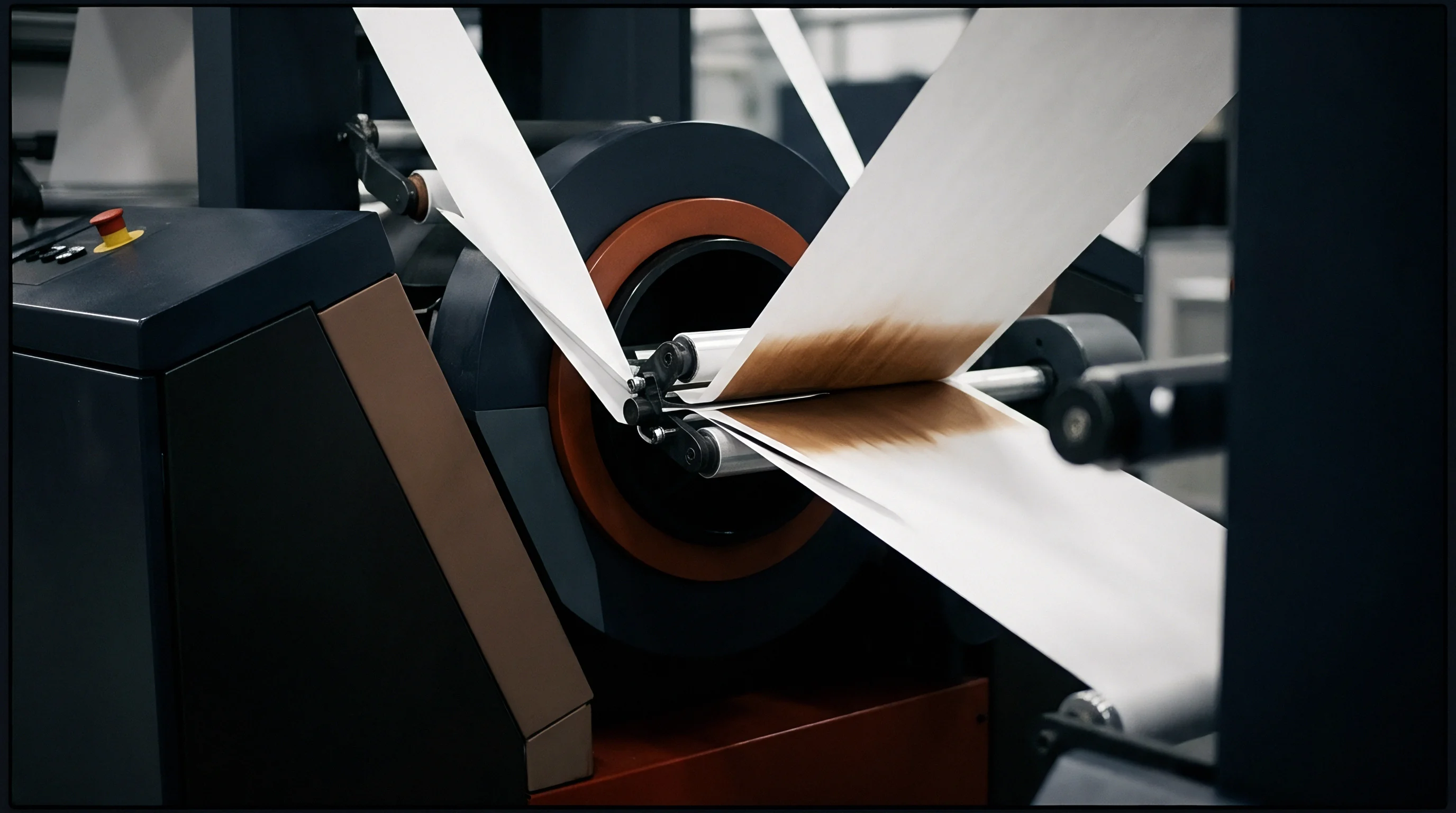
Vector
Force resolution in rotary converting operates quite differently from a flatbed platen press. Where flatbed tooling exerts perpendicular compression across the sheet all at once, a rotary die applies load continuously along a moving line of contact. As the cutting rule enters the board, the force resolves into vertical compression along the Z-axis and horizontal shear along the X-axis in the machine direction, concentrating tensile stresses directly along the ply boundaries.
Speed differences between the male die cylinder and the anvil roll aggravate this shear. Under load, elastomeric anvil jackets deflect, widening the contact patch and altering local surface speed. The top liner travels at nominal line speed against the die cylinder, but the bottom liner follows the deformed anvil face, setting up continuous planar shear strain through the caliper that shifts web tension across the nip.
| Converting Speed (m/min) | Strain Rate (s⁻¹) | FBB Interfacial Shear Limit (kPa) | CRB Interfacial Shear Limit (kPa) | SBS Interfacial Shear Limit (kPa) |
|---|---|---|---|---|
| 300 | 550 | 310 | 230 | 410 |
| 500 | 920 | 275 | 195 | 375 |
| 700 | 1300 | 240 | 160 | 340 |
| 900 | 1650 | 215 | 135 | 315 |
Caliper dictates how severe those internal rotational shears become. Boards above 450 micrometers generate much larger internal bending moments than thinner substrates. As thickness increases, the outer boundaries sit further from the neutral bending axis, forcing outer plies to travel a noticeably longer arc than the core layers.
Unless the interply bond can absorb that slip displacement, delamination runs straight down the sheet along the machine direction.
Compliance with ISO 16260 minimum energy absorption thresholds fails to prevent field delamination when web converting speed exceeds seven meters per second.
The precise contribution of anvil sleeve surface wear to micro-delamination frequency under multi-shift continuous production remains unquantified across standard industry trials.

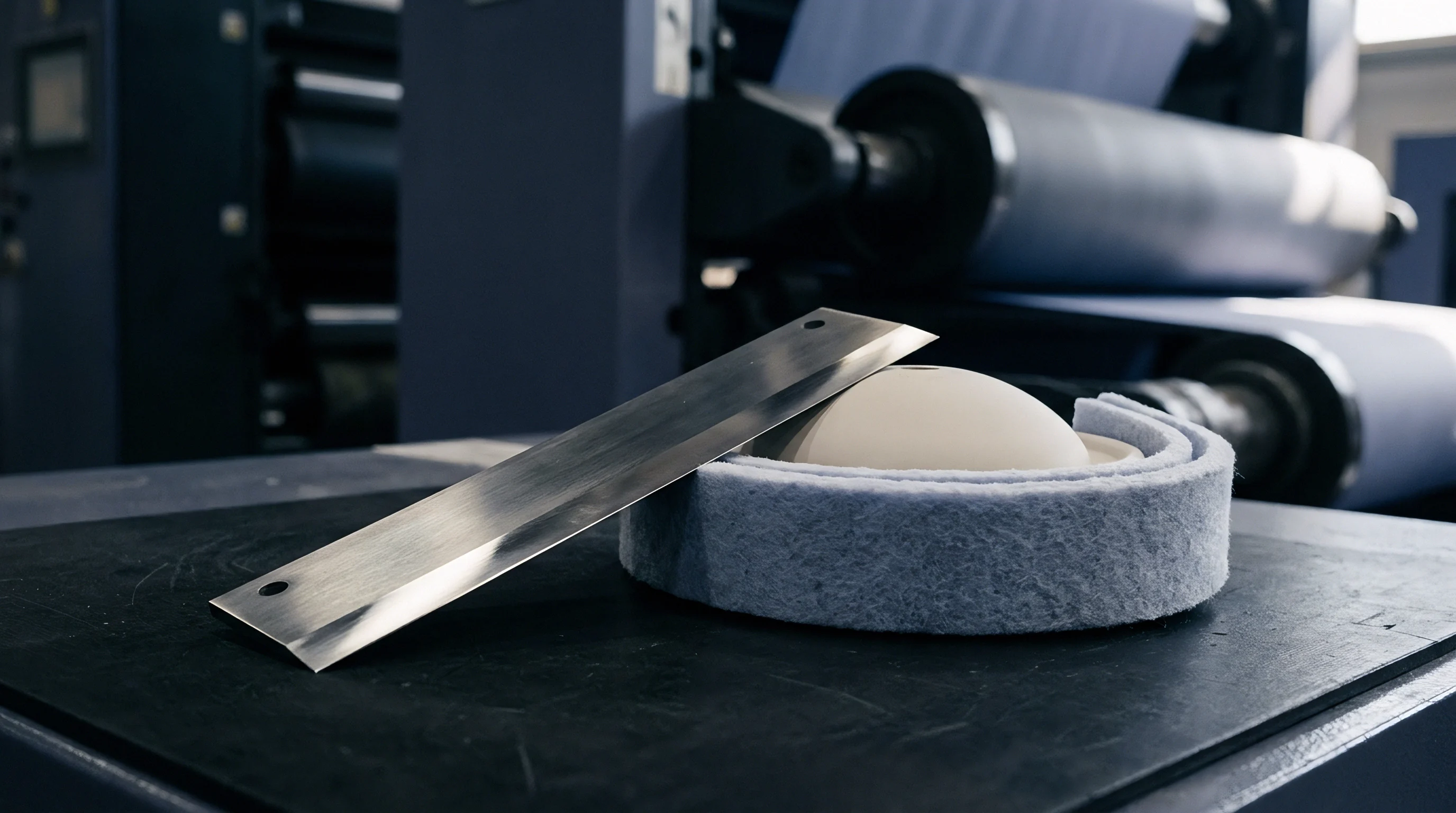
Gauge
Verifying interply adhesion requires bench test methods that reproduce the mechanics of high-speed converting. Plants still rely heavily on Scott Internal Bond testing under ISO 16260 or TAPPI T 569, where a weighted pendulum strikes an angle bracket glued to the sample. That impact occurs below 3 meters per second ~ far too slow to reflect substrate behavior under dynamic rotary strain rates that routinely exceed 15 meters per second.
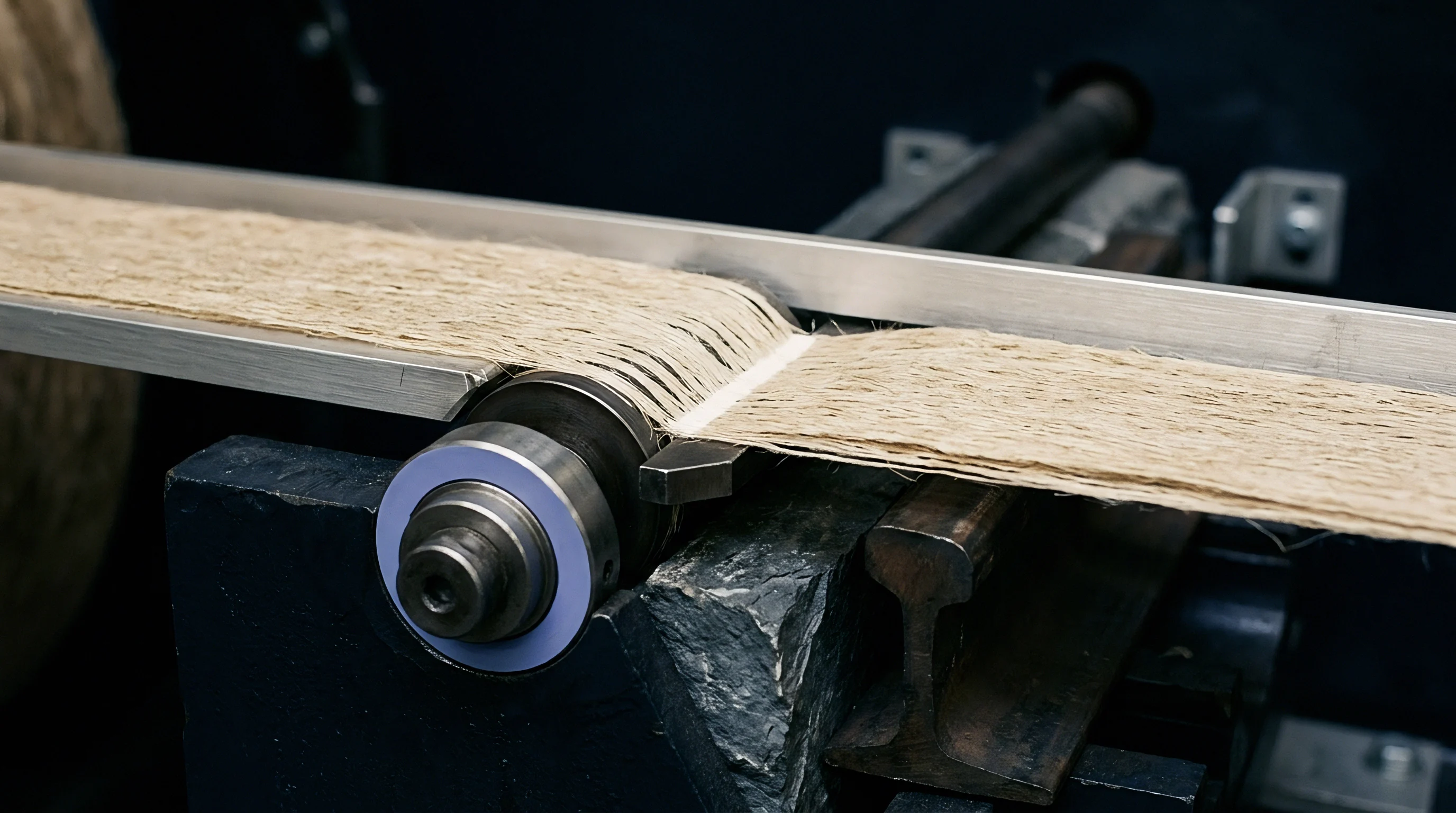
Does Scott Bond Testing Predict Rotary Delamination Accurately?
Z-direction tensile testing under TAPPI T 541 yields a clean static value for normal tensile strength, but it leaves out planar shear entirely. A board that tests well under static perpendicular pull can still fail on press under rotary shear. Meaningful qualification demands test setups that apply normal compression and planar shear at the same time under controlled deformation speeds.
- Condition board samples at 23 degrees Celsius and 50 percent relative humidity per ISO 187 for 24 hours prior to testing.
- Cut test strips parallel to machine direction to capture longitudinal orientation effects during high-speed rotary shear simulation.
- Mount specimens using double-sided high-tack adhesive tape onto rigid steel test blocks to prevent backing flexure during shear loading.
- Apply Z-direction pre-load clamp pressure of 0.7 megapascals for 60 seconds to establish uniform adhesive contact.
- Execute shear rupture pull at an angle of 15 degrees from the specimen plane at a constant crosshead displacement rate of 500 millimeters per minute.
- Record peak force at interfacial separation and inspect fracture surfaces under optical magnification to verify delamination failure mode.
Fracture analysis has to be part of the test protocol to tell structural fiber failure from poor adhesive bonding. A fiber-tear surface proves that internal hydrogen bonding was stronger than the plies themselves. A smooth, clean separation with minimal fiber transfer points straight to weak interply bonding, calling for formulation changes or moisture adjustments back at the wet end.
Measuring static tensile strength across paperboard layers fails to reveal sub-surface structural defects that open under dynamic rotary shear.
Supply specifications referencing TAPPI T 541 section 6.2 enforce a minimum Z-tensile threshold of 250 kilopascals, shifting quality compliance liability back to the board mill upon delivery verification.
Claim
Financial fallout from delamination quickly outstrips the purchase price of the board. Running a high-speed line with poor interply cohesion produces thousands of scrapped cartons per hour before anyone catches the fault. Stripping stations jam, folder-gluers skew their folds, and cartons fail to open cleanly on automated packaging equipment, while standard static tests give no warning of how the material behaves under rotational speeds.
A simple tally shows how fast the numbers climb. On a 20-tonne order of 350-micrometer folding boxboard at 1,250 Euros per tonne (25,000 Euros total), a 4 percent failure rate from under-gelatinized starch scraps 1,000 Euros worth of raw board. But 12 hours of press downtime for sorting, clearing jams, and resetting tooling at 450 Euros an hour tacks on another 5,400 Euros in lost production.
The combined 6,400-Euro loss wipes out more than 25 percent of the original board purchase.
- Interfacial shear performance limits must mandate dynamic Z-shear thresholds above 260 kilopascals measured at strain rates exceeding 1,000 reciprocal seconds.
- Reel-end delamination guarantees require mills to certify interply bond consistency across all tambour rolls within a single production lot.
- Moisture balance tolerances restrict interply moisture variations to within 0.5 percent across all individual couch plies at dry-end reel-up.
- Commercial claim remedies establish full converter reimbursement for press downtime costs when lab verification proves interfacial failure under certified converting parameters.
Accepting multi-ply board shipments without mandatory Z-direction dynamic shear certificates results in unrecoverable press room downtime and total loss of converting margin on high-speed packaging contracts.