Critical Mixed Mode Interfacial Fracture Toughness Criteria for High Speed Automated Paperboard Converting
Critical mixed-mode interfacial fracture toughness dictates high-speed paperboard converting success by preventing score line delamination under rapid shear and bending forces.

Mechanics
Automated packaging lines subject poly-coated paperboard and multi-ply laminated barrier substrates to complex dynamic stress fields during rapid creasing, blanking, and high-velocity rotary folding. When a flat sheet transforms into a three-dimensional carton at production speeds exceeding 500 units per minute, localized shear and normal forces concentrate at the polymer-fiber boundary. If the local crack driving force exceeds the critical resistance of the adhesive bond or extrusion interface, delamination initiates.
This failure propagates along the score lines, destroying structural stiffness and compromising moisture or oxygen barrier integrity.
Interfacial delamination in solid bleached sulfate (SBS), folding boxboard (FBB), and recycled coated recycled board (CRB) operating on high-speed lines is governed by mixed-mode fracture principles. Pure tensile separation, designated Mode I, rarely occurs in isolation during mechanical folding. Instead, folding operations force the multi-layer web into combined tensile opening and in-plane shearing, designated Mode II.
The ratio between shear and tensile loading, defined by the mode mixity phase angle, dictates whether a crack propagates cleanly along the interface or dives into the underlying fiber matrix.
Interfacial Strain Energy Partitioning during High Speed Creasing
Dynamic female-and-male scoring tools apply high localized compression prior to folding. The scoring rule forces the paperboard plies to shear internally while stretching the outer polymer film. During this deformation, strain energy accumulates within both the elastic board plies and the viscoelastic polymer coating.
The total strain energy release rate available for crack propagation combines the Mode I tensile component and the Mode II shear component.
Polyethylene strain hardens at high rate. At converting strain rates between 100 and 1,000 inverse seconds, low-density polyethylene (LDPE) and polyethylene terephthalate (PET) films exhibit elevated yield stress and reduced strain to failure. The elastic modulus of the extruded film increases, shifting the neutral axis of the combined laminate toward the outer face.
As a result, the interfacial shear stresses under the male creasing rule increase significantly compared to static bench measurements.
Delamination halts high speed converting. When the local strain energy release rate reaches the critical mixed-mode interfacial fracture toughness, crack initiation occurs. The total toughness varies continuously with the loading phase angle.
Pure Mode I fracture toughness represents the lowest energy threshold for separation, whereas Mode II sliding shear resistance is frequently two to five times higher due to frictional contact and mechanical interlocking between fiber ends and the polymer matrix.
| Laminate Interface System | Mode I Toughness (J/m²) | Mode II Toughness (J/m²) | Phase Angle Range (Degrees) | Dominant High-Speed Failure Mechanism |
|---|---|---|---|---|
| Flame-Treated LDPE / SBS Board | 45 to 65 | 140 to 210 | 15 to 45 | Interfacial peeling with partial fiber tear |
| Co-extruded EVOH / PE / FBB Board | 35 to 50 | 110 to 160 | 20 to 50 | Clean adhesive separation at tie layer |
| Adhesive-Laminated Met-PET / CRB Board | 25 to 40 | 85 to 130 | 30 to 65 | Metal deposit delamination from film base |
| Dispersion Aqueous Barrier / SBS Board | 55 to 80 | 180 to 260 | 10 to 40 | Sub-surface paperboard ply splitting |
Mode Mixity Variations across Packaging Converting Operations
The phase angle of loading changes dynamically as a carton blank progresses from initial scoring to final 180-degree glue-lap folding. In the scoring die, compression dominates, forcing the mode mixity toward negative phase angles where frictional sliding increases effective resistance. During folder-gluer entry, high-speed belt transfers impose asymmetric bending, driving the phase angle into positive regimes between 30 and 50 degrees where Mode I opening forces become significant.
Score cracking ruins barrier properties. At phase angles below 20 degrees, tensile opening fractures the thin extrusion skin before internal board plies can shear. The crack path remains trapped within the weak boundary layer between the primer skin and the outer board fibers.
At phase angles above 45 degrees, the strong shear component forces the crack tip away from the interface and deep into the board substrate, resulting in structural fiber tear rather than surface film peeling.
Converting lines running above 400 meters per minute require substrates formulated to maintain interface integrity across all operating phase angles. If the interfacial bond strength is calibrated only against static Mode I peel tests, high-speed converting machinery running under Mode II rich shear conditions will generate unpredicted edge splitting and surface flaking. Converting line operators frequently observe film lifting at carton corners when the material specification fails to account for mixed-mode toughness escalation.
As a rule of thumb, an interface that survives static ninety-degree peel testing will still fail on high-speed folder-gluers if its Mode II shear toughness is less than double its Mode I opening toughness.
Substrates designed for high-velocity converting must maintain high adhesion energy across both opening and shearing modes to prevent line jams and barrier breach.
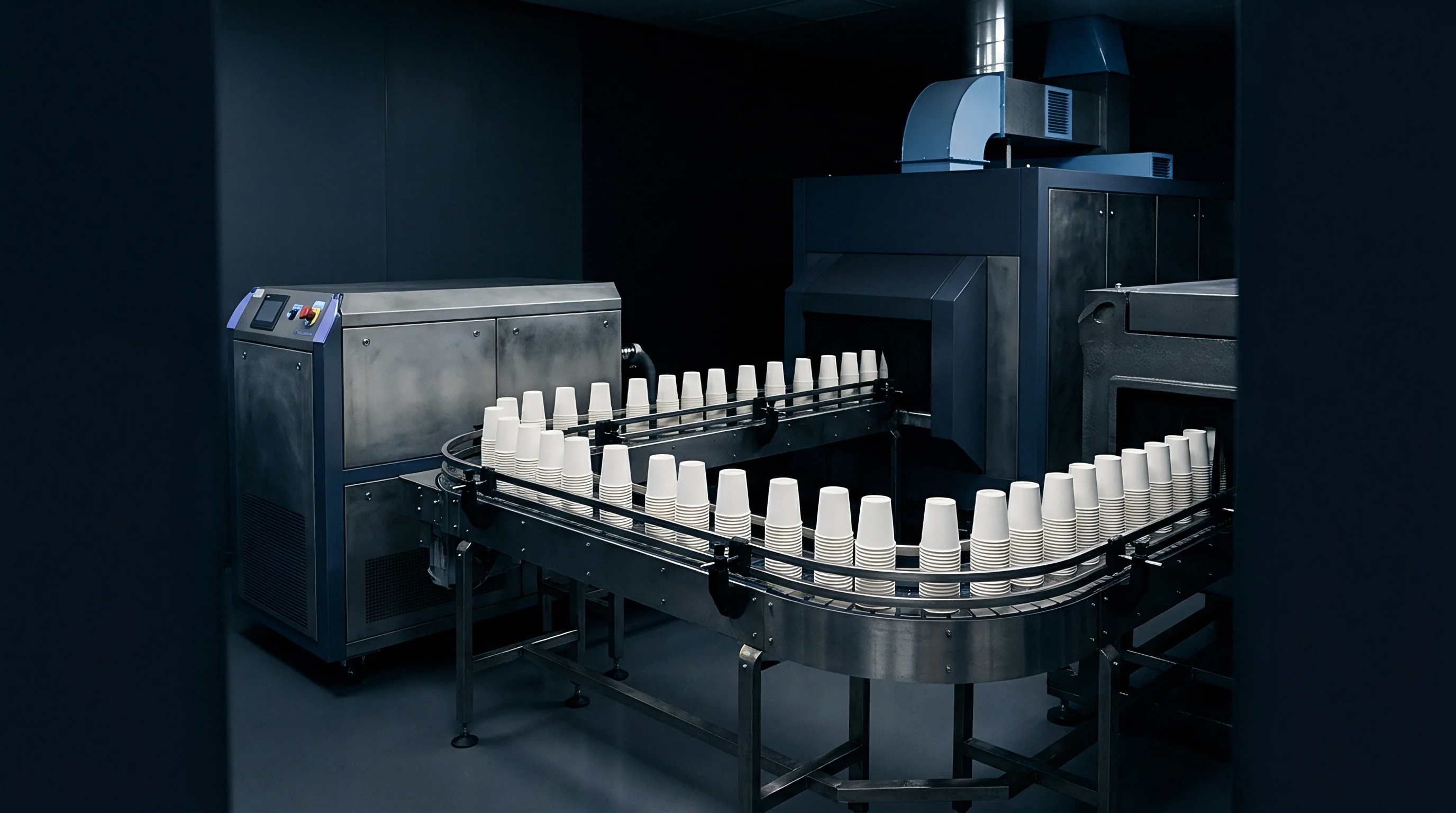
Nip
Pressure application rollers and rotary scoring cylinders introduce transient shear fields that determine interfacial contact quality and residual stress state across laminated paperboard webs. As the paperboard passes through the lamination nip, molten polymer or liquid adhesive undergoes rapid thermal quenching and mechanical consolidation. The magnitude and symmetry of the nip pressure profile set the baseline level of mechanical interlocking and chemical van der Waals contact across the joint.
Inadequate nip pressure allows microscopic air pockets to remain entrapped at the fiber-polymer junction. These micro-voids function as pre-existing stress concentrators and sharp interfacial flaws. Under subsequent converting forces, these unbonded sites serve as immediate crack initiation points, lowering the apparent fracture toughness of the overall structure.
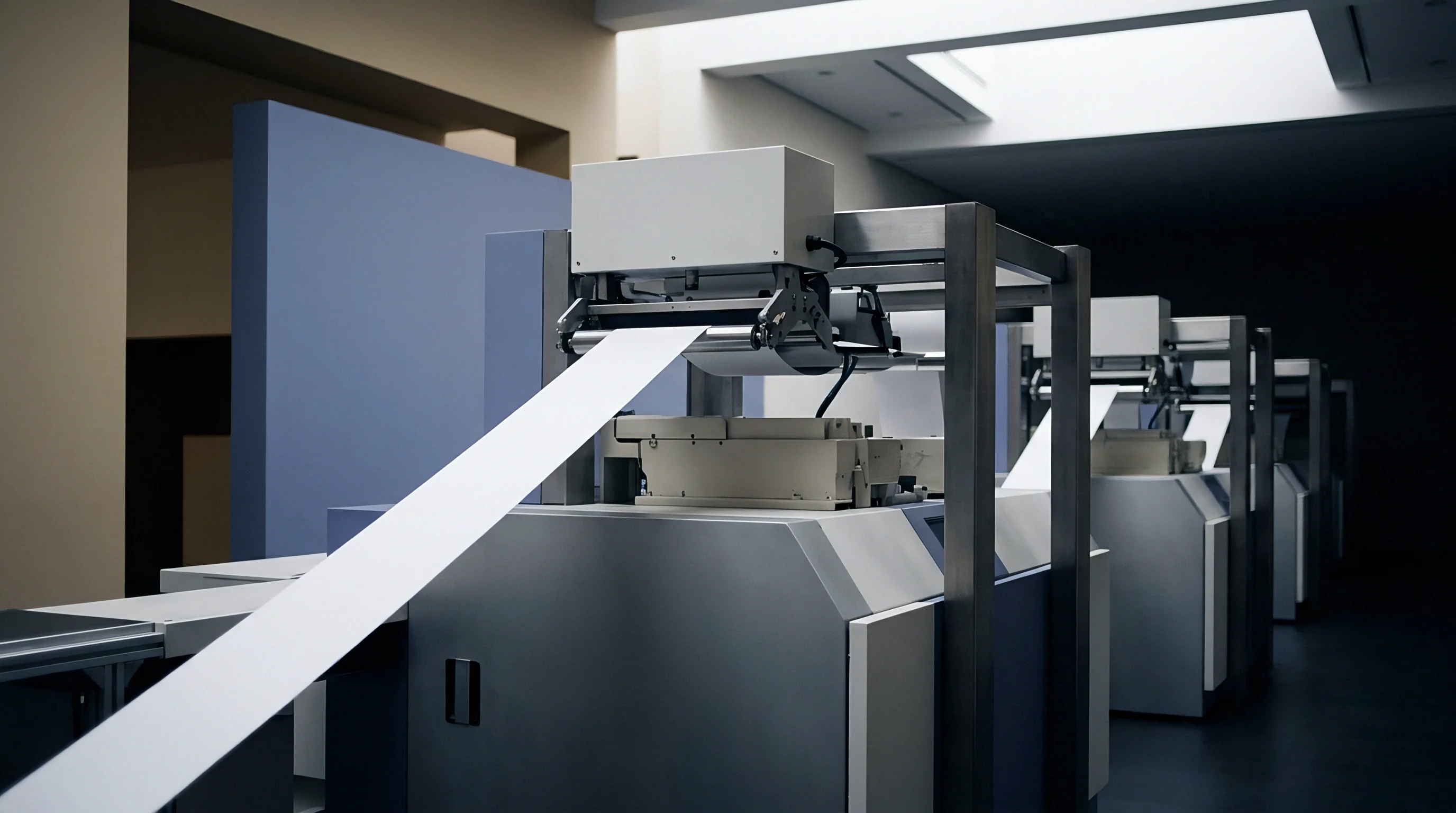
Viscoelastic Substrate Deformation under Dynamic Compression
Paperboard is an anisotropic, highly compressible porous network of cellulosic fibers. Under heavy nip compression, the internal pore volume contracts, causing localized density increases beneath the scoring rule or laminating roll. Polyethylene strain hardens at high rate.
The viscoelastic response of the damp fiber network combined with the thermoplastic polymer layer produces a complex residual stress field post-nip.
Nip pressure drives polymer flow. When liquid barrier coatings or extruded polymers are forced into the open surface pores of folding boxboard, the depth of penetration correlates directly with nip residence time and dynamic viscosity. Insufficient penetration leaves a weak planar interface prone to low-energy Mode I delamination.
Excessive penetration drains polymer from the surface layer, creating pinholes and thinning the protective film barrier.
Dynamic strain during nip compression creates residual tensile stresses inside the cooled polymer film upon exiting the nip zone. These residual stresses add to the externally applied crack driving forces during box forming. If residual film tension is ignored during material qualification, the web will exhibit curl and premature edge delamination during rotary blanking.
Score Line Delamination Pathways under Dynamic Bending
When the blank reaches the high-speed folder-gluer, pre-scored lines are folded rapidly through angles ranging from 90 to 180 degrees. The geometry of the score channel, male rule width, and female matrix depth determine the local strain distribution across the board thickness. Improper rule-and-matrix alignment shifts the mechanical neutral axis, generating high interfacial shear stresses directly at the coating boundary.
- Interface Decoupling separates the polymer skin completely from the fiber surface without pulling underlying cellulosic material, indicating poor surface energy match or inadequate flame oxidation treatment.
- Intra-Ply Shearing splits the internal cellulose fiber network beneath the surface coat, confirming that interfacial bond strength exceeds the internal z-direction tensile strength of the paperboard matrix.
- Top-Coat Shattering causes micro-cracking across the outer brittle functional barrier coating while maintaining interfacial adhesion to the board, resulting in barrier failure without visible surface peeling.
- Fluted Interface Popping occurs in micro-fluted corrugated laminates where high shear forces at the linerboard interface detach the outer printed paper liner from the flute tips during rapid corner folding.
Interface adhesion drops under impact. Converting equipment operating at high velocity impacts the score line with high-energy folding belts, creating stress waves that propagate along the interface. When these transient stress waves encounter localized unbonded regions, fracture velocity accelerates rapidly, causing catastrophic delamination across entire production lots.
Failing to balance nip pressure and scoring matrix depth results in high scrap rates, frequent line clearings, and lost production capacity across the packaging converting facility.
Energy
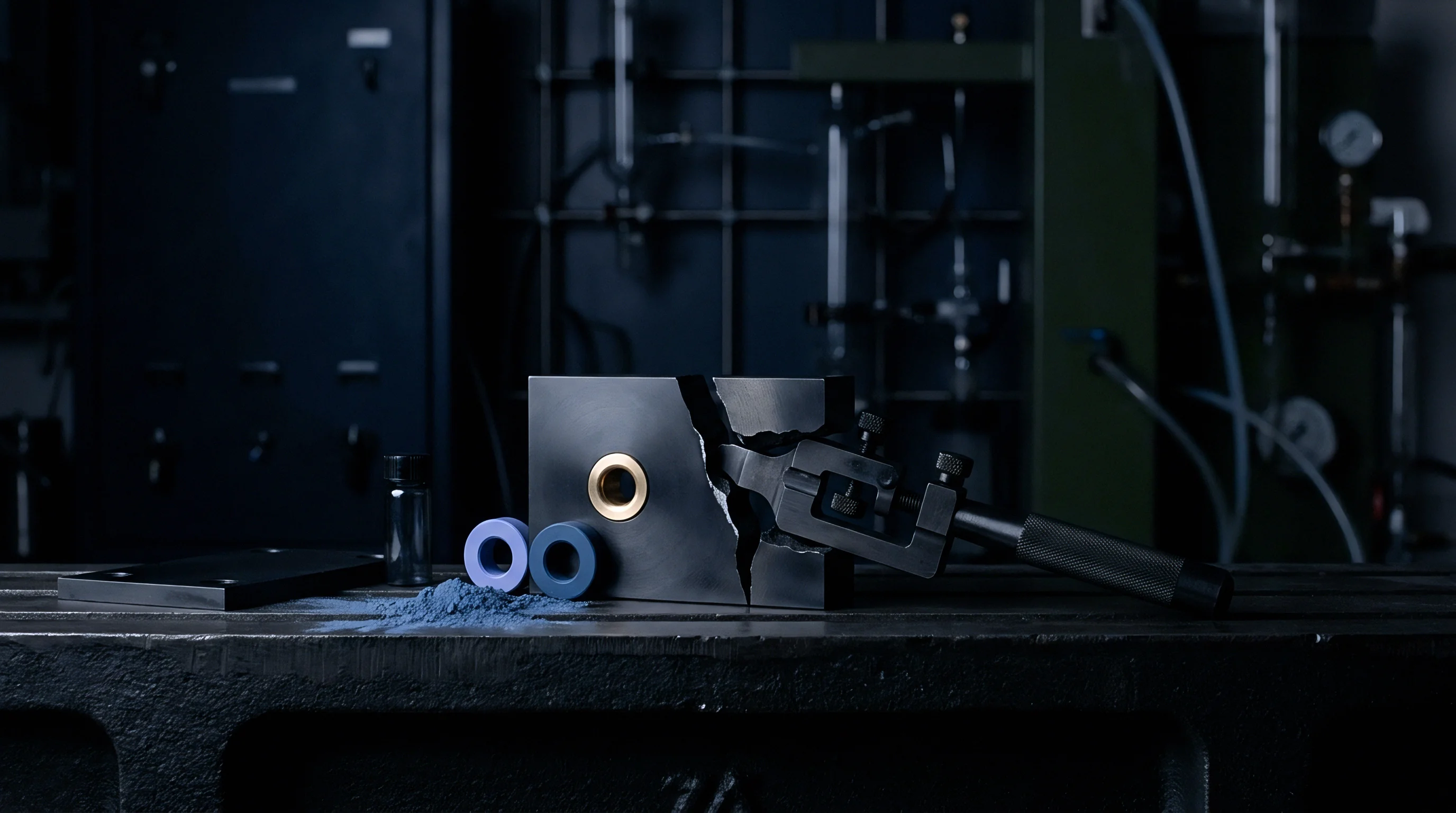
Quantifying fracture resistance across polymer-paperboard boundaries demands measuring fundamental work of adhesion alongside bulk plastic dissipation within the fiber network. Total energy consumed during interfacial crack propagation is not merely a property of the adhesive interface alone. Instead, it represents a composite measurement incorporating surface energy, microscopic polymer stretching, and macroscopic plastic bending of the stiff paperboard substrate.
Elasto-plastic fracture mechanics provides the mathematical framework for separating intrinsic interfacial fracture energy from bulk substrate deformation. When a laminate is peeled or sheared apart, a large fraction of the input mechanical energy dissipates as plastic work within the paperboard fibers and the ductile film layer. High-speed converting lines require accurate separation of these energy sinks to optimize coating formulations and substrate selection.

Determination of Mode Dependent Critical Energy Release Rates
The total critical strain energy release rate, designated G_c, varies as a function of the phase angle of loading, psi. At zero degrees phase angle, corresponding to pure Mode I opening, G_c equals G_Ic. As the phase angle increases toward 90 degrees, representing pure Mode II shear, the measured fracture energy increases significantly.
The empirical Phenomenological Criterion models this behavior:
G_c(psi) = G_Ic (1 + tan^2((1 – eta) psi))
Here, eta is a material mode-mixity parameter typically ranging from 0.2 to 0.4 for poly-coated board laminates. The mode-mixity parameter reflects how effectively shear stresses are dissipated through mechanical friction and plastic yield within the boundary layer. Lower values of eta indicate strong mode dependence, where shear loading rapidly elevates resistance to delamination.
Consider a practical converting example comparing two 350 micrometer folding boxboard grades laminated with 20 micrometer films running on a folder-gluer at 600 cartons per minute. Grade A utilizes an acrylic water-based barrier formulation with G_Ic of 30 J/m² and an eta parameter of 0.15. Grade B uses an extruded LDPE layer with G_Ic of 45 J/m² and an eta parameter of 0.35.
During a 90-degree fold at high speed, the operating phase angle at the outer score margin reaches 40 degrees.
For Grade A at psi = 40 degrees:
G_c(40) = 30 (1 + tan^2((1 – 0.15) 40)) = 30 (1 + tan^2(34)) = 30 (1 + 0.455) = 43.65 J/m²
For Grade B at psi = 40 degrees:
G_c(40) = 45 (1 + tan^2((1 – 0.35) 40)) = 45 (1 + tan^2(26)) = 45 (1 + 0.238) = 55.71 J/m²
Although Grade A appears adequate under static zero-degree laboratory testing, Grade B provides 27.6 percent higher fracture energy under actual converting phase angles, preventing score delamination on the folder-gluer.
High Rate Fracture Testing Protocols for Machine Speeds
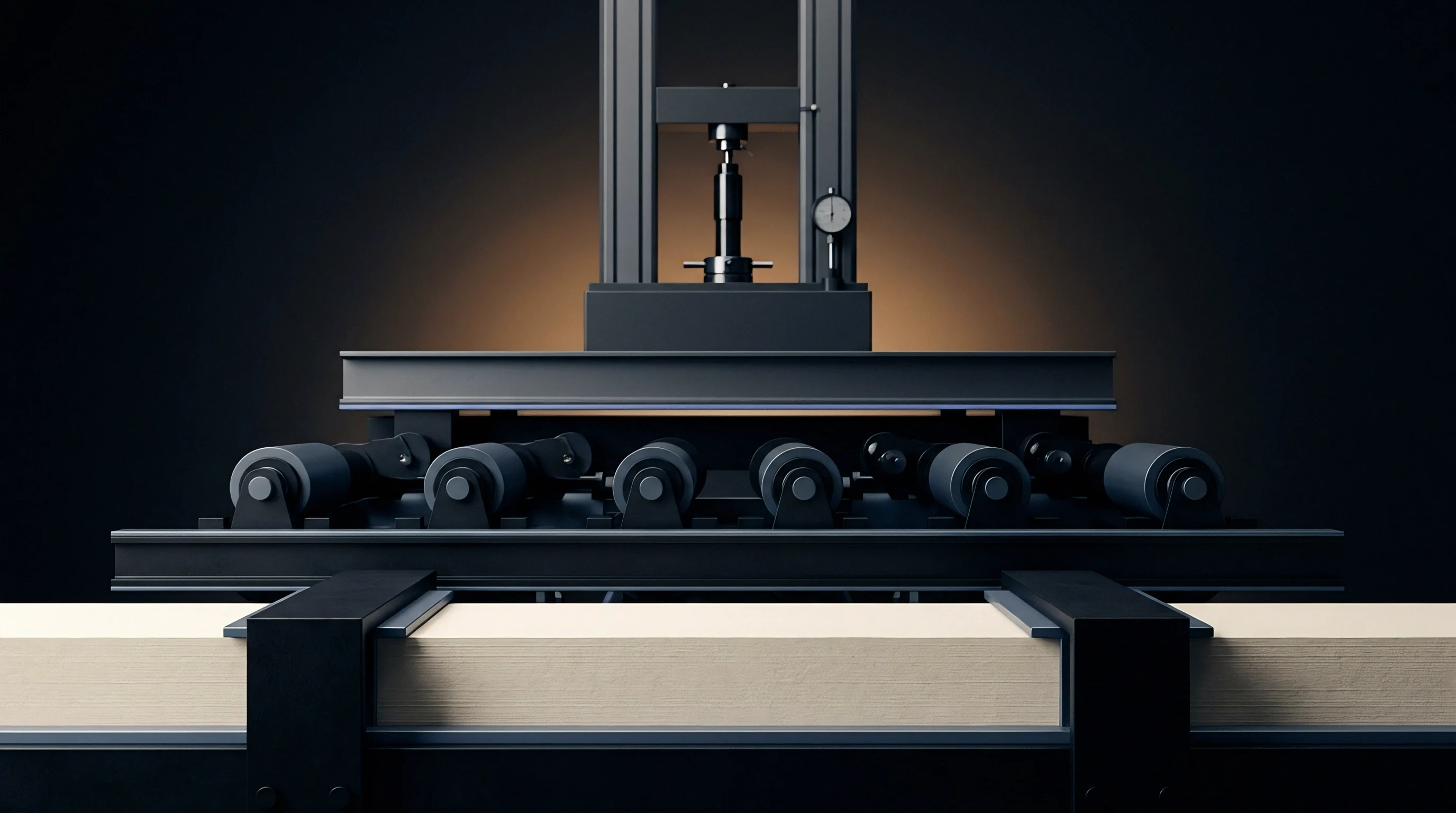
Evaluating fracture toughness at bench-scale crosshead speeds of 5 to 50 millimeters per minute fails to capture velocity-dependent toughening and embrittlement transitions. Test protocols must employ servo-hydraulic or instrumented impact test rigs operating at peel velocities between 1 and 10 meters per second. These testing speeds match the local deformation rates observed within high-speed converting machinery.
- High Speed Dual Cantilever Beam Test applies pure Mode I tensile loading at crosshead speeds up to 5 meters per second using lightweight carbon-fiber loading arms to minimize inertial force artifacts.
- Dynamic End Notched Flexure Method induces pure Mode II shear fracture by subjecting a center-notched laminated beam to three-point impact loading, measuring dynamic load-point displacement using high-speed optical videogrammetry.
- Variable Angle High Speed Peel Fixture mounts the laminated board sample on a rotary stage, allowing precise control of peel angle from 15 to 120 degrees while pulling the film layer at production velocities.
High moisture softens board fibers. Humidity changes alter the plastic dissipation zone size within the paperboard core. At 80 percent relative humidity, moisture absorption reduces the elastic modulus of cellulose fibers, increasing bulk plastic dissipation during fracture testing.
Consequently, measured total energy release rates increase artificially, masking a potential degradation in intrinsic chemical bond strength at the polymer-fiber interface.
Standard ISO 187 laboratory conditioning at twenty-three degrees Celsius and fifty percent relative humidity is mandatory for baseline contract qualification, but floor conversions running at high ambient humidity require fracture toughness testing at seventy percent relative humidity to prevent unpredicted line failures.
Material suppliers frequently claim that high room-temperature peel strength guarantees converting performance, yet this assertion ignores the dramatic reduction in Mode II fracture toughness that occurs when chill rolls run cold or flame treaters experience power dropouts.


Verification
Benchtop qualification routines replicate the microsecond deformation timescales encountered on commercial folder-gluers to predict production yield reliably. Quality control procedures that rely exclusively on manual thumb-peel or knife-scoring tests introduce unacceptable operator bias. Quantitative verification requires calibrated mechanical testing that captures critical energy release rates across the full spectrum of converting phase angles.
Failure to implement standardized interfacial fracture testing leads to disagreement between substrate converters and packaging end users. When a high-speed packaging line experiences score cracking, mills often point to correct board grammage and burst strength. Meanwhile, converters point to delaminated carton folds.
Rigorous verification protocols establish unambiguous, numerical fracture criteria that eliminate subjective arguments over material quality.
Standard Testing Configurations for Interfacial Adhesion Calibration
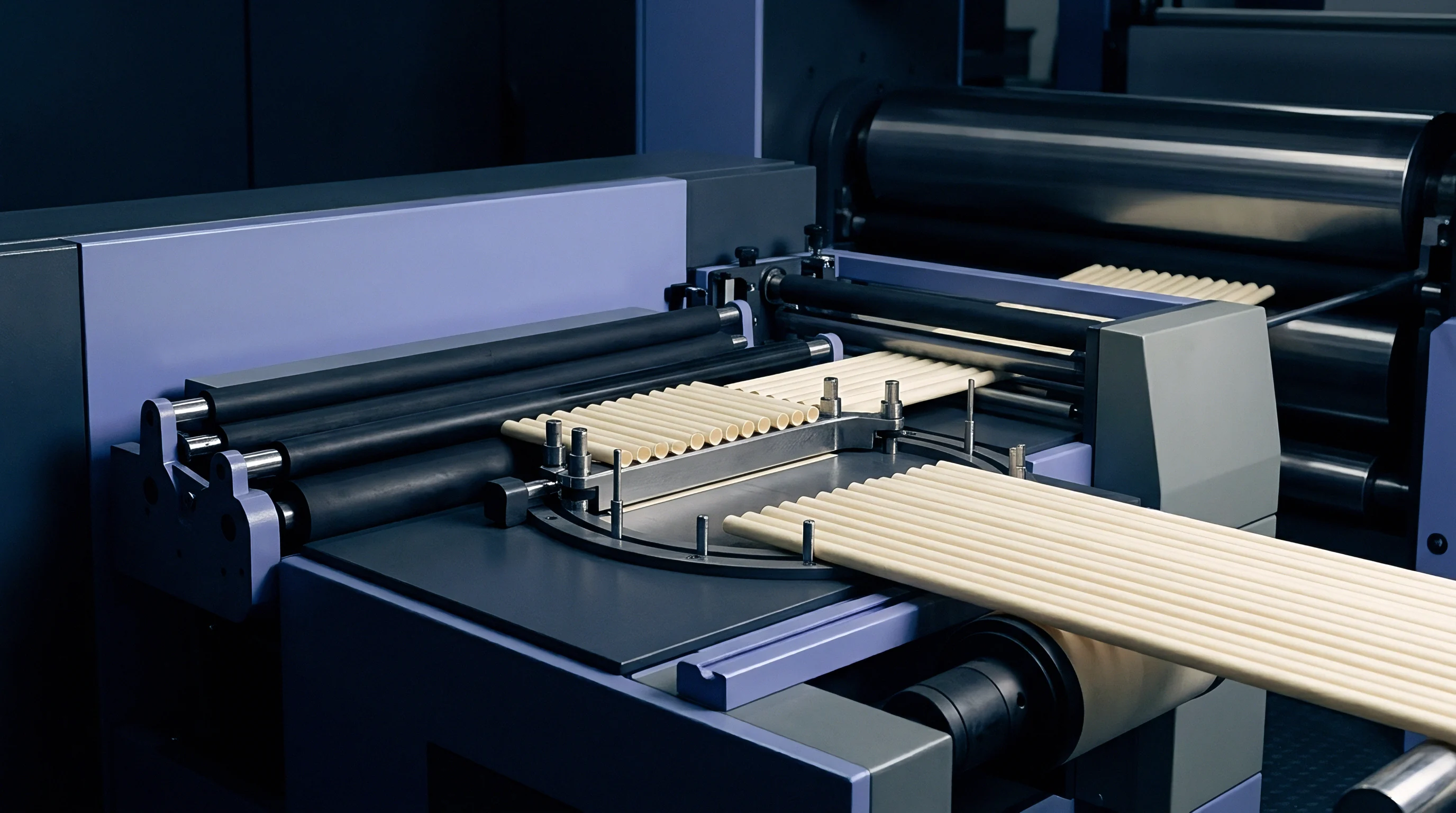
Mixed-Mode Bending (MMB) fixtures complying with ASTM D6671 standards provide the foundational data needed for comprehensive interface characterization. The MMB apparatus combines end-opening loads and mid-span bending loads on a double cantilever beam specimen. By adjusting the load position lever arm, the laboratory technician varies the mode mixity phase angle continuously from pure Mode I to pure Mode II.
Specimen preparation demands meticulous dimensional control. Laminated paperboard samples are cut into strips 25 millimeters wide and 150 millimeters long using sharp rotary shear blades to prevent pre-damaging the interface edges. A Teflon starter film 12.5 micrometers thick inserted at the coating interface during lamination creates a sharp, well-defined initial crack tip.
The specimen is bonded to rigid aluminum loading blocks using high-modulus cyanoacrylate adhesive.
Mode mixity shifts crack paths. During MMB testing, load and displacement are recorded continuously via high-frequency data acquisition systems. Crack length propagation is tracked using optical cameras or crack-length resistance gauges bonded directly to the sample flank.
The J-integral method calculates energy release rates directly from load-displacement curves, compensating for non-linear plastic deformation within the compressible paperboard substrate.
Does off Line Testing Predict High Speed Production Spoilage?
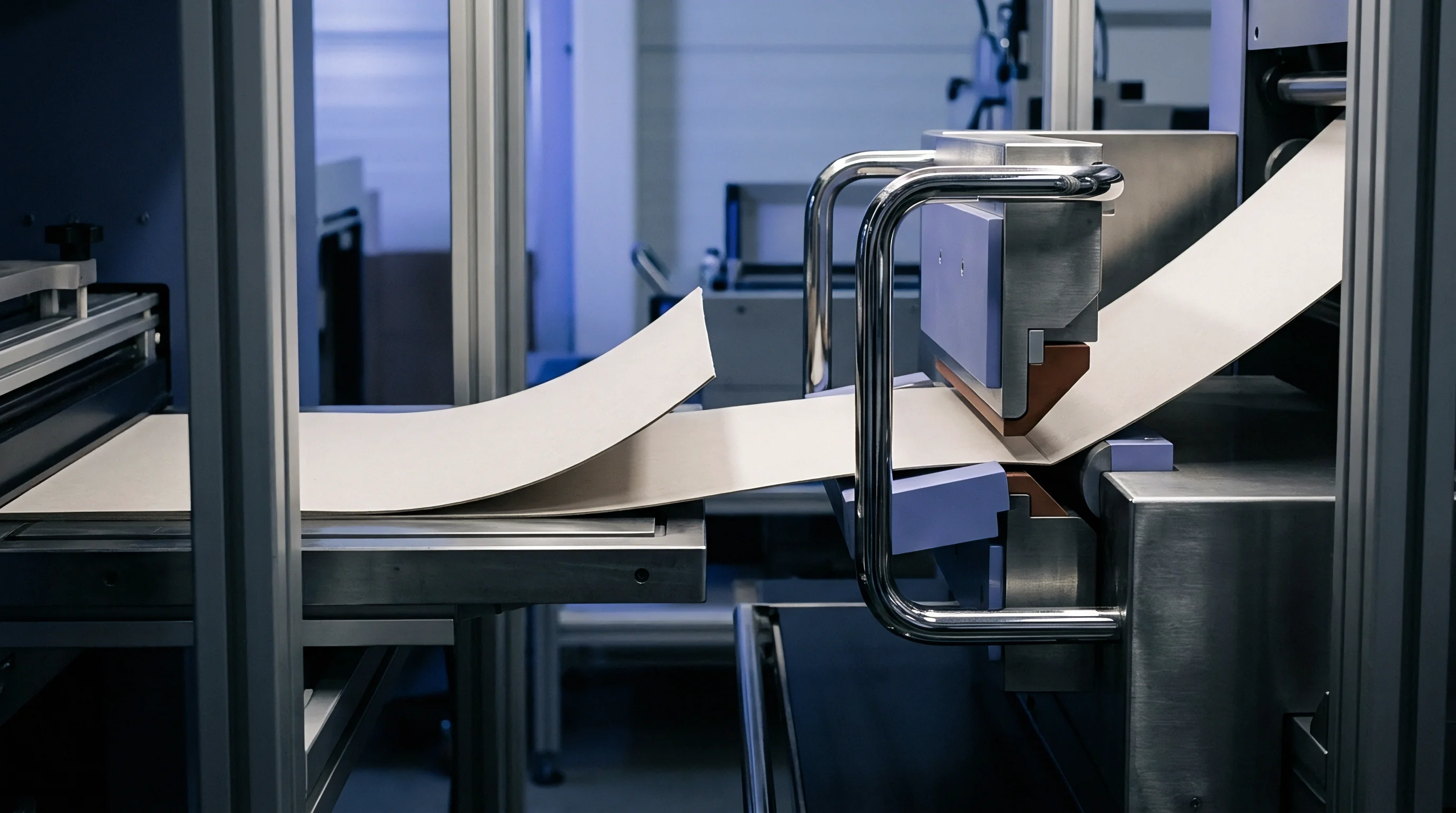
Off-line laboratory testing reliably predicts converting behavior only when loading rates, temperature, and environmental conditioning match operational converting conditions. Standard low-speed mechanical testing frequently understates brittle delamination tendencies because viscoelastic polymers have sufficient time to relax stress concentration at low deformation rates. Under machine speeds exceeding 500 units per minute, stress relaxation cannot occur, and brittle interfacial separation dominates.
- Cut laminated paperboard samples precisely along machine direction and cross direction axes to capture fiber orientation anisotropy.
- Condition all test specimens in an ISO 187 compliant environment for twenty-four hours to stabilize moisture content at equilibrium.
- Mount the sample into a high-speed mixed-mode bending frame with the phase angle lever calibrated to thirty-five degrees.
- Apply high-velocity impact loading at two and a half meters per second while recording dynamic force and displacement.
- Calculate critical interfacial fracture toughness using non-linear compliance calibration equations to account for substrate plastic work.
- Compare calculated energy values against the baseline threshold of fifty-five Joules per square meter established for high-speed conversion.
| Test Conditioning State | Loading Rate (mm/min) | Equivalent Machine Velocity | Measured G_Ic Variance (%) | Qualification Outcome |
|---|---|---|---|---|
| 23°C / 50% RH Standard ISO 187 | 10 | 0.0006 m/s (Static) | Baseline (0%) | Fails to detect dynamic brittle failure |
| 23°C / 50% RH Standard ISO 187 | 150,000 | 2.5 m/s (Production) | -28% to -42% | Accurately predicts line score cracking |
| 10°C / 30% RH Cold Storage Simulation | 150,000 | 2.5 m/s (Production) | -50% to -65% | Identifies winter shipping embrittlement |
| 35°C / 80% RH High Humidity Tropical | 150,000 | 2.5 m/s (Production) | +15% to +30% | Masks bond defects due to fiber softening |
Die wear changes pressure profiles. Dynamic verification protocols must account for tool degradation over extended production runs. As male creasing rules wear down, scoring nip pressures decrease, causing localized shifts in interfacial strain energy partitioning.
Quality assurance teams must periodically pull production blanks to re-verify mixed-mode fracture resistance throughout long converting runs.
Per Section 4.2 of European Standard EN 13430, material compliance dossiers for recyclable packaging must include certified interfacial adhesion energy data demonstrating that barrier layers remain attached during mechanical repulping operations.
Incorporating explicit mixed-mode fracture metrics into supply contracts prevents delivery of sub-standard board lots that pass basic tensile tests but split during automated box erecting.
Appraisal
Commercial evaluation of extrusion-coated versus film-laminated folding boxboard balances substrate yield, make-ready waste, and regulatory recyclability compliance fees. Specification decisions made purely on raw material cost per metric ton frequently backfire when sub-optimal interfacial fracture resistance causes line downtime and high rejection rates. Every pass through a laminator, coater, or rotary blanker carries distinct economic costs and spoilage liabilities.
High-speed folder-gluers running at 600 cartons per minute generate thousands of finished packs per hour. A line stoppage caused by score delamination or coating peeling creates immediate financial losses, including lost machine capacity, wasted adhesive, and scrap board disposal. Investing in higher-grade primers, flame surface treatment, or optimized tie-layer polymers adds initial material expense but secures net operational profitability by protecting production throughput.
Yield Losses and Spoilage Costs Driven by Score Line Failure
When an unpredicted interfacial fracture defect affects a production lot, financial damage extends far beyond the raw material value of the ruined blanks. Off-spec cartons that pass initial converting unnoticed can delaminate during automated filling at the customer packaging plant. Secondary failures at brand-owner facilities incur massive financial penalties, mandatory lot recalls, and severe reputation damage for the packaging converter.
Cold storage accelerates film brittle failure. Operating thin extrusion layers or aqueous dispersion coatings near their glass transition temperatures lowers effective fracture toughness. If a converter ships poly-coated frozen food cartons manufactured with low Mode II fracture resistance, scores will crack open inside cold-chain logistics networks, resulting in expensive product returns and contract renegotiations.
Financially optimized converters set baseline fracture criteria based on total landed run cost rather than board purchase price. Adding two dollars per thousand square meters for advanced surface plasma oxidation during extrusion coating routinely prevents tens of thousands of dollars in line spoilage on high-velocity converting equipment.
Recyclability Penalties and Barrier Layer Interface Optimization
Extended Producer Responsibility (EPR) fee structures under current European packaging regulations heavily penalize multi-layer laminates that cannot be cleanly separated in standard paper recycling mills. High-strength permanent film laminations that resist dynamic score line cracking may fail recyclability audits if the film layer cannot be detached during mechanical hydrapulping. The ideal interface balances high dynamic fracture toughness during converting with controlled hydrolytic cleavage during repulping.
Dispersion-coated barrier boards offer simplified recycling profiles but present narrower fracture toughness operating windows compared to traditional polyethylene extrusion laminates. Water-based barrier polymers often exhibit lower strain to failure, making them sensitive to Mode I opening cracks at sharp fold radii. Formulators must incorporate plasticizing additives and nano-clay reinforcers to boost dynamic fracture energy without compromising water vapor transmission resistance or repulpability certification.
Quantifying interfacial fracture metrics allows procurement desks to compare competing barrier board suppliers on an objective cost-to-performance matrix. Rather than relying on supplier marketing claims, buyers evaluate substrates using verified Mode I and Mode II critical energy release rate limits tied directly to machine operating speeds.
Selecting barrier boards with verified mixed-mode interfacial fracture toughness ensures trouble-free converting at full machine speed, eliminates score line delamination waste, and secures long-term compliance with evolving circular economy legislation.