Adhesion Metric
Quantitative mechanical criteria express the critical energy release rate required to propagate a crack along the boundary between two bonded substrates. Laminate designers evaluate interfacial fracture toughness to predict whether multi-layer structures will withstand converting stresses without delaminating along internal plies. The metric accounts for both mechanical peel forces and plastic energy dissipation occurring near the advancing crack tip.
Measurements apply to extrusion coatings, dry-bond laminations, adhesive cold seals, and metallized films. Monolithic materials lacking defined adhesive boundaries fall outside the analytical framework of interfacial fracture evaluation.
Delamination Resistance
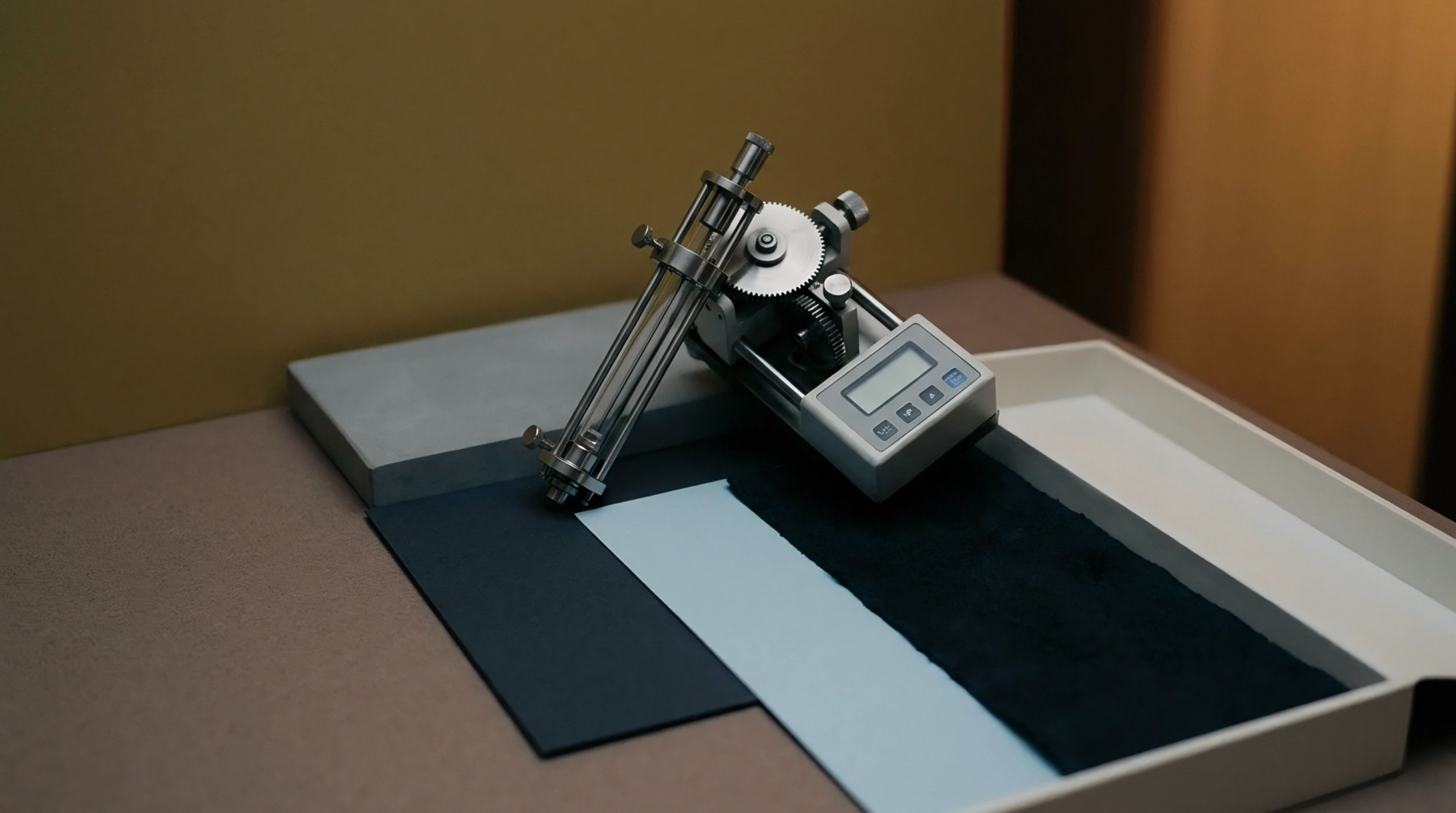
Cleavage initiation tests such as double cantilever beam configurations apply monotonic opening displacement to pre-cracked joint assemblies. Load-displacement curves capture crack initiation and stable crack extension under mode I tensile opening or mode II shear loading conditions. Calculation methods combine beam stiffness, specimen width, and crack advance length to yield critical fracture toughness values expressed in joules per square metre.
Plastic deformation within adjacent polymer layers absorbs significant fracture energy, causing apparent toughness to vary with layer thickness and testing speed. Environmental humidity and processing temperatures modify molecular mobility at the laminate boundary, altering measured crack resistance.
Converting Integrity
Extrusion coating lines must achieve sufficient interfacial bonding between synthetic polyolefins and fibrous paperboard to prevent edge separation during scoring. Insufficient interfacial fracture toughness leads to flaking along creased carton edges, fiber tear failure during high-speed folding, and seal failure in pouch formers. Chemical primers and flame treatments increase bonding energy by establishing covalent linkages that raise crack propagation thresholds.
Measuring interfacial fracture toughness ensures that barrier coatings remain securely bonded throughout high-stress finishing steps.